UN calls on Afghanistan’s Taliban rulers to reverse crackdown on women

By EDITH M. LEDERER

Associated Press

UNITED NATIONS (AP) — The U.N. Security Council unanimously adopted a resolution Monday calling on Afghanistan’s Taliban rulers to swiftly reverse their crackdown on women and to combat militant groups inside Afghanistan that Pakistan accuses of carrying out cross-border attacks.

China’s U.N. Ambassador Fu Cong, whose country sponsored the resolution, said the hope is that the Afghan government will “take more proactive measures to protect human rights, especially the rights of women, and project an image of openness, inclusivity and responsibility.”

The resolution extends the U.N. political mission in Afghanistan until June 17, 2027, and authorizes it to support humanitarian aid deliveries “without discrimination” and to promote national and local governance “without any discrimination based on sex, religion or ethnicity, with the full, equal, meaningful and safe participation of women, … minorities, youth and persons with disabilities.”

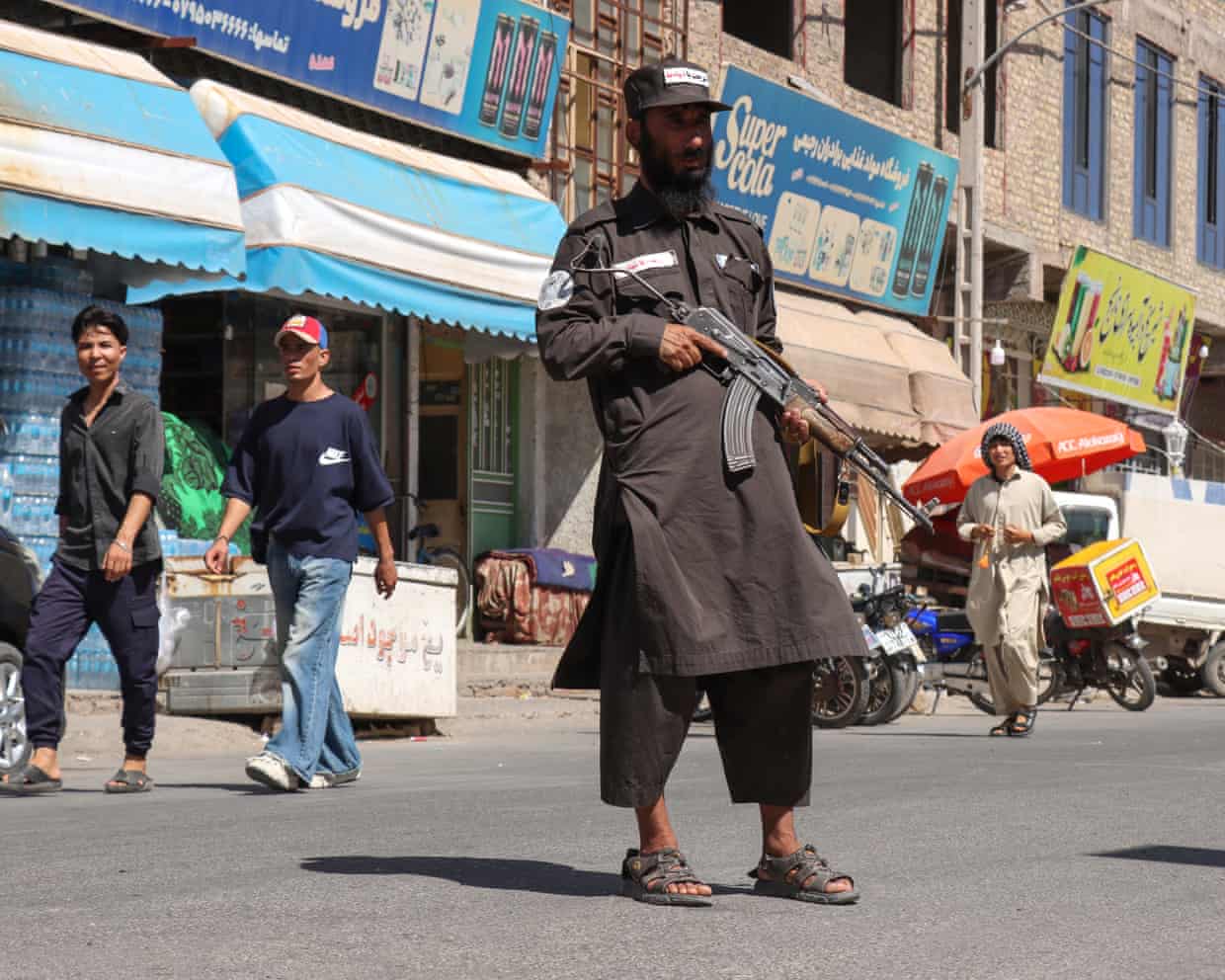
The resolution’s adoption follows the arrest of at least 30 women in the western city of Herat this month for allegedly violating the Taliban’s strict dress code. A rare protest sparked by the arrests was violently dispersed by Taliban police, who shot and killed one person and injured several others, according to the U.N. mission known as UNAMA.

The Taliban have run Afghanistan since 2021 in the wake of the chaotic withdrawal of U.S.-led forces and have imposed a strict interpretation of Islamic law, or Shariah, including draconian restrictions on women and girls, such as bans on education beyond primary school and on many jobs. Minorities have also been impacted.

The resolution authorizes the U.N. mission to facilitate talks between the Taliban and regional countries and the wider international community,

“For that political process to succeed, the Taliban must act,” U.S. deputy ambassador Jennifer Locetta said. “The Taliban must meet their counterterrorism commitments, respect Afghanistan’s international obligations, end hostage diplomacy, and cease their unconscionable abuses of the human rights of women and girls.”

Pakistan accuses Afghanistan of harboring militants who carry out deadly attacks inside Pakistan, which the Taliban denies. Hundreds of people have been killed in fighting between the two countries since February, when Afghanistan attacked Pakistan in retaliation for Pakistani airstrikes inside Afghanistan.

Pakistan’s U.N. Ambassador Asim Ahmad said the “resolution expresses the council’s serious concern over the presence of terrorist groups in Afghanistan, which continue to constitute a threat to international peace and security.”

The new resolution also authorizes UNAMA to advance Afghanistan’s economic development, including by facilitating commercial and financial activity and supporting efforts to return assets belonging to the Central Bank “for the benefit of the Afghan people.”


UN calls on Afghanistan’s Taliban rulers to reverse crackdown on women
read more

Kabul Hosts Regional Meeting of Afghanistan, Central Asia, Azerbaijan

Participants discussed ways to strengthen regional cooperation in the areas of security, economy, transit, investment, and regional connectivity.

Amir Khan Muttaqi, the Foreign Minister of the Islamic Emirate, called for strengthening scientific and research cooperation among regional countries while emphasizing the role of think tanks in expanding regional collaboration during the first meeting of the Strategic Studies Centers and Think Tanks of Afghanistan, Central Asia, and Azerbaijan.

Muttaqi said: “Today, we have gathered not merely as representatives of our countries, but as intellectuals and thought leaders of a shared geography, with the aim of elevating the ties among regional countries—particularly relations between the Islamic Emirate of Afghanistan and the Central Asian states—from the current level of interaction and cooperation to a stage of deep and sustainable integration.”

The Foreign Minister stated that the successful convening of the first Afghanistan–Central Asia Consultative Dialogue had created a favorable political environment for expanding cooperation. However, he stressed the need for a specialized, research-oriented mechanism to transform political agreements into practical proposals and implementation plans.

In another part of his remarks, he identified security concerns and regional tensions, climate change and environmental challenges, economic and transit opportunities, as well as the need for developing indigenous narratives, as some of the most important issues requiring close cooperation among the region’s research institutions.

Muttaqi added: “Ongoing wars and conflicts in our shared regional environment have caused significant disruptions to economic supply chains, mobility, and food and energy security. Under such circumstances, research and study centers are not merely academic institutions; they can serve as intellectual partners and drivers of regional diplomacy by offering scientific and practical solutions for managing these challenges and strengthening regional integration.”

The Director of Uzbekistan’s International Institute for Central Asia said that the Kabul meeting is not merely an expert gathering, but a step toward establishing a sustainable framework for cooperation among think tanks in Afghanistan, Central Asia, and Azerbaijan.

Javlon Vakhabov, Director of the International Institute for Central Asia, told TOLOnews: “We have gathered here to develop a set of policy recommendations and practical proposals that can be highly useful under current circumstances, especially as we are witnessing unprecedented cooperation and closer relations among the countries of Central Asia, including Afghanistan.”

The meeting was hosted by the Strategic Studies Center of the Ministry of Foreign Affairs of the Islamic Emirate of Afghanistan and attended by representatives from Uzbekistan, Turkmenistan, Tajikistan, Kazakhstan, Kyrgyzstan, and Azerbaijan.

Participants discussed ways to strengthen regional cooperation in the areas of security, economy, transit, investment, and regional connectivity.

Kabul Hosts Regional Meeting of Afghanistan, Central Asia, Azerbaijan
read more

The toll on Afghanistan of five years of Taliban rule

By Besmillah Taban

The toll on Afghanistan of five years of Taliban rule
read more

Kidnapped US journalist faces Taliban captor in court as 42-year sentence caps long saga

 in New York

Haji Najibullah appeared unbothered as he walked into Manhattan federal court earlier this week to learn whether he would face life behind bars for his role in brutal violence during his time as a Taliban commander – including the 2008 kidnapping of US journalist David Rohde.

Najibullah, who walked into the courtroom in shackles at about 9.50am Monday, sporting khaki jail garb and a black skullcap, could even be seen grinning at various points before proceedings started.

When the former New York Times reporter Rohde entered the courtroom about 10 minutes later, a female companion took note of Najibullah’s demeanor. “He smiled,” she could be heard whispering. “How dare he smile.”

“He lied to us and he is lying today,” Rohde said as he stood at the lectern during Najibullah’s sentencing. “He is refusing to take responsibility for his actions as I look at him right now.”

The courtroom showdown between Rohde and his one-time captor last week brought to an end a years-long saga that began with a planned interview that turned into a kidnapping, then months of detention before a daring escape and finally the capture and trial of Najibullah.

Najibullah was charged for his role in capturing Rohde and two Afghan associates and holding them hostage for some seven months. Najibullah was also charged with his leadership of Taliban militants who attacked US service members, leading to their deaths. Najibullah pleaded guilty on 25 April 2025 to hostage taking and providing material support for acts of terrorism resulting in death.

Rohde said Najibullah, who had previously spoken to media without incident, agreed to an interview. In a telephone call shortly before the planned sit-down, Najibullah then changed the meeting place. When the group showed up, the road was “blocked” and Najibullah’s men drove them to an undisclosed location in Afghanistan before taking them to Pakistan.

In the months that followed, Rohde was forced at gunpoint to make ransom videos that terrorized his “grieving” family, prosecutors said. Under constant fear of death, Rohde had to deliver the chilling lines demanded of him, such as: “If you don’t help me, I will die.”

Rohde apologized to his family during his address to the court. “It was a huge mistake to go to the interview,” he said, breaking into tears. “I will always regret it.”

“Hostage-taking is a cruel and cowardly crime,” Rohde said at one point, with Najibullah largely looking stone-faced during his statement.

Rohde, his translator, and driver left Kabul for the planned interview at about 7am on 10 November 2008. He left a letter at the Times’s Kabul bureau that read: “If I get kidnapped don’t publicize it. That will be easier for [my wife] + my family.”

He also left behind a note for his wife telling her to use money from his book advance for ransom, writing: “This is my responsibility. I love you so much and am sure this will be OK. Please go and be happy and move forward if things go very wrong.”

The missive chillingly foreshadowed months of what prosecutors described as “psychological torture”.

When they arrived at the meeting point, the translator called Najibullah who told them there was US military activity nearby, directing them to another location. There, machine gun-toting Taliban militants restrained and blindfolded them, transporting them to a house.

There, Najibullah used one of their mobile phones to call the newspaper’s Kabul outpost and told a staffer he was holding them captive because they were spies for coalition forces, prosecutors said.

Najibullah and his accomplices tried wielding their captivity as a tool to extract ransom payments and force the release of Taliban prisoners. Rohde and the other two hostages complied with Najibullah’s orders, fearing death or abuse if they refused, prosecutors said.

The men were shuttled between safe houses where they were forced to cook and clean. Rohde did whatever he could to get them released. He and another hostage “staged a hunger strike.” He pretended to be sick. At one point, he even faked a suicide attempt.

In June 2009, Rohde finally had a real chance. While cleaning, Rohde happened upon a car tow rope. He secreted the cord under a pile of clothes, prosecutors said. Rohde and his translator decided to try escaping with the rope.

On 9 June 2009, Rhode and his translator went to the roof when the guards were asleep. They used this rope to scale the compound wall and fled to a nearby Pakistani military outpost.

The guards let them in and they were brought to US authorities. Rohde, who with his wife wrote about this ordeal in the book A Rope and a Prayer: A Kidnapping from Two Sides, reunited with his family.

This harrowing saga came to a close with Najibullah’s sentencing. Najibullah’s defense asked Judge Katherine Polk Failla for an 18-year sentence; prosecutors pushed for life imprisonment, citing the “unimaginable pain” he caused victims.

Najibullah “had to choose a side” upon his return and joining the Taliban “felt like it was the only decision” he could make. Dalack insisted Najibullah was a “low-level” commander who is now “an enemy to the Taliban”.

“They killed his brother,” Dalack said. At various points during Dalack’s pitch for leniency, Najibullah could be seen touching his beard.

When it came time for Najibullah to speak, he apologized but, like Dalack, invoked context.

Najibullah, through a Pashto translator, said he “deeply” regretted his role in Rohde’s kidnapping while telling the judge that his involvement “brought terrible consequences” to his family, saying the Taliban “martyred” his brother because of Rohde’s escape.

He also criticized the US’s presence in Afghanistan, saying soldiers were sacrificed by “the bad policies made by powerful men in American leadership and Taliban leadership”.

When it came time for Failla to impose Najibullah’s sentence, Failla told Najibullah to rise.

As she handed down a 42-year sentence, Najibullah kept his hands in front of him. Rohde looked on from the gallery.

“Mr. Najibullah, do you understand that is your sentence?” Failla asked.

“Yes, I understand,” Najibullah said.
Kidnapped US journalist faces Taliban captor in court as 42-year sentence caps long saga
read more

‘We can’t give up on Afghans’: Lyse Doucet on the remarkable ‘people’s history’ that won her the Women’s prize

The Guardian
12 June 2026

The BBC’s chief international correspondent was awarded the prestigious nonfiction prize for The Finest Hotel in Kabul – which she hopes will bring more attention to the Taliban’s draconian treatment of women

More than three decades later, it became the subject of her first book, The Finest Hotel in Kabul, which has now won the Women’s prize for nonfiction. But while the prize recognises a remarkable work of reportage and history, the BBC’s chief international correspondent is more interested in what it might do for the country that inspired it.

The Finest Hotel in Kabul – A People’s History of Afghanistan by Lyse Doucet
 Photograph: PR

“Afghanistan has largely slipped from the headlines,” Doucet says. “Perhaps this win will bring some attention to the country. None of us should be ready to accept a situation in which we live in a world where there is a country where girls cannot be educated after they’re 16, where women cannot go to university, where women are barred from so many jobs. This is something we should all be angry about.”

Afghanistan was not ever thus. After nearly four decades reporting from the country, primarily for the BBC, Doucet, 67, has watched it pass through almost every political experiment of the modern era: Soviet-backed communism, civil war, Taliban rule, western-backed democracy, and now the Taliban again.

“I was conscious that Afghanistan has a very difficult and violent history,” Doucet says. “I needed to find something that would draw people in rather than push them away. I didn’t want people to close the book and say: ‘It’s too dark. It’s too bloody.’ So a hotel was a device to tell the story in a way people could recognise.”

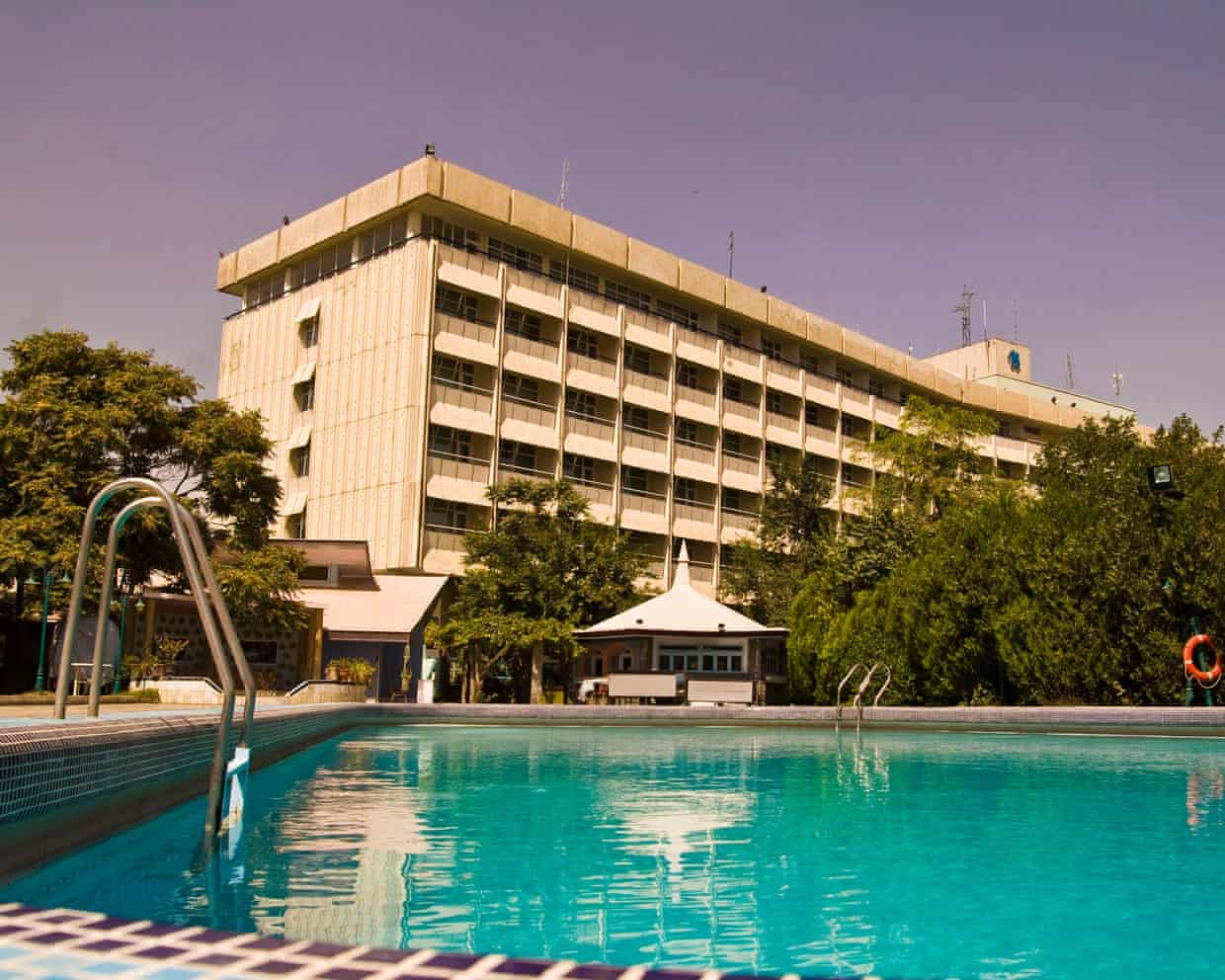
The Intercontinental Hotel – known simply as the Intercon – offered the perfect lens to tell a people’s history of the country. Built by the British in the late 1960s, it was once a symbol of a different Afghanistan. In the 1960s and 70s, Kabul was known as the “Paris of the east”, a vibrant hub of fashion, jazz, miniskirts and apres-ski resorts. Afghan pop star Ahmad Zahir – known as the “Elvis of Afghanistan” – performed at the hotel; Gloria Gaynor was a guest. Foreign travellers passed through on the hippy trail.

As the following decades saw immense political upheaval, the Intercon remained open. “Politics, like hotel guests, checked in and out,” Doucet writes. “As Afghanistan lurched through decades of trial and terror, laced with bright but brief beginnings, the Intercon was an unbreakable constant.”

Intercontinental Hotel in Kabul.
‘Politics, like hotel guests, checked in and out’ … Intercontinental Hotel in Kabul. Photograph: Theodore Liasi/Alamy

The hotel staff who remained through those changes are at the heart of her story: Hazrat, the housekeeper who worked there from the hotel’s opening; Abida, the hotel’s first female chef; Amanullah, the engineer; and Malalai, one of the first female waiters.

“I have to pay tribute to the Afghans who helped me and spoke to me for the book, because in Afghanistan even sharing stories can have risks,” Doucet says.

Doucet began her career in journalism as a freelance reporter in west Africa for the BBC. She went on to cover conflicts across the world, eventually becoming chief international correspondent in 2012. Her book opens with the fall of Kabul in August 2021, and the disastrous American withdrawal, which remains one of the defining moments of Doucet’s career. She recalls watching the evacuation from the airport: military transport planes, helicopters and Afghans carrying only one bag as they fled.

“There was this fear at the end. People kept talking about Vietnam – that image of the people clinging to the last helicopter rising from the roof of the embassy in Saigon,” she says. “In fact, it was a hundred times worse – Afghans racing to the airport, clinging to the underbelly of planes. It’s been a really traumatising experience.”

Since returning to power, the Taliban have systematically erased women from public life through a series of draconian measures. Girls have been entirely banned from secondary education and university, women have been forced out of many workplaces and banned from public spaces, and strict adherence to the burqa is required. Last month, an official decree was passed effectively legally recognising child marriage. And just this week, a rare protest that erupted in the western city of Herat against arrests of women accused of violating hijab rules ended with two people killed, including a child.

A member of Taliban security stands guard outside a mosque in Shahrak-e-Almahdi, Jebrail district of Herat province yesterday.
A member of Taliban security stands guard outside a mosque in Shahrak-e-Almahdi, Jebrail district of Herat province yesterday. Photograph: Mohsen Karimi/AFP/Getty Images

“Five years in and it is getting worse. It is a stain on our world,” Doucet says. “But the courage of Afghan women is extraordinary.”

Doucet is also frustrated that the barriers facing Afghan women go beyond those inside the country. “There are Afghan women getting scholarships, but there are no visas now to allow Afghan women to come and study in Britain and in many other places,” she says. “They are meeting obstacles everywhere. We live very privileged lives here, and it’s not our privilege to give up on Afghans.

“People who were somebody in Afghanistan – activists, world-class journalists – find themselves having to start again from scratch,” she continues. “It’s something none of us would want to do.”

Doucet believes, though, that the world must be careful not to dismiss the achievements of the post-2001 period. “People often say: what did 20 years of international engagement achieve? Was it all for nothing? I always say it wasn’t for nothing. There were many mistakes, but that period helped create the most educated, the most connected generation in Afghan history,” she says. “When you see girls saying: ‘I want to get online, can you help me get a scholarship, can you help me get some kind of education?’ … They know their rights now.”

This month, for the first time, the EU is preparing talks with Taliban representatives in Brussels, despite concerns that engagement risks legitimising a bloody and despotic regime. Doucet is cautious about prescribing a solution.

“I’m a BBC journalist,” Doucet says. “My job is to explain, not advocate. But [some] mediators would say that it’s better to negotiate than isolate. The only change is going to have to come from within the Taliban.”

For now, there is little sign of change in the country. But Doucet is reluctant to surrender the quality Afghans themselves prize above all others.

“Afghans always used to say: the last to die is hope,” she says. “Afghanistan has possibly lived through every political system the world has tried – the thread through Afghan history is that nothing lasts forever.”

‘We can’t give up on Afghans’: Lyse Doucet on the remarkable ‘people’s history’ that won her the Women’s prize
read more

UN Security Council to Hold Meeting on UNAMA Mission in Afghanistan

The United Nations Assistance Mission in Afghanistan (UNAMA) said the UN Security Council will hold a meeting on Monday to discuss the mission’s mandate in Afghanistan.

UNAMA said in a post on X on Sunday that the Security Council is scheduled to make a decision regarding the mission’s future role in the country.

According to the mission, the meeting will begin at 10:00 a.m. New York time and 6:30 p.m. Kabul time.

The Security Council last extended UNAMA’s mandate for three months, allowing the mission to continue its activities while member states considered its future role and priorities in Afghanistan.

The Security Council has renewed UNAMA’s mandate annually since the mission was established in 2002 following the fall of the former Taliban government. Since the Taliban returned to power in August 2021, the mission has taken on an increasingly important role as one of the main channels for diplomatic engagement between Afghanistan’s de facto authorities and the international community.

The United Nations has repeatedly stressed the importance of maintaining an international presence in Afghanistan amid a deep humanitarian crisis. UN agencies estimate that millions of Afghans continue to require humanitarian assistance, while economic challenges, displacement, and climate-related shocks have increased pressure on vulnerable communities across the country.

The future of Afghanistan’s engagement with the international community has also been shaped by concerns over restrictions imposed by the Taliban on women and girls. The United Nations and numerous member states have repeatedly called for the reversal of policies that limit access to secondary and higher education, employment in many sectors, and participation in public life.

Human rights concerns have remained central to Security Council discussions on Afghanistan. UN reports have documented restrictions on civic space, media freedoms, and the rights of women and girls since 2021, issues that many countries say will influence their approach to future engagement with Afghanistan and the mandate of international institutions operating in the country.

UN Security Council to Hold Meeting on UNAMA Mission in Afghanistan
read more

Over 700 Afghan Refugees Released From Pakistan Jails

A total of 763 Afghan nationals were released from prisons in Pakistan and returned to Afghanistan over the past week, according to authorities overseeing migration affairs.

The Ministry of Refugees and Repatriation said on Saturday that the former detainees entered Afghanistan through the Torkham and Spin Boldak border crossings after completing legal procedures.

The releases come amid Pakistan’s ongoing campaign against undocumented foreign nationals, which has led to the detention, deportation and voluntary return of hundreds of thousands of Afghans over the past two years. Pakistani authorities have repeatedly said that individuals without valid residency documents must leave the country.

The United Nations and several international aid agencies have expressed concern over the scale of arrests and deportations, warning that many returnees face economic hardship and limited access to housing, employment and humanitarian assistance upon their return to Afghanistan.

According to the ministry, the detainees had been imprisoned in Pakistan because they lacked legal residency documents. Of the total number released, 230 returned through the Torkham crossing in eastern Nangarhar province, while 533 entered through Spin Boldak in southern Kandahar province.

The ministry said the individuals were transferred back to Afghanistan after their identities were verified and the necessary administrative procedures were completed.

The release of the detainees comes as arrests of undocumented Afghan migrants continue across several Pakistani cities. Human rights organizations and refugee advocates have raised concerns about the detention of asylum seekers and vulnerable migrants during the enforcement campaign.

The United Nations has repeatedly urged Pakistan to halt the detention and deportation of Afghan refugees, particularly those who may face protection risks upon return.

At the same time, the authorities in Kabul have called for the acceleration of the return process, despite warnings from aid organizations that Afghanistan is struggling with economic challenges, high unemployment and limited humanitarian resources to absorb large numbers of returnees.

According to international agencies, millions of Afghans remain displaced or dependent on humanitarian assistance, while the continued return of migrants from neighboring countries is placing additional pressure on already stretched services and communities across the country.

Over 700 Afghan Refugees Released From Pakistan Jails
read more

Herat Developments Draw Concern From UN and MSF

Médecins Sans Frontières (MSF) condemned the detention of one of its healthcare workers in Herat, saying it was deeply concerned by the incidents.

The spokesperson for .the UN Secretary-General has expressed concern over the recent situation in Herat, saying that the United Nations Assistance Mission in Afghanistan (UNAMA) is on the front line of developments and is closely monitoring events.

Stéphane Dujarric, spokesperson for the UN Secretary-General, said that UNAMA personnel were on the front line of developments in Herat and described the situation as very concerning. He stressed that lethal force should never be used against peaceful demonstrators and added that the United Nations would continue to monitor the situation closely.

Médecins Sans Frontières (MSF) has condemned the detention of one of its healthcare workers in Herat by the Ministry for the Promotion of Virtue and Prevention of Vice, saying it is “deeply angered” by the incident.

In a statement, MSF said: “MSF is outraged by the arrest and detention of one of our employees as part of the enforcement of dress code requirements in Herat. This incident is not isolated. Women in Afghanistan already face severe restrictions on movement and access to public life, which have direct consequences on people’s access to care and the delivery of healthcare services across the country.”

Religious scholar Sediqullah Sediq said: “Women should be educated about the importance and virtues of the hijab so that they can observe it.”

Women’s rights activist Tafsir Siyah Poosh said: “Afghan women have always protected, and continue to protect, their hijab, dignity, and modesty. We call on the Islamic Emirate to respect women and their status while taking human dignity into consideration.”

Earlier, the governor of Herat rejected reports of women being detained and protesters being shot at, describing some of the circulated images as AI-generated.

Herat Developments Draw Concern From UN and MSF
read more

Women in Afghanistan Need More Than Expressions of Concern, Rights Group Says

A human rights organization said women in Afghanistan need more than repeated expressions of concern from the international community.

A human rights organization has criticized what it described as the international community’s repeated expressions of concern over the situation of women in Afghanistan, saying Afghan women need concrete action rather than statements of sympathy.

The Afghanistan Human Rights Defenders Committee said in a statement on Friday that Afghan women have grown tired of hearing international actors “express concern” while restrictions on their rights continue to expand.

The statement comes as women and girls in Afghanistan remain subject to sweeping restrictions on education, employment and public life. Since 2021, girls have been barred from secondary schools and universities, while women have faced growing limitations on work, travel and participation in public activities.

International organizations, including the United Nations, have repeatedly warned that the restrictions have created one of the world’s most severe women’s rights crises. Rights groups say the measures have deepened poverty, increased social isolation and limited economic opportunities for millions of Afghan women and their families.

Referring to recent events in the western province of Herat, the committee said the phrase “expression of concern” has become one of the most frequently repeated responses by the United Nations, the UN Assistance Mission in Afghanistan (UNAMA) and other international institutions to developments affecting Afghan women.

The organization acknowledged that monitoring human rights violations, documenting abuses and raising concerns are important responsibilities of international bodies. However, it said such measures alone are insufficient to address the continuing deterioration of women’s rights in Afghanistan.

The committee argued that the moral and political responsibility of the United Nations, member states and international organizations extends beyond issuing statements and public condemnations.

It called on the international community to make greater use of legal, diplomatic and political mechanisms to support Afghan women and hold authorities accountable for actions that restrict their rights and freedoms.

The statement follows recent protests and public criticism over the detention of women in Herat, where reports of arrests linked to dress code enforcement triggered demonstrations and renewed international scrutiny of the situation facing women across Afghanistan.

The committee said Afghan women now need meaningful protection and sustained international support, warning that continued inaction risks further weakening fundamental rights and opportunities for women and girls throughout the country.

Women in Afghanistan Need More Than Expressions of Concern, Rights Group Says
read more

Afghans Hold Rare Public Protests Against Taliban Rules

In Herat, Afghanistan, on Monday.

By Yaqoob Akbary and Zane Irwin

Yaqoob Akbary reported from Kabul, Afghanistan

The New York Times

June 12, 2026, 6:56 p.m. ET

The United Nations said it was “deeply concerned” about the arrests of dozens of women, and reported that two people were killed in protests organized to support them.

In a rare burst of public opposition to the Taliban’s severe restrictions on women, people organized protests in one of Afghanistan’s biggest cities, which authorities responded to with wide-ranging security measures on Friday.

Reports circulated online and in local media that demonstrators marched toward a government building in the western city of Herat, holding signs and chanting “Women, Work and Freedom!” Videos showing the demonstrations have not been independently verified.

Friday’s planned protests followed demonstrations on Tuesday that resulted in the death of two people, including a boy, and injuries to at least 20 others, according to the United Nations.

Sayed Masoud Hussaini, a police spokesman in Herat, has denied reports of arrests or injuries among what he called “agitators,” contradicting witness accounts and the United Nations.

During Tuesday’s protests, dozens of men and women gathered in a public square in Herat, one of the largest cities in the country, their faces hidden behind scarves and masks, chanting “education, work and freedom!”

The neighborhood in Herat, which has historically been more socially liberal than other parts of the country, is home to many of Afghanistan’s Hazara minority and Afghan refugees who were expelled by Iran last year. The slogans were inspired by Iran’s “Woman, life, freedom” protests of 2022.

The protests followed the arrest of at least 30 women in Herat on June 6 and 7, the United Nations said, by the Taliban’s Ministry for the Propagation of Virtue and the Prevention of Vice for violating laws requiring women to completely cover their bodies and forbidding women from wearing perfume.

A spokesman for the ministry told Taliban-operated outlets that reports of the dress code arrests were “rumors.”

A news conference at a mosque in Herat province on Thursday, in support of the Taliban’s strict rules over women’s clothing.

Activists on social media hoped to organize a fresh round of demonstrations, despite the crackdown and warnings against further protests by the Taliban.

The Taliban mobilized law enforcement in Kabul, the capital, and near Herat to discourage people from gathering. Armed government forces set up checkpoints around Herat, local religious leaders were instructed to discourage demonstrations, and clinics were warned against treating injured protesters.

Since taking control of Afghanistan in 2021, the Taliban government has imposed some of the world’s toughest restrictions on women and girls, including education bans, limitations on work and movement, and many other facets of daily life.

Metra Mehran, an advocate with the rights group Amnesty International, said this week’s demonstrations stood out because Afghan men, not just women, had taken to the streets.

“The power comes because we see the people taking huge risks, knowing that it will subject them to persecution and even death by Taliban soldiers,” Ms. Mehran said. “And then, it’s men and women doing it together.”

In a phone interview, a teacher named Razia described a violent scene when she arrived at the protest on Tuesday, which she heard about on WhatsApp.

“I wanted to protest why the Taliban arrested four women from this neighborhood who had a proper hijab; their faces were covered with masks, their hair was covered and they even wore socks,” she said.

The United Nations Assistance Mission in Afghanistan said in a statement that it was “deeply concerned” by the arrests in Herat.

While the women were released on Monday, the impact of such arbitrary arrests and detentions on women and their families is profound, the U.N. Mission said.

“A woman’s detention in Afghanistan carries enormous stigma, which can put women at risk of further violence and isolation in their families and communities even after they are released,” said Georgette Gagnon, the top United Nations official in Afghanistan.

Razia, whose last name is being withheld for fear of reprisal by the Taliban, said she fled the scene of the protest on Tuesday. She said that a friend who was injured was forced to seek treatment at a regional hospital after a local clinic turned her away, afraid of retaliation for treating dissenters.

A pharmacist in Herat said in a phone interview that several people came to him on Tuesday with bullet wounds. A mother brought her son, who had been shot in the knee while riding his bike near the protest, the pharmacist said.

Zane Irwin is an international reporter and a member of the 2026-27 Times Fellowship, a program for journalists early in their careers.


Afghans Hold Rare Public Protests Against Taliban Rules
read more