In a post on X, he wrote that Afghans seek peaceful coexistence with the people of Pakistan, but stressed that the will of the Afghan people remains strong.
Islamabad has welcomed two new agreements between Afghanistan and Pakistan, which Pakistani officials say reflect the desire of people on both sides of the hypothetical Durand Line for peace and reduced tensions.
A spokesperson for Pakistan’s Ministry of Foreign Affairs said the latest agreement was reached between tribal elders from Kunar and Pakistan’s Bajaur district regarding a ceasefire. Earlier, elders from Chitral and Nuristan had also agreed on a ceasefire and the reopening of roads.
Tahir Andrabi, spokesperson for Pakistan’s Foreign Ministry, said: “The agreements reached between the tribes and people of Bajaur, Kunar, Chitral, and Nuristan are welcome developments. These developments show that people on both sides of the border want peace, and I believe this is also the sentiment within the government of Pakistan.”
Meanwhile, former Afghan Foreign Minister Rangin Dadfar Spanta commented on relations between the two countries, saying Pakistan is facing serious challenges, including security crises and separatist movements.
In a post on X, Spanta wrote that Afghans seek peaceful coexistence with the people of Pakistan, but stressed that the will of the Afghan people remains strong.
Abdul Naser Shafiq, a university professor, said: “Strong relations between countries are necessary, and Pakistan should resolve its concerns through dialogue with Afghanistan.”
Military analyst Toryalai Zazai also stated: “The people of Afghanistan have no problem with Pakistan; however, the main issue lies in the policies of Pakistan’s military establishment, which has pursued a military approach toward Afghanistan and caused civilian casualties.”
This comes as Mahmood Khan Achakzai, leader of the opposition in Pakistan’s Senate, criticized the Pakistani government’s approach yesterday, saying that threats and military actions are not the solution to problems between the two countries, and that no country resorts to attacks after failing in dialogue.
Pakistan Welcomes New Agreements Across Hypothetical Durand Line
They say they have neither shelter nor land, and even securing daily food has become an immense challenge.
A number of families deported from Iran and Pakistan in Kabul are complaining about severe living conditions.
They say they have neither shelter nor land, and even securing daily food has become an immense challenge.
Hamid, a deportee from Iran, said: “We returned from Iran, but no one checks on us. There is no one to ask where we came from or whether we have anything to survive on. These days, I work as a shoe shiner just to earn money for bread. There are no jobs at all; I may be forced once again to risk my life and leave the country.”
Meanwhile, some migrants deported from Pakistan report facing similar hardships.
Amir Mohammad, who was deported from Pakistan, said: “We paid 300,000 Afghanis for three houses. We did not take anything from anyone; we simply worked hard in exile and built our lives in that country.”
Mohammad Khan Talibi Mohammadzai, a migrant rights activist, said: “The current Afghan government, in cooperation with international organizations, must increase efforts and assistance to address migrants’ concerns so that the problems and hardships faced by Afghan returnees can be reduced.”
At the same time, the distribution of residential land to returning migrants has accelerated, and in just one week, land has reportedly been allocated to more than 9,000 families.
According to Hamdullah Fitrat, deputy spokesperson for the Islamic Emirate, most of the land has been distributed in Nangarhar, Laghman, and Zabul provinces, while the resettlement process for returnees is continuing.
Another migrant rights activist, Abdul Raziq Adil, told TOLOnews: “Aid from organizations should not be limited merely to survival assistance; it should focus on self-sufficiency for returnees so they can transform from a burden on society into a driving force for the economy. Otherwise, the housing and poverty crisis will reach its peak in 2026.”
In recent years, the forced return of Afghan migrants from Iran and Pakistan has left thousands of families facing serious economic and social challenges.
Experts continue to stress that creating job opportunities and providing sustainable support are essential to preventing rising poverty and renewed migration.
Returned Afghan Migrants Struggle With Poverty and Uncertainty
Uzbekistan Railways has launched a new multimodal transport corridor linking China to Afghanistan through Central Asia, in a move aimed at improving regional trade efficiency and reducing transit times, Uzbek media reported on Wednesday.
The route will carry containerised cargo by rail from China through the Altynkol border station in Kazakhstan to Uzbekistan, before shipments are transferred to trucks and transported via Turkmenistan to Herat in western Afghanistan.
The corridor spans approximately 7,400 kilometres, with an average delivery time of around 30 days, according to the reports, offering an alternative to longer and more complex routes.
Previously, much of the cargo moving between China and Afghanistan was shipped by sea to Iran’s Bandar Abbas port before being transported overland, a process that often increased transit time and costs.
The new route is expected to streamline logistics by combining rail and road transport across Central Asia, potentially boosting trade flows into Afghanistan.
Uzbekistan has expanded economic engagement with Afghanistan since the Taliban returned to power in 2021, focusing on trade, transport, and energy links despite the country’s political isolation.
Landlocked Afghanistan relies heavily on regional transit routes for imports, making alternative corridors through Central Asia critical for maintaining supply chains and reducing dependence on maritime routes through neighboring countries.
New rail-road corridor links China to Afghanistan via Uzbekistan
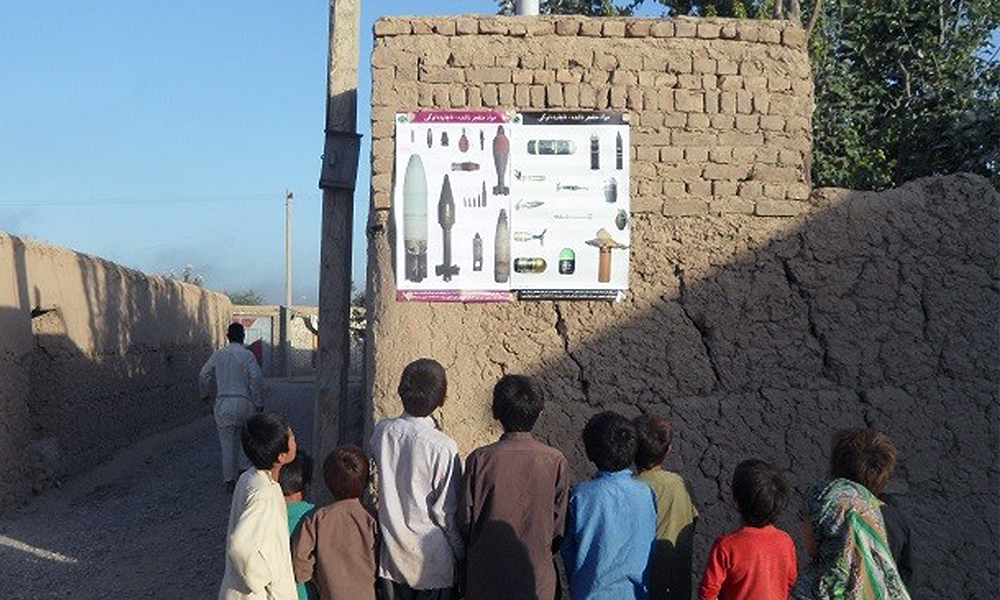
A blast caused by unexploded ordnance killed one person and injured three others in Afghanistan’s Parwan province, Taliban police said, highlighting the continued threat posed by leftover munitions.
The incident occurred on Tuesday afternoon in Bagram district when a 20-year-old man attempted to open a piece of unexploded ammunition, according to a statement from local Taliban authorities.
The man was killed in the explosion, while two girls and one boy were injured and transferred to the provincial hospital in Parwan, where they are receiving treatment.
Afghanistan remains heavily contaminated with landmines and unexploded ordnance left over from decades of conflict, with civilians — particularly children, frequently among the victims.
According to data released by Taliban disaster management authorities, at least 96 people were killed and 328 injured in the past year due to explosions caused by mines and unexploded munitions.
The agency said that between April 2025 and March 2026, a total of 225 such incidents were recorded, resulting in 474 casualties, including 321 children and 153 adults.
Unexploded ordnance continues to pose a major humanitarian risk across Afghanistan, especially in rural and previously contested areas where remnants of war remain buried or exposed. Limited awareness and economic hardship often lead civilians to handle such ordinance, increasing the likelihood of deadly incidents.
Provinces such as Kunar, Farah, Nangarhar, Herat and Kandahar have reported some of the highest numbers of such incidents, reflecting the widespread nature of the threat across the country.
Unexploded ordnance blast kills one, injures three in Parwan
They consider education essential for Afghanistan’s progress and therefore urge the Islamic Emirate to allow girls to return to classrooms.
A number of girls deprived of education in the country have once again called for the reopening of schools above the sixth grade so that, as they say, they can achieve their dreams.
Hosai and Masouma are among the girls left out of education who study together. These two friends are 10th-grade students who still hope for the reopening of schools.
Masouma said: “We have repeatedly expressed our demand, and once again I say that the wish of all girls is for schools to reopen so that we can achieve the dreams we have.”
They consider education essential for Afghanistan’s progress and therefore urge the Islamic Emirate to allow girls to return to classrooms.
Hosai, another student, said: “In every society, the foundation of a family is a woman and a girl. When a girl cannot study and does not receive proper education and upbringing, how can she raise a healthy child for society in the future?”
Meanwhile, UNICEF, which has repeatedly warned about the consequences of banning girls from schools, now reports that educational packages have been provided to more than four million schoolchildren in Afghanistan. UNICEF says every child deserves a safe learning environment and the necessary tools to build their future.
Daniel Timme, Chief of Communications for UNICEF Afghanistan, added: “Last year, we were able to report some important achievements in education. For example, we provided educational materials to 4 million children, trained more than 8,000 female teachers, and rebuilt 232 schools. We should also not forget education in emergencies. However, there is still much work ahead, and I would like to highlight two major challenges in education: learning poverty and the secondary education crisis. Learning poverty means that 90 percent of ten-year-old children in Afghanistan are unable to read simple texts or perform basic math calculations.”
This comes as more than forty days have passed since the start of the new academic year in Afghanistan, and so far the Islamic Emirate has said nothing about girls’ education.
Afghan Girls Renew Call for Reopening of Secondary Schools
Meanwhile, the High Commission for Addressing Migrants’ Problems has criticized the way Afghan migrants are being deported from Pakistan.
A number of Afghan migrants residing in Pakistan say that Pakistani authorities have asked them to demolish their homes and return to Afghanistan.
The Afghan migrants told TOLOnews, in recent weeks some families have been forced to destroy their shelters, an action that has left them facing severe economic conditions and psychological pressure.
Imran, an Afghan migrant in Pakistan, said: “I live in Pakistan; this is my home. We went through many problems in this house and built it, but now we were forced to destroy it. An order has been issued by Pakistan to return to our country.”
Malik Mujahid, another Afghan migrant in Pakistan, added: “This is my house, which I built with great passion. We were born in this house. I demolished this house with my own hands, and it was an order from the Pakistani government to destroy our homes and return to our country.”
Meanwhile, the High Commission for Addressing Migrants’ Problems has criticized the way Afghan migrants are being deported from Pakistan.
According to a statement from the commission, Pakistan delays returning migrants for days on the other side of the Torkham crossing under various pretexts.
Part of the statement reads: “Unfortunately, migrants returning to Afghanistan via Torkham are delayed for days on the Pakistani side for various reasons, while women, children, and the elderly are with them and face other problems, remaining stranded on the roads without a clear fate.”
Mohammad Khan Talebi Mohammadzai, a migrant rights activist, told TOLOnews: “The forced deportation of Afghan migrants from host countries, including Pakistan, has created many problems for migrants. In this regard, the Pakistani government should respect the rights of migrants residing in this country and not subject them to forced deportation.”
Finally, organizations supporting Afghan migrants have consistently described their situation in Pakistan as concerning—conditions that require immediate attention and humane solutions from relevant organizations.
Afghan Migrants in Pakistan Forced to Demolish Homes Amid Deportation
Mujahid calls on countries, like Russia, to independently establish good relations with Afghanistan, without considering pressure from powerful countries.
More than four and a half years have passed, and so far, except for Russia, no country has recognized the Islamic Emirate of Afghanistan. The spokesperson of the Islamic Emirate told TOLOnews that the reason is that some countries are not yet ready to engage with Afghanistan.
Zabihullah Mujahid calls on countries, like Russia, to independently establish good relations with Afghanistan, without considering pressure from powerful countries.
Zabihullah Mujahid, spokesperson of the Islamic Emirate, said: “We want other countries to also be independent in their calculations and decisions, and decide to establish good relations with Afghanistan.”
In part of his remarks, Mujahid, without naming any country, said that the intelligence agencies of some countries share incorrect information with the region and the world to create concerns about Afghanistan’s security, while according to him, this information belongs to the period before the Islamic Emirate returned to power in Afghanistan.
He insists that currently, there is no active armed group in Afghanistan that poses a threat to the world.
Zabihullah Mujahid said: “Before the Emirate, during the previous administration in Kabul and the presence of the United States, it had been predicted that there were 20 groups in Afghanistan, and they had even included the Islamic Party of Afghanistan among them.”
He also emphasized the presence of Islamic Emirate representatives in regional and international meetings, adding that participation in meetings can respond to concerns and properly reject baseless propaganda.
Mujahid adds that the Islamic Emirate’s policy in the war between Iran and the United States is neutral, and it has called for an end to the war.
Mujahid Calls on Nations to Recognize Afghanistan Without External Pressure
The United Nations has warned that declining humanitarian funding, driven in part by rising global conflicts and increased defense spending, is significantly slowing mine clearance operations in Afghanistan.
UN officials said the shortage of funds has directly affected efforts to remove landmines and unexploded ordnance, with devastating consequences for civilians. On average, one child is killed every day in Afghanistan due to explosive remnants of war.
Kazumi Ogawa, head of the UN mine action programme, said shifting national budgets toward military spending has reduced support for humanitarian initiatives.
“We are seeing the impact on the ground. In Afghanistan, one child is killed every day,” Ogawa said.
Afghanistan remains one of the most heavily contaminated countries in the world with landmines and unexploded remnants of war.
Experts warn that the continued presence of these hazards not only endangers lives but also hinders reconstruction, agriculture, and broader development efforts.
Meanwhile, Mohammad Yousuf Hamad, spokesperson for the National Disaster Management Authority, said 474 people were killed or injured in landmine explosions over the past year. He added that more than 1,000 square kilometres of land remain contaminated, placing at least seven million people at risk.
Currently, 155 demining teams are operating under 10 programmes across 23 provinces and 82 districts. However, officials say reduced international support is limiting their ability to expand operations.
Earlier, the United Nations Assistance Mission in Afghanistan reported that around 50 people are killed or injured each month by unexploded ordnance, with nearly 80 percent of victims being children.
UN warns funding cuts are slowing mine clearance efforts in Afghanistan
The incident is the latest test of a fragile ceasefire agreed between the two countries last month.
Afghanistan’s Taliban-led government has accused neighbouring Pakistan of killing three civilians in a cross-border attack, which Kabul has condemned as a “war crime”.
The incident on Monday marked the latest test of a fragile ceasefire between the two countries, brokered by China in April, following months of cross-border fighting that left hundreds dead and injured.
Afghanistan’s deputy government spokesman, Hamdullah Fitrat, said on X that 14 others were injured in the attack. He accused Islamabad of deliberately targeting civilian infrastructure, including homes, schools, a health centre, and mosques in Dangam, Kunar province, which lies along the border with Pakistan.
Islamabad has dismissed the allegations. The Ministry of Information and Broadcasting suggested Kabul may have staged the destruction, saying in a post on X that images released by Afghanistan showed damage inconsistent with artillery strikes. It said the incident could be part of a “propaganda effort” to discredit Pakistan, following cross-border attacks in March and April that killed nine people and that Islamabad blamed on its neighbour.
The rise in tensions comes as one person was killed late on Monday in Pakistan’s Khyber Pakhtunkhwa province, near the Afghan border, when security forces foiled a suicide attack at a checkpoint.
Several others were injured as security personnel opened fire on the attacker’s car, which was packed with explosives and heading towards a military post. The vehicle exploded before reaching its target.
Director of the Pak Institute for Peace Studies (PIPS) Muhammad Amir Rana told Al Jazeera that Pakistan faces multiple challenges in carrying out cross-border attacks.
“Precision is a real problem for Pakistan when it comes to its cross-border strikes. Effective and foolproof intelligence is the critical missing link – without it, controlling collateral damage becomes the central challenge. What we are also seeing is that Pakistan’s security situation has worsened considerably since the war on Iran began on February 28,” he said.
Rana added he was not hopeful of a diplomatic breakthrough anytime soon.
“Pakistan’s diplomatic capital is growing and it is not willing to offer any concessions to Kabul, while the Afghan side is asking why it should concede anything,” he said.
Islamabad accuses Afghanistan of harbouring Tehrik-e Taliban Pakistan (TTP), a Pakistani offshoot of the Afghan Taliban that is waging an armed rebellion against the government. Kabul denies the accusation.
Afghanistan accuses Pakistan of killing three civilians in ‘war crime’
The Taliban regained power in Afghanistan in August 2021, twenty years after their ouster by U.S. troops. Since then, all the progress for women made over the course of the U.S. occupation has been reversed, resulting in strict, fundamentalist rules, ongoing economic turmoil and severe restrictions on employment and education for women and girls.
Executive director of the Georgetown Institute for Women, Peace, and Security (GIWPS)Ambassador Melanne Verveer and GIWPS Director of Policy and Programs Kimberly Hart examine the ongoing, systematic oppression in Afghanistan. They discuss how climate and humanitarian crises affect women and girls and explore ways for the international community to bolster support for Afghan women’s resistance and strengthen accountability.
Q. Since the Taliban regained control in 2021, what have been the most significant changes in women’s daily lives, especially in education, employment and freedom of movement? How uniform are these restrictions across different regions?
A. The situation for women and girls in Afghanistan today is the worst in the world. The Georgetown Institute for Women, Peace, and Security (GIWPS) ranks Afghanistan #181 out of 181 countries for women’s wellbeing. The Taliban have engaged in systematic oppression regulating every aspect of women’s lives. Women are denied the right to an education, including midwifery training to stem child and maternal mortality. They can’t participate in the workplace outside their homes. They must be accompanied by a male guardian in public. They cannot access outdoor parks or raise their voices in public, even to recite the Quran. The burqa is the mandated dress code. The U.N. reports that nearly 80% of young Afghan women are out of education, employment or training, and the bans on girls education will increase child marriage by 25% and maternal mortality by at least 50%.
Over 100 edicts have been issued to essentially erase half the population, and the Taliban’s recent criminal regulations further violate women’s rights and entrench repression and violence. In a recent promulgation of the penal code, the punishments for abusing an animal are stiffer than those for abusing a woman. In the Taliban’s version of “justice,” a woman is basically considered property, akin to slavery. This is nothing less than gender apartheid.
Women across all of Afghanistan are suffering under this regime. Most of the legal restrictions imposed by the Taliban are national, but women’s experiences of these restrictions, as well as challenges ranging from poverty to the impacts of climate change, vary somewhat by region and in rural versus urban areas due to different local officials, enforcement, cultural norms and economics. A recent analysis of rural women in 12 regions painted a devastating picture of the situation of women, from access to healthcare and clean water to education and jobs, but it also showed variation across regions. Though it is important to note that while there are some unique challenges across different regions, discrimination against women and the suffering women and girls experience is a universal problem in Afghanistan.
A. Afghans are confronting a very serious humanitarian crisis. Food insecurity, the lack of healthcare and the growing lack of essential services have been exacerbated by deep reductions in international assistance and by the poor governance of the Taliban. The U.N. estimates that 45% of the population of Afghanistan is in need of humanitarian aid, while hundreds of millions of dollars worth of aid has been cut by the U.S., other countries and, as a result, the U.N.
This humanitarian crisis impacts all aspects of daily life for many Afghans. During the dry season from November 2025 to March 2026, over 17 million Afghans faced food insecurity. The European Commission has reported that nearly four million children are malnourished—approximately one in five—and about one million need medical treatment to survive. 37% of households lack soap for basic sanitation and hygiene, which can lead to outbreaks of illnesses. Public healthcare facilities are struggling to meet community needs, a problem deeply worsened by the Taliban takeover, and the country has one of the highest maternal mortality rates in the world. As UN Women notes, “Women are living shorter, less healthy lives.” The humanitarian crisis in the country is directly impacting a wide range of universal human rights, from the right to health and the right to water to the right to freedom from discrimination, which is obvious in all aspects of the Taliban’s rule.
Women and girls are uniquely impacted by all of these humanitarian crises due to social and cultural norms, as well as their erasure from public life and, therefore, economic opportunity and access. And women’s ability to provide services and aid in communities has also been affected, from the ban on UN female personnel to limited internet access for women.
Q. What role could international actors play in addressing these needs within a closed, autocratic, theocratic system like Afghanistan’s? What realistic policy options are available to the international community to improve conditions for women in Afghanistan without exacerbating harm to them? How can other countries and multilaterals balance diplomatic engagement with accountability?
A. One of the most damaging misconceptions by international actors is that in incredibly challenging environments with authoritarian governments, like Afghanistan today, nothing can be done. Far too often, international actors mistake complexity for intractability or futility. There are steps that the international community can take, today and in the near future, to improve the situation for women and girls in Afghanistan and push back on the Taliban’s repressive rule.
Kimberly Hart
First, humanitarian assistance is desperately needed. Funding cuts, pushback on efforts targeted to supporting women and lack of support for the multilateral system are all making a bad situation worse. The international community needs to step up its efforts to deliver humanitarian aid for Afghans while putting in place guardrails to ensure that assistance goes to those in need and not the Taliban.
Second, innovative approaches must be used to protect girls’ access to education and women’s access to employment and income, even amidst the challenges. This can range from temporary educational alternatives, including online school and home schools, to fostering opportunities for income generation for Afghan women—for example, connecting Afghan experts with virtual employment opportunities.
Third, the Taliban must be held accountable for their crimes, particularly those committed against women and girls. The pressure must be intensified and the stakes must be raised for the Taliban. The U.N.’s draft Crimes Against Humanity Treaty offers a concrete opportunity to create a new legal category for “gender apartheid.” Apartheid itself is already an international crime, defined as the “inhuman acts committed for the purpose of establishing and maintaining domination by one racial group of persons over any other racial group of persons and systematically oppressing them.” Women and girls are experiencing this same systematic repression and domination, and by establishing a new crime, the Taliban could be held accountable in the future. There are also other legal avenues to pursue justice, including international courts as well as the use of universal jurisdiction. Afghan women recently showed the world the clear legal arguments about crimes against humanity in Afghanistan via a people’s tribunal, and now is the moment for those arguments to be elevated in formal courts around the world. Additionally, sanctions and visa bans should continue to be a key tool to hold Taliban officials accountable.
Fourth, the international community must empower the participation of Afghan women in any peace talks or formal negotiations. It must be clear and unequivocal that no progress can be made without women’s full, meaningful involvement as a prerequisite.
Finally, the international community must continue speaking out against the crimes of this regime and in support of Afghan women and girls. The more time passes, the easier it is for the world to focus on the next global crisis. International actors must never forget and always uphold their commitment to Afghanistan and use every avenue—diplomatic, legal, economic—to pressure the regime while supporting Afghan people. Last year, Russia became the first country to formally recognize the Taliban government; other countries must not follow suit. Non-recognition of the Taliban is essential. We cannot normalize brutal regimes that violate human rights.
All of these steps require investing in solutions that Afghans identify and supporting Afghan-led efforts. And there are many other actions that the international community can take. The international community must demonstrate a clear unwavering commitment to the Afghan people and work to better understand what the needs are and what solutions Afghan themselves have already identified.
Q. There have been reports of Afghan women organizing and resisting restrictions in various ways. What forms of agency or resilience are you seeing among women on the ground, and what risks do they face in doing so?
A. Every day, women inside and outside Afghanistan demonstrate their agency, bravery, commitment and creativity, finding ways to push for their rights and their needs, but it’s not easy, and many take great risks in doing so. Some women are taking great risks in defying prohibitions, including seeking out education, speaking out and documenting human rights abuses and even engaging in protests. There are a range of reported punishments from imprisonment to harassment and even death. Yet despite the challenges, women inside Afghanistan are pushing back and supporting each other.
A group of women covered in blue burqas walking outdoors in Afghanistan, 2023.
Girls in particular are especially desperate to continue their education. Before the Taliban returned to power, they were enrolled in schools, getting degrees and engaging in all kinds of pursuits, from robotics to sports competitions. Today, the Taliban are snuffing out their dreams, but many are refusing to give up, seeing education as a form of resistance. And education for girls is widely supported in the country: a recent UN Women survey found that 92% of respondents believe that “it was ‘important’ for girls to continue their schooling, with support cutting across rural and urban communities.” Girls are seizing whatever opportunity is available to learn, from secret schools in homes to online opportunities. If discovered, they can pay a heavy price. Sadly, at the same time, suicide rates are rising out of a sense of hopelessness, and roughly 80% of suicide attempts in the country are committed by women.
The Taliban’s brutal repression of women continues every day in Afghanistan, including targeting women themselves as well as their families and loved ones. This manifests both through its broad criminal code and edicts as well as through targeted attacks of former government officials, those seen as Western allies and communities perceived as anti-Taliban. And increasingly, the Taliban is resorting to transnational repression, harassing its critics outside of the country.
Q. In your opinion, are overall conditions for women in Afghanistan any better in 2026 than they were before the U.S. invasion in 2001?
A. This is a challenging question, because the Taliban has been consistent in their oppression of women and girls, both in the first Taliban regime and today. That is why there was great apprehension over the Taliban takeover in 2021, and so many experts on women’s rights warned about the risks. While the Taliban told the world they would be good for women and girls and their good treatment would be consistent with Islam, as Maya Angelou said, “When someone shows you who they are, believe them the first time.” The Taliban returned to an extremist version of Islam, not condoned in any other Islam-majority country or with many of the teachings of the Quran. The harshest practices have returned and in some ways have gotten even more extreme since the emboldened Taliban took power, with more systematic repression and rollback of key progress made before 2021. As the global backlash on women intensifies today, it only gives more leeway to the Taliban to continue their brutal repression. The world must respond by doubling down on its support for Afghan women and girls and their demands for freedom, dignity and equal rights.
Five questions on the status of women’s and girls’ rights in Afghanistan
The United Nations says aid workers are still in a “race against time” to remove rubble and rebuild after the devastating earthquake struck eastern Afghanistan last month, killing at least 2,200 people and cutting off remote areas.
The 6.0-magnitude quake on Aug. 31 was shallow, destroying or causing extensive damage to low-rise buildings in the mountainous region. It hit late at night, and homes — mostly made of mud, wood, or rocks — collapsed instantly, becoming death traps.
Satellite data shows that about 40,500 truckloads of debris still needs to be cleared from affected areas in several provinces, the United Nations Development Program said Wednesday. Entire communities have been upended and families are sleeping in the open, it added.
The quake’s epicenter was in remote and rugged Kunar province, challenging rescue and relief efforts by the Taliban government and humanitarian groups. Authorities deployed helicopters or airdropped army commandos to evacuate survivors. Aid workers walked for hours on foot to reach isolated communities.
“This is a race against time,” said Devanand Ramiah, from the UNDP’s Crisis Bureau. “Debris removal and reconstruction operations must start safely and swiftly.”
People’s main demands were the reconstruction of houses and water supplies, according to a spokesman for a Taliban government committee tasked with helping survivors, Zia ur Rahman Speenghar.
People were getting assistance in cash, food, tents, beds, and other necessities, Speenghar said Thursday. Three new roads were under construction in the Dewagal Valley, and roads would be built to areas where there previously were none.
“Various countries and organizations have offered assistance in the construction of houses but that takes time. After the second round of assistance, work will begin on the third round, which is considering what kind of houses can be built here,” the spokesman said.
Afghanistan is facing a “perfect storm” of crises, including natural disasters like the recent earthquake, said Roza Otunbayeva, who leads the U.N. mission to the country.
 Afghanistan Peace Campaign