The Taliban’s ban on girls studying at high schools will become a de facto ban on university degrees for women if it stays in place, a Taliban spokesperson and university officials have said.
Girls will not have the documents needed to enrol in higher education, or the academic capacity to start university courses after nearly a year out of school.
“Automatically if we do not have high school graduates, we won’t have new female university students any more,” said Maulawi Ahmed Taqi, a spokesperson for the Taliban’s ministry of higher education.
“But I am hopeful that the ministry of education will come up with a policy and soon reopen the schools. Because we have realised that it is important, and the ban on girls’ education is temporary.”
Even if practical barriers to women entering higher education are removed in the coming months, authorities are also considering limiting them to degrees in healthcare and education, said a source with Taliban leadership ties.
Without a high school graduation certificate, Afghan students cannot take the kankor national university entrance exam, which is required to enrol even at private colleges.
Last year, the Taliban automatically “graduated” female twelfth grade students, making them eligible for the exam, should they want to attempt it when the new government holds one.
But Afghanistan’s new rulers have not yet scheduled a session of the kankor since they took control of the country.
In the growing pool of would-be university students, women are already at a disadvantage competing against men who have been allowed to finish school. In the final weeks of 2022, when the Afghan school year ends, another class of boys will take their final 12th-grade exams.
It is not clear whether the Taliban will once again issue otherwise meaningless “high school graduation certificates” to girls who should be finishing with them. Afghan law bars them from taking the entrance exam without one.
Even if they are allowed to take part, university officials who handle admissions say they are worried how far girls will be falling behind, after nearly a year barred from education.
Extra classes can help make up for a few missed months, but girls who did not even finish 11th grade cannot be expected to move on to university classes, said Dr Azizullah Amir, president and founder of the all-female Moraa university.
He set up the university to educate female medics, after his own mother died from septic shock having refused to see a male doctor about an infection on her thigh. “A beautiful life was ruined by the loss of my mum to a highly preventable infection,” he said. “How could I sit quiet when I could prevent other children becoming orphaned early for a silly reason.”
Students, teachers, administrative staff and even gardeners are all women, helping draw in students from Afghanistan’s most conservative regions. It offers a stricter segregation than the Taliban has required of government universities, Amir points out, yet it is now at risk of being unable to enrol new students.
“Even now we have time, if they restart classes, in the remaining months of the year we can graduate students, with more effort and support including intensive classes,” he said. “But if it continues, then next year you won’t have students in the university, apart from those who graduated in previous years, which will be small numbers.”
Online classes and illegal underground schools have allowed some girls to keep studying, including in parts of the Taliban’s deeply conservative southern heartland, but these efforts only reach a tiny minority.
Because secret schools are private initiatives, most have to charge fees to at least cover their costs, and the economic catastrophe that engulfed Afghanistan means few families can afford them.
Streaming or downloading classes requires at least a smartphone and a generous data package, again out of reach for many of the girls who were the first in their family to reach high school.
Afghanistan’s new leaders have repeatedly claimed that they support women’s education, as long as it complies with their definition of Islamic regulations.
This includes near total separation of the sexes, although male professors still teach some women’s classes due to a shortage of specialists.
Taqi pointed to the ministry’s efforts to shift schedules and reallocate buildings, so that women can attend single-sex classes, as a concrete demonstration of that support.
Some universities, including the leading Kabul University, now teach men and women on alternate days. Others have morning and afternoon shifts.
“Our ministry is committed, we have plans, policies, procedures and as you see education in university is going on for both girls and boys,” he said.
But without a pathway to enrol new students, or should the Taliban bring in plans to limit what women can study, those changes will be little more than a temporary accommodation for the last classes of female students in many subjects.
“They want to restructure the universities, to streamline girls’ education to specific faculties,” said the source with Taliban links. “They [ask]: ‘Why should girls study engineering?’
“They will be restricted to specific faculties, medicine, education, sharia. I don’t even believe they are going to be that progressive to allow them to be doctors.”
Lutfullah Qasimyar contributed reporting
Taliban policies risk de facto university ban for Afghan women, say officials
Last week, Uzbekistan convened an international conference on Afghanistan. Envoys of at least 20 countries and organizations attended the conference.
Attending a session held at the Ministry of Foreign Affairs on Monday, the acting foreign minister said the Tashkent International conference was a good opportunity for engagement between the international community and Afghanistan.
Minister Amir Khan Mutaqqi urged countries to accredit Islamic Emirate diplomats in order to create official engagement.
Mutaqqi further said that the conference was constructive for the Islamic Emirate.
“They announced support for engagement, in addition to this they stressed the need for the release of Afghanistan’s assets and the removal of bans,” said Minister Amir Khan Mutaqqi.
The acting foreign minister praised the activities of Afghanistan’s political mission in Uzbekistan.
At the conference, the Central Asian countries expressed willingness to connect to South Asia through Afghanistan.
“At the meetings with Central Asian countries, the issue of connecting Central Asian countries to South Asia through Afghanistan was discussed. The issue of increasing economic and trade relations with Afghanistan was also discussed,” said Amir Khan Mutaqqi.
Countering insurgency, upholding human rights, in particular girls’ education, and the forming of a government acceptable to the Afghan people were key demands at the Tashkent conference.
The countries also said they are seeking to increase economic relations through Afghanistan with South Asian countries, but they are concerned about insurgency in Afghanistan.
“The Central Asian countries’ engagement is important for Afghanistan. If the Taliban-led government wants good relations and engagement with these countries, the government (Afghan government) must attempt to remove these concerns,” said Assadullah Nadim, military expert.
“Uzbekistan wants peace and stability in Afghanistan, where explosions and killing do not happen, and Uzbekistan wants a developed economy for Afghanistan,” said Meer Asrar Ahraraf, Uzbek journalist.
Last week, Uzbekistan convened an international conference on Afghanistan. Envoys of at least 20 countries and organizations attended the conference.
Tashkent Mtg Participants Show Readiness to Engage With Kabul
This comes as on Sunday Da Afghanistan Bank on Twitter said that a cash aid package of more than $40 million arrived in Kabul.
UN Development Program Resident Representative in Afghanistan, Abdallah Al Dardari, said that more than 700,000 jobs have been lost since Aug 2021 in Afghanistan.
Speaking by video to a meeting of the Arab Coordination Group, Dardari asked for help to create 2 million jobs for Afghan women and men in the next three years.
“At the moment, we are facing a universal poverty situation of levels above 90 percent,” he said.
Meanwhile, the Ministry of Economy said that the acting government has been trying to draw international support for economic and trade sectors in Afghanistan.
“There are problems but the opportunities are greater than the problems. The international community’s aid could be effective for the Afghan situation,” said Abdul Latif Nazari, deputy Minister of Economy.
Afghanistan faces the worst humanitarian crisis in the world according to humanitarian agencies, with the country’s more than $9 billion in assets being frozen by the international community after the Islamic Emirate swept into power last mid-August.
Atiqullah, 40, who has a background of working with private and government organizations, is now forced to engage in street work to make ends meet.
“Who hears us? To whom should we share our problems? No one hears us but God,” he said.
“Our problem is unemployment. The situation is very deteriorated in the city. When you look toward the people, everyone is anxious,” said Abdullah, Atiq’s son.
This comes as on Sunday Da Afghanistan Bank on Twitter said that a cash aid package of more than $40 million arrived in Kabul.
UNDP in Afghanistan Chief Concerned by Afghan Situation
Several similar incidents have taken place since the Taliban’s armed takeover of Afghanistan in August 2021.
Tehran, Iran – A border fight between the forces of Iran and Afghanistan’s Taliban has left one dead, according to a local Afghan official.
Mawlawi Mohammad Ebrahim Hewad, the Islamic Emirate’s border commander in the province of Nimroz, was quoted by Afghanistan’s TOLOnews as saying that one Taliban soldier has died and another has been wounded on Sunday.
He claimed Iranian forces began the fighting that he said took place in the Kong district in Nimroz.
The Reuters news agency also quoted a police official in Nimroz as saying a member if the Taliban forces had died.
Iran’s state-run IRNA did not comment on the reported casualty, but said the fight was started by Taliban forces.
According to IRNA and the semiofficial Tasnim news outlet, fighting began when Taliban forces entered Iranian soil in Hirmand, located in the province of Sistan and Balochistan, and tried to raise their own flag.
They said Taliban forces have once more mistaken a wall that has been constructed to constrain smugglers, and does not actually represent the border between the two countries.
“With a wrong understanding of the borderline, Taliban forces imagine the wall is the border between Iran and Afghanistan while it isn’t,” Tasnim said. “Iranian border officials have tried to make them understand this for the past few months.”
A short video circulating on Iranian social media on Sunday purportedly showed Iranian forces firing shells from the back of a truck in the border area.
The first such publicised incident, which didn’t result in any casualties, came in December and was called a “misunderstanding” by both countries’ authorities.
Iran has yet to officially recognise the Taliban as the government of Afghanistan, maintaining that its recognition would hinge on forming an “inclusive” administration.
The two have also been at odds over Iran’s water rights from the Helmand river, which the Taliban has yet to grant despite recognising the right.
Border fight between Iran and Taliban kills one: Afghan official
KABUL/WASHINGTON, July 26 (Reuters) – U.S. and Taliban officials have exchanged proposals for the release of billions of dollars from Afghan central bank reserves held abroad into a trust fund, three sources familiar with the talks said, offering a hint of progress in efforts to ease Afghanistan’s economic crisis.
Significant differences between the sides remain, however, according to two of the sources, including the Taliban’s refusal to replace the bank’s top political appointees, one of whom is under U.S. sanctions as are several of the movement’s leaders.
Some experts said such a move would help restore confidence in the institution by insulating it from interference by the Islamist militant group that seized power a year ago but which foreign governments do not recognise.
Freeing up cash may not solve all of Afghanistan’s financial troubles, but it would provide relief for a country hit by a slump in foreign aid, persistent drought and an earthquake in June that killed 1,000 people. Millions of Afghans are facing a second winter without enough to eat.
While the Taliban do not reject the concept of a trust fund, they oppose a U.S. proposal for third-party control of the fund that would hold and disburse returned reserves, said a Taliban government source who spoke on condition of anonymity.
The United States has been in talks with Switzerland and other parties on the creation of a mechanism that would include the trust fund, disbursements from which would be decided with the help of an international board, according to a U.S. source who also declined to be named in order to discuss the matter.
A possible model could be the Afghanistan Reconstruction Trust Fund, a World Bank-administered fund created to get donations of foreign development assistance to Kabul, the U.S. source added.
“No agreement has been reached yet,” said Shah Mehrabi, an Afghan-American economics professor who is on the Afghan central bank’s supreme council.
The U.S. State Department and Switzerland’s Federal Department of Foreign Affairs declined to comment. The Afghan central bank did not respond to requests for comment.
SIGNIFICANT PORTION
U.S. Special Representative for Afghanistan Thomas West, speaking at an Afghanistan-focused conference in Uzbekistan on Tuesday, welcomed the dialogue.
“We have made it clear that a future recapitalisation of the (Afghanistan) central bank and the Afghan financial system is possible provided that reasonable and serious steps are taken to professionalise the central bank, to enhance its AML/CFT (anti-money laundering and counter-terrorist financing) architecture and its independence,” he said.
Some $9 billion in reserves have been held outside Afghanistan, including $7 billion in the United States, since the Taliban overran Kabul last August as U.S.-led forces withdrew after 20 years of fighting the militants.
Foreign governments and rights groups have accused the Taliban of abuses including extrajudicial killings during and after the insurgency, and the movement has curtailed women’s freedoms since regaining power.
The international community wants the group to improve its record on women’s and other rights before officially recognising it.
The Taliban have promised to investigate alleged killings and say they are working to secure Afghans’ rights to education and free speech within the parameters of Islamic law.
‘POSITIVE MOVE’
At talks in Doha last month, the Taliban submitted to U.S. officials their response to the U.S. proposal for a mechanism to free up Afghan assets, said Mehrabi, the Taliban official and a senior diplomat.
Experts cautioned that releasing funds would bring only temporary relief and new revenue streams were needed to replace direct foreign aid that financed 70 percent of the government budget before it was halted after the Taliban takeover.
But the exchange of proposals was seen by some as a glimmer of hope that a system can be created that allows for the release of Afghan central bank funds while ensuring they are not accessed by the Taliban.
Negotiations on the assets and other issues faltered after Washington cancelled meetings in Doha in March when the Taliban reneged on their promise to open girls’ high schools. read more
“It is a positive move overall,” that the Taliban did not reject the U.S. proposal, said Mehrabi, who added that he had not seen the Taliban counter-offer.
The Taliban official said the group was open to allowing a State Department-appointed contractor to monitor Afghanistan’s central bank compliance with anti-money laundering standards, and that monitoring experts would be able to go to Afghanistan.
But the Taliban were concerned the U.S. idea could create a parallel central banking structure, the official added, and were not prepared to remove top political appointees including deputy governor Noor Ahmad Agha, who is under U.S. terrorism sanctions.
The U.S. source denied the proposed trust fund would amount to a parallel central bank.
INITIAL TRANCHE
Negotiations have focused on an initial release of $3.5 billion that U.S. President Joe Biden ordered set aside “for the benefit of the Afghan people” out of $7 billion in Afghan reserves held by the Federal Reserve Bank of New York.
The other $3.5 billion is being contested in lawsuits against the Taliban stemming from the Sept. 11, 2001, attacks on the United States, but courts could decide to release those funds too.
West in February said funds set aside by Biden potentially could be used to recapitalize a reformed central bank and the paralyzed banking system.
Afghanistan’s economy went into freefall after the Taliban takeover, with the central bank’s foreign-held reserves frozen, Washington and other donors halting aid and the United States ending deliveries of hard currency.
The banking sector all but collapsed and the national currency, the Afghani, plummeted.
The World Bank says it has strengthened, although shortages of dollars and Afghanis persist. High unemployment and soaring prices, fuelled by drought, the COVID-19 pandemic and Russia’s invasion of Ukraine, worsened the humanitarian crisis.
Experts said releasing foreign-held funds to the central bank would help it stem the crisis.
“You need a central bank regulating the value of the currency, regulating prices, ensuring liquidity for imports,” said Graeme Smith, a senior consultant for the International Crisis Group. “This is not optional (or) people won’t eat.”
Reporting by Charlotte Greenfield and Jonathan Landay; Additional reporting by Michael Shields in Zurich and Mukhammadsharif Mamatkulov in Tashkent; Editing by Mike Collett-White and David Holmes
US and Taliban make progress on Afghan reserves, but big gaps remain
KABUL (Pajhwok): Foreign Minister Amir Khan Muttaqi on Tuesday said their government had firm determination to transform Afghanistan into the center of peace, stability and economic cooperation.
“We seek stability for both us and the world. Stability in Afghanistan not only guarantees stability in the entire region, but Afghan stability is a key cog for regional economic prosperity and development,” Muttaqi said, while addressing participants of an international conference in Tashkent, Uzbekistan.
He said economic centralism was a fundamental pillar of the caretaker government’s new foreign policy.
“The time has come for Afghanistan to practically transform into the crossroad of Asia. Reliable security, serious political will and transparent administrative structure are elements conducive for achieving this end,” he said.
He said Afghanistan was the closest and cheapest trade route between Central and South Asia.
“We have made a commitment with the international community in the Doha Agreement that no group or individual will be allowed to use the soil of Afghanistan against another country.”
He said the Taliban viewed regional and world security interconnected with the security of Afghanistan.
He said they expected the United States to fulfill their part of the commitments made in the first part of the Doha Agreement.
“Our defense and security forces have made good progress against Daesh. Following failed efforts to disrupt security on Uzbekistan border in recent months, our security forces launched operations against the perpetrators — killing some and detaining others. We will not allow Daesh or any other group to use the territory of Afghanistan against another country.”
Muttaqi also urged the United States to unconditionally release all reserves of the Afghan central bank and lift all economic sanctions on Afghanistan.
“This is a fundamental step towards normalization of relations, and this action will have a positive impact on the mindset of Afghans vis-a-vis America. We also call on other world countries to begin official engagement with the Islamic Emirate of Afghanistan to secure long-term legitimate bilateral interests.”
“The strategic location, vast natural resources, and availability of diligent and affordable manpower in Afghanistan under the shade of reliable security and sincere political determination is an excellent investment opportunity.”
He said their government managed to establish security, revive the security sector, maintain government infrastructure and personnel, continue providing basic services to citizens.
“For the first time ever declare a national budget purely reliant on state revenues, uproot corruption and assure objective inclusivity”.
Muttaqi said their supreme leader laid the foundation for a culture of tolerance and acceptance and ended the disastrous four-decade tradition of revenge.
“Not only was a general amnesty enforced, but workers from the previous administration continue work in mid-level all the way up to director and deputy minister positions.”
The Islamic Emirate has created a contact group for return of former political figures at Prime Minister’s Political Deputy level where majority members are state Ministers.
He said the Islamic Emirate believed that Afghanistan was the shared home of Afghans and all had a right to a dignified life in their homeland.
Time for Afghanistan to change into Asia crossroad: Muttaqi
The country has been out of the spotlight since US forces left but environmental disasters and the threat of another food crisis should be front-page news
The main attention Afghanistan gets these days is when big international aid agencies put together posters of hungry women and children for donations, or when a calamity like the June 2022 earthquake hits.
But as you are reading these lines, many towns and villages in the war-ravaged country remain submerged by flash floods triggered weeks ago by a relentless spate of untimely rains and melting glaciers, claiming lives and destroying livelihoods of marginalised communities already surviving on small amounts of foreign aid.
It’s currently peak summer harvest season when farmers gather fruits and collect staples for the approaching winter. But it snowed briefly in the central highlands after long and crippling dry spells, when farmers were desperately longing for the usual spring season rains.
Then came violent hail storms destroying orchards and eventually rain that ruined the wheat crops. None of these events are anywhere near normal in terms of the climate of this landlocked country of nearly 40 million people.
The glaciers in the Himalayas are melting at an unmatched pace, bringing the deadly floods from the mountains of the northern provinces all the way down to the plains in the south. These fast-depleting glaciers are the lifeline of Afghans who rely heavily on the natural streams and rivers. Despite this, there has been no development work on water preservation, storage and distribution over the past couple of decades on a national level. The underground levels are dropping at an alarming rate as it is the only way for locals to look for water.
Prior to the latest downpours, the drought was so severe and the heatwave so intense it led to multiple occurrences of forest fire in the country’s east and south. This was a grim tragedy. Locals in the fire-affected Khost and Nuristan provinces had to rely on youth from the local communities to put out the fires by carrying buckets of water and sand with their bare hands, day and night.
The climate crisis is so real in the country that it will likely trigger another food crisis in the months to follow. All this at a time when the delivery of aid is hampered and overshadowed by the Russian invasion of Ukraine, leading to supply chain disorders, inflation and donor fatigue.
Is the media solely to blame for this? No. Could they do more to help? Yes. Just as the major environment polluters must take responsibility for the miseries they have inflicted upon a population that has been left at the mercy of the Taliban.
Amid all this, Afghanistan’s neighbours have manipulated the situation to their advantage with dodgy deals with the Taliban that would give them access to the country’s rich natural resources at throwaway prices, propping up a funding stream for the defecto regime.
Afghan earthquake survivors dig by hand as rescuers struggle to reach area
China also has its eyes on Afghanistan’s rich and extensive lithium, iron and copper ore reserves while Pakistan has accelerated the import of high-grade coal at bargain prices, which is only going to accelerate the melting of the Himalayan glaciers as well as increasing global pollution levels. For Pakistan, a country grappling under tough financial conditions, a steady flow of coal will help fire up power plants and revive the ailing railway network.
The quest for coal even prompted Pakistani authorities to make non-stop border-crossing arrangements during the day and night – a privilege that was not even offered during the peak of the war when thousands of war-weary Afghans were fleeing the country in all directions.
The search for Afghanistan’s untapped mineral wealth even attracted Australia’s richest man, Andrew Forrest, to the country just weeks before the Taliban takeover.
Reporting on environmental disasters in Afghanistan is important, as it would serve as a catalyst for the entire green movement around the world to hold deniers and polluters to account.
The local media – the few surviving outlets post the Taliban takeover – is unable or unwilling to critically report on all of this because of obvious fears of retaliation. And for the international media, the Afghanistan story seems to have hit a dead-end of sadness, with nothing new or “exciting’ for the international media or its consumers.
One can dispute matters of politics in the country, but the climate calamity Afghanistan is facing is imposed from outside. It’s time the world, and neighbouring and regional polluters, take responsibility.
Shadi Khan Saif is an Afghan journalist based in Melbourne
Afghanistan is facing a climate calamity – it’s time the world took notice
A veteran war reporter in Afghanistan was told she would go to jail if she didn’t tweet an apology for her reporting. She has since safely left the country.
The Taliban forced a longtime war correspondent to publicly retract some of her articles this week, telling her that she would go to jail if she did not, she said, in the latest crackdown on press freedom in Afghanistan.
The reporter, Lynne O’Donnell, an Australian who writes for Foreign Policy and other publications, explained her circumstances on Wednesday, after she had safely left Afghanistan.
“They dictated. I tweeted,” she wrote on Twitter. “They didn’t like it. Deleted, edited, re-tweeted. Made video of me saying I wasn’t coerced. Re-did that too.”
In an article on Wednesday in Foreign Policy, Ms. O’Donnell wrote that Taliban intelligence agents had “detained, abused and threatened me.”
She said the Taliban had taken issue with articles that she wrote in 2021 and 2022 about the threat of forced marriages by Taliban fighters and the violence facing L.G.B.T.Q. people living in Afghanistan. She wrote that one intelligence officer had told her that “there are no gays in Afghanistan,” while another had told her that he would kill anyone he learned was gay.
Taliban officials denied Ms. O’Donnell’s narrative of events, claiming that she appeared to continue to report in the country after being denied press credentials this week.
“Ms. Lynne O’Donnell, upon arriving to Afghanistan, was denied a permission letter to operate due to her open support for armed resistance against the current government, and falsifying reports of mass violations and sexual slavery by government officials,” Abdul Qahar Balkhi, a spokesman for the Ministry of Foreign Affairs, said in a statement.
The forced retraction by a Western journalist underscores the increasing restrictions on the press in Afghanistan, where new leadership that promised to allow media freedom is instead harassing and detaining journalists.
A United Nations report released Wednesday found that in the 10 months since the Taliban took control of Afghanistan, 173 journalists and media workers were subject to human rights violations, including arrests, torture and threats. Six journalists were killed in that period, five of them by ISIS militants, and the other from unclear circumstances.
“What the Taliban leadership says is not in line with how the lower-level Taliban act toward the media, so the situation is getting worse, with a lot of censorship,” said Susanna Inkinen, an Afghanistan adviser for International Media Support, a nonprofit.
She said the amount of freedom that journalists had was dependent on the province and the local Taliban. “People are much more careful what they report, how they report,” she said. “There are issues people don’t cover anymore.”
Ms. Inkinen said she wasn’t aware of any other case in which a reporter had been forced to publicly walk back reporting.
In one of the coerced tweets, posted on Tuesday, Ms. O’Donnell wrote: “l apologize for 3 or 4 reports written by me accusing the present authorities of forcefully marrying teenage girls and using teenage girls as sexual slaves by Taliban commanders. This was a premeditated attempt at character assassination and an affront to Afghan culture.”
In another, she said: “These stories were written without any solid proof or basis, and without any effort to verify instances through on-site investigation or face-to-face meetings with alleged victims.”
Ravi Agrawal, the editor in chief of Foreign Policy, said the publication stood by Ms. O’Donnell’s work and its continuing coverage of Afghanistan.
“The fact that the Taliban forced her to retract her reporting via a tweet speaks for itself,” Mr. Agrawal said.
He added: “We will continue to report on Afghanistan from afar and publish expert analysis as we have long done. Lynne’s ordeal is confirmation that reporting from inside Afghanistan is becoming more and more dangerous.”
In an interview from Pakistan on Wednesday, Ms. O’Donnell said the ordeal had lasted about four hours.
“The only thing I had in my mind that was my only protection is that they are desperate for diplomatic recognition that will give them legitimacy as the government of Afghanistan, and they don’t have that,” she said.
Ms. O’Donnell, who now lives in London, was the Afghanistan bureau chief for The Associated Press and Agence France-Presse from 2009 to 2017. She also reported from the country in the lead-up to the withdrawal of U.S. forces last year.
She returned to Kabul, the capital, on Sunday to see what had happened to the country in the year since she left.
She said local journalists had been detained, beaten and killed, with many leaving the country.
“Their media organizations have been closed or forced to accept whatever line the Taliban gives them,” Ms. O’Donnell said, adding of the coverage: “It’s a black hole. The light has gone out.”
John Sifton, the Asia advocacy director of Human Rights Watch, said both Afghan and international journalists faced increasing restrictions.
“To human rights groups, what’s most alarming is that the restrictions make it harder and harder to know what’s going on around the country on a day-to-day basis,” he said.
Mr. Sifton said that while it was a concern that Ms. O’Donnell had been detained, the greater risks were to people she had spoken with and the local staff who had worked with her and remained in Afghanistan.
“There are still working Afghan journalists trying to do their job, and they are facing far greater threats than any of the expatriates,” he said.
Katie Robertson is a media reporter. She previously worked as an editor and reporter at Bloomberg and News Corporation Australia.
A version of this article appears in print on July 21, 2022, Section B, Page 4 of the New York edition with the headline: Reporter Says Taliban Forced Her to Publicly Retract Some Articles.
Reporter Says Taliban Forced Her to Publicly Retract Accurate Articles
Oil from the versatile plant makes cannabis medicine CBD and its fibre has a range of uses but the Taliban need convincing
Amin Karim, photographed behind his home in Kabul, where some of the genetically modified hemp plants he is trying to promote as an alternative to opium poppy cultivation in Afghanistan grow as weeds. Photograph: Nanna Muus Steffensen/The Guardian
The smell seemed unmistakable, the dried buds looked familiar and the Taliban checkpoint guards, who had never heard of CBD, a non-psychoactive cannabis compound, were disgusted by the pungent cargo of Amin Karim’s truck.
“They said to me: ‘Aren’t you ashamed of yourself, Haji?’” using an honorific for an older man, as they poked through the piles of hemp headed for Kabul last October.
He tried explaining to them that there was nothing in the plants that would make anyone high. Instead they were part of a new project to tackle Afghanistan’s opium industry, which supplies most of the world’s heroin and has spawned terrible addiction problems at home.
But the CBD revolution hasn’t really reached Taliban-controlled Afghanistan, and the country’s new rulers have promised a crackdown on drug production.
Karim’s standing as a veteran of the resistance against Soviet invaders, former peace negotiator and presidential adviser, and senior figure in the influential Hezb-i-Islami party, held no weight with the men searching for contraband.
Convinced they could trust the evidence of their eyes and noses, they had no patience for his attempts to explain that the crop was grown from genetically modified seeds, so that the plants did not produce any tetrahydrocannabinol (THC), the primary psychoactive ingredient in marijuana.
Amin Karim and his daughter Rayhana in a small field behind their home in Kabul on 21 July, where some of the genetically modified hemp plants have been harvested. Photograph: Nanna Muus Steffensen/The Guardian
“They took it all away, and probably burned it. We were really scared they might take us and imprison us and say we had been dealing narcotics,” said his daughter Rayhana Karim, who gave up a career as a London restaurateur last year to move to Afghanistan and focus on humanitarian work.
The rest of that trial crop, which should have been worth up to €6 a gram in European markets, is in storage. After the Taliban takeover, Afghan labs could no longer provide the international certificates needed for export.
But the Karims and the charity they are working with, Hemp Aid, have not given up, working instead on alternative certification in Pakistan for exports, and persuading the Taliban to approve the new crop for production in Afghanistan.
They are convinced that in hemp the country could find a solution not only to opium, but also to the terrible malnutrition that cripples Afghan lives. A longstanding problem has been made far worse by the economic collapse that followed the Taliban’s takeover last August.
One strain of the plant produces CBD oil, but another – hemp fibre – can be used to make protein-rich hemp flour. By weight it provides as much protein as beef or lamb, as well as many other nutrients, and the group hope to use it to enrich the wheat bread that is an Afghan staple.
In recent trials with a local bakery they found that mixed in with wheat flour at 7%, it doesn’t affect taste (higher levels of hemp were unpopular) but makes each piece of bread seven or eight times more nutritious.
They are due to plant their first fields of hemp fibre plants in two eastern provinces next week. They hoped the crop might be less controversial than CBD plants because it doesn’t have much of a scent and looks more like sugar cane than a field of narcotics, but 400kg of imported seeds are currently stuck in airport customs.
Karim is talking to the Taliban leadership about getting the hemp seeds released, and CBD production approved. “We need to take this slowly and do some education as our mullahs don’t know much about this [crop],” one senior Taliban official told him.
Hemp is relatively easy to grow, store and transport and uses less water than opium, says Hemp Aid co-founder Babur Kabiri. This is a vital consideration in a country that is already badly affected by rising global temperatures, and last year endured the worst drought in decades.
It is also valuable, essential for any attempt to ban opium farming. Two decades of eradication efforts by the US-backed governments of the Afghan republic led only to record crops. Despite Taliban promises to eradicate opium, fields flourished across the country this year.
Saffron, roses and pomegranates were touted as substitutes but proved hard to harvest, store or transport, or there was no room for new producers in well-established markets.
Last year, Afghanistan’s illegal opiate economy was worth between $1.8bn and $2.7bn, the United Nations estimated. Opiates earned more than all legal exports of goods and services combined, and supplied eight out of 10 users globally. Replacing such a lucrative crop has always been a tough challenge.
The trade makes middlemen rich, but for the desperately poor farmers producing the opium, it is often simply the difference between hunger or feeding their families. Even if many feel uneasy about farming poppies, they feel they have few alternatives.
Karim’s political instincts made him chief negotiator for Hizb-i-Islami in a 2014 peace deal that led to leader Gulbuddin Hekmatyar – a fugitive warlord and former al-Qaida ally frequently accused of war crimes including shelling civilian areas of Kabul – laying down arms and rejoining the Afghan political mainstream.
He has focused some of that energy on a new political proposal for the Taliban to find their way back from political isolation, but CBD and hemp flour have become a passion since he turned a parking lot near his house into a first experimental field.
“After you take the oil, you can use the rest of it to produce fibre, make shoes, clothes, paper, brick, walls,” he says. “Every part of this plant is useful.”
Afghanistan has been famous for its marijuana since hippies first started heading to Kabul six decades ago. Karim, who has never touched the drug, reckons Afghanistan may be able to capitalise on that fame.
“Afghanistan is famous for this plant all around the world,” he said. “If we can install a lab in Kabul, we will be able to manufacture a multitude of products and to export to the entire world under an Afghan brand.”
From battlefields to CBD: can hemp pioneer wean Afghanistan off opium?
A look at UNAMA’s first major human rights report since the Taleban takeover
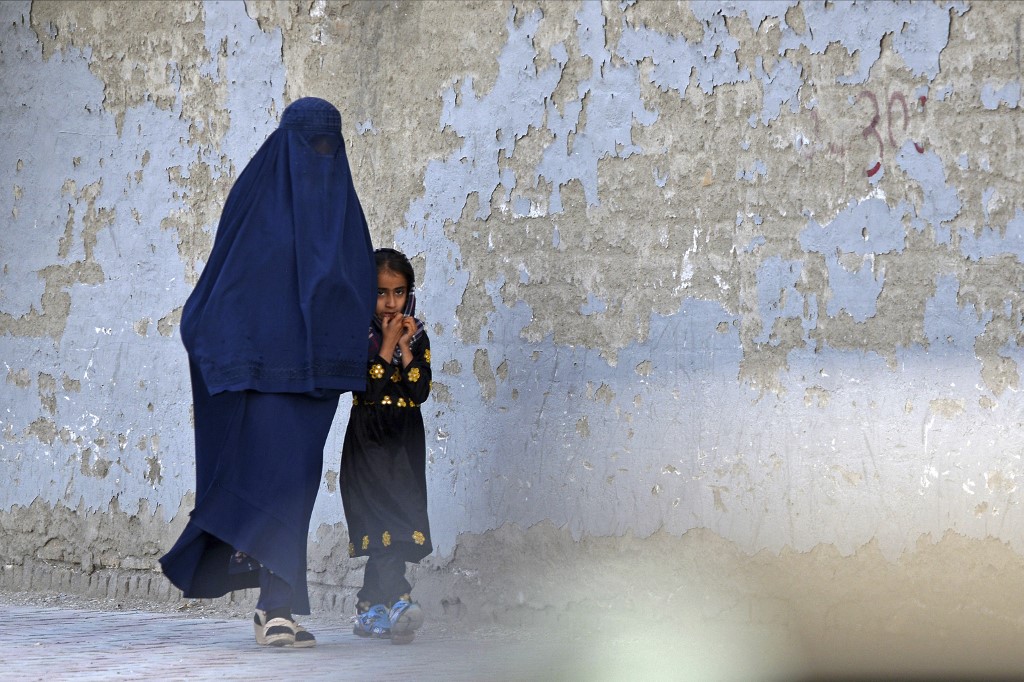
UNAMA has published its first major report on human rights in Afghanistan since the Taleban came to power on 15 August 2021. It covers a multitude of issues, including detentions, torture and extrajudicial killings, the rights of women and girls and civilian casualties. One recurring theme is the arbitrary way the new administration often works and the unpredictability of its laws, punishments and procedures. Also underlined in the report, says AAN’s Kate Clark, is the critical importance of ‘fundamental freedoms’, the right to peaceful protest and dissent, the existence of a free media and lively human rights organisations, in helping curb the arbitrary power of the state. These, the report documents, have been increasingly under attack in the last ten months.Taleban restrictions on the rights and freedoms of women and girls, says a new UNAMA report says, “has effectively marginalized and rendered Afghan women voiceless and unseen.” Photo: Ahmad Sahel Arman/AFP, 7 May 2022.
UNAMA’s new report, Human Rights in Afghanistan – 15 August 2021 to 15 June 2022, is comprehensive and authoritative, detailing violations of a wide range of human rights and freedoms by what UNAMA refers to throughout as the ‘de facto’ authorities. It also traces institutional and other changes which have made it harder and more dangerous for Afghans to seek redress, complain, document abuses, or even know for sure what the new administration’s rules are.This AAN report traces some of the areas highlighted by UNAMA’s Human Rights Service (UNAMA HRS). They include new ways the state is violating Afghans’ rights, for example, Taleban restrictions on women and girls’ access to education, work and travel – although these echo the first Taleban Emirate’s even more extreme curbs. There are also some very old and familiar violations, revenge attacks on members of the former regime, for example, or the methods of torture used by the Taleban’s General Directorate of Intelligence (GDI). Anyone versed in the history of state torture in Afghanistan will recognise the use of kicking, punching and slapping, beatings with cables and pipes and the use of mobile electric shock devices on security detainees. (See AAN’s dossier of reports on detentions and torture here.)
This AAN report also looks at what has facilitated these violations of Afghans’ rights: the clamping down on human rights defenders and the media, the suppression of free speech and peaceful protest and changes in state institutions, which all help to make the deployment of arbitrary and unaccountable state power so much easier.
As always, for far greater detail, including accounts of individual incidents, and the Taleban’s response to UNAMA’s findings, the 58-page report is worth reading in full. There are also whole sections in the UNAMA report that this report has not covered, including civilian casualties up to the Taleban’s seizure of power and since (a subject AAN hopes to return to), conditions in Afghanistan’s prisons and the Taleban’s use of excessive force at checkpoints.
UNAMA’s monitoring has indicated a “clear pattern with regards to the targeting of specific groups by the de facto authorities.” These include former members of the Afghan National Security Forces (ANSF), former government officials, individuals accused of affiliation with the armed opposition groups, the National Resistance Front (NRF) and the Islamic State in Khorasan Province (ISKP), journalists and civil society, human rights and women’s rights activists and those the Taleban authorities accuse of ‘moral crimes’.
UNAMA says the Taleban’s general amnesty for former government officials and especially former members of the ANSF has been violated:
Between 15 August 2021 and 15 June 2022, UNAMA HRS recorded 160 extrajudicial killings (including 10 women), 178 arbitrary arrests and detentions, 23 instances of incommunicado detention and 56 instances of torture and ill-treatment of former [ANSF] and government officials carried out by the de facto authorities. These incidents occurred in almost all parts of the country and have affected a range of individuals with differing levels of affiliation to the former government: from senior officials to drivers, bodyguards and relatives of former government and [ANSF] members.
In the first two months of the new administration, UNAMA says, there were reports of groups of individuals being killed, for example, 17 people in Kandahar city between 14 and 15 August, and 14 members of the ANSF who had surrendered in Khedir district of Daikundi province on 31 August. From October 2021 onwards, UNAMA says, it is individuals, rather than groups, have been targeted, often with a person taken out of their house and summarily shot. The list of examples includes two former female Afghan National Police Officers who were reportedly arrested in Kabul and whose bodies were found on 13 November by the side of a road in Gardez, capital of Paktia province. UNAMA has also tracked the arbitrary detentions and torture, not only of former ANSF and government officials themselves but also their relatives.
Since the Taleban capture of power, UNAMA has also documented the new administration targeting Afghans they accuse of being members or supporters of the National Resistance Front. UNAMA has recorded 18 extrajudicial killings, 54 instances of torture and ill-treatment, 113 arbitrary arrests and detentions and 23 cases of incommunicado detention of people accused of being linked to the NRF, mostly in Panjshir and Baghlan provinces. On 31 May, in the Khenj district of Panjshir, for example, “de facto security forces reportedly arrested 22 civilians accused of supporting the NRF. Three were reportedly released following mediation by community elders, while the remaining 19 were transferred to Dashtak prison and then to an unknown location.”
Afghans with alleged links to ISKP have been the focus of some particularly gruesome abuses. UNAMA says it has documented 59 extrajudicial killings, 22 arbitrary arrests and detentions and seven incidents of torture and ill-treatment by the authorities of individuals accused of ISKP affiliation since 15 August, mainly in Nangrahar province and especially in Chaparhar district and Jalalabad city. Extrajudicial killings in the region, it says, reached a peak in October and November 2021.
The incidents followed a similar pattern – bodies, often dismembered and/or beheaded were found, sometimes hanging from trees. Often the victim had been arrested by de facto authorities one or two days prior to the discovery of their body. In some instances, the circumstances around the killing – including the perpetrator – remains unknown, with bodies being found accompanied by notes stating that the individual was killed because they were an ISIL-KP member.
One of the examples UNAMA gives is the discovery of the body of a tribal elder on 15 November in Chaparhar district.
He had been arrested by the de facto authorities from a mosque the day prior, and was allegedly targeted for suspected [ISKP] affiliation. His body was dismembered, beheaded and his eyes had been gouged out. He reportedly also had bullet wounds.
UNAMA has also looked at the punishments given to those accused of violating moral or religious codes and has documented 217 instances of cruel, inhuman and degrading punishments since 15 August 2021. They range from shopkeepers in Lashkargah city in Helmand being slapped and kicked in April because they had not gone to pray in the mosque to a man in Tirin Kot, Uruzgan province, convicted of adultery and sentenced to public flogging on 21 February by representatives from the Departments for the Propagation of Virtue and Prevention of Vice, of Information and Culture, and of Justice, judges and the provincial governor. In Badakhshan, a woman who had accused her brother-in-law of sexual assault on 10 October was herself arrested by the provincial chief of police; both she and her alleged perpetrator were sentenced to lashing and were then ordered to marry. On 14 February, in the same province, in Nusay district, a woman and man were publicly stoned to death, accused of having an extramarital relationship, having reportedly been sentenced by the district governor.
The UNAMA report singles out the Taleban intelligence agency, the GDI, for violations, saying it has recorded instances of killings – both in the form of extrajudicial killings and as a result of severe torture – of detainees. On 19 December, for example, in Meskinabad village in Dasht-e Archi district, Kunduz, “a former Afghan Local Police officer was arrested by de facto GDI outside his house. On 22 December, de facto GDI summoned his relatives for a meeting where they handed over the man’s dead body.”
Arrests and detentions by theGDI, the report says, often appear to be arbitrary, with individuals reportedly not informed of the specific charges against them, family members not informed of their whereabouts or denied visits, not granted access to defence lawyers and only seen by a doctor after having been tortured or ill-treated. In some instances, it says, detentions were based on an individual’s role as a media worker or civil society activist.
Curbs on dissent, protest and reporting
A member of the Taleban speaks on a loudspeaker during a demonstration held to condemn a protest by Afghan women’s rights activists in Kabul. Photo: Mohammad Rafsan/AFP, 21 January 2022.
Importantly, the UNAMA report also traces a gradual clamping down on the right to protest and other ‘foundational freedoms’. It points to the campaign of largely unclaimed targeted killings of human rights defenders, journalists and media workers in late 2020 and early 2021, which had already created a climate of fear by the time the Taleban came to power. Many journalists, human rights defenders and activists then sought to flee Afghanistan, fearing a crackdown by the new administration and indeed, since their takeover in August 2021, says UNAMA, the newauthorities have:
Increasingly limited the exercise of human rights such as freedom of peaceful assembly and freedom of opinion and expression, cracking down on dissent and restricting civic space in the country. The arbitrary arrests and detention of journalists, human rights defenders, protesters have had a chilling effect on freedom of the media and civic activism. The absence of due process in the arrests and detention carried out by the de facto GDI puts individuals outside the scope of judicial supervision and increases the risk of extended pre-trial detention periods. The increasingly intrusive role and activities of the de facto [Ministry for the Promotion of Virtue and Prevention of Vice] have compounded such concerns.
UNAMA documents the Taleban’s increasing crackdown on peaceful protest, including pursuing activists with house searches, arbitrary arrests and incommunicado detention, all especially problematic for women. Meanwhile, the “once rich Afghan media landscape” has also been under attack, with arbitrary arrests (122 cases, one concerning a woman), incommunicado detention (12, all men), torture and ill-treatment (58 cases, one concerning a woman) and threats or intimidation (33 cases, three concerning women) documented. The report said interlocutors “have increasingly highlighted the role of the de facto GDI in exerting pressure on media entities and journalists through threats, arbitrary arrests, incommunicado detentions.”
As for civil society actors and human rights defenders, the UNAMA report says, they have “stopped their operations in most provinces, fearful of repercussions and restrictions imposed by de facto authorities,” while journalists have “increasingly resorted to self-censorship to cope with the new media environment.”
All in all, says UNAMA, the human rights situation “has been compounded by the measures taken by the de facto authorities to stifle debate, curb dissent and limit the fundamental rights and freedoms of Afghans.
Facilitating abuse
By curbing both protests and dissent and the documentation and reporting of violations, the Emirate has made it easier for further violations to be perpetrated. The Emirate has also facilitated abuses by its officials in other ways. One theme running through the UNAMA report is the arbitrary nature of the new administration, of how rules are decided and enforced and violations punished by Taleban officials and agencies.
One example is the role of the newly re-established Ministry for the Promotion of Virtue and Prevention of Vice (commonly referred to as the vice and virtue ministry), whose mandate, the UNAMA report says, “seems to include a mix of policy setting, advice, monitoring, complaints management, and enforcement authority on a range of issues connected with the de facto authorities’ interpretation of what is needed to ensure the propagation of virtue and prevention of vice.” (See AAN’s recent report on the thinking behind the new ministry here.) Over the first ten months of the Taleban administration, UNAMA says it has noted increased instructions from the ministry whether prohibitions, for example, on music, displays of images of women, and the use of cosmetics, or ordering, for example, face-coverings for women, mahrams (close male relative) to chaperone women in public and public prayers for men, or advice “on a seemingly open-ended set of other issues (including but not limited to the length of hair and beards; restrictions on women’s practicing sports, driving, access to public bathing establishments).”
Many of these instructions, says UNAMA, involve the “curtailment of fundamental human rights such as freedom of movement, freedom of expression and right to privacy.” Their legal nature is also uncertain, and often they are “simply announced by a spokesperson in a media interview or via Twitter, leave the system open for interpretation and abuse.” There has also been wide variation in what provincial departments of the ministry have instructed citizens locally to do or not to do. Moreover, the scope of the instructions, UNAMA says, “seems to be purposefully vague, which poses concerns in terms of compliance with the principle of legality, and the element of specificity.”
UNAMA has documented cases where ministry personnel have punished people for violating advice or when they had not actually broken rules. For example, in January 2022, in Taloqan, capital of Takhar province, city, vice and virtue officials “verbally abused a group of three women who were shopping in the bazar with their young children because they were out of the house without a mahram” while in April,in Lashkargah in Helmand province, officials verbally abused a group of women who were shopping in the bazaar without mahrams and beat male shopkeepers for allowing the women to be in their stores unaccompanied; the police subsequently arrested 12 shopkeepers. Yet, the official rule for women is that a mahram is only required for journeys of more than 78 kilometres, while the instruction for women not to leave the house unless necessary is advisory only.
The vice and virtue ministry is also the avenue where citizens are supposed to be able to make complaints through a telephone hotline and a three-stage adjudication or referral decision-making process. UNAMA does not report on how well this is working, but does say that the Taleban’s abolishment of the Afghanistan Independent Human Rights Commission (AIHRC), an A-status national human rights institution under the Paris Principles, on 4 May 2022 “leaves a void that will be difficult to fill. Notwithstanding the establishment of some avenues for citizens to submit complaints to various de facto governmental entities, the absence of an independent national human rights institution will inevitably affect human rights accountability in Afghanistan.”
Violations of the rights of women and girls
“Despite prior assurances during negotiations in Doha and at a 17 August 2021 press conference in Kabul,” writes UNAMA, “that assured women of their rights ‘within the framework of Sharia law’” and that there will be “no violence (…) and no discrimination against women,” women and girls have seen the progressive restriction of their human rights and freedoms. These, it says, stem from the Taleban’s “conservative theo-political position on the role of women.”
Most fundamentally, there are no women in the Taleban’s cabinet or indeed any decision-making forums at national or sub-national levels, denying them the opportunity even to be consulted on matters that affect them and their families. Restrictions, either de facto or as official orders or ‘advice’, specifically on the lives of women and girls include: the ongoing closure of girls’ schools beyond sixth grade; forcing women to have mahrams outside the home, including only allowing women to leave the country if they are with a mahram; orders for women to cover their faces outside and only leave the home if necessary; gender segregation of parks, gardens, and picnic venues in Kabul and; bans on employment by the government except in key roles, for example, health, education and some policing. Widows, the report says, and other women heading households are particularly affected by many of these orders, given that many are predicated on women having male ‘guardians’ to support and represent them.
Afghanistan’s often poor record on violence against women has worsened, with “the dissolution of dedicated mechanisms established to deal with cases of violence against women and girls.” Even where the Taleban have promoted some rights for women, for example, Mullah Hibatullah Akhundzada’s 3 December 2021 decree on women which upheld their women not to be forced into marriage and for widows to enjoy their inheritance rights, UNAMA said it had recorded instances where the authorities – including judges, provincial governors and others – had broken this ruling.
For example, on 15 February, in the Tarin Kot district of Uruzgan province, a woman and her brother were summoned to court regarding her rejection of an offer of marriage, reported UNAMA.
The judges of the de facto Primary Court tried to force the woman to accept, and when she refused they beat her and her brother severely. They were forced to flee their home, fearing further retribution, and her other brother who stayed behind was subsequently detained by the de facto authorities in an attempt to get the woman to accept the proposal.
In another example, from 27 April, a 15-year-old girl told UNAMA she had been sold to an older man by her father, whom she did not want to marry and from whom she had run away with another man whom she married. After her father filed a complaint, the police locked her up, ordered her to divorce her husband and marry the man of her father’s choosing. She remains in detention, with her case reportedly before the court.
For any woman or girl facing domestic violence or sexual assault, the restrictions on their basic rights and freedoms – to work, go to school, travel, and leave the country – and their absence now from decision-making and as judges and lawyers in courts, all make it easier for violent perpetrators to abuse their victims unhindered. It also makes it less likely for victims to get redress. And for women as a whole Taleban restrictions on their rights and freedoms, says UNAMA, “has effectively marginalized and rendered Afghan women voiceless and unseen.”
Conclusion
UNAMA Human Rights Service is now the only extant, on-the-ground, nationwide body documenting human rights violations and trying to hold the new administration to account. It is also one of the few bodies that continues to engage with the Taleban at central, provincial and district levels, bringing, as it says, credible reports of human rights violations to the attention of relevant ministries and departments and raising awareness of human rights standards, instruments and mechanisms.[1] UNAMA says it has appreciated “the willingness of the de facto authorities to engage on various issues, including reports of human rights violations.” It has provided a critical public service in producing and publishing this report.
The report ends with an almost philosophical defence of human rights and how respect for them is integral to Afghanistan’s future:
Ten months after the Taliban takeover, Afghanistan still faces uncertainty over its political, security and socio-economic future. The economic, financial and humanitarian crisis, exacerbated by the sanctions and suspension of non-humanitarian aid flows, continues to negatively affect Afghans’ human rights, including to an adequate standard of living.
Afghan women and men legitimately expect from the de facto authorities an inclusive governing vision that fosters peace, social cohesion and economic development. It is imperative that such a vision is based on fundamental human rights, as without them people’s participation in public affairs is limited, security is ephemeral, and development is not sustainable. Human rights are not only about complaints being heard, but also about different voices being able to be expressed without fear and being valued as enriching social life.
Edited by Roxanna Shapour
References
References
↑1
The other body still active is, of course, the International Committee of the Red Cross (ICRC), although its role is to work with the authorities and other conflict actors behind the scenes.
Arbitrary Power and a Loss of Fundamental Freedoms
The United Nations says aid workers are still in a “race against time” to remove rubble and rebuild after the devastating earthquake struck eastern Afghanistan last month, killing at least 2,200 people and cutting off remote areas.
The 6.0-magnitude quake on Aug. 31 was shallow, destroying or causing extensive damage to low-rise buildings in the mountainous region. It hit late at night, and homes — mostly made of mud, wood, or rocks — collapsed instantly, becoming death traps.
Satellite data shows that about 40,500 truckloads of debris still needs to be cleared from affected areas in several provinces, the United Nations Development Program said Wednesday. Entire communities have been upended and families are sleeping in the open, it added.
The quake’s epicenter was in remote and rugged Kunar province, challenging rescue and relief efforts by the Taliban government and humanitarian groups. Authorities deployed helicopters or airdropped army commandos to evacuate survivors. Aid workers walked for hours on foot to reach isolated communities.
“This is a race against time,” said Devanand Ramiah, from the UNDP’s Crisis Bureau. “Debris removal and reconstruction operations must start safely and swiftly.”
People’s main demands were the reconstruction of houses and water supplies, according to a spokesman for a Taliban government committee tasked with helping survivors, Zia ur Rahman Speenghar.
People were getting assistance in cash, food, tents, beds, and other necessities, Speenghar said Thursday. Three new roads were under construction in the Dewagal Valley, and roads would be built to areas where there previously were none.
“Various countries and organizations have offered assistance in the construction of houses but that takes time. After the second round of assistance, work will begin on the third round, which is considering what kind of houses can be built here,” the spokesman said.
Afghanistan is facing a “perfect storm” of crises, including natural disasters like the recent earthquake, said Roza Otunbayeva, who leads the U.N. mission to the country.
 Afghanistan Peace Campaign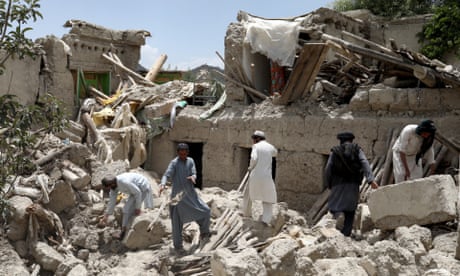


 Taleban restrictions on the rights and freedoms of women and girls, says a new UNAMA report says, “has effectively marginalized and rendered Afghan women voiceless and unseen.” Photo: Ahmad Sahel Arman/AFP, 7 May 2022.
