Germany launches new program to help at-risk Afghans

Associated Press

17 October 2022

BERLIN (AP) — The German government said Monday that it is launching a new program to help to bring about 1,000 people who are at risk of persecution in Afghanistan to Germany each month.

The program is part of an agreement between the three governing parties. It provides a formal structure for the way German authorities were already handling applications from Afghanistan since the Taliban takeover last year.

Officials said the program is aimed at Afghan citizens who are at risk because of their work for women’s and human rights. Also eligible are journalists, scientists, political activists, judges educators and those persecuted for their gender, sexual orientation or religion.

Germany has given refuge to about 26,000 people from Afghanistan since August 2021. Many of those had previously worked for the German military or police during their deployment in Afghanistan.

Foreign Minister Annalena Baerbock said the new humanitarian relocation program is intended to give those persecuted by the Taliban “a bit of home and the chance of a free, self-determined and secure life.”

She acknowledged that it would be a “mammoth task” to implement the program, including safely getting applicants from Afghanistan to Germany.

“But we won’t let up,” she said.

Applicants will need to be nominated for the program by civil society groups approved by the German government.

Germany launches new program to help at-risk Afghans
read more

US will not fund non-state actors in Afghanistan: Taliban sources

Al Jazeera

Doha, Qatar – The United States has assured Afghanistan’s Taliban rulers that Washington will not fund any armed groups or non-state actors in the country, Taliban sources have told Al Jazeera.

The assurances were welcomed by the Taliban as Tajik armed groups, which have been backed by the West in the past, continue to challenge the group’s leadership – even as it has managed to contain the Tajik-dominated National Resistance Front and other groups aligned with the former Western-backed government since it returned to power in August last year.

The assurances were given during a meeting between US Department of State officials and Taliban representatives in Doha earlier this month.

While few details about the meeting in the Qatari capital are available, Taliban sources told Al Jazeera its members met with members of a high level US delegation, including CIA deputy director.

This meeting was the first since July when the US said it killed al-Qaeda leader Ayman al-Zawahiri in a drone attack on his hiding place in Afghanistan’s capital, Kabul.

Al-Zawahiri’s presence in Afghanistan led the West to accuse the Taliban of violating the 2020 Doha Agreement, in which the Afghan group agreed not to provide safe haven to al-Qaeda and other armed groups.

The Taliban swept into power last year in a lightning offensive but violence by armed groups such as ISIL affiliate ISKP has surged in recent months, posing a security challenge to the group.

Taliban reject US plan for Afghan assets

In the meeting, the Taliban also conveyed its rejection of the US announcement that it would transfer $3.5bn in frozen Afghan central bank assets into a Swiss-based trust, according to the Taliban sources, who have knowledge about the meetings.

Last month, the Taliban said the US decision to put part of nearly $10bn in Afghan assets – which it froze last August in an attempt to keep the Taliban from accessing it – into trust was “unacceptable and a violation of international norms”.

The US announcement had said the fund will be managed by an international board of trustees and used for debt payments, electricity, food, printing new currency and other essential needs and services.

The Afghan group has repeatedly called for the lifting of sanctions and the release of frozen funds, including international aid that was suspended after the Taliban takeover, to help its dying economy. Sanctions that had been placed on the Taliban during their first period of rule that ended in 2001 came back into force with them taking power last year.

The Taliban’s isolation

More than half of Afghanistan’s 39 million people need humanitarian help and six million are at risk of famine, the United Nations said in August.

No country has recognised the Taliban’s self-styled Islamic Emirate of Afghanistan, and its diplomatic and financial isolation has exacerbated the humanitarian crisis in the country, which has suffered from decades of war, including the last 20 years under US occupation.

The international community has urged the Taliban to respect human rights, including allowing girls access to schools and workplaces. But the group has put in place increasing curbs on human rights, further angering the international community and dashing any hopes of recognition.

However, the revelations about the Doha meeting show the US continues to engage with the Taliban despite the rift.

A state department spokesperson confirmed the Doha meetings to Al Jazeera.

“As we’ve made clear, we’ll continue to engage the Taliban pragmatically regarding American interests,” she told Al Jazeera.

SOURCE: AL JAZEERA
US will not fund non-state actors in Afghanistan: Taliban sources
read more

Kabul Asks World to Avoid Interfering in Afghanistan’s Affairs

Analysts said that given the current situation, it is essential to meet some of the demands of the international community such as the reopening of girls’ schools.

The Islamic Emirate of Afghanistan asked the neighboring nations and the international community to avoid interfering in Afghanistan’s internal affairs.

In a statement on Friday, the Islamic Emirate said that under the excuse of the closure of girls’ schools in Afghanistan, the US imposed sanctions on a number of current and former members of the current government.

The Islamic Emirate has principles for improving the system in the political, cultural, social, economic, and educational sectors and considers itself accountable for resolving the issues facing the people, the statement said.

“The Islamic Emirate takes decisions by its own will and its people and takes actions in accordance with the priorities of the country and its Islamic values, so as we do not want to interfere in the internal affairs of other countries and other countries should let Afghans have their own country and have their own system and issues,” said Bilal Karimi, the deputy spokesman of the Islamic Emirate.

Analysts said that given the current situation, it is essential to meet some of the demands of the international community such as the reopening of girls’ schools.

“We must interact with our neighbors. Today, the international community cannot continue to be so indifferent that the school gates in Afghanistan are closed. According to the international community, the government has a monopoly on opinion, and the media is under censorship. When we expect something else, we must also be given something in return,” said a political analyst Mohammad Hassan Haqyar.

“Issues regarding world peace and stability, as well as commenting on human rights issues, are in no way considered to be part of a country’s domestic affairs,” said international relations specialist Sayed Jawad Sajadi.

“The requests that have been made so far by the international community are the legitimate expectations of the Afghan people themselves. We can adopt the models of the society, but it cannot impose its will on us,” said Mohammad Omar Nuhzat, a political analyst.

The US Department of State announced on Tuesday new restrictions on the “issuance of visas for the current or former Taliban members, members of non-state security groups, and other individuals believed to be responsible for, or complicit in, repressing women and girls in Afghanistan through restrictive policies and violence.”

Kabul Asks World to Avoid Interfering in Afghanistan’s Affairs
read more

Putin: We Need to Work with Current Afghan Authorities

Speaking at the summit, Putin stressed the need to interact with the current government in Afghanistan.

Russian President Vladimir Putin said at the Commonwealth of Independent States (CIS) countries that Moscow will work with the current Afghan government to fight terrorism in the region.

Speaking at the summit, Putin stressed the need to interact with the current government in Afghanistan.

“Cross-border relations of jihadists is a threat for all of us. Of course, we need to work with the current authorities of Afghanistan,” Putin added.

Tajikistan President Emomali Rahmon said the situation on the border between Afghanistan and Tajikistan is complicated.

“The base is being created in our close proximity (referring to proximity to Tajikistan), for the escalation of radical extremist ideology. Amid these alarming trends, the situation has been complicated around the perimeter of the Tajik-Afghan border exceeding 60 percent of the total border line between Central Asia and Afghanistan,” Rahmon noted.

He said his government will continue to enhancing the border and create necessary border infrastructure.

“For your information, dear colleagues, we built over 175 border posts in the Afghan direction over two years. But it’s not enough,” Rahmon added.

Turkmenistan’s President Serdar Berdimuhamedow meanwhile said at the event that a stable Afghanistan would ensure the security of the region and that Ashgabat supports international channels to resolve the Afghan crisis.

“Russia is concerned about security in Tajikistan, and Russia’s concern is fair,” said Wali Frozan, a political analyst.

But the Islamic Emirate said that security is ensured at the borders of Afghanistan and it will not be a threat to other countries.

“Our country’s territory does not pose a threat to other nations. We are aware of our borders and have ensured the security of our borders with other nations,” said Bilal Karimi, deputy spokesman of the Islamic Emirate.

The Hindu Newspaper reported that the Regional Anti-Terrorism Structure (RATS) of the Shanghai Cooperation Organisation (SCO) on October 14, 2022, decided on joint measures by member countries to counter threats posed by international terrorist groups operating from Afghanistan.

According to the report, the decision was made at a meeting of the council of RATS hosted in New Delhi.

Putin: We Need to Work with Current Afghan Authorities
read more

Ban on Girls Schooling Happens Only in Afghanistan: US Expert

Speaking to TOLOnews, Rubin said the closure of girls’ schools is unacceptable for the United States, Afghanistan’s neighbors and the international community.

Barnett Rubin, an Afghanistan expert with the Center on International Cooperation, said girls’ schools should be reopened in Afghanistan and women’s rights should be protected to become a member of the international community.

Speaking to TOLOnews, Rubin said the closure of girls’ schools is unacceptable for the United States, Afghanistan’s neighbors and the international community.

“Afghanistan is the only country in the world where girls are prevented from going to school and that is something not acceptable to the international community and not just to the United States but to any of Afghanistan’s neighbors, to the United Nations, the humanitarian organizations, and if Afghanistan wants to be a member of the international community, it cannot continue that policy,” he said.

Rubin said that it is a crucial issue that girls are not permitted to attend school.

“I was just talking about girls not being allowed to go to school, that is a very important issue, but it is not one of the reasons given in the UN security council resolution for imposing the sanctions, those are other reasons. So, we have to actually look at the text of the sanctions resolution and try to resolve the problems that were designated in the resolution not just by the United States,” he said.

But the Islamic Emirate said that all issues should be resolved through negotiation and that relations with the international community should be unconditional.

“Relationships and interactions should be unconditional and based on respect for one another. It shouldn’t be connected to conditions that involve our nation’s internal issues,” said Bilal Karimi, deputy spokesman of the Islamic Emirate.

“The Islamic Emirate is open to dialogue and understanding on all matters that relate to our nation’s external dimensions and are taken into account by other countries, and we firmly believe that through these two channels, all difficulties and worries we currently face in relation to our nation’s foreign policy will be resolved,” he added.

Secondary schools for girls are closed for more than a year and if things keep going this way, maybe no female student will be able to attend the university entrance exam next year.

Ban on Girls Schooling Happens Only in Afghanistan: US Expert
read more

Trump ordered rapid withdrawal from Afghanistan after election loss

Military Times

President Donald Trump ordered a rapid withdrawal of all U.S. troops from Afghanistan and Somalia in the wake of his 2020 election loss, but senior officials never followed through on the plan, according to testimony released by the congressional January 6 committee on Thursday.

“The order was for an immediate withdrawal, and it would have been catastrophic,” said Rep. Adam Kinzinger, R-Ill., one of two Republican members of the special panel. “And yet President Trump signed the order.”

Witnesses who spoke to the committee about the surprise withdrawal plan included Joint Chiefs Chairman Gen. Mark Milley, former national security advisor to the vice president Keith Kellogg, and several other senior officials in the Trump administration.

Committee officials played video clips of their testimony during Thursday’s 10th hearing on the attempted insurrection on Jan. 6, 2021. The event is expected to be the final public meeting of the panel.

Milley said he was shocked when he saw the withdrawal orders, signed by Trump on Veterans Day 2020, just four days after Joe Biden was declared the winner of the 2020 presidential election.

“It is odd. It is nonstandard,” Milley said in his recorded testimony. “It is potentially dangerous. I personally thought it was militarily not feasible nor wise.”

Kellogg, a retired Army lieutenant general, said after seeing the order he told senior staff the idea was “a tremendous disservice to the nation” and implementing it would be “catastrophic.”

At the time, about 8,000 troops were still stationed in Afghanistan, helping train government security forces and conduct counter-terrorism operations. Fewer than 1,000 U.S. troops were in Somalia on similar missions.

Journalists Bob Woodward and Robert Costa referenced the surprise memo in their book “Peril” on the Trump presidency, released last month. They wrote that the idea did not go through any of the traditional chain of command protocols, and ultimately senior staff believed it did not have legal standing requiring them to follow through with the plan.

“Knowing that he had lost and that he had only weeks left in office, President Trump rushed to complete his unfinished business,” Kinzinger said.

“These are the highly consequential actions of a president who knows his term will end shortly.”

Trump has maintained that the 2020 election was conducted improperly and that he actually won the popular vote. He and supporters have been unable to provide evidence for that claim, and the committee has offered testimony undermining both the accusations and Trump’s own belief in them.

They have, however, argued that Trump was to blame for the violence at the Capitol building on Jan. 6, when hundreds of his supporters overtook the halls of Congress in an attempt to stop certification of the 2020 election results.

The deaths of at least five people have been blamed on the violence and its aftermath, including a Trump supporter shot and killed by Capitol Police. Numerous law enforcement officials were injured as the crowd surged past them to try and reach lawmakers.

More than 850 people have been charged by the Justice Department in the Capitol attack, according to the Associated Press.

Trump ordered rapid withdrawal from Afghanistan after election loss
read more

WHAT AFGHANS WANT THE REST OF THE WORLD TO KNOW

The country is, once again, the worst place in the world to be a woman.

Hajera gave birth to her daughter, Sarah, in Kabul two weeks after the Taliban took over Afghanistan last summer. Hajera is 35 and worked as a government economist. She and her husband already had two sons and were happy to be welcoming a daughter. But they soon lost their jobs, and the Taliban erased the rights women had gained over the previous two decades.

An Afghan women’s-rights activist had connected me with Hajera, who was too afraid to share her last name. “We had a job,” she told me. “We had money. We had a home. We had a country. We had a family.” Now, she said, “we have nothing.”

Afghanistan is, once again, the worst place in the world to be a woman.

I asked her: What did she hope would happen now? “Hich omid nist,” she said. There is no hope.

I was born in 1999, two years before the September 11 attacks and the subsequent invasion of my country. For Afghan women, the overthrow of the Taliban marked the beginning of a luckier time. Schools were opened to girls. Women were no longer imprisoned at home—they were allowed to work, and would no longer be beaten if they chose not to wear the burqa.

Freedom came too late for my mother and her generation. They had prayed and protested for these rights. But many were married off as children. My mother was married at 16. Our mothers and grandmothers refer to these times as the “unblessed years.”

Now that the time of unblessing has returned, it has become clear that as we grew up, my generation was witnessing not the beginning of a new future, but an anomalous moment in our country’s sad history. We had been enthusiastic, energetic, happy, and hopeful. On August 15, 2021, Afghanistan returned to zero. Or even less than zero, because the path to freedom feels even longer and more dangerous now, and Afghan women are so very tired.

I am a refugee in the United States now, but I have been talking with my family and friends, with former teachers and colleagues, to understand what they have been going through and what they want the rest of the world to know.

Faryal is a 14-year-old girl in Kabul. As with many of the women I spoke with for this story, I’m using only her first name to protect her privacy. She should be in ninth grade this year at Hussain Khail High School, where she loved her classes, even though the students had no chairs or tables and studied in hot, overcrowded tents. She used to wake up every morning and leave for school with her 12-year-old brother, but now she watches from the window as he boards the bus. She stays home all day, doing nothing, looking at her old books.

Soon after returning to power last year, the Taliban banned secondary school for girls. The Ministry of Education indicated that these schools would reopen once the Taliban settled on a dress code for female students and teachers “in accordance with Islamic law and Afghan culture and traditions.” But everyone knows it was a lie.

Faryal told me she misses her friends and the playground, where they would braid one another’s hair. She asked me with a crying voice questions I couldn’t  answer. Why have they only closed our schools, not the boys’ schools? Are the Taliban at war with women?

Not everyone is waiting for the Taliban to open the schools. Some people are running secret schools for girls out of their homes. One person told me that she knew of at least two such schools in Kabul and three or four elsewhere in the country, but there may be many more.

Recently, I spoke with a teacher at one of these secret schools. Ayesha Farhat Safi, 22, teaches roughly 80 teenage girls in the basement of her family’s house in Kabul. She doesn’t make any money doing it, and she could be arrested or beaten. She told me, “A lot of students are reaching out to us, but we don’t have enough space to have them all participate, and it hurts me.”

NPR and other news organizations have reported on female students’ attempts to get around the ban. Some schools that teach young girls legally are secretly instructing teenagers as well. When Taliban inspectors visit the schools, the older girls scatter and hide.

None of these secret schools is close enough to where Faryal lives for her to attend. But she knows of them, and dreams about going to one someday. She told me she doesn’t care if the Taliban catch her.

Ispoke with a 26-year-old woman who, until the government fell, had worked for the Ministry of Education, analyzing national enrollment data. She loved her job and the difference she was making in the country. Now she has no job, and many of the schools she watched open have been closed. She told me she feels small and weak, an “observer of the miseries of women.”

Her former colleagues at the ministry have told her that many teachers who taught in girls’ schools have been reassigned to teach boys. Others have left the country. She has had many opportunities to leave, but she doesn’t want to go. She teaches English classes for girls and women, as well as classes in computer coding and other technical skills. Some are streamed online, but others are in person. She told me that her girls gather in a secret location where they pretend to be studying the Quran and Sharia. She believes that the only way we can help Afghan women is to empower them through education. She told me, “I want to stay until it becomes impossible for me to stay.”

Saira Saba, 42, is a former teacher too. She helped organize a protest in August in front of the Ministry of Education, in Kabul, and held a sign reading bread, work, freedom. News reports said about 40 women participated in the protest, though Saba told me there were even more: mothers and daughters, women who’d never learned to read and women who’d worked as professors at universities.

Saba participated despite knowing that the Taliban were arresting and beating female protesters. She said, “We want a country where we have our rights. We want a country where we will be able to work. We want a country where we know who our president is and who our leaders are. And where we have the right to choose our own leaders.”

Of course, it’s not only women who are suffering in Afghanistan. The Taliban are also targeting religious and ethnic minority groups. The economy is paralyzed; the health-care system has broken down; people are starving.

Recently my mother told me that she was walking back from the bakery with three loaves of bread when she decided to share the food with some beggars she passed by. But there were far more hungry people than there were loaves of bread. She says there are more beggars now than she can ever remember seeing in Kabul, and more kids on the streets than in schools.

We lost our freedom of speech the same day we lost our country. There is no constitution, and Taliban commanders set up their own courts to judge individuals on whatever charges they want, whenever they want. Terrorists are finding a haven in Afghanistan, and deadly bombings of civilians in mosques and markets have increased.

But the fear and oppression are worse for Afghan women, because they can’t fight back; they’ve been systematically removed from society, imprisoned in their homes once again. My conversations with the friends I grew up with get shorter and less cheerful each time we speak. They have stopped planning for their futures—they can see that there is no future. Some of them have accepted the first marriage proposal that came their way, no matter who it came from, because they think their only escape from their current circumstances is to find a husband.

My sister’s closet is filled with colorful clothing. But when she goes out she can only wear black; she says it’s like the whole nation is in mourning, and the people in the streets look like zombies. She used to wear lipstick and eyeliner; she no longer bothers, because she knows no one will look her in the eyes. She says that, covering her face wherever she goes, she has forgotten what she even looks like.

It would be nice to think that, in the privacy of their own homes, women have remained free; that they could turn their back on an oppressive government that doesn’t see them as fully human, and continue, at least in their own personal relationships, to be who they’ve always been. But that’s not the case. By removing women from the public sphere, the government has also reestablished the patriarchy within the home, where men are once again judge and jury.

I want to believe that there’s something to be done—that foreign governments or institutions or refugees like myself could somehow help the women back home. The United Nations has restricted the travel of some Taliban leaders. The United States has imposed sanctions on Afghanistan to pressure the Taliban to create a democratic government in which women and other minorities have equal rights. It has also frozen $7 billion of Afghan money in U.S. banks, and announced that it will use about half of that for a fund to support the Afghan economy, in ways that will help the people without enriching the government.

But human-rights activists are calling for more penalties. The UN could ban all Taliban leaders from traveling; Twitter could cut off access (as Facebook has done already) to the official Taliban accounts as well as those operated by anyone lobbying on the Taliban’s behalf. Additional humanitarian aid could be provided on the condition that women are allowed to work, go to secondary school, and participate in politics. Governments and nonprofit groups could help women’s-rights activists by providing financial support and political backing. They could also set up and fund online education and more secret in-person schools.

Afghanistan is not far from becoming the country we were in the Taliban’s first regime. But some things are different now. Few in rural communities have access to the internet, but those who do can organize and resist in new ways. In secret, behind closed doors, Afghanistan is still breathing.

Hajera told me there was no hope. I want to believe that there is a little.

Bushra Seddique is an editorial fellow at The Atlantic.
WHAT AFGHANS WANT THE REST OF THE WORLD TO KNOW
read more

Uncertainty Surrounds Billions of Dollars in Afghanistan’s Funds

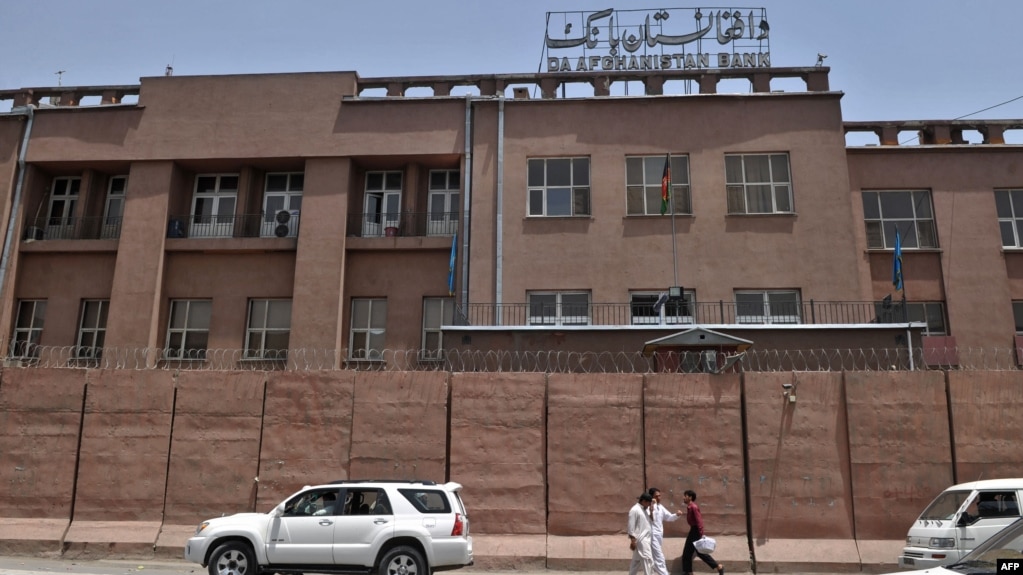
FILE - Afghan men walk past Da Afghanistan Bank, Afghanistan's central bank, in Kabul on June 28, 2011.
FILE – Afghan men walk past Da Afghanistan Bank, Afghanistan’s central bank, in Kabul on June 28, 2011.

Facing economic paralysis and a nationwide humanitarian crisis, Afghanistan needs to stay current on what it owes international economic institutions before it can receive critically needed foreign assistance. How much the country owes and who should pay off the debts are unclear.

Despite having no representation at the World Bank, the de facto Taliban government paid about $5 million to the bank in June toward Afghanistan’s debt.

Last month, the United States transferred $3.5 billion in Afghan central bank assets previously frozen in New York to a Swiss bank, and officials said some of the funds might be used to pay Afghanistan’s debts to international institutions.

Paying off debt that has come due will “unlock much greater resources for basic services in Afghanistan,” U.S. Special Representative for Afghanistan Thomas West said during a discussion last month at the Center for Strategic and International Studies while explaining the potential use of Afghan assets in safeguarding the country’s economy.

“Aid reception is contingent upon the scheduled loan repayments before it becomes an arrear or an outstanding loan,” Zia-u-Rahman Haleemi, a former Afghan representative at the World Bank, told VOA. “A very small amount in outstanding arrears could potentially block a huge amount in aid.”

A spokesperson for the World Bank did not answer a question about the extent of Afghanistan’s existing arrear but pointed to a 2018 report that put the country’s total debts to the World Bank and the Asian Development Bank at about $1 billion.

“Afghanistan has memberships in international bodies that have membership fees. If the Taliban do not pay those fees, then they could be paid from the Afghan funds,” Anwar ul-Haq Ahady, a former Afghan finance minister who now sits on the four-member board of trustees for the management of the Afghan funds in the Swiss bank, told VOA’s Afghan service recently.

A spokesman for the Afghanistan central bank received but did not respond to VOA’s questions about the Taliban’s willingness to pay current and future arrears to the World Bank and other international institutions.

Like most Western donors, the World Bank has stopped aid to Afghan state agencies and has instead channeled assistance programs and funds through the United Nations and international nongovernment organizations.

“All projects are being implemented off-budget outside of the interim Taliban administration,” a World Bank spokesperson told VOA, adding that the bank has given $893 million to U.N. agencies and NGOs.

Assets in European banks

Prior to the collapse of the former Afghan government, Afghanistan maintained more than $9 billion in financial assets, mostly in U.S. and European banks. The assets were used primarily to stabilize the Afghan currency market and address other national financial issues.

The Taliban’s return to power has scattered the national assets in different banks and under different, sometimes unclear, circumstances.

Half of Afghanistan’s $7 billion bank assets remain frozen in the U.S. due to ongoing litigation by families of some victims of the September 11, 2001, attacks on the U.S., despite a recommendation by a federal judge that the funds were immune from the court’s jurisdiction.

About $2 billion in additional Afghan financial assets are frozen in European banks.

“I think the $2 billion held in Europe should be unfrozen and combined with the Afghan Fund [in the Swiss bank],” said Mohsin Amin, an Afghan policy analyst.

Like the U.S., European countries have refused to recognize the Taliban’s de facto leadership and have accused the Taliban of lacking legitimacy and perpetrating egregious human rights violations.

“There has not been any declaration by political leaders of the European countries where the $2.1 billion DAB [Da Afghanistan Bank] funds are held that they are ‘frozen.’ But in practice, it is exact that these $2.1 billion are out of reach of the DAB, as the private banks where they are located are not responsive to the DAB requests,” Jean-François Cautain, a former European Union ambassador, told VOA.

Save, but for how long?

Despite extricating half of the Afghan assets from litigation in the U.S. and the official announcements that the funds will be used to stabilize the Afghan economy, the overall preference is to save the money and not spend any amount on humanitarian or development needs, according to Ahady and West.

It is unclear how long the funds will remain dormant in the Swiss bank and how saving the assets will resuscitate the crippled Afghan economy.

U.S. officials have said that neither recognition of nor lifting sanctions on the Taliban is on their immediate agenda.

While defying widespread domestic and external calls for the formation of an inclusive government and respect to women’s rights, Taliban authorities have accused the U.S. of choking the Afghan economy.

Groups advocating a total release of Afghan assets say the asset freeze, financial sanctions and the Taliban’s bad governance have essentially paralyzed the Afghan economy, causing immense suffering for ordinary Afghans.

“While the $3.5 billion moved to Switzerland may be safeguarded from litigation in the U.S., the fundamentals have not changed. The Afghan economy and banking system remains paralyzed — at enormous human cost to regular Afghan citizens — because of political decisions taken by the U.S. and its allies,” United Against Inhumanity, an international organization advocating against war atrocities, said in a statement on October 4.

U.S. officials say the assets freeze and sanctions are targeting Taliban officials and that the U.S. has maintained robust humanitarian assistance to the people of Afghanistan with more than $1 billion given to U.N. agencies and international NGOs.

Uncertainty Surrounds Billions of Dollars in Afghanistan’s Funds
read more

Iran’s Protests … and the Afghan Sisters Next Door

Iran’s women are seizing worldwide admiration with 26 days of courageous defiance against their authoritarian government’s violent confinement of females as second-class citizens who may not freely work, marry, divorce, travel or even be seen with their heads uncovered. Less noted are this audacious movement’s existing, and potential, connections to the tenacious, 14-month campaign by Afghan women resisting the even tighter oppression of the Taliban. Street protest slogans, social media posts and other links illustrate a synergy between the movements that both should use in the difficult task of converting their inspiring courage into real change.

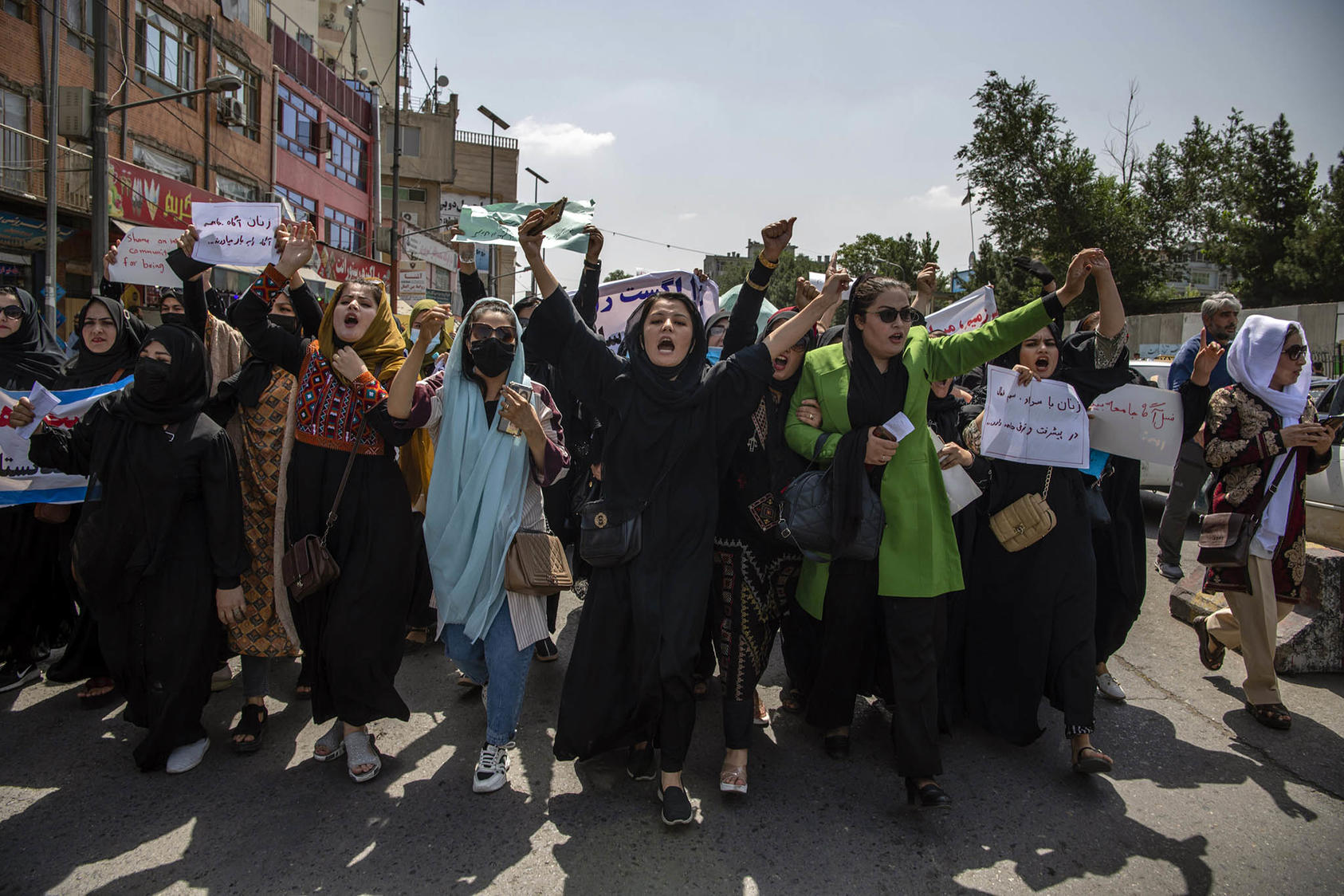
Afghan women protest Taliban rule in Kabul in August before gunmen dispersed them with gunfire into the air. Women have continued to resist a gradually tightening Taliban crackdown against them. (Kiana Hayeri/The New York Times)

Iran’s Unprecedented Uprising

Iran’s widened protests this week, including workers’ strikes and Iran’s vital oil sector, underscore that its women are now leading the most potent challenge in years to the authoritarian rule by clerics and their allied security forces. The uprising began as a protest against the death of a young woman, Mahsa Amini, in the hands of Iran’s morality police, who arrested her on a Tehran street for allowing some of her hair to stray from beneath the head scarf that her government requires all women to wear in public.

“Protest chants about her death quickly evolved into calls to oust the regime,” USIP fellow and Iran specialist Robin Wright wrote this week. They began chanting “‘Death to the Dictator,’ and ‘Our disgrace is our incompetent leader,’ and ‘We don’t want the Islamic Republic.’” In a default response, Iran’s security forces, such as the Basij militia, have attacked protesters, multiplying popular anger. As of Tuesday, those attacks have killed 185 protesters, including 19 children, reports the monitoring group Iran Human Rights.

Iranian women have protested Iran’s narrow, discriminatory theocracy since the 1979 revolution that erected it in place of the ruling monarchy. Indeed, Wright notes, “The first protest after the ouster of the shah was a women’s rally demonstrating against the imposition of conservative Islamic dress. … Women led much of the 2009 Green Movement protests against an allegedly fraudulent presidential election, chanting ‘Where’s my vote?’ and ‘Death to the Dictator!’”

Iranians’ demands for reform have grown stronger in recent years and news accounts, tracked by USIP’s Iran Primer, reflect how the current uprising has won unprecedented support from a broad swath of Iranian society.

Afghanistan, Iran: Sisters’ Synergy

Like other nonviolent protest movements of the past decade, in Sudan, Tunisia, Libya, Myanmar and elsewhere, the Afghan and Iranian women’s campaigns are using social media as vital amplifiers. Despite their governments’ obstructions of the internet, the two movements can share ideas more quickly because both can discuss them in the Persian language. Women demonstrators in both countries have been using the same Persian-language slogan — “Zan, Zindagi, Azadi” (“Women, Life, Liberty!”) — against their governments’ efforts to control their bodies and choices.

An Iranian protest group called Khiaban Tribune, which is painting street graffiti as part of the protests, last week posted its support for Afghan women, who have defied arrests, beatings and other violence by the restored Taliban regime. The Iranian group declared, “we are both fighting … against a Taliban.” Activist writer Masih Alinejad and other Iranian women campaigners have echoed the comparison between the two countries’ regimes and women’s responses.

Over the 20 years in which a U.S.-led international intervention held Afghanistan’s Taliban out of power, millions of Afghan women won greater freedoms to study, pursue careers and hold public roles in society. Women served as judges and provincial or district governors, headed four national government ministries, held between 20 and 30 percent of parliament seats (compared to about 6 percent in Iran), and ran for president and vice president. A generation of Afghan women built a foundation of experience and skills that they are now using to resist the re-imposition of misogynist oppression by the new Taliban regime, winning local-level concessions from officials in various provinces who are relaxing enforcement against women’s activities to avoid drawing public protest.

A throng of countries offered years of support for Afghan women’s struggles via government aid programs, civil society campaigns, TV talk shows, parliament sessions and national and international conferences. Many Iranian women’s rights activists lament that their own movement has had vastly less international support. But with the Taliban’s return and Iran’s crisis, the two women’s movements are sharing — and can increase — much-needed support for each other.

Afghans’ Continued Resistance

Retaking power in August 2021, the Taliban quickly replaced Afghanistan’s women’s affairs ministry with a “Ministry of the Propagation of Virtue and Prevention of Vice,” an organ that was highly oppressive during the Taliban’s 1990s rule. Taliban spokesmen protest to the international community that their regime intends to moderate past oppressions and respect women’s basic rights, but Taliban actions have steadily tightened restrictions. In the past six months, the regime has:

  • Dissolved the Afghan Independent Human Rights Commission, for years the nation’s most prominent human rights authority and long directed by women.
  • Ordered women to cover their faces in public.
  • Halted the issuance of driving licenses to women and banned women from using public transportation unless accompanied by a close male relative, called a mahram. The Taliban’s restored Ministry of Vice and Virtue ordered bus drivers to install curtains to close off the designated seats for women in buses.
  • Ordered schoolgirls in the fourth to sixth grades in Ghazni province to cover their faces while walking to or from school, or to face expulsion.
  • Banned women from going to public parks where authorities cannot ensure segregation between men and women.
  • Instructed women employees of the Finance Ministry, in phone calls to each one personally, to send male relatives to their offices to replace them.

Afghan women began a wave of protests in the days after the Taliban seizure of power, rallying in the capital, Kabul, and in towns across many provinces, including Balkh, Herat, Kunduz, Baghlan, Takhar, Kapisa, Panjshir and Bamyan. Taliban enforcers beat protesters with batons and arrested them, both women and men. They also arrested protesters’ family members. Under this assault, women this year began holding smaller protests. Fourteen months on, women are gathering in offices or homes to produce photos and videos in which, masked for security, they present speeches and signs with their demands for justice and then share them via text messages, WhatsApp, Twitter or Facebook.

Still, Afghan women also continue to defy the Taliban with periodic public rallies, including street protests this month against an increase under Taliban rule of attacks and hate speech against Afghanistan’s ethnic Hazara minority, who are adherents of Islam’s Shia sect, which also is a minority in a country dominated by Sunni Islam. These latest rallies condemned a horrific September 30 bombing in Kabul that killed more than 35 ethnic Hazara girls and women at a school. The women activists in Iran, a Shia-majority country, have joined Afghan women in specifically condemning the attacks on the Hazaras. As both the Iranian and Afghan authoritarian regimes suppress ethnic and religious minorities as well as women, the two women’s movements should strengthen efforts at building coalitions with other marginalized communities to more powerfully press for real democratic change.

In both countries, some religious clerics have supported the demands of women that authorities stop using force to require women to adhere to government requirements that they cover their hair or faces. In Iran, these include former president Mohammad Khatami. In Afghanistan a group of 15 religious scholars published a statement via social media that called such coverings a moral choice rather than a subject of criminal law.

In the past month, Afghan women have drawn their own inspiration from Iranians’ protests. On September 29, about 25 Afghan women activists protested outside Iran’s embassy in Kabul, waving signs declaring, “Iran has risen, now it’s our turn!” and “From Kabul to Iran, say no to dictatorship!” the AFP news agency reported. Taliban gunmen soon arrived and unleashed volleys of automatic rifle fire to disperse the group.

Building a Sisterhood

One lesson that Afghan women may be drawing from Iran’s protest movement is the need to bolster the support they receive from men in their communities. Afghan men — district-level officials and elders in Kandahar, Paktia, Parwan and Baghlan provinces, for example — have joined women in pushing for the resumption of girls’ schooling that has been halted by the Taliban. But Afghan women have noted the much greater prominence of men publicly with women in Iran’s protests and have said the same is needed in Afghanistan.

Alongside mutual encouragement, the Afghan and Iranian women’s rights campaigns can offer each other complementary elements of support. Afghans provide an example and experience of managing a longer, lower-profile resistance movement under the extremely harsh repression of the Taliban. And with the reduced global attention to Afghanistan following last year’s withdrawal of international troops and most government and non-government assistance programs, it is the Iranians who are galvanizing world attention right now for the goals that the two movements share.

It is only natural that two communities tied by language, culture and their oppression by authoritarianism masquerading as religious faith, are finding synergies. With women in both Iran and Afghanistan facing crisis and opportunity, it is time to strengthen their connections. Whether in person, or on the cellphone screens that feed millions of women and girls in these neighboring countries with emotional support, organizational ideas and clearer visions for their future, Afghan and Iranian women must now all the more strengthen each other as sisters.

Iran’s Protests … and the Afghan Sisters Next Door
read more

Religious Clerics, Badghis Citizens Call for Reopening of Girls’ Schools 0 COMMEN

According to them, girls’ education is important, and if the closure of girls’ schools continues the nation’s illiteracy rate will rise.

Following ongoing calls for the reopening of girls’ schools above the sixth grade, some religious clerics and people of Badghis province asked the Islamic Emirate to reopen girls’ schools as soon as possible.

According to them, girls’ education is important, and if the closure of girls’ schools continues the nation’s illiteracy rate will rise.

“A segment of society will stay illiterate if girls’ schools are not reopened,” said Gul Mohammad, a resident of Badghis.

“It will be good that our girls become literate and the whole family becomes literate,” said Juma Khan, another resident of Badghis.

“Knowledge is a tool; there are no specific conditions needed to acquire the knowledge of science,” said Ghulam Mohammad Muwahedi, a member of the Badghis Religious Council.

“Any government should provide education for its people and take steps to encourage people to learn science,” said Abdullah Jan, a member of the Badghis Religious Council.

Female students in Badghis province said that they have been waiting for the reopening of their schools for more than a year.

“I ask the current government to open the school gates for girls and not let the girls stop studying,” a student said.

“We demand that the Islamic Emirate reopen girls’ schools above the sixth grade,” another student said.

Meanwhile, representatives of the Badghis Department of Education expressed optimism for the reopening of the secondary schools for girls.

“The reopening of girls’ schools has been postponed until the next order; God willing, it will reopen in accordance with the decision of the Islamic Emirate. The Islamic Emirate is aware of this issue,” said Muhibullah Ehsan, director of the education department of Badghis.

Concerns have been raised that no female student will be able to take the entrance exam for university next year if girls’ schools above the sixth grade do not open soon.

Religious Clerics, Badghis Citizens Call for Reopening of Girls’ Schools 0 COMMEN
read more