Bahous Says UN Women Will Work With Rabab Fatima to Support Afghan Women and Girls

UN Women Executive Director Sima Bahous has welcomed the appointment of Rabab Fatima as the United Nations Secretary-General’s Special Representative for Afghanistan and the new head of the United Nations Assistance Mission in Afghanistan (UNAMA), pledging close cooperation to advance the rights and leadership of Afghan women and girls.

Bahous congratulated Fatima on her appointment in a statement on Saturday, saying UN Women would work with the incoming UNAMA chief “at this critical time” to support the rights, voices and leadership of Afghan women and girls as Afghanistan continues to face severe restrictions on women’s participation in public life.

Fatima, a veteran Bangladeshi diplomat with more than three decades of experience in multilateral diplomacy, was appointed by UN Secretary-General António Guterres in July to succeed Roza Otunbayeva as the UN’s top envoy in Afghanistan. She is expected to lead UNAMA’s political engagement and coordinate the UN’s humanitarian and development efforts in the country.

Before taking up the Afghanistan post, Fatima served as the UN Under-Secretary-General and High Representative for the Least Developed Countries, Landlocked Developing Countries and Small Island Developing States. She previously represented Bangladesh at the United Nations, where she chaired the Executive Boards of UNICEF and UN Women and became the first woman to lead the UN Peacebuilding Commission.

Her appointment comes at a pivotal moment for Afghanistan as the UN Security Council has extended UNAMA’s mandate through June 2027 and requested a strategic review of the mission’s future role in the country. The review is expected to examine how the UN can strengthen its political engagement, humanitarian coordination and human rights monitoring in Afghanistan.

UN Women has repeatedly warned that Taliban policies have created one of the world’s most severe institutional systems of discrimination against women and girls. Since returning to power in August 2021, the Taliban have barred girls from secondary schools and universities, restricted women’s employment, limited their participation in public life, and prohibited Afghan women from working for the United Nations inside Afghanistan.

The appointment also follows UNAMA’s recent reports documenting continued human rights concerns, including restrictions on women’s freedoms, shrinking civic space and barriers to humanitarian operations. UN officials have consistently argued that meaningful international engagement with Afghanistan depends on measurable progress in protecting the rights of women and girls.

UN Women said it looks forward to working closely with Fatima and UNAMA to ensure Afghan women and girls remain at the center of the UN’s engagement with Afghanistan, describing their participation and leadership as essential for the country’s long-term peace, stability and development.

Bahous Says UN Women Will Work With Rabab Fatima to Support Afghan Women and Girls
read more

UN Experts Urge Protection of Afghans from Forced Return

The UN experts called on Islamabad to assess the circumstances of Afghan nationals before deporting them and to prevent the deportation of vulnerable Afghans, particularly women and unaccompanied children.

In a statement, they stressed that the return of Afghan nationals must be carried out in accordance with the principle of non-refoulement.

Part of the UN experts’ statement reads: “Pakistan is not the only country deporting Afghans.” The experts called on all countries to uphold their obligations under the principle of non-refoulement, which is part of customary international law and is binding on all states.

Alireza Karimi, a migrant rights activist, said: “Human rights organizations and United Nations offices have a responsibility to support the rights and security of vulnerable individuals.”

Meanwhile, authorities in Punjab say that 213 Afghan nationals are currently being held at 39 migrant detention centers and are expected to be returned to Afghanistan through Torkham.

Alongside concerns over the deportation of Afghan migrants, the situation of Afghan medical students in Pakistan also remains under attention.

The Lahore High Court on Friday, September 18, extended the suspension of an order by the Pakistan Medical and Dental Council concerning the return of Afghan medical students.

Sediq Kakar, a lawyer representing Afghan migrants in Pakistan, said: “The students were told to continue their studies and take their exams, while Pakistani authorities were instructed to allow them to do so. This is a short-term decision.”

This comes as the spokesman for the Islamic Emirate previously said that nearly two million Afghan migrants had returned to the country from Pakistan, Iran and Türkiye over the past year.

UN Experts Urge Protection of Afghans from Forced Return
read more

Germany Presses Ahead With Legal Action Against Taliban Over Women’s Rights

18 September 2026

A source at Germany’s Foreign Ministry told Afghanistan International that Berlin, together with international partners, is pursuing efforts to hold the Taliban accountable for violations of women’s rights.

The German Foreign Ministry official said initial legal steps had been taken under Article 29 of the Convention on the Elimination of All Forms of Discrimination against Women.

According to the source, Germany supports international mechanisms, including the UN-led Doha process, aimed at improving the human rights situation in Afghanistan.

The German official stressed that the country would continue its efforts to ensure Afghanistan fulfils its obligations under the Convention on the Elimination of All Forms of Discrimination against Women.

Germany’s Foreign Ministry added that, together with Australia, Canada and the Netherlands, it had taken the first necessary steps under Article 29 of the convention and had contacted the Taliban administration.

Legal Process at the International Court of Justice

Australia had previously also announced that it was pursuing the legal process.

A spokesman for Australia’s Foreign Ministry told Afghanistan International that Canberra, in cooperation with Germany, Canada and the Netherlands, was pursuing legal action to hold the Taliban accountable for widespread violations of the rights of women and girls.

Under Article 29 of the Convention on the Elimination of All Forms of Discrimination against Women, disputes between member states over the interpretation or application of the convention can, after specified procedures, be referred to arbitration and ultimately to the International Court of Justice.

In September 2024, Germany, Australia, Canada and the Netherlands jointly announced that they had initiated legal proceedings under Article 29 of the convention and called on the Taliban administration to enter into dialogue over the matter.

The Rawadari human rights organisation and several other civil society groups have also recently launched campaigns urging the countries that initiated the process to continue with their commitments and legal action.

More than 20 countries have backed the move by Germany, Australia, Canada and the Netherlands to use the mechanism provided under Article 29 of the convention. They include Spain, Sweden, Belgium and South Korea.

Since the Taliban returned to power in August 2021, sweeping restrictions have been imposed on the rights and freedoms of women and girls in Afghanistan.

Girls are barred from education beyond sixth grade, while women and girls are also prohibited from attending universities.

Women have also been excluded from many areas of public and social life, with broad restrictions imposed on their employment and freedom of movement.

In several cases, women and girls have been detained or questioned for failing to comply with Taliban dress requirements.

Human rights organisations have described the Taliban’s policies as a clear example of gender apartheid.

The Taliban has previously rejected allegations of human rights violations and discrimination against women, saying citizens’ rights in Afghanistan are protected within the framework of Sharia law and that no one is discriminated against.


Germany Presses Ahead With Legal Action Against Taliban Over Women’s Rights
read more

‘The Last Free Women’ follows 4 Afghans rebuilding their lives after escaping the Taliban

PBS Newshour
September 18, 2026

When the Taliban swept back into Kabul in 2021, millions of Afghans suddenly faced an uncertain and dangerous future. Among them were two young sisters whose ambitions to study medicine and law were threatened. Their escape and the lives they built afterward are at the heart of the new book, “The Last Free Women.” Geoff Bennett sat down with the authors, Rebecca Blumenstein and Diana Kapp.

Read the Full Transcript

Notice: Transcripts are machine and human generated and lightly edited for accuracy. They may contain errors.

Geoff Bennett:

When the Taliban swept back into Kabul in August of 2021, thousands of Afghans who had worked alongside Americans and their families suddenly faced an uncertain and dangerous future.

Among them were four young women who had grown up in a rapidly changing Afghanistan with ambitions for college, careers and lives of their own. Their extraordinary escape from Afghanistan and the lives they built afterward in the U.S. are at the heart of a new book, “The Last Free Women: A Daring Escape from Afghanistan and Coming of Age in America.”

It’s written by Rebecca Blumenstein, now president of editorial at NBC News, who was then a deputy managing editor at The New York Times. Her co-author is journalist and author Diana Kapp.

I spoke with them earlier today.

Rebecca Blumenstein, Diana Kapp, welcome to the “News Hour.”

Diana Kapp, Co-Author, “The Last Free Women: A Daring Escape from Afghanistan and Coming of Age in America”: Thanks for having us.

Rebecca Blumenstein, Co-Author, “The Last Free Women: A Daring Escape from Afghanistan and Coming of Age in America”: Great to be here.

Geoff Bennett:

Take us back to August 15, 2021. Kabul is falling. At the same time, you were driving your son across country to college. How quickly did you realize that what was unfolding in Afghanistan would turn out to be a life-and-death situation for your then-Afghan colleagues?

Rebecca Blumenstein:

When Kabul and Afghanistan started falling, it just happened far faster than anybody thought it would. Of course, the U.S. had signaled that we were pulling out.

But people thought the Afghan forces that the U.S. trained, they would hang in at least for a while. And province after province started falling. They started getting closer and closer to Kabul. We were scrambling, like many news organizations, like many vets, to do whatever we could to get our people out of Afghanistan.

It was clear at that moment that the U.S. was going to be of no help. And so the task to the top editors at The Times was like find them a way out of there and find a country where they can go. And I was literally calling anyone in the world I could think of.

Geoff Bennett:

And The New York Times ultimately evacuated 124 Afghan employees and their family members. What did The Times have to do that the U.S. government at the time could not or did not do?

Rebecca Blumenstein:

We were able to get a request into the deputy foreign minister of Qatar and a manifest with a list, which is a list of all of the names of the employees we wanted to evacuate, their family members, their birth dates, and their documents.

And we had been pressing the U.S. to issue visas, and they just — it was so chaotic, it was clear that it was not going to happen for the U.S. So we had to get foreign governments to help us. Qatar would only take us if we found another country. They did not want people to stay in Qatar, importantly.

And so we were able through our reporter in Mexico — he convinced Mexico’s foreign minister to take them. And you remember the images of the thousands of people who descended on the airport in Kabul, many of them so desperate to leave, with no way out, some of them so desperate to leave that they climbed literally into the wheel holes of planes and fell to their deaths.

We had a plan. We finally got Qatar to say they would take them out on a plane. They couldn’t land the plane. Our group was there for two days. They fell under attack from the Taliban and they had to try again three days later. And, by that point, the Taliban controlled the entire city.

So we had to appeal for help, and thankfully found it in the right places through some luck.

Geoff Bennett:

And, Diana, when you heard this story, when did you realize that this was more than just an extraordinary evacuation story, that there was a larger, deeper narrative here?

Diana Kapp:

As I write in the book, it’s a hell of a story. So, I had been talking to Rebecca, who’s a close college friend, and I had been interested in Afghanistan because I went to Afghanistan in 2012, and I had the opportunity to visit a woman building schools in the far north in the Takhar province.

And it was the height of girls’ education. It was, the Americans landed in 2001. The school doors flung open. Girls rushed in. There was classrooms with as many as 70 girls in them. And we walked into a few classrooms and we asked the little girls, how many of your mothers can read or write? And not a single hand would go up.

And then we would ask them, how many of you imagine going to university? And they would all shoot their hand up. So we understood, I understood that this was a generation of women that had huge aspirations for themselves, and it was washed away in an instant in a morning.

And so as soon as I heard this story and the great work The New York Times was doing, I knew it was a tale we should start to follow.

Geoff Bennett:

And you center this book on four women, Marwa, Mursal, Maryam, and Samira. Why these four? What did their different lives allow you to show about a generation of Afghan women?

Diana Kapp:

They were between the ages of 17 and 24, and they were all poised, right at the cusp of launching into their adult lives, into careers that they were passionate about.

Mursal had completed law school. Maryam was a senior in high school and headed to medical school. And Marwa was in her fourth year of medical school when she woke up that morning to learn that, instead of returning to classes after the pandemic, she would be running for the airport.

So we chose a cohort that was of similar age and was very much of that generation that had high aspirations for themselves.

Rebecca Blumenstein:

When you think about it, maybe one of the largest accomplishments of the longest war that we waged in Afghanistan was the education of the women of Afghanistan.

And we were finally fortunate enough to get this group of 124 into the U.S., and I was rather startled to hear that the typical expectations of refugees in this country are a lifetime of poverty.

And it just felt, especially for the women, especially those who were on the cusp of becoming doctors and lawyers and really wanted to build the future of Afghanistan, to lose it all in half an afternoon and to come here and to have to give it all up and have no hope of going back to school seemed wrong, and especially because of what happened, obviously, to the women of Afghanistan.

Geoff Bennett:

And there’s a question embed in the successful evacuation of the 124 Afghans. What does it mean for the millions of Afghans who didn’t have a powerful American institution advocating on their behalf?

Rebecca Blumenstein:

Exactly.

Many of the people in our group struggle with a bit of guilt that they were — they were evacuated. And I think The Times did something very significant here. They didn’t just take out the expat foreign reporters. They decided to take out the entire bureau, everybody who had had ties to the 20 years of the bureau in Kabul, the cooks, the gardeners, the translators, the drivers, and their immediate families.

But, obviously that’s a limited number of people. And I think those who made it out do feel a duty. They can’t do much to change the situation there, but the title of the book, “The Last Free Women,” does convey the sense that, for those here, whether they’re illiterate, whether they were on the cusp of becoming doctors and lawyers, they want to do whatever they can and work as hard as they can to take advantage of the freedom they have here.

Geoff Bennett:

How do the four women you profile, how do they make sense of that and how has that shaped their lives, the fact that they were evacuated and had the opportunity to start over again in the States?

Diana Kapp:

They have jumped into their lives here with just incredible force.

Of course, there was trauma and they had a lot of challenges. Some of them have been — real difficulty, like how to learn to use a computer. They had to learn to speak English. They had cultural issues. They went on to college campuses.

In Afghanistan, girls don’t leave home and live away from home in a dorm. It just doesn’t exist. So there was — on so many levels, they were confronting a lot. And yet they went after it with such, such tenacity. The young woman Mursal, she was desperate to work at the United Nations in her internship between her two years of Cornell, where she got a master’s in public administration and graduated.

But she made 30 applications to every single department she could find. And she had each of them edited by ChatGPT. She did all of that herself, because, even though professors told her this is extremely competitive and you won’t get it, she went right ahead and tried anyway.

And you — we just have seen that over and over again, where they just — they just keep stepping forward.

Geoff Bennett:

Yes.

Rebecca Blumenstein:

And our women are quite different.

Samira Rustami, she grew up in a household where her mother did not support education. Her mother actually burned her books. And she figured out a way to get an MBA in India, leave the country, come back. She had just been in Kabul for a couple of months. Her husband had worked for The New York Times just for a couple of — a couple of months as well.

They get on the manifest. And she has come here. She had a daughter. They moved to Pittsburgh,. She is about to become a nurse, and her daughter has basically been adopted by a family in Pittsburgh and now goes to the Jewish community center for kindergarten.

And you think about Durrin and the life that she will have and how different it is than even her mother’s, and it’s really quite astounding.

Diana Kapp:

It’s so striking watching these women. They don’t just work hard and do the schoolwork. They also find the joy in life. So they want to learn how to do scuba diving. They have tried — on her 30th birthday, Mursal bought an inflatable paddleboard and took it out on the Potomac River.

She’s learned to swim. They take yoga. They’re trying ceramics. They want to learn to play the piano. So they are embracing life in so many different ways.

Geoff Bennett:

Tremendous stories and a terrific new book, “The Last Free Women: A Daring Escape from Afghanistan and Coming of Age in America.”

Rebecca Blumenstein, Diana Kapp, thank you so much for being here.

Rebecca Blumenstein:

Thanks for having us.

Diana Kapp:

Thank you. Thank you, Geoffrey.
‘The Last Free Women’ follows 4 Afghans rebuilding their lives after escaping the Taliban
read more

Mohib Accuses Khalilzad of “Great Betrayal” in New Book on Afghanistan’s Republic Collapse

Khaama Press

Former Afghan National Security Adviser Hamdullah Mohib has accused former U.S. envoy Zalmay Khalilzad of a “great betrayal” in a new book examining the collapse of Afghanistan’s republic, arguing that Washington’s direct negotiations with the Taliban sidelined Kabul’s elected government and accelerated its fall in 2021.

The book, Shadows Over Kabul: An Insider’s Account of the Fall of the Afghanistan Republic, co-authored with investigative journalist Tam Hussein, was published in English by Bloomsbury on September 17. It presents Mohib’s account of the peace process and the final years of the Afghanistan republic from inside the former government.

The book argues that Khalilzad’s appointment as the United States’ chief negotiator fundamentally changed the balance of power during the peace process. Mohib writes that then-President Ashraf Ghani viewed Khalilzad’s appointment with deep skepticism from the outset, fearing it would sideline Afghanistan’s government in favor of direct talks between Washington and the Taliban.

Mohib claims Khalilzad established contacts with Taliban representatives without informing the Afghaistan government and conducted negotiations that excluded Kabul’s officials. According to Mohib, the Taliban’s confidence increased significantly once they realized they could negotiate directly with the United States rather than through Afghanistan’s elected administration.

He further alleges that Khalilzad returned from meetings in Pakistan without briefing President Ghani or senior Afghan officials on the substance of those discussions. Mohib writes that the government later learned Khalilzad had met Taliban representatives in Pakistan, describing the move as “a great betrayal.”

Mohib also recounts traveling to Washington to warn U.S. officials that Khalilzad’s diplomacy was weakening the Afghanistan government while empowering the Taliban politically. He says he questioned whether Khalilzad’s approach reflected official U.S. policy or his own initiative, but received conflicting answers. Mohib writes that several planned meetings with U.S. State Department officials were subsequently canceled.

Criticism of the Doha peace process

Mohib’s account adds to longstanding criticism by former Afghan officials of the 2020 Doha Agreement between the United States and the Taliban. The agreement, negotiated without the Afghanistan government as a signatory, provided a timetable for the withdrawal of U.S. troops in exchange for Taliban counterterrorism commitments and intra-Afghan negotiations.

Former members of the Afghan republic have repeatedly argued that excluding Kabul from the agreement weakened the government’s legitimacy and provided the Taliban with international political recognition before a comprehensive settlement was reached. U.S. officials, however, have maintained that the Doha deal was intended to end America’s longest war and create a pathway for peace negotiations.

Khalilzad’s role remains disputed

Khalilzad has consistently defended his role in the peace process and has rejected accusations that he was responsible for the republic’s collapse. He has argued that corruption, political divisions within the Afghanistan government, and the rapid collapse of Afghan security forces were decisive factors in the Taliban’s takeover.

The publisher’s synopsis says Mohib’s book challenges Western narratives that primarily blamed Afghan leaders for the events of August 2021, describing the collapse as the result of “Western and Afghan leaders’ betrayal.”

Mohib Accuses Khalilzad of “Great Betrayal” in New Book on Afghanistan’s Republic Collapse
read more

Gagnon: No Progress on Issues of Concern to Afghans, Int’l Community

Gagnon also described the Doha Process as essential for continued and sustained international engagement with Afghanistan.

Georgette Gagnon, Deputy Special Representative of the UN Secretary-General for Afghanistan, referring to the fifth anniversary of the Islamic Emirate’s return to power, described some of the developments and achievements of the current government during this period as “encouraging,” but added that there has been no progress “on issues that are of profound concern to the Afghan people and the international community.”

Gagnon made the remarks on Wednesday (September 16) during a UN Security Council meeting on Afghanistan, where she addressed various issues, including restrictions on women and girls in the country.

Referring to developments over the past five years, she said: “They are occurring, however, in a context of no progress on issues that are of profound concern to the Afghan people and the international community: the severe restrictions on women and girls, exclusionary governance, a human rights crisis, and the continued presence of terrorist groups that threaten Afghanistan, the region, and international peace and security.”

The UN official also renewed calls for restrictions on women and girls in Afghanistan to be lifted. The Islamic Emirate has repeatedly described issues related to women’s rights as an internal matter and maintained that the rights of women and girls are protected in accordance with “Sharia.”

Gagnon also described the Doha Process as essential for continued and sustained international engagement with Afghanistan.

She said: “Sustained international engagement, including through the Doha Process, remains essential. Currently, the Doha Process is the multilateral framework through which such engagement is occurring aimed at Afghanistan’s reintegration into the international community based on compliance with international obligations and commitments.”

At the end of her remarks, Gagnon emphasized the value of principled and pragmatic engagement, saying that such engagement sustains dialogue on key issues and concerns, maintains influence, reduces risks, creates opportunities for progress and, “critically, supports the needs and aspirations of the Afghan people.”

The Islamic Emirate has not yet responded to these remarks.

Gagnon: No Progress on Issues of Concern to Afghans, Int’l Community
read more

UNICEF: Over 2.6M Afghan Girls Denied Secondary Education Since 2021

UNICEF emphasized that Afghanistan is the only country in the world where secondary and higher education remain closed to girls.

As Afghanistan marks five years since girls were banned from education beyond the sixth grade, the United Nations Children’s Fund (UNICEF) has announced that more than 2.6 million girls have been deprived of their right to secondary education since 2021.

UNICEF emphasized that Afghanistan is the only country in the world where secondary and higher education remain closed to girls.

Catherine Russell, UNICEF’s Executive Director, said: “Five years ago today, adolescent girls in Afghanistan were barred from attending secondary and high schools. Every girl has the right to learn and reach her potential. UNICEF calls on the de facto authorities in Afghanistan to reopen schools to all girls.”

The organization has called on the current authorities to immediately lift restrictions on girls’ education and allow all girls and women to return to schools and universities.

Daniel Timme, UNICEF’s Chief of Communication, said: “This ban must end because it is taking away the future of millions of girls. Moreover, we are already witnessing its devastating consequences for the country’s development, as half of the population is being denied secondary education.”

Meanwhile, Amnesty International has also called on the international community to take action to ensure that higher education is reopened to girls.

Amnesty International wrote: “Stand with the women and girls of Afghanistan and call on the international community to pressure the Taliban to immediately reopen girls’ schools.”

Five years ago, education for girls beyond the sixth grade was suspended across Afghanistan.

The issue remains unresolved, and officials of the Islamic Emirate have not recently commented on the matter.

UNICEF: Over 2.6M Afghan Girls Denied Secondary Education Since 2021
read more

Pak court blocks expulsion of Afghan medical college students

Agence France-Presse
Karachi, Pakistan
sharethis sharing button

A Pakistan court blocked on Friday an order by the country’s medical board for dozens of Afghans studying to be doctors to be expelled from colleges and universities and sent home.

‘The Lahore High Court has extended the stay order preventing the expulsion of over a hundred Afghan medical students from medical colleges until the next hearing,’ a Lahore court decision seen by AFP said.

The judge, Justice Khalid Ishaq, did not fix a date for the next hearing.

A similar petition has already been rejected by a court in Balochistan province, while another is underway in Sindh.

Earlier this month, the Pakistan Medical and Dental Council said in a letter to academic institutes that no ‘form of facilitation of Afghan nationals is permitted for the current academic session’.

The order sparked dismay among Afghan students, one who said: ‘It was like the death of my hopes to become a doctor.’

The PMDC letter to college deans said: ‘Afghans previously enrolled in medical or dental programs in Pakistan are required to return to Afghanistan.’

The letter, a copy of which was seen by AFP, did not say on whose authority the medical council was acting, but said: ‘The matter is of highest priority and relates to national policy directions.’

Relations between neighbours Pakistan and Afghanistan have plummeted since the Taliban government’s return to power in Kabul in 2021, and escalated into weeks of war earlier this year.

More than 2.5 million Afghans — many who spent decades living as refugees in Pakistan — have been expelled or left voluntarily over the past three years, according to UN data, as part of a deportation drive by Islamabad.

Human Rights Watch urged authorities to reverse the PMDC order, highlighting the plight of women who are banned from studying in Afghanistan.

Amnesty International slammed the move as ‘discriminatory and arbitrary’.

Among the Lahore petitioners is a 23-year-old who was just days away from finishing her second-year studies when she was told she must ‘go back and leave everything’.

A judge suspended the expulsion order at the provincial level on September 11, but the student said her records have already been expunged from the university’s online platform.

The undergraduate was forced to end her medical studies in Afghanistan after Taliban authorities banned women from universities.

She said she was one of about 20 Afghan women, out of 30,000 applicants, to win a scholarship in Pakistan.

‘I will never give up. I learned from this journey that sadness doesn’t bring anything,’ she told an AFP journalist in Kabul by phone.

Asad Jamal, one of several lawyers representing the students in Lahore, criticised the PMDC orders which he said failed to provide medics with ‘any opportunity to be heard’.

Jamal said even if the students lose their Lahore petition, the case could still be taken to Pakistan’s Federal Constitutional Court.

Mubin Ulfati, a final-year student in Lahore, had just returned from a hospital shift when he was given 24 hours to leave the country.

‘We are medical students; we know how to manage shocking news. But this wasn’t something very manageable,’ the 24-year-old said.

‘We are clearly victims’ of a political situation.

Some Afghan medics had been deported even before the PMDC order, such as a fourth-year student who tried unsuccessfully for more than a year to renew his visa.

‘We are only students. We are not political people,’ said the medic, who was specialising in ophthalmology.

The 33-year-old was pulled out of the operating theatre and expelled within two days.

‘Please, let us finish our studies,’ he said. ‘We will finish, and we will go back to our country.’

Pak court blocks expulsion of Afghan medical college students
read more

Taliban warns Pakistan of ‘crushing response’ to any military operation in Afghanistan

FirstPost
Sep 18, 2026
Taliban spokesperson Zabihullah Mujahid said Kabul will defend its territory against any Pakistani strikes, while rejecting allegations that Afghanistan shelters militants targeting Pakistan

Taliban has warned Pakistan against carrying out military operations inside Afghanistan while rejecting Islamabad’s accusations that Afghan territory is being used by militant groups to launch attacks across the border.

In an interview with Al Arabiya, Taliban spokesperson Zabihullah Mujahid said Afghanistan would defend its sovereignty if Pakistan carried out strikes inside the country.

“If Pakistan invokes Article 51 to violate the sanctity of Afghan territory, Afghanistan has the right to defend its country, and we will do so,” Al Arabiya quoted Mujahid as saying, warning of a “crushing response” to any violation of Afghan sovereignty.

Mujahid said Pakistan should address its security challenges internally instead of blaming Afghanistan, arguing that unrest involving the TTP and Baloch groups predates the Taliban’s return to power.

Pakistan has repeatedly accused the Taliban of sheltering members of Tehreek-e-Taliban Pakistan in Afghanistan and allowing them to use Afghan territory to plan and carry out attacks in Pakistan. The Taliban rejects the allegation.

Relations between Pakistan and Afghanistan have deteriorated since the Taliban returned to power in Kabul in 2021 and escalated into weeks of war earlier this year.

More than 2.5 million Afghans, many of whom spent decades living as refugees in Pakistan, have been expelled or left voluntarily over the past three years, according to UN data, as part of a deportation drive by Islamabad.

Despite the tensions, Mujahid said Afghanistan wants dialogue with Pakistan and called for stronger mechanisms for intelligence-sharing and cooperation.

He also welcomed a larger Saudi role in mediating between Kabul and Islamabad, saying the Kingdom is a friend of both countries and can play a “positive role” in resolving their differences.

With inputs from agencies

Taliban warns Pakistan of ‘crushing response’ to any military operation in Afghanistan
read more

Security Council LIVE: ‘Being a woman is a crime in Afghanistan,’ civil society briefer declares

Peace and Security

Since the Taliban returned to power in Afghanistan in 2021, the continuing presence of terrorist groups as well as rights violations against women and girls are a growing concern as the Security Council meets Wednesday to hear the latest updates, including from a civil society representative who said being born as a woman in the country “is a crime”.

What you need to know

  • Since the Taliban returned to power in 2021, the plight of Afghans has only deteriorated, with millions impoverished while authorities violate basic human rights daily, according to the UN Human Rights Office
  • Women, in particular, are facing the brunt of the Taliban rule, and since 2021, over two million Afghan girls and women have been denied access to secondary and higher education
  • Both women and men are being arrested by the Taliban’s Office for the Propagation of Virtue and Prevention of Vice, primarily for alleged violations of strict dress codes, beard length, and the playing of, or listening to, music
  • Censorship of the media, temporary closures of media outlets and arrests of journalists also continue. 
  • At least 449 men and women were subjected to corporal punishment by the de facto authorities in the first half of the year, according to the UN.

In brief – Afghanistan

Facts:  UNAMA said Taliban authorities highlight security and economic gains after five years in power, but Afghanistan continues to face severe restrictions on women and girls, human rights abuses, exclusionary governance and terrorist threats.  Speakers also warned of worsening humanitarian needs, refugee returns, media restrictions and growing regional security concerns.

Impact:  Council members broadly agreed that restrictions on women and girls remain the main obstacle to Afghanistan’s recovery and international reintegration.  Terrorist threats, economic fragility, mass returns and humanitarian shortfalls continue to undermine stability.  Divisions persist, however, over whether engagement or greater pressure offers the best path forward.

Call to Action:  Speakers urged the Taliban to restore women’s rights, permit female UN staff to work, build inclusive governance structures and meet counter-terrorism commitments.  Donors were encouraged to sustain humanitarian funding, while the UN and Security Council were called on to maintain principled engagement, accountability efforts and support for political dialogue.

Relative calm must not be mistaken for peace

Uploaded image

©UN Web TV

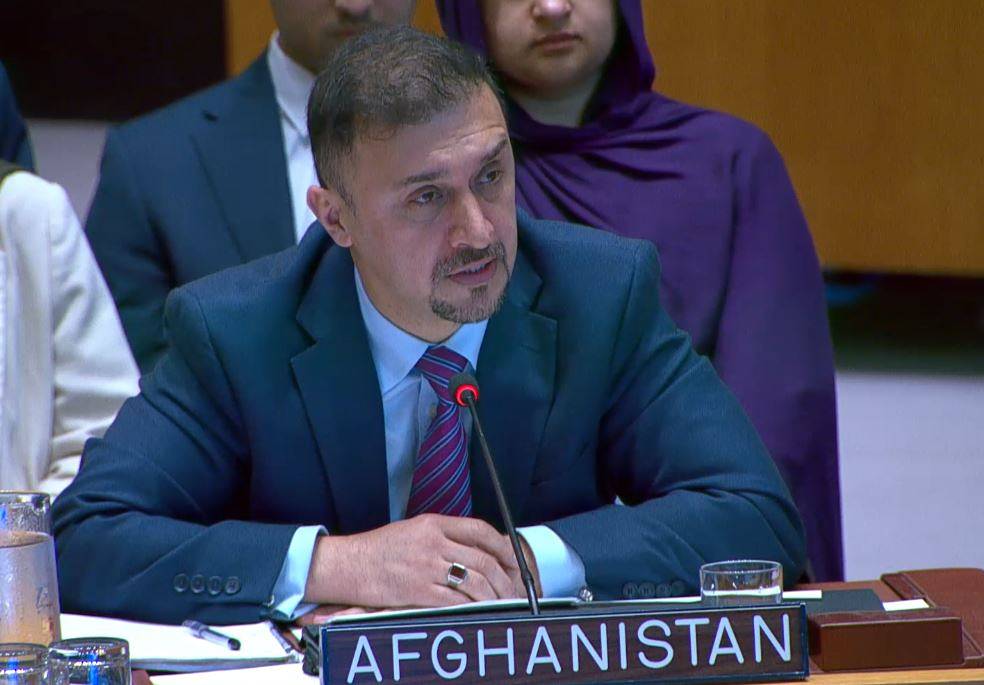
Afghanistan’s delegate said that five years is “long enough to judge the situation by actions”.

There is still no inclusive political system, no accepted constitutional framework and no accountable institutions through which Afghans can influence decisions affecting their lives.

“The absence of large-scale war should not be mistaken for sustainable peace,” he said.

The repression of women and girls is “not only a women’s rights crisis” but also a national crisis affecting Afghanistan’s economy, health, education and development and long-term stability.  Afghanistan remains the only country in the world where women and girls are formally denied education beyond the primary level.

The international community must abandon the false choice between isolation and normalization, he said, calling for principled and outcome-oriented engagement aiming towards legitimate and accountable governance.  UNAMA should work to create conditions for a political solution, he stressed.

Context:  What’s the UN doing in Afghanistan?
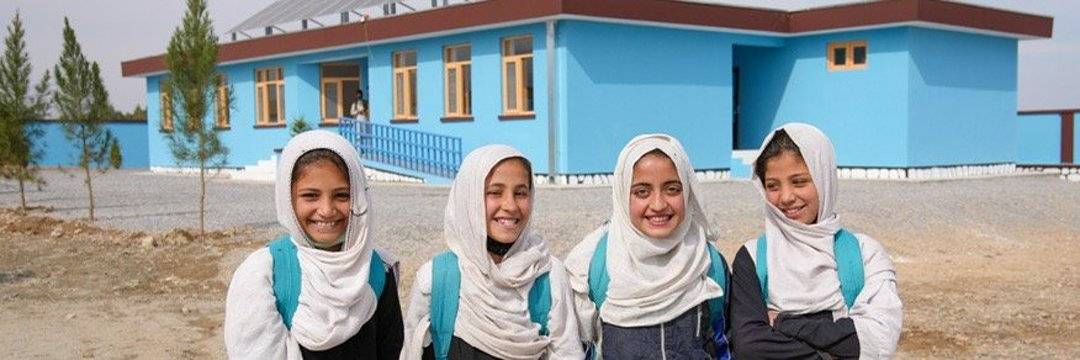
Uploaded imageUNICEF

The UN established the Special Trust Fund for Afghanistan, an inter-agency mechanism to support joint programming in the provision of basic human needs in Afghanistan.  Here’s a snapshot of ongoing UN initiatives:

  • In Kandahar, UN agencies are helping farmers build sustainable livelihoods through agricultural inputs and technical assistance, creating new opportunities for families previously dependent on opium poppy cultivation
  • World Health Organization (WHO):  Supporting the expansion of efforts to expand women’s access to specialized treatment for obstetric fistula, including surgery, counseling and follow-up care
  • UN Children’s Fund (UNICEF):  Supported the delivery of essential health services for over 6 million people, including women and children

Find out more about UN efforts in Afghanistan here.

United States demands results from Taliban
Uploaded image©UN Web TV

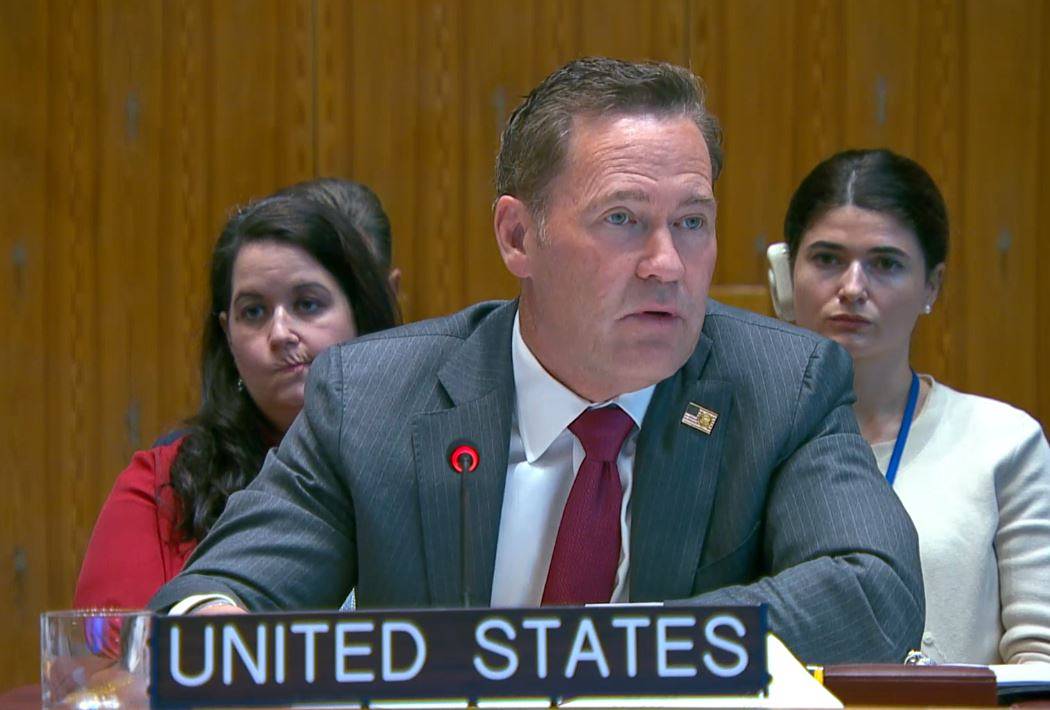
The representative of the United States said Washington will not tolerate the Taliban using American citizens as “bargaining chips”.

Condemning the group’s record, he said:  “I’ve seen them hang children, terrorize families, pillage whole villages and prey on the very people they claim to represent.”

He also lamented that Afghanistan remains the only country where girls and women are barred from higher education, saying that after 20 years of progress, “that door is now closed on them”.

Stressing the need for accountability, he added:  “This Council must demand results from the Taliban regime.”

Context: Winter is coming
Afghans returning from Pakistan are trying to rebuild their lives from scratch, said the UN emergency relief agency, OCHA.They need a safe place to sleep, education for their children and opportunities to earn a living.

With a harsh winter approaching, they also need urgent support now.

Security Council LIVE: ‘Being a woman is a crime in Afghanistan,’ civil society briefer declares
read more