 Afghanistan Peace Campaign
Since the Taliban returned to power in Afghanistan in 2021, the continuing presence of terrorist groups as well as rights violations against women and girls are a growing concern as the Security Council meets Wednesday to hear the latest updates, including from a civil society representative who said being born as a woman in the country “is a crime”.
What you need to know
- Since the Taliban returned to power in 2021, the plight of Afghans has only deteriorated, with millions impoverished while authorities violate basic human rights daily, according to the UN Human Rights Office
- Women, in particular, are facing the brunt of the Taliban rule, and since 2021, over two million Afghan girls and women have been denied access to secondary and higher education
- Both women and men are being arrested by the Taliban’s Office for the Propagation of Virtue and Prevention of Vice, primarily for alleged violations of strict dress codes, beard length, and the playing of, or listening to, music
- Censorship of the media, temporary closures of media outlets and arrests of journalists also continue.
- At least 449 men and women were subjected to corporal punishment by the de facto authorities in the first half of the year, according to the UN.
In brief – Afghanistan
Facts: UNAMA said Taliban authorities highlight security and economic gains after five years in power, but Afghanistan continues to face severe restrictions on women and girls, human rights abuses, exclusionary governance and terrorist threats. Speakers also warned of worsening humanitarian needs, refugee returns, media restrictions and growing regional security concerns.
Impact: Council members broadly agreed that restrictions on women and girls remain the main obstacle to Afghanistan’s recovery and international reintegration. Terrorist threats, economic fragility, mass returns and humanitarian shortfalls continue to undermine stability. Divisions persist, however, over whether engagement or greater pressure offers the best path forward.
Call to Action: Speakers urged the Taliban to restore women’s rights, permit female UN staff to work, build inclusive governance structures and meet counter-terrorism commitments. Donors were encouraged to sustain humanitarian funding, while the UN and Security Council were called on to maintain principled engagement, accountability efforts and support for political dialogue.
©UN Web TV
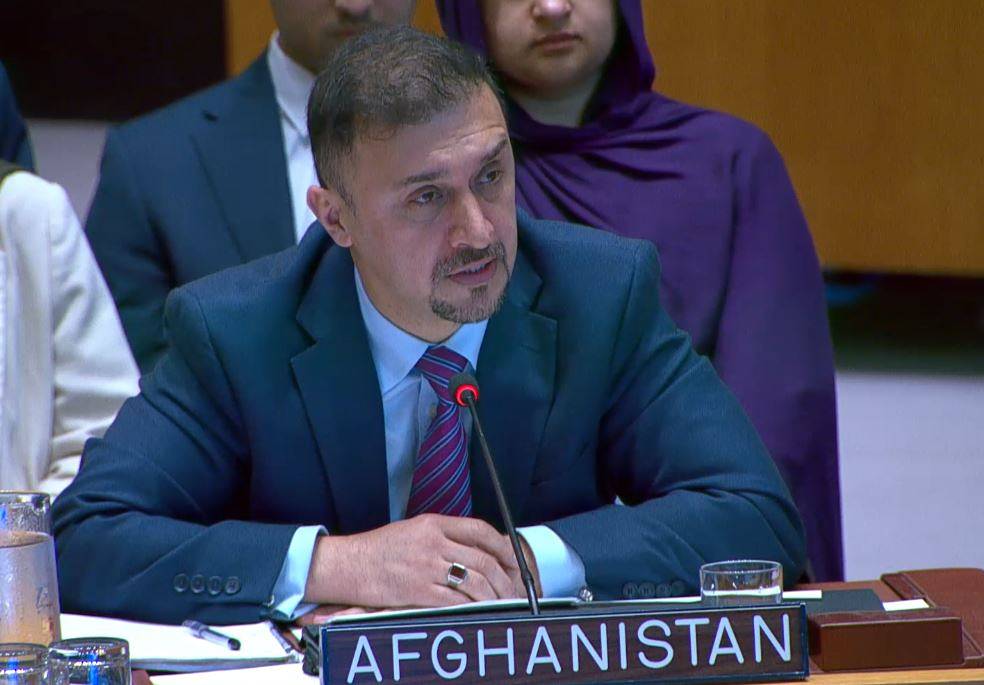
Afghanistan’s delegate said that five years is “long enough to judge the situation by actions”.
There is still no inclusive political system, no accepted constitutional framework and no accountable institutions through which Afghans can influence decisions affecting their lives.
“The absence of large-scale war should not be mistaken for sustainable peace,” he said.
The repression of women and girls is “not only a women’s rights crisis” but also a national crisis affecting Afghanistan’s economy, health, education and development and long-term stability. Afghanistan remains the only country in the world where women and girls are formally denied education beyond the primary level.
The international community must abandon the false choice between isolation and normalization, he said, calling for principled and outcome-oriented engagement aiming towards legitimate and accountable governance. UNAMA should work to create conditions for a political solution, he stressed.
 UNICEF
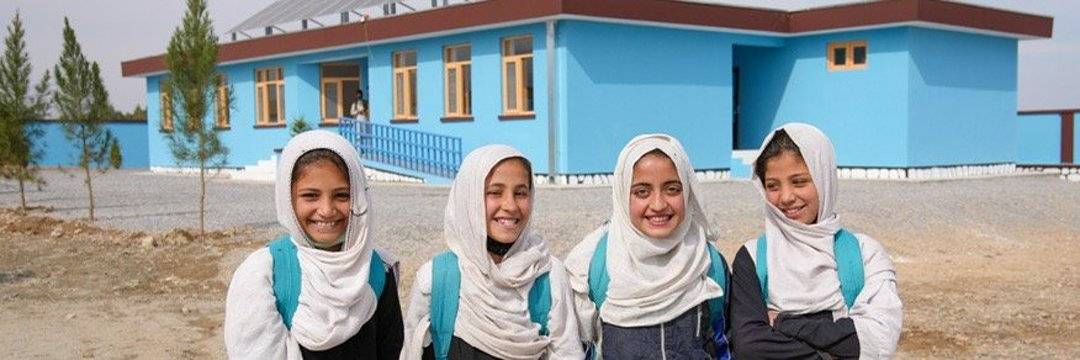
The UN established the Special Trust Fund for Afghanistan, an inter-agency mechanism to support joint programming in the provision of basic human needs in Afghanistan. Here’s a snapshot of ongoing UN initiatives:
- In Kandahar, UN agencies are helping farmers build sustainable livelihoods through agricultural inputs and technical assistance, creating new opportunities for families previously dependent on opium poppy cultivation
- World Health Organization (WHO): Supporting the expansion of efforts to expand women’s access to specialized treatment for obstetric fistula, including surgery, counseling and follow-up care
- UN Children’s Fund (UNICEF): Supported the delivery of essential health services for over 6 million people, including women and children
Find out more about UN efforts in Afghanistan here.
 ©UN Web TV
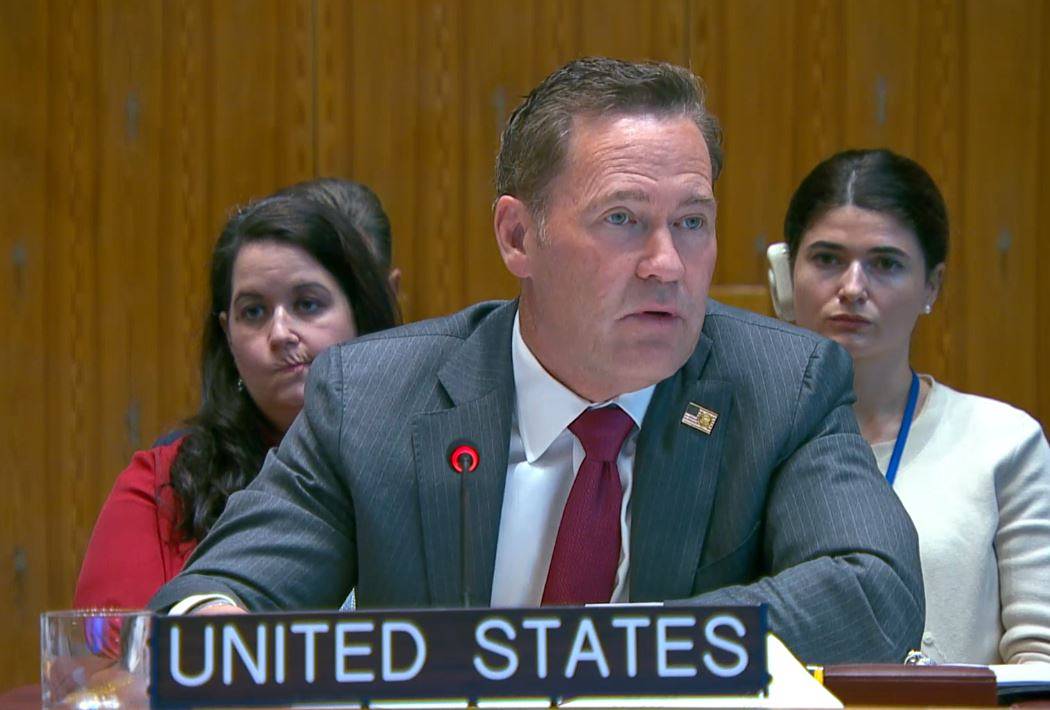
The representative of the United States said Washington will not tolerate the Taliban using American citizens as “bargaining chips”.
Condemning the group’s record, he said: “I’ve seen them hang children, terrorize families, pillage whole villages and prey on the very people they claim to represent.”
He also lamented that Afghanistan remains the only country where girls and women are barred from higher education, saying that after 20 years of progress, “that door is now closed on them”.
Stressing the need for accountability, he added: “This Council must demand results from the Taliban regime.”
With a harsh winter approaching, they also need urgent support now.