
Let’s Not Kid Ourselves: Afghanistan’s Taliban Regime Will Not Become More Inclusive

By William Byrd

Lawfare Blog

Monday, October 24, 2022, 8:31 AM

Ever since the August 2021 Taliban takeover of Afghanistan, there has been widespread, almost universal, rhetoric in international diplomatic circles—ranging from the United Nations to the European Union and the United States to Russia—that the Taliban need to form a more inclusive government, with varying definitions and views on what that means in concrete terms.

The U.S. had negotiated the Doha Agreement with the Taliban in 2020 and tried unsuccessfully to get the Taliban and the previous Islamic Republic government led by former President Ashraf Ghani to reach a negotiated end to the conflict and to embark on a peace process. When this completely failed with the final withdrawal of U.S. and other international troops followed by the unexpectedly quick Taliban victory last year, it was only natural to reach for inclusivity arguments; with peace negotiations no longer possible, the Taliban nevertheless should broaden the political base of their new regime by bringing in non-Taliban elements and influences. Unfortunately, the inclusivity argument is flawed and is undermined by patterns of historical experience.

What Is Wrong With the Conventional Wisdom

A retrospective perspective is important for absorbing lessons from the failure to negotiate a peace settlement in Afghanistan, but the salient question for Afghanistan in the immediate future is: Are there realistic prospects for the new regime to become more inclusive in response to international pressure and rhetoric? And would this be in the Taliban’s own self-interest?

Authoritarian regimes have their own dynamics and incentives, and efforts to influence them from outside must be informed by what makes sense in terms of their own overriding priority of regime as well as individual leadership survival and longevity. Asking an authoritarian regime to take actions that risk undermining—let alone toppling—it is, beyond a certain point, a fool’s errand.

Contrary to how democracies work, authoritarian regimes and their leaders are subject to different success factors. Bruce Bueno de Mesquita and Alastair Smith explore this issue in their book, “The Dictator’s Handbook,” building on associated research. Whether authoritarian leaders and regimes can stay in power, the authors assert, depends on:

  • Keeping the ruling coalition small and manageable; not expanding the circle of power much beyond the minimum necessary to maintain control over the country.
  • For the authoritarian ruler (or ruling junta), reshuffling the coalition, especially in the immediate aftermath of coming into power, to keep potential rivals in check.
  • Controlling the country’s revenues, and deploying them to reward key supporters and constituencies, pay security forces, and more generally strengthen the regime.
  • In aid-dependent countries, this includes skewing aid in favor of the regime in various ways ranging from outright corruption to “taxing” aid in different ways and directing it to favored beneficiaries.
  • Cracking down on any opposition and preventing it from organizing, sometimes through extreme measures such as executions, massacres, starvation, forced relocations, and the like.

Beyond these general principles, what does historical experience tell us about how victorious insurgencies govern after they come into power? This has been an under-researched area, partly because there have been relatively few insurgent victories compared to other outcomes of civil wars, but several recent papers shed some light on this question.

Terrence Lyons argues that victorious insurgencies naturally gravitate toward becoming authoritarian regimes, reflecting their military background and leadership built up during their successful campaign as well as their wartime governance of the territory they took control over during the fighting. Moreover, Lyons argues, victory itself provides the insurgent group with some degree of legitimacy for their authoritarian tilt, and transitional processes postconflict can be used as instruments for consolidating power. This is, however, a debated area, with Monica Toft asserting that victorious insurgencies have an opening to become more democratic, whereas when governments win, they tend to become more authoritarian. Among non-elite populations, a study of the Balkans suggests that people exposed to war-related violence tend to embrace more authoritarian values.

Kai Thaler divides victorious insurgent groups into two broad categories: (a) programmatic, aiming to achieve long-term goals including transforming socioeconomic and political relations and providing public goods and services, and (b) opportunistic, viewing the state as a prize to win and motivated purely by power and material gain. Thaler argues that victorious programmatic insurgencies will focus on expanding the footprint of the state and its influence over social and economic issues, providing more public goods and services. Opportunistic victors, by contrast, will engage in minimal state building, retain or ignore existing state institutions, provide limited public goods and services, and focus instead on security forces and economic rent extraction, allocating resources for individual and group benefit. The stronger states that some victorious insurgencies build often become more repressive and authoritarian. Thaler notes that “[r]ebel victory can potentially provide peace and public benefits in the short term, but it may come at the cost of longer-term authoritarianism and repression.”

The Taliban, a religious ideology-driven anti-foreign movement, does not fit squarely into either of these two categories. Observed Taliban behavior demonstrates significant elements of opportunism: for example, taking over existing state structures rather than building new ones, not prioritizing provision of public goods and services, focusing on security and rent extraction, using government appointments to balance and reward important members of the group, and the like. But they do have a general program—albeit vague—of ridding the society of what they perceive to be un- and less-Islamic features and foreign influences. And personal greed appears to be less of a motivating factor among the Taliban than has been the case in purely opportunistic power grabs by other insurgents and rebels.

Are the Taliban Performing Like a Typical Authoritarian Regime?

How should the Taliban be assessed in light of these patterns of international experience? Overall, much of what the Taliban have done over the past year (typically the first six months to one year is the most dangerous period for the survival of a new authoritarian regime or leader) is not only understandable but largely sensible from the perspective of their own success factors and their leadership’s self-interest.

First, while taking over the formal state levers of power and existing government institutions from the fallen Ghani administration, the Taliban have not strayed from their authoritarian roots. The Taliban movement was formed in the authoritarian mold and developed as such during a quarter-century of civil war and insurgency. The movement is headed by a top religious figure (the Amir), with high-level decision-making by a sizable, but far from open, group of religious, military, and political leaders; there is no pretense of democracy.

Second, the Taliban have prioritized maintaining the broad outward unity of their movement despite emerging tensions between the Amir and his associates in Kandahar and formal government leaders in Kabul.

Third, the Taliban have brutally and effectively cracked down on opposition, especially any signs of armed resistance. International experience suggests that, however tragic for the country, this is an authoritarian regime’s typical response to dissent and leads to a higher probability of regime survival—at least for a while—compared to backing down or trying to accommodate opposition.

Fourth, the Taliban have resisted international and domestic pressures to broaden their government even symbolically, let alone become more inclusive in any meaningful sense. They face challenges in managing their own factions, which would be aggravated by broadening their governing coalition.

Fifth, the Taliban have been remarkably successful in collecting, consolidating, and centralizing customs revenue, while sharply curbing corruption in customs and getting rid of the bulk of the numerous road checkpoints that had generated hundreds of millions of dollars in bribes under the previous government. Total revenue collected this year is likely to reach $1.5 billion, and possibly more; this is less than the peak collection under the previous government but impressive given the collapse of the Afghan economy, which has not led to a commensurate decline in revenue.

Sixth, the Taliban have stopped publishing any data on actual budget expenditures, nor have they published a full budget for the current fiscal year (March 2022-March 2023), just some headline numbers. Though sufficient data on revenues has been made available to assess performance, broadly confirmed by field research, no information is available on actual budget expenditure, which apparently is being treated as a “state secret” by the Taliban administration. While this is bad public finance practice and is harmful to good governance and accountability to the citizenry, budget secrecy allows the Taliban to deploy the resources they are mobilizing to benefit the regime with no external scrutiny.

Seventh, where they perceive it to be in their own interest, the Taliban strive to maintain capacity in several key government agencies, including the customs administration. (The automated customs software was quickly revived and is now employed more effectively than it was under the previous Afghan government.) It also appears that they have tried to maintain existing capacity in the intelligence agency, for obvious reasons.

Apparent Taliban Mistakes

Where do the Taliban seem to have gone wrong? Any conclusions must be tentative, since we don’t know much about the inner workings of Taliban decision-making and managing tensions within the movement behind the scenes. Nevertheless, certain actions seem at least superficially puzzling and contrary to their movement’s self-interest, such as:

  • The comprehensive opium ban announced by Amir Haibatullah, which, if implemented, will not only harm Afghanistan economically but also alienate some individuals and groups within and around the Taliban, particularly in the south and southwest of the country, who have been beneficiaries of the drug industry and could cause problems for the regime.
  • Beyond trade, transport, and taxation—where the Taliban have demonstrated competence and effectiveness—some of their actions suggest a lack of understanding of economic issues.
  • The back-and-forth over the closure of girls’ secondary schools in much of the country, even though women are allowed to apply to and attend university and private girls’ schools remain open, which undermines the public picture of Taliban unity and has damaged their international relations.
  • The blatant harboring of al-Qaeda leader Ayman al-Zawahiri in Kabul and the subsequent U.S. drone strike killing him, which embarrassed the Taliban domestically and internationally, undermining their claim that they are implementing counterterrorism commitments.
  • The inability to prevent domestic terrorist attacks by the Islamic State-Khorasan and occasional attacks from Afghan soil on neighboring countries, which undermines their narrative and selling point vis-a-vis the Afghan population and regionally that they are bringing security and stability to the country.

What explains these apparent departures from authoritarian good practice? There are several, not mutually exclusive, possibilities here: The Taliban are learning the ropes of running an authoritarian state, and perhaps they understandably are making some miscalculations; behind-the-scenes political economy dynamics, not fully apparent from the outside, may be influencing some of their actions; they may not focus on or care about certain issues; or the Taliban may be prisoners of their own ideology and rhetoric, which could outweigh considerations of narrower self-interest for the authoritarian regime and its leadership. (The opium ban, for example, went out of its way to be comprehensive and strongly stated, probably unnecessarily so.)

And the Taliban seem almost congenitally unable to make even minor gestures to the international community that would not compromise the regime’s power, authority, or core ideological principles, and would not make their regime more inclusive in any meaningful sense. An example is reaffirming the nominal autonomy of Afghanistan’s central bank (which is enshrined in current Afghan law), appointing non-Taliban technocrats to leadership positions there, and bringing in technical assistance where needed.

More generally, many authoritarian regimes that brutally repress their people maintain decent diplomatic and economic relations with the outside world—not least by putting forward distorted narratives and making announcements and commitments they don’t plan to adhere to but that superficially assuage international concerns. The Taliban have not succeeded in doing so.

What Can Foreigners Do—If Anything?

Informed by historical experience with other victorious insurgencies and authoritarian regimes, how should the U.S. and other countries approach and try to influence the Taliban? This is a major challenge, as little that has been tried over the past 14 months has worked in meaningfully influencing Taliban behavior and actions.

Unfortunately, what has not worked and will not work in the future is clearer than what might work. In particular, preaching international laws and norms, the need to form an inclusive government, and the like—even when incentivized by the possibility of recognition and implicit or explicit offers of aid—has not made much of a difference and is unlikely to change the Taliban in the future.

One set of actions that effectively influenced and changed regimes in Afghanistan’s own historical experience as well as in other countries—external support to armed groups—appears to be ruled out in the near-term future. Foreign powers—some of whom supported such groups in the past—are refraining from doing so now. They may be considering the likelihood that the resulting conflicts and, at the extreme, “proxy wars” risking a breakdown into general civil war would be more damaging to Afghanistan and to their interests than the present situation with the Taliban in power.

Leadership succession (through natural causes or otherwise) is the Achilles’ heel of many authoritarian regimes. Though it may sometimes present opportunities for change, it may also give rise to major risks such as widespread conflict during a succession crisis. External involvement in leadership changes and succession easily could prove short-lived, ineffective, or even counterproductive, as happened with U.S. and international interventions in several presidential election crises during the Islamic Republic regime. And—an example of direct, kinetic action to change leadership—the U.S. drone strike in 2016 that killed the preceding Taliban leader, Akhtar Mansoor, did not succeed militarily or politically and delayed incipient negotiations with the Taliban until a few years later when the military equation was even more favorable to them. Foreign governments, however, would do well to maintain sound knowledge, engagement, and flexibility with respect to the Taliban regime so as to be in a good position to respond to any succession developments and associated opportunities that may arise as well as to mitigate risks.

So, what might work in the short run to influence the Taliban? Given the experience over the past year, as well as in earlier peace negotiations and other interactions with the Taliban, expectations need to be modest.

A recent report from the Afghanistan Analysts Network admits that the Taliban’s collection of large amounts of revenue is unlikely to translate into some kind of “social contract” whereby much of the money is returned in the form of public services to the population, nor is it likely to give rise to some kind of tax revolt. The traders, transporters, and businessmen, however, who pay the bulk of taxes under Afghanistan’s narrowly based tax system (heavily reliant on customs duties and taxes paid at border crossings) have demonstrated the ability to exert some degree of influence over tax rates and other business issues that directly affect their profits, and thereby how much tax they can afford to pay. According to recent research, the Taliban seem aware of profitability considerations and have proved willing to renegotiate when, for example, private businesses argue strongly that high tax levies render their activities financially unviable.

Another segment of Afghan society that appears to be able to exert a degree of influence over the Taliban at the local level is traditional rural stakeholders, including tribal leaders, village elders, and the like. The strength of this channel of influence varies across different parts of the country and, perhaps, also the idiosyncrasies of local Taliban leaders and their relationships to the central regime.

Neither of these potential sources of influence should be overstated, and their impacts would tend to be around specific issues that are important to the stakeholders concerned and local problems. Moreover, foreigners attempting to exert leverage through these channels, however well intentioned, is especially risky since that could discredit the Afghan stakeholders and trigger a Taliban backlash—making the situation even worse.

The question remains whether intermediaries at least somewhat trusted by the Taliban could argue cogently in favor of actions in the Taliban’s own self-interest as an authoritarian regime and leadership. Again, such interventions cannot be seen to be orchestrated by international actors, as it would discredit the intermediaries. Nevertheless, there may be scope for some indirect advice to the Taliban, oriented toward the regime’s own self-interest.

One example might be to put forward technical arguments for the de-politicization of certain government functions that are not sensitive to the Taliban ideologically and would not threaten their power. The central bank may be a good example, and improvements there would be beneficial in helping to stabilize the economy.

Overall, the U.S. and other international partners are left with very limited levers to influence and change Taliban behavior—let alone to push them to become meaningfully more inclusive, which is not in their own self-interest. Recognizing this is the first step toward a more practical approach.
William Byrd is a senior expert at the U.S. Institute of Peace, where he focuses on Afghanistan; the views expressed are his own. A development economist by background, he was previously with the World Bank and has worked on and lived in China, India, Pakistan, and Afghanistan.
Let’s Not Kid Ourselves: Afghanistan’s Taliban Regime Will Not Become More Inclusive
read more

Russia’s Recruiting Afghan Commandos


Foreign Policy
OCTOBER 25, 2022, 2:53 PMAbandoned special forces veterans are getting job offers for a very different kind of battlefield.

Members of Afghanistan’s elite National Army Commando Corps, who were abandoned by the United States and Western allies when the country fell to the Taliban last year, say they are being contacted with offers to join the Russian military to fight in Ukraine. Multiple Afghan military and security sources say the U.S.-trained light infantry force, which fought alongside U.S. and other allied special forces for almost 20 years, could make the difference Russia needs on the Ukrainian battlefield.

Afghanistan’s 20,000 to 30,000 volunteer commandos were left behind when the United States ceded Afghanistan to the Taliban in August 2021 . Only a few hundred senior officers were evacuated when the republic collapsed. Thousands of soldiers escaped to regional neighbors as the Taliban hunted down and killed loyalists to the collapsed government. Many of the commandos who remain in Afghanistan are in hiding to avoid capture and execution.

The United States spent almost $90 billion building the Afghan National Defense and Security Forces. Although the force as a whole was incompetent and handed the country over to the Taliban in a matter of weeks, the commandos were always held in high regard, having been schooled by U.S. Navy SEALs and the British Special Air Service.

Emblematic of the commandos’ pyrrhic success was the battle of Dawlat Abad, where an Afghan commando unit fought the Taliban while waiting for reinforcements and resupplies that never came in June 2021. The U.S.-trained major who led the unit, Sohrab Azimi, became a national hero when it was revealed he’d had only three days’ rest after fighting for 50 days straight before heading to his final battle.

Now, they are jobless and hopeless, many commandos still waiting for resettlement in the United States or Britain, making them easy targets for recruiters who understand the “band of brothers” mentality of highly skilled fighting men. This potentially makes them easy pickings for Russian recruiters, said Afghan security sources. A former senior Afghan security official, who requested anonymity, said their integration into the Russian military “would be a game-changer” on the Ukrainian battlefield, as Russian President Vladimir Putin struggles to recruit for his faltering war and is reportedly using the notorious mercenary Wagner Group to sign up prisoners.

Wagner is a shady organization that officially doesn’t exist but is believed to be run by Yevgeny Prigozhin, an associate of Putin who possibly funds it through the GRU military intelligence agency. It reportedly first emerged in Crimea after Moscow’s 2014 annexation of the region from Ukraine, and it has since appeared in Syria, Libya, and elsewhere in Africa. Prigozhin was recently filmed signing up prisoners in return for canceled sentences to reinforce Russian lines in Ukraine.

A former official, who was also an Afghan commando officer, said he believed Wagner was behind Russia’s recruitment of Afghanistan’s special forces. “I am telling you [the recruiters] are Wagner Group. They are gathering people from all over. The only entity that recruits foreign troops [for Russia] are Wagner Group, not their army. It’s not an assumption; it’s a known fact,” he said. “They’d be better used by Western allies to fight alongside Ukrainians. They don’t want to fight for the Russians; the Russians are the enemy. But what else are they going to do?”

Some former commandos report being contacted on WhatsApp and Signal with offers to join what some experts referred to as a Russian “foreign legion” to fight in Ukraine. News of the recruitment efforts has caused alarm in Afghanistan’s former military and security circles, with members saying up to 10,000 former commandos could be amenable to the Russian offers. As another military source put it: “They have no country, no jobs, no future. They have nothing to lose.”

“It’s not difficult,” he added. “They are waiting for work for $3 to $4 a day in Pakistan or Iran or $10 a day in Turkey, and if Wagner or any other intelligence services come to a guy and offer $1,000 to be a fighting man again, they won’t reject it. And if you find one guy to recruit, he can get half his old unit to join up because they are like brothers—and pretty soon, you’ve got a whole platoon.”

Since global attention switched to Ukraine following Russia’s February invasion, the Afghan commandos have been left high and dry. Instead of helping them escape Taliban death squads, the United States and its allies have largely gone AWOL. Their vulnerability to recruitment by countries hostile to the United States was flagged in a report by Rep. Michael McCaul on last year’s evacuation debacle. Referring to United States’ intelligence assets—which include the Afghan commandos—he said they “could potentially present a risk to U.S. security should they be coerced or coopted into working with an adversary, including international terrorist groups such as [the Islamic State-Khorasan] or state actors like China, Russia, and Iran.”

A 35-year-old former commando captain in hiding in Afghanistan said he had helped a number of former colleagues connect with a recruitment office in Tehran. Recruits were flown from Afghanistan to Iran and then to Russia, he said. What happened next was unclear: “When they accept Russia’s offer, the commando personnels’ phones are turned off. They proceed very secretly,” the former captain said.

He and other former commandos who spoke from Afghanistan and Iran described living in desperate conditions. “We are very disappointed. For 18 years, shoulder to shoulder, we performed dangerous tasks with American, British, and Norwegian consultants. Now, I am in hiding. I am suffering every second,” said the 35-year-old. He didn’t take up the offer, as he regards Russia as Afghanistan’s enemy. The former Soviet Union invaded Afghanistan in 1979 and fought a 10-year war against U.S.-supported mujahideen. More recently, Russia supported the Taliban’s insurgency, and it has close ties with them now that they’re in power, stopping short of diplomatic recognition.

Another commando who fought alongside British special forces said he fled to Iran to escape Taliban death squads and now worries he will be arrested by Iranian police. Both commandos said they wanted to resettle in Britain but have no idea how to contact the authorities to ask for protection.

Recruitment messages seen by Foreign Policy use the same wording, suggesting a centralized operation. “Anyone who would like to go to Russia with better treatment and good resources: please send me your name, father’s name, and your military rank,” the messages say. Recipients are asked to help recruit other members of their units. Afghan television reported that the recruitment offers include Russian citizenship.

The 35-year-old captain, father to four young children, said he was still hopeful that he would be resettled in Britain. “We fought the sworn enemies of Afghanistan for 20 years, all over the country, with high morale, on the side of Britain and the United States,” the captain said. “We are hiding like prisoners now.”

Lynne O’Donnell is a columnist at Foreign Policy and an Australian journalist and author. She was the Afghanistan bureau chief for Agence France-Presse and the Associated Press between 2009 and 2017.

Russia’s Recruiting Afghan Commandos
read more

Afghanistan Becomes World’s ‘Least Secure’ Country: Report

NDTV (India)

According to Gallup’s index, Afghanistan is the country in which the people are “least likely” to feel safe while walking at night alone since the Taliban seized power in Afghanistan.

Kabul: Amid unabated human rights violations in Afghanistan due to Taliban rule, the war-torn country has been ranked as the “least secure” country in the world, local media reported citing a report by Gallup’s Law and Order Index.

The survey evaluated around 120 countries based on the safety and security of the country’s citizens. This report comes after Afghanistan retained its position in the Global Peace Index for five years as the world’s “least peaceful” country, Khaama Press reported.

Afghanistan emerged with a score of 51 as the survey was conducted on the basis of how safe people feel in their communities or have been prone to theft or assault in the previous year.

Despite the low score in 2021, Afghanistan’s score was an improvement over its previous result in 2019, which was 43 according to Gallup’s survey. The surveys conducted by Gallup in Afghanistan in 2021 were conducted when the US withdrew its troops.

However, Singapore was rated as the most secure, with a score of 96 in the survey report, according to Khaama Press.

According to Gallup’s index, Afghanistan is the country in which the people are “least likely” to feel safe while walking at night alone since the Taliban seized power in Afghanistan.

Since the Taliban seized power in Kabul last year, the human rights situation has been exacerbated by a nationwide economic, financial and humanitarian crisis of unprecedented scale.

Acts of terror, killings, blasts and attacks have become a regular affair with unabated human rights violations involving ceaseless murder of civilians, destroying mosques and temples, assaulting women, and fueling terror in the region.

The Taliban dismantled the system to respond to gender-based violence, created new barriers to women accessing health care, blocked women’s aid workers from doing their jobs, and attacked women’s rights protesters.

With the US troops’ withdrawal from the country, large-scale violence has been unleashed creating political uncertainty in different parts of the country. At least 59 per cent of the population is now in need of humanitarian assistance – an increase of 6 million people compared with the beginning of 2021, according to UNAMA.

Afghanistan Becomes World’s ‘Least Secure’ Country: Report
read more

Russia recruits Afghan commandos to bolster forces in Ukraine: ‘Surprising’ effect of US military drawdown

By Peter Aitken 

Multiple Afghan military and security sources have said the elite National Army Commando Corps, which fought alongside U.S. forces for nearly two decades, have started joining up with Russian troops in Ukraine after the U.S. left them behind following its withdrawal from Afghanistan in 2021, according to a report from news website Foreign Policy.

The force, comprised of 20,000 to 30,000 volunteer commandos, have faced persecution in their homeland after the U.S. departed as the Taliban took control of the country. A few hundred senior officials evacuated during the withdrawal, leaving thousands of soldiers to try and escape to neighboring countries or hide to avoid capture and execution.

A Department of Defense spokesperson told Fox News Digital that the Pentagon has “seen the reports” and that officials will “monitor” the situation but have nothing to say on the matter today. The State Department did not respond to a request for comment.

The U.S. spent around $90 billion to build the Afghan National Defense and Security Forces, according to a report from the Special Inspector General for Afghanistan Reconstruction (SIGAR) from May 2022.

New Afghan commandos take part in their graduation ceremony in Kabul, Afghanistan, on Jan. 13, 2020. (Xinhua/Rahmatullah Alizadah via Getty Images)

Rebekah Koffler, president of Doctrine & Strategy Consulting and a former DIA intelligence officer specializing in Russia and Putin, told Fox News Digital that the situation might prove more complicated than initial reports indicated as intelligence suggests that Iran may be helping Russia with its recruitment.

“Intelligence indicators suggest that Russian operatives, possibly with assistance from Iran, are recruiting Afghan soldiers and refugees, including those trained by U.S. forces, to fight on behalf of Russia in Ukraine,” Koffler said.

New Afghan commandos take part in their graduation ceremony in Kabul, Afghanistan, on Jan. 13, 2020. (Rahmatullah Alizadah/Xinhua via Getty)

“In the aftermath of the hasty and disorganized U.S. withdrawal from Afghanistan, thousands of Afghan security personnel, translators and support staff had to flee as the Taliban took control,” she explained. “They became refugees in neighboring countries with no means of survival.”

New Afghan commandos take part in their graduation ceremony in Kabul, Afghanistan, on Jan. 13, 2020. (Rahmatullah Alizadah/Xinhua via Getty)

The recruitment presents another troubling consequence of President Biden’s withdrawal with continued knock-on effects: many Afghanistan allies – possibly thousands – are still waiting to enter the U.S.

Bill Roggio, senior fellow at the Foundation for Defense of Democracies, told Fox News Digital that the report presents “one of the more unexpected consequences of President Biden’s rash and disastrous decision to precipitously withdraw from Afghanistan” and warned of the significant impact it could have on the war in Ukraine.

“Tens of thousands of commandos were left in Afghanistan to fend for themselves, and many are without work and being hunted by the Taliban,” said Roggio, who also edits the Long War Journal news site. “They are easy recruiting prey for the Russians, assuming they are willing to fight for the Russians.”

“If the Russians can recruit the commandos in large numbers, they can have an impact on the battlefield in Ukraine,” he added.

Russia recruits Afghan commandos to bolster forces in Ukraine: ‘Surprising’ effect of US military drawdown
read more

Balkh Residents Complain of Increased Kidnapping, Murder

Meanwhile, the Balkh Police Command officials promised that the perpetrators of the recent incidents will be arrested and punished.

The increase in cases of kidnapping and murder, especially of doctors, is causing alarm among residents of Balkh province.

They asked the security officials to arrest and punish the perpetrators.

“We ask the authorities and the military departments to pay serious attention so that our doctors can work comfortably,” said Fazel Rahim Houshmand, a doctor.

“All of our professionals are concerned about their lives as well as the lives of their families,” said Sayed Adilshah, a doctor.

“We worry that something may happen to us and our family when we leave the house in the morning,” said Ahmad Siyar, a doctor.

“The security situation is gradually getting worse; we ask the government to improve the situation again,” said Balkh resident Fazel Rahman.

Meanwhile, the Balkh Police Command officials promised that the perpetrators of the recent incidents will be arrested and punished.

“We hope to find the perpetrators of Dr. Asadullah Shariq and bring them to justice,” said Mohammad Asif Waziri, the spokesman of the Balkh Police Command.

These concerns were raised when Asadullah Shariq, one of Mazar-e-Sharif’s well-known doctors, was recently shot and killed by unidentified armed men while returning to his home in the PD7.

Balkh Residents Complain of Increased Kidnapping, Murder
read more

SIGAR: US Has Restarted Development Programs in Afghanistan

In the report, SIGAR said that in Afghanistan the health sector faces a lack of budget and expert staff. 

A report from the Special Inspector General for Afghanistan Reconstruction (SIGAR) said that the US has restored reconstruction programs in Afghanistan. 

The SIGAR report also expressed concern about the lack of facilities and budget in the health system and the loss of twenty years of achievements in Afghanistan.

“The Department of State and USAID have restarted reconstruction programs that were active prior to August 2021 and provided new funding for other programs focusing on poverty, hunger, malnutrition, economic stress, health care, agriculture, and education,” SIGAR said.

“The restored reconstruction programs are an important step for trust-building and can help to reduce poverty and help in the health and agriculture sectors, and we welcomed it,” Said Abdul Latif Nazari, deputy Minister of Economy.

In the report, SIGAR said that in Afghanistan the health sector faces a lack of budget and expert staff.

“In the immediate aftermath of the Taliban’s takeover, the health care sector faced an urgent funding lapse when international support and government funding for Afghanistan’s health sector was immediately halted. The World Bank halted funding for its Sehatmandi program, pushing the health care system to the brink of collapse,” said SIGAR.

Earlier, the deputy minister of the Public Ministry said that more than one billion dollars was promised for the health sector, but the Ministry of Public Health is not involved in how it is spent.

SIGAR: US Has Restarted Development Programs in Afghanistan
read more

Missteps and Missed Opportunities for Peace in Afghanistan

The United States, successive Afghan governments and the Taliban missed several opportunities to achieve peace over the past couple of decades. Today, under the Taliban government, which is not recognized by a single country, Afghanistan is facing twin economic and humanitarian crises while the marginal gains made on women’s rights have all but evaporated.
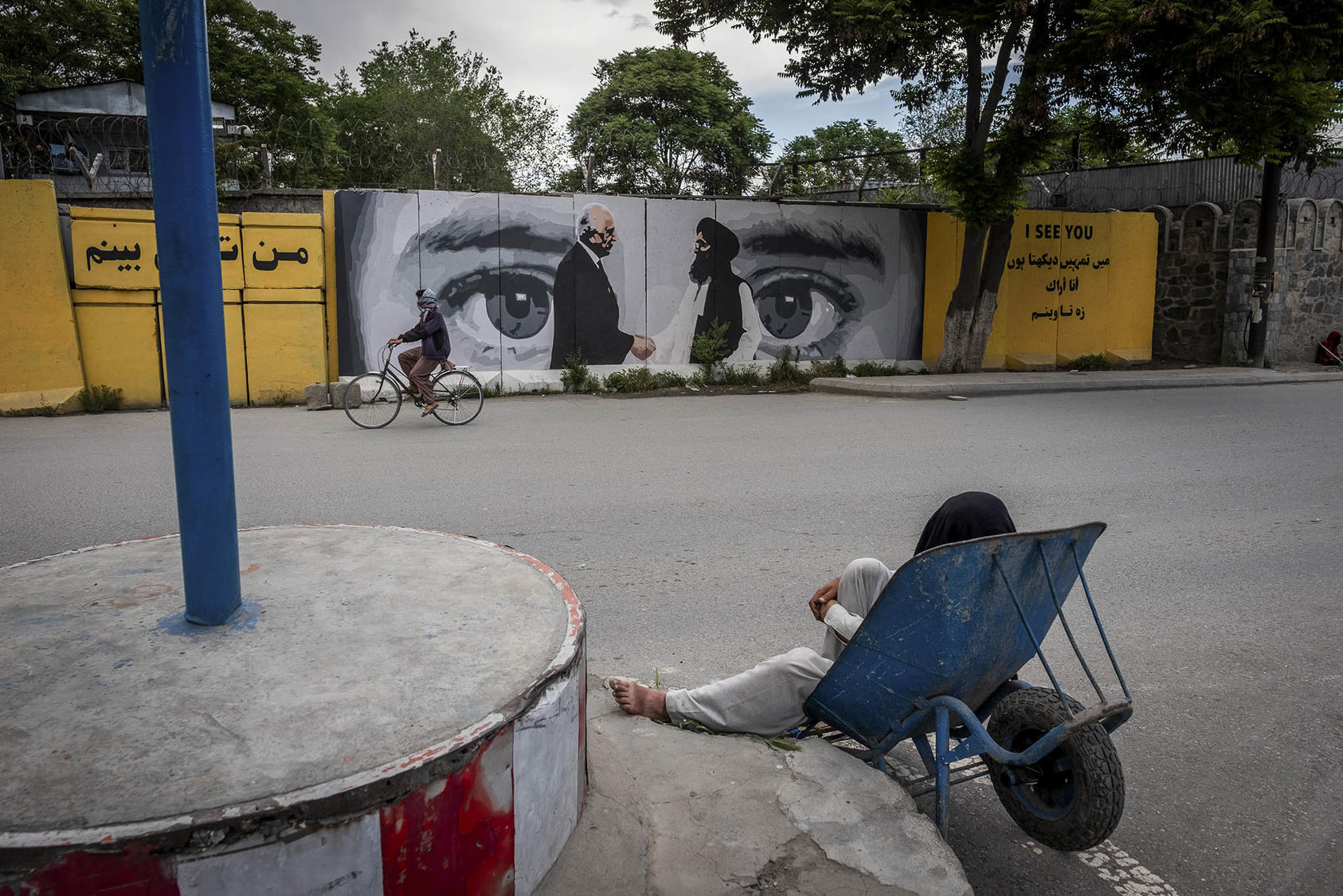
A mural depicting Zalmay Khalilzad, the U.S. special representative for Afghanistan reconciliation, and Mullah Baradar shaking hands after the signing of a peace deal, in Kabul, Afghanistan, May 15, 2020. (Jim Huylebroek/The New York Times)
Masoom Stanekzai, a former chief peace negotiator for the Afghan government and director of the National Directorate of Security in Afghanistan, believes three historic mistakes were made in the decades-long peace process. First, he said, the exclusion of the Taliban from the Bonn Conference in 2001 that produced an agreement on a post-Taliban government was a “strategic mistake” that resulted in squandering a “unique opportunity” for peace. Second, Pakistan, through its support to the Taliban, played the role of spoiler in the peace process. And third, the U.S. invasion of Iraq in 2003 diverted attention away from Afghanistan at a critical moment.Steve J. Brooking, a former special advisor on peace and reconciliation at the U.N. Assistance Mission in Afghanistan (UNAMA) who led U.N. engagement with the Taliban, quoting Lakhdar Brahimi, a former head of UNAMA, described the exclusion of the Taliban from the Bonn Conference as the “original sin.”

Habiba Sarabi, a former member of the Afghan government negotiation team led by Stanekzai, and former deputy chair of the Afghan High Peace Council, a body established in 2010 to negotiate with the Taliban, pointed out another flaw in the process. She said that when the peace process got underway participants were looking for a “quick fix” and, as a result, critical constituencies, particularly women, were ignored.

Stanekzai, Brooking and Sarabi participated in a panel discussion hosted by the United States Institute of Peace on October 25.

Missed Opportunities

Following the U.S.-led invasion that toppled the Taliban regime in 2001, Stanekzai said Afghanistan was turned into a laboratory for experiments with peacemaking, development initiatives and security sector reform. But, he said, the disconnect between these efforts meant instability persisted.

In 2013, an opportunity for peace presented itself when the Taliban opened an office in the Qatari capital Doha following months of diplomatic negotiations. It was a good idea to have an official address where people could engage with the group’s leadership, said Brooking. However, that opportunity was lost because the Taliban opening of the office violated certain terms of a memorandum of understanding, which was brokered by Qatar. The Taliban shut the office following objections raised by the United States and then Afghan President Hamid Karzai over the Taliban’s use of its white flag and a sign that read “Islamic Emirate of Afghanistan” — actions that were expressly prohibited in the memorandum of understanding.

By 2018, the peace process had gained momentum. Then U.S. President Donald J. Trump appointed Zalmay Khalilzad special representative for Afghanistan reconciliation and tasked him with striking a deal with the Taliban.

The United States engaged in direct negotiations with the Taliban in Doha. The Taliban had refused to negotiate with then Afghan President Ashraf Ghani’s government, which it considered a puppet of the West, as it did the Karzai government before it. The fact that the Ghani administration was excluded from negotiations — just as the Taliban was excluded from the Bonn Conference in 2001 — delegitimized the Ghani government, said Stanekzai.

Khalilzad’s appointment marked the beginning of a process with the Taliban that Kristian Berg Harpviken, a research professor at the Peace Research Institute Oslo, said caused “considerable unease” among Afghanistan’s neighbors “almost all of whom actually want the United States out, but then almost all of whom also worry about the consequences” of a U.S. withdrawal.

The United States’ priority was the withdrawal of its forces from Afghanistan, while for Afghans it was that this withdrawal be done in a responsible manner that results in peace, said Stanekzai.

Brooking said that after the United States signed the Doha agreement with the Taliban in 2020, the Afghan negotiating team was sent in “with one hand tied behind their back” and later when U.S. President Joe Biden announced his decision to withdraw U.S. troops from Afghanistan it “cut the legs off the negotiating team.”

“After that, failure was inevitable,” Brooking said. By August 2021, the Taliban had overrun Kabul and Ghani had fled the country. Brooking said Karzai and Ghani were equally to blame for lost opportunities for peace. He said they had “scuppered various initiatives for peace, presumably for their own interests.”

Women Ignored in Peace Process

Describing women as strong peacebuilders, Sarabi, who as governor of Bamiyan province was the first female governor of an Afghan province, said they were “forgotten” and “ignored” in the peace process. “The peacebuilding that people are doing at the local level with the community is very important; the social peace,” Sarabi explained.

Sarabi said that when peace negotiations got underway, some organizations took the initiative to have an “inclusive mechanism for peace” with the aim of building a bridge between civil society, women’s groups and community elders and the peace negotiations team. However, she said, “the Taliban was not ready to listen to the voice of people and the voice of women.”

Sarabi pointed out that the Doha agreement did not contain a single word about women. “The quick fix announcement of [the] peace process damaged everything,” she said, adding, “Peace cannot be [achieved] within a month or some months.”

A big problem, Sarabi and Stanekzai said, was a lack of consensus among the United States, Afghan leaders and Afghan civil society on the definition of peace. For example, Sarabi explained, while there were many discussions about reducing violence these came to naught in the absence of a mechanism to reduce violence. Stanekzai said the U.S. and Afghan governments were focused on the peace process but not on the end state.

Managing the Spoilers

According to Stanekzai, Afghanistan’s stability has been impacted by several factors, including government corruption, extremism and the fact that the country is caught in the middle of global and regional power rivalries.

“In order to understand Pakistan’s involvement in Afghanistan we certainly have to understand Pakistan’s relationship to India,” said Harpviken, pointing to the longstanding rivalry between India and Pakistan.

Stanekzai described the detrimental role played by “spoilers” — specifically Pakistan — in the peace process, noting that neither the U.S. government nor the Afghan government properly managed this challenge.

“Pakistan has been a problem,” said Brooking, adding that while U.S. intelligence agencies and successive administrations were well aware of the support Pakistan was giving to the Taliban, nothing was ever done about it.

“The United States often has a myopic view of conflicts,” said Scott Worden, director of Afghanistan and Central Asia programs at USIP, who moderated the discussion. “We put ourselves at the center of the problem and then, in this case, we focused on Afghanistan” and then “recognized that Pakistan had a central role in both supporting the Taliban and affecting events on the ground in Afghanistan.”

In Bonn, Brooking recalled, the United States told the world “you are either with us or against us.” Pakistan reluctantly sided with the United States, but then the invasion of Iraq created a “massive distraction” which Pakistan exploited to rearm the Taliban, he said.

In 2010, with the establishment of the special representative’s office in Washington, “the policy of the day became Af-Pak,” said Harpviken. There was an eagerness to “pursue a genuine regional engagement,” but that goal was quickly shelved as “the strategy for the neighborhood morphed into primarily being about preventing Pakistan from undermining the project in Afghanistan,” he added.

Afghanistan’s neighbors pursued their own objectives that were largely informed by security threats. As a result, Harpviken said, despite the fact that there were “very attractive economic and social prospects” that they could have pursued, the immediate threat to these countries was “existential,” which is what shaped their relationship with Afghanistan.

Harpviken said the United States did not consistently pursue a regional concert in support of Afghan peace. As for Afghanistan’s neighbors, he asked: “Why was it that they didn’t see the potential for them in a peaceful Afghanistan?” The answer to that is quite simple, he said, adding: “The obstacles to getting to that objective, attractive as it was, seemed to them to be insurmountable. Therefore, minimizing risk would be the wise thing to do.”

‘Back to Square One’

Worden noted the shift in the United States’ global position in 2001 when it was a unipolar actor with greater economic and political leverage than it has today. Following its military withdrawal from Afghanistan in August of 2021, Worden said, the United States has become “increasingly reliant on the region to address the risks that come from Afghanistan, and Afghans themselves rely on the region to hopefully provide a source of additional stability.”

However, there may be only so much that regional powers can do. Harpviken said that while Pakistan has been “absolutely instrumental” in the Taliban’s ability to return to power, it now finds that the Taliban are “not obeying orders” and “in many ways we are back to square one.”

Unlike in the 1990s, when the Taliban government was recognized by Pakistan, the United Arab Emirates and Saudi Arabia, no country today recognizes the government in Kabul. Nevertheless, Harpviken said many of Afghanistan’s neighbors have developed working relationships with the Taliban. “We do see a gradual adaptation,” he said, adding, “geography matters and if you are a next-door neighbor you want to minimize the risks.”

Eventually, Harpviken said, “A level of consistent engagement with the Taliban will be necessary, recognizing fully that we will not see dramatic reform within the Taliban neither in the short nor the long term.”

Missteps and Missed Opportunities for Peace in Afghanistan
read more

Taliban Escalate New Abuses Against Afghan Women, Girls

Afghanistan’s Taliban are escalating restrictions against women, sending armed men into girls’ classrooms and forcing staff to inspect girls’ bodies for signs of puberty to disqualify them from further schooling. Afghan women report Taliban enforcers beating women whom they find wearing Western-style pants beneath their regime-mandated outer robes. The Taliban are intensifying these assaults in response to women’s rights campaigns in Afghanistan and Iran, and amid their own struggle to consolidate power. The Taliban’s intensifying violations against women risk mass atrocities and may presage greater violent extremism and threats to international security. Policymakers must respond.

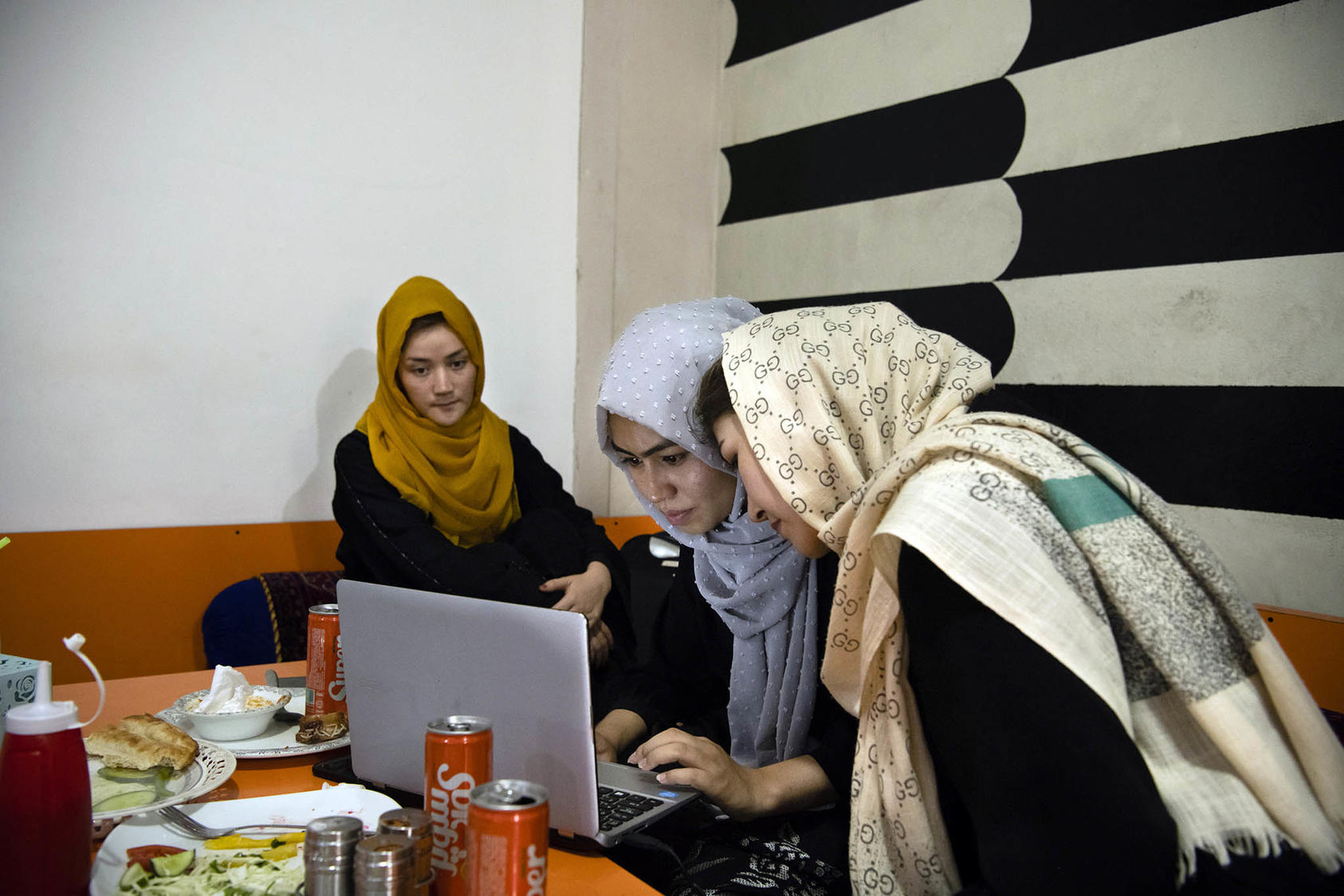
Kabul University students study for an August final exam in the women’s room of a restaurant. This month, Taliban expelled female university students suspected of joining protests and barred many more girls from classes. (Kiana Hayeri/The New York Times)

Taliban Repression — and Its Danger

The new abuses of women reflect Afghanistan’s manifold, rising crises. Fourteen months after the Taliban recovered power in Kabul, they rule by force and are unlikely to make any significant effort to broaden the base of their regime, USIP analyst William Byrd argues. Their repressiveness is heightened by the country’s economic collapse.

The Taliban’s top leaders — largely ethnic Pashtuns from southern regions around Kandahar and educated in hardline religious schools in Pakistan — face murky divisions among Taliban sub-groups such as the Haqqani network, rooted in eastern provinces, and ethnic Uzbeks in the north. (While the Taliban often are identified as a Pashtun organization, they do not represent the Pashtun population broadly.) Indeed, USIP’s Andrew Watkins has noted, the Taliban’s internal divisions are most dramatized over women’s rights. In March, the group’s Kandahar-based emir, Haibatullah Akhundzada, suddenly vetoed a promise by Kabul-based Taliban officials to lift their prohibition on schooling for girls beyond sixth grade.

Peacebuilding experience shows that campaigns of threat or violence against marginalized groups, notably women, pose risks of mass atrocities. While narrow, openings exist to influence Taliban behavior. U.N. Special Rapporteur Richard Bennett, who yesterday underscored the deepening crisis, deserves more resources and a more robust mandate to investigate the myriad abuses of women’s rights that are being reported and, if warranted, refer crimes to the International Criminal Court. In addition, governments that engage with the Taliban or shelter Afghan refugees should appoint special envoys for Afghan human and women’s rights to press the case for reform in diplomatic engagements with the Taliban.

A New Spiral of Abuses

Afghan women activists, who cannot be identified for their safety, said this week the Taliban’s newly intensified attacks and threats against women are partly a response to Afghan women’s sustained demands and protests for basic rights — and to the high-profile women’s rights uprising in neighboring Iran. An alarming development, the women told USIP, is this: The Taliban previously forced their restrictions on women through their official “morality police.” But now, Taliban leaders’ more strident directives to control women have emboldened, or compelled, countless other men into abusive roles as “enforcers.” Men ranging from ordinary Taliban gunmen, many with little to do since the end of their long war last year, to civilian supporters of the regime have begun ad hoc enforcement against any woman they may see. Taliban have forced shopkeepers, teachers and other ordinary citizens into enforcement roles.

Women activists in Kabul are reporting the new abuses to colleagues abroad via e-mail and encrypted text messages. Details also are emerging via social media and notably from Rukhshana Media, a news website run by Afghan women journalists. Rukhshana published several articles this month on new restrictions and violence against women and girls, in Kabul as well as Herat and other provinces.

Soon after re-taking power last year, the Taliban scrapped the 20-year-old Women’s Affairs Ministry and re-established the Ministry for the Promotion of Virtue and the Prevention of Vice, which the 1990s Taliban regime used to repress women’s rights and their roles in public life. While the regime declares it is respecting women’s rights, its “virtue and vice” enforcers — most of them bearded men wearing white tunics with a ministry emblem — have policed women’s dress in streets, on buses and in other public spaces. The Taliban have steadily tightened restrictions on women’s dress, their ability to move in public spaces, and their study or work in roles it dislikes. They declared new restrictions in May, ordering women to cover their faces in public, halting the issuance of driving licenses to women and forbidding them to travel long distances from home without a close male relative as chaperone. Still, the degrees of enforcement vary.

The recent weeks’ heightened repression and assaults on women have come heavily in Kabul, which, with 4.5 million people, shelters more than 10 percent of the country’s population. Increasingly, Afghan women said, abuses are committed by gunmen dressed in ordinary street clothes, whom women could not identify. These armed squads entered women’s classrooms in universities and private schools across Kabul, demanding to inspect female students’ clothing. They forced the students to lift their long skirts and robes to show their garments underneath. Where the enforcers found girls or women wearing Western-style pants, they beat them with electrical cables, the women said.

Puberty Exams and Beatings

In public elementary schools, the Taliban have been appointing women, trained in the regime’s approved madrassas, as teachers and principals. The Taliban order them to enforce the regime’s requirements for women and girls to wear all-concealing clothing. In recent weeks, the Taliban’s virtue and vice ministry has in some schools instructed principals to examine the bodies of girls as young as 10 or 11 for signs of puberty — and to expel from school any girls who appear older or whose bodies are beginning to mature.

Women in Kabul said Taliban have entered girls’ elementary schools to enforce the regime’s months-old order that students and teachers keep their faces, except for their eyes, covered even in class. In the raids, as recent as yesterday, enforcers beat accused violators with electrical cables, sticks or gun butts.

“My fifth-grade daughter was beaten by Taliban for not having her face covered” in her classroom, a mother in Kabul told USIP. “She is terrified to go outside and refuses to attend school.” Another woman described Taliban enforcers stopping her family in their car this week. “They asked my husband about his relationship with the ‘black head,’ referring to me.” When he said they were married, the enforcers took each out of the car to ask them separately “what we had for dinner the night before, the name of my uncle and where we lived.” They let the family go, but only after ordering the woman to move from the front seat, next to her husband, to the back, with the children.

Women in Kabul report new abuses by Taliban gunmen in residential districts across the city. On Sunday, enforcers raided several girls’ schools and privately run education courses in the southern neighborhood of Chihil Sutun, beating students and teachers for wearing pants as undergarments, outer robes that did not reach their ankles, or clothing in colors other than black, the women said. Taliban abuses and restrictions reported by women in recent weeks include these:

  • On October 11, enforcers expelled about 60 female students, most from the ethnic Hazara minority, from dormitories of Kabul University. A university student said the expulsions appeared to be reprisals for Hazaras’ public protests over violent attacks against their community, and for Taliban’s suspicions that students had joined protests against the September 30 suicide bombing that killed at least 53 people at a Hazara education center in Kabul that was teaching girls. The student said Taliban warned it would retaliate against anyone reporting the expulsions to news media.
  • Female students who earned high school diplomas before the Taliban takeover, and who this month sat for university entrance examinations, report that Taliban officials prohibited them from registering for studies in fields including engineering, economics, veterinary science and journalism. An education official confirmed the prohibitions to Spain’s EFE news agency but was contradicted by an official Taliban spokesman.
  • Taliban are continuing routine torture and killings of women. Their officials in the central province of Ghor this month condemned a 24-year-old to execution by being buried to the waist in a pit and then stoned to death for alleged adultery. She committed suicide before her scheduled killing, two Afghan news agencies reported.

Afghan women’s resistance to the new Taliban repressions continues in part via protests — at times in public and often in private but shared via social media. It continues as well through women’s reporting of the rising violence. In an effort to throttle both tactics, women told USIP, Taliban enforcers also have been forbidding girls from carrying cellphones that can record video — a primary way that women in both Afghanistan and Iran have energized their movements and international support for them.

Taliban Escalate New Abuses Against Afghan Women, Girls
read more

Bennett Briefs UN General Assembly on Afghan Human Rights

The Ministry of Foreign Affairs (MoFA) said that the Islamic Emirate had cooperated with Bennett and he should not take advantage of it.

The UN Human Rights Council’s special rapporteur to Afghanistan, Richard Bennett, said that despite the Islamic Emirate’s claims about “progress made,” the country continues to face a human rights and humanitarian crisis.

The Ministry of Foreign Affairs (MoFA) said that the Islamic Emirate had cooperated with Bennett and he should not take advantage of it.

Bennett briefed the UN General Assembly on Wednesday.

“My view is… that it is important to keep Afghanistan in the spotlight when there is competing news,” Bennett said.

The Ministry of Foreign Affairs (MoFA) said that the Islamic Emirate had cooperated with Bennett and he should not take advantage of it.

“To investigate the human rights situation, all departments of the Islamic Emirate including the security departments, provided them with necessary cooperation, so morally, this positive motivation should not be misused,” said Zia Ahmad Takal, deputy spokesman for MoFA.

Political analysts gave various opinions in this regard.

“The world has always been political towards Afghanistan. If they want to solve the problems and challenges of the people of Afghanistan, they should put aside their regional and worldwide competition playing out in Afghan geography,” said Javid Sandel, a political analyst.

“We call on the current government to bring reforms in girls’ access to education, self-freedom … as well as all those issues with which the world has problems,” said Najibullah Jamay, a political analyst.

The UN special rapporteur for Afghanistan traveled to the country twice over the last seven months.

Bennett Briefs UN General Assembly on Afghan Human Rights
read more

Private University Enrollment Down 50% Since Govt Change: Union

Students confirmed that because of economic challenges they are not able to pay fees for their education.

The Union of Private Universities in Afghanistan said that the number of students attending private universities has dropped by 50 percent since the political change in 2021.

The union said that the political change and the economic crisis are the main reasons for the decrease.

“Younger generations are hopeless about their future and their education and students have economic challenges and cannot pay their fees,” said Gul Rahman Qazi, head of Qalm University.

“The first reason is that economic challenges have affected our society and today nobody has a perfect job,” said Sara, a lecturer.

Students confirmed that because of economic challenges they are not able to pay fees for their education.

“There is no work, incomes have decreased, and this has caused most students who are not able to pay fees to become distanced from education,” said Manizha, a student.

Officials of the Union of Private Universities in Afghanistan said that due to economic problems and political changes, there has been a fifty percent decrease of students.

“Numbers of students have decreased by 50 percent due to the political changes and economic challenges,” said Mohammad Karim Naseeri, head of the media of the Union of Private University in Afghanistan.

“After the Islamic Emirate takeover, educational opportunities have been facilitated in private and governmental universities and students can continue their studies with full confidence,” said Khaleddad Ahmad Taqi, a spokesman for the Ministry of Higher Education.

140 private and governmental universities are active across the country and now the number of the students has decreased.

Private University Enrollment Down 50% Since Govt Change: Union
read more