
‘Burying Us Alive’: Afghan Women Devastated by Suspension of Aid Under Taliban Law

The New York Times
Since the Taliban administration banned women from aid work, many groups have suspended their operations in the country and warned of permanently shutting down if the ban remains.

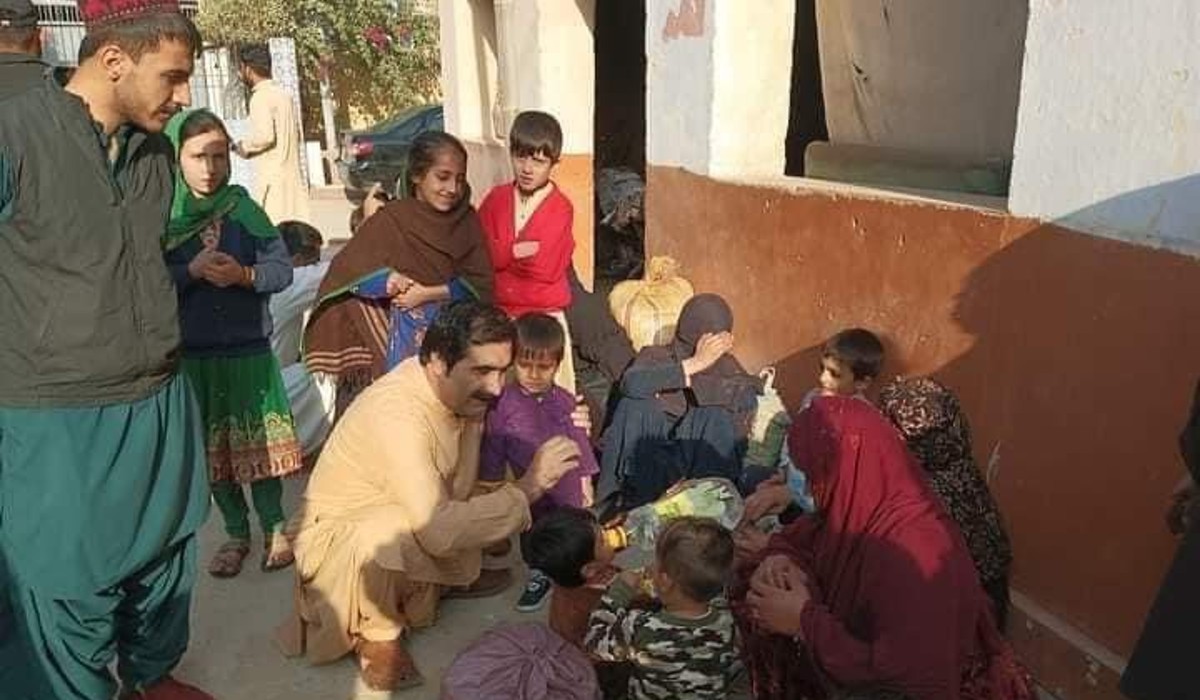
For years before the Taliban seized power and the economy collapsed, Jamila and her four children had clung to the edge of survival. After her husband died trying to cross the Iranian border, she and her children moved to a camp for displaced people in northwestern Afghanistan and relied on aid organizations.

One group brought her oil, flour and rice — food that kept her family from starving. Another gave her children pens and notebooks — the only supplies they had in primary school. A third vaccinated them against measles, polio and other illnesses.

But when Jamila tried to arrange an emergency parcel of food in late December, the aid worker cut the call short, explaining that the organization had suspended its operations: Last month the Afghan government barred women from working in most local and international aid groups, prompting many to stop their work. Jamila’s heart sank.

“If they are not allowed, we will die of hunger,” said Jamila, 27, who goes by only one name, like many women in rural Afghanistan. “We are starving.”

Just weeks since the Taliban administration’s decree, women across the country are grappling with the disappearance of lifesaving aid that their families and the country have relied on since the country plunged into a humanitarian crisis.

It has been a dual tragedy for Afghanistan, and for Afghan women in particular.

For many women and girls who had already faced increasing restrictions under the new government — including being shut away from many jobs, high schools, universities and public parks — the new edict removed one of the few remaining outlets for employment and public life. Given the conservative system that had existed in Afghanistan even before the Taliban took power last year and amplified the most hard-line traditions, aid groups had relied on female workers to reach other women and their families, who were often segregated from any contact with outside men.

Now, amid a malnutrition and health care crisis that has worsened as the Afghan government’s changes have turned the world away, many aid groups say the banning of those female workers has made it nearly impossible for them to work in the country. Those organizations described the move as a “red line” that violated humanitarian principles and that, if it remains in place, could permanently shut down their operations in Afghanistan.

The result is likely to be millions of Afghans left without critical aid during the harsh winter months. A record two-thirds of the population — or 28.3 million Afghans — are expected to need some form of humanitarian assistance next year as a hunger crisis looms over the country, according to United Nations estimates.

“This is not a choice. This is not a political decision. It’s actually reality. We cannot do our job if we do not have a female staff in place to work,” Adam Combs, regional director at the Norwegian Refugee Council, said in a news conference late last month.

In recent weeks, United Nations officials have met several times with the Afghan authorities to try to resolve the crisis, they said. But while Afghan officials have urged the resumption of aid programs, they have also indicated that the Taliban administration’s top leadership is unwilling to reverse the edict. Instead, the leadership has doubled down on accusations that women aid workers had not worn Islamic head scarves, or hijabs, in accordance with the new government’s laws on women’s attire, according to summaries of those meetings and other documents obtained by The New York Times.

In a meeting in late December between United Nations officials and officials with the Taliban administration in Kandahar — the heartland of the Taliban movement and center of power of the new government — Afghan officials accused Western countries, particularly the United States, of using aid as political leverage to push unwelcome Western values on the country, according to the documents.

Late last month, Zabihullah Mujahid, a spokesman for the Taliban administration, said on Twitter that all organizations within Afghanistan must comply with the country’s laws, adding: “We do not allow anyone to talk rubbish or make threats regarding the decisions of our leaders under the title of humanitarian aid.”

Afghan officials have said that the ban does not directly apply to the United Nations — one of the last Western entities to maintain a presence in Afghanistan. Still, most U.N. aid agencies work with nongovernment organizations to implement their operations — many of which had relied on female aid workers to reach women and families in need and have now suspended their programs.

Many international donors also require that women make up at least half of the people an aid organization reaches in order to receive funding.

For women across the country, the effects of the ban and the suspension of aid have been devastating.

The situation “is a disaster,” said Abeda Mosavi, an employee of the Norwegian Refugee Council, or N.R.C., who works with Afghan widows in Kunduz, an economic hub in northern Afghanistan. “I don’t know the extent to which the Taliban understood the role of women in aid organizations and the crises that women will face after this.”

Since the ban was issued and N.R.C. suspended its operations, Ms. Mosavi has barely been able to sleep, she said, haunted by worries about the women she worked with to help make ends meet. Late last year, Ms. Mosavi met a widow with eight children who she said was trying to secure a quick marriage for her 13-year-old daughter — effectively selling her for a $2,000 dowry — to an older man to be his second wife. The woman felt it was the only way she could keep her other children alive and fed, but Ms. Mosavi persuaded her not to go through with it, and put her in touch with a food aid program.

“I don’t know what will happen to her now,” Ms. Mosavi said, racked with worry. “There are hundreds of cases like this.”

Other women aid workers — many of whom are the sole providers for their families — have themselves worried about how to put food on the table if the ban remains in place.

“If we are not allowed to work in NGOs, what should my children and I eat?” said Najima Rahmani, 42. Ms. Rahmani, a widow in the northern province of Balkh, was unemployed for six months before finding a job in November with Coordination of Humanitarian Assistance, an implementing partner that works with the U.N.’s World Food Program.

Those six months without a job were like a living nightmare, she said.

Her family could not afford electricity in their home. She had to borrow money from relatives — who were struggling themselves — to try to scrape together the university fees for her two sons and daughter.

The government’s barring of women from attending universities last month was devastating to her and her daughter. Then the ban on NGO work came down, and it felt not just like a new blow, but like a prison sentence, condemning them all to return to a life of begging and hardship.

“I am in a lot of pain,” Ms. Rahmani said, breaking down into tears. “My wound is always fresh. The wound of a woman in my situation is always fresh, it never heals.”

Since the fall of the Western-backed government in August 2021, the new authorities’ initial promises that women would have opportunities like employment and a public life — requirements for engagement with Western donors — have nearly all been reversed.

Today, women are barred from gyms and public parks, and from traveling any significant distance without a male relative. They cannot attend high school or university. At checkpoints along streets and in spot inspections on farms, the morality police chastise women who are not covered from head to toe in all-concealing burqas and headpieces in public.

It has been a realization of some women’s worst fears about Taliban rule and a devastating loss for those who had hoped for much more than just an end to the war.

Habiba Akbari, who works for Afghan Aid, a British humanitarian and development organization, spent much of the past four years dodging sporadic fighting between the Western-backed government and Taliban forces to travel between her hometown in Badakhshan Province and her university in Kunduz City.

Ms. Akbari graduated last year — just before the Taliban administration banned women from attending university — and secured a job with the aid group. Her monthly salary of 30,000 Afghanis — around $350 — sustained her seven siblings and parents after her oldest sister and the family’s main provider was dismissed from her post as a prosecutor. But now, her work has been suspended — and any hope she held for her future has vanished.

“The Taliban are burying us alive,” Ms. Akbari said.

Isabella Kwai contributed reporting from London.

Christina Goldbaum is a correspondent in the Kabul, Afghanistan, bureau.

Najim Rahim is a reporter in the Kabul, Afghanistan, bureau.
‘Burying Us Alive’: Afghan Women Devastated by Suspension of Aid Under Taliban Law
read more

UNSC to Discuss Afghanistan’s Situation in Closed-Door Meeting

Chargé d’Affaires of the Afghanistan Permanent Mission to the UN, Naseer Ahmad Faiq, said that the meeting is due to be held on 13 January New York time. 

The UN Security Council is holding a closed-door meeting on Friday about Afghanistan’s situation including the recent bans imposed by the caretaker government on women’s access to work and education. 

Chargé d’Affaires of the Afghanistan Permanent Mission to the UN, Naseer Ahmad Faiq, said that the meeting is due to be held on 13 January New York time.

“The UN special envoy for Afghanistan, Roza Otunbayeva, Catherine Russell, UNICEF’s executive director, David Miliband, head of the International Rescue Committee will give speeches. The meeting will provide an opportunity to discuss the negotiations and evaluation of the Taliban’s decision on humanitarian aid in Afghanistan,” Faiq said.

The Islamic Emirate reacted to the meeting, saying that without the presence of its representative, the meeting will not bring any result.

“We call on international organizations to respect the rules and values of the people of Afghanistan. All areas that they are concerned about are negotiable and they may come and talk with the Islamic Emirate closely so that they are convinced. Without the presence of the Islamic Emirate representing the people of Afghanistan, these decisions will not be helpful,” said Zabiullah Mujahid, the spokesman of the Islamic Emirate.

The UN Secretary-General Antonio Guterres said that “systemic attacks on women’s and girls’ rights and the flouting of international obligations are creating gender-based apartheid.”

“This deliberately undermines the development of a country that desperately needs the contributions of all in order to return to sustainable peace,” he said.

Amnesty International in a statement said that the UN Security Council (UNSC) closed-door meeting on Afghanistan “must focus on how to reverse the stifling ban by the Taliban on women and girls from accessing work, education, sports and public spaces.”

“The Security Council that asses the issue of the Afghan women’s rights should also consider the issue of Afghanistan. It can be done when major powers reach an agreement,” said Suraya Paikan, a human rights defender.

“Women have never been banned from education or politics and whatever is ordered for men, women are also beside it,” said Sayed Abdullah Ihsani, a member of the Assembly of Scholars.

This comes as the Organization of Islamic Cooperation also held an extraordinary meeting on Afghanistan this week.

UNSC to Discuss Afghanistan’s Situation in Closed-Door Meeting
read more

IS claims responsibility for Kabul attack that killed 5

Associated Press
January 12, 2023

KABUL, Afghanistan (AP) — The Islamic State group claimed responsibility Thursday for a deadly bombing that killed at least five people near the Foreign Ministry in the Afghan capital the previous day.

The bombing was the second major attack in Kabul in 2023 and drew condemnation from the international community.

The extremist group said in a statement that a “martyrdom-seeker” it identified as Kheiber al-Qandahari detonated his explosive vest amidst a gathering of ministry employees and guards as they left through the ministry’s main gate.

There was no immediate response from Afghanistan’s Taliban rulers about the IS claim. Kabul police chief spokesman Khalid Zadran said Wednesday that the explosion killed five civilians and that “a number of others were wounded” near the ministry.

The IS news outlet Aamaq said the attack coincided with a ministry training course for diplomats.

The extremists have increased their assaults since the Taliban takeover of Afghanistan in 2021. Targets have included Taliban patrols and members of the country’s Shiite minority.

After Wednesday’s attack, more than 40 wounded people were brought to a surgical center in Kabul run by Emergency NGO, a humanitarian organization. Stefano Sozza, Emergency’s director in Afghanistan, said at the time that he expected the number of casualties to rise.

The attack drew condemnation from the United Nations and various countries. In a statement Wednesday, Pakistan said it stood in solidarity with Afghans in the fight against militants.

China Thursday said that none of its citizens were killed or injured in the attack, following reports that a visiting delegation was due at the ministry.

Foreign Ministry spokesman Wang Wenbin told a press briefing: “We hope Afghanistan will take strong measures to effectively protect the safety of all sides’ personnel and institutions in Afghanistan, including those from China.”

IS claims responsibility for Kabul attack that killed 5
read more

Nearly 500 Afghan Refugees Deported from Turkey

TOLOnews reached out to some of the deportees, who complained about mistreatment of Turkish forces with them.

Turkish media reported that at least 500 Afghan refugees have been deported by Ankara and that more than 5,000 others are in detention, who will also be deported soon.

TOLOnews reached out to some of the deportees, who complained about mistreatment of Turkish forces with them.

Bilal, a second year student of the faculty of political science, said that he went to Turkey seven months ago to find a job but he was reported.

“We didn’t have the right to talk. They would just beat us until they get tired,” Bilal said.

“They tightened our hands and feet. They wouldn’t feed us well. They would give two peices of bread with food for four people,” said Akram, an Afghan national deported from Turkey.

Anadolu Agency said that Ankara is due to deport nearly 20,000 refugees, of whom over 5,000 are Afghans.

“The government of Turkey had severed the conditions for Afghan refugees and no refugee can take asylum under the current situation,” said Maazullah Sultan Oghlo, an Afghan refugee in Turkey.

The Ministry of Refugees and Repatriation said that the Islamic Emirate has held talks with Turkish officials about the situation of Afghan refugees there.

“We are in contact to stop the process of deportation of Afghans,” said Abdul Mutalib Haqqani, a spokesman for the ministry.

“The international law for the refugees suggests host countries to treat well with refugees,” said Abdul Malik Afghan, a refugees rights activist.

Earlier, Turkish media reported that out of 124,000 undocumented refugees, 68,000 of them were Afghans in 2022.

Nearly 500 Afghan Refugees Deported from Turkey
read more

Deadly ‘suicide’ blast outside Afghan foreign ministry in Kabul

Al Jazeera

At least 20 people have been killed after a suspected suicide bomber detonated himself outside the foreign ministry in Kabul in the second major attack in the Afghan capital this year, according to a Taliban official.

Ustad Fareedun, an official at the Taliban-run information ministry, told Reuters that the bomber had planned to enter the foreign ministry but failed. He added that at least 20 people were killed and many others injured in the blast.

A photo of the area, confirmed by official sources, showed at least nine people wounded or killed, lying outside the ministry as security forces attended to them.

Kabul police chief spokesman Khalid Zadran said said security teams have been deployed to the site. He said that at least five people were killed and several wounded in the blast.

The blast hit about 4pm local time (11:30 GMT) on Wednesday, Zadran said.

Taliban foreign and interior ministry officials have yet to comment on the deadly explosion.

Obaidullah Baheer, Lecturer at the American University of Afghanistan, Kabul, said that the discrepancies in casualty figures are ‘troubling’.

“We have seen the Taliban do this before. It does not help the security of the city to deny numbers of the actual casualties. So, a lot of questions, little answers,” he told Al Jazeera.

Baheer added that the blast site is in a very high security area. “There are multiple checkpoints. You have to have specific documents to access that street,” he said.

The blast reportedly happened when a Chinese delegation was meeting the Taliban at the Ministry of Foreign Affairs.

Deadly ‘suicide’ blast outside Afghan foreign ministry in Kabul
read more

Pakistan sends back hundreds of Afghan refugees to face Taliban repression

in Karachi
The Guardian
Tue 10 Jan 2023
About 250,000 Afghan asylum seekers have arrived in Pakistan since August 2021, but a migrant crackdown has left many of them in fear of being jailed or deported

More than 600 Afghans have been deported from Pakistan in the past three days, and hundreds more face expulsion in a renewed crackdown on migrants.

On Saturday, 302 people were sent back to Afghanistan from Sindh province and 303 on Monday, including 63 women and 71 children. A further 800 people are expected to be deported in the coming days.

Last summer, authorities began deporting Afghans for illegally entering the country, but arrests and detentions have increased since October. Nearly 1,400 Afghans, including 129 women and 178 children, have been detained in Karachi and Hyderabad alone, the largest number of arrests made to date in Pakistan, say lawyers.

Pakistan has not adopted the UN Refugee Convention 1951, which confers a legal duty on countries to protect people fleeing serious harm.

Moniza Kakar, a Karachi-based human rights lawyer, said nearly 400 of the arrested Afghans had valid visas on their passports or proof-of-residence cards, which they said were confiscated by police before they were jailed.

Umer Ijaz Gilani, an Islamabad-based lawyer, said deporting Afghan asylum seekers was a “clear violation of the non-refoulement principle” (forcibly returning refugees or asylum seekers where they may be persecuted). He urged the Pakistan government’s National Commission for Human Rights (NCHR) to direct state authorities to stop the deportations.

“The NCHR has the jurisdiction … if it fails to exercise it, we might go to the high court,” said Gilani, who is supporting 100 Afghan human rights defenders seeking asylum in Islamabad. He said his clients were extremely disturbed about the arrests in Sindh.

Farah Zia, the director of the independent Human Rights Commission of Pakistan, condemned the treatment of Afghans, particularly the arrests of women and children “because their vulnerability is compounded by their gender and age and lack of connections with local networks”.

Last year, the commission wrote to the government, urging it to develop a more humane policy towards Afghan refugees.

The Sindh authorities have defended their actions. “The government is only taking action against illegal immigrants; those living without a valid travel document,” said their spokesperson Murtaza Wahab.

Nida Amiri*, a registered asylum seeker in Karachi, told of “sleepless nights” since the crackdown. Her husband, a prominent government official, is in hiding in Afghanistan. “I have headaches, and my blood pressure refuses to come down,” said Amiri, 47, who left Kabul in December 2021 and is now working as a cook.

She added: “I would rather die in prison than return to Kabul, where we cannot even breathe freely.”

She has a registration card from the Society for Human Rights and Prisoners’ Aid (Sharp), which partners with the UN high commissioner for refugees (UNHCR) to initially assess asylum cases. But a Sharp employee said the card “cannot save her from being hauled in”.

Amiri’s 21-year old daughter, Afshaneh Noor, said that living in Pakistan may not be easy, but if she was sent back she would be “a prisoner in my home”. “It’s the worst place on Earth to be in for a woman, right now,” she said.

Her 14-year-old sister and nine-year-old brother are no longer allowed to go to school, she said, because their mother is so worried they’ll be detained. “She has told us to always carry the Sharp card and to avoid leaving the home unless absolutely necessary,” said Noor. “We tell people we are from Chitral [a region in northern Pakistan bordering Afghanistan].”

Nadera Najeeb*, 43, a widow and mother of six, belongs to the Hazara community, a predominantly Shia Muslim minority group persecuted by the Taliban. She entered Pakistan illegally with five of her children – two sons and three daughters – two months ago. “I was forced to run away, otherwise my daughters would be raped by the Taliban,” she said. Before leaving, she married her eldest daughter to a cousin’s son, leaving her in Kabul.

Najeeb, who works at a fishery in Karachi, has begun to wear a black abaya – a long, loose coat that covers her head and face so that only her eyes show. “This way no one can tell I’m an Afghan or belong to the Hazara community,” she said. “I took this difficult journey to keep my kids safe; if we’re put behind bars and then sent back, all this will be for nothing.”

Qaiser Khan Afridi, a UNHCR spokesperson, said the organisation is working to identify the most vulnerable asylum cases for resettlement, including women-headed households and families with children at risk. The UNHCR was striving to find “durable solutions” for refugees, but it was up to governments to grant asylum.

“Resettlement, unfortunately, cannot be available for the entire refugee population as the opportunities are limited,” he said.

*Names have been changed to protect identities

Pakistan sends back hundreds of Afghan refugees to face Taliban repression
read more

Afghanistan & Haiti: failed as autocracies and democracies

Anatol Lieven

Responsible Statecraft

DECEMBER 27, 2022

Both have intractable governing problems, but that doesn’t mean the West should keep intervening to save them.

Recent months have seen escalating clashes along Pakistan’s disputed border with Afghanistan. In the latest, on December 11 and 15, civilians on both sides were killed when Taliban forces fired into Pakistan and Pakistani troops retaliated.

These clashes have their origins in three factors: the presence in Afghanistan of Pakistani Islamist rebels who launch attacks across the border into Pakistan, Pakistani attempts to fence off the border to limit militant attacks, smuggling, and illegal mass migration (more than 250,000 Afghans have fled near-famine conditions in Afghanistan since the Taliban took control last year), and the radical reduction in Western aid.

The Taliban, like every previous Afghan government, has also refused to accept the legality of the frontier that was established by the British Empire. The border fence has caused violent resentment among Afghans living along the border, as well as some of their neighboring Pakistani Pashtun fellow-tribesmen.

Clashes between the Taliban and Pakistan are on the face of it surprising. Pakistani support was instrumental in helping the Taliban take over Afghanistan in the mid-1990s, and during the U.S. and Western intervention in Afghanistan, Pakistani shelter of the Taliban played an important part in allowing them to continue their struggle. Some Western and Afghan government propagandists even accused the Taliban (quite falsely) of being mere Pakistani puppets. The problems that Pakistan has faced since the Taliban victory last year have therefore led to a measure of Schadenfreude in the West.

This is misplaced. For what Afghanistan exemplifies is a wider problem that may reach terrifying dimensions in the years to come: that of societies that while ferociously determined to resist intervention and even influence from outside, are themselves incapable of generating or accepting effective modern state institutions. At the time of writing, another extreme case of this is developing on America’s own doorstep, in Haiti.

The modern history of Afghanistan is not only the history of the defeat of successive attempts at outside intervention — whether British, Soviet, or American. More importantly, it has been the history of the failure of successive Afghan regimes to create an effective modern state.

Thus in the 1920s, the attempt of King Amanullah to bring accelerated modernization led to a revolt of the tribes under the banner of conservative religious reaction. Following his overthrow, a more limited and cautious royal regime was established. In the decades after the Second World War, with the help of U.S. and Soviet aid and modern weaponry, this state expanded its power; but it proved incapable of meeting the increased expectations that it had generated in sections of society.

The collapse of dynastic rule in the 1970s led to the catastrophic Communist attempt at accelerated modernization, resulting in another conservative revolt and the eventual victory of the Taliban. Their overthrow by the United States after 9/11 led to yet another attempt at modernization (this time coupled with an attempt at “democracy”), with the results that we now see before us.

The Taliban have certain advantages denied to previous state-builders: their deep rootedness in the conservative Pashtun rural society of eastern and southern Afghanistan; and the tremendous prestige that accrues from their defeat of an infidel superpower. Their ambitions when it comes to state-building are also limited, which given Afghan realities may also be an advantage. Essentially they want to create a state with basic internal peace, which in cultural terms adheres strictly to their version of conservative Islam.

They are however completely incapable of developing Afghanistan economically. As the population surges and public misery grows, this is bound to undermine their rule. Moreover, their limited form of rule allows other armed militant groups to exist, like the Pakistani Taliban and the Islamic Movement of Uzbekistan (IMU), which are tolerated by the Taliban because they do not threaten their rule, they do threaten all Afghanistan’s neighbors. For very obvious reasons, however, none of these neighbors is likely to think of intervening directly in Afghanistan to deal with these threats.

The American establishment clearly wishes to forget that Afghanistan ever existed, and since Kabul is 7,000 miles from the United States this could be possible. Americans will however find it more difficult to ignore state collapse in their own backyard. Haiti is in many ways very different from Afghanistan, but the underlying problem is the same: the perennial failure of attempts at modern state-building, both domestic and through outside intervention. And while Haiti, unlike Afghanistan, has not incubated a terrorist threat to its neighbors, like Afghanistan it has generated huge numbers of migrants and great problems of criminality. Haiti over the past 40 years has seen repeated coups and rebellions.

A brief U.S. military intervention in 1994-95 (until 2000 continued as part of a UN mission) failed to solve or even seriously mitigate any of Haiti’s underlying problems . Given its extremely limited numbers, funding, mandate, and timeframe, there was never any serious prospect that it would. Haiti today lacks an effective government and is dominated by criminal gangs whose warfare and crimes are a nightmare for most of the population.

Haiti might on the surface seem a much more suitable area for U.S. military intervention than Afghanistan. There is no terrorist threat from Haiti, so American forces would not face anything like the fanatically determined resistance of the Taliban. Nor would Haitian gangs receive support and protection from outside powers.

But to do any good, a U.S. intervention would have to be in effect permanent, and involve a government that would for the foreseeable future be staffed by Americans. Every short-term effort followed by a “restoration of democracy” has failed and will go on failing.

In principle, the fact that Haiti is a neighbor of the United States should make this possible. The United States cannot simply walk away from Haiti, any more than Pakistan can walk away from Afghanistan. In practice, however, such a long-term U.S. intervention however looks highly improbable, barring a radical transformation in American attitudes and priorities. Especially after the miserable experiences of Afghanistan and Iraq, the American public and Congress are extremely unlikely to accept such an open-ended commitment.

Moreover, the creation of what would in effect be a permanent colonial government would not only challenge contemporary ideas of national sovereignty, it would radically contradict the present largely bipartisan U.S. doctrine of a world divided between democracies and hostile autocracies.

And that is indeed a key point about the examples of Afghanistan, Haiti, Somalia, South Sudan, the Central African Republic and elsewhere: the complete irrelevance of U.S. (as previously Soviet) ideological nostrums to these societies. Both democratic and authoritarian regimes have failed to create effective states in these countries, and on the record so far will continue to fail.

As climate change, coupled with population growth poverty and water shortages, undermines more and more vulnerable states around the world, this problem of failed states in recalcitrant societies is likely to grow, until it becomes a dire threat to all organized and developed societies — once again, irrespective of whether these states are democracies or autocracies.

Above all, such failed or failing states are likely to generate immense waves of migration — as we see already in western Africa and Central America. As the example of Afghan migration to Pakistan indicates, this is not simply a problem for the West, but for every state around the world. The most ferocious anti-immigrant (as opposed to security) border in the world is probably that created by India to stop migrants from Bangladesh, more than 1,200 of whom have been killed by Indian security forces over the past 20 years. Once again, this is a problem that transcends ideological systems, to which neither democracies nor autocracies have found answers that manage to be both effective and reasonably humane, and which demands the combined attention of the international community.

Judging by U.S. behavior during the Cold War, American administrations will be tempted to meddle in these failed states for geopolitical reasons, picking one tribe or gang as anti-Chinese or anti-Russian and then blessing them as “democratic,” as President Reagan notoriously blessed the Afghan Mujahedin. This will make local conflicts even worse. Instead, we should recognize that effective statehood is a fragile thing, and that all countries that have achieved it have a common interest in defending it. In the future, this will also mean finding ways to cooperate in managing the problems emanating from places like Haiti and Afghanistan.

Afghanistan & Haiti: failed as autocracies and democracies
read more

Taliban hard-liners consolidate control with crackdown on women

ISLAMABAD, Pakistan — Taliban hard-liners are consolidating their control over Afghanistan with the recent bans on women’s education and work, overriding the wishes of some Taliban officials in the capital, Kabul, and at the provincial level, according to government and aid officials.

The Taliban’s supreme leader, Haibatullah Akhundzada, and his fellow ultraconservatives based in Afghanistan’s second city of Kandahar are cracking down on social freedoms as their movement transitions from primarily waging an insurgency to governing a large, diverse country.

The draconian restrictions issued by Akhundzada last month, banning women from attending universities and from working for international organizations, demonstrated that real authority continues to reside in Kandahar rather than in Kabul, home to Taliban ministries and the group’s acting prime minister.

“This is [the supreme leader] taking more control” over national policy and how his directives are followed in Kabul and elsewhere, said an aid official in Kabul with direct knowledge of negotiations within Taliban leadership. The official, like others interviewed for this article, spoke on the condition of anonymity because they were not authorized to discuss ongoing negotiations or internal policy disagreements.

Akhundzada, an ultraconservative Muslim cleric, has led the Taliban since 2016, rarely appearing in public but increasingly meeting in private with local religious officials. Despite having appointed Taliban ministers and governors after the collapse of Afghanistan’s previous government in 2021, Akhundzada retains the final say on all major national policy decisions.

“At first, we were just sent guidelines” from the supreme leader for formulating policy, said one Taliban official in Kabul at the ministry level. “Now for anything important, we need to get Kandahar’s approval,” he said.

In other cases, rulings come directly from Kandahar without consultation with Kabul, though the decisions are formally announced by government ministries, he said.

The acting education minister was ousted in September after Akhundzada replaced him with the head of Kandahar’s provincial council as part of a wider reshuffle. The reshuffle also saw Taliban members from the supreme leader’s inner circle appointed to senior political and security positions at the provincial level.

Qari Muhammad Yousef Ahmadi, a deputy Taliban spokesman, denied any shift in the group’s policymaking or implementation.

“The leaders, ministers and members of the cabinet of the Islamic Emirate of Afghanistan make policies under the guidance” of the supreme leader, and his guidance is entirely based on Islamic law, Ahmadi said.

The recent rulings appeal to many members of the Taliban’s base, but they also threaten to expose critical divisions within the movement and test its ability to maintain unity.

For years, while at war with U.S. and NATO forces, the Taliban maintained a degree of diversity within its network of alliances. The movement’s more conservative wing is largely dominant in Afghanistan’s mostly rural Pashtun south, but commanders in the east and north were granted some autonomy in how they carried out the Taliban’s strict interpretation of Islamic law. In some districts under Taliban control, for instance, women were allowed to travel to nearby cities to attend university.

With the war over, it’s unclear whether the group is prepared to allow a similar level of autonomy within its leadership. While some cabinet members in Kabul and Taliban leaders at the provincial level disagree with the recent restrictions on the rights of women, these figures have not publicly voiced their dissent, fearing it would be interpreted as an affront to Islamic rule and undermine national unity, according to two Taliban officials in Kabul.

Some Taliban officials have suggested that rulings restricting women’s education and ability to work are temporary and could be adjusted once stricter gender segregation is introduced and if conservative dress is observed. But other officials have come out in strong support of the decrees.

The acting minister of higher education, speaking on Afghan television, accused women in universities of failing to observe a strict Islamic dress code and instead wearing clothing “women wear to go to a wedding.” And a Taliban spokesman in Qatar said that Afghan women do not need to work and that “if the international community wants to help women, they should deliver it to their husbands who will share with their wives.”

The restrictions have also sparked fierce international criticism and warnings from aid groups that any reduction in the level of humanitarian assistance could leave millions without the ability to feed their families.

“A part of the Taliban leadership appears either not to comprehend the chilling consequences of these latest decisions or they are indifferent to the suffering of millions of ordinary Afghans,” said Markus Potzel, acting head of the U.N. mission in Afghanistan. Potzel did not specify what part of Taliban leadership he was referring to but warned that some Taliban leaders also appear “prepared to take the country further into isolation away from the community of nations.”

Since taking control of Afghanistan, the Taliban has steadily cracked down on women’s rights. The majority of female government employees were immediately banned from coming to work in 2021.

In March, a surprise last-minute ruling banned girls from secondary school education. In May, an order heavily restricted how women dress in public, and in November, women were banned from public parks and gyms.

Despite many of the bans triggering global outrage and protests across Afghanistan, senior Taliban leadership has so far refused to overturn any of the decisions, defending them as internal issues that should free of outside interference.

Ahmadi, the deputy Taliban spokesman, said that the rulings are necessary for the Taliban to establish nationwide Islamic law and that the international community’s “responsibility” is to continue to help the Afghan people.

During the first months of Taliban rule, security was the group’s primary concern amid fears of a resurgence by the Islamic State group and a simmering resistance movement in the northeastern province of Panjshir. Now, more than a year later, Ahmadi said the group is also focusing on development and social issues. “These are the needs of the people, and they have expectations from us,” he said.

Haq Nawaz Khan in Peshawar, Pakistan, contributed to this report.

Susannah George is The Washington Post’s Afghanistan and Pakistan bureau chief. She previously headed the Associated Press’s Baghdad bureau and covered national security and intelligence from the AP’s Washington bureau.
Taliban hard-liners consolidate control with crackdown on women
read more

World Clerics’ Delegation Seeks Education for Every Muslim

The Organization of Islamic Cooperation is due to hold a conference on Afghanistan on Thursday.

A delegation of Muslim clerics, which has visited Afghanistan, on Tuesday called for ensuring the right to education for every Muslim and emphasized the need for girls’ access to education in Afghanistan.

The head of the delegation, Sheikh Mohammad Saghir, said they have discussed education for women and girls in their meetings with the officials of the caretaker government.

He said the Islamic Emirate assured that the existing problems would be removed.

“We had meetings with all leaders of the Islamic Emirate. In these meetings, we discussed the issue of education. The minister of higher education has pledged not to deprive all Afghan men and women of education,” he said.

“Education is necessary, therefore we call on the Islamic Emirate to pave the ground for the education of women as soon as possible,” said Mawlawi Hassibullah Hanafi, a cleric.

Meanwhile, a number of female students expressed their concerns over their “uncertain” future after the closure of schools and universities. They urged the Islamic Emirate to reopen universities and schools for them.

“The closure of the universities has caused concerns including the uncertain future which is awaiting for us and which caused long-term psychological pressure,” said Khadija, a student.

“We call on the Islamic Emirate to reopen schools and universities without any conditions because education is our right,” said Hassina Mutassim, a student.

The Organization of Islamic Cooperation is due to hold a conference on Afghanistan on Thursday.

The meeting is aimed at discussing the recent decision of the Islamic Emirate about the ban on women’s education and working at NGOs.

Secondary schools are already closed for girls over the past 480 days.

World Clerics’ Delegation Seeks Education for Every Muslim
read more

Pakistan releases 524 Afghan nationals from its prisons

Pakistan on Saturday released another batch of Afghan nationals who were thrown into Pakistani prisons in recent months.

The Taliban-run embassy in Islamabad said that 524 people, including 54 women and 97 children, have been released from Pakistani prisons.

The embassy added that the body of a Faryab resident, who died in a Pakistan jail last month, has been repatriated.

Refugees from Afghanistan have meanwhile voiced concern of the mistreatment of refugees by Pakistani police.

Zohra Wahidi Akhtari stated that the situation of refugees in Pakistan is alarming. “Immigrants are denied access to many services and live in fear. They are not allowed to work and their families are in a bad financial situation,” she added.

She said that Pakistan police treat refugees from Afghanistan very badly which is a violation of immigration laws.

A number of asylum seekers who sought refuge in Pakistan following the return of the Taliban to power stated that one of their biggest problems is their visas have expired.

Zabihullah, who worked for foreign institutions in Afghanistan, fled to Pakistan after the Taliban came into power in 2021.

“My documents have expired and I am in a bad situation. I don’t have a work permit. We are being chased by police, we can’t go to Afghanistan either. We ask the international organizations for migration to pay attention to the situation of Afghan refugees and put pressure on the government of Pakistan to stop harassing refugees,” he said.

A number of other asylum seekers also claimed that they were denied access to all public services including work, education, and health services in Pakistan.

Najibullah Ziyaee, an refugee who resides in Pakistan along with his family, said that they have no access to public services and that restrictions on migrants are increasing every day.

“We are fed up with life; Because there are so many problems that I don’t know which one I should raise. When we get sick, we don’t have access to a hospital. We are also not allowed to work. In Afghanistan, we could have been killed, and here [in Pakistan] we would die of hunger too,” he said.

Pakistan releases 524 Afghan nationals from its prisons
read more