The world is willing to negotiate with the Taliban and help solve Afghanistan’s problems but, first, the de facto rulers must cut ties with al-Qaeda and address rising terrorism
Islamic extremism is on the rise again in Afghanistan, with terrorists flourishing under Taliban rule. With the international community recently meeting in Doha to consider steps to legitimise the Taliban, it could not have come at a worst moment for the de facto rulers of Afghanistan. In particular, the UN’s report on Afghanistan released last month revealed a disturbing rise in activity by al-Qaeda.
The report said the terrorist group had re-established itself in Afghanistan and “continues to pose a threat to the region, and potentially beyond”. Al-Qaeda has reportedly built eight new training camps, runs safe houses in Kabul and Herat, has stockpiled weapons in the Panjshir Valley, and operates five madrasas in the east of the country.
While the UN report found that al-Qaeda lacks the capability for a large-scale attack, it still harbours global ambitions and is rebuilding its strength in Afghanistan.
Al Qaeda’s re-emergence is a big concern globally. Under the leadership of Osama bin Laden, the group used Afghanistan as a base during the Taliban’s last stint in power between 1996 and 2001. This led to the Taliban being internationally isolated and enabled al-Qaeda to carry out devastating attacks around the world, including September 11.
The Taliban is also connected to smaller groups Tehreek-i Taliban Pakistan (TTP) and Tehreek-i Jihad Pakistan (TJP), which have carried out terrorist attacks in neighbouring Pakistan. This includes a bombing in Khyber Pakhtunkhwa province last year that killed 23 soldiers and injured many more. Over 400 Pakistanis, including security forces, have reportedly died in insurgent suicide bombings and attacks since the start of last year.
All three groups are supported by the Taliban, which offers them protection in Afghanistan. The UN report says the Taliban-al-Qaeda relationship “remains strong” and operates under a system of Taliban patronage. The Taliban is also “generally sympathetic” to the TTP and supplies it with weapons and equipment. The report reveals that Taliban members have joined the TTP and that the group’s members receive aid packages from the Taliban.
The Taliban has denied these allegations, claiming the UN is “always spreading propaganda” and that “there is no one related to al-Qaeda in Afghanistan”.But the Taliban’s support for al-Qaeda has been known for some time. In 2022, al-Qaeda chief Ayman al-Zawahiri was killed by a US drone in a house in Kabul. The property was owned by Sirajuddin Haqqani, the Taliban’s interior minister. The discovery and death of al-Zawahri was deeply embarrassing for the regime.
Still, ahead of the Doha meeting to discuss Afghanistan’s future, the Taliban had expected progress on international recognition as the Afghan government.
The deputy minister for political affairs, Mawlawi Adbul Kabir, recently claimed the group had met all the conditions for recognition and said: “We have been assured that the coming meeting of Doha will aim at encouraging the world to engage with the Islamic Emirate”.
Such recognition, and Afghanistan’s UN seat, would mean legitimisation of the group and its harsh interpretation of Islam, which has seen it pilloried for its severe treatment of women and minority groups.The problem for the Taliban is that, since its return to power, most countries have demanded that Afghanistan must not be used as a terrorist haven – particularly its neighbours, who fear regional instability and attacks.
Pakistan urged the Taliban last December to “take strong action” against terrorist groups and said it expected “concrete and verifiable steps to prevent the use of Afghan soil by terrorist entities against Pakistan”.
China has raised similar concerns, telling the Taliban it needed to “take the security concerns of its neighbours seriously and take stronger measures to counter various terrorist forces within Afghanistan”.
This position has not changed and was reiterated in Doha on Monday, with UN Secretary General Antonio Guterres outlining proposals to ensure Afghanistan did not become a “hotbed” of terrorist activity.
The Taliban appears stubborn and unwilling to budge on a range of issues, including its links to terrorist groups. This was made clear when the group said it would not be attending the Doha meeting, deeming it “unbeneficial”.
For a group obsessed with recognition, the Taliban’s stance is not just counterproductive, but also a bad look, especially when the international community is willing to engage to help solve Afghanistan’s problems. The Taliban’s flat-out denial of its links to al-Qaeda also reconfirms to the world that it is not to be trusted.
The Taliban cannot have it both ways. If it wants to be recognised, it needs to assuage – rather than alienate – Afghanistan’s close neighbours. This means combating terrorism and cutting ties with al-Qaeda and its affiliates.
This can only benefit the Taliban. The regime will be able to meet – at least in part – the criteria for recognition and the benefits that come with it, like legitimacy, influence and greater investment in the nation.
It will also make Afghanistan and the wider region safer. This would be welcome news to the Taliban’s neighbours – particularly Pakistan and China – who have legitimate concerns about the spread of terrorism at home and abroad.
The Taliban has a choice, one that may determine the future of Afghanistan. It can repeat history and choose terrorism and isolation, or it can decide to govern responsibly and accept the demands of the international community, which could lead to a safer, more prosperous Afghanistan.
The Taliban should choose wisely.
Chris Fitzgerald is a freelance journalist and project coordinator for the Platform for Peace and Humanity’s Central Asia Programme
If Taliban wants legitimacy in Afghanistan, it must renounce al-Qaeda
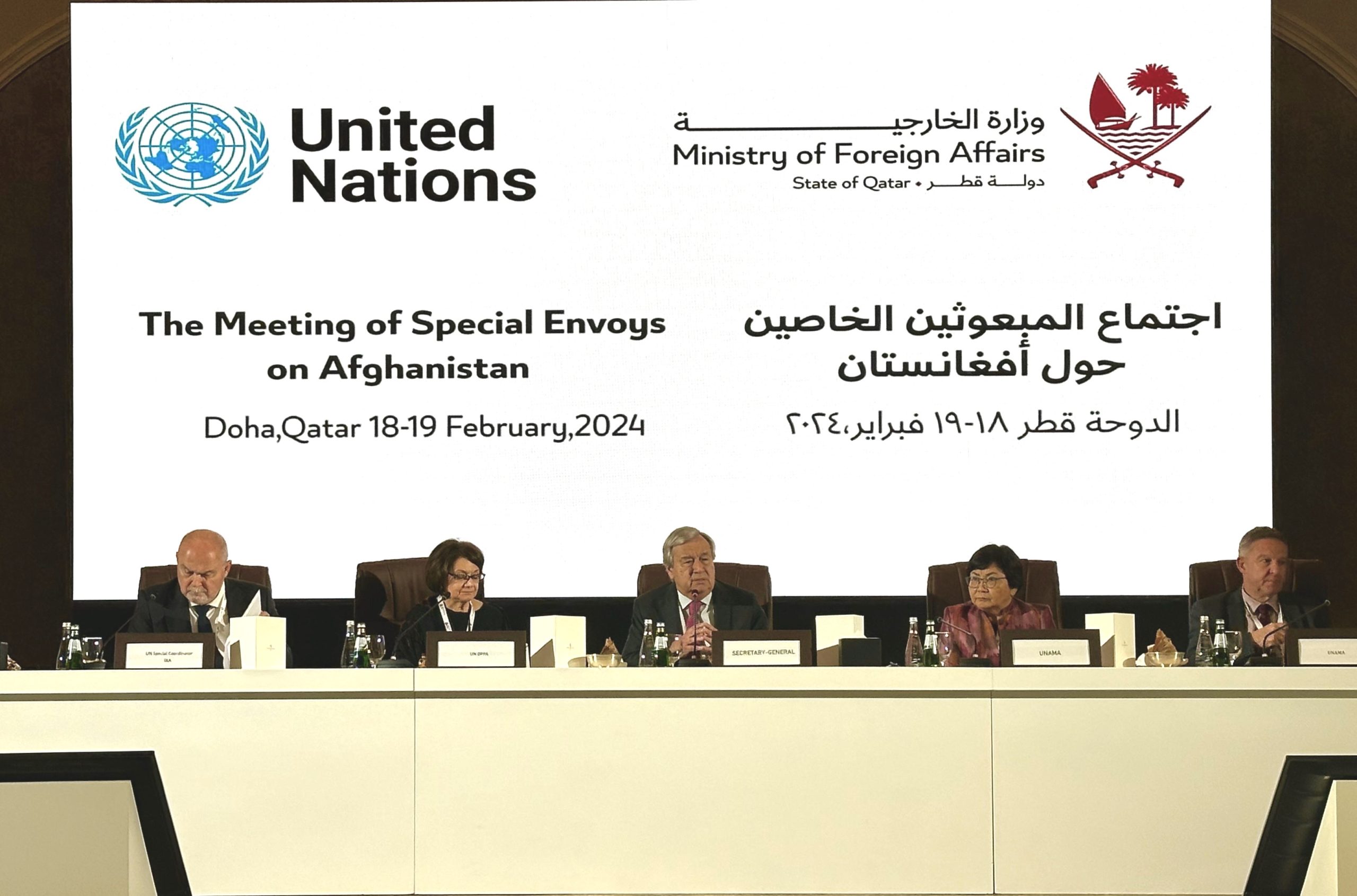
Afghanistan is back on the world’s agenda. The UN Security Council has met behind closed doors to hear about the recently held United Nations-convened meeting of Special Envoys on Afghanistan in Doha, which the Islamic Emirate decided not to attend. The current rulers of Afghanistan, the Islamic Emirate, decided not to attend the Doha gathering and are adamantly against the planned appointment of a UN Special Envoy to coordinate and facilitate the world’s engagement with the country, as foreseen by the UN Security Council’s latest resolution on Afghanistan. Ahead of the Security Council’s meeting to renew the mandate of the UN Assistance Mission in Afghanistan (UNAMA), which is due to expire on 17 March, AAN’s Roxanna Shapour looks at what is known about the ‘Doha II’ gathering, at the debate among the emerging political blocks about the shape of future engagement with Kabul and how Afghans themselves view a seemingly hamstrung political process that is happening in faraway meeting rooms behind closed doors.
The second meeting of the Special Envoys on Afghanistan held in Doha, Qatar, on 18-19 February 2024 took place without a much-anticipated delegation from the Islamic Emirate of Afghanistan (IEA); whether it would go or not was an outstanding question right up to the final hours before the gathering began (see AAN reporting). The meeting was followed by a closed-door session of the United Nations Security Council, ostensibly for a briefing on the outcome of the gathering in Doha, especially with regard to the controversial decision to appoint a UN Special Envoy for Afghanistan.
In this report, we look at what, if anything, were the outcomes of the meeting in Doha and the subsequent session of the UNSC. We try to make sense of what the apparent emergence of a regional block of nations might mean for future international engagement with Afghanistan. We try to make sense of the IEA’s position concerning the special envoy and why, in the end, it decided against participating in the meeting in Doha. We try to make sense of what Afghans themselves are saying about the world’s engagement with their country. Finally, we look at what might happen in the future and, if there is no progress over an UN-appointed special envoy, whether Afghanistan’s foreign interlocutors will be able to make headway on other, arguably more important, issues that would help improve the lives of the Afghan people.
Why did the special envoys meet in Doha?
On 16 March 2023, following weeks of complex negotiations over Afghanistan and the annual renewal of the United Nations Assistance Mission in Afghanistan’s (UNAMA) mandate, the UN Security Council passed two resolutions on Afghanistan – one (Resolution S/RES/2678(2023) extended UNAMA’s mandate until 17 March 2024 and another (Resolution S/RES/2679(2023) asked the Secretary-General to conduct an independent assessment which would provide recommendations for “an integrated and coherent approach among different actors in the international community in order to address the current challenges facing Afghanistan” (see AAN report which looked at the politics behind this move in detail). On 25 April, it was announced that the UN Secretary-General had appointed senior Turkish diplomat Feridun Sinirlioğlu as the Special Coordinator to conduct the assessment. It was just after this, that Guterres hosted the first meeting of special envoys in Doha, to which the Emirate was not invited (see AAN’s reporting about that gathering, held on 1-2 May 2023). Guterres’s aim with the first Doha Special Envoys meeting was “to reinvigorate international engagement around key issues, such as human rights, in particular women’s and girls’ rights, inclusive governance, countering terrorism and drug trafficking” (see UN press release). The special envoys also discussed their expectations from the independent assessment report.
The Independent Assessment Report, submitted by Sinirlioğlu to the Security Council on 10 November 2023, identified five key issues and priorities: human rights, especially of women and girls; counterterrorism, counternarcotics and regional security; economic, humanitarian and development issues; inclusive governance and rule of law and; political representation and implications for regional and international priorities (concerning the lack of recognition of the IEA).
It made several recommendations for a “performance-based roadmap” for advancing its stated goal – “An end state of Afghanistan’s full reintegration into the international system.” These include engagement with the IEA, starting with the economy, which would see international assistance expand to include development assistance, particularly in the banking sector; security cooperation, including on counterterrorism and counternarcotics; political engagement, including an intra-Afghan dialogue and on Afghanistan’s international obligations.
Finally, it proposed three mechanisms to coordinate these efforts: a UN-Convened Large Group Format (which already exists – this was the group which met in Doha in May 2023 and also on 18-19 February); a smaller and more active International Contact Group and; an UN Special Envoy, complementary to UNAMA which would focus on “diplomacy between Afghanistan and international stakeholders as well as on advancing intra-Afghan dialogue.” It has been that last mechanism, the appointment of a special envoy, which has ended up eclipsing the rest of the Assessment, with the Emirate logging its strong opposition to the idea from the very start (see AAN’s analysis of the Assessment report and the debate around it).
On 29 December, its last working day of 2023, the Security Council adopted Resolution 2721. It encouraged “member states and all other relevant stakeholders to consider the independent assessment and implementation of its recommendations” and asked the Secretary-General to “appoint a Special Envoy for Afghanistan” (see AAN analysis). Importantly, the Resolution was adopted by 13 votes in favour, with China and Russia abstaining, rather than using their power as permanent members of the Security Council to veto it (see UN press release). The Resolution welcomed Guterras’ initiative to organise the second Doha meeting and requested him to appoint “in consultation with members of the Security Council, relevant Afghan political actors and stakeholders, including relevant authorities, Afghan women and civil society, as well as the region and the wider international community” a Special Envoy. The second meeting of the Special Envoys on Afghanistan in Doha on 18-19 February 2024 should be seen in light of this requirement, as well as being part of the process that started with the extension of the UNAMA mandate and the UNSC asking for the independent assessment in March 2023.
What happened at Doha II
Even as 25 special envoys and representatives on Afghanistan started arriving for the Doha II meeting, the IEA’s participation was still very much in doubt.[1] The Emirate’s foreign ministry, which initially asked for clarifications on the agenda and invitees (see media report), finally released a statement, the day before the gathering was due to begin, outlining its conditions for attending the meeting. It noted that while the meeting was a good opportunity to have “frank and productive dialogue,” the IEA had two conditions for its participation: 1) that it would be the only representative of Afghanistan, meaning that civil society representatives and members of opposition groups would not be present; and 2) that its delegation would meet the UN at a very senior level. Reportedly, the ask was for a meeting between IEA acting Foreign Minister, Amir Khan Muttaqi and UN Secretary-General António Guterres. These conditions were rejected by Guterres, who told reporters on 19 February:
I received a letter with a set of conditions to be present in this meeting that were not acceptable. These conditions, first of all, denied us the right to talk to other representatives of the Afghan society and demanded a treatment that would, I would say, to a large extent be similar to recognition (see video here and transcript here).
A document, unpublished but widely distributed (AAN has seen a copy), which is purported to be notes from a briefing by an ‘expert on Afghanistan’ who was present in Doha, also lists other difficulties for the Emirate, to do with protocol and what the agenda said about the UN’s view of the IEA’s status: special envoys had been given plenty of time to meet the Secretary-General, while Afghans in general had not, and adding insult to injury, the IEA appeared to have been accorded the same status as Afghan civil society actors. Whatever the reason behind the decision not to go to the meeting, the gathering in Doha proceeded in the IEA’s absence. Many believed an opportunity for rapprochement between Kabul and the West had been missed or, for those opposed to engagement, narrowly avoided.
While not much is known about the sessions at Doha II, which were held behind closed doors, AMU TV, whose CEO, Lutfullah Najafizada, was among the civil society representatives present, did post the following schedule:
The two-day event includes four meetings. Monday’s agenda begins at 09:00 am (Doha time) with remarks from the UN Secretary-General, followed by a 15:30 meeting between special envoys and Afghan civil society representatives.
A scheduled 17:30 meeting with the Taliban delegation was canceled following their refusal to participate. The day’s schedule includes:
Special envoys of countries and organizations meeting.
Working meeting among special envoys.
Remarks by the UN Secretary-General.
Meeting between special envoys and Afghan civil society representatives.
Canceled meeting with the Taliban delegation.
On their first day in Doha (18 February), the special envoys’ time was taken up with a throng of bilateral meetings between special envoys from various countries as well as consultations between foreign delegations and Afghan civil society representatives.[2] The IEA had been vigorously opposed to their participation, a fact which was stressed by its envoy to Qatar, Muhammad Naeem Wardak, who told BBC Persian that the Emirate was the sole representative of the Afghan people and inviting other people is “against all principles and regulations.”
In line with the wishes of the Islamic Emirate, Russia refused to participate in meetings with “so-called Afghan civil activists,” saying they had been selected “non-transparently, behind Kabul’s back,” according to a statement issued by its embassy in Kabul (see the Russian News Agency Tass). China and Iran also, reportedly, refrained from meeting civil society representatives, but did not issue a statement about it (see ToloNews). The UN Secretary-General criticised Russia’s decision during his press conference, held after the meeting:
Indeed, it is true that the Russian Federation issued a communiqué saying that we should not meet the civil society. I am terribly sorry, but I am in total disagreement. I think it will be very important to meet with the de facto authorities. But I think it’s also very important to listen to other voices in the Afghan society.
This sentiment was echoed by US State Department Spokesperson Matthew Miller in his 20 February press briefing: “The Taliban are not the only Afghans who have a stake in the future of Afghanistan. We will continue to support giving all Afghans, including, of course, women and girls, a voice in shaping their country’s future.”
Miller’s statement drew a strong reaction from IEA Spokesman Zabiullah Mujahed, “Washington has already tasted the results of [its] intervention in Afghanistan and has seen the consequence over the past 20 years,” he told Afghanistan’s state broadcaster, RTA, as quoted by Ava Press, adding that “America should learn from the past and not repeat its mistakes…. Whether you like it or not, the Islamic Emirate represents Afghanistan and its people.”
Nevertheless, and despite the IEA’s opposition to their participation, civil society representatives were, for the most part, upbeat about the impact of their participation at the meeting. In various media interviews and online briefing sessions, they said their presence signalled the resolve of Afghanistan’s interlocutors to engage with a broad base of Afghan stakeholders and presented an apt opportunity for them to raise the voices of the Afghan people to international fora. Two representatives, Shah Gul Rezai and Metra Mehran, released their statements publicly (see Rezai’s here and Mehran’s here). Mehran said the Independent Assessment Report was “unduly conciliatory towards the regime” and urged participants not to “compromise our rights for your regional and international political rivalries.” Echoing the frustrations she and other Afghan women felt, she said:
Our trust in all of you has been severely tested; as women and people of Afghanistan, it feels like we are fighting on multiple fronts – against the Taliban and also to convince the international community to not turn away or ignore our plight. We are being eased [sic] from our own society as the whole world watches. During these talks, and as you go forward, you have the opportunity to ensure that this erasure isn’t legitimized, downplayed or perpetuated. I urge you to heed the calls of women and ensure that the outcome of these talks is grounded in, and center, women’s rights and agency.
Disagreements at Doha hamper consensus
Despite the Emirate’s snub and disagreements among the participants, Guterres put on a brave face during the press conference held after the two-day meeting, on 19 February. There was consensus among the participants, he said, concerning the assessment report’s “programmatic proposals” as well as the “end game” (see UN Web TV and a transcript of the press conference). The UN Secretary-General defined this unanimous vision as:
Afghanistan in peace with itself and peace with its neighbours. Able to assume the commitments and international obligations of a sovereign state and at the same time, doing so in relation to the international community, the other countries, its neighbors, and in relation to the rights of its own population. At that same time an, Afghanistan fully integrated in all the mechanisms, political and economic, of the international community. This is the objective, the endgame.
Guterres, however, stressed that the group of envoys had been deadlocked on an “essential set of questions,” leaving Afghanistan with a government that is not recognised internationally, on the one hand, and with a perception among special envoys that inclusiveness in government had not improved, the situation of women and girls, and human rights in general, had deteriorated, and “problems of the fight against terrorism are not entirely solved.” He described “a situation of the chicken and the egg,” with the Taleban calling for recognition and asserting that the issues raised by the international community are “not their business” and “the international community thinking that there is no progress in relation to its main concerns.”
Guterres said that all the participants had agreed that meetings of special envoys and special representatives on Afghanistan should continue in the future, but not without the Emirate’s participation. He also said the UN would appoint a special envoy, but only after “a serious process of consultations” to pave the way for the IEA to agree to the appointment. Finally, a contact group would be established, and while it was up to member states to decide the particulars, Guterres said he had put forward a personal suggestion that this group should be made up of the permanent members of the UNSC, also known as the P-5 (China, France, Russia, the United Kingdom, and the United States), a group of neighbouring countries (this would include Iran and Pakistan) and a group of “relevant donors.” On the face of it, this composition sounds like a good idea, but it might prove to be a non-starter. While it is not unheard of, one can only imagine the wrangling involved in getting the United States and Iran to agree to sit down together at the same table.
To many, these plans may seem like low-hanging fruit, but reaching an accord on the mechanisms for engagement among some 25 nations and international organisations, each with its own priorities – even before the wishes and possible red lines of the IEA are taken into account – will be no small feat.
In AAN’s last report, ahead of Doha II, we wrote about the possibility of an emerging regional block, with a consensus position on Afghanistan, which would place strengthening ties with Kabul at the centre of its agenda. That dynamic appeared to be proven true by events at Doha and there now appear to be three rough groups of countries, each with its own ideas about the best way to engage with the IEA. First is the nascent regional block, which includes China, Russia and Iran, which have increasingly closer ties with Kabul and are seemingly advocating for the IEA and its positions. A second group of countries are taking an isolationist approach, most notably France (another permanent member of the Security Council) and Germany, both of whom are very critical of the Emirate and its human rights record and want to see the IEA deliver on all its obligations. The third group, spearheaded by the US and UK (also permanent members of the SC), favours a more pragmatic approach, which would see member states engage with the Emirate and try to persuade them to take positive action in fulfilling Afghanistan’s international obligations in exchange for more engagement and progress towards Afghanistan’s reintegration into the world community. In this light, there is a vast gap between the varying positions of Afghanistan’s interlocutors, and the impasse could prove a significant hurdle to reaching a consensus. Finally, the importance of the Islamic Emirate of Afghanistan as an integral part of this complex puzzle cannot be overlooked, for even if there was an unequivocal consensus among all the other countries, it would be hollow if it failed to gain buy-in from the IEA.
Returning to Guterres, there was more of interest at his 19 February press conference. Responding to a question from Al-Jazeera about reports that the reason for the IEA decision not to attend was because of a “lack of proper communication,” he said: “If the reason was lack of communication, I’m very happy because I can then make sure that the next time, there will be perfect communication, and then the problem will not exist.” Guterres downplayed the absence of IEA representatives from the meeting, saying: “It was not damaging because the meeting was very useful, and we absolutely needed to have this discussion,” referring to the recommendations of the Independent Assessment, and expressed hope that discussions with the Emirate will “happen in the near future.” In fact, he confirmed that the UN Under-Secretary-General for Political and Peacebuilding Affairs, Rosemary di Carlo, who is widely expected to take over the Afghanistan file at the UN, had met with “a representative of the Taliban in Doha” earlier that day. “So, the contacts are moving on, and they will move on,” Guterres said. “I hope we are not discussing the divorce but we are discussing, as I said, a failure of communication.”
Other reactions to the meeting in Doha – from China, Russia and other Afghans
Not everyone was as positive as Guterres about the outcome of the meeting, with regional countries leading the way in the criticism of the gathering and its failure to engage with the IEA. China’s Special Envoy for Afghanistan, Yue Xiaoyong was quoted in media reports as saying: “It’s a pity that the Doha meeting on Afghanistan once again failed to have a dialogue with the interim Afghan government or the ruling party as China and regional countries have been calling for”(see this Ariana News report).
While neither Russian Foreign Minister Sergey Lavrov, nor their Special Envoy to Afghanistan Zamir Kabulov made a statement about the Doha meeting, the criticism came from a spokeswoman of the Russian Foreign Ministry, Maria Zakharova. She said that plans to appoint a special envoy and a small contact group were added to the agenda “without proper elaboration,” adding that any such initiative was “doomed to failure without the support of Kabul and regional states. She went on to defend the Emirate’s refusal to take part in the meeting:
The delegation of the Afghan government refused to participate due to the humiliating conditions associated with the fact that it was allowed only to minor events involving fugitive emissaries of the so-called Afghan civil society (see Turkey’s Anadolu Agency).
Notably, representatives of Afghanistan’s political groups had not been invited to Doha. Several of these groups issued communiques commenting on their absence from the table. For example, former Foreign Minister Salahuddin Rabbani’s party, Jamiat-e Islami, noted “the non-invitation of Afghanistan’s political parties and movements to this meeting as a serious flaw,” but nevertheless welcomed it as a “notable step, which signaled a return of regional and global attention to the situation in Afghanistan (see this post on X). The communique said the only acceptable political system is one based on the vote of the Afghan people and cautioned against “a distortion of the concept of inclusive government to include certain individuals in a political structure with the Taliban at the helm,” which it said amounted to “a trick to legitimize the Taliban.”
The National Resistance Front of Afghanistan, led by Ahmad Massud, also issued a statement that made no reference to the fact that it had not been invited to Doha II. Instead, it applauded “the Secretary-General’s refusal to accept the Taliban’s unreasonable conditions for attending the Doha meeting.” The statement was strongly supportive of UN plans, including the special envoy and called for the person who is appointed to be “an impartial, credible, and unmanipulable envoy of a high international stature, who is fully familiar with the nature of the conflict in Afghanistan” (see this post on X).
Inside Afghanistan, people concerned about the future of their country are following developments closely. Since the publication of the Independent Assessment Report, evening discussion programmes on Afghanistan’s airwaves have dedicated the lion’s share of their news agenda to pundits and political commentators deliberating every development – the assessment report, what has come to pass at the UN, the debate among Afghanistan’s foreign interlocutors and the IEA’s reactions. For example, on 25 February, the evening before the UN Security Council was due to hear about what happened at Doha II, former Afghan diplomat and former advisor to the Republic/Jamiat-e Islami politician Abdullah Abdullah, Omar Samad, and ranking member of Hezb-e Islami – Gulbuddin, Amin Karim, joined ToloNews’ Farakhabar programme to talk about what might be expected at the meeting in New York, a world away from the daily lives of Afghans.
Both men praised UN efforts to support Afghanistan and agreed that a special envoy to act as a coordinator and facilitator was necessary to move the world’s engagement and negotiations with the Emirate forward. Karim cautioned the Emirate[3] against banking on the region’s goodwill, saying that “Iran, China and Russia’s views had diverged from the view of the others. They [Iran, Russia and China] want to increasingly remove the US’s hand from Afghanistan, but they don’t pay for 80 per cent of the aid coming into Afghanistan – the West does that.”
Similarly, Samad said that it was to Afghanistan’s benefit not to become a pawn in the “machinations and rivalries between various blocks, regions or world powers.” It would be best for Afghanistan to keep well away from these rivalries, keep the country’s interests in mind and press forward with engagement.” He also commented on the growing rift in the Security Council – between Russia and China on one side and the US on the other, which he said could have a negative impact on the Emirate’s aspirations for recognition as well as humanitarian aid flows at a time when the Afghan economy was struggling to get back on its feet.
Both men cautioned that the IEA must take a balanced approach that furthers relations with both the region and the West and keeps all international parties onside in order to avoid one faction blocking progress in favour of its own interests. “The region alone cannot solve the problems of Afghanistan, but the problems of Afghanistan cannot be solved without the region,” said Karim. It’s in Afghanistan’s interests to engage with the world, he said, politics is “the art of give and take… You can’t say this is what I’m doing – take it or leave it.”
Talking about the UN special envoy, they agreed that the appointment was necessary and appeared to be a red line in the eyes of Afghanistan’s Western interlocutors. They argued that Afghanistan’s progress toward re-integrating into the world community rested on the appointment and stressed that while the IEA had the right and obligation to negotiate on the mandate and the person, it should not rule out a UN special envoy altogether. This, Karim said, would lead to economic ruin and a deepening humanitarian crisis for a nation that was already enduring significant hardship.
Turning their eyes toward the Security Council meeting, which was due to take place the next day, Samad said, “The UN Under-Secretary-General for Political and Peacebuilding Affairs, Rosemary di Carlo, is expected to brief the Security Council on the outcomes of the special envoys meeting and also her meeting with members of the IEA liaison office in Doha.” Three issues will be discussed, he said, the appointment of a UN special envoy (which Samad believed could eventually take on another name and a modified remit), who will be part of the small contact group and the next steps for the special envoys or “large format” group (which is tentatively scheduled for May 2024). He pointed to the possibility of another Security Council resolution on Afghanistan in the coming days – at the latest by 17 March, when UNAMA’s mandate is due to be renewed.
The Security Council meets, again
The United Nations Security Council (UNSC)[4] had a private meeting (these types of meetings are held behind closed doors) on Monday, 26 February 2024, to be briefed on the outcome of consultations conducted at Doha II, as mandated by the Security Council’s Resolution 2721. Ahead of the meeting, the independent website Security Council Report ran a brief that included details on how the Doha gathering had gone and how Sinirlioğlu’s recommendations might be acted upon, especially in the matter of the special envoy.
Spokesperson for the UN Secretary-General Stéphane Dujarric would not be drawn on that issue: “That process is ongoing. My years of experience here have taught me not to pretend that I have a timeline. But I know the issue is being taken very seriously and expeditiously,” he said during his regular press briefing on 26 February.
On the day of the Security Council meeting, acting IEA Deputy Foreign Minister, Sher Muhammad Abbas Stanakzai, reiterated its position on the appointment of a special envoy in an interview with ToloNews, with perhaps the best articulation so far by any Emirate official on the subject:
A UN special envoy is always appointed when there is a crisis or a problem in a country. In Afghanistan, there are no problems. At the same time, UNAMA is active here and there is a UN representative. They are cooperating with us both in political and humanitarian affairs. Therefore, we don’t see a need for another UN envoy, which would create another problem.
In an apparent reference to the participation of civil society representatives at the meeting in Doha, he said:
Sometimes people who have no role in the government, no authority from the government and no legitimacy among the Afghan people are invited to meetings in order to portray the Islamic Emirate as weak and to create controversy (see ToloNews here).”
Guyana’s Permanent Representative to the UN Carolyn Rodrigues-Birkett, reads a statement on behalf of the Signatories of the Shared Commitments to the Principles of Women, Peace, and Security (WPS) on the situation of women in Afghanistanahead of the UNSC meeting.
Photo: United Nations, 27 February 2024
Meanwhile, at the UN headquarters in New York, the President of the Security Council for February 2024, Guyana’s Permanent Representative to the UN Carolyn Rodrigues-Birkett, read out a joint statement (see UN Web TV), on behalf of the Signatories of the Shared Commitments to the Principles of Women, Peace, and Security (WPS) on the situation of women in Afghanistan[5] ahead of the private UNSC meeting. Rodrigues-Birkett stressed the group’s commitment to what she called an inclusive political process and to improving the situation of women and girls in Afghanistan:
It must be underscored that sustainable peace, stability and development in Afghanistan can only be achieved if there is an inclusive political process underpinned by respect for the rule of law and the human rights of all Afghan people a process in which the rights of women and girls are fully–respected and the voices of all Afghans are represented.
We strongly condemnthe Taliban’s continued systemic gender discrimination and oppression of women and girls in Afghanistan and demand that the Taliban immediately rescind all policies and decrees that repress women and girls, including restrictions on education at secondary and tertiary levels, women’s right to work, freedom of movement and freedom of expression. Women and girls must have full exercise of their human rights and fundamental freedoms in public, political, economic, cultural and social life.
Meetings behind closed doors fuel speculation
The Security Council meeting on 26 February had no apparent outcome, and the world body did not comment on the proceedings at its conclusion. It was not expected to. But the lack of transparency – the mere fact that the world continues to meet to discuss Afghanistan behind closed doors – is something that many Afghans have long commented on with dismay (see for example, this Hasht-e Sobh report from 2 May 2023 and this 26 February 2024 Voice of America interview with Afghan human rights defender Hoda Khamosh). Once again, Afghan pundits speculated in the media about what might be happening behind closed doors and why the meetings have not yielded any tangible results.
Regular commentator on international affairs in the Afghan media Wali Forouzan told Salam Watandar, for example: “In these meetings, countries want to use Afghanistan as a tool to pressure each other. These countries want to secure their own place in Afghanistan and keep Afghanistan from coming under the influence of their rivals.” Afghan human rights defenders and women’s rights activists, who have repeatedly pinned their hopes on various UN meetings and other diplomatic efforts, only to see them dashed, are starting to lose confidence, as Holda Khamosh told the same outlet: “If these meetings had any positive results,”, “we would by now have seen the opening of schools and universities to girls and would be witnessing Afghan women accessing employment opportunities.”
The Emirate, for its part, was quick to dismiss the gathering as a “failure.” Emirate spokesman Zabiullah Mujahed told ToloNews:
In our opinion, the Security Council meeting did not have any notable results. There was no agreement on the issue of Afghanistan, and secondly, when a meeting fails, the members may rush to highlight very small issues as a pretence [to present them] as the meeting’s outcome.
Even before the February meeting in Doha, many were of the opinion that the emergence of a regional block and of mounting tensions between the US and Russia could prove to be an intractable barrier to reaching a consensus. Andrew Watkins from the United States Institute of Peace (USIP) said this could be especially so, given the growing divide and “the tense geopolitical climate” between the US and Russia and China in the Security Council. In a Q&A piece co-authored with USIP’s Kate Bateman, he compared US support for the appointment of a special envoy with Russian and China’s “lukewarm” position on the issue. He argues these factors may also prove a stumbling block for US attempts to “rally allies and partners around a common position” (read the USIP piece here).
Still, while acknowledging the apparent lack of progress precipitated by the region’s support of the IEA position against the appointment of a UN special envoy, many Afghan commentators caution against dismissing the UN-led process as a failure. For the time being, disagreements among the permanent members of the Security Council, with Russia and China on one side and the US and Face on the other, have led to a standstill: “But this is not the end of the road for UN efforts,” Afghanistan’s former acting Ambassador to Canada, Muhammad Daud Qayumi, said on ToloNews’ Farakhabar programme on 27 February.
Doha II not the end of the road
Afghanistan will certainly figure prominently on the UN and world agendas in the coming weeks and months. The day after the Security Council meeting, US Secretary of State, Anthony Blinken spoke at an Alliance for Afghan Women’s Economic Resilience Summit which was hosted by Boston University. Blinken spoke strongly against the Emirate’s restrictions on Afghan women and girls, particularly in education and employment, and restated international commitments to support them:
Countries from around the world, though, are determined to support Afghan women and girls who want to learn, who want to go to school, who want to pursue their educations, who want to work. Countries like Indonesia and Qatar, which have coordinated international efforts to expand educational opportunity for Afghan women, or the more than 70 countries – more than 70 countries in the Middle East, from Asia, from Europe, from the Americas – who came together in a joint statement at the United Nations calling for, and I quote: the full, the equal, the meaningful participation of women and girls in Afghan society.
Two other key meetings are on the Security Council’s schedule this month. First is the regular quarterly report of the Secretary-General on Afghanistan, which is due to be presented in a meeting in the first week of March, and second is a meeting on the renewal of UNAMA’s mandate, which is set to expire on 17 March. The Special Rapporteur on the situation of human rights in Afghanistan, Richard Bennett, has also now presented his latest report to the UN Human Rights Council in Geneva. It pulled no punches, as was expected (the report, A/HRC/55/80, is listed here and Bennett’s presentation was streamed online).
Two and a half years on from the fall of the Islamic Republic, Afghanistan is still ruled by a government that is not recognised and is still under sanctions. The Independent Assessment Report offered a broad roadmap aimed at moving beyond the impasse caused by international condemnation of the Emirate on the one hand and the Emirate’s determination not to ‘bow’ to outside pressure on what it considers sovereign issues on the other. Appointing a special envoy was intended to be a mechanism to facilitate engagement and discussion. Yet, as the rest of the world continues to wrangle over the appointment of a special envoy, which should, at best, be a procedural matter, the well-being of the Afghan people hangs in the balance.
Edited by Kate Clark
References
References
↑1
28 special envoys and representatives of multinational organisations were originally said to be participating in the meeting, but the number was later reported as 25, possibly because it excludes representatives from the three multinational organisations. The original list was: Canada, China, France, Germany, India, Indonesia, Iran, Italy, Japan, Kazakhstan, Kyrgyzstan, Norway, Pakistan, Qatar, the Republic of Korea, Russia, Saudi Arabia, Switzerland, Tajikistan, Turkey, Turkmenistan, the United Arab Emirates, the United Kingdom, the United States and Uzbekistan, in addition to the European Union (EU), the Organisation of Islamic Cooperation (OIC) and the Shanghai Cooperation Organisation (SCO).
↑2
The five Afghan civil society representatives at the Doha meeting were: Lutfullah Najafizada, founder and CEO of US-based broadcaster Amu TV; Metra Mehran, US-based gender equity and human rights activist; Shah Gul Rezai, Norway-based former MP from Ghazni province; Mahbouba Seraj, Afghanistan-based women’s rights defender and recipient of Finland’s International Gender Equality Prize and; Faiz Muhammad Zaland, Assistant Professor at Kabul University. Another two civil society representatives from inside Afghanistan reportedly cancelled their trip to Doha after the IEA declined to participate. Former Deputy Foreign Minister and cousin of the Republic’s first president, Hamid Karzai, Hekmat Karzai, was also in Doha, although it is unclear in what capacity (see his post on X).
↑3
Karim, who is very close to Hezbi leader Gulbuddin Hekmatyar, referred to the “Tanzim-e Emarat-e Islami-ye Taleban,” (the Taleban’s Islamic Emirate Movement). His intention, with this unusual choice of name, was unclear: Was he implying that the Emirate was a political party, rather than a government, or trying, implicitly, to downgrade its status?
↑4
The UN Security Council is currently composed of the following 15 Members: Five permanent members – China, France, Russian Federation, the United Kingdom and United States – and ten non-permanent members that are elected for two-year terms by the General Assembly –Algeria, Ecuador, Guyana, Japan, Malta, Mozambique, Republic of Korea, Sierra Leone, Slovenia, Switzerland (see UNSC website). Japan is the current Penholder for Afghanistan, meaning that it will take the initiative on Security Council actions and drafts documents, particularly resolutions, that it negotiates with the permanent members before sharing the text with elected members (read about the Penholder system here).
↑5
The signatories of the Shared Commitments to the Principles of Women, Peace, and Security (WPS) are Ecuador, France, Guyana, Japan, Malta, the Republic of Korea, Sierra Leone, Slovenia, Switzerland, the United Kingdom and the United States.
From Doha to Doha: The contest over a UN Special Envoy lingers as discussions and disagreements drag on
Mathew Miller, while referring to the interim government’s actions against terrorist groups, also says that the Islamic Emirate has violated the Doha Agreement.
The United States Department of State says that the Doha Agreement led to the empowerment of the Islamic Emirate and the weakening of America’s partners in Afghanistan.
Mathew Miller, the spokesperson for the department, while referring to the interim government’s actions against terrorist groups, also says that the Islamic Emirate has violated the Doha Agreement.
“In our view, this agreement empowered the Taliban, weakened our partners in the Afghan government, and committed the United States to withdraw its forces without any clear plan for what should come next. The Taliban have not fulfilled their commitments under the Doha Agreement,” said Mathew Miller, The spokesperson for the U.S. Department of State.
However, the Islamic Emirate considers the Doha Agreement a political achievement.
Hamdullah Fetrat, the deputy spokesperson for the Islamic Emirate, says that based on this agreement, foreign forces left the country, and the ground was prepared for an Islamic system in the country.
“The Doha Agreement was a political victory for the Islamic Emirate, which not only ended the occupation but also led to the withdrawal of foreign forces from Afghanistan and paved the way for establishing a strong Islamic system,” said Hamdullah Fetrat.
Fighting terrorist groups, the complete withdrawal of foreign forces from Afghanistan, the start of intra-Afghan talks, a permanent ceasefire, and the non-use of Afghan soil against the United States were mentioned as important parts of this agreement.
“Intra-Afghan negotiations began, but the ways to solve Afghanistan’s problems were not sought. The airspace of Afghanistan is still under the control of the USA,” said Najiburahman Shamal, a political analyst.
“In my opinion, instead of accusing each other that the agreement has not been implemented, I emphasize that the Doha Agreement should be implemented, which will be in the interest of both parties,” said Mohammad Emal Dostyar, another Political analyst.
This comes while Amir Khan Muttaqi, in a special interview with TOLOnews, said that the Islamic Emirate is committed to the Doha Agreement and has adhered to it; in his view, the USA has committed one thousand and seven hundred violations of the agreement.
The Deputy Prime Minister for Political Affairs Mawlavi Abdul Kabir in a meeting with Robert Chatterton Dickson, the Chargé d’Affaires of the UK Mission to Afghanistan, criticized the way Doha meeting held and said that only the Islamic Emirate can represent Afghanistan in international meetings.
The deputy PM’s office said Thursday in a statement that Kabir stressed the meaningful participation of the IEA in international meetings.
“In international meetings, only the Islamic Emirate can represent Afghanistan, and in the Doha meeting, those who were invited cannot represent Afghanistan, and Afghans do not accept them as their representatives. Non-participation in the Doha meeting does not mean that the Islamic Emirate does not want to interact with the international community, if the demands of the Islamic Emirate are considered in the future, it is ready to have meaningful and useful participation,” the statement read.
In this meeting, the chargé d’affaires of the British Embassy also said that London is interested in good relations with Kabul and is ready to work with the IEA to ensure the stability and prosperity of Afghanistan.
Simultaneously, in a separate meeting with Dmitry Zhirnov, Russia’s ambassador to Kabul, Abdul Kabir emphasized the expansion of relations between Kabul and Moscow.
At the meeting, Zhirnov, referring to the frozen assets of Afghanistan, said that Russia is asking the international community to remove these restrictions.
Meanwhile, British Chargé d’Affaires also met with Sher Mohammad Abbas Stanakzai, Political Deputy of the Ministry of Foreign Affairs in Kabul, and the two sides discussed the relations between Kabul and London.
Only IEA can represent Afghanistan in international meetings: deputy PM
The UN special rapporteur for Afghanistan on Thursday emphasized prioritizing human rights, particularly women’s rights, in engagement with the Taliban.
Richard Bennett painted a grim picture of human rights in Afghanistan, criticizing widespread torture and discrimination against women and minorities.
Presenting his six-month report at the 55th session of the Human Rights Council, Bennett labeled the human rights situation in Afghanistan as “dire.”
He stressed the importance of prioritizing the Afghan people and ensuring their inclusion in decision-making processes.
Concerns are raised about countries normalizing relations with the Taliban without significant improvements in Afghanistan’s humanitarian situation.
Regarding women’s rights violations, he urged the world to pursue legal avenues for gender, ethnic, and religious justice in Afghanistan.
Bennett highlighted the Taliban’s systematic suppression and expulsion of women and girls, constituting “crimes against humanity.”
Despite refraining from terming the situation as “gender apartheid,” Bennett condemned the Taliban’s discriminatory actions against Afghan women.
Bennett underscored the Taliban’s “systematic discrimination” against Afghan women and girls in their quest for complete control.
The UN special rapporteur called for accountability from the Taliban for their policies and actions, urging the world to find ways to support Afghan women and girls promptly.
Suicide rates, depression, especially among youth, women, and girls, and the imposition of Taliban-prescribed dress codes on women were among the concerns Bennett addressed.
His report shed light on the increased pressure on ethnic and religious minorities in Afghanistan, particularly the Hazara community, due to targeted ISIS attacks.
Respect for Human Rights key to expanding engagement with Taliban: UN Special Rapporteur
The UN Special Rapporteur on the situation of human rights in Afghanistan, Richard Bennet, Thursday, called on countries to initiate a case against Afghanistan at the International Court of Justice (ICJ) over the violation of women’s rights.
His call, made during the 55th regular session of the Human Rights Council, targeted the Taliban’s persistent violation of women’s rights.
“States parties to the convention on the elimination of discrimination against women possess the authority to initiate a case against Afghanistan at the International Court of Justice for non-compliance with the convention and encourage state parties to consider this legal pathway to challenge these violations.”
According to Bennet, Afghanistan’s current state of affairs paints a grim picture, with women and girls facing erasure from public life. He noted a lack of tolerance for peaceful dissent, accompanied by pervasive violence and threats used to control and instil fear among the population.
The dire situation in Afghanistan is further exacerbated by economic and humanitarian crises, resulting in the denial of essential economic, social, and cultural rights. Bennet underscored the urgency of addressing these systemic issues to ensure the well-being and rights of women and girls.
Bennet emphasized the crucial role of the international community in demanding substantial improvements in human rights, particularly concerning the situation of women and girls in Afghanistan. He warned against complacency, stating that failure to prioritize these improvements would send a troubling message about global commitment to women’s rights.
Echoing Bennet’s concerns, representatives from various countries expressed solidarity and voiced their apprehension regarding the deteriorating state of women’s rights in Afghanistan. They called upon Afghan authorities to lift restrictions and prioritize the protection of women’s rights.
In response to these international calls for action, the Taliban rebuked accusations of human rights violations, labeling them as Western manipulation. Zabullah Mujahid dismissed the focus on Afghanistan’s human rights record and redirected attention to what they perceived as the oppression and brutality of Israel, signaling a contentious stance on the issue.
Bennett Urges action against Afghanistan at ICJ for women’s rights
Disabled Afghans — particularly women — have been among the hardest hit by the Taliban’s rollback of human rights.
In Afghanistan, obtaining accurate data on the number of persons with disabilities — including gender-disaggregated information — has always been a challenging endeavor. But based on the data we do have, it’s clear that more than four decades of violent conflict have left a considerable portion of the Afghan population grappling with various forms of disabilities, both war-related and otherwise. And the pervasive lack of protective mechanisms, social awareness and empathy surrounding disability continue to pose formidable challenges for individuals with disabilities, with women being disproportionately affected.For years, the prolonged insecurity caused by the Taliban’s insurgency hindered a thorough understanding of the challenges faced by disabled Afghans. And now that the Taliban have returned to power, there are even fewer opportunities to gather accurate assessments regarding disability in the country, particularly regarding women with disabilities.
Attempts to Account for Disabled Individuals in Afghanistan
This hasn’t stopped many from trying, with varying levels of success. In one report released by the Afghan government in 2018, the estimated number of Afghans with disabilities was cited at 1.2 million, with 41 percent being women. However, approximately half of the country’s population resided in areas controlled or disputed by the Taliban at the time, so conducting surveys in those regions was impractical and therefore not pursued.
Meanwhile, the Asia Foundation’s 2019 Model Disability Survey reported that a staggering four-in-five Afghan adults and one-in-five children had a physical, sensory, intellectual or psychosocial disability. And citing a 2005 government report, Human Rights Watch noted that roughly one-in-five Afghan households (equivalent to 1.2 million households) included a family member with a severe disability, while two-in-five households had some form of disability.
The Recent History of Disability in Afghanistan
Despite enormous shortcomings and challenges during the Afghan Republic, initial strides were made toward advancing the rights of persons with disabilities in Afghanistan — including constitutional articles that prohibited discrimination and allowed for the provision of financial aid to disabled people.
The enactment of the National Law of Rights and Benefits of Persons with Disabilities in 2010 marked a pivotal moment, opening doors for their participation in social, political and economic spheres. Furthermore, the ratification of the U.N. Convention on the Rights of Persons with Disabilities, along with its Optional Protocol in 2012, underscored the country’s commitment to recognizing the rights of disabled persons.
However, during the Republic era, there was a distinction made between individuals who acquired disabilities due to war injuries and those who were born with disabilities or developed them unrelated to war. Those with war-related disabilities were entitled to social assistance, while those with non-war-related disabilities often faced marginalization.
Additionally, any support earmarked for the latter group was irregular and heavily reliant on personal connections within the government ministry responsible for distributing disability aid. This led to even more discrepancies and discrimination, as many disabled women in west Afghanistan with non-war-related disabilities were denied government assistance while others with similar disabilities in some northern provinces received consistent social support from the ministry.
Since taking control in 2021, the Taliban have introduced measures aimed at monitoring the distribution of financial aid to disabled individuals irrespective of the origin of their disabilities. While this might seem as though the Taliban have expanded the scope of support for disabled individuals, in truth, the Taliban have simply swapped one bias for another: Resource allocation under the Taliban heavily favors disabled Taliban members above all others.
The Taliban have adjusted the total amount for welfare payments. Currently, a disabled Taliban member receives between 60,000 Afghanis ($820) and 180,000 Afghanis ($2,460) annually. Meanwhile, a non-Taliban disabled person who sustained war-related injuries during the Afghan Republic era is paid between 36,000 Afghanis ($490) to 96,000 Afghanis ($1,315) — roughly 53 to 60 percent less than their Taliban-affiliated counterparts.
These changes fail to sufficiently address the needs of non-Taliban disabled individuals. And while payments are promptly disbursed to disabled Taliban members, the same cannot be said for others.
The Disproportionate Challenges Facing Disabled Afghan Women
Disabled women face particularly egregious discrimination, isolation, insult and humiliation within Afghan society, enduring unfair blame for supposedly bringing shame to their families solely due to their disabilities. This has led to increased anxiety and depression, as every day, disabled Afghan women must grapple with stigma, discrimination and exclusion, leading to a compromised sense of dignity and quality of life.
And for those with disabilities from birth, the challenges are even more pronounced. To protect their disabled family members from societal humiliation and scorn, many families find themselves compelled to conceal their severely disabled family members from the outside world entirely. This predicament is notably prevalent in cases involving girls with mental disabilities.
With the Taliban back in power, the various restrictions and bans on women’s employment have also left disabled women unable to make their own income. A 25-year-old woman from a northern province in Afghanistan shared her story, revealing that she and four of her siblings have been visually impaired since birth. Despite holding a university degree, she struggles to secure employment. She lamented, “My family invested in my education to enable me to lead an independent life and contribute to my sustenance. However, the Taliban’s ban on women’s employment has shattered my dreams and those of my family.”
The ban on women’s employment, combined with the absence of a comprehensive support program for disabled individuals, has forced many disabled women to resort to begging on the streets, enduring deplorable conditions. But Human Rights Watch reports that the Taliban’s requirement for women to be accompanied by a mahram — a close male relative — has further compounded the challenges faced by women and girls with disabilities, as even the harrowing and dangerous act of begging is now no longer an option for many as they are excluded from all public life.
In speaking with a 24-year-old woman that lost her leg in an explosion, she told me that not only is she unable to find employment for a dignified income — she also lacks a male blood relative to accompany her outside the home. This has left her feeling helpless and hopeless, as she expressed: “I am a prisoner at home because I am a woman and have disability. I don’t have a father or brother to accompany me outside.”
Meanwhile, the inconsistency of disability assistance payments under the Taliban has forced many families to borrow money from friends and relatives to cover their living expenses while awaiting the next payment. Borrowing money becomes particularly arduous for women, as they have limited access to employment opportunities and stable income streams to repay such loans.
One woman from western Afghanistan spoke of the challenges of being a single, visually impaired individual in the country. Despite receiving an education and working under the republic government, she now faces unemployment under the Taliban. She currently receives an annual sum of 60,000 Afghanis (equivalent to $820) in two installments at the beginning and middle of the year. She revealed that during the intervals between payments, her family resorts to borrowing money from neighbors and relatives, and often struggle to afford enough food.
Another disabled Afghan woman, a former law student, told a similar story: “Every six months, the de facto government provides me with 18,000 Afghanis ($260), but in between these payments, my family is forced to borrow money. Given the widespread poverty, it is very hard to even borrow money these days.”
Closing the Door on Disabled Women and Girls’ Future
The former law student’s story also touches on another particularly troubling trend under the Taliban: The expulsion of female students with visual and hearing impairments from schools tailored to meet their specific needs, as well as the prohibition on NGOs providing vital awareness-raising and mental health services.
By also cutting off access to education, the Taliban are not just leaving disabled women and girls in a dire and destitute financial situation, they’re closing the door on their future as well. As the former law student told me, her aspiration is simple yet powerful: To earn an income in a dignified manner. She firmly believes in the capabilities of her mind, stating, “I did not choose my disability and I am not entirely without use.”
This goal to provide for oneself was a common refrain among the women I spoke with. One woman who became paraplegic at the age of seven due to polio said she completed her education up to the third grade — but still aspires to attain a higher education and acquire employable skills, envisioning a future where she can support both herself and her family.
Another woman in her late twenties, born with a paralyzed leg, mentioned she’d made it to her second year of university before the Taliban banned university education for female students. Despite this setback, she revealed her dream is to become a physicist.
Given the opportunity to develop their abilities, individuals with disabilities can contribute to the workforce, earn income and support their families. However, the current situation in Afghanistan often makes them feel like a burden on their families, leading to various forms of depression and anxiety, compounded by the uncertainty of having enough food to eat.
Empowering Afghans with Disabilities
But what can be done to help create more opportunities for disabled Afghans, especially women and girls? The mother of a young woman with a physical disability had a message she wanted me to convey to the international community: “I urge the authorities and the international community not to ignore the challenges faced by people with disabilities. Don’t treat them as if they are invisible or devoid of needs and interests,” but instead provide employment opportunities based on the skills and abilities of those with disabilities and acknowledge their capabilities.
Or as another disabled Afghan told me: “We do not want to depend on charity.”
Of course, the Taliban are a major obstacle to this goal — and they are likely to remain so for the foreseeable future. Likewise, the United States, and the international community more broadly, are still debating how to engage with the Taliban regime going forward. But there are actions that can be taken today that can help alleviate the burdens carried by disabled Afghans. These include:
Humanitarian aid organizations can prioritize special programs aimed at providing aid to persons with disabilities, with a particular focus on women and girls who face additional constraints due to their disabilities and Taliban-imposed restrictions.
Ongoing vocational training and income generation projects should be carefully crafted to accommodate the diverse needs and abilities of persons with disabilities.
And as policymakers continue to develop the contours of a relationship with the Taliban regime, it is crucial to effectively advocate for disabled individuals’ basic right to dignified living conditions and ensure that they receive the support they need to thrive. To do so in their dealings with the Taliban, policymakers should keep several key points at the forefront of their mind:
The Taliban have been outspoken about their ability to collect revenue from tax and customs. The Taliban’s confidence in their revenue collection should be leveraged by the international community to pressure the Taliban into providing adequate financial and living conditions for persons with disabilities.
The Taliban must allocate dedicated funds to improve the financial and living conditions of persons with disabilities regardless of their gender or cause of disability. While they have made some gestures toward rectifying past biases regarding non-war-related disabilities, the Taliban must be pushed to put this into practice, expand its scope to include women, and cease its preferential treatment of Taliban-affiliated individuals.
The Taliban should ensure that women with disabilities have unrestricted access to education and vocational training. This is already a point of contention between the Taliban regime and the international community, but its importance to the future of disabled Afghan women and girls should only strengthen policymakers’ resolve on the issue.
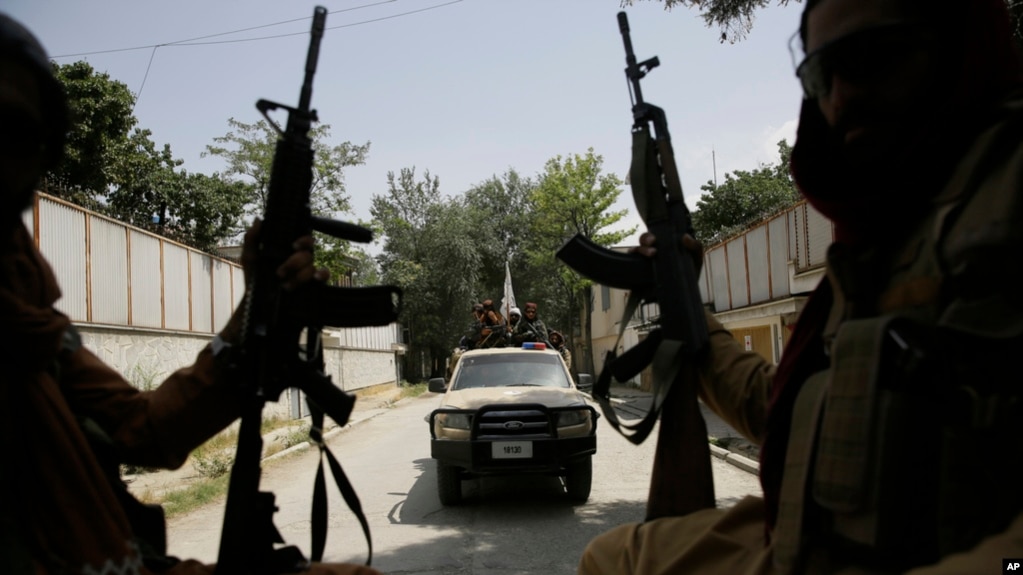
FILE – Taliban fighters patrol in Kabul, Afghanistan, on Aug. 19, 2021.
ISLAMABAD —
The United Nations is urging the Taliban government in Afghanistan to immediately cease “inhuman” public executions and floggings of individuals convicted of murder and other crimes.
The condemnation comes as Taliban authorities put to death three men by gunfire in Afghan sports stadiums across several cities in the past week in the presence of hundreds of onlookers.
In a statement issued Wednesday, the Geneva-based U.N. Human Rights Office, or OHCHR, said that it was “appalled” by the public executions, decrying them as “a form of cruel, inhuman or degrading treatment or punishment.”
The Taliban have publicly executed five convicted killers since they seized control of Afghanistan in August 2021 and have also flogged hundreds of people, including women, for committing crimes such as theft, robbery, and adultery.
The U.N. statement noted that the latest public floggings took place this past Sunday when a 12-year-old boy and a man were publicly flogged for the crime of immorality in eastern Laghman province. On the same day, a woman and a man convicted of running away from home and adultery were flogged 35 times in public in northern Baluch province.
“Corporal punishment also constitutes a form of cruel, inhuman or degrading treatment or punishment, which is prohibited under international human rights law,” the U.N. cautioned.
It urged the fundamentalist Taliban to ensure full respect for due process and fair trial rights, in particular access to legal representation, for anyone confronted with criminal charges.
De facto Afghan authorities have dismissed criticism of their criminal justice system, saying it is aligned with Islamic rules and guidelines.
The Taliban have imposed sweeping restrictions on women’s rights to education and public life, barring female visitors from parks and gyms and forbidding girls from attending schools beyond the sixth grade.
The international community has rejected the Taliban’s calls for granting their administration formal recognition, citing their treatment of Afghan women and other human rights concerns.
Richard Bennett, the U.N. special rapporteur on the situation of human rights in Afghanistan, will unveil the findings of his new report at Thursday’s U.N. Human Rights Council meeting.
In an apparent preemptive reaction to the upcoming report, chief Taliban spokesperson Zabihullah Mujahid wrote on X, formerly known as Twitter, that Bennett and other Western critics should stop “misusing” the Afghan human rights situation and instead focus on and stop rights abuses elsewhere in the world.
UN ‘Appalled’ by Taliban-Ordered Public Executions in Afghanistan
The White House press secretary says the signing of the Doha Agreement in 2020 strengthened the Islamic Emirate and weakened “our partners in the previous government of Afghanistan”.
Karine Jean-Pierre said in a press conference on Wednesday: “As you know, four years ago, the previous administration signed the Doha Agreement in 2020 with the Taliban [Islamic Emirate] and pledged to withdraw its forces a few months after President Joe Biden’s oath inauguration without any clear path or plan for the next plans.”
The Doha Agreement was signed on February 29, 2020, during the presidency of Donald Trump, between the United States and the Islamic Emirate in Qatar. US special representative at the time Zalmay Khalilzad and Mullah Abdul Ghani Baradar, the current deputy prime minister of the Islamic Emirate, signed the accord.
“This agreement strengthened the Taliban [Islamic Emirate] and weakened our partners in the Afghan government,” said Jean-Pierre.
Although Trump has repeatedly defended the signing of this agreement and has said that endless wars have taken American resources and lives and must end, the former US president and some Republicans have always criticized Joe Biden for how he left Afghanistan.
But the White House said: “President Biden’s choices for how to leave Afghanistan were heavily influenced by the conditions created by him [Donald Trump]. When Biden took office, the Taliban [Islamic Emirate] was in its strongest position since 2001, controlling or challenging nearly half of the country.”
American officials say that the Islamic Emirate had pledged in this agreement that they would discuss with other Afghan parties to form an inclusive government. But Jean-Pierre added: “The Taliban [Islamic Emirate] have not fulfilled their commitments in (the agreement). The [Islamic Emirate] Taliban have not kept their promises to start a meaningful dialogue with Afghans to pave the way for a comprehensive and inclusive political system.”
The White House spokesman said that the United States holds the Islamic Emirate accountable for its commitments and added: “We work tirelessly every day to ensure that these commitments are fulfilled.”
American officials say that according to the Doha agreement, the Islamic Emirate should not allow terrorist groups to reactivate in Afghanistan, use Afghanistan against other countries, and cut ties with terrorist groups.
The Islamic Emirate of Afghanistan [IEA] has always claimed that al-Qaeda does not exist in Afghanistan, Daesh has been suppressed, and does not allow anyone to attack another country from Afghanistan.
Doha Agreement strengthened IEA and weakened our partners, says White House
The Afghanistan Journalists Center reports that the Minister of Virtue and Vice for the Taliban has issued a warning that if female reporters do not cover their faces on television, women’s work in the media may be prohibited.
Expressing concern, the center has called for the cancellation of this Taliban decree.
The Afghanistan Journalists Center stated on Wednesday that Mohammad Khalid Hanafi, the Taliban’s Minister of Virtue and Vice, raised this issue in a meeting with media representatives in Kabul.
Hanafi warned that if women do not cover their faces when appearing on television or in visual interviews, Mullah Hibatullah Akhundzada, the Taliban supreme leader may completely ban women’s activities in the media.
The Journalists Center said that this meeting took place on Tuesday with the presence of officials and media representatives at a hotel in Kabul.
The Afghanistan Journalists Center, while warning of the possibility of issuing a directive banning women’s work in the media, urged the Taliban to cancel its new media guidelines and allow journalists and media outlets to continue their activities by public media laws.
This comes that some media representatives informed this center that Abdul Ghafoor Farooq, the spokesperson for the Taliban’s Ministry of Virtue and vice, recommended to media representatives to observe employees, especially women, wearing a “black covering with only their eyes visible.”
He also urged media officials to refrain from interviewing women whose faces are visible or who are not wearing masks.
Women’s media work may be banned if faces are not covered: AFJC
The United Nations says aid workers are still in a “race against time” to remove rubble and rebuild after the devastating earthquake struck eastern Afghanistan last month, killing at least 2,200 people and cutting off remote areas.
The 6.0-magnitude quake on Aug. 31 was shallow, destroying or causing extensive damage to low-rise buildings in the mountainous region. It hit late at night, and homes — mostly made of mud, wood, or rocks — collapsed instantly, becoming death traps.
Satellite data shows that about 40,500 truckloads of debris still needs to be cleared from affected areas in several provinces, the United Nations Development Program said Wednesday. Entire communities have been upended and families are sleeping in the open, it added.
The quake’s epicenter was in remote and rugged Kunar province, challenging rescue and relief efforts by the Taliban government and humanitarian groups. Authorities deployed helicopters or airdropped army commandos to evacuate survivors. Aid workers walked for hours on foot to reach isolated communities.
“This is a race against time,” said Devanand Ramiah, from the UNDP’s Crisis Bureau. “Debris removal and reconstruction operations must start safely and swiftly.”
People’s main demands were the reconstruction of houses and water supplies, according to a spokesman for a Taliban government committee tasked with helping survivors, Zia ur Rahman Speenghar.
People were getting assistance in cash, food, tents, beds, and other necessities, Speenghar said Thursday. Three new roads were under construction in the Dewagal Valley, and roads would be built to areas where there previously were none.
“Various countries and organizations have offered assistance in the construction of houses but that takes time. After the second round of assistance, work will begin on the third round, which is considering what kind of houses can be built here,” the spokesman said.
Afghanistan is facing a “perfect storm” of crises, including natural disasters like the recent earthquake, said Roza Otunbayeva, who leads the U.N. mission to the country.
 Afghanistan Peace Campaign