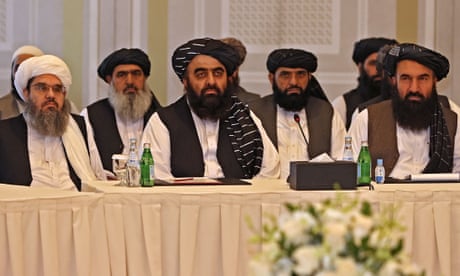
Mujahid: Islamic Emirate Attending Doha Meeting to Foster Engagement

By Fidel Rahmati

Reports from the venue of the third Doha meeting in Qatar indicate that Roza Otunbayeva, head of the UN body for Afghanistan, Thomas Nicholson, and Asif Durrani, special representatives of the European Union and Pakistan, arrived in Doha today, Saturday, June 29th.

The third Doha meeting will be hosted by Rosemary DiCarlo, UN Deputy Secretary-General, in the Qatari capital on Monday and Tuesday, June 30th and July 1st.

Ms. DiCarlo has not yet arrived in Doha, but a UN spokesperson confirmed her travel to Qatar.

The presence of Roza Otunbayeva Mark Poots, the head and deputy political head of UNAMA, respectively, at the venue of the Doha meeting, has been confirmed, along with special envoys from the European Union and Pakistan arriving for Afghanistan.

Representatives from over 20 countries and delegates from several international organizations are participating in the second session of Doha, and a delegation from the Taliban will also be present at this conference.

Civil society and women representatives of Afghanistan, who have been key players in other international conferences on Afghanistan, have not been invited to the third Doha meeting, sparking widespread domestic and international criticism.

According to the UN rapporteur and other international observers, critics argue that excluding women and civil society from the Doha talks will come at a high cost.

Mujahid: Islamic Emirate Attending Doha Meeting to Foster Engagement
read more

Mujahid: Islamic Emirate Attending Doha Meeting to Foster Engagement

Mujahid stated that the Islamic Emirate’s participation in this meeting does not signify hostility towards any party.

Zabihullah Mujahid, the spokesperson for the Islamic Emirate, announced in a press conference that the Islamic Emirate will participate in the third Doha meeting with the aim of “engaging with all parties and resolving issues.”

Mujahid stated that the Islamic Emirate’s participation in this meeting does not signify hostility towards any party.

According to Mujahid, the Islamic Emirate invites the countries participating in the Doha meeting to engage with Afghanistan.

The spokesperson for the Islamic Emirate said: “Our participation in this meeting is not enmity towards any party but engagement with all parties, which should be understood and utilized better.”

Mujahid called on the countries participating in the third Doha meeting not to leave Afghanistan alone in difficult conditions.

Zabihullah Mujahid clarified that domestic issues of Afghanistan will not be discussed in the third Doha meeting because, in his opinion, Afghanistan’s domestic issues are related to the country, not the United Nations.

The spokesperson for the Islamic Emirate said that economic issues, restrictions, and achievements of the Islamic Emirate will be discussed in the third Doha meeting.

Mujahid said they are participating in this meeting based on conditions, but he did not provide further details on the matter.

He also commented on the Islamic Emirate’s opposition to the presence of women in the Doha meeting, stating that this opposition was to maintain Afghanistan’s unified stance in the meeting.

In part of his remarks, the spokesperson for the Islamic Emirate recounted the Eid message from the leader of the Islamic Emirate, which emphasized avoiding conflict, as an advisory message.

Mujahid, denying any conflicts within the Islamic Emirate’s system, said that the leader’s emphasis on avoiding conflicts does not indicate the presence of discord and conflict within their Islamic system.

The spokesperson for the Islamic Emirate stated: “The issue of women’s participation in this meeting was that no one other than the Islamic Emirate, which is a system, should represent Afghanistan, because if Afghans appear through several channels in external meetings, it means we are still scattered and our nation is not on one path, and it paves the way for external interventions. Therefore, it is better that whatever we do inside the country is among ourselves, but outside, we should be united as a single Afghan.”

Sheikh Hibatullah Akhundzada, the leader of the Islamic Emirate, in a recording for his Eid al-Adha sermon at the Eidgah Mosque in Kandahar, asked all the people of Afghanistan to set aside their differences.

The third Doha meeting is scheduled to be held on the 30th of June in Qatar.

Mujahid: Islamic Emirate Attending Doha Meeting to Foster Engagement
read more

The Fate of the Village Councils: The Emirate’s effort to institute hegemony over rural Afghanistan

Jelena Bjelica • AAN Team

Afghanistan Analysts Network

Afghanistan’s Community Development Councils (CDCs), which were established under the Islamic Republic by the National Solidarity Programme (NSP) and its successor Citizen’s Charter, have been abolished by the Islamic Emirate of Afghanistan (IEA). Government bodies have been told to coordinate economic projects with ulema councils instead. Afghanistan, however, has a longstanding tradition of grassroots, collective, decision-making and problem-solving bodies called shuras or village councils that long predate the CDCs. These shuras have played a crucial role in village life, praised, for example, by the late anthropologist Louis Dupree, for carrying “the country safely over its post-1933 internal power crises.” AAN’s Jelena Bjelica and the AAN team interviewed villagers across Afghanistan between November 2022 and June 2024 to learn how their shuras had fared under IEA rule. Many interviewees reported that even before the ban, their shuras had become non or barely functional, ignored by a government which prefers to work with village heads, often ones it has handpicked.

A Community Development Council (CDC) meeting in Herat province. Source: National Solidarity Programme/Flickr, 15 November 2010

You can preview the report online and download it by clicking here or on the download button below.

The picture that emerged from our research was of the slow demise of village councils/CDCs (interviewees tended to use the terms interchangeably) since the Islamic Emirate returned to power. It has preferred to work with individuals or groups, either head men (maleks or arbabs) or ulema councils, which, in general, it had appointed or at least approved.

Even before Amir Hibatullah Akhundzada’s May 2024 abolishment of the CDCs, the Emirate’s intentions had been discernible in the way it had diminished and marginalised the councils, in many cases, rendering them inactive. In addition, very few shuras had managed to keep their female members -–both the NSP and Citizens Charter programmes had mandated the equal participation of women in the CDCs. However, more than half of our interviewees rued this loss, if only for practical reasons, such as the shura’s inability to ascertain and address issues concerning women in the community.

The letter abolishing CDCs also indicated that future delivery of aid would have to be coordinated with ulema councils. NGOs, the World Bank and United Nations agencies, which have premised their work on working with CDCs, may now face problems. The relationship between the Emirate and the aid industry was already fraught. Navigating this latest blow to what many aid actors had considered a mechanism for ensuring equitable, local aid distribution will take some careful footwork.

Over the past century, shuras have undergone many changes, but one thing has remained a constant– they have always been a bridge between the community and external players – shielding, negotiating and trying to get resources. The Emirate’s move to abolish the shuras in favour of state-appointed or approved head men or ulema councils points to a redrawing of local-level power dynamics.

Whether this is a final nail in the coffin of Afghanistan’s village councils does, however, seem unlikely. In rural Afghanistan, shuras have survived the test of time because of their centrality to village life. They did not begin with the Soviet occupation or the Islamic Republic and it is highly questionable whether they will cease to exist with the IEA’s order to abolish them.

Whatever the future brings, if history is any indication, shuras will re-emerge as an integral part of Afghanistan’s social fabric as key local self-organised and self-governing structures. Once the initial jolt of the Amir’s ban has faded, we may see village shuras, as before, reinventing themselves under a new banner and perhaps with redefined horizons.

Edited by Roxanna Shapour and Kate Clark 


You can preview the report online and download it by clicking the download button below.


The Fate of the Village Councils: The Emirate’s effort to institute hegemony over rural Afghanistan
read more

Let Afghan women join the UN talks next week. It’s what the Taliban fear most

The Guardian

Since it became clear that the Taliban will be the only Afghan voices at the table and women’s rights will not officially be on the agenda at the UN meeting on Afghanistan in Doha, I have received thousands of messages from women inside and outside the country expressing their deep despair, shock and disappointment.

There is increasing concern about the tone that the international community – especially the UN mission in Afghanistan, Unama – have adopted to normalise the human rights violations in Afghanistan in an effort to secure the Taliban’s participation in the Doha talks.

The agenda for next week’s meeting will focus on counter-narcotics and the private sector, two peripheral issues chosen to ensure Taliban participation by putting nothing more contentious on the table.

This means the conference will ignore the fundamental issues of holding the Taliban accountable for their unprecedented violations of the basic rights of Afghan women and girls to have education, employment and active participation in society.

On Wednesday, in response to the outpouring of criticism, UN undersecretary-general Rosemary DiCarlo said that Afghan women’s rights, among other key issues, will be raised in every meeting with the Taliban. She conveniently ignored the fact that the whole world, including Islamic scholars, have been raising the same issues with the Taliban for more than three years to no avail, while the the group continues to impose more bans and restrictions on the women of Afghanistan with impunity.

The agenda also clearly contradicts the UN’s own charter and the security council resolutions 1325 and 2721, which call on the UN secretary general to appoint a special envoy for Afghanistan and to ensure participation of all sides, especially Afghan women’s groups.

It also disregards the lack of a legal framework and an inclusive and accountable governing system that ensures participation of all sides. Without a resolution to these two key issues, Afghanistan will never cease to be the centre of narcotics production and drug trafficking, nor will the country’s private sector develop without full participation of women – the two items on the UN’s agenda. According to the UN’s own assessment, the Taliban bar on women’s employment is costing the Afghan economy more than $1bn a year.

If Unama and others in the international community see the Taliban as the only reality for Afghanistan, they need to look at our history. Millions of Afghans risked life and limb to cast their votes in the 2004, 2009 and 2014 elections, despite threats, fraud and irregularities. They believed in the democratic values and principles which the international community propagated to them for more than 20 years.

Yet Afghans today are bewildered that the same international community which championed free elections and women’s rights is willing to compromise its own moral values to cave in to an extremist ideological group. A group that represents a ruling armed clerical regime which has established gender-apartheid in Afghanistan and directed the subjugation of more than 20 million women and girls into an abyss of hopelessness.

Given the moral collapse of the international community when it comes to upholding their own values for human rights, women’s rights, and equality for all, most Afghans feel there is no chance of a fair and transparent intervention by global bodies such as the UN to seek a reasonable and durable solution to the conflict in Afghanistan.

They question the international community’s commitment to women’s rights when their own fundamental rights were so easily bartered in exchange for geopolitical convenience during the withdrawal of troops from Afghanistan.

Two rows of bearded men sit at a conference table.
Shutting Afghan women out of key UN conference to appease Taliban ‘a betrayal’

Taliban members, who came to power with guns, can hold on to power through violence but will never subdue the will of a nation which has never been colonised. Our people, men and women, need education, employment and the prospect of liberty for achieving their dreams in order to realise their full potential. And if the Taliban hope that by sticking to their gender-apartheid vision and forcing the morally compromised internationally community to grant them some level of recognition, will help them achieve their aims they are also wrong.

It is the Taliban who launched their war on the women of our country. Women are half of our population, and the country cannot move forward without full participation of Afghan women, incorporation of the magnificent diversity of our country, and the incredible talent and potential of our youth who are now fleeing Afghanistan because they do not see any future under Taliban rule.

The Taliban have silenced women’s voices inside the country using violence and torture. And by excluding women’s participation at the Doha meeting, the UN and others in the international community have enabled the Taliban to try to silence our voices outside Afghanistan, too.

If the international community and the UN want to be useful, let the women of Afghanistan directly talk to the Taliban. This is something that the leaders of the gender-apartheid regime fear the most.

  • Fawzia Koofi is a politician and women’s rights activist who was the first woman vice-president of the Afghan parliament and chair of its women’s affairs and human rights commission.

Let Afghan women join the UN talks next week. It’s what the Taliban fear most
read more

‘No dialogue’: Pakistan says open to attacks on Afghan-based armed groups

By

Al Jazeera

Islamabad, Pakistan — Pakistan’s Defence Minister Khawaja Asif has warned that the country would not hesitate to launch attacks on the territory of Afghanistan, its neighbour, amid rising tensions between the two over security concerns.

When asked whether Pakistan would consider cross-border attacks to control perpetrators, the Asif replied to an interviewer, “If the need arises, there is nothing more important than Pakistan’s sovereignty.”

Addressing the legality of potential cross-border attacks, Asif argued that Pakistan must prioritise its own interests. “It is also a violation of international norms when Afghan soil is used to export terrorism, with those responsible receiving protection and safe havens by the people there,” he added.

In the interview on Thursday, he also rejected the prospects of any dialogue with the Tehreek-e-Taliban Pakistan (TTP), also known as the Pakistan Taliban, an armed group accused by Pakistan of launching attacks from across the border.

“There is no chance of a dialogue with them. What do we talk about, we need to have a common ground to speak to them,” Asif said.

The interview follows Pakistan’s recent announcement of a renewed military operation named Azm-e-Istehkam, aimed at curbing escalating violence since November 2022, when the TTP unilaterally ended a ceasefire.

Founded in 2007 and aligned ideologically with the Afghan Taliban, the TTP is an armed group advocating for the reversal of the merger of Pakistan’s northwestern tribal regions with Khyber Pakhtunkhwa province, and stricter enforcement of their interpretation of Islamic laws in the region.

Pakistan has repeatedly accused armed groups of launching attacks from Afghanistan, where it says the ruling Afghan Taliban, in power since August 2021, provides them with a safe haven. The Taliban denies these allegations.

Relations between the two neighbours have deteriorated significantly in the past two years, with numerous border skirmishes that have often led to closures of border crossings.

In March this year, Pakistan conducted air strikes inside Afghan territory in retaliation for attacks that resulted in the deaths of seven soldiers in Pakistan’s North Waziristan district in Khyber Pakhtunkhwa province.

The Afghan interim government claimed that Pakistan targeted ordinary Afghan homes and condemned what it termed as its neighbour’s reckless actions.

Yet, even as Asif’s comments underscored the taut ties between the neighbours, Pakistan has insisted that it is not shutting the door on Afghanistan – and is keen to remain engaged in its neighbour’s future.

Pakistan’s Foreign Minister Ishaq Dar said on June 27 in the National Assembly that the country would send a delegation to attend United Nations-hosted talks with the Afghan Taliban in Qatar’s capital, Doha, on June 30.

Pakistan Taliban talks
Khwaja Asif visited Kabul with a high-level Pakistani delegation in February 2023 [Handout: The office of Deputy Prime Minister for Economic Affairs]

Dar, who also serves as the country’s deputy prime minister, added that the foreign office is planning a future visit by officials to Kabul.

“Afghanistan remains a top priority on our agenda. Make no mistake, Afghanistan has not been ignored by this government,” he emphasised.

However, Riccardo Valle, a researcher based in Venice with The Khorasan Diary – a non-partisan platform run by journalists – said that while improving the country’s security situation was necessary, the Azm-e-Istehkam operation could have negative consequences for Pakistan’s relations with the Afghan Taliban and may not achieve the goal of reducing violence.

“Pakistan has previously conducted air strikes, reportedly targeting TTP militants’ camps. These actions not only failed to weaken the group but also triggered strong propaganda responses from the TTP,” Valle told Al Jazeera.

Pakistan has witnessed a surge in violence over the past 18 months, with data showing more than 700 attacks in 2023 alone, resulting in nearly 1,000 deaths, primarily among law enforcement personnel.

The government has dispatched numerous delegations to Kabul, including a high-level visit by Asif and Pakistan’s intelligence chief, General Nadeem Anjum, in February 2023, yet mutual distrust between the two nations persists.

Valle notes the close relationship and shared ideology between the TTP and the ruling Afghan Taliban, making it challenging to envision a scenario where the Afghan Taliban would crack down on the Pakistan Taliban.

The researcher pointed out that the announcement of Operation Azm-e-Istehkam had already stoked fierce resistance from residents and political parties in Khyber Pakhtunkhwa.

“Today in Afghanistan, there exists a regime maintaining ties with the Pakistani Taliban. By launching this operation, Pakistan risks fostering further grievances in the province towards the state, potentially aiding the TTP,” he said.

SOURCE: AL JAZEERA
‘No dialogue’: Pakistan says open to attacks on Afghan-based armed groups
read more

Women’s rights will be raised at the UN meeting being attended by Taliban, UN official says

By Richard Bennett

Mr. Bennett is the U.N. special rapporteur on the situation of human rights in Afghanistan.

The New York Times

June 28, 2024

In May 2022, nine months after the Taliban retook power in Afghanistan, I visited a girls’ secondary school that was still open in the north in spite of a ban on education for girls above sixth grade. Communities in the area, which has a long history of valuing education, had refused to comply. I met with a group of 11th-grade math students who told me about their hopes for the future. “I don’t want to end up trapped at home and condemned to a domestic life,” one female student told me. “I want to finish school and become a teacher so that I can help my family and others.”

I ended that visit to Afghanistan with hope that perhaps the situation would not become as dire as I — and many Afghans — feared. But when I returned a year later, everything had changed. The school was closed. Instead of attending lessons, the student and her classmates were forced to stay at home, their teachers transferred to a primary school. Now, among the many other challenges facing girls and women under the Taliban’s rule, a mental health crisis has gripped the country. Girls report anxiety, depression and hopelessness, and there have been reports showing an alarming surge in suicides.

It is against this backdrop that the United Nations will convene a third meeting of international special envoys in Doha, Qatar, next week to discuss a political path forward for Afghanistan. The Taliban have accepted the U.N.’s invitation to join. (They declined to attend February’s meeting.) After discussions with the Taliban, the meeting’s agenda will focus on fighting narcotics and helping the private sector — and does not include human rights or women’s issues, and neither women nor Afghan civil society representatives will be included.

If these exclusions are the price of the Taliban’s presence in Doha, the cost is too high.

When the Taliban retook power in August 2021, its leaders initially said that education for girls above the sixth grade would be suspended until conditions were suitable under Islamic rules. Now, more than 1,000 days later, school remains off limits for girls older than 12, and restrictions on education have expanded to universities. The Taliban now say education is “an internal matter,” and it remains unclear when — or if — schools will reopen to girls.

Denial of education is just one of many Taliban decrees against women. Female civil servants were instructed not to report to work when the Taliban retook power. Women are now barred from working at nongovernmental organizations and humanitarian agencies, including the United Nations. Some female-owned businesses, like beauty salons, have been shuttered. Women and girls need to be accompanied by a male relative to travel.

The net result is that today, women and girls have been virtually erased from public life, deprived of their most basic rights. Afghan women began describing the Taliban’s policies as gender apartheid in the 1990s, and they and many others, including me, want such policies to be criminalized under international law.

The Taliban’s institutionalized oppression is devastating not only for the current generation of Afghan women and girls. If left unchecked, it will inflict irreparable harm on future generations of Afghans as well. Boys, raised in a system that legitimizes the dehumanization of women and girls, may follow their leaders’ example and continue to treat women badly, and they are vulnerable to radicalization, sowing seeds for security concerns that extend beyond Afghanistan’s borders. The crippling gender policies and their violent enforcement are also severely depriving L.G.B.T.Q. people of their fundamental rights.

Despite all of this, Afghan women and girls are pushing back. Some have protested in the streets to demand the restoration of their rights, risking arrest, detention and violence. In the face of shuttered schools, girls with access to the internet, who are a minority, are taking classes in English, math and science, and female entrepreneurs are moving online, finding creative ways to circumvent restrictions on their movement. “We did not create the Taliban, but we are the ones who have to live with them in control,” one woman told me. “There is no other choice than to find ways to survive and learn.”

It would be easy to leave these women to carry on their struggle alone, citing the excuse that the international community has done enough damage in Afghanistan and should stay out of the nation’s affairs. But that would be a grave disservice both to those women and girls showing defiance and to many others who do not have the economic capacity to fight back. We have an obligation to meet their bravery with increased protection, support and solidarity.

The focus on politically neutral topics at the upcoming meeting in Doha was designed to entice the Taliban to the table. A formal discussion of human rights will be missing, despite the fact that Afghans who disagree with the Taliban’s ideology have made clear that respect for human rights, especially the rights of women and girls, must be a prerequisite for any engagement with the Taliban. This is happening despite the fact that an independent assessment requested by the Security Council last year advised any road map for Afghanistan’s reintegration into the international community should include measurable improvements in human rights.

Afghanistan has suffered more than four decades of conflict and had a questionable human rights record during the 20 years of the Islamic republic. But since retaking power, the Taliban has not only attacked the rights of women and girls; they have been responsible for wide-ranging violations and abuses — including killings, disappearances and arbitrary detentions — as well as a campaign of retaliation against former enemies, despite their claim of an amnesty. People from minority communities are especially at risk.

Also conspicuously absent at the main Doha meeting will be any representation of non-Taliban Afghans. Though some civil society and women’s groups will be included in meetings on the sidelines, this representation appears to have come only after significant external pressure, but it should have been baked in from the beginning. This is not the first time non-Taliban Afghans have been sidelined from political discussions, though history has repeatedly shown that failure to include all Afghans in political processes undermines their credibility and sustainability.

The Taliban are not recognized by the United Nations as a government and should not be treated as such. They must not be allowed to use the threat of backing out of the talks to dictate the terms of this conference or any future international process. It is a mistake to measure the success of this meeting by whether the Taliban show up.

The bravery, dignity and perseverance of millions of Afghans in the face of such gross injustice must be matched by strong, principled and effective international leadership. Afghan women and girls have often said to me that their greatest fear used to be that the Taliban would return to power. Now they say that they fear the Taliban will be recognized simply because of their power, in disregard of their cruel policies and practices.

The international community must insist on reversing the restriction of Afghan women’s and girls’ rights, on women’s meaningful participation in decision making and on accountability. Having these issues explicitly on the agenda in Doha would still be an important first step.

Richard Bennett was appointed by the U.N. Human Rights Council as special rapporteur on the situation of human rights in Afghanistan in April 2022. He was the head of the human rights component of the U.N. assistance mission in Afghanistan and a long-term adviser to the Afghanistan Independent Human Rights Commission beginning in 2003.

Women’s rights will be raised at the UN meeting being attended by Taliban, UN official says
read more

Women’s rights will be raised at the UN meeting being attended by Taliban, UN official says

EDITH M. LEDERERAssociated Press

UNITED NATIONS (AP) — The U.N. political chief who will chair the first meeting between Afghanistan’s Taliban rulers and envoys from about 25 countries answered sharp criticism that Afghan women have been excluded, saying Wednesday that women’s rights will be raised at every session.

Undersecretary-General Rosemary DiCarlo stressed to a small group of reporters that the two-day meeting starting Sunday is an initial engagement aimed at initiating a step-by-step process with the goal of seeing the Taliban “at peace with itself and its neighbors and adhering to international law,” the U.N. Charter, and human rights.

This is the third U.N. meeting with Afghan envoys in Qatar’s capital, Doha, but the first that the Taliban are attending. They weren’t invited to the first and refused to attend the second.

Other attendees include envoys from the European Union, the Organization of Islamic Cooperation, the United States, Russia, China and several of Afghanistan’s neighbors, DiCarlo said.

The Taliban seized power in Afghanistan in 2021 as United States and NATO forces withdrew following two decades of war. No country officially recognizes them as Afghanistan’s government, and the U.N. has said that recognition is almost impossible while bans on female education and employment remain in place and women can’t go out without a male guardian.

When DiCarlo met with senior Taliban officials in Kabul in May, she said she made clear that the international community is concerned about four things: the lack of an inclusive government, the denial of human rights especially for women and girls, and the need to combat terrorism and the narcotics trade.

“The issue of inclusive governance, women’s rights, human rights writ large, will be a part of every single session,” she said. “This is important, and we will hear it again and again, I’m sure from quite a number of us.”

Human Rights Watch and Amnesty International criticized the United Nations for not having Afghan women and civil society representatives at the table with the Taliban.

DiCarlo described the meeting as a process. “This is not an inter-Afghan dialogue,” she stressed. “I would hope we could get to that someday, but we’re not there.”

The Taliban’s foreign ministry on Tuesday reiterated the concerns they want to raise — restrictions on Afghanistan’s financial and banking system, development of the private sector, and countering drug trafficking. DiCarlo said they also raised Afghanistan’s vulnerability to climate change.

She said discussions on the first day of the Doha meeting on Sunday will focus on how the world would engage with the Taliban to achieve the objectives of peace and its adherence to international law and human rights. The assessment calls for a step-by-step process, where each side would respond to actions taken by the other.

On the second day, the participants will discuss the private sector, including getting more women into the workforce through microfinance projects, as well as counter-narcotics efforts, such as alternative livelihoods and support for drug addicts, she said.

“Hopefully, it will achieve some progress, but it will be slow,” DiCarlo said.

She stressed that the meeting isn’t about the Taliban and doesn’t signify any recognition of Afghan’s rulers as the country’s official government. “That’s not in the cards,” she said.

“This is about Afghanistan and the people and their need to feel a part of the international community and have the kinds of support and services and opportunities that others have — and they’re pretty blocked off right now,” DiCarlo said.

Before the meeting, the U.N. political chief met with the Afghan diaspora. After the meeting on Tuesday, she said the U.N. and the envoys will meet with civil society representatives including women, and private sector representatives mainly living in Afghanistan.


Women’s rights will be raised at the UN meeting being attended by Taliban, UN official says
read more

Chinese President vows continued role in resolving Afghanistan issues

Khaama Press

Xi Jinping, the President of China, announced that China will continue its role in connecting to resolve Afghanistan’s issues.

He said on Friday, June 28th, in a ceremony in Beijing, that China will not change its determination for peace development.

According to Chinese media reports, he said Beijing will continue its constructive role in crises such as Ukraine, resolving the Palestine-Israel conflict, and addressing issues related to the Korean Peninsula, Iran, Myanmar, and Afghanistan.

Xi participated in Friday’s 70th anniversary of the Five Principles of Peaceful Coexistence in Beijing.

China, although not recognizing the Taliban like other countries, maintains economic and diplomatic relations with the group and has transferred the Afghan embassy in Beijing to the Taliban.

This comes amid a dire humanitarian crisis in Afghanistan following the Taliban’s takeover in 2021. Millions of Afghans face food insecurity, with humanitarian aid struggling to reach those in need due to ongoing conflict and bureaucratic hurdles.

The United Nations has warned of a looming famine, exacerbated by severe drought conditions and economic collapse.

Restrictions on human rights, particularly for women and girls, have intensified under Taliban rule. Women’s access to education and employment has been severely curtailed, with many forced to stay home and unable to pursue opportunities they had gained in the past two decades.

The Taliban’s interpretation of Islamic law has imposed strict dress codes and limited movement for women, effectively rolling back years of progress in gender equality.

International condemnation and concern have mounted over the Taliban’s systematic repression of dissent and freedom of expression. The international community continues to call for unhindered humanitarian access and increased support for those affected by the ongoing crisis in Afghanistan.

Chinese President vows continued role in resolving Afghanistan issues
read more

Ministry, Bank Delegates to Travel to Doha 3, US Special Envoys to Attend

Amir Khan Muttaqi confirmed this during a meeting with Roza Otunbayeva, and also both sides discussed the agenda of the third meeting.

The Ministry of Foreign Affairs in a statement said that representatives from the Ministries of Interior, Industry and Commerce, Foreign Affairs, the Central Bank of Afghanistan, and the head of the Islamic Emirate’s Qatar-based Political Office will participate in the third Doha meeting.

Amir Khan Muttaqi, the acting Minister of Foreign Affairs of the Islamic Emirate, confirmed this during a meeting with UNAMA head Roza Otunbayeva, and also both sides discussed the agenda of the third meeting.

The statement of the ministry said: “The two sides discussed and exchanged views on the agenda and other related issues, in addition to the participation of the Islamic Emirate delegation in the Doha meeting.”

“The meetings are influential but cannot fundamentally solve the issues,” said Baqir Saeer, a political analyst.

Meanwhile, the US State Department also announced the participation of its special representatives for Afghanistan in the third Doha meeting, highlighting that the interim government must take its commitments under the Doha Agreement seriously, especially regarding the rights of women and girls in Afghanistan.

Matthew Miller, spokesperson for the US State Department, speaking at a press briefing, said: “We will be participating in that conference because we take – we will continue, with the international community, to impress upon the Taliban that they need to take seriously their obligations under the Doha Agreement, and that includes with regards to the treatment of women and girls, which, of course, continues to be appalling.”

At the same time, Rina Amiri, United States Special Envoy for Afghan Women, Girls and Human Rights, said that the cycle of conflict in this country will not stop until the issue of women and girls is included in the agenda of the Doha meeting.

Meanwhile, China’s special envoy for Afghanistan, Yue Xiaoyong, told an Iranian media outlet that the Doha meeting will be held informally and behind closed doors. The Chinese diplomat added that he hopes this meeting will not be as unsuccessful as the previous Doha meetings.

China’s special envoy for Afghanistan, said: “I don’t know how this meeting will be; but what I do know is that this meeting will be informal, behind closed doors, and it will not be in a way that people can fully discuss the issues.”

Ishaq Dar, the Foreign Minister of Pakistan, said: “In the coming weeks, a conference will be held in Doha, and there will be a trilateral meeting hosted by Doha. We will be there, and Afghanistan will be there. In this meeting, we will discuss comprehensive issues including health, and the work of the Ministry of Foreign Affairs is ongoing in this regard. The issue of Afghanistan is a priority for us.”

Earlier, the United Nations emphasized that the third Doha meeting and the UN officials’ meeting with the interim government do not mean their recognition, and the Doha meeting is a process to compel the interim government to fulfill its commitments.

Ministry, Bank Delegates to Travel to Doha 3, US Special Envoys to Attend
read more

China Urges Islamic Emirate to Fulfill Promises on Girls’ Education

Beijing hopes peace and reconstruction in Afghanistan will occur in a way that witnesses the formation of an inclusive government.

China’s special envoy for Afghanistan, Yue Xiaoyong, said in an interview with an Iranian media outlet that he hopes the caretaker government of Afghanistan will fulfill its promises regarding improving education, especially girls’ education.

In this interview, Yue Xiaoyong called external solutions to Afghanistan’s issues unsuccessful and said that more work needs to be done to integrate Afghanistan into the global community.

He added that Beijing hopes peace and reconstruction in Afghanistan will occur in a way that witnesses the formation of an inclusive government and a clear fight against terrorism.

China’s special envoy for Afghanistan said: “We have noticed that the caretaker government has announced its interest in improving education, including girls’ education. We hope they [the officials of the caretaker government of Afghanistan] can fulfill their plans and promises and improve girls’ education.”

China’s special envoy for Afghanistan also added that the international community should not interfere in Afghanistan’s internal affairs. Referring to the role of neighboring countries in Afghanistan’s issues, he stressed regional efforts for the quicker integration of Afghanistan into the global community.

Yue Xiaoyong further said: “In the process of peace and reconstruction in Afghanistan, we must build our efforts on equality and mutual respect, and gradually and as soon as possible, strive to bring Afghanistan back into the global community.”

“Undoubtedly, the people of Afghanistan, especially girls, need education, training, and schooling. The Islamic Emirate, just as it has fought against terrorism over the past three years, should continue to do so in the future. Regional countries can play a significant and fundamental role in achieving permanent peace and stability in Afghanistan,” said Salim Paigir, a political analyst.

The Islamic Emirate has not yet commented on these remarks by China’s special envoy for Afghanistan; however, it had previously pledged the provision of educational opportunities for girls and urged countries not to interfere in Afghanistan’s internal affairs.

China Urges Islamic Emirate to Fulfill Promises on Girls’ Education
read more