‘I used to hide that I am a son of refugees – now I’m proud of it’

Shivani Chaudhari

BBC News, Essex
19 August 2024
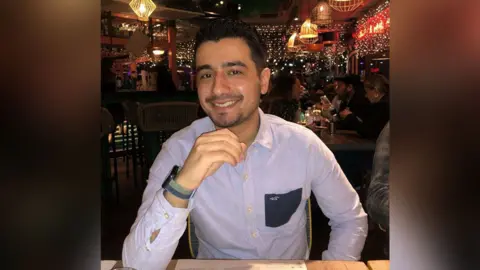
Family photo Rustam, a young man sitting in a restaurant wearing a smart blue shirt and smiling at the camera.
Family photo
Rustam Wahab, 22, grew up in Essex and is the son of refugees from Afghanistan

Rustam Wahab is the proud son of refugees – but only a few people knew until recently.

His parents and older brother, who was two at the time, risked their lives in 2001 to flee war and persecution in Afghanistan and seek refuge in England.

Mr Wahab, 22, was in his mum’s stomach when she made the journey to England in the hope of finding a better life.

The family, who now live in London and Essex, were used to a comfortable lifestyle when they lived in central Kabul, but were catapulted into extreme poverty when they first arrived in the country.

Mr Wahab said: “The first time I told people that I was a son of refugees was a year ago, so it’s not been a long time.”

Mr Wahab said: “The earliest example I have of us being very poor as a result of being an asylum seeker was when me and my older brother went to school and it was a funfair day.

“We only had 50p [and] we didn’t have money to go on the bouncy castle.”

Mr Wahab said his older brother gave him the 50p as they did not have enough money for them both to have a go.

“One teacher saw and let us both go onto the bouncy castle, and stuff like that has stuck with me and my older brother.

“That’s the first time we had experienced the kindness of other people and them treating us with fairness and love.”

‘Middle class life’

Mr Wahab said his family used to live near the presidential palace in the Afghan capital, but their life had been destroyed due to the war and left his parents with no other choice but to risk everything and flee.

He said: “It was a middle class life, my dad worked from the age of 12, he helped out his dad while still going to school.

“My dad was a really, really hard worker and he still is now, to support his family right now he is working crazy hours.

“So the transition from middle class life to them being at the bottom of society – it was really difficult for my parents.

“Not only did they flee war and persecution, [but] then they came to the UK and went through poverty and being dirt poor and [not being able] to afford certain stuff.

“The people who come here illegally don’t want to come here, they have to come here and as soon as people realise that the whole narrative on asylum seekers coming here… will change.”

Mr Wahab is studying for a degree in philosophy, politics and economics at Southampton University. Alongside his studies he runs an Instagram page, on which he shares videos that give an insight into events taking place across the world to more than 700,000 followers.

Mr Wahab has recently focused on sharing informative videos that reference the riots that took place after disinformation was spread online about the circumstances of an attack in which three young girls were fatally stabbed in Southport.

Following the disorder that followed the incident, he said: “Of course, I have been subject to a little bit of racism and Islamophobia.

“But seeing that with my own eyes, a mass amount of people just rioting and attacking people of colour – it made me feel frightened, scared and unwelcomed.

“I really thought about immigrating to a different country because of it.”

Yet he added he found the counter-protests “heartwarming”.

Mr Wahab added: “It just goes to show that there is a small minority who share those racist, far-right views, but the majority of the country actually want us here.”

‘Worked hard’

However, growing up Mr Wahab said he had kept his family’s history a secret.

Hostility was rampant towards people of colour after 9/11 and Mr Wahab’s parents hoped to protect their children by telling them to hide who they were.

Mr Wahab said: “The first time I told people that I was a son of refugees was a year ago, so it’s not been a long time.”

He launched his Instagram page in 2019 and it started to grow quickly during 2020, but he felt his identity “was sort of like a secret”.

“I saw that the hate towards people of colour and refugees was getting so bad, that I thought I should share my story and the person running this account is actually a son of refugees.

“We’re just normal people, not a threat to anyone. We’re just here living the same as them, paying their taxes.”

“We sort of had to hide our identity up until maybe our teenage years, when we kind of got fed up of it and we didn’t want to hide who we were anymore.

“We used to say we were Pakistani or Turkish instead of saying we were Afghan.

“It was difficult really because my parents were always quite protective and a bit ashamed because of the connotations that come with [being a] refugee as well.”

But now he said: “I am pretty proud of it.”

“My parents have worked hard to give us good decent lives after they got their British status in 2007.”

Moving forward he said he hoped to finish his degree and and wants to pursue a career as an MP.

“I do want to be an MP, I do believe that to cause real change is through Parliament.”

‘I used to hide that I am a son of refugees – now I’m proud of it’
read more

Hollywoodgate review – chilling fly-on-the-wall glimpse of the Taliban’s takeover of Kabul

“If his intentions are bad, he will die soon.” Taliban commander Mawlawi Mansour smiles and glances at the camera as he speaks, the menace in his words not disguised by an affable show of teeth. He is talking about the director of this fascinating, chilling film – Egyptian-born Ibrahim Nash’at, who scored the documentarian’s golden ticket when he gained access to the Taliban’s inner circle in the immediate aftermath of the US withdrawal from Afghanistan in August 2021.

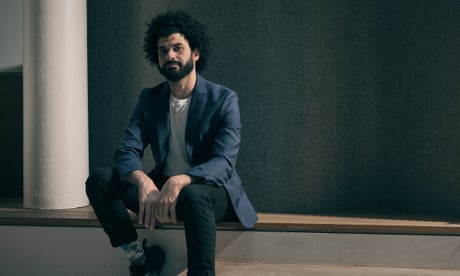
Ibrahim Nash'at photographed in London by Phil Fisk for the Observer New Review, July 2024.
Documentary-maker Ibrahim Nash’at on filming the Taliban: ‘The secret service asked to see my footage. I left the same day’
Read more

The access comes with caveats: Nash’at is not permitted to film civilians, or indeed much outsidethe former US base, nicknamed Hollywoodgate. Even so, and at considerable risk, one suspects, to his personal safety, the director captures something of the plight of the ordinary people of Kabul, a distant afterthought for these war-obsessed men consumed by the thrill of new toys – the US left weapons and equipment behind worth an estimated $7bn – and the threat of old enemies.

 In UK and Irish cinemas/ on Curzon Home Cinema

Watch a trailer for Hollywoodgate..
Hollywoodgate review – chilling fly-on-the-wall glimpse of the Taliban’s takeover of Kabul
read more

Afghanistan’s Taliban sign $2.5B in trade, investment deals with Uzbekistan


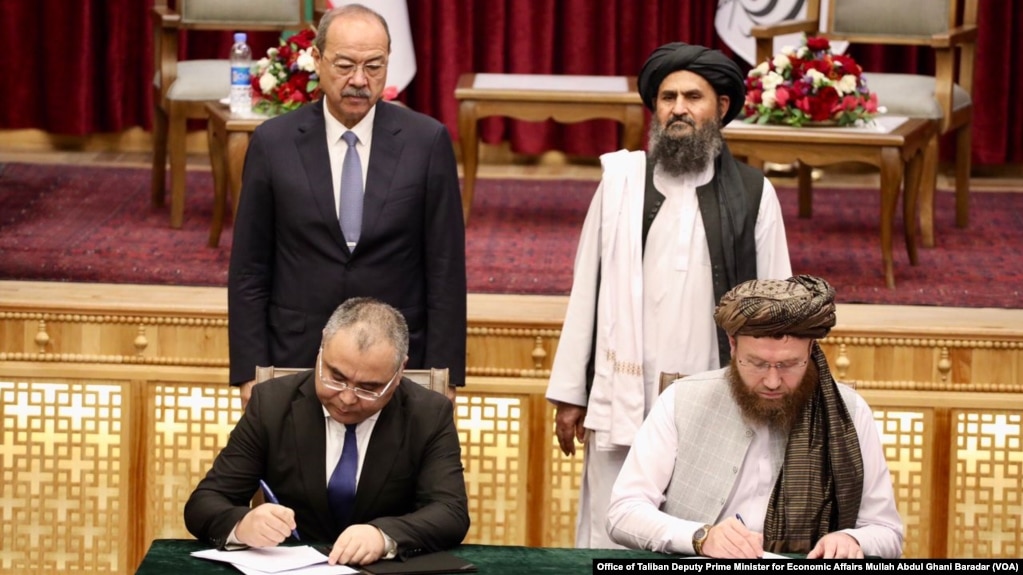
Uzbek Prime Minister Abdulla Aripov, back row, left, and Taliban Deputy Prime Minister for Economic Affairs Mullah Abdul Ghani Baradar, back row, right, oversee the signing of Memorandums of Understanding in Kabul, Afghanistan, Aug. 17, 2024.

The Taliban government in Afghanistan announced Saturday that it had finalized trade and investment deals worth $2.5 billion with the prime minister of neighboring Uzbekistan during his historic visit to Kabul.

Uzbek Prime Minister Abdulla Aripov and his delegation arrived in the Afghan capital on the highest-level visit by a foreign leader to the country since the Islamist Taliban regained control three years ago. Aripov was accompanied by Laziz Kudratov, the minister of investment, industry, and trade, among other senior officials.

Aripov and Mullah Abdul Ghani Baradar, the deputy Taliban prime minister for economic affairs, oversaw the signing of “35 MoUs (memorandums of understanding) valued at $2.5 billion.” The ceremony occurred after the two leaders inaugurated an exhibition of Uzbek products in Kabul.

“The MoUs include 12 investment agreements valued at $1.4 billion and 23 trade agreements worth $1.1 billion,” Baradar’s office said in a statement. The documents covered agriculture, energy, infrastructure, and manufacturing sectors.

“This landmark signing is a testament to the strong political will and commitment of the leadership in both Afghanistan and Uzbekistan to deepen economic integration in the region,” Taliban-run Afghan state media quoted Baradar as saying. “We are confident that these agreements will create new avenues for investment, trade, and job creation, benefiting the people of both our nations,” he added.

Afghan media quoted Uzbek minister Kudratov as saying that the two countries are working together to increase the annual bilateral trade to $3 billion.

Afghanistan shares a 144-kilometer (89.4 miles) border with Uzbekistan, and both sides have reported a steady improvement in bilateral political, security, and economic cooperation since the Taliban takeover.

The fundamentalist group swept back to power in Kabul in August 2021 as the United States and NATO troops withdrew from the country after 20 years of war with the then-insurgent Taliban.

No country has formally recognized the Taliban as the legitimate government of Afghanistan, and international development assistance to the impoverished country remains suspended.

Terrorism-related global sanctions on many top Taliban leaders, isolation of their administration, and termination of foreign development aid have made it difficult for the de facto Afghan government to tackle the country’s deepening economic troubles.

The World Bank reported in April that the aftermath of the Taliban takeover had seen a stark decline in international aid, leaving Afghanistan without any internal growth engines and leading to “a staggering 26% contraction in real GDP.”

However, the Taliban’s policies, in line with their strict interpretation of Islamic law, have troubled the world because they have barred Afghan girls from attending school beyond the sixth grade and many women from public and private sector employment.

The Taliban reject criticism of their government as interference in internal matters of Afghanistan, saying their policies are aligned with local culture and Islam.

Afghanistan’s Taliban sign $2.5B in trade, investment deals with Uzbekistan
read more

1980s Pul-e Charkhi Commander Walks Free: War crimes conviction overturned by Dutch Court of Appeal 

A senior figure overseeing the notorious Pul-e Charkhi prison in the 1980s who was convicted of war crimes in the Netherlands, where he had been given asylum, has seen his conviction overturned by the Court of Appeal. His lawyers successfully argued that Abdul Razaq Aref’s crimes – arbitrary deprivation of liberty, cruel and inhuman treatment, and assault on the personal dignity – were not admissible because they had no link to the armed conflict between the then government and the mujahedin and could therefore not be considered war crimes. The Public Prosecution Service has now asked the Dutch Supreme Court to consider the appeal judgement. Senior analyst Kate Clark, has, with other AAN colleagues, followed this and similar cases over many years and here delves into the substance and points of law made in the appeal court’s judgement that may now be considered by the Supreme Court.

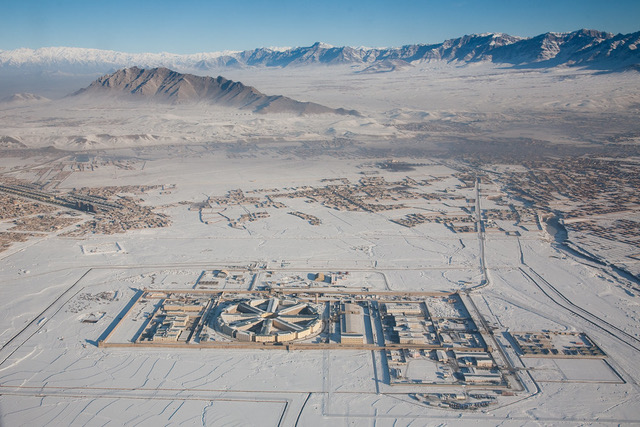
Pul-e Charkhi prison. Photo: Jerome Starkey via Flickr, 17 January 2012
 

Abdul Razaq Aref came to the Netherlands in 2001, sought asylum and eventually gained Dutch nationality. However, in 2012, another Dutch-Afghan reported him to the police, accusing him of having entered the country on a false identity and alleging that he was actually the former commander of Pul-e Charkhi prison during the 1980s when the Parcham faction of the People’s Democratic Party of Afghanistan (PDPA) was in power.[1] It was a time when there was mass incarceration of anyone suspected of opposing the regime and political prisoners were routinely tortured during interrogations and kept in dire conditions. After a lengthy investigation, Aref was arrested in 2019 and put on trial in 2022.

Two former Pul-e Charkhi detainees and two Dutch prosecutors told AAN’s Ehsan Qaane ahead of his trial (see this 2020 report) that Aref had served in three different positions at Pul-e Charkhi, first, as head of the political unit of KhAD, the Parchami-era intelligence agency, the Khedamat-e Ettela’at-e Dawlati, then, deputy general director of the prison and finally its general director (rayis-e umumi). At his trial, the court was not able to verify his exact position at the prison, but did rule that, from 1 January 1983 to 1 January 1988, he had enjoyed a leadership role and been “responsible for the detention conditions and the order in prison, including the placement or transfer of prisoners.” It deemed him to have criminal liabilities both as a co-perpetrator and as a supervisor.

On 14 April 2022, Aref was found guilty on three counts: arbitrary deprivation of liberty, cruel and inhuman treatment, and assault on the personal dignity of at least 18 individual political prisoners (see judgement in Dutch, press release in English and AAN’s Ehsan Qaane reporting). Out of the tens of thousands of people who passed through Pul-e Charkhi during Aref’s time at the prison, 24 witnesses provided testimonies – nearly all of them victims – to an investigative magistrate in interviews taking place in nine countries in Europe and North America. As historian Thijs Bouwknegt wrote for the website, JusticeInfo.net, just one of the witnesses addressed the court:

On the first trial day, Abdul “W”, an elderly man with a masterly silver beard and antiquated black spectacles, sat in the middle of the courtroom. He said that some 40 years ago he was detained at Pul-e-Charkhi, an infamous jail on the eastern fringes of Kabul. His crime, the former economy student said, had been “wanting freedom for his country”. In 1984, in prison “block 3”—which he says held political prisoners – he was beaten so badly that his hand and leg were broken. Yet, it is the “psychological torture” and “flashbacks” of his lost comrades – some of whom being “buried alive” – that still intrude his sleep.

Bouwknegt reported that Aref, on the other hand, barely spoke except to say he could remember nothing.

The Pul-e Charkhi prison, a “great wheel composed of eight multi-storied blocks” on the outskirts of Kabul,[2] held two types of prisoners. Common criminals were in one block under the control of the Ministry of Interior, and were in a small minority, according to the United Nations Mapping Report.[3] The vast majority of those held at the prison were political prisoners, arrested and interrogated by KhAD and then transferred to the blocks in the prison which were under KhAD’s command.[4]

The trial judges established that Aref, by virtue of his position, had been responsible for the detention conditions and order in the prison, including the placement or transfer of prisoners. It found he worked with subordinates and:

… detained persons without prior fair trial and created and maintained a detention regime in which prisoners lacked sufficient and good basic facilities, such as sanitation, food, medical care and outdoor access. Part of that regime was the use of physical violence as punishment and an atmosphere of fear, for example by placing spies in a cell. To achieve this, the suspect gave orders to his subordinates, but sometimes he also intervened himself, as evidenced by the many witness statements.

The judgement concluded:

In view of these findings, we can speak of close and conscious cooperation between the suspect and his subordinates, aimed at cruel treatment, assault on personal dignity, humiliating and degrading treatment and arbitrary deprivation of liberty of prisoners in Pul-e Charkhi prison. In the court’s opinion, the suspect’s contribution to this was of sufficient importance to consider him a co-perpetrator in those violations of international humanitarian law.

The court found Aref guilty and sentenced him to 12 years in prison.[5]

The appeal

On 12 June 2024, Aref’s conviction was overturned by the Court of Appeal (see the verdict in Dutch and press release in English). The judges ruled in his favour not because doubt had been cast on whether he had committed the crimes he had been sentenced to, but on a point of law. The question was whether they were war crimes. The court accepted the defence’s contention that political prisoners were not necessarily held at Pul-e Charkhi because of the conflict, and therefore crimes against them could not be classed as war crimes.

Before looking at the grounds for this argument, this report first looks briefly at why the judges at Aref’s original trial decided there had been a nexus – or connection – between the crimes committed by Aref and the armed conflict.[6]

‘Nexus’ as understood by the trial judge

The trial judges ruled that there was “a close connection between the armed conflict and the violations of international humanitarian law for which it holds the accused liable.” That original verdict held that violations had been committed against political prisoners, that is,

persons who were seen by the incumbent Afghan regime as an opponent of that regime, for example because they had spoken out against the regime or because they were affiliated with the previous regime. The detention of political prisoners in Pul-e-Charkhi prison cannot be seen as separate from the armed conflict.… [T]here was an armed conflict going on at the time between the Afghan regime, supported by the Soviet Union, and groups that opposed that regime, in particular the Mujahedin. Although it cannot be established that the political prisoners offered armed resistance to the regime, they were – at least in the eyes of the regime – among the opponents of the regime. This caused the regime to see an importance in detaining these political prisoners. This also arises from the witness statements. For example, several witnesses stated that they were accused of being against the Soviet Union or having ties to the United States, the Soviet Union’s opponent at the time. Thus, the conflict played an essential role in the opportunity for the suspect to commit the violations of international humanitarian law.

The judgement argued that the suspect had allowed detention conditions in the Pul-e Charkhi prison to deteriorate “precisely because the prisoners were political opponents.” Witnesses, it said, described the high officials in the prison seeing them as “their enemies… anti-revolutionaries.” One witness, for example, said he was punished after a spy had reported him saying he had defended the mujahedin. This section of the judgement at the trial concluded:

Detention under these circumstances could be regarded as a way to (temporarily) eliminate political opponents and ensure punishment had a ‘retributive and preventative aspect’ so that they could no longer play a role in the conflict. Thus, the conflict has also played an essential role in the purpose with which violations of international humanitarian law were committed.[7]

‘No nexus’ as understood by the appeal court

“Making [an action] a punishable crime [strafbaarstelling],” the appeal judgement said, “is intended to provide protection against crimes that are closely related to a war.” The importance of distinguishing war crimes from common crimes lies:

… in the possibility of limiting the exceptional character of the laws of war [het oorlogsstrafrecht] to the group of offences that are appropriate. War crimes belong to the most serious category of crimes in criminal justice. In Dutch law, this is reflected, among other things, in the broad jurisdiction regulations, the fact that there is no statute of limitations, and the high maximum penalties.

This means that the laws of war have the possibilities they need, but at the same time, care must be taken against applying them too broadly. Careful application of the nexus must ensure this.

The appeals court cited guiding points in case law from the International Criminal Tribunal for Yugoslavia (ICTY) to determine whether there was a nexus in Aref’s case. It said that to be considered a war crime, the existence of an armed conflict must have played at least:

(i) a substantial role in the perpetrator’s decision to commit the crime, (ii) his ability to do so, (iii) the manner in which the crime was committed or (iv) the purpose for which it was committed.… The judge could take into account whether the perpetrator was a combatant, whether the victim was a non-combatant, or belonged to the opposing party, whether the conduct served the ultimate goal of the military campaign, and if the act was part or in the context of performing an official function.

Responding to these points, the judgement said:

The court cannot determine on the basis of the evidence that the existence of the armed conflict in this case played a substantial role in the suspect’s decision – if proven – to commit the acts [of which he was accused], his ability to do so, the manner in which he did so or the purpose thereof. Although the victims were non-combatants, it is unclear to what extent the charges were committed in the performance of the suspect’s duties – he was not a combatant, it has not been established that he had a military position, the victims did not belong to the opposing party in the armed conflict and it cannot be said that the behaviour served the ultimate goal of the military campaign.

The judge went on to say:

The KhAD was … a security/intelligence service with initially a civil and a military branch with very far-reaching powers.… [I]t cannot be established that the suspect, who falls under the KhAD, was part of the military apparatus as the Public Prosecution Service has argued. It cannot be established that it was a strictly military organisation, including with regard to its involvement in the Pul-e Charkhi prison. The available information does not indicate that the military branch was specifically responsible for it.

As to the victims, could they offer a nexus to the conflict? Some of those mentioned in the indictment were relations of the Khalqi president, Hafezullah Amin – who was murdered by Soviet commandos in December 1979, when the Soviets also installed Parchami Babrak Kamal as president – or others from Amin’s Khalq faction of the PDPA.[8] As to other victims, all the judgement said was that they “were seen as political opponents for various reasons.”

The common denominator was that – for whatever reason – they were opponents of the regime. It was often sufficient for an arrest that someone had anti-government views or engaged in anti-government activities. However it does not appear from the file that the persons mentioned in the indictment were Mujahedin, in the sense that they belonged to the fighting group that was designated as such, nor does it appear that they were all associated with it, as the Public Prosecution Service has argued.”

The judgement went on:

The court was also unable to sufficiently determine what significance the ongoing battle with the Mujahedin had for the detention of the political prisoners. It should be borne in mind that the armed conflict with the Mujahedin was already underway before Karmal came to power in December 1979. With the appearance of the Soviet Union on the battlefield, the battle intensified, but the commitment of the Mujahedin remained the same: this group of resistance fighters defended Islam through violence and fought for Afghan values against communism, as they had done since the Saur revolution in April 1978. Moreover, the armed struggle continued after the departure of the Soviet troops in 1989.

It can also not otherwise be said that the existence of an armed conflict played a substantial role in the treatment accorded to the political prisoners. As far as anything can be determined about the purpose of the treatment, it was to propagate the ideas and positions of the communist ruling party, in other words re-education.

To sum this part of the appeal judgement up, it found that: KhAD was not necessarily military; Aref was not necessarily military; the victims were not necessarily related to the mujahedin; and it could not be determined that the armed conflict had played a substantial role in Aref’s motivation or purpose in committing the crimes he was accused of, nor his ability to do so, nor the manner in which they were carried out. The judgement appeared to cast the situation in Afghanistan as one in which there was repression of political opponents of the regime or its communist ideology that was separate from the conflict with the armed opposition.

Based on these points, the appeal court concluded that:

it cannot be established that there is a nexus between the conduct of the accused and the armed conflict. This means that these actions – if proven – do not constitute a violation of the laws and customs of war, as charged. The suspect must therefore be acquitted for this reason. For the sake of completeness, the court emphasises that the jurisdiction of the court in this case is limited to the assessment of the charged conduct insofar as it concerns a war crime. Now that, in the opinion of the court, this is not the case – due to the lack of nexus – it is not for the court to further assess the question of whether the suspect was guilty of the actual conduct referred to in the indictment.

This also means that the detention conditions in the Pul-e Charkhi prison described in the introduction as appalling and inhumane will not be discussed further in this judgment, without this detracting from how witnesses, according to their statements, experienced them.

Questions which the Supreme Court might consider

On 7 July 2024, the Dutch Public Prosecution Service announced it had filed an appeal against Aref’s acquittal with the Supreme Court, specifically contesting the appeal’s court’s determination that there was no connection between the inhuman treatment Aref had originally been convicted of and the armed conflict. For this author, the appeal court’s reasoning leads to several questions which the Dutch Supreme Court could consider, among them:

1 What sort of organisation was KhAD? Is it relevant whether it was “a strictly military organisation” or not, or had different civilian and military branches when it comes to its relevance for Aref’s crimes having a nexus with the armed conflict?

2 Is it accurate or reasonable to view the Afghan state in the 1980s as having been involved in civilian political repression separate from the armed conflict?

3 The appeals judgement referred to the determination of whether there is a nexus of crimes with an armed conflict by reference to the Criminal Tribunal for Yugoslavia (ICTY): was it comprehensive in its referencing of legal understandings reached at the ICTY?

These questions will be looked at in turn.

1. What sort of organisation was KhAD? Is it relevant if it was “a strictly military organisation” or not, or had different civilian and military branches when it comes to its relevance for Aref’s crimes having a nexus with the armed conflict?

KhAD was established by the Soviet KGB in January 1980 immediately after the invasion. In 1986, it was recast as a ministry, known by the acronym WAD.[9] The agency was explicitly modelled on the KGB and Soviet advisors were embedded in the various centres (later renamed directorates). The agency rapidly mushroomed to become the key institution of the Parchami state, with the highest budget and the most staff.[10] Like the personnel in the ministries of defence and interior, a UNHCR briefing noted, “All positions within the formal KhAD/WAD organigramme were ranked as military positions. Rank was determined by the level of education, and promotions in rank were based on military law.”[11] KhAD employees had to be members of the PDPA and the agency answered directly to the president.

KhAD’s – and later WAD’s – task was, as a 2001 Dutch government report on the organisation said, to “ensure the continued short and long-term existence of the Communist regime” which in practice, meant it “had a licence to track down and fight the regime’s external and internal enemies as they saw fit.”[12] The report went on:

The Communist regime in Afghanistan distinguished between external and internal enemies. The first group included political opponents from outside the PDPA such as left-wingers, Islamists, independent intellectuals and Mujahedin fighters. The second group included political opponents from within the PDPA, such as disloyal and disaffected fighters. In practice, the slightest sign of disloyalty or opposition provided a pretext for being branded an enemy.

Such enemies were dealt with by a criminal justice system separate from that which dealt with common criminals. KhAD was tasked with the surveillance, arrest, interrogation and incarceration of enemies of the state. Torture against opponents of the regime, said UN Special Rapporteur Felix Ermacora in 1985, was “commonplace and… has almost assumed the character of an administrative practice.” A year earlier, Amnesty International commented on how it had received reports of torture perpetrated by all the governments since the 1978 Saur Revolution but only after the formation of KhAD was torture “reported to have become systematic.” The aim of KhAD’s use of torture, said Amnesty, was to “extract information and in order to force prisoners to make a confession.”

Those accused might be tried, or just left in no-trial detention; either way they could spend months or years in prison. If they were tried, it was by the Special Revolutionary Court, also set up in 1980 and also supervised by Soviet advisors. “[T]o all intents and purposes, wrote Barnett Rubin, the Special Revolutionary Court “functioned as a branch of KhAD.”[13] Rubin quoted then president, Babrak Kamal, who said that KhAD, the Revolutionary Prosecution Department and the Special Revolutionary Court “form one chain and one organism in the struggle.” The Special Revolutionary Courts, Rubin said, never acquitted anyone.

The Dutch appeal court’s assertion that “[a]s far as anything can be determined about the purpose of the treatment [of prisoners], it was to propagate the ideas and positions of the communist ruling party, in other words re-education [emphasis added]” is very strange. I can find no evidence for this contention in the literature, including war crimes reporting of the time. Rather, as the UN Mapping report said, “the Afghan regime and its Soviet allies maintained and enforced control in the cities through the fear of a terrorized population aware of the ever-present possibility of arbitrary arrest, torture, imprisonment, and execution.” The enforcer of this system, the report said, was KhAD. The report quoted AFP journalist Yves Heller who secured a rare press visa to visit Kabul in 1983 and described the capital as “in the grip of fear, which was visible in all the Afghans we managed to meet.” This fear, Heller said, was “methodically maintained” by KhAD, “a veritable octopus which is continually spreading its tentacles over the capital. Stories of disappearances, arrests, spying are plentiful in Kabul… where KhAD has become not just a state within a state, but the state itself.”

KhAD was largely active in urban areas – the countryside, where the regime had little control, was subject to widespread and indiscriminate bombing by Afghan and Soviet forces. However, it also had three military battalions under its Directorate for Counter-Rebellion, fighting forces tasked with carrying out frontline military operations and from 1988 onwards, a National Guard. It also ran militias, had some officers who were tasked with infiltrating mujahedin groups and conducted cross-border attacks.[14]

The judgement refers to a military department of KhAD, and of the agency being split into a civilian and military service:

In addition to the civilian KhAD, there was a military intelligence service called the KhAD-e Nezami. This military KhAD formally operated under the Ministry of Defence. The (civilian) KhAD initially fell under the Ministry of the Interior, but in 1980 it became a fully independently operating Directorate General, falling under the Office of the President. The KhAD also carried out military tasks, such as guarding important military positions and monitoring threatened desertions, and special battalions were also set up to fight the resistance. When the KhAD became a separate ministry (WAD) in 1986, both the civilian and military KhAD were included.

From this it concludes that “it cannot be established that [KhAD] was a strictly military organisation.”

In practice, however, there was no ‘civilian KhAD’ separate from ‘military KhAD’: KhAD was one organisation, in its entirety set up in 1980. Nor did a ‘civilian’ KhAD ever fall under the Ministry of Interior. Rather, both KhAD and WAD answered directly to the president. What the judgement refers to as military KhAD was a directorate tasked with monitoring the armed forces and ensuring there was no infiltration by the regime’s enemies. It was not run out of the Ministry of Defence, but rather, as UNHCR reported, it answered to the KhAD leadership and ultimately the president:

[T]he Military and Police KhAD/WAD were structures situated respectively within the Ministries of Defense and the Interior, responsible for counter-intelligence and prevention of infiltration by enemies of the regime, in particular Mujaheddin groups. They maintained their reporting lines to KhAD/WAD.

Whether KhAD was military or civilian – and it clearly had a mixed role – seems irrelevant. It was established concurrent with the Soviet invasion and expanded as the resistance grew. If it had been purely civilian, this would also not seem relevant; a civilian or employee of a civilian organisation can also commit war crimes. Moreover, at this time, it was not just the PDPA armed forces that were engaged in fighting real and perceived armed and unarmed resistance – it was the entire state apparatus. KhAD, a huge agency with a tentacular reach and multiple aspects to its work, was at least as important as the armed forces in that fight.

As to Aref’s role within it, two sentences in the judgement stand out in this context:

[I]t is unclear to what extent the charges were committed in the performance of the suspect’s duties … and it cannot be said that the behaviour served the ultimate goal of the military campaign.

The charges against Aref were absolutely carried out as part of his duties overseeing Pul-e Charkhi. It is hard to see how the judges thought this might not be the case. As to whether his behaviour served the military campaign, causing fear and suffering, physically harming, degrading and humiliating prisoners would seem a very direct way of deterring opposition and, as the original trial judges said, temporarily eliminating political opponents and ensuring the sort of punishment that meant they no longer played a role in the conflict.

2. Is it accurate or reasonable to view the Afghan state in the 1980s as having been involved in civilian political repression separate from the armed conflict?

The judgement cast the armed conflict as having been between the PDPA state and its Soviet backers and the mujahedin. It twice referred to the mujahedin as a ‘group’, including saying that the mujahadin “consisted of various sub-groups, both Sunni and Shia in nature.” In fact, the various mujahedin tanzims (military-political factions), each had their own command and control structure, were unrelated to the others and were, in some cases, deadly rivals. This was not one group.

Moreover, not all Afghans involved in the armed resistance were mujahedin. In another war crimes trial in the Netherlands, for example, victims were from the leftist group, SAMA (see the guilty verdict in the 2005 case brought against another senior figure in KhAD, Hesamuddin Hesam, for torture, in breach of the laws and practices of war). AAN’s Thomas Ruttig has given a detailed rendering of the “the parties during the war of resistance,” relayed here in full as it accurately describes the multitudinous scope of the anti-PDPA, anti-Soviet groups in the 1980s.

The Islamists only rose to importance after the PDPA’s 7th Saur coup (or the Saur Revolution, as the PDPA called it) in 1978 and, in particular, after the Soviet invasion of Christmas 1979. They profited from the enormous amount of military and financial aid, coming mainly from the USA and Saudi Arabia and channelled through the ISI, and from the Pakistani decision in May 1979 to limit the flow exclusively to the Sunni Islamist ‘Peshawar Seven’, the so-called tanzim that constituted the haftgana or ‘Alliance of Seven’. The nationalist and leftist resistance groups were cut off from supplies. Pakistan also stopped two attempts to convene a Loya Jirga that would have reinforced the tribal elites vis-à-vis the Islamists.

Right at the beginning of the resistance war the Islamists split into various tanzim. Attempts by Pakistan and the USA to establish an umbrella organisation only resulted in short-term unity and then the establishment of new factions. Harakat-e Inqelab-e Islami, or ‘Islamic Revolution Movement’, and Ittehad-e Islami bara-ye Azadi-ye Afghanistan, or ‘Islamic Union for the Freedom of Afghanistan’, were both meant to be alliances but soon turned into new factions, led by Muhammadi and Sayyaf. …

Resistance by Shia groups can be divided into two phases: a ‘successful popular resistance movement’ between 1978-83, led by Shura-ye Inqilabi-ye Ittifaq-e Islami-ye Afghanistan, or ‘Revolutionary Islamic Unity Council of Afghanistan’, and the ‘in-fighting’ period which resulted from the ‘emergence of Hazara groups backed by Iran’. Shia resistance started in a very fragmented way; Bradsher counted ‘at least 37 factions’ by the summer of 1979. The Shura, a conservative Islamic organization, came into being when the leaders of the rebellion, mainly from the old khan elite from almost all Hazara areas, came together in September 1981, setting up a parallel administration in areas under its control… From 1983 onwards, the leadership in Tehran pushed Khomeinist groups from the Afghan diaspora, mainly Pasdaran and Nasr. They brutally suppressed the Shura and its social base in what amounted to an inner-Hazara civil war. In 1987, Tehran forced the eight major Shia groups – the so-called hashtgana or ‘Tehran Eight’ – to unite in Shura-ye I’tilaf-e Islami-ye Afghanistan, or ‘Islamic Coalition Council of Afghanistan’, from which, in 1989, Hezb-e Wahdat-e Islami, or ‘Islamic Unity Party’, was created. This was first led by Abdulali Mazari (killed 1995) and then by Abdulkarim Khalili. The non-Hazara Harakat-e Islami-ye Afghanistan, or ‘Islamic Movement of Afghanistan’, under its religious leader Sheikh Asef Mohseni, soon opted out leaving the predominantly Hazara Hezb-e Wahdat as the only active Shia group. Within Hezb-e Wahdat, the constituent groups maintain some coherence until today, particularly in rural areas. The Mustaza’fin retained some degree of organisational independence throughout this period… In addition to the Peshawar Seven and the Tehran Eight, dozens of other armed groups continued to fight the Soviets – and for their own organisational survival.

At least in the first years, the Maoist groups continued highly intense guerrilla warfare against the new regime. Meanwhile, Settam-e Melli/SAZA became less active, in particular after the Pashtun PDPA leaders were replaced by Tajik speaker, Babrak Karmal, following the Soviet invasion. One of the most successful resistance groups was Sazman-e Azadibakhsh-e Mardom-e Afghanistan (SAMA), or ‘People’s Liberation Organisation of Afghanistan’, formed in the summer of 1979 by Abdulmajid Kalakani. Although generally labelled ‘Maoist’, it was in fact a mixture of former Shola’i, non-conformist leftists like its legendary leader, and groups of outlaws politicised by him. In January 1980, SAMA initiated a broader alliance that included some ex-Shola’i and ex-Settami groups, left-wing Pashtun nationalists, and religious leaders like the Pir of Obeh from Herat province, called Jabha-ye Muttahed-e Melli-ye Afghanistan, or ‘National United Front of Afghanistan (NUFA)’, which continued to follow Kalakani’s republican ideals. SAMA soon came under military pressure from Jam’iat and Hezb. Kalakani was arrested in February 1980 and executed four months later. Some SAMA leaders negotiated a surrender with the government which led to further splits.

Other leftist underground groups were Paikar (full name Sazman-e Paikar bara-ye Raha’ibakhsh-e Afghanistan, or ‘Struggle Organisation for the Liberation of Afghanistan’) – the successor to SuRKhA (Sazman-e Rahayibakhsh-e Khalqha-ye Afghanistan, or ‘Liberation Organisation of Afghanistan’s Peoples’) which was destroyed by the regime –, Raha’i (Sazman-e Raha’ibakhsh-e Khalqha-ye Afghanistan, or ‘Afghanistan’s Peoples’ Liberation Organisation’), and Sazman-e Feda’ian-e Zahmakashan-e Afghanistan (SAFZA), or ‘Feda’ian Organisation of Afghanistan’s Toilers’, a Settam-e Melli offshoot. After an ill-prepared uprising in Badakhshan in August 1979, its leader Maulawi Bahauddin Ba’es who considered himself an ‘Islamic socialist’, was put into prison and killed. Other SAFZA leaders re-joined PDPA in 1984.[15]

It is simply incorrect to render the armed conflict in the 1980s as one solely between the PDPA/Soviet Union and the mujahedin group, or even mujahedin.

Moreover, what is important in the context of the appeal court’s verdict is that, regardless of the particular motivation of the government’s opponents, or what category of opposition the state perceived individuals as belonging to, it treated them the same, whether they were or were accused of being Shia or Sunni mujahedin, leftist, independent intellectuals, Maoist or Khalqi. It is just not possible to disentangle the state’s actions, structures, institutions and mechanisms in terms of how it dealt with political and armed opponents.

Here, it is also worth stressing a particular flaw in the appeals judgement is that, apart from mentioning the relatives of former President Amin and other Khalqis, there is no detail about the other prisoners, and no case-by-case argument as to why, for each, there was no nexus with the armed conflict.

One important understanding that emerged in both the International Criminal Tribunals for Yugoslavia (ICTY) and Rwanda (ICTR), over whether a particular crime has a nexus to an armed conflict was summed up in these paragraphs from Rwandan Georges Rutaganda’s failed 2003 appeal against his 1999 life sentence. He had been found guilty of genocide, crimes against humanity and violations of common article 3 (murder). Some of this language was echoed in the appeals court ruling on Aref, but not all:

What ultimately distinguishes a war crime from a purely domestic offence is that a war crime is shaped by or dependent upon the environment – the armed conflict – in which it is committed. It need not have been planned or supported by some form of policy. The armed conflict need not have been causal to the commission of the crime, but the existence of an armed conflict must, at a minimum, have played a substantial part in the perpetrator’s ability to commit it, his decision to commit it, the manner in which it was committed or the purpose for which it was committed. Hence, if it can be established, as in the present case, that the perpetrator acted in furtherance of or under the guise of the armed conflict, it would be sufficient to conclude that his acts were closely related to the armed conflict. The Trial Chamber’s finding on that point is unimpeachable.

In determining whether or not the act in question is sufficiently related to the armed conflict, the Trial Chamber may take into account, inter alia, the following factors: the fact that the perpetrator is a combatant; the fact that the victim is a non-combatant; the fact that the victim is a member of the opposing party; the fact that the act may be said to serve the ultimate goal of a military campaign; and the fact that the crime is committed as part of or in the context of the perpetrator’s official duties.

This Chamber agrees with the criteria highlighted and with the explanation of the nexus requirement given by the ICTY Appeals Chamber in the Kunarac Appeal Judgement. It is only necessary to explain two matters. First, the expression “under the guise of the armed conflict” does not mean simply “at the same time as an armed conflict” and/or “in any circumstances created in part by the armed conflict”. For example, if a non-combatant takes advantage of the lessened effectiveness of the police in conditions of disorder created by an armed conflict to murder a neighbour he has hated for years, that would not, without more, constitute a war crime under Article 4 of the Statute. By contrast, the accused in Kunarac, for example, were combatants who took advantage of their positions of military authority to rape individuals whose displacement was an express goal of the military campaign in which they took part. Second, as paragraph 59 of the Kunarac Appeal Judgement indicates, the determination of a close relationship between particular offences and an armed conflict will usually require consideration of several factors, not just one. Particular care is needed when the accused is a non-combatant.

If it became necessary to establish that a perpetrator had been motivated only by wanting to further an armed conflict, there would be effective impunity from war crimes law for anyone who took advantage of a war and their official position within it to carry out, for example, murder or rape. In Aref’s case, the question should at least be asked as to whether his crimes were perpetrated under the guise of the armed conflict and/or whether the conflict enabled him to commit his crimes.

Repercussions of Aref’s appeal verdict

The Netherlands has had a relatively good track record of bringing accusations of old war crimes to court (see AAN’s 2020 report on those involving Afghans). These cases are difficult. The Afghan cases, in particular, date back decades, making witness testimony tricky. The alleged crimes took place in another country, about which the court will not have the same sort of knowledge as its own.

In Aref’s appeal, the points of substance which the appeal court may have got wrong – casting KhAD and Aref as non-military and therefore with no necessary nexus to the armed conflict, and the Parchami government’s repression of a civilian opposition as having been separate from its pursuit of the armed conflict are troubling. More problematic though is the court not taking into consideration the possibility that Aref acted under the guise of the armed conflict, in line with the legal understanding reached at the ICTY and ICTR.

Aref is now a free man and if his acquittal is upheld, he will be due financial compensation from the Dutch government for the years he has spent in prison. Even if the Supreme Court agrees with the prosecution’s argument that his actions did, in fact, have a nexus to the armed conflict, it can only refer the case back to the high court. In the best case scenario – from the victims’ point of view – the legal process is destined to take years. At best, therefore, Aref would be very old before he might again see the inside of a Dutch prison. For Aref’s many victims – and those who testified to the court were a tiny fraction – the appeal court’s verdict will have been a bitter blow, as they see justice – hard won and after so many years – again slipping away from them.

Edited by Martine van Bijlert and Roxanna Shapour


References

References
↑1 Much of the original court case focused on whether the man in the dock was the ‘Aref’ who had been commander of Pul-e Charkhi. The contention was that Aref had gone to the Netherlands in 2001 and applied for Dutch citizenship under a false name and giving a false occupation. For a report published in 2020, AAN’s Ehsan Qaane spoke to two former Pul-e Charkhi detainees and two Dutch prosecutors about the case. Three of the interviewees had contended that Aref had faked his name by adding a dot above the first letter of his last name, turning Aref (عریف) into Gharef (غریف), or Rarief in the Dutch transcription. Gharef is not a name in Afghanistan. 

At the appeal court, Aref’s lawyers argued that he should be acquitted since, among other reasons, it “could not be ruled out” that his was a case of mistaken identity. However, the court reiterated that the name change on his Afghan ID card (tazkira) had been forged and the assertion was dismissed.

↑2 The quote is from British journalist Anthony Hyman who wrote: 

Pul-i Charkhi is a great wheel composed of eight multi-storied blocks, with watchtowers and high walls cutting off the prison from the main road south to Jalalabad and the border, just a mile away. The prison was not completed in the spring of 1978, when the new regime’s wave of arrests made it essential to use its ample accommodation for 5,000 prisoners, so as to relieve pressure on Kabul’s old Deh Mazang prison. Intended as a modern-style, progressive prison by its designers, Pul-i Charkhi failed from the first to satisfy elementary rules of hygiene, quite apart from its other defects; floors were unfinished

concrete, water pipes had not been connected, and there was no water closet, and all other necessary works were suspended after occupation.

See Anthony Hyman, ‘Afghanistan under Soviet Domination’, London: St. Martin’s Press, 1984, p 108.

↑3 AAN recently re-published the UN Mapping Report (see also this report about why we have done this). It brought together published sources on war crimes and human rights violations committed in Afghanistan between 1978 and 2001, said the exact number of prisoners in Pul-e Charkhi Prison in the early and mid-1980s was not certain. Quoting an Amnesty International report published in 1986, it said “estimates of the total number of prisoners vary, but Amnesty International believes that it is probably well in excess of 10,000. One block is said to be occupied by ordinary criminal prisoners, but they were estimated to be not more than about 1,000 of the total in prison.”
↑4 The verdict (quote translated from the original Dutch) from Aref’s trial described the different blocks: 

In block 1 political prisoners were held, including political opponents, former ministers, a former ambassador, relatives of former President Amin and relatives of former ministers. Prisoners were held here without being convicted by a court. Some witnesses never attended a court during their stay in block 1. In block 1 also people who had been sentenced to death were held.

…

Block 2 contained political prisoners who had not (yet) been to a court. There were also prisoners here who had been sentenced by a court to prison or to the death penalty. It regularly happened that prisoners were transferred to block 2 after having been detained in block 1 for a period. Prisoners were imprisoned in block 2 for several years in a row, sometimes with temporary transfers to blocks 1 and/or 3.

…

When the political prisoners were sentenced to prison by the court, they were transferred to, among other places, block 3. …

The conditions were better compared to blocks 1 and 2, according to some witnesses. … Several witness statements also show that prisoners in block 3, unlike prisoners in blocks 1 and 2, were allowed to go outside daily and were also allowed to receive visitors.

↑5 The trial verdict summed up conditions in the blocks under Aref’s control, as testified to by the witnesses. In block 1, according to one witness, overcrowding had been such that five prisoners were held in a cell intended for one, and twelve in cells built for three; there were “so many people in the cell,” one witness testified, that “it literally made it harder to breathe.” Aref had the windows of some cells covered, two witnesses testified, so that no light came in. Prisoners were not allowed outside, at all or only rarely, there were no showers and “everyone was covered in lice.” 

In block 2, there was overcrowding both in the large cells, which were designed for 60 people but might house as many as 250 to 300, and the smaller ones where double the number of intended inmates were held. It meant, the judgement reported, that, “[s]ometimes there was such a lack of space that the prisoners did not always have the opportunity to sleep continuously, but had to take turns sleeping. They touched each other as they lay on the ground. [One] witness could not straighten his legs because he would hit other people in the head.”

Getting to the few toilets in block 2 (one for 500 people or “four or five for 600 people,” according to witnesses) required permission and happened at set times. If it was not possible, “prisoners had to relieve themselves in something else, such as a plastic bag, bottle, cardboard box or bucket.” There were “countless fleas, lice and insects in all the cells.” As for the food, it was “poor, often insufficient, dirty and cold. Witnesses have stated that they found, for example, vermin, mice, pebbles, soil and faeces in [it].” Many prisoners developed diarrhoea, which in turn led to problems due to the limited number of toilets. [One] witness stated that on one occasion, “[w]hen the cell door opened there was a line of diarrhoea towards the toilet.”

In both blocks, there were spies among the inmates who informed on prisoners who would then be punished. In block 1, that might be “beating, no access to the outside for a longer period of time or transfer to another cell.” In addition, the judgement said, “prisoners were confronted with violent treatment of other prisoners as abused prisoners were placed back in cells. Screams could also be heard from people who were being interrogated and tortured in block 1, according to [one] witness.”

The charge of arbitrary detention related to Aref, in association with his subordinates, keeping political prisoners for years in detention without trial and without informing them of the charges against them. The Dutch court heard that some of those detained as political prisoners had never been to court, while others had spent years in pre-trial detention.

↑6 The acts for which Aref was convicted at trial do also fall under the definition from the Rome Statute (which established the International Criminal Court or ICC) of crimes against humanity (Article 7) which include “imprisonment or other severe deprivation of physical liberty in violation of fundamental rules of international law,” as well as “inhumane acts” of a character similar to acts such as murder, extermination, torture, rape and enforced disappearances, “intentionally causing great suffering, or serious injury to body or to mental or physical health.” To be considered a crime against humanity, the act must also be “part of a widespread or systematic attack directed against any civilian population, with knowledge of the attack.” Like the crime of genocide, they do not need to be linked to an armed conflict but can occur in peacetime. See this webpage by the UN Office on Genocide and the Responsibility to Protect for a concise explainer. 

Under Dutch law, however, crimes against humanity can only be tried if they were committed after 2001. War crimes and torture are covered by earlier legislation: the 1952 Wartime Offenses Act and 1988 Torture Convention Implementation Act, respectively. See this 2014 explainer from Human Rights Watch, ‘The Legal Framework for Universal Jurisdiction in the Netherlands’, and this paper by Open Society Justice Initiative and Trial International, ‘Universal Jurisdiction Law and Practice in the Netherlands’, published in April 2019.

↑7 The word for a punishment with a ‘retributive and preventative aspect’ is leedtoevoeging, literally ‘to add suffering’. It is a Dutch legal term used in the context of a punishment that has retributive and preventive aspects.
↑8 The prosecutors’ argument linking Khalqi prisoners to the conflict was that the Soviets and the Parchamis believed Amin had been turned during his time as a student in the United States in the 1960s and had become a tool for the CIA. Subsequently, as the US played the major role in supporting the mujahedin in their fight against the Soviet occupation and PDPA government, with the CIA working with Pakistan to channel funds and arms to the Sunni Muslim tanzims (this was always officially denied), abuses suffered by Khalqis could be deemed to have a nexus with the conflict. The appeal court rejected this argument, saying: 

To the extent that a number of victim witnesses have stated that they were told as prisoners that they had ties with the United States, Pakistan and/or the CIA – whatever the case may be – that single fact is insufficient to establish the close connection required for the nexus between the armed conflict and the conduct. In this regard, the court takes into account that it can be inferred from the context report that geopolitical considerations played a role in the formation and political course of the Karmal regime during the period in question. In this respect, the political spheres of influence of the Soviet Union on the one hand and the United States (including the CIA) and Pakistan on the other were opposed to each other and these countries and their (alleged) supporters were regarded as political opponents. Alleged attempts by Amin to approach the US and Pakistan were a direct reason for the intervention of the Soviet Union and the formation of the Karmal regime. It can be concluded from this that the accusation of having ties with one of these countries (and/or their intelligence services) does not yet indicate a connection with the armed conflict between the Afghan government and the Mujahedin. It cannot be determined on the basis of the evidence whether the fact that these countries, against the outlined geopolitical background, would also support the Mujahedin, was a factor that played a role in the acts charged.

↑9 The Wizarat-e Amniat-e Dawlati, or Ministry of State Security, is commonly referred to in the literature as WAD.
↑10 See the UN Mapping Report p 17.
↑11 UNHCR, ‘Note on the Structure and Operation of the KhAD/WAD in Afghanistan 1978-1992’, 2008
↑12 Netherlands delegation report to the Council of the European Union, ‘Afghanistan – Security services in Communist Afghanistan (1978-1992): AGSA, KAM, KhAD and WAD’, 2001.
↑13 Barnett R Rubin, ‘The Fragmentation of Afghanistan: State Formation and Collapse in the International System’, Yale University Press, second edition, 2002, p133.
↑14 UNHCR said sources had described the following directorates (some of them were described as support directorates, not involved in intelligence gathering, interrogation or fighting. These “non-operational directorates” are starred): 

Directorate of Administration and Finance*

Directorate of Cadre/Personnel*

Directorate of Interrogation

Directorate of Intelligence and Afghan Diplomatic Missions Abroad

Directorate of Post and Parcels*

Directorate for Operative Activities for Internal Control of KhAD/WAD Personnel

Directorate for Economy and Anti-Corruption

Directorate for Counter Rebellion (with two Sub-Directorates covering 16 provinces each)

Directorate for Surveillance of Foreign and National Suspects

Directorate of the Press and Educational Institutions*

Directorate for the Protection of the Government and its Representatives

Directorate of Propaganda and Counter-Propaganda*

Directorate of Telecommunications and Decoding*

Directorate for Activities Linked to Infiltration of Mujaheddin

Directorate of Logistics*

Directorate for Agents and Informers*

Directorate of Analysis and Reporting*

Military KhAD/WAD

Police KhAD/WAD

↑15 See Thomas Ruttig, ‘Islamists, Leftists – and a Void in the Center: Afghanistan’s Political Parties and where they come from (1902-2006)’, Konrad-Adenauer-Stiftung, 2006.

1980s Pul-e Charkhi Commander Walks Free: War crimes conviction overturned by Dutch Court of Appeal 
read more

Pakistan deports over 32,000 Afghan refugees in past month

Pakistan has deported over 32,000 Afghan migrants in the past month, bringing the total number of Afghans expelled since October of last year to 691,000.

According to Pakistani media, between Sunday, July 21, and Saturday, August 16, a total of 11,054 children, 9,320 women, and 11,826 men were deported from the country.

These migrants were sent back to Afghanistan in 674 vehicles.

Pakistani authorities have stated that the deportation of Afghans without valid residency documents will continue.

The deportation of Afghan migrants from Pakistan began in October 2023, and despite widespread criticism, the process is ongoing.

The forced deportation of Afghan refugees comes at a time when Afghanistan is facing a severe humanitarian crisis. The country is grappling with widespread poverty, food shortages, and a lack of basic services, making it extremely difficult for the returning refugees to survive.

International organizations have expressed deep concern over Pakistan’s deportation program, highlighting that the refugees are being sent back to a country where their safety and well-being are at significant risk.

The ongoing humanitarian crisis in Afghanistan raises serious ethical questions about the forced return of vulnerable populations.

Pakistan deports over 32,000 Afghan refugees in past month
read more

Islamic Emirate Again Denies Presence of Terrorist Groups

Hamdullah Fitrat pledged that Afghanistan’s territory is secure and will not be used against any country.

The Deputy Spokesperson for the Islamic Emirate has once again maintained the absence of terrorist groups on Afghan soil, stating that other countries should not be concerned about this matter.

Hamdullah Fitrat pledged that Afghanistan’s territory is secure and will not be used against any country.

Fitrat said: “We once again declare that the entire geography of Afghanistan is under the full control of the Islamic Emirate’s forces, and no one will be allowed to use Afghan soil to threaten other countries.”

Earlier, Asif Ali Durrani, Pakistan’s Special Representative for Afghanistan Affairs, claimed that Islamabad is concerned about increasing security threats from Afghanistan.

Regarding this, Pakistan’s Special Representative for Afghanistan said: “I think this situation could return Afghanistan to the pre-September 11 conditions and, in fact, create another September 11.”

Some political analysts also stress resolving the existing challenges through diplomatic means.

“These statements have been made in response to the $2.5 billion investment from Uzbekistan to show the world that Afghanistan is not calm. Pakistan sees itself in danger and is fueling these issues,” Mohammad Mateen Mohammakhail, a military affairs analyst, told TOLOnews.

This comes as Pakistan has repeatedly accused Afghanistan of harboring terrorist groups, including the Tehrik-i-Taliban Pakistan (TTP), an accusation the Islamic Emirate has denied.

Islamic Emirate Again Denies Presence of Terrorist Groups
read more

Mawlawi Yaqoob Mujahid: Return To Country and Engage In Lawful Activities

Mujahid added in a statement that the spirit of victory and the desire to end occupation still persists among Afghans, just like their ancestors.

Today (Sunday, Asad 28 of solar calendar) marks the 105th anniversary of Afghanistan’s independence.

One hundred and five years ago, on this day, King Amanullah Khan, one of Afghanistan’s constitutional monarchs and freedom seekers, ended the Third Anglo-Afghan War by signing the Rawalpindi Peace Treaty and declared Afghanistan’s official independence on August 18, 1919.

Zabihullah Mujahid, the spokesperson for the Islamic Emirate, said on this occasion that “the struggle of our ancestors not only led to the defeat of occupation in Afghanistan but also defeated occupation in all colonized and imperialist countries of the region and the world.”

Mujahid added in a statement that the spirit of victory and the desire to end occupation still persists among Afghans, just like their ancestors.

Since Asad 28, various governments in Afghanistan have commemorated this day, and this year, the Islamic Emirate also celebrated the occasion at the Ministry of Defense.

During the ceremony, Mawlawi Mohammad Yaqoob Mujahid, the acting Minister of Defense, urged neighboring countries not to create challenges for Afghanistan at the borders or along the Durand Line.

In his view, the construction of roads, the establishment of border police, and checkpoints at the borders are not challenges for neighboring countries, but rather for the protection of Afghanistan.

The acting Minister of Defense said: “It is our duty to protect Afghanistan at any cost, to defend this country at any price. All those who have fled Afghanistan and have different ideologies have turned their eyes to foreign entities, and they will remain disappointed forever, hoping to be served from them. I tell them to come back to Afghanistan.”

This official of the Islamic Emirate, without naming any person or country, said, “[They] used all their strength against us for the sake of America,” but, he added, the Islamic Emirate has not attacked American interests in any country.

Khalifa Sirajuddin Haqqani, the acting Minister of Interior, who was also present at the ceremony, said that the enemy is still engaged in destroying Afghanistan ideologically and culturally.

Haqqani said that the enemy has trained Afghan youth, who have distanced themselves from their culture, in such a way that they are working to destroy their own society.

The former Chairman of the High Council for National Reconciliation, Abdullah Abdullah, and Hamid Karzai also publically marked the 28th of Asad on X.

Abdullah wrote that he hopes the celebration of this day will pave the way for unity, solidarity, brotherhood, and the establishment of social justice among the people of Afghanistan.

According to Abdullah, freedom and independence are “the result of the sacrifices of our ancestors” from across the country.

Former President Hamid Karzai on this day called on the interim government of Afghanistan to reopen the doors of education for girls.

Karzai also urged all people to work together to fight poverty, gain knowledge, and strive for progress.

In Karzai’s view, the bright future of Afghanistan undoubtedly depends on the education of the young generation, and it is necessary for everyone to make comprehensive efforts in the field of education and training.

At the ceremony held today by the Ministry of Defense to commemorate the 28th of Asad, Mullah Abdul Ghani Baradar, Deputy Prime Minister for Economic Affairs, Abdul Salam Hanafi, Deputy Prime Minister for Administrative Affairs, and Amir Khan Muttaqi, the acting Minister of Foreign Affairs, were also present.

Mawlawi Yaqoob Mujahid: Return To Country and Engage In Lawful Activities
read more

‘An island of freedom’: Inside the secret beauty salons of Afghanistan

By Al Jazeera Staff
17 Aug 2024

In Kabul, an army of clandestine beauticians is keeping morale alive among women living in fear of the Taliban-led government.

Kabul, Afghanistan – In an apartment near a Taliban headquarters, a young woman is discreetly moving about. Breshna* is 24 years old. Today, as on every day for the past year, her hands are sweaty and shaking. Yet her movements must be meticulous. She’s cutting the hair of one of her clients.

“In a week, my niece is getting married. It’s a big moment. You have to do your best,” says the customer, a woman in her 50s.

Comb in one hand, scissors in the other, Breshna concentrates. She has repeated these movements hundreds of times. Hair is her speciality, but above all, it is her livelihood. Mistakes are not an option.

The hum of the hairdryer both reassures and frightens her. “What if the Taliban hears us? I am afraid that the doorbell might ring. It could be them. They can come at any moment,” she whispers before handing the mirror to her customer.

Her client’s face lights up with happiness when she glimpses her reflection. This is the first time she’s been to an underground salon. Despite the fear, she does not regret coming. She will definitely be back to Breshna’s clandestine beauty parlour.

In early July 2023, the Taliban announced the closure of all beauty salons across the country and proclaimed that a number of services, including eyebrow shaping, the use of other people’s hair and the application of makeup, interfered with pre-prayer ablutions required in Islam. No other Muslim-majority country in the world has banned salons, however, and critics say the Taliban’s treatment of women defy mainstream teachings of Islam.

According to the Taliban, beauty salons also put unnecessary financial pressure on grooms and their families.

Salons were some of the last businesses open to women as customers and workers. In a country where more than 12,000 beauty salons had flourished, the ban has had a devastating economic impact on the 60,000 women who worked in the sector. This decision also exacerbated the severe humanitarian crisis that at the time was already affecting 85 percent of the population, according to the United Nations Development Programme.

The fall of Kabul to the Taliban in 2021 resulted in the direct suspension of international humanitarian assistance, which previously had supported 75 percent of Afghan public services. Hunger, malnutrition, disease, climate-related disasters (including flooding and earthquakes), drastic rises in poverty and the near-collapse of the national health system are putting the Afghan population one step away from famine.

The restrictions placed on female aid workers, curbing their ability to work for humanitarian organisations, also worsened the crisis by making it nearly impossible to deliver aid to women and their children. The latter are disproportionately affected by the humanitarian crisis with 3.2 million children and 840,000 pregnant and lactating mothers facing moderate or severe acute malnutrition.

Beyond economic empowerment, the salons provided Afghan women with a much-needed community. “It was a safe, female-only space where we could meet outside of our homes and without a mahram [male guardian],” a former beauty business owner who did not want to be named for safety reasons tells Al Jazeera.

Banned when the Taliban were first in power from 1996 to 2001, beauty salons had proliferated across Afghanistan in the following two decades.

Many remained open in the immediate aftermath of the Taliban’s return to power nearly three years ago. But on July 25, 2023, all beauty salons permanently closed their doors.

Little by little, the walls have closed in on Afghanistan’s 21 million girls and women, who are confined to their homes, unable to study, work, travel or even walk freely.

Those who do risk heavy fines.

Despite this, some women have continued to operate secret beauty businesses. Some younger entrants have even chosen to set up new clandestine establishments.

Among them are former schoolgirls who have been deprived of their right to education since secondary-school for girls was banned in September 2021 and have entered the underground beauty market: a gesture of resistance driven by the need to feed their families and regain some semblance of a social life and a future.

“If the Taliban catch me, I would be taken to a special office. God knows what happens there,” says a 21-year-old makeup artist who did not want to be named. “They would also fine me 50,000 afghanis [$704] and warn or even attack my mahram. If you are getting caught a second time, you’ll be sent to prison.”

In 2022, a Taliban official admitted to Al Jazeera that Islam grants full rights to women to pursue education, work and entrepreneurship. The group has said multiple times that they are working to create a so-called “safe environment” for girls and women in secondary schools and the workplace. Despite this, the institutions remain closed to women.

Breshna was one of many young Afghan women who began working in the beauty sector after the Taliban came to power. It has been almost three years since she last set foot in a classroom.

The first woman in her family to go to university, she dreamed at age 22 of becoming a diplomat. But when the Taliban came back to power, her ambitions were shattered.

Three months after secondary schools were closed to girls, women’s right to attend university was also removed. “I felt trapped,” Breshna says. “All of a sudden, my future was reduced to nothing. I realised that I would never go back to university.”

A few weeks after universities were closed to Afghan women in early 2022, Breshna found a low-paying job in a beauty salon while they were still officially open. It was a far cry from her original ambitions, but it provided food for her family and kept her from isolation.

With her father and brother seriously ill, she is the sole breadwinner. And with a monthly salary of 14,000 afghanis ($197), she struggles to cover all the family’s expenses.

At first, her skills were far from perfect, but the customers at the beauty salon became accustomed to the former student’s clumsiness, even finding it endearing. “They used to call me ‘the kohl diplomat’,” Breshna recalls nostalgically.

“I spent almost two years learning the techniques. It was difficult at first, but I developed a passion for hairdressing. I got really good at it. I became a favourite among the salon’s clientele. They saved me from depression,” she reflects before her voice fades.

On a morning in early July 2023 while scrolling through her Facebook news feed, Breshna learned that all the beauty salons had to shut down.

“After university, it was the beauty salons’ turn,” she says. “The only island of freedom that remained collapsed in front of my eyes. I was devastated. We had less than a month to pack up and close the business. On the last day, our customers, who were usually so happy, were all crying.”

Breshna held back her tears and decided to continue working secretly at her own risk. “The Taliban robbed me of my right to education. It was unthinkable that they would also take away my right to work.”

Like many other young women, she could not face the prospect of sitting idle after she had to stop going to university. Mursal had already been working part-time in a beauty parlour to help support the family while she studied.

So, the day after the universities were shut to women, Mursal went to work full time and continued in secret after the beauty salons were banned.

“Although it was a dangerous decision, I didn’t hesitate for a second. Fear is not going to feed my family or get me back to university,” she says.

Many of her peers from university have made similar decisions.

“I worked to pay for my studies. Now I work to survive,” says Lali*, an underground beautician who had previously hoped to become a doctor.

For her, makeup brushes have replaced scalpels. Despite having her job, Lali says her mental health is at an all-time low. “I wish I no longer existed. I should be saving lives in the hospital, not risking mine to apply makeup to women.”

When she first entered the world of underground beauty, Breshna worked with only a few trusted clients. Word soon spread in her neighbourhood. Now she has more than 15 women regularly requesting her services.

Given her success, Breshna has had to take extra precautions. Her working hours are never the same, and she is very careful about her movements.

“I always take short cuts and avoid the cameras. The most dangerous time is when I buy makeup,” she says. Because she regularly needs to get new products for her business, she never makes too many purchases in one place to avoid being clocked by bazaar vendors.

The secret beauticians all run the risk of being turned in by neighbours, makeup suppliers or even fake clients who are spying for the Taliban. For Breshna, every trip is a valuable one. “When I go somewhere, I hide the straightener and hairdryer under my burqa or in a shopping bag so the Taliban think I’ve just come from the grocery store.”

“I want to feel like a woman again,” one client tells Al Jazeera at an underground salon located in Kabul. With its gilded mirrors verging on kitsch and shelves overflowing with beauty products, it’s easy to forget that this customer is in a basement. And yet it’s in this improvised salon of about 20sq metres (215sq ft) that two sisters are bustling about.

Richly equipped and decorated with heavy red curtains, the atmosphere of the clandestine parlour is warm and cosy. Today, three customers are having a beauty treatment while their children play on the carpet. Only a few bursts of laughter and the sound of brushes tapping on makeup palettes can be overheard.

Hamida* is a former footballer and now a secret beauty treatment client. Once a month, she visits a secret salon to get her nails done. To ensure her safety and that of the makeup artists, she always comes out wearing black gloves that cover her long and colourful nails.

“The Taliban have no idea that we protect our freedom under the rules that they impose on us,” Hamida says.

“When the beauty salon moved to a secret location, I was reluctant to go,” another customer says. “I was afraid, but I have to honour the courage of those who continue to work. This is a war against women, and we are the beauty resisters.”

Despite the fear and mass surveillance introduced by the Taliban to better track the movements of the population and hinder the presence of women in public spaces, these women say they are determined to continue.

“We are left with no other choices. They banned us from university. We’ll continue to read. They banned beauty salons. We’ll continue to work ” a young beautician says defiantly.

*Names have been changed to protect anonymity.

‘An island of freedom’: Inside the secret beauty salons of Afghanistan
read more

The Taliban’s Capture of Kabul and After

Talmiz Ahmad

The Wire
Aug 15, 2024

An intrepid reporter’s first-hand account of the debacle next door.

August 15, 2024 marks the third anniversary of the Taliban’s entry into Kabul

After having dominated global headlines for over four decades, Afghanistan now evokes very little interest among international commentators. It is as if the international community is now hanging its head in guilt and shame for having allowed the battles between major powers to devastate this ancient land and enable some of the world’s most violent and vicious groups to control these territories. Now, three years after the Taliban marched unopposed into Kabul, Human Rights Watch (HRW) has said that the country remains mired in a human rights crisis and, mutedly and futilely, gives a call for action.

Nayanima Basu,
The Fall of Kabul: Despatches from Chaos,
Bloomsbury (2024)

Three years ago, a courageous Indian lady journalist with a passion for foreign affairs and first-hand reporting, Nayanima Basu, landed in Kabul to cover the turbulent events in the country then witnessing the crushing defeat of American armed forces and awaiting, with trepidation, the triumphant entry of the Taliban into the capital.

This book gives an eye-witness account of Basu’s first impressions of the city as it awaited arrival of the Taliban forces, her visit to Mazar-i-Sharif a day before it fell, her short but important interview with former Prime Minster Gulbuddin Hekmatyar, the day – August 15, 2021 – when the Taliban took over Kabul without the Afghan army putting up any resistance, and her final departure from Kabul airport in very traumatic circumstances. The book has a 60-page “Epilogue” that discusses Afghan politics, its social and economic situation and the role of foreign powers in that ruined state under Taliban rule.

Though describing events three years ago, Basu’s account has a remarkable freshness and immediacy. As she prepares to leave for Kabul, she recalls the killing of the creative and courageous Indian photographer, Danish Siddiqui, at the hands of the Taliban, and wonders if the same fate could befall her. But the fervour of the journalist makes her shrug off this apprehension, take her flight, and reach Kabul armed with her reporting enthusiasm.

The atmosphere is tense and expectant – but no-one seems to know what will actually happen. The India embassy tells her that the Ashraf Ghani government will remain in place on the basis of a power-sharing deal finalised in Doha, an assessment that surprises her. She fears that the Indian government “was clearly unaware of the ground realities and failed to see the inevitable”.

Some believe that the Taliban will come to Kabul, but there will be no repeat of what happened during its rule in 1996-2001; this is a changed entity, they confidently assert. Twenty years of US occupation, they think, has created a “new Afghanistan”, one “where women and men were bold, beautiful and hard-working, knew what they wanted and whom they wanted to rule over them”. They would ensure that the Taliban would provide the country with a democratic government. How wrong they were!

Basu has a poignant encounter with an Afghan artist who paints the natural beauty of his country, images of soldiers and war, and, most often, pictures of the actor Shahrukh Khan, particularly his “dimpled smile”. The artist wistfully points out that “nothing would be new in Afghanistan” and it will remain the world’s favourite battleground. He tells Basu he expects to be killed by the Taliban, but his paintings will remain to celebrate the beauty and peace of his country.

At Mazar-i-Sharif, she marvels at the beauty of the Blue Mosque, a historic shrine dedicated to Hazrat Ali, the cousin and son-in-law of Prophet Mohammed. The imams at the mosque play down the threat from the Taliban and recall the depredations to which Afghanistan has been subjected over two centuries at the hands of the British, the Russians and the Americans. “Let the Taliban have their chance,” one of them says.

But the journalist in Basu remained alive: when she received a call from a “heavy masculine voice”, she dreaded the Taliban had taken over her hotel; but her next thought was to do a quick interview with the person!

Amidst the portends of conflict, Basu had many joyful encounters – one young soldier who eagerly wanted to see the Taj Mahal in India, while another wanted his mother to see him in his American-style uniform and fancy goggles. She notes soberly that the Taliban entered Mazar-i-Sharif a day later and many of the cheerful soldiers had most likely died in the ensuing battles.

On August 15, three years ago, Basu had an extraordinary encounter with Hekmatyar, the legendary “Butcher of Kabul”, who, after the Soviet withdrawal in 1989, had bombarded Kabul to crush all opposition to his personal rule over the country. Perhaps the only Indian journalist to interview this hate-figure, Basu instead noted his “gentle and polite demeanour”. In the conversation, he criticised the Americans for failing to back the anti-Taliban forces in the country (like himself) and investing in unpopular figures, like the incumbent president, Ashraf Ghani. To compound these follies, they had decided to leave abruptly, handing over the country to the Taliban.

However, this interview was dramatically interrupted by the news that the Taliban had entered Kabul; Hekmatyar was swiftly spirited away, while Basu found herself on the streets and surrounded by total chaos, as the capital braced itself for anarchy and violence. She describes her slow trudge to her hotel in tense and gripping prose, saving herself by asserting her Indian identity and personal familiarity with Shahrukh Khan.

The best piece of writing in the book is Basu’s description of Kabul in the grip of the Taliban and her efforts to reach the Indian embassy and then the airport for the journey back to India. Afghanistan was abandoned by the president, his ministers and the armed forces. None of them wanted a repeat of what had befallen former president Najibullah when he was tortured and killed by the Taliban after his capture from the UN compound in 1996 and his body was hung from a lamp post for several days.

She describes scenes of thousands of Afghan men, women and children thronging the airport to escape the wrath of the new occupiers of their capital, of numerous instances of them being beating by the Taliban and even shot by their tormentors. Amidst this chaos and fear, Basu got help from unknown figures who came out of the shadows to protect her and then disappeared into the crowds. She also often distractedly wondered why “everything looked blurry”, when “nothing seemed right or wrong, true or false”. She saw through the mayhem and concluded: “Afghanistan was slipping from the hands of time,” as its people were being callously abused and abandoned.

The “Epilogue” provides an excellent summary of Taliban rule over the last three years. No, there has been no “new Afghanistan”, and, yes, the Taliban have lived up to the worst expectations. Their rule has been particularly harsh for women: they are denied education beyond the sixth grade; employment is restricted, and they are subjected to frequent gender-based violence, as HRW has noted in its latest report.

But many other expectations have gone awry – Pakistan had believed it would be an influential player in Afghanistan, as exemplified by the public swagger in Kabul of the then ISI chief, Lt. General Faiz Hamid, a few weeks after the takeover. Since then, it is clear that Pakistan has gained nothing from its investment in the Afghan insurgency since 2002; indeed, some Taliban factions, such as the Tehreek-e-Taliban Pakistan, are actively hostile.

No country formally recognises the Taliban administration, but several maintain diplomatic presence, many at ambassador-level. These include: China, Russia, Qatar, Turkmenistan, Tajikistan and Uzbekistan, with most looking for economic benefits from the country’s natural resources and logistical connectivity projects due to its pivotal geographical location. But the economic situation remains dire: foreign assistance has almost dried up, causing job losses and trade collapse. The HRW has said that more than half the population – about 23 million – faces food insecurity.

Though it seems that the world has abandoned Afghanistan, Basu’s book, a combination of travel diary and astute observation and comment, is a timely account of the travails of our neighbour. It has had multiple calamities visited upon it as distant world powers have asserted their interests on its geographical space – unwanted and unsolicited. It reminds us that we still have crucial and abiding interests in that country and, amidst the ongoing imbroglio in Bangladesh, there is an urgent need for us to take a fresh look at our policy approach to our neighbourhood.

But Basu has done more. In an environment in which India’s mainstream media largely fails to reflect national concerns and aspirations, she reminds us that we still have journalists, passionate about their profession, who can meet the highest standards of reporting and commentary in these trying times.

Talmiz Ahmad is a former diplomat.

The Taliban’s Capture of Kabul and After
read more

Key Achievements of the Caretaker Government Over Three Years

This comes as, despite three years passing, no country has yet recognized Afghanistan’s caretaker government.

The spokesperson for the Islamic Emirate has released a statement highlighting the significant achievements of the Islamic Emirate over the past three years, stating that the Islamic Emirate has made important strides in political, economic, social, and other areas during this period.

Zabihullah Mujahid, in the statement, mentioned general amnesty, nationwide security, the fight against drugs, political relations with other countries, the participation of the caretaker government’s delegation in the third Doha meeting, and several other accomplishments as the most significant achievements of the Islamic Emirate over the last three years.

Javid Momand, a political affairs expert, told TOLOnews: “In these three years, we have seen progress in security, and in the economic sector, large projects have been initiated and there have been advancements.”

Meanwhile, a number of political analysts, while expressing satisfaction with these achievements, emphasized that the caretaker government must also address the continued closure of girls’ schools above the sixth grade and universities.

Moeen Gul Samkani, a political analyst, said: “The doors of schools and universities are still closed to girls, and there is no job opportunity for them. We do not have a constitution. All these factors are hindering progress. The hope is that in the fourth year, the Islamic Emirate will address these issues with great seriousness.”

Janat Faheem Chakari, another political affairs expert, said: “This is something that people are heavily criticizing domestically, and the world is also against it. Schools and universities should be open, and job opportunities should be provided for women.”

This comes as, despite three years passing, no country has yet recognized Afghanistan’s caretaker government.

Key Achievements of the Caretaker Government Over Three Years
read more