Members of the High Council of National Resistance for the Salvation of Afghanistan, composed of key leaders from the former government, have stated that they met with an American delegation.
Mohammad Mohaqiq, leader of the Islamic Unity Party of Afghanistan, told Voice of America on Tuesday, February 4, that several members of the High Council of Resistance, including himself, met with a delegation sent by the Global Peace Operations Initiative.
According to him, the American delegation visited them around two days ago to discuss issues related to Afghanistan. The delegation was sent by the Global Peace Operations Initiative for this purpose.
The leader of the Islamic Unity Party added that several members of the High Council of Resistance for the Salvation of Afghanistan, including himself and Marshal Abdul Rashid Dostum, the leader of the National Islamic Movement of Afghanistan, attended the meeting with the American delegation.
He also mentioned that senior advisors from the Global Peace Operations Initiative were part of the delegation, but he did not provide any details regarding the specific topics discussed during their meeting.
Reports suggested that the group had met with a Pakistani delegation, but Mr. Mohaqiq, in an interview with Voice of America, firmly denied any such meeting between the members of the High Council of Resistance and the Pakistani delegation.
US delegation holds talks with Afghanistan’s former leaders in Turkey
According to him, as long as peace, an Islamic system, national unity, and territorial integrity exist, there is no need for such talks.
Mohammad Nabi Omari, the Deputy Minister of Interior, stated at a ceremony in Ghazni that there are no differences among the high-ranking officials of the Islamic Emirate, nor are they divided into factions.
During the introduction ceremony of the new deputy governor of Ghazni, the deputy minister of interior said:”They presented their request and ultimately stated that they wanted a base—whether by request, plea, or force, their forces would be stationed at Bagram Air Base. They said, ‘We do not care about your Islamic system, your enjoining of good and forbidding of evil, or your land.’ Our friends there told them that if a single NATO or American soldier remains in Afghanistan, we will fight them for a hundred years.”
Mohammad Nabi Omari added that during the Doha negotiations, the Islamic Emirate told American officials that even the presence of a single NATO soldier in Afghanistan was unacceptable and that no military base would be granted to the United States.
Regarding this, the deputy minister of interior said:”Do not think this way, do not worry, and do not be influenced by the media claims that suggest there are divisions such as the Kandahar network, the Haqqani network, or the Ghazni network. May God never show us such a situation in life or after death.”
Omari further stated that some political circles, in an attempt to receive dollars from the United States, are trying to force the Islamic Emirate into negotiations. According to him, as long as peace, an Islamic system, national unity, and territorial integrity exist, there is no need for such talks.
Mohammad Nabi Omari continued: “Take a few dollars from America and try to force the Taliban to negotiate with you. We have already said that there is security here, an Islamic system, national unity, and territorial integrity. No one has invaded our land, there is no occupation, and we are united. So, if I negotiate with you, what will be the agenda of our meeting?”
This comes as US President Donald Trump, in his recent remarks, emphasized the importance of Bagram Airfield, stating that due to its proximity to China, the airbase is significant for the United States.
Deputy Min. Denies Internal Strife, Reaffirms Stance Against US Presence
Ministry of Rural Rehabilitation and Development said that 60% of the construction work on this major regional project has been completed.
The Ministry of Economy has rejected a report by The Washington Post regarding security and economic challenges facing the Wakhan project.
Abdul Latif Nazari, the Deputy Minister of Economy, told TOLOnews that Afghanistan, China, and regional countries have the political and economic will to advance this project, and there are no security challenges against it.
“The Ministry of Economy of the Islamic Emirate strongly rejects The Washington Post’s report on Afghanistan’s isolation and the existence of security threats. The Wakhan Corridor can transform Afghanistan into a trade hub and a regional transit and connectivity center. There is political and economic determination in Afghanistan, China, and regional countries to complete this project,” said the deputy minister.
The Washington Post reported that the Islamic Emirate is attempting to turn the remote Wakhan region into an international trade center and connect Afghanistan to China. However, security challenges and a lack of financial resources could hinder the project’s progress.
The newspaper also analyzed different aspects of the Wakhan Corridor project, stating that, according to satellite images, no new construction has taken place in the past seven months, and the completed section of the road ends less than half a mile from the Chinese border.
Meanwhile, the Ministry of Rural Rehabilitation and Development said that 60% of the construction work on this major regional project has been completed, but due to cold weather, the work is currently on hold.
Noor-ul-Hadi Adel, the ministry’s spokesperson, said: “60% of the construction work on this project has been completed, but due to the cold weather and snowfall, the road construction has been halted. Once the weather improves, work on the project will resume.”
Two weeks ago, Abdul Karim Fateh, Deputy Minister of Public Works, told TOLOnews in an exclusive interview that the survey for the Wakhan Corridor in Badakhshan has been completed, and the design process is currently underway. He added that once the budget is approved by the leadership of the Islamic Emirate, the ministry is prepared to start its construction.
Economy Ministry Rejects Washington Post’s Report on Wakhan
According to the sources, the main focus of this meeting will be narcotics, alternative cultivation, the private sector, and humanitarian aid to Afghanistan.
Sources told TOLOnews that the United Nations Working Group meeting is scheduled to take place later this month (February), following the third Doha meeting.
According to the sources, the main focus of this meeting will be narcotics, alternative cultivation, the private sector, and humanitarian aid to Afghanistan.
Yousuf Amin Zazi, a political analyst, told TOLOnews: “For the past 20 to 25 years, alternative crops to poppy and narcotics have been discussed, but Afghan farmers have not been provided with them. We must consider the people’s economy. How can we ban poppy cultivation and drug production when there is poverty in the country?”
The sources also confirmed that the Islamic Emirate has been invited to the meeting; however, the Islamic Emirate has not yet commented on the matter.
Abdul Jabbar Akbari, a university lecturer, said: “The more focus and international attention is given to economic and trade issues, the more valuable it will be for Afghanistan’s economy, helping the country emerge from economic isolation.”
Aziz Maarij, another political analyst, said: “The UN Working Group meeting is a continuation of the United Nations’ meetings, particularly following the third Doha meeting. A key aspect of this meeting, set to take place in February, is its focus on alternative poppy cultivation and humanitarian aid to Afghanistan.”
The third Doha meeting was held from June 30 to July 1 last year, focusing on alternative cultivation and Afghanistan’s private sector. It was hosted in Qatar by the UN Deputy Secretary-General for Political Affairs, with the participation of Islamic Emirate representatives and special envoys from over 25 countries.
UN Working Group to Meet in February, Islamic Emirate Invited
Some of these migrants have complained about mistreatment and harassment by Pakistani security forces.
Local officials in Nangarhar say that in the past week, 120 families and 215 Afghan migrants have been forcibly returned to Afghanistan through the Torkham crossing.
According to reports, on Saturday night, the Pakistani government expelled 141 Afghan migrants, many of whom had legal documents.
“120 families, including 550 individuals, along with 215 deported migrants, have been returned from Pakistan to Afghanistan via the Torkham crossing,” said Baz Mohammad Abdul Rahman, head of the Nangarhar Directorate of Refugees and Repatriation.
Some of these migrants have complained about mistreatment and harassment by Pakistani security forces.
“They expelled us and started oppressing us. I was arrested in Islamabad, and in prison, they only gave us one meal, just lentils,” said Gulzada, a deported migrant.
“I was in prison for three days. During this time, they only gave me one meal, and I was beaten four times,” stated Sharifullah, another deported migrant.
“I was arrested in Islamabad. In prison, they neither gave us food nor allowed us to buy food with our own money,” said Sher Agha, another deported migrant.
Meanwhile, officials at the Afghan Embassy in Pakistan have announced that in the past two months, the arrest of Afghan migrants in Islamabad and Rawalpindi has intensified.
“For the past two months, the arrest of Afghan migrants in Islamabad and Rawalpindi has continued in various forms. Just yesterday, arrests took place in many areas. In recent days, Islamabad police have detained dozens of Afghan migrants. A letter from the Pakistani Prime Minister’s Office has been circulated on social media, instructing that all Afghan migrants with ACC cards, UNHCR refugees, and other Afghans with legal documents should be expelled from Islamabad and Rawalpindi and sent back to Afghanistan, said Sardar Ahmad Shakeeb, acting ambassador of the Islamic Emirate in Islamabad.
According to information from the Afghan Embassy in Islamabad, the Pakistani government has decided to expel all Afghan migrants from Islamabad and Rawalpindi in the short term and return them to Afghanistan.
SIGAR also said that the US government might want to consider reviewing the possibility of returning the $4 billion to Afghanistan.
The Special Inspector General for Afghanistan Reconstruction (SIGAR), in its 66th report to the US Congress, highlighted President Trump’s directive to suspend US aid for 90 days.
According to the report, the “Taliban’s” interference in humanitarian aid distribution and the ban on women working in aid organizations have further deepened Afghanistan’s economic crisis.
SIGAR also said that the US government might want to consider reviewing the possibility of returning the $4 billion to Afghanistan.
However, Afghanistan’s Ministry of Economy has rejected SIGAR’s report, calling on the US to return Afghanistan’s frozen assets to its central bank.
Abdul Rahman Habib, the spokesperson for the Ministry of Economy, stated: “In addition to US economic sanctions and restrictions, approximately $9 billion of Afghanistan’s foreign reserves remain frozen, which has severely impacted the country’s economy. Any allocation, use, or action by the US regarding these assets is unacceptable. We urge the international community to return this money to Afghanistan’s central bank.”
Meanwhile, the US Secretary of State, in a televised interview, defended the 90-day suspension of foreign aid, emphasizing that some aid might be resumed or partially disbursed after a full review.
US Secretary of State Marco Rubio said: “And ultimately our foreign aid has to be a tool that we use to advance the national interest. The US Government is not a charity. It spends money on behalf of our national interest.”
At the same time, some economic experts warn that halting US aid will exacerbate poverty in Afghanistan and stress that the Taliban government and the US must negotiate a solution to address this crisis.
Mohammad Asif Stanikzai, an economic analyst, said: “In recent months, international criticism of Afghanistan has intensified, particularly regarding the ban on women’s employment and girls’ education. This issue has led to the suspension of foreign aid. A legitimate solution must be found to allow international organizations to continue providing assistance.”
Abdul Nasir Rashtia, another economic expert, said: “Humanitarian organizations that were assisting people had employed a large number of Afghan citizens, providing them with stable incomes. With the suspension of these organizations’ activities, many people have lost their jobs, further increasing poverty levels.”
The SIGAR report also stated that its operations are scheduled to completely shut down by January 31, 2026.
SIGAR: US Aid Suspension Will Deepen Afghanistan’s Economic Crisis
Taliban officials have a plan to turn one of the country’s remotest corners into a global trade hub by linking the Afghan heartland with China.
ISHKASHIM, Afghanistan — More than three years after the Taliban seized power, Afghanistan remains economically decrepit and politically isolated. But now, the Taliban government has a plan to turn one of the country’s remotest corners into a global trade hub.
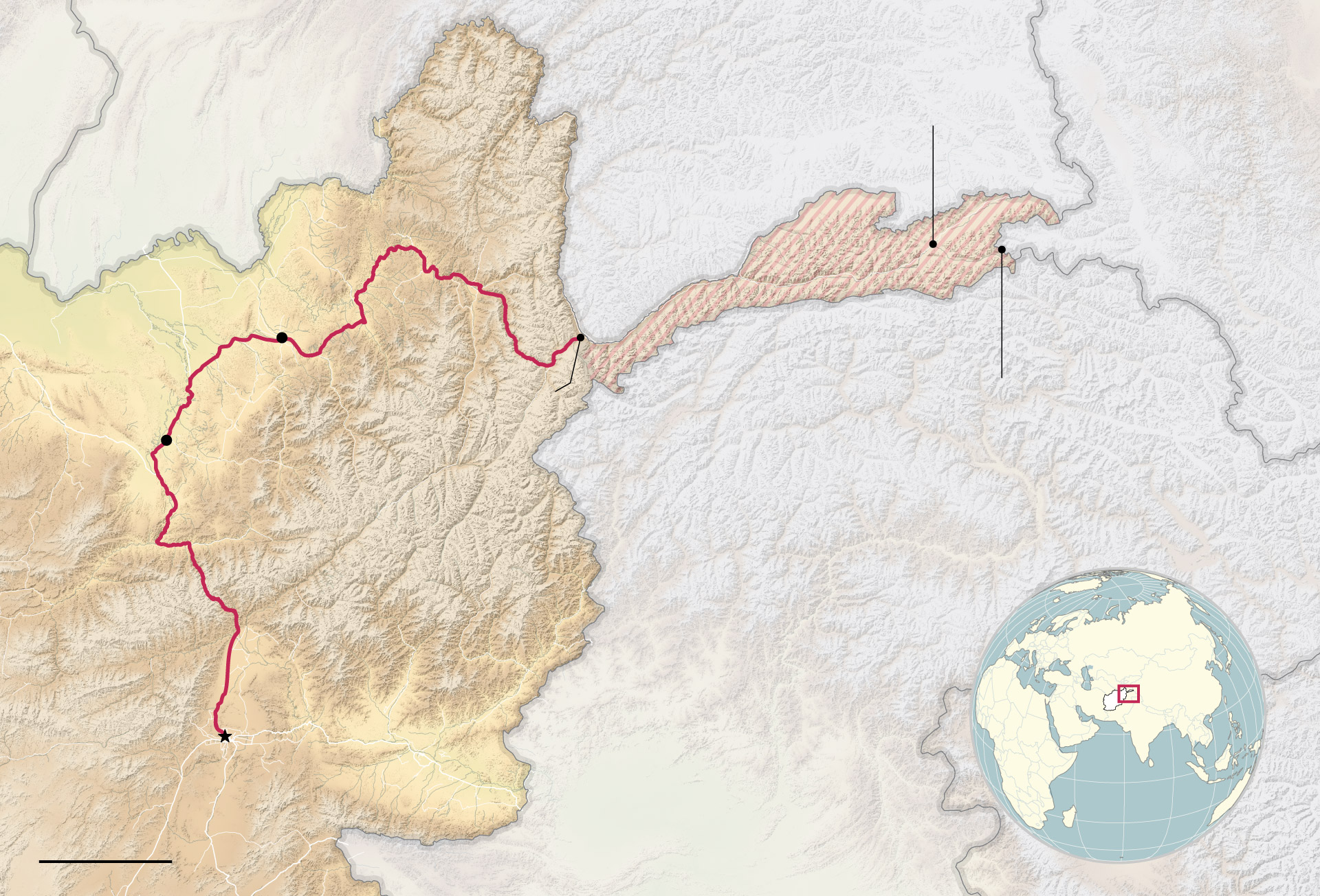
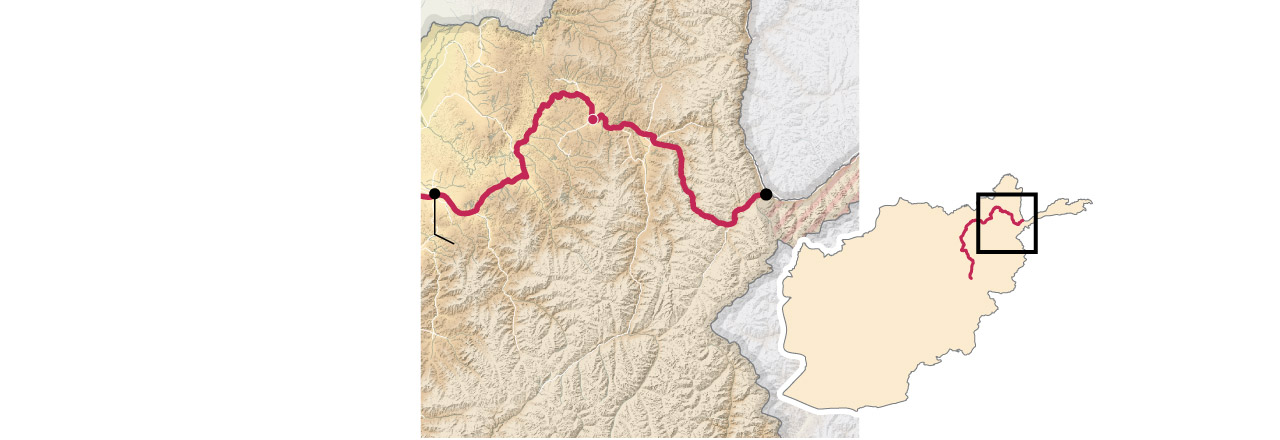
The regime wants to build a highway through the Wakhan Corridor, the narrow, rugged panhandle in the far northeast, to connect the Afghan heartland with China — and place itself at the center of international commerce.
If the road is ever completed, it would bypass Pakistan, dramatically cutting travel times between Central Asia and China and potentially promoting trade in rare minerals and other resources, such as lithium, cobalt and gold. The highway’s boosters see it returning Afghanistan to the central place it held ages ago on the Silk Road, as China pushes forward with plans to build a modern version of the route with an intercontinental network of land and maritime routes. “Wakhan is part of it,” said Abdul Salam Jawad, a spokesman for the Taliban-run Ministry of Industry and Commerce.
Buzai Gumbad
The Taliban says its initial task is to pave a 30-mile stretch of dirt road just west of the Chinese border, though 200 more miles are also largely unpaved and badly in need of improvement. Ultimately, the route will require building durable bridges and eliminating river crossings that become inaccessible in high water.
But its detractors say the road could easily become a highway to nowhere.
Satellite images from Maxar, a commercial imaging firm, show that on the Afghan side of the border, no new construction has occurred on the corridor’s Wakhjir Passsince August and that the completed segment ends in rough terrain, less than a half-mile from the border.
“Our government doesn’t have enough budget,” Zabihullah Amiri, director of the provincial Information Ministry, acknowledged in an interview. “We hope that China will help.”
Chinese companies have struck numerous deals to mine rare minerals in Afghanistan since the Taliban takeover. But despite the Taliban’s claims that China is eager to team up with the regime to facilitate trade via the Wakhan Corridor, Beijing has so far stayed away from undertaking large infrastructure projects.
The challenges facing the project are the same as those confronting the Afghan economy as a whole. The Taliban’s tightening restrictions on women and girls have left Afghanistan economically isolated, with many foreign governments, multinational companies and international agencies reluctant to invest under these repressive conditions. Security also remains a grave concern for development amid persistent attacks by Islamist militants, at times targeting Chinese visitors.
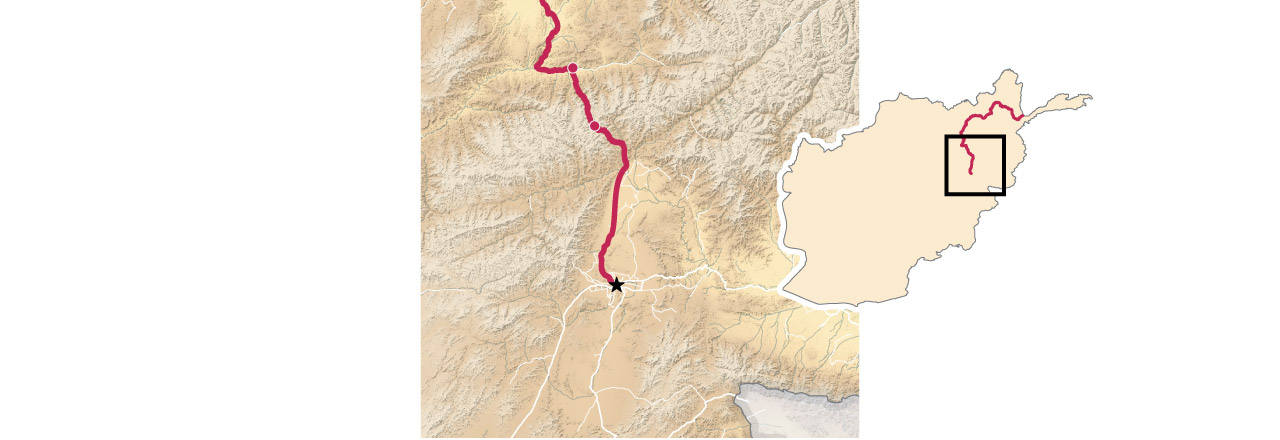
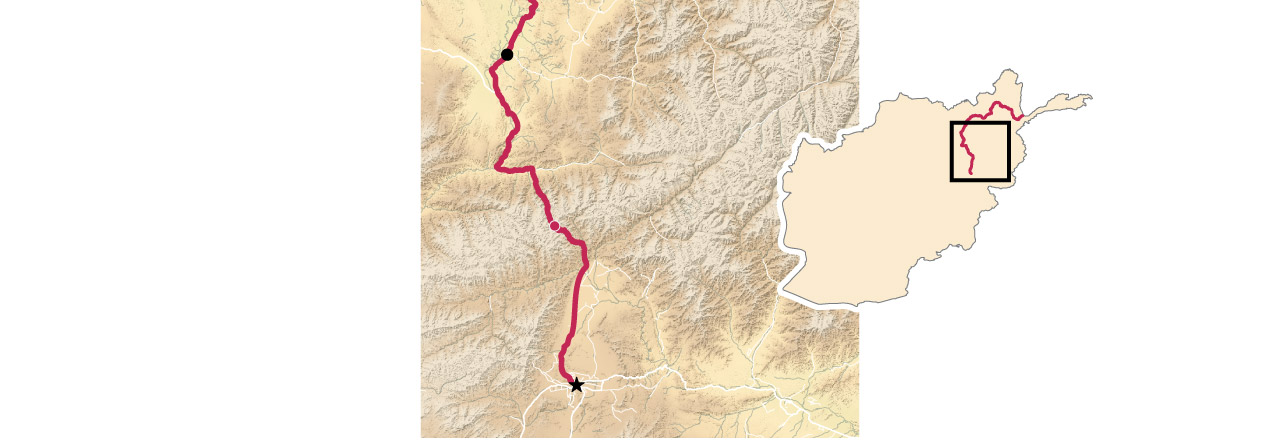
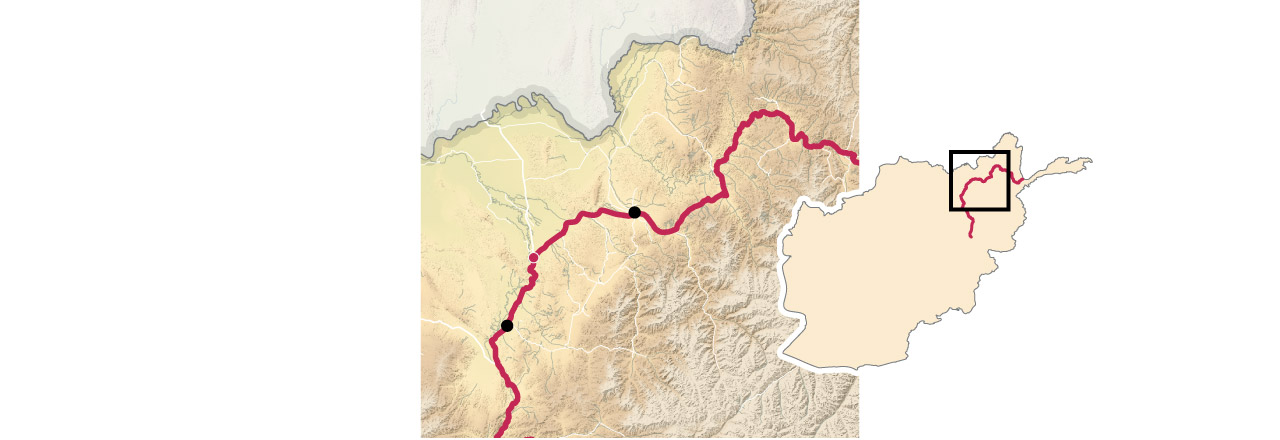
Along with a team of Washington Post journalists, I recently traveled from the capital, Kabul — 600 miles from the Chinese border — to the Wakhan Corridor to explore the factors afflicting the highway project and the Taliban’s broader aspirations.
Most of the work on the highway so far has occurred over the border in China. Satellite imagery shows that small portions of roadway there have been recently paved, improving the existing road, and that additional guard posts have been erected at the border.
But Afghan state media has focused instead on even the tiniest progress on the Afghan side.
In Kabul, the headlines about such progress have prompted enthusiasm. Abdul Jabar Saqib, 39, is preparing for what he projects will be an influx of Chinese merchants. He just opened a Chinese restaurant in downtown Kabul and is planning branches elsewhere in the city. Visitors arriving at Kabul’s airport, meanwhile, are greeted these days by a billboard advertising a recently opened Chinese hotel.
Sirajuddin Haqqani, the acting interior minister, recently met with the Chinese ambassador to discuss the Wakhan Corridor and “the enhancement of trade relations,” said Abdul Mateen Qani, a spokesman for the ministry.
So far, demand appears to be primarily driven by companies that can afford to take risks. Some long-standing Chinese merchants, however, say the number of Chinese people starting businesses in Kabul has actually declined since the Taliban takeover, with some citing concerns over the safety of their investments.
A language teacher in Kabul said an initial wave of interest in learning Chinese may already be fading. There is no shortage of work for the limited pool of well-qualified interpreters. But the teacher, who spoke on the condition of anonymity for fear of losing Chinese funding, said scholarship applications to study in China are being rejected en masse by the Chinese government. Only a few Chinese construction companies have shown interest in recruiting entry-level graduates for road construction or mining projects.
Wary investors
To reach the Wakhan Corridor from Kabul, we first had to follow the main road north, eventually passing through the infamous Salang Tunnel, a claustrophobic, smog-filled 1.7-mile passage built by the Soviet Union at an altitude of over 11,000 feet, where even the most seasoned travelers can experience altitude sickness. The tunnel was a remarkable engineering achievement when it was built in the 1960s, but today, with heavier traffic volumes, travelers often find themselves mired in long jams. The Taliban has announced plans to build a second tunnel, but the cost could be prohibitive.
Upgrading the roadways to Wakhan and then constructing a connecting road to China could require financing like that in the Cold War, international organizations suggest, when the Soviet Union and the United States pumped money into the country because they saw it as strategically important.
Supporters of the Taliban say there has been a noticeable increase in the construction of infrastructure under its rule. But much of that work has been in cities like Kabul, rather than on the eroded network of Afghan highways spanning thousands of miles.
One reason for the continued neglect of highways has been a lack of international funding due to the Taliban’s crackdown on women’s rights, according to foreign donors. Western governments are wary of being seen as supportive of the regime; many international donors have yet to resume funding for major development projects; and Afghanistan’s banking system remains internationally ostracized.
Still, many Afghan men in places like Baghlan — at the north end of the tunnel — are optimistic about the future because the withdrawal of U.S. troops put an end to the country’s long war. Mohammad Wali Baghlani, a 60-year-old businessman in Baghlan, says his region’s golden era is still ahead.
But for women, peace has come at a steep cost. “We’re waiting for a miracle to happen,” said a 23-year-old woman in Baghlan, speaking on the condition of anonymity to avoid drawing scrutiny from the regime.
Security fears
Beyond Baghlan, the road eventually came to a junction and we turned east, arriving before too long at Taleqan. Under the Taliban’s plans for the Wakhan Corridor, this city would become a major transport hub.
These days, convoys carrying Taliban soldiers race along Taleqan’s roads with sirens blaring. Rumors of robberies and militant attacks are ubiquitous. Such security fears could derail the Taliban’s plans for Wakhan, in part because violence could scare off the Chinese engineers and other experts that the Afghan government is counting on. Continuing attacks could also depress commerce.
Islamic State-Khorasan, the local Islamic State affiliate, has asserted responsibility for numerous attacks in various parts of Afghanistan since 2021, including a December 2022 assault on a hotel in Kabul that injured five Chinese citizens. ISIS-K views the Chinese government as a target, railing against what the group has called “China’s daydream of imperialism.” The increasing reach of the militants was illustrated late last year when a bombing claimed by ISIS-K killed an Afghan cabinet minister, Khalil Haqqani.
In neighboring Pakistan, attacks that have killed 20 Chinese nationals since 2021 brought a strong reaction from the Chinese government, which warned that plans for major construction projects could be in jeopardy and demanded that the Pakistani government take action against the militants responsible for the violence.
The Taliban claims it isn’t worried. “Finally, after four decades of war, we have reached full security across the country,” reads a large roadside billboard on the way north.
But the closer one gets to Afghanistan’s northern border, the more hushed conversations become about the security situation and the more guarded the behavior, with residents often avoiding eye contact. Government snipers were positioned above Taleqan’s market square.
At the end of an interview, Zabihullah Ansar, head of the Taliban’s information directorate in the city, advised us to keep a low profile and hide our foreign identities. “The security situation is dire,” he said.
Someone to blame
More than 100 miles farther east, we finally reached the Wakhan Corridor. It is here that the Taliban dreams of a vibrant commercial artery. Today, it is home to little more than sleepy, neglected villages. The main road is patched together from gravel and pavement, and mostly devoid of traffic.
At the town of Ishkashim, at the western entrance to the corridor, a slogan carved into the mountainside by the previous Afghan government still welcomes visitors. It reads, ironically, “Education For Everyone.” The Taliban has banned girls and women from secondary and university education.
“Maybe, if the road was opened and foreigners came from afar, the Taliban would have to give us more freedom,” mused a 25-year-old woman.
But there is a widening gulf between ambition and reality in Taliban-ruled Afghanistan. And as this gap becomes more obvious, some Afghans are looking for someone to blame.
Without providing evidence, local officials in the region are spreading word that foreign powers are behind a plot to prevent the Wakhan road from ever being built. Some Taliban officials and supporters claim that neighboring Pakistan, which could lose the most if the highway is built, may be preparing to invade Afghanistan to block the project.
Paranoia seems to be on the rise here. In Wakhan, Mohammad Zakir Ahmadi, a 54-year-old shepherd, said he was stunned to pass 150 Taliban security checkpoints over two weeks while herding about 20 of his yaks through the corridor.
There is little here to suggest a new future for Afghanistan. But the wreckage of Russian tanks rusting in riverbeds and abandoned NATO military bases with faded camouflage tarps offer ample reminders of the past that Afghans dream of leaving behind.
Lyric Lee, Haq Nawaz Khan, Sarah Cahlan, Shaiq Hussain and Fariba Akbari contributed to this report. Graphics by Amaya Verde and Jarrett Ley.
Rick Noack is The Washington Post’s Afghanistan bureau chief. Previously at The Post, he was the Paris correspondent, covering France and Europe, and an international affairs reporter based in Berlin, London and Washington.
Carolyn Van Houten is a Pulitzer Prize-winning staff photojournalist at the Washington Post.
A Taliban highway could lead to the future. But it’s stuck in the past
Mr. Ackerman is a former Marine and intelligence officer who served five tours of duty in Iraq and Afghanistan.
The New York Times
February 2, 2025
On a recent Saturday afternoon, I took my son to the newly opened Afghanistan and Iraq exhibit at the National Museum of the Marine Corps near Quantico, Va. As we walked among the weapons, equipment and uniforms, one display stood out. It contained an unusual uniform worn by a Raider, a member of U.S. Marine Corps special operations.
I served in the Raiders and as an adviser to Afghan special operations units between 2008 and 2011. But, like the one on display, the uniform I wore wasn’t American — it was Afghan. I explained to my son that we dressed this way for tactical reasons, but also because implicit in wearing Afghan uniforms was a promise: We and our Afghan allies were one.
The Afghan withdrawal four and a half years ago broke that promise. Today, America has an opportunity to redeem at least a part of it.
The last U.S. military aircraft left Kabul in August 2021. But the withdrawal is not over. More than 1,600 of our Afghan allies are stranded overseas and trying to resettle in the United States. The Trump administration has canceled their entry to the United States as part of a broad suspension of the Refugee Admissions Program. This decision, if not reversed, is yet another betrayal of my former colleagues.
The stranded Afghan refugees are not migrants like those who have come across the southern U.S. border illegally, or even like those who overran the airfield at Kabul International in 2021. They are colleagues of our service members, men and women who have been fully vetted and cleared by the State Department for entry into the United States.
A number of these stranded refugees are former members of the Afghan military who fought in the same types of special operations units that I advised. They are also members of Afghan civil society, including activists who stood up for women’s rights at our country’s urging. Many are family members of U.S. citizens, including children and spouses of active-duty U.S. military personnel.
During the Afghan withdrawal, the Taliban drew up lists of our allies to hunt and kill because they had worked with us. A number of these people are on those lists. Due to bureaucratic inertia and a lack of political will, the Biden administration failed to bring them to the United States.
During his presidential campaign, Donald Trump heavily criticized Mr. Biden’s withdrawal while standing by his first administration’s decision to negotiate its framework with the Taliban. Mr. Trump’s argument was that the United States needed to get out of Afghanistan, but that the Biden administration botched the execution. Now he is making the same mistakes his predecessor made.
One of the denunciations leveled by critics of the Biden administration was that abandoning our Afghan allies after the withdrawal harmed the credibility of the United States. This was a fair criticism then, and it is a fair criticism now. The United States is confronting a world as turbulent as any since the end of the Second World War. In addition to enduring threats from terrorist groups like ISIS, it is a world characterized by the return of great power competition. This country doesn’t fight on its own; it has always fought alongside its allies.
During the withdrawal I was one of thousands of American veterans who worked on what came to be called a “digital Dunkirk.” We used our phones and encrypted apps to save the lives of Afghan friends and colleagues when the U.S. government abandoned them. We made lists of Afghans who required assistance, shepherded them onto convoys and helped them navigate checkpoints.
I was personally involved with several hundred Afghan evacuation cases. We knew that eventually our efforts would have to end — we would have to tell the remaining, deserving Afghans begging for our help that we couldn’t help them any more, that the last flight had left. Since then, the Taliban have taken retribution against some of them; others have fled the country or remain in hiding inside of Afghanistan.
The Trump administration has a powerful opportunity here, not only to honor the lives of our allies but also the sacrifices of a generation of American veterans who served in their country. By bringing this group of vetted Afghans to the United States, Mr. Trump would differentiate himself from Mr. Biden and show that he would have handled the aftermath of the withdrawal differently. He would also send a signal that the United States is reliable, even as we are renegotiating our relationships with international partners.
Surely many around the world are watching — in Ukraine, for example, which itself is in a war of strategic consequence to the United States.
On inauguration day, Mr. Trump vowed that under his new administration he would create “peace through strength.” But peace through strength has never been solely about American might. This is why in the arena of great power competition — from the First and Second World Wars to the Cold War — the United States has won. We have forged strong, enduring alliances.
Breaking faith with former allies projects weakness to current, and future, partners. Weakness will never breed peace. And fighting without allies means that any future losses will primarily be our own.
Elliot Ackerman is a former Marine and intelligence officer who served five tours of duty in Iraq and Afghanistan.
The Moral and Strategic Case for Taking in the Afghan Refugees
Request for arrest warrants labels Taliban’s women’s rights abuse a crime against humanity.
The Taliban may retaliate by imposing even harsher restrictions on Afghan women and girls.
Court’s effort provides hopes to victim and incentivizes pragmatic Taliban leaders to push for change at the top.
The International Criminal Court’s chief prosecutor announced on January 23 that he had requested arrest warrants for the Taliban’s leader, Haibatullah Akhundzada, and its chief justice, Abdul Hakim Haqqani, for being “criminally responsible for persecuting Afghan girls and women.”Since their return to power in August 2021, the Taliban have banned girls from education beyond sixth grade and barred women from jobs and most public spaces. There is, however, a split emerging within the Taliban over the education ban. Earlier this month, Sher Abbas Stanikzai, a senior Taliban figure, issued a rare public rebuke of Taliban policy by urging the leadership to lift the ban. “We are committing an injustice against 20 million people out of a population of 40 million, depriving them of all their rights. This is not in Islamic law, but our personal choice or nature,” Stanikzai said in a video shared on his X account.USIP’s Belquis Ahmadi, Lauren Baillie and Scott Worden analyze the ICC’s request for arrest warrants and its implications for Afghanistan.
What led the ICC to make this move now, and what could it mean for Afghanistan?
Ahmadi: The ICC’s request for warrants against the Taliban’s emir, Haibatullah Akhundzada, and its chief justice, Abdul Hakim Haqqani, represents a significant milestone in the pursuit of justice and accountability for the Taliban’s extreme restrictions on women’s rights.
The ICC officially began its investigation shortly after the Taliban’s takeover in 2021 and has spent the last two years gathering exhaustive documentation of human rights violations and compiling evidence gathered by a dedicated coalition of organizations, human rights experts, legal advocates and survivors. Even while under investigation for committing gender persecution, the Taliban have increased their repressive measures. They have issued orders and decrees restricting women’s rights, most notably barring girls from public education above sixth grade, prohibiting women from traveling without a male companion and restricting women’s employment.
For many Afghans, this development carries the hope that the ICC’s warrants will extend beyond the two leaders to include other members of the Taliban’s leadership. These individuals, who operate as part of the Taliban’s machinery, have played pivotal roles in enabling and enforcing systemic crimes, particularly the widespread and institutionalized gender persecution that has stripped Afghan women and girls of their basic rights.
This step by the ICC is a significant validation of years of tireless efforts by Afghan civil society and human rights advocates, who have risked their lives to document the Taliban’s crimes. It highlights the critical importance of their work and serves as a powerful reminder that their advocacy is resonating on the international stage. The ICC’s actions provide a renewed sense of purpose and a tangible sense of progress despite the many challenges that lie ahead.
Afghans, like the broader international community, understand that the individuals named in the arrest warrant request have not traveled abroad since seizing power and are unlikely to do so in a way that would require all parties to the Rome Statute to arrest people against whom there is an arrest warrant. Nevertheless, this action by the ICC carries immense symbolic and practical value. It sends a clear message that the plight of Afghan women and the broader atrocities committed by the Taliban have not been ignored. It also revives hope in the pursuit of justice, demonstrating that the global community acknowledges the suffering and remains committed to holding perpetrators accountable, no matter how long it takes.
The Taliban are unlikely to accept any arrest warrants quietly and may retaliate by imposing even harsher restrictions on Afghan women and girls, who are already suffering under their oppressive rules. In the past, the Taliban have often responded to criticism by tightening their control, using women as targets to show their defiance. This creates a serious risk of worsening the already difficult situation for women in Afghanistan. Because of this, it’s crucial for the international community — especially countries that have some level of contact or trade with the Taliban — to step up and apply stronger pressure.
These countries have a responsibility to push back against further restrictions on women and girls. This pressure should go beyond just words; it could include tying existing diplomatic relations to specific conditions, placing sanctions on Taliban leaders and working with others in the region to collectively push for women’s rights. At the same time, the world must also support Afghan women and the organizations fighting for their rights. This includes giving Afghan women platforms to speak out, making sure their voices are heard in global discussions and including them in decisions about Afghanistan’s future.
Why is the case being pursued by the ICC? Are there no alternative venues to hold the Taliban accountable for crimes committed against Afghan women?
Baillie: At present, there are no other venues available to Afghan women to seek justice for gender persecution. The ICC is a court of last resort. It is intended to consider cases that cannot be heard fully in national courts, typically because the courts lack the capacity to fairly and impartially decide cases related to atrocity crimes.
Since the 2021 Taliban takeover, Afghan courts have lost their independence and impartiality. Judges and prosecutors have been replaced with Taliban allies, including fighters and madrasa graduates who lack formal training in law and justice. Their decisions are frequently consistent with the Taliban’s restrictive interpretation of Shariah law rather than Afghan law, and, along with Taliban leadership, they have taken concerted steps to make the courts inaccessible to women. As a result, Afghan courts are unlikely to deliver credible justice — justice that recognizes and remedies the harms suffered by victims and holds perpetrators accountable — to Afghan women.
With no meaningful recourse to Afghan courts and only limited access to the courts of other states, the ICC is the only viable judicial venue to prosecute Taliban leadership.
National courts of other states have yet to prosecute Taliban crimes committed since 2021 under the principle of universal jurisdiction, which provides that atrocity crimes — war crimes, genocide and crimes against humanity — are so detrimental to global stability that they may be considered by national courts even if those crimes took place on the territory of another state and/or against third-party nationals. These cases, however, are typically opportunistic, as they often require the defendant to be present on the prosecuting state’s territory and are unlikely to reach those most responsible for the crime committed due to the principle of head of state immunity. With no meaningful recourse to Afghan courts and only limited access to the courts of other states, the ICC is the only viable judicial venue to prosecute Taliban leadership.
This is the first time gender crimes have been the main focus of an ICC case. Why is this important?
Baillie: The only crime alleged against Akhundzada and Haqqani is gender persecution, marking the first time an ICC prosecution has focused solely on the crime. The prosecutor’s application for arrest warrants now triggers a process of review by the judges to confirm the charges and issue the warrants. If arrest warrants are issued and prosecutions move forward, this will provide an important opportunity for the court not only to consider the situation of Afghan women but also to develop important precedent on the crime of persecution on the basis of gender.
The potential prosecutions of Haibatullah and Haqqani would allow the court to not only consider whether and how gender persecution has been committed against Afghan women as a result of Taliban conduct but may also develop important precedent around the crime of persecution on the basis of gender. This precedent could support potential prosecutions in other contexts where women are systematically repressed, such as Iran.
Many commentatorsandadvocates have argued that persecution is insufficient to describe the systematic repression and violence targeted toward Afghan women by the Taliban, and have labeled this treatment “gender apartheid.” Gender apartheid is not a recognized crime under international law, however, and cannot be prosecuted by the ICC.
How could this impact the Taliban’s international relations?
Worden: The ICC prosecutor’s indictment of the Taliban, even if confirmed, is unlikely to change the status quo in Afghanistan for suffering Afghan women and girls. The Taliban will not cooperate with the court, the indicted leaders do not travel and regional countries are not likely to change their relationship with the Taliban based on gender persecution charges by the ICC.
An arrest warrant can have longer-term impacts by delegitimizing the Taliban’s current leadership and slowing the regime’s path toward international recognition.
An arrest warrant can have longer-term impacts by delegitimizing the Taliban’s current leadership and slowing the regime’s path toward international recognition. The U.N. Security Council passed Resolution 2721 in December 2023, which “affirms that the objective of [a UN] process should be a clear end state of an Afghanistan at peace with itself and its neighbors, fully reintegrated into the international community and meeting international obligations, and recognizes the need to ensure the full, equal, meaningful and safe participation of Afghan women in the process throughout.” A confirmed indictment by the ICC for gender persecution should give all Security Council members additional pause to consider whether the Taliban are meeting these minimal conditions for being a member in good standing of the international community or to hold a seat in the U.N.An indictment of Haibatullah and Haqqani can also apply subtle pressure within the Taliban movement over their leadership choices. The Taliban will publicly unite in opposition to a foreign court order against their leadership. But more pragmatic Taliban who favor girls’ education and seek greater engagement with Western countries that care most about human rights can privately use the indictment as an argument that keeping Haibatullah and his inner circle in power will ensure that Afghanistan continues to be isolated from the international financial system, with little private investment and declining humanitarian aid.
Does the ICC’s Request for Warrants Against the Taliban’s Leaders Matter?
The United Nations says aid workers are still in a “race against time” to remove rubble and rebuild after the devastating earthquake struck eastern Afghanistan last month, killing at least 2,200 people and cutting off remote areas.
The 6.0-magnitude quake on Aug. 31 was shallow, destroying or causing extensive damage to low-rise buildings in the mountainous region. It hit late at night, and homes — mostly made of mud, wood, or rocks — collapsed instantly, becoming death traps.
Satellite data shows that about 40,500 truckloads of debris still needs to be cleared from affected areas in several provinces, the United Nations Development Program said Wednesday. Entire communities have been upended and families are sleeping in the open, it added.
The quake’s epicenter was in remote and rugged Kunar province, challenging rescue and relief efforts by the Taliban government and humanitarian groups. Authorities deployed helicopters or airdropped army commandos to evacuate survivors. Aid workers walked for hours on foot to reach isolated communities.
“This is a race against time,” said Devanand Ramiah, from the UNDP’s Crisis Bureau. “Debris removal and reconstruction operations must start safely and swiftly.”
People’s main demands were the reconstruction of houses and water supplies, according to a spokesman for a Taliban government committee tasked with helping survivors, Zia ur Rahman Speenghar.
People were getting assistance in cash, food, tents, beds, and other necessities, Speenghar said Thursday. Three new roads were under construction in the Dewagal Valley, and roads would be built to areas where there previously were none.
“Various countries and organizations have offered assistance in the construction of houses but that takes time. After the second round of assistance, work will begin on the third round, which is considering what kind of houses can be built here,” the spokesman said.
Afghanistan is facing a “perfect storm” of crises, including natural disasters like the recent earthquake, said Roza Otunbayeva, who leads the U.N. mission to the country.
 Afghanistan Peace Campaign