Kabul Determined to Continue Confrontation, Says Former Pakistani Envoy after Istanbul Talks Collapse

Former Pakistani envoy Asif Durrani said the Istanbul talks collapsed, warning Kabul appears intent on prolonging confrontation and diplomatic deadlock with Islamabad.

Islamabad’s former envoy on Afghanistan affairs, Asif Durrani, has said the deadlock in negotiations in Istanbul suggests that the Taliban regime is determined to continue confrontation with Pakistan, and that the Pakistani team has since left the venue.

Durrani wrote on the X platform on Friday that if negotiations remain stalled, the border may remain sealed, trade suspended and travellers restricted — a scenario that risks harming ordinary citizens.

Pakistan has long accused Kabul of harbouring Tehrik‑e‑Taliban Pakistan (TTP) fighters who mount cross-border attacks; Durrani claims the Taliban delegation in Istanbul explicitly refused to address the TTP issue.

In the talks mediated by Istanbul under the aegis of Doha-brokered ceasefire mechanisms, Pakistan handed over “evidence-based” demands to Turkey and Qatar, but the Afghan side rejected signing written commitments, insisting on verbal assurances only.

The Taliban refused the allegations and stated that Afghanistan does not provide safe havens for militants, and that Islamabad must respect Afghanistan sovereignty. A Taliban spokesman claimed Pakistani forces fired into Afghanistan territory on the day talks resumed in Istanbul, but Taliban forces held back “out of respect” for the dialogue.

The breakdown of the Istanbul process underscores the absence of trust between Islamabad and Kabul, especially over verification, documentation and accountability of militant cross-border activity. Without written guarantees, Pakistan’s patience appears exhausted, and regions along the frontier may see further disruption of trade and civilian movement.

For the broader region, the failure raises the risk of renewed military flare-ups. Diplomatic channels now face a tougher task; either reconvene with a stronger framework and enforce mapping of militant routes or witness a slide back into violence that could derail the fragile cease-fire.

Kabul Determined to Continue Confrontation, Says Former Pakistani Envoy after Istanbul Talks Collapse
read more

UNAMA Head: Afghanistan Must Honor Its International Obligations

In an online meeting with journalists in Kabul, Georgette Gagnon emphasized that Afghanistan must uphold its international commitments.

The acting head of the United Nations Assistance Mission in Afghanistan (UNAMA) has said the mission focuses on political engagement, coordination of humanitarian aid, support for governance, and development initiatives.

In an online meeting with journalists in Kabul, Georgette Gagnon emphasized that Afghanistan must uphold its international commitments.

The UN official also described the Doha process as an effective mechanism for addressing Afghanistan’s challenges and noted that the date and agenda for the fourth Doha meeting would be determined by the member states involved in the process.

Georgette Gagnon mentioned that determining the agenda for the potential “Doha IV” meeting would be up to the member states involved in the Doha Process. She indicated that if the meeting takes place, it is likely that the issue of counter-narcotics would be part of the broader discussions.

Political analyst Hanif Khan Karo Khil said: “Over the past four years, the Islamic Emirate and UNAMA have criticized one another, yet there have been few tangible results. It is important that both sides show flexibility and reach some understanding on key issues.”

Over the past four years, international political efforts to resolve Afghanistan’s problems have followed two separate tracks: the Moscow Format, led by regional countries, and the Doha Process, led by the UN and Western nations.

Although several meetings have taken place under both frameworks, there is still no clear consensus within the international community on the way forward for Afghanistan.

UNAMA Head: Afghanistan Must Honor Its International Obligations
read more

Istanbul Talks Enter Second Day Behind Closed Doors

The spokesperson for Pakistan’s Foreign Ministry also stated that their delegation has presented its demands to the Turkish and Qatari mediators.

The ongoing negotiations in Istanbul have entered their second day behind closed doors.

Sources told TOLOnews that on the first day of talks, both sides shared their demands with the mediators from Turkey and Qatar. According to the sources, Pakistan once again raised demands in the third round that, in their view, are unrelated to Afghanistan.

One of the reported demands from Pakistan is the transfer of TTP (Tehrik-e-Taliban Pakistan) members from Pakistan to Afghanistan. In response, the Islamic Emirate of Afghanistan has demanded that Pakistani soil and airspace not be used by other countries or by ISIS for operations against Afghanistan.

Aziz Maarej, a political analyst, said: “These remarks are contradictory, on one hand, they say the TTP is in Afghanistan, and on the other, they request its transfer to Afghanistan, while the TTP is in fact an internal issue of Pakistan.”

The spokesperson for Pakistan’s Ministry of Foreign Affairs also stated that their delegation has presented its demands to the Turkish and Qatari mediators.

Tahir Hussain Andrabi added that the mediators are currently reviewing Pakistan’s demands with the Afghan delegation: “The Pakistani delegation has submitted documented and logical demands aimed at ending cross-border terrorism. The mediators fully support Pakistan’s position, which is based on the evidence provided by the Pakistani delegation and aligned with international norms and laws.”

The third round of talks between the delegations of the Islamic Emirate of Afghanistan and Pakistan began on Thursday. Earlier, the Turkish Foreign Ministry had stated in a release that the third round would include discussions on establishing a mechanism for monitoring and verification to ensure peace and penalize violators.

Istanbul Talks Enter Second Day Behind Closed Doors
read more

Pakistan says Afghanistan talks deadlocked after deadly border clashes

Al Jazeera
Afghan official says four Afghan civilians were killed and five others wounded in border clashes.

Talks in Istanbul between Pakistan and Afghanistan are at a deadlock, Islamabad said, a day after both sides accused each other of mounting border clashes that risked breaching a ceasefire brokered by Qatar.

The update on the talks by Pakistan’s Information Minister Attaullah Tarar on Friday came after an Afghan official said four Afghan civilians were killed and five others wounded in clashes between Pakistani and Afghan forces along their shared border despite the joint negotiations.

There was no immediate comment from Kabul about the Pakistani claim.

In a statement thanking Turkiye and Qatar for mediating the talks, Tarar maintained that the Afghan Taliban has failed to meet pledges it made with the international community about curbing “terrorism” under a 2021 Doha peace accord.

Tarar said that Pakistan “will not support any steps by the Taliban government that are not in the interest of the Afghan people or neighboring countries.” He did not elaborate further, but added that Islamabad continues to seek peace and goodwill for Afghans but will take “all necessary measures” to protect its own people and sovereignty.

Ali Mohammad Haqmal, head of the Information and Culture Department in Spin Boldak, blamed Pakistan for initiating the shooting. However, he said Afghan forces did not respond amid ongoing peace talks between the two sides in Istanbul.

Pakistan’s Ministry of Foreign Affairs spokesperson Tahir Andrabi said Afghanistan initiated the shooting.

“Pakistan remains committed to ongoing dialogue and expects reciprocity from Afghan authorities”, Pakistan’s Ministry of Information said.

The ministry said the ceasefire remained intact.

Andrabi said Pakistan’s national security adviser, Asim Malik, is leading the Pakistani delegation in the talks with Afghanistan. The Afghan side is being led by Abdul Haq Wasiq, director of general intelligence, according to Mujahid.

He said that Pakistan had handed over its demands to mediators “with a singular aim to put an end to cross-border terrorism,” and that “mediators are discussing Pakistan’s demands with the Afghan Taliban delegation, point by point.”

Strained Ties

Islamabad accuses Kabul of harbouring armed groups, particularly the Pakistan Taliban (Tehreek-e-Taliban Pakistan or TTP), which regularly claims deadly attacks in Pakistan. The Afghan Taliban deny sheltering the group.

Many Pakistan Taliban leaders and fighters are believed to have taken refuge in Afghanistan since the Afghan Taliban’s return to power in 2021, further straining ties between the two countries.

Turkiye said at the conclusion of last week’s talks that the parties had agreed to establish a monitoring and verification mechanism to maintain peace and penalise violators.

Fifty civilians were killed and 447 others wounded on the Afghan side of the border during clashes that began on October 9, according to the United Nations. At least five people died in explosions in Kabul that the Taliban government blamed on Pakistan.

The Pakistani army reported 23 of its soldiers were killed and 29 others wounded, without mentioning civilian casualties.

Pakistan says Afghanistan talks deadlocked after deadly border clashes
read more

Afghan opium crop plummets after Taliban ban – UN report

Bethany Bell Role, Yogita Limaye Role

BBC News

6 November 2025

Opium farming in Afghanistan has dropped significantly following a ban imposed by the Taliban government in 2022, the United Nations said.

The total area of land for growing opium poppy shrank 20% since last year, while the amount of opium has fallen by 32% over the same period, the UN’s Office on Drugs and Crime said in a survey.

Afghanistan used to produce more than 80% of the world’s opium, with heroin made from Afghan opium making up 95% of the market in Europe.

But after retaking power the Taliban banned the practice in April 2022, saying opium was harmful and went against their religious beliefs. The UN said most farmers continued to observe the ban despite “severe economic challenges”.

Many Afghan farmers are harvesting cereals, but poppy – from which opium, the key ingredient for the drug heroin can be extracted – continues to be “far more profitable” than legitimate crops, the UNODC noted.

Over 40% of available farmland has remained fallow because of the lack of profitable alternatives, limited agricultural outputs and, adverse climate conditions it added.

The total area under opium poppy cultivation this year was estimated at 10,200 hectares, mostly in the north-east of the country, with Badakhshan province accounting for the largest share. Before the 2022 ban, more than 200,000 hectares were under poppy cultivation in Afghanistan.

Four provinces with opium poppy cultivation in 2024 (Balkh, Farah, Laghman, Uruzgan) were declared opium poppy-free in 2025.

“The near elimination of cultivation from traditional strongholds illustrates the scale and durability of the ban on opium poppy cultivation,” the survey said.

The Taliban’s efforts to destroy opium fields occasionally sparked violent resistance from the farmers, particularly in the north-east, the UNODC said, noting that casualties were reported during clashes in several districts of Badakhshan.

But the vast majority of Afghan farmers adhere to the ban issued by the Taliban’s supreme leader.

However, farmers say they lack support to grow alternative crops – as a result, they have to choose between poverty or punishment.

“If we violate the ban, we face prison. If we comply, we face destitution,” one unnamed farmer in Helmand province told BBC Pashto this summer.

“If there’s no money, then I’ll grow poppies again.”

Poppy fields are no longer openly visible in Helmand, but they do still exist.

Another farmer showed BBC Pashto around his small walled-off poppy field in front of his house in a remote village. He’s risking jail, but he said he had no option.

“What should I do? I’m forced to do this – I have nothing else. I can’t even provide food for my family.”

While opium is in decline, trafficking in synthetic drugs such as methamphetamine have risen since the ban, the UNODC said.

Seizures of such drugs in and around Afghanistan was 50% higher in late 2024 compared with the previous year.

Organised crime groups favour synthetic drugs which are easier to produce and less vulnerable to climate shocks, the UNODC said.

Additional reporting by BBC Afghan’s Yama Bariz

Afghan opium crop plummets after Taliban ban – UN report
read more

Afghanistan earthquake survivors spend the night in the open; the quake damaged historical sites

By ABDUL QAHAR AFGHAN

Associated Press

KABUL, Afghanistan (AP) — Survivors of a powerful earthquake in northern Afghanistan that killed more than 25 people and injured nearly 1,000 were digging through the rubble of their homes Tuesday, trying to salvage what belongings they could after spending the night outside in the bitter cold.

Rain was forecast for the region, further compounding the misery for survivors.

The 6.3 magnitude quake struck just before 1 a.m. local time Monday, with an epicenter 22 kilometers (14 miles) west-southwest of the town of Khulm in Samangan province. By early Tuesday afternoon, the death stood at 27, while another 956 people were injured, Public Health Ministry spokesperson Sharafat Zaman said in a statement.

The tremor also damaged historical sites, including Afghanistan’s famed Blue Mosque in the northern city of Mazar-e-Sharif, which is one of Afghanistan’s most revered religious landmarks, and the Bagh-e-Jahan Nama Palace in Khulm.

The Blue Mosque’s minaret was badly damaged, while some bricks and tiles had fallen from some of the mosque’s walls and cracks appeared in other parts of the centuries-old site, said Mahmoodullah Zarar, Head of Information and Culture of Balkh Province.

Video footage from the mosque, which is a major gathering place during Islamic and cultural festivals, showed structural damage to parts of the mosque, while brickwork and the decorative tiles that adorn its facade had crumbled in several places and laid strewn on the ground.

The most severely damaged historical monument in the province was the 19th century Bagh-e Jehan Nama Palace, said Firozuddin Munib, Samangan province’s Head of Information and Culture. The palace, built in 1890-1892, and its adjoining gardens are a popular site for visitors.

“The restoration of this palace is very important because winter is coming and the area is cold, and it is raining, which may cause further damage,” Munib said, adding that the quake caused a surrounding wall and one tower to collapse and also led to cracks in the palace and other towers.

In Khulm, aftershocks rattled survivors, who spent the night out in the open.

“People are still scared because of last night’s earthquake because small tremors were felt during the day,” said local resident Asadullah Samangani. “We spent the night in the open ground last night, the weather was very cold, we couldn’t sleep, we feel like there will be another earthquake now.”

He said authorities had sent tents and basic necessities, but that his home was “completely destroyed, nothing was left intact to use. Our children were all sick in the morning because we had spent the night in the cold, and all the household items were under the rubble.

“People from other areas came to help, but our belongings are still under rubble and damaged. Our women are facing great difficulties, we do not have a toilet and we do not have a place where our women can spend the night.”

Rescue crews were still operating in some areas on Tuesday, and were expected to finish by the end of the day.

The World Health Organization said partial damage had been reported in several health facilities, while the laboratory at the Samangan Provincial Hospital had collapsed, destroying critical medical equipment. Emergency response operations with health teams and rescue units were ongoing, it said.

Impoverished Afghanistan often faces difficulty in responding to natural disasters, especially in remote regions. Buildings tend to be low-rise constructions, mostly of concrete and brick, with homes in rural and outlying areas made from mud bricks and wood, many poorly built.

In August, a quake in eastern Afghanistan killed more than 2,200 people.

Afghanistan earthquake survivors spend the night in the open; the quake damaged historical sites
read more

Pakistan Army Says Ongoing Tensions With Afghanistan Stem From Absence of Representative Govt in Kabul

Pakistan’s military said ongoing tensions with Afghanistan are linked to the absence of a representative government in Kabul, urging stronger action against cross-border militancy.

The military’s remarks reflect Islamabad’s mounting frustration with Kabul’s failure to rein in the Tehreek-e-Taliban Pakistan (TTP) and other militant groups, even as Pakistan pursues diplomatic channels.

Pakistan’s military declared on Monday that the current tensions with Afghanistan stem from the absence of a legitimately elected government in Kabul. A spokesman for the Inter-Services Public Relations (ISPR) said that unless a representative leadership is installed in Afghanistan, issues such as cross-border militancy cannot be resolved.

Lieutenant General Ahmed Sharif Chaudhry, ISPR’s spokesperson, told reporters that although the 2020 Doha agreement promised a Loya Jirga and an inclusive Afghanistan government, “that commitment remains unfulfilled.” He emphasised Pakistan’s insistence on ending militant sanctuaries in Afghanistan territory.

Chaudhry noted that Pakistan has already eliminated some 1,667 militants this year, including Afghan nationals, and warned that the current cease-fire would be void if any militants operate from Afghanistan soil, signalling a potential return to open conflict.

Islamabad urged the Taliban’s leadership to comply with the border-security terms agreed in recent Doha and Istanbul talks. Pakistan’s single non-negotiable demand remains: Afghanistan territory must not be used to launch attacks into Pakistan.

The Taliban rejected Pakistan’s claims of militant sanctuaries inside Afghanistan, insisting no foreign armed groups operate on its soil and calling the accusations baseless.

Observers warn the already fragile truce could collapse unless steps are taken to operationalise the monitoring mechanism and rebuild mutual trust amid deepening Pakistani concerns over national security.

Pakistan Army Says Ongoing Tensions With Afghanistan Stem From Absence of Representative Govt in Kabul
read more

Pakistani Army Denies Secret Deal with U.S. Amid Rising Tensions with Kabul

Ahmed Sharif Chaudhry said that Islamabad does not allow any country, including the United States, to do such a thing.

The spokesperson of the Pakistani army, in a press conference, rejected the remarks made by the spokesperson of the Islamic Emirate of Afghanistan regarding the use of Pakistan’s airspace against Afghanistan and the existence of a secret agreement between Pakistan and the United States on this issue.

Ahmed Sharif Chaudhry said that Islamabad does not allow any country, including the United States, to do such a thing.

The Pakistani security official said: ‘This news is fake. Pakistan has not given permission to the United States or any other country to use its territory for attacks inside Afghanistan. These claims are baseless propaganda.’

The spokesperson of the Pakistani army once again said that Pakistan’s security concerns are the only issue between Kabul and Islamabad and added that if an attack is launched from Afghanistan, the current ceasefire between the two sides will also end.

Sayed Muqadam Amin, a political analyst, said on the matter: ‘These are not issues that should be viewed solely from Pakistan’s perspective; rather, the United States is directly involved, and the Islamic Emirate, considering national interests, should continue some meetings with the United States after Pakistan, keeping in mind the provisions of the Doha agreement.’

The verbal tensions between Kabul and Islamabad have escalated at a time when, in two days, the third round of negotiations between the Islamic Emirate of Afghanistan and Pakistan is set to begin in Istanbul, Turkey.

Pakistani Army Denies Secret Deal with U.S. Amid Rising Tensions with Kabul
read more

Five Ways Pakistan Is Trying To ‘Hide’ Its Own Blunders In Afghanistan

Sarral Sharma

NDTV (India) Opinion,

Updated:
Nov 04, 2025 15:53 pm IST
Pakistan is working to shift the global narrative in its favour amid ongoing tensions with Afghanistan and uncertainty regarding peace negotiations with the interim Taliban government. To achieve this, Islamabad is portraying itself as a victim of cross-border terrorism, calling the Taliban uncooperative, seeking external support from Western and friendly Islamic nations on the issue, justifying aggressive military actions in Afghanistan, and blaming India for the rift with the Taliban. All these factors also contribute to Pakistan’s attempts to hide its “strategic depth” policy failure in Afghanistan and coerce the Taliban leadership to fall in line or face consequences. Riding high on renewed ties with the United States and a growing diplomatic role in the Middle East, Pakistan believes it can reshape the perception about Afghanistan. While this tactic may work in the short term, Islamabad risks alienating the Taliban in the long run.

Pak Plays Victim

First, Pakistan is presenting itself internationally as the victim of cross-terrorism allegedly originating from Afghan territory. Islamabad has repeatedly accused the Taliban-led interim government of harbouring the Tehrik‑i‑Taliban Pakistan (TTP) and other militant groups that attack Pakistani armed forces. In the most recent round of talks in Istanbul (with mediation from Turkey and Qatar), Pakistan initially declared: “The dialogue…ended without any workable solution” and accused the Afghan side of being “indifferent to Pakistan’s losses”. However, the recent negotiations were extended due to third-party mediation efforts and finally concluded on October 30, with plans to hold the next round on November 6 in Istanbul. By emphasising its own sufferings and sacrifices, Pakistan is now portraying itself as a responsible, peace-seeking neighbour whose diplomatic overtures have been rejected due to the Taliban’s intransigence. This victim narrative gives Islamabad moral cover in international forums.

A ‘Peace Warrior’

Second, by pointing the finger at the Taliban and declaring its own peaceful credentials, Pakistan can claim the role of the peace warrior. The Pakistani side has claimed that the country had “always desired, advocated and immensely sacrificed for peace and prosperity for the people of Afghanistan” and warned that “Pakistan’s patience has run its course”. Whereas Pakistan’s army chief, Field Marshal Syed Asim Munir, warned the Afghan Taliban to choose between “peace and chaos”, and stated in January 2024, “when it comes to the safety and security of every single Pakistani, the whole of Afghanistan can be damned”. In doing so, Pakistan presents itself as both a willing negotiator and a powerful military force that reserves the right to act. This matters because the international community generally favours diplomatic negotiations over military solutions. Therefore, Pakistan’s argument that it engaged with the Taliban in Doha and Istanbul, but that the latter allegedly backtracked on commitments, gives Islamabad a diplomatic advantage and allows it to shift the blame away from itself and onto Kabul for bilateral tensions.

Look At What It Says To The World

Third, the failure of negotiations helps Pakistan mobilise external support from the West and some Islamic countries to pressure the Taliban. Islamabad has long argued with Washington that Kabul cannot be stable unless Pakistan’s security concerns (especially the TTP) are addressed. With the Taliban’s limited role in controlling militancy in Pakistan, which it considers the latter’s “internal problem”, Islamabad may use the uncertainty around peace talks as an example of the Taliban’s unreliability and solicit financial aid, intelligence, and military cooperation, or diplomatic backing from Western capitals on the issue. Notably, Pakistan remains a close counterterrorism partner of the United States and has strengthened bilateral security cooperation under the Donald Trump administration. With renewed support from Washington and ongoing tensions between the US and Afghanistan over the issue of the Bagram airbase control, Islamabad sees an opportunity to bolster its external support and portray the Taliban as a threat to regional and global security.

Justifying Its Aggression

Fourth, the diplomatic impasse gives Pakistan a convenient justification for an aggressive military strategy against Afghanistan under the pretext of counterterrorism operations against TTP and its affiliates. For example, Defence Minister Khawaja Asif threatened Afghanistan that Pakistan did not need “even a fraction of its full arsenal to completely obliterate the Taliban regime” if provoked further. The temporary breakdown of diplomacy between the two countries may lead to Pakistan using force and carrying out more and deeper strikes inside Afghanistan, such as in Kabul or Kandahar. In Pakistan, there are growing calls for ‘open war’ or redrawing the Durand Line by forcefully capturing some territories in eastern Afghanistan. Other options include increasing airstrikes on so-called militant hideouts, decapitation of top TTP leaders, and even attempts at regime change or a reshuffle in the current Taliban administration in Kabul. These options are possible as Pakistan is working to shape a global narrative that, if the ceasefire fails and peace talks with the Taliban break down, it reserves the right to take escalatory actions against Afghanistan.

Blaming India, As Usual

Fifth, Pakistan is also using the deadlock with the Taliban to further its propaganda that India is supposedly interfering via Afghanistan by supporting certain militant outfits. In its recent narrative, Islamabad is increasingly blaming India for influencing the Taliban regime to allegedly destabilise Pakistan’s western region. While Islamabad has failed to provide any evidence proving India’s involvement, this narrative serves the purpose of Pakistan’s military establishment: shifting attention away from its own counterterrorism policy failures, pressuring the Taliban, and placing India in the role of a destabiliser in the region. Pakistan is unsettled after the recent multi-day visit of the Acting Foreign Minister of the interim Taliban government, Amir Khan Muttaqi, to India. Muttaqi lauded India as a “close friend” that provides humanitarian aid, and announced Afghanistan’s desire for “mutual respect, trade, and people-to-people relations” with India.

Additionally, New Delhi recently agreed to upgrade its “technical” mission in Kabul to a full embassy. For Pakistan, the burgeoning India-Afghanistan relationship under the Taliban regime in Kabul is a clear failure of its decades-old “strategic depth” policy. To express its disapproval and frustration, Pakistan carried out airstrikes in Kabul, allegedly targeting key TTP leaders, during Muttaqi’s visit to India. This shows Pakistan will not accept growing diplomatic ties between Kabul and New Delhi and may intensify pressure on the Taliban through military strikes and narrative warfare against India. Nevertheless, these tactics will not solve Pakistan’s core issues with the Taliban administration, improve the internal security situation, or address deep ethnic divisions within the country.

By combining these reasons, Pakistan may extract short-term gains from ongoing tensions with the Taliban. The third-party mediation from Qatar and Turkey provides Pakistan with an additional advantage to pressure the Taliban and shape the global narrative and outcomes of the talks in its favor. Here, Pakistan’s aim is to change the Taliban’s behaviour in its favor, limit Kabul’s ties with New Delhi, and use regional instability as a time-tested tool to garner international attention.

However, this approach also poses certain risks to Pakistan. By leaning heavily on military operations and coercive diplomacy, Pakistan may further alienate the Afghan Taliban, reduce its influence, and increase the probability of a broader armed confrontation. The Taliban may turn away from Pakistan and cultivate new partnerships within the region and outside. Unlike the first Taliban regime in the late 1990s, Taliban 2.0 does not want to accept Pakistan’s policy directives and expects respectful treatment from its neighbour. On the other hand, Pakistan is not ready to accept the Taliban’s independent policy lines, especially Afghanistan’s growing ties with India, and would continue to push for a malleable leadership in Kabul. Even after four years, Islamabad has still not officially recognised the Taliban regime as the legitimate government of Afghanistan. This has generated serious mistrust in Kabul regarding Islamabad’s intentions and is one of the key reasons for tensions between the two sides.

‘Disappointment’ Is The Word

Since August 2021, Pakistan’s policy toward Afghanistan has shifted from one of triumph to one of disappointment. As the Taliban refuse to accept blatant subordination from Islamabad, Pakistan has decided to use coercive diplomacy, military measures, and the cross-border terrorism issue to create a narrative in its favour, which will allow it to justify its hard actions against Afghanistan in the future. This strategy may benefit Pakistan in the short term, as the Taliban’s international reputation is already struggling with credibility issues. However, Pakistan faces the following risks: losing influence over the Taliban in the long term, intensifying anger among Afghans, especially refugees and those impacted by Pakistani military actions, rising local militancy, and possibly consolidating the disgruntled members of the Pashtun community on both sides of the border.

Therefore, what remains to be seen is whether Pakistan’s aggressive policy on Afghanistan would ultimately pressure the Taliban and bring long-term peace to the two countries, or whether the regional instability would again help garner international attention and material support for Islamabad. One thing is clear: under Munir’s leadership, Pakistan’s military establishment is likely to use rising tensions on both its eastern and western borders as justification to further consolidate its power and deflect any calls for public accountability for its recurring counterterrorism failures and destabilising regional policy.

(Sarral Sharma is a Doctoral Candidate at JNU and a former Consultant at the National Security Council Secretariat)

Five Ways Pakistan Is Trying To ‘Hide’ Its Own Blunders In Afghanistan
read more

What options on the Pak-Afghan table?

By Asif Durrani

The News International (Pakistan)
November 05, 2025

In deference to Turkiye’s request, Pakistan agreed to continue the talks with the Afghan Taliban in Istanbul. A meeting of the Pakistani and Afghan principals (possibly defence ministers) on November 6 is likely to yield a compromise that has bedevilled the dialogue process so far.

Turkiye’s Foreign Office statement gave the encouraging news that “all parties agreed to continuation of ceasefire”, and “put in place a monitoring and verification mechanism that will ensure maintenance of peace and imposing penalty on the violating party”. However, whether the Taliban regime officials agree to provide written assurances on a “monitoring and verification mechanism” remains to be seen.

Advertisement

Earlier, during the meeting between the officials of the two countries, Defence Minister Khwaja Asif’s blunt warning to the Taliban to provide verifiable guarantees on the TTP caused ripples in Afghan circles. Meanwhile, the Taliban’s ‘ignorance’ about the TTP’s presence or activities had no takers. In this day and age, nothing can be hidden, so why claim that there are no TTP guys in Afghanistan or that ISKP cadres are in Pakistan, not in Afghanistan?

The UN, international NGOs, including Amnesty International, report clearly the existence of these terrorist organisations in Afghanistan. Not to forget that the prominent figures of the Taliban leadership are still on the 1267 travel list.

The Istanbul talks brought home three points about the Taliban’s modus operandi towards their interlocutors. First, the decision-making process of the Taliban regime is highly centralised; nothing moves without the consent of Amir Ul Momeneen Mullah Haibtullah Akhund. Therefore, Taliban officials drag out the dialogue to the maximum to tire out their interlocutors. They also believe that yielding to a proposal or demand would give the other side space or reflect poorly on the Taliban.

Empirical evidence of their delaying tactics is the ban on girls’ education, whereby the Taliban officials maintain that they are still formulating a policy about the resumption of girls’ education beyond sixth grade. The question is: are the Taliban working out a rocket manufacturing formula that is taking so much time? The plausible answer is that through such delaying tactics, the Taliban clergy think that the people will forget all about the issue. But they are harshly mistaken; girls’ education will continue to haunt them unless they give in.

Second, the Taliban are stony-faced when confronted by opponents with incontrovertible evidence. For instance, while they are passionate about relaxation in transit trade from Pakistan, their Islamic ethics take a backseat when they happily allow the smuggling of contraband items to Pakistan.

Third, if cornered on the TTP, the Afghan Taliban tell Pakistan that “we fear that bringing pressure on the TTP may push them to join the ISKP”. They also admit that TTP cadres have already joined ISKP. Hence, taking action against the TTP would be detrimental to the Taliban regime. While maintaining this stance, the Taliban officials forget that they are not living on an island and their regime is bound to take action against all terrorist groups, be they ISKP, TTP, ETIM or Al-Qaeda.

The above observations are not a conference-room eyewitness account but a drawing-board sketch of a group of people who are ruling Afghanistan, about whom our ruling elite wore a proud smile when they triumphantly entered Kabul. The Pakistanis were led to believe that the “Taliban have broken the shackles of slavery”, without realising that soon Afghanistan would be ruled by a group with a basic knowledge of religious and conservative characteristics. Therefore, the Taliban regime’s actions do not enjoy endorsement from the Islamic world, especially the ban on girls’ education and women’s right to work, which have been unanimously condemned by the Organisation of Islamic Cooperation (OIC).

What should be Pakistan’s course of action in tackling the situation with the Afghan Taliban regime? If Pakistan is banking on controlling the TTP in Afghanistan as a panacea to the current onslaught by the terrorist organisation, there is a need to reexamine the drawing board. That’s where it becomes apparent that the TTP’s back can be broken, mainly in the merged districts of former Fata, with crucial support from the local people, of course.

Once TTP cadres within Pakistan are neutralised, the ones sitting in Afghanistan will automatically become orphans and lose their nuisance value. Also, political ownership of the problem by all and sundry would be crucial for a successful campaign against TTP terrorists. The same applies to Balochistan, where people must be made stakeholders if we intend to render the BLA/BLF irrelevant.

As regards the Afghan Taliban, Pakistan will have to show patience and leadership while tackling the Afghan Taliban diplomatically. Preference should be focused on intelligence-based operations (IBOs) to dismantle the terrorist infrastructure wherever it exists. The government of Pakistan should consider taking measures to make the TTP cadres and their leadership’s lives difficult in Pakistan and Afghanistan. As a first step, the government should issue red warrants for the TTP leaders holed up in Afghanistan and raise the issue with the UN Security Council’s 1267 Committee for their arrest and repatriation to Pakistan to face the law.

Second, the TTP’s narrative should be effectively challenged, including their religious locus and the legitimacy of their cause. It is encouraging to note that the TTP does not enjoy legitimacy in Pakistan, especially in the tribal areas. The TTP’s blackmail can be challenged by empowering the local population and adequately resourcing the police.

Third, Pakistan should send a friendly message to the people of Afghanistan, regardless of the government in Kabul. The Afghan people feel comfortable in Pakistan, which is Pakistan’s great strength. By deporting Afghans in droves, the anti-Pakistan lobby in Afghanistan will only be further strengthened, which should be avoided. Fourth, create a conducive environment for people-to-people contacts and business and investment opportunities, especially by encouraging Afghan businesspeople to invest in Pakistan. Afghan businesspeople will be ready to invest billions of dollars in Pakistan, provided their investments are secure.

The writer is a former ambassador of Pakistan to Iran and the UAE. He is also a former special representative of Pakistan for Afghanistan and currently serves as a senior research fellow at the Islamabad Policy Research Institute (IPRI).
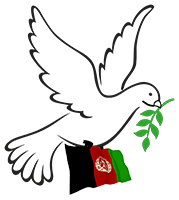
What options on the Pak-Afghan table?
read more