Afghan national charged in Guard ambush shooting drove across US to carry out attack, officials say

By  ALANNA DURKIN RICHER, GARY FIELDS, ANTHONY IZAGUIRRE and BEN FINLEY
Associated Press

WASHINGTON (AP) — An Afghan national who worked with the CIA in his native country and immigrated to the U.S. in 2021 drove from Washington state to shoot two West Virginia National Guard members deployed in Washington, D.C., just blocks from the White House, U.S. officials said Thursday.

The suspect had worked in a special CIA-backed Afghan Army unit before emigrating from Afghanistan, according to two sources who spoke to the Associated Press on condition of anonymity due to the sensitivity of the situation, and #AfghanEvac, a group that helps resettle Afghans who assisted the U.S. during the two-decade war.

Jeanine Pirro, the U.S. attorney for the District of Columbia, declined to provide a motive for Wednesday afternoon’s brazen act of violence, which comes as the presence of troops in the nation’s capital and other cities around the country has become a political flashpoint.

Pirro identified the guard members at a news conference as Specialist Sarah Beckstrom, 20, and Staff Sgt. Andrew Wolfe, 24. The West Virginia National Guard said both had been deployed in D.C. since August. Both remained hospitalized in critical condition on Thursday.

Pirro said that the suspect, Rahmanullah Lakanwal, launched an “ambush-style” attack with a .357 Smith & Wesson revolver. The suspect currently faces charges of assault with intent to kill while armed and possession of a firearm during a crime of violence. Pirro said that “it’s too soon to say” what the suspect’s motives were.

The charges could be upgraded, Pirro said, adding: “We are praying that they survive and that the highest charge will not have to be murder in the first degree. But make no mistake, if they do not, that will certainly be the charge.”

The rare shooting of National Guard members on American soil, on the eve of Thanksgiving, comes amid court fights and a broader public policy debate about the Trump administration’s use of the military to combat what officials cast as an out-of-control crime problem.

The Trump administration quickly ordered 500 more National Guard members to Washington.

The suspect who was in custody also was shot and had wounds that were not believed to be life-threatening, according to a law enforcement official who was not authorized to discuss the matter publicly and spoke to AP on condition of anonymity.

Suspect worked with CIA during Afghanistan War

A resident of the eastern Afghan province of Khost who identified himself as Lakanwal’s cousin said Lakanwal was originally from the province and that he and his brother had worked in a special Afghan Army unit known as Zero Units in the southern province of Kandahar. A former official from the unit, who spoke on condition of anonymity because of the sensitivity of the situation, said Lakanwal was a team leader and his brother was a platoon leader.

The cousin spoke to The Associated Press on condition of anonymity for fear of reprisals. He said he had last spoken to Lakanwal about six months ago. He said both brothers had moved to the United States in 2021. He said Lakanwal had started out working as a security guard for the unit in 2012, and was later promoted to become a team leader and a GPS specialist.

Zero Units were paramilitary units manned by Afghans but backed by the CIA and also served in front-line fighting with CIA paramilitary officers. Activists had attributed abuses to the units. They played a key role in the chaotic U.S. withdrawal from the country, providing security around Kabul International Airport as the Americans and others fell back during the Taliban offensive that seized the country.

Lakanwal, 29, entered the U.S. in 2021 through Operation Allies Welcome, a Biden administration program that evacuated and resettled tens of thousands of Afghans after the U.S. withdrawal from the country, officials said. Lakanwal applied for asylum during the Biden administration, but his asylum was approved under the Trump administration, #AfghanEvac said in a statement.

The initiative brought roughly 76,000 people to the U.S., many of whom had worked alongside U.S. troops and diplomats as interpreters and translators. It has since faced intense scrutiny from Trump and his allies, congressional Republicans and some government watchdogs over allegations of gaps in the vetting process and the speed of admissions, even as advocates say there was extensive vetting and the program offered a lifeline to people at risk of Taliban reprisals.

Lakanwal has been living in Bellingham, Washington, about 79 miles (127 kilometers) north of Seattle, with his wife and five children, said his former landlord, Kristina Widman.

Prior to his 2021 arrival in the United States, the suspect worked with the U.S. government, including the CIA, “as a member of a partner force in Kandahar,” John Ratcliffe, the spy agency’s director, said in a statement. He did not specify what work Lakanwal did, but said the relationship “ended shortly following the chaotic evacuation” of U.S. servicemembers from Afghanistan.

Kandahar in southern Afghanistan is in the Taliban heartland of the country. It saw fierce fighting between the Taliban and NATO forces after the U.S.-led invasion in 2001 following the al-Qaida attacks on Sept. 11. The CIA relied on Afghan staff for translation, administrative and front-line fighting with their own paramilitary officers in the war.

Wednesday night, in a video message released on social media, President Donald Trump called for the reinvestigation of all Afghan refugees who entered under the Biden administration.

“If they can’t love our country, we don’t want them,” he said, adding that the shooting was “a crime against our entire nation.”

Attack being investigated as terrorist act

FBI Director Kash Patel said the shooting is being investigated as an act of terrorism. Agents have served a series of search warrants, with Patel calling it a “coast-to-coast investigation.”

Pirro said: “We have been in constant contact with their families and have provided them with every resource needed during this difficult time.”

Washington Mayor Muriel Bowser interpreted the shooting as a direct assault on America itself, rather than specifically on Trump’s policies.

“Somebody drove across the country and came to Washington, D.C., to attack America,” Bowser said. “That person will be prosecuted to the full extent of the law.”

Afghan national charged in Guard ambush shooting drove across US to carry out attack, officials say
read more

WFP Warns Afghanistan’s Hunger Crisis Is Worsening Ahead of Winter

Afghanistan is facing one of the world’s worst hunger emergencies, the World Food Programme warns, with shortages and child malnutrition expected to intensify as winter approaches.

Afghanistan is facing one of the world’s most severe hunger emergencies and conditions are expected to worsen during winter, the World Food Programme (WFP) said on Tuesday.

WFP warned that hunger is spreading rapidly across the country, with malnutrition among women and children increasing sharply as temperatures drop. The agency estimates that nearly five million mothers and children are currently malnourished.

According to WFP, every 10 seconds a child in Afghanistan becomes malnourished, and many families no longer have reliable access to daily food. In Helmand province, food insecurity is so severe that parents are often forced to decide which family member will eat each day.

The crisis has been intensified by a 40% reduction in food aid funding. WFP said this cut has slashed the share of Afghans receiving food assistance from 14% of the population to just 1% since October 2025.

Emergency food assistance funded by partners, including the Asian Development Bank, Australia, Canada, the UN Emergency Response Fund, the EU’s humanitarian program, France and others, remains the only lifeline for many vulnerable households.

WFP urged the international community to restore and expand funding immediately, warning that, without rapid support, millions of Afghan women and children face life-threatening hunger in the months ahead.

WFP Warns Afghanistan’s Hunger Crisis Is Worsening Ahead of Winter
read more

Afghanistan says Pakistan bombed Khost, killing nine children and a woman

By Al Jazeera Staff and News Agencies

At least nine children and a woman have been killed after Pakistani forces bombed a house in the country’s southeastern Khost province, according to Afghan authorities – a claim dismissed by Pakistan’s military.

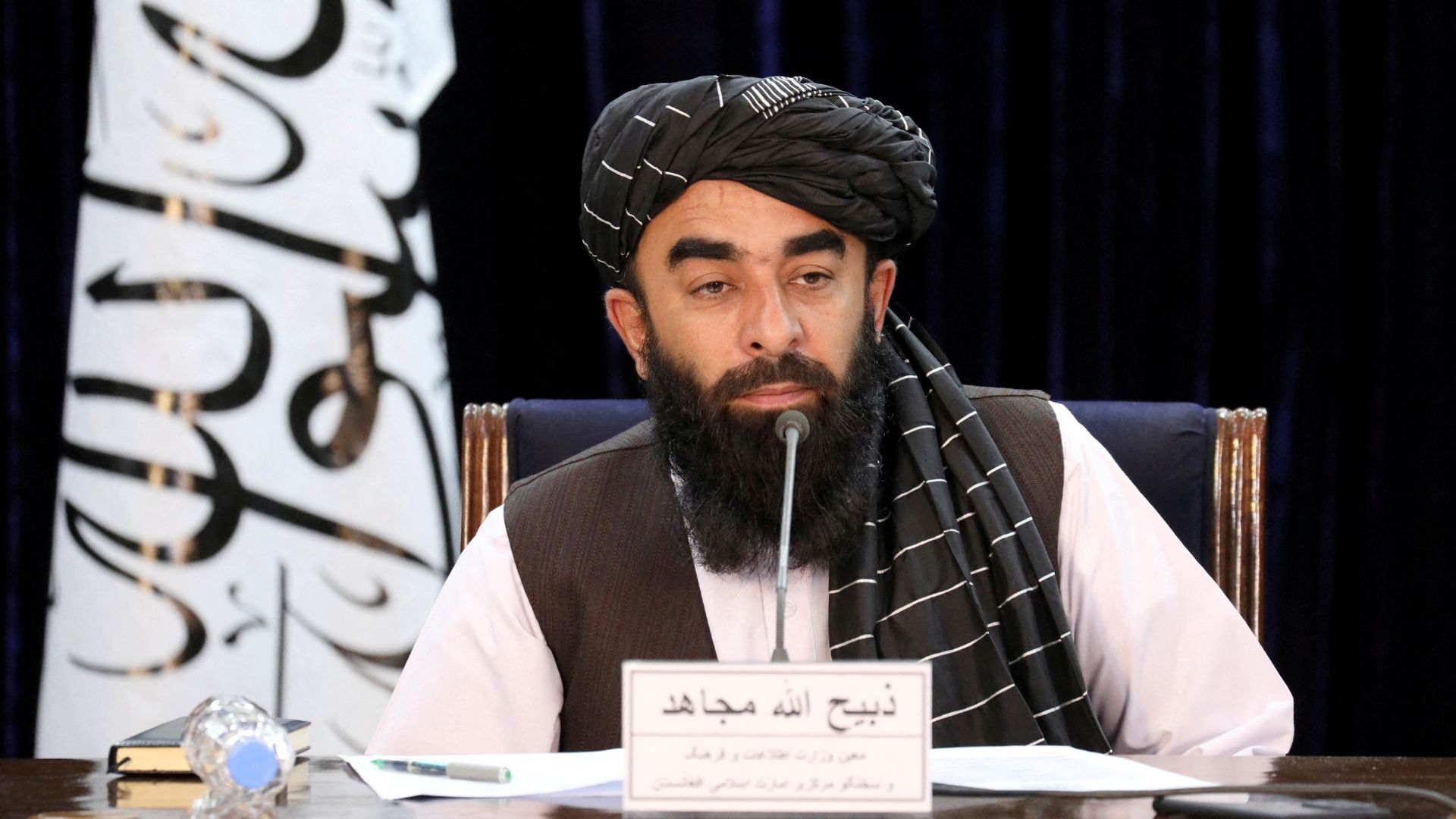
Zabihullah Mujahid, the spokesman for the Taliban administration, said on Tuesday that the attack took place at midnight (19:30 GMT) in the district of Gurbuz.

The latest attack risks triggering renewed hostilities and comes as a fragile ceasefire between the two nations hangs by a thread, with each side blaming the other for the impasse in the negotiations.

“The Pakistani invading forces bombed the house of a local civilian resident, Waliat Khan, son of Qazi Mir,” Mujahid wrote in a post on X.

“As a result, nine children [five boys and four girls] and one woman were martyred, and his house was destroyed,” he added.

Other air strikes took place in northeastern Kunar and eastern Paktika provinces, Mujahid said, wounding at least four civilians.

Later on Tuesday, Pakistani military spokesperson Ahmad Sharif Chaudhry denied the Afghan government’s claim and said Pakistan does not target and kill civilians, he said

The denial came after Mujahid said Afghanistan would “respond appropriately at the right time”.

“The Islamic Emirate strongly condemns this violation and crime and reiterates that defending its airspace, territory, and people is its legitimate right,” he said in a statement on social media.

Afghanistan-Pakistan graphic
(Al Jazeera)

The bombardment in Afghanistan comes a day after a suicide attack that targeted the headquarters of Pakistan’s paramilitary Federal Constabulary force in Peshawar.

The Jamaat-ul-Ahrar – which is a splinter group of the Pakistan Taliban, known by the acronym TTP – claimed responsibility for that attack.

State broadcaster PTV reported the attackers were Afghan nationals, and President Asif Zardari blamed the “foreign-backed Fitna al-Khawarij” – Islamabad’s term for the TTP fighters it accuses of operating from Afghan soil.

Another suicide attack in the Pakistani capital, Islamabad, earlier this month killed at least 12 people and was also claimed by a faction of the Pakistan Taliban. Pakistan blamed a cell that was “guided at every step by the … high command based in Afghanistan” for the attack on the capital.

Relations between Pakistan and Afghanistan have been fraught since the Taliban swept back to power in 2021 and worsened after deadly border clashes in October that killed about 70 people on both sides.

The fighting ended with a ceasefire brokered by Qatar and Turkiye, but talks in Istanbul failed to produce a lasting deal, with security issues, especially Pakistan’s demand that Kabul curb TTP fighters proving a sticking point.

Pakistan accuses the Taliban of sheltering fighters behind a surge in attacks, including the TTP, which has waged a bloody campaign against the country for years.

Afghanistan denies the charge and counters that Pakistan harbours groups hostile to the country and does not respect its sovereignty.

Afghanistan says Pakistan bombed Khost, killing nine children and a woman
read more

Pakistan denies Afghanistan’s claims of airstrikes killing 10 people, mostly children

By  ABDUL QAHAR AFGHAN and MUNIR AHMED
Associated Press

KABUL, Afghanistan (AP) — Afghanistan’s Taliban government on Tuesday accused Pakistan of launching deadly overnight strikes in three eastern provinces, but Pakistan’s military dismissed the claim and said no such strikes were carried out.

The Pakistani denial came hours after Zabihullah Mujahid, the chief spokesperson for the Afghan government, said on X that Pakistan “bombed” the home of a civilian in Khost province, killing nine children and a woman. He also claimed additional strikes were carried out in the Afghan provinces of Kunar and Paktika, injuring four people.

Mujahid described the attacks as “atrocities” and said the strikes were “a violation of Afghan territory.” Afghanistan “considers the use of its airspace and territory and defense of its people to be its legitimate right, and at the appropriate time, it will give the necessary response,” he said.

Tensions escalate

Afghanistan’s report of new strikes came more than a month after cross-border clashes erupted when the Afghan government claimed Pakistani drone strikes hit Kabul.

Pakistan military spokesperson Ahmad Sharif Chaudhry denied the Afghan government’s claim Tuesday, saying Pakistan does not target and kill civilians. He added that strikes carried out in October targeted the hideouts of Pakistani Taliban who were behind the surge of violence in the country.

“We announce and acknowledge whenever we carry out such strikes,” he said during a news briefing in the garrison city of Rawalpindi.

The ceasefire brokered by Qatar and Turkey between the two sides in October still held Tuesday despite the reported strikes. There was no immediate comment from Qatar and Turkey.

Iran has recently offered to play a role in defusing tensions between Pakistan and Afghanistan.

Ali Larijani, the secretary of Iran’s Supreme National Security Council, said Tuesday on X that he met with Pakistan’s Foreign Minister Ishaq Dar in Islamabad, a day after arriving on a previously scheduled visit. Dar’s office was also expected to release a statement about the meeting.

In Khost, residents combed through the rubble of the destroyed home, retrieving belongings.

“You see the cruelty with your own eyes, that young children, a woman and nine children, were martyred,” said Muhammad Iqbal, who said the dead were his cousin’s family.

Local tribal leader Mer Adam Khan said the attack was carried out by a drone that was flying over the area at around midnight. “It is not known where it came from and by whom,” he said, adding that the home that was destroyed was that of a local man, whom he identified as Shariat Khan.

“He has not interfered with any government. He lives a poor life here,” the tribal leader said.

Recent attacks target Pakistan

The latest escalation follows a deadly attack a day earlier in Pakistan’s northwestern city of Peshawar, where two suicide bombers and a gunman stormed the headquarters of the Federal Constabulary. Three officers were killed and 11 others were wounded in the Monday morning attack.

No group claimed responsibility for the Peshawar attack, but suspicion quickly fell on the Pakistani Taliban, or Tehrik-e-Taliban Pakistan.

The army spokesperson, Chaudhry, said the three militants who carried out the attack were Afghan nationals who sneaked into the country from the Tirah border region in the northwest.

TTP is a separate group but closely allied with the Afghan Taliban and many of its leaders are believed to be hiding in Afghanistan. Kabul in 2022 brokered a brief ceasefire between the TTP and Pakistan. The militant group then ended the truce after accusing Pakistan of violating it.

Pakistan has intensified intelligence-based operations against militants in recent weeks. Since January, Pakistan has killed 1,873 militants in thousands of operations, Chaudhry said.

On Tuesday, the military said security forces killed 22 militants during a raid on what it described as a hideout of “Indian-backed” fighters in Bannu, a district in Pakistan’s northwestern Khyber Pakhtunkhwa province near the Afghan border.

In a statement, the army referred to the killed insurgents as Khawarij, a term the government and the military use for militants they allege are supported by Afghanistan and India. Kabul and New Delhi deny providing any support to such groups.

The statement said Pakistan “will continue at full pace to wipe out the menace of foreign-sponsored and supported terrorism from the country.”

Pakistan has repeatedly urged Afghanistan’s Taliban rulers to prevent TTP militants from using Afghan territory to launch attacks. Kabul denies the accusation, but relations further deteriorated after Afghanistan blamed Pakistan for the Oct. 9 drone strikes on its capital and threatened retaliation.

The clashes that followed killed dozens of soldiers, civilians and militants before the sides agreed to the Oct. 19 ceasefire.

Peace talks failed to end the dispute

Two subsequent rounds of talks in Istanbul failed to resolve the dispute, when Pakistan said Afghanistan had refused to provide a written guarantee that TTP fighters would not operate from Afghan soil.

The Afghan government insists it does not allow anyone to use its soil for attacks against any country, including Pakistan.

The lingering tensions have stalled bilateral trade between Pakistan and Afghanistan, with all border crossings between the two neighbors remaining shut since last month. It has also affected movement of people, as residents from both sides have been unable to travel to meet with relatives and friends since early October.

Ahmed reported from Islamabad. Associated Press writer Riaz Khan in Peshawar, Pakistan, contributed to this story.


Pakistan denies Afghanistan’s claims of airstrikes killing 10 people, mostly children
read more

Claimed by Gunfire: How a single shot stole an Afghan girl’s future

In parts of southeastern Afghanistan, a boy seeking to force a girl into marriage may fire gunshots outside her home to claim her publicly as his future wife, often after the girl’s family has refused his proposal. The shots are a signal that the girl now belongs to him – regardless of her wishes or her family’s decision. Once a girl has been claimed in this way, no one else dares to marry her, fearing retaliation. It is rare, though not unheard of, for families to give their daughter in marriage to the boy. In those cases – usually involving community mediation and large payments – the relationship between the families never truly heals and the girl’s family will forever resent their new son-in-law. Most girls who fall victim to this coercive practice remain unmarried for the rest of their lives, living in their father’s home, trapped by someone else’s reckless actions. In this instalment of The Daily Hustle, Hamid Pakteen hears from 47-year-old Bibi Salima about how her cousin’s actions thirty years ago altered her life and shattered her dreams. 

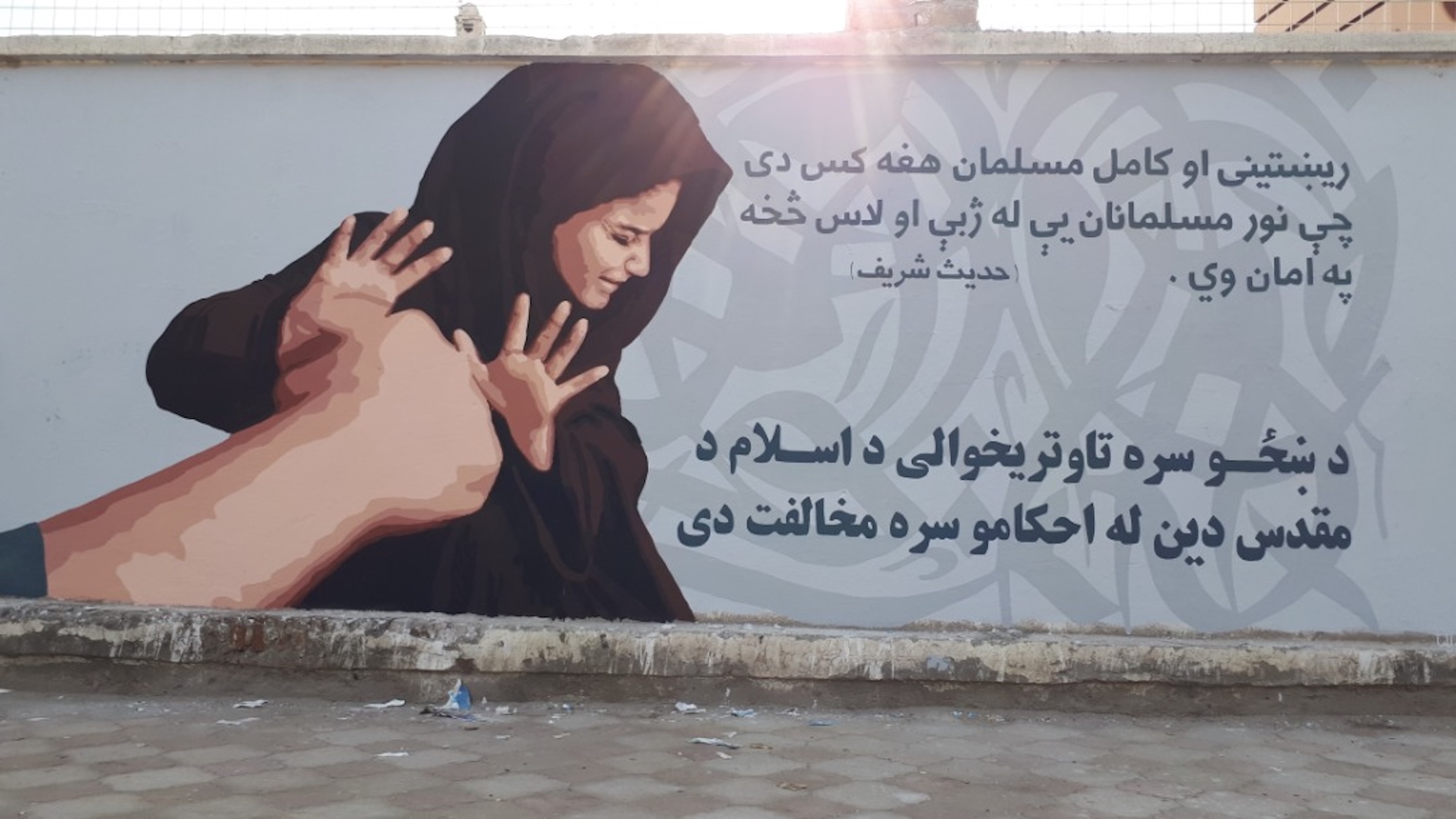
A Kabul street mural by the Afghan artist collective ArtLords reads: “A true Muslim is one whose words and actions do no harm to others (Hadith Sharif). Violence against women goes against the teachings of Islam.” Photo: ArtLords, 2017

 

When I was 17 years old, my cousin – my mother’s nephew – asked for my hand in marriage, but my family refused. My mother said, “She’s still young. She hasn’t reached the legal age yet.”

We are three sisters and I’m the youngest. At the time, my eldest sister was already married and my other sister, who is a couple of years older than me, hadn’t married yet. My mother wanted her to marry first, and according to our customs, that made sense. But my cousin wasn’t having it. He kept asking my mother to let him marry me, every chance he got.

One day, my eldest brother confronted him outside our house. What was supposed to be a quiet chat between two cousins grew into a heated argument when my cousin refused to stop asking for my hand. He told my brother he was determined to marry me, either with the family’s approval or by force. When my brother came inside, he was furious – visibly shaken and red in the face. He told my mother that we should no longer have any relations with her brother’s family. “We shouldn’t go to their house and they should never again come to ours,” he shouted.

The gunshots that changed everything 

From that day on, resentment grew between the two families until one afternoon, my cousin came to our house with a gun. He stood on the street outside our front door and fired shots into the air. He called out my name and then called out to my brother, “Come and save your sister from me now, if you dare.”

That day, none of the men in our family were at home. My mother ran outside to try to calm him down. She begged him not to destroy both families with his actions, but he ignored her pleas. He kept shouting, telling her that she was ruining his life and then he fled.

When my brothers came home and heard about what my cousin had done, they were furious. One of my brothers grabbed the household gun and stormed out of the house. He said he was going to my uncle’s house, a half-hour’s walk from our village, to kill my cousin. But my cousin was nowhere to be found.

My uncle, devastated by what his son had done, rushed to our house. He begged my mother to stop my brother. “Control your son so that he doesn’t do anything that we will all regret,” he pleaded. He said that his son had run away from home and gave his word that he would punish him severely if he found him. He said that he could never forgive his son for doing such a shameful thing, especially to his niece, and then running away like a coward. He apologised over and over again. I think he was truly ashamed and heartbroken. But my brothers were incensed. They said terrible things to my uncle and pushed him out of our home.

Disgrace, repentance and a broken family 

My father was a respected religious scholar, but he wasn’t at home. He was in Kabul, where he was the imam of a mosque. He came back home as soon as he found out – angry and determined to seek satisfaction. He talked it over with my brothers and together they filed a complaint at the district centre. At that time, during the mujahedin regime, there was no official government to speak of, but because everyone respected my father, they took the matter seriously and started an investigation.

The authorities summoned my uncle’s family and demanded that they hand over my cousin. But, knowing what was in store for him, he’d fled to Pakistan, cutting all ties with his family. My uncle, who was well-respected in the community, publicly apologised to my parents and even said, “I’ve disowned him. He’s no longer my son.” He and his sons were detained, but after a few days, when it became obvious they had no idea of my cousin’s whereabouts, they were released.

Afterwards, my uncle came to our house along with his family and several tribal elders to ask for forgiveness according to our custom of nanawatai (sanctuary), which obliges victims to forgive a transgressor who comes to repent. Although my father was still angry, he had no choice but to accept their apology. But he said there would be no contact between the two families ever again. From that day on, our families became strangers. My uncle and his family never visited us again and we never visited them. On rare occasions, my uncle would quietly visit my mother, without my father or brother’s knowledge. But when he passed away, my mother didn’t go to his funeral.

The woman that I never became 

I often think about how a single moment – a single rash act, a single word spoken in anger or a single shot fired to the sky – can alter someone’s life forever. I sometimes look back at my 17-year-old self – a carefree, innocent girl, unaware of the gathering clouds and the storm that was about to destroy her future.

Every girl has dreams of getting married and having a family. And I was no different. I wanted a big wedding, as is our custom, lasting several days and turning the entire village into a festival. I imagined a kind husband who would take me on visits to Kabul and maybe even to Pakistan and Iran. But that life wasn’t meant to be.

I was too young then to understand what all this would mean for my future. I thought that in time, the storm would pass and the families would go back to how things had always been before the shots were fired. But my family knew that things could never be the same and that my life would be one of dependence, isolation and sorrow. Looking back, there were clues in the way people looked at me, in their hushed voices, and in the silence when I walked into a room. But at the time, I was too young and inexperienced to recognise them.

I still didn’t think much about it when my older sister got married. After all, according to our customs, it was her turn and I thought that I’d be next. But reality hit hard as I watched one girl after another in the family get married, but my turn never came and I realised that it never would. At wedding parties, girls would whisper hurtful things: “It’s your turn now, but you can’t marry. You will always stay in your father’s home.” Their words cut into my heart like a knife.

My mother tried to comfort me. She was the keeper of all my secrets and the source of my strength. But when I was alone with my thoughts, the sense of gloom and hopelessness overpowered me. I felt trapped, cursed by circumstances that I had no part in. However, with each passing day, my anxiety only grew. Eventually, my family took me to a doctor. When that didn’t help, they took me to one mullah after another. They all prayed for me. A couple of them said that I had been cursed by an evil eye and gave me amulets, and one even said I had been possessed by a jinn. But there was no cure for my suffering.

After my parents died, my brothers, who had families of their own, moved into their own homes. Our family became scattered. Now, everyone’s busy with their own lives and I’m left alone. I live in my father’s house with my eldest brother and his family. Although my brother and my nieces and nephews take care of me and I lack for nothing, I still feel like a burden.

Thirty years without hope

My cousin never came back to our area again. He never visited his family because his father had sworn to kill him and warned him to stay away, but I later learned that he had sent a letter warning people that no one had the right to marry me. People remained fearful that if anyone did marry me, he’d harm them. We heard that he’s living in Pakistan and has a family of his own.

He’s living his life, but his decision to fire a gun outside our house killed my future. In an instant, all my dreams, all my hopes and aspirations, turned to dust.

It’s been nearly 30 years since the day the shots rang outside our house and ruined my life forever. After the Islamic Emirate regained power, it criminalised this despicable act. I wonder if it will make any difference; I haven’t heard of anyone being jailed for it. Whatever happens, the new law came too late for me. I’ve spent my life living through other people’s happiness, watching in the mirror as my hair turned white and wrinkles appeared on my face. These days, I pass the time lost in my own thoughts, without a sense of direction, watching the girls I grew up with – now grandmothers – tend to their own families and grandchildren.

People live on hope. My hope died a long time ago and a life without hope is a slow kind of dying. There is more than one way to kill a person. You can take a gun to a girl’s house and fire shots in the air outside her door.

Edited by Roxanna Shapour

Authors:

Hamid Pakteen

More from this author

Roxanna Shapour

More from this author

Claimed by Gunfire: How a single shot stole an Afghan girl’s future
read more

Regional Powers Mediate to Ease Afghanistan–Pakistan Tensions

According to the Turkish ambassador to Pakistan, the delegation will include the head of Turkish intelligence and several ministers.

The spokesperson for Iran’s Foreign Ministry has said that Tehran is engaged in consultations with regional countries, including Russia, Qatar, Turkey, and other involved parties, to help reduce tensions between Kabul and Islamabad.

Ismail Baghaei added that Tehran will continue its efforts in this regard to ensure that the existing challenges between Kabul and Islamabad are resolved within an appropriate regional framework.

Baghaei stated: “We have held talks with parties that are involved in this issue in various ways. We are continuing our efforts so that the matter can be discussed and addressed within a proper regional framework. The main goal is to help reduce tensions between these two neighboring and Muslim countries.”

Recently, Turkey also announced that a high-level delegation will travel to Islamabad in the coming week to discuss tensions between Afghanistan and Pakistan.

According to the Turkish ambassador to Pakistan, the delegation will include the head of Turkish intelligence and several ministers.

Gul Mohammaduddin Muhammadi, a political analyst, stated: “It is best that tensions are resolved through dialogue. And if Pakistan raises any unreasonable demands, the mediators should tell Pakistan that those demands are unacceptable.”

In addition to Turkey, several other regional countries, including Russia, have expressed readiness to mediate between Kabul and Islamabad.

The Russian ambassador in Islamabad said that tensions in South Asian relations are being fueled by external actors.

Wahid Faqiri, another political analyst, added: “Russia, Turkey, Iran, and other countries know that the tension between Afghanistan and Pakistan is futile.”

These regional efforts have intensified as tensions between Kabul and Islamabad have reached their peak following the failure of the third round of talks.

It remains to be seen whether these efforts will succeed in easing tensions between Afghanistan and Pakistan.

Regional Powers Mediate to Ease Afghanistan–Pakistan Tensions
read more

Iran’s Trade with Kabul Surpasses European Nations, Says Foreign Minister

Iran’s Foreign Minister Abbas Araghchi revealed that trade with Kabul now exceeds Iran’s trade with all European countries combined.

Iran’s Foreign Minister Seyyed Abbas Araghchi announced that trade with Taliban-ruled Afghanistan has surpassed Iran’s trade with all European countries combined.

Araghchi noted that Iran’s border provinces with Afghanistan play a key role in expanding trade, acting as crucial entry points for goods. He also stated that border issues with the Taliban can be resolved locally.

The announcement comes as Afghanistan shifts its trade focus to Iran after trade with Pakistan stalled. This move marks a significant change in Afghanistan’s trade patterns.

Nooruddin Azizi, the Taliban’s Minister of Industry and Trade, recently visited Iran to explore using Chabahar Port for Afghanistan’s exports, particularly to India. This visit highlights growing economic cooperation between the two countries.

Trade between Afghanistan and Iran has surged to $1.6 billion in the past six months, surpassing Afghanistan’s trade with Pakistan. This growing partnership signals a shift in regional trade dynamics.

The expanding ties between Iran and the Taliban could reshape regional economic and geopolitical landscapes, offering new opportunities for both countries.

Iran’s Trade with Kabul Surpasses European Nations, Says Foreign Minister
read more

Afghanistan economy under pressure as Pakistan shocks reshape trade flows

Ariana News

Afghanistan’s economy continued to face strong headwinds in late 2025 as concurrent shocks — including mass refugee returns, drought, earthquakes, and shifting regional dynamics — strained growth and weakened investment momentum, according to the latest Afghanistan Economic Monitor released by the World Bank.

The report says that while low inflation and stable revenues have supported modest economic expansion, rapid population growth driven by large-scale returns from Iran and Pakistan has outpaced job creation, limiting improvements in average household incomes.

Inflation eased slightly in September 2025, with the Consumer Price Index falling 0.4 percent month-on-month as food prices declined. Fresh and dried fruits dropped by 4.6 percent due to seasonal harvests, while small increases were recorded in vegetables and spices.

Non-food inflation rose marginally, with housing costs climbing 1.7 percent amid rising rents in Kabul and other major cities. Year-on-year inflation slowed to 2.1 percent, down from 3.1 percent in August.

The Afghani strengthened against the U.S. dollar in both monthly and annual terms, but lower domestic inflation offset much of the nominal gain. The Real Effective Exchange Rate fell 1.1 percent, helping maintain Afghanistan’s external competitiveness against its major trading partners.

Trade flows were significantly disrupted by the mid-October closure of the Durand Line crossings with Pakistan, historically Afghanistan’s largest trade corridor. Despite the disruption, exporters quickly rerouted goods through Iran and Central Asia. The trade deficit narrowed slightly to $0.88 billion, supported by a 13 percent rebound in exports to $267 million.

Food exports — now the backbone of Afghanistan’s export economy — surged, reaching $ 238million in October and rising more than 22 percent over the first seven months of FY2025. India emerged as Afghanistan’s top export destination, accounting for 50 percent of October’s shipments, while Pakistan’s share declined sharply due to crossing closures.

Imports rose 2 percent month-on-month to $1.15 billion but fell 4.5 percent year-on-year. A structural shift toward Iran and Central Asia accelerated, with Iran supplying 29 percent of Afghanistan’s total imports so far in FY2025, followed by the United Arab Emirates at 19 percent.

The report warns that Afghanistan’s increasing dependence on food exports and redirected trade routes leaves the economy vulnerable to climate shocks and further regional instability, underscoring the need for strengthened infrastructure, diversified markets, and increased investment.

Afghanistan economy under pressure as Pakistan shocks reshape trade flows
read more

Pakistan Plotting Kabul Power Shift? New Report Says Islamabad Is Exploring Regime Change Options

Pakistan is exploring political options for a potential power shift in Kabul, reviving contacts with Afghan opposition groups amid tensions with the current leadership.

Pakistan is reassessing its long-standing approach to Afghanistan amid deepening tensions with the Taliban government, U.S.-based publication New Lines reported, citing sources who say Islamabad is exploring political alternatives in Kabul.

According to the report, Pakistan has revived political contacts with members of the Afghan opposition party after months of deteriorating relations with the Taliban. Sources described Islamabad as “considering scenarios” that could reshape the political balance in Afghanistan.

The publication said Pakistan’s security calculus has shifted sharply in recent months, driven by the Taliban’s warming ties with India, stalled peace initiatives, and the surge in attacks by Tehrik-e-Taliban Pakistan (TTP), a group Islamabad considers its most urgent security challenge.

New Lines reported that Pakistani intelligence officials believe the Taliban leadership has grown increasingly unresponsive to security concerns, particularly regarding TTP networks operating across the border. Islamabad fears this trend could undermine its domestic stability.

Pakistan’s involvement in Afghan affairs is not new. For decades, Islamabad played a pivotal role in shaping political outcomes in Kabul, supporting mujahideen factions in the 1980s and maintaining close, if complicated, relations with the Taliban during and after their rise in the 1990s.

Analysts say Pakistan’s current concerns echo previous periods of strategic anxiety, especially when Kabul’s alignment drifted toward New Delhi. India’s expanding diplomatic outreach to the Taliban has heightened Islamabad’s unease, reviving old geopolitical rivalries in South Asia.

The report said Pakistan has the military capability and intelligence networks to pressure Taliban leaders, given its decades-long familiarity with the group’s structure. However, any aggressive strategy risks destabilizing Afghanistan further and generating a new wave of refugees.

Sources told the publication that Islamabad has quietly opened communication channels with representatives of the Afghan opposition party, signaling interest in exploring alternative political arrangements should relations with the Taliban continue to deteriorate.

Opposition figures have reportedly treated Pakistan’s outreach with caution. Members of the party told the publication that Islamabad has historically tried to influence Afghan political groups and that any engagement must align with Afghanistan’s national interests.

Some opposition officials said closer coordination with Pakistan carries political risks, given the widespread belief among Afghans that Islamabad seeks to shape Kabul’s politics to its advantage. Others argued that cooperation is worth considering if it leads to regional stability.

New Lines said that if Pakistan were to place its political weight and financial networks behind anti-Taliban factions, it could significantly alter the balance of power. Past examples, such as support provided to mujahideen groups and, later, the Taliban; demonstrate how Pakistan’s backing can reshape conflict dynamics.

Analysts warn that any major shift in Pakistan’s strategy could revive cycles of instability that have defined Afghanistan for decades. Regional powers, including India, Iran and China, are closely watching developments, aware that even small adjustments in Islamabad’s policy can ripple across South Asia.

Pakistan Plotting Kabul Power Shift? New Report Says Islamabad Is Exploring Regime Change Options
read more

Spain to Host Third Conference on Afghanistan’s Women’s Rights in December

Written By: Najeebullah Rahmati, Phd Scholar, EFL University

Spain will host the third “Hear Our Voice” conference on Afghanistan’s women’s rights in Madrid on December, focusing on justice and accountability.

The third conference on Afghan women, titled “Hear Our Voices,” will be held on December 12 in Madrid. Hosted by the Spanish Ministry of Foreign Affairs in collaboration with the European Union and the Afghanistan Women’s Organization, this significant event aims to address the ongoing crisis facing Afghan women and girls under the Taliban regime. The conference will bring together global leaders, human rights advocates, and experts to discuss ways to create an actionable roadmap for justice and accountability.

This year’s conference will focus on using “all tools for justice and accountability,” particularly through international legal mechanisms, to ensure that Afghanistan women and girls receive long-term protection of their human rights. The goal is to develop a practical framework that emphasizes gender equality and safeguards against the oppressive measures imposed by the Taliban. With the participation of the Spanish Foreign Minister, activists, international leaders, and ambassadors from various countries, the conference aims to create a united front to defend women’s rights in Afghanistan.

The “Hear Our Voices” conference is not the first of its kind. The first session, held in Albania last year, gathered Afghan women, human rights defenders, and international representatives to discuss the dire situation in Afghanistan. Following this, the second conference in Madrid in December last year, focused on condemning the Taliban’s restrictive policies, particularly those that ban girls from attending school and limit women’s participation in public life. During both meetings, attendees called for the immediate repeal of decrees that infringe upon basic rights, with a strong emphasis on accountability for the Taliban’s actions.

Building on the momentum of these previous conferences, this third event aims to produce a comprehensive roadmap for justice. The anticipated outcome is a detailed action plan that outlines concrete steps for the international community to take in response to the Taliban’s violations of women’s rights. This includes utilizing international legal frameworks and humanitarian channels to ensure Afghan women’s voices are not silenced in the face of continued oppression.

The series of conferences on Afghan women’s rights highlights the international community’s commitment to addressing the crisis in Afghanistan. The collaboration between governments, international organizations, and grassroots activists provides a powerful platform to advocate for change. As the world continues to focus on the plight of Afghan women, it is essential to push for the protection of their fundamental rights and ensure the accountability of those responsible for their suffering.

The “Hear Our Voices” conference represents hope and solidarity, offering a chance for Afghan women to have their stories heard on a global stage. By uniting in the fight for justice, we can work toward a future where Afghanistan women and girls are free from oppression and can fully participate in society.

In Afghanistan, women are denied access to education beyond sixth grade, with Taliban policies banning girls from secondary schools and universities, further restricting their opportunities for personal and professional growth.

Spain to Host Third Conference on Afghanistan’s Women’s Rights in December
read more