Central Bank: Over $1.5 Billion in Cash Aid Received Since Political Change

Da Afghanistan Bank (Central Bank) called on the international community to provide their assistance through Afghan banks.

The international community has provided more than $1.5 billion in cash to Afghanistan since the Islamic Emirate swept into power, a spokesman for the country’s central bank said.

Da Afghanistan Bank (Central Bank) called on the international community to provide their assistance through Afghan banks.

“As part of the humanitarian aid, more than $1.5 billion in cash assistance has arrived in Afghanistan but has been handed over to the commercial bank,” said Haseebullah Noori, a spokesman for Da Afghanistan Bank.

The economists believe that the international aid has not been spent properly and aid has not been effective in reducing poverty in the country.

“Unfortunately, the international humanitarian aid over the past 16 months has not been effective in eliminating poverty and just solved a part of the people’s problems of access to food,” said Mir Shikib, an economist.

This comes as the Ministry of Economy (MoE) said that there is need to invest in development projects in order to alleviate poverty in the country.

“Three issues are important for us. Attracting domestic and foreign investment, launching big economic projects and work on infrastructure, and to begin development projects,” said Abdul Latif Nazari, a spokesman for the MoE.

Earlier, the Special Inspector General for Afghanistan’s Reconstruction (SIGAR) said that Washington remains the largest donor to Afghanistan after the Islamic Emirate came to power in the country.

SIGAR said that US agencies denied its request to provide information about spending money in Afghanistan.

Central Bank: Over $1.5 Billion in Cash Aid Received Since Political Change
read more

The Unwinnable War

By Laurel Miller

Foreign Affairs

November/December 2022 Issue

Book Review

The Fifth Act: America’s End in Afghanistan

By Elliot Ackerman

Penguin Press, 2022, 288 pp.

America’s Blind Spots in Afghanistan

In August 2021, Afghanistan was thrust back into the headlines. Taliban forces rapidly closed in on Kabul, and the United States began making its final military withdrawal. Suddenly, the world was confronted with images of desperate people squeezing their way into Kabul’s airport for a chance to flee. Almost overnight, nearly everything that the United States and its allies had accomplished in 20 years of fighting, spending, and building in Afghanistan disintegrated. For the one million or so Americans who had taken part in those failed endeavors, and for the millions of young Afghans who had grown up under a Western-backed democracy, flawed though it was, such losses were head spinning. With their livelihoods imperiled, and with many fearful for their lives, hundreds of thousands of Afghans sought to leave the country, posing a new challenge for withdrawing Western forces.

The United States didn’t expect to mount such a large evacuation, or at least not so quickly. Over ten days, the U.S. military and its allies airlifted about 120,000 people, including 80,000 Afghans, from Kabul, mostly to military bases in the Middle East, from where they eventually left for the United States and elsewhere. The effort was chaotic. For those without a U.S. passport or visa, often the only ticket out was a personal connection to someone who could pull strings with U.S. personnel on the ground. American veterans, former diplomats, aid workers, and journalists scrambled to find passage for vulnerable Afghans. Many Afghans who wanted to leave were turned away. Amid this crisis, many Americans who had served in Afghanistan were angry that the evacuation was so haphazard and left behind so many Afghans they believed to be at risk.

One of those Americans was Elliot Ackerman, who served in Afghanistan as a marine and later as an adviser to Afghan counterterrorism teams under a CIA-led program. In the final weeks before the U.S. withdrawal, he joined a series of impromptu efforts to help evacuate small groups of Afghans. Ackerman used his connections to the U.S. military and other agencies involved in the evacuation to help Afghans get into Kabul Airport and onto planes. In The Fifth Act, Ackerman describes these efforts, interweaving the account of the withdrawal with his combat experiences and views on what went wrong with the war.

For decades, U.S. veterans have written books that use their intimate experiences of war to challenge the prevailing wisdom of U.S. strategists and military planners in Washington. That is not the case with The Fifth Act. Paradoxically, in setting out to explore the missed opportunities of the U.S.- led war and the botched withdrawal, Ackerman ends up reflecting the same misguided mindset that drove the war’s architects. Looking at the conduct of the war through a narrow aperture, he focuses, as Washington did, largely on U.S. forces and U.S. policy; the politics, motivations, and experiences of Afghans are pushed offstage. In doing so, however, the book usefully, if inadvertently, reveals many blind spots that compromised Washington’s strategy.

CURTAINS UP

Ackerman’s book is divided into five parts, or “acts” (hence the title), and the drama proceeds by combining a number of disparate narrative strands. The most resonant one centers on Ackerman’s combat experience and describes two missions in which he participated as a Marine Special Operations team leader in 2008. In each mission, one of his comrades was tragically killed. This narrative intends to convey the importance of the “leave no one behind” ethos in the U.S. military, a theme that resurfaces in the evacuation narrative.

In the aftermath of a mission gone wrong, Ackerman is particularly haunted by having had inadequate personnel and equipment left to retrieve the body of one of his men. He decides to defer the task to another unit of marines, in the interest of protecting the lives of others under his command, but he writes that “a measure of guilt settled its weight on me.” More than a dozen years later, he still carries the weight of regret about this decision. Ackerman’s prose successfully transports the reader to the battlefield and into the midst of ambiguities facing young combatants required to make life-and-death decisions. He writes lovingly of his comrades, bringing them to life and heightening the poignancy of the stories he tells.

But that message about military valor is overshadowed by the powerful illustration he provides of wasted life. One of the missions on which one of Ackerman’s comrades died achieved no apparent military objectives. Ackerman notes that the team did not find the Taliban forces they were looking for, leaving readers with a sense of the counterinsurgency’s futility.

Yet, Ackerman’s war-fighting narrative fails to address why the United States lost. Ackerman skates over crucial problems with how the U.S. military carried out the war. For instance, in describing his work as a CIA paramilitary operator, during which he advised an Afghan counterterrorism unit established and funded by the agency, he does not seem to recognize that these teams were a double-edged sword. He celebrates their tactical successes, such as when they kill or capture enemy targets. But he ignores the mountain of evidence that their routine night raids on villages, including ones in which he took part, fomented bitterness toward foreign militaries and undermined the Afghan government’s ability to build popular support.

The real story is not only one of U.S. failure but of Taliban success.

Consider also an operation that Ackerman describes that took place in the Zerkoh Valley in Herat Province in 2008, when he was a marine. He briefly notes that a U.S. general had to pressure Afghan President Hamid Karzai to green-light the operation because Karzai had concerns about civilian casualties. He also dismissively refers to the “tribal politics that had allowed Zerkoh Valley to become a Taliban sanctuary.” But Ackerman leaves out the fact that a year earlier, U.S. airstrikes in the same area killed dozens of civilians, causing local outrage and demonstrations against the government. (Although the United States never made an accounting of the casualties, the Afghan government claimed that 42 had been killed, and Human Rights Watch reported at least 25 deaths.) Karzai’s concerns were justified, and no Afghan leader could simply brush aside tribal politics as Ackerman seems to propose.

In recounting another 2008 operation, this time in Farah Province, Ackerman refers to “a turbaned man and his family who we’d turned out of their home.” The man shouted at the marines searching his home each time he heard “the sound of an item crashing to the floor.” Ackerman misses a chance to discuss the corrosive effect of foreign invaders repeatedly harassing Afghan civilians—a mistake that U.S. policymakers and Pentagon planners made, as well.

The Fifth Act mirrors another flaw in the thinking of strategists in Washington about what U.S. forces could achieve in Afghanistan. Ackerman advised a large group of Afghan commandos as well as CIA-led counterterrorism units. Yet these men are no more than bit players in his story. Repeatedly, Ackerman refers to “our war,” “my war,” “us,” and “our Afghan tragedy.” In doing so, he calls to mind the habit of U.S. policymakers to see themselves as the primary protagonists of the war and to perceive the conflict in Afghanistan as an American initiative built around the United States bending Afghans to its will, rather than as one in which the actions and motivations of Afghans on both sides would hold ultimate sway.

In the face of the Taliban’s rapid reconquest of the country in 2021, Ackerman seems baffled by the “bitter” and “humiliating” defeat by a far inferior force. But he looks for answers only in U.S. policy errors and, to a lesser extent, in the failings of the U.S.-backed Afghan government. The Taliban, an enemy poorly understood by the United States, are largely missing from his picture. Ackerman tries to explain why the United States lost, yet he overlooks half the equation. The real story is not only one of U.S. failure but of Taliban success, owing to strong motivation, organizational resilience, and support from outside the country, particularly Pakistan.

BLAME GAME

Ackerman is least persuasive when he strays from his own memories of combat in Afghanistan. When the book comments on policy and politics, it offers no basis for its reasoning besides Ackerman’s personal experience. Ackerman leans heavily on the idea that the United States lost the war because “we never understood what winning meant.” But he never makes clear what, in his own view, “winning” meant.

A better explanation for Washington’s failures in Afghanistan is that the United States should have focused from the outset on how to end the war, not how to win it. That might have meant seeking to prevent an insurgency from gaining traction in the first place by including the Taliban early on as minority stakeholders in the post-2001 government. Or it could have meant negotiating seriously with the Taliban at the height of U.S. power, around 2011, rather than waiting to do so until 2019, at which point U.S. influence in the country was approaching its nadir and U.S. leaders had made clear their intention to pull out. Quiet negotiations with the insurgents began in 2009 but proceeded in fits and starts and lacked strong political commitment from Washington until it was too late.

In February 2020, the United States struck a deal with the Taliban that included a timeline for withdrawal. Ackerman blames the agreement for having “fatally delegitimized President [Ashraf ] Ghani and his central government.” That agreement was flawed and probably accelerated the government’s downfall. But it was far from a primary cause of the collapse. For all its problems, the deal should be credited as an effort to salvage the possibility of intra-Afghan peacemaking and for ensuring that the United States could withdraw without a fight. The agreement must be judged against the backdrop of President Donald Trump’s decision to pull out U.S. forces from the country. There is little evidence to suggest that the brittle Afghan government would have remained intact had the United States withdrawn without a deal.

Ackerman joins a sizable camp of critics who have blamed the United States for not being committed enough to fighting the war. But he fails to explain what being committed enough would have looked like, beyond creating an impression that the U.S. military would remain in the fight indefinitely. What should the United States have done that it had not already done—and for how much longer? Ackerman does not say.

Ackerman decries the lack of a “social construct to sustain” the war, by which he means a war tax or draft that would have, in his view, entailed greater buy-in from the American public. But he leaves unclear how such steps would have helped and ignores their political implausibility. At the same time, he implies that the United States should have rationalized keeping troops in Afghanistan, instead of pulling out, by claiming they were not “at war,” such as the United States has done in Syria and parts of Africa. But it strains credulity to suggest that even keeping a relatively small number of U.S. troops in the country indefinitely would have meant that there was anything other than a war going on: in 2021 alone, there were over 35,000 war-related deaths in Afghanistan. What is more, to suggest that U.S. officials should have downplayed the war sits uneasily with Ackerman’s contention that they also should have encouraged ordinary Americans to personally invest in it more.

THE DENOUEMENT

Ackerman played a laudable role in helping Afghans escape their country as the Taliban advanced on Kabul in August 2021. And his depiction of the evacuation as chaotic is undeniably true. But his vantage point, from thousands of miles away, could offer only a limited view. He weaves descriptions of text messages, emails, and phone calls about evacuating Afghans with vignettes from his family vacation in Italy, which happened at the same time, a juxtaposition that is hardly illuminating.

Ackerman provides limited portraits of the Afghan evacuees he assisted; as he notes, he didn’t know most of them. His efforts to aid strangers in need were admirable. But the lack of a personal connection means that readers who want a rich account of the final days of the U.S. war in Afghanistan—including the experience of the Afghans whose lives were turned upside down—will need to look elsewhere.

Despite the book’s subtitle, its focus is not the end of the U.S. war in Afghanistan. Ackerman was not there during the withdrawal, and he does not suggest that he has closely studied the denouement. Nonetheless, he regards the timing of the withdrawal as arbitrary and its handling as a betrayal. He proposes that the United States should have extracted more Afghans, and sooner. But nothing would have precipitated widespread panic and the collapse of the Afghan government with greater certainty than the United States evacuating hundreds of thousands of Afghans well in advance of the withdrawal date—whenever that date was set to be. And it is doubtful that a more deliberate evacuation, rather than a quick and reactive one, could have been sustained with less chaos as the government crumbled and the Taliban rolled into Kabul.

Ackerman’s position presupposes that the United States should have risked this highly probable sequence of events. But Ackerman, like many critics of the withdrawal process, fails to acknowledge the dilemma that U.S. policymakers faced. It is undeniable that aspects of the emergency evacuation could have benefited from advance planning. For example, the U.S. government could have processed more Special Immigrant Visas, for which Afghans who worked for the United States are allowed to apply. But the notion that a massive evacuation could have been carried out well ahead of the August 31 deadline without turmoil is fanciful. Furthermore, since the withdrawal, the United States and private groups have arranged for passage out of the country for thousands more Afghans, including many who were vulnerable or who had worked with U.S. forces.

NO WAY OUT

In the final years of the war, it became clear that Washington’s choice in Afghanistan was between losing quickly or losing slowly. When U.S. President Joe Biden decided in April 2021 to completely pull out, he chose to lose fast, though how fast was uncertain. Ackerman claims that “the Afghan government had fought the Taliban to a stalemate when President Biden announced his withdrawal.” This is false; in fact, the Taliban had been gaining ground for years, especially since the United States began to draw down its forces after 2014. After that point, some U.S. officials called the situation an “eroding stalemate”—an oxymoron. Moreover, Ghani’s domestic legitimacy and grip on the political system had become shaky, and he remained dependent on foreign aid and military support.

Once Biden decided to withdraw, there were two plausible outcomes to the war that might have taken hold. In the first scenario, the Taliban would gain ground, sparking a protracted battle to control cities, which would possibly have devolved into a multifactional civil war. In the second scenario, which is the one that materialized, the withdrawal would provoke a crisis of confidence among Afghans, leading to a rapid collapse of their government and security forces. It would have been difficult for the United States to predict the likelihood of the second scenario because it depended on accurately evaluating how a vast number of Afghans would feel about continuing their fight—a measurement the U.S. had little capability to make.

There was always a risk that the chaos that blighted the denouement would have occurred in any withdrawal. Some critiques of how the Biden administration handled the pullout, including several leveled by Ackerman, are fair. But by dwelling so much on what happened during 15 days in 2021, his book implies that the principal failures had to do with how the United States got out of Afghanistan, rather than how it got in—and what it did while it was there. What the final days show most of all is the hollowness of the Afghan government and the security institutions that the United States tried so hard to build over two decades. If the story that Americans come to tell themselves about the Afghan war focuses not on those realities but on the organization and timing of the U.S. exit, it will distract them from the war’s most important lessons: there is a limit to what American money and willpower can achieve, and the best way to avoid having to get out of an unwinnable war is to avoid getting into one.

  • LAUREL MILLER is Director of the Asia Program at the International Crisis Group. From 2013 to 2017, she served as Deputy and then Acting Special Representative for Afghanistan and Pakistan at the U.S. Department of State.
The Unwinnable War
read more

Social Media Campaign “Let Girls Learn” Ends on Sunday

This comes as female students expressed frustration about their closed schools and said that that they are facing an uncertain future. 

The campaign launched by activists on social media called “Let Girls Learn” ended on Sunday.

The organizers of the campaign said that the movement aimed at drawing  attention to the reopening of the girls’ schools above grade six.

“My concern is that Afghanistan is losing a lot of things economically and as the sanctions continue, an internal tension increases. If there is no education for women, and the women are not educated, all of it will have a bad affect,” said Abdullah Baheer, an organizer of the campaign.

Afghan girls above grade six have been banned from going to school.

The US envoy for Afghan women and human rights, Rina Amiri, expressed concerns over restrictions against women in Afghanistan.

“Those who fear a radicalized Afghanistan should be alarmed by the Taliban’s policies against women & girls, denying them education, work in most sectors, even small joys such as the right to go to a park,” she said on Twitter. ”This extremism will lead to instability, poverty & more population flight.”

“Unfortunately, the situation of women in Afghanistan has deteriorated. It is full of deprivation. If the ruling party really believes in ensuring human rights in Afghanistan, they must do something to provide women with their rights instead of excluding them and violating their rights,” said Marriam Marouf, a women’s rights activist.

This comes as female students expressed frustration about their closed schools and said that that they are facing an uncertain future.

“Our request is that they don’t take our education from us and reopen schools for girls,” said Najma, a student.

 “We call on the Ministry of Education to reopen our schools which have been closed for one year,” said Diana, a student.

Social Media Campaign “Let Girls Learn” Ends on Sunday
read more

UN Officials Meet With Ministry of Industry and Commerce

Meanwhile, economists believe that supporting women entrepreneurs can help the economic growth of the country.

The UN General-Secretary’s special envoy discussed the ministry’s efforts to support private sector development and urged continued dialogue with women entrepreneurs, the UN Assistance Mission in Afghanistan (UNAMA) said on Twitter.

“UN envoy (Roza) Otunbayeva and Ramiz Alakbarov (OCHA humanitarian coordinator) discussed with de facto authorities’ Ministry of Industry & Commerce efforts to support private sector development, urging continued dialogue with women entrepreneurs in order to help their and Afghanistan’s advancement,” UNAMA said.

The Ministry of Industry and Commerce said that the meeting covered women’s access to regional and world markets as well as support for women entrepreneurs.

“There were talks about the facilitation of trade licenses for women entrepreneurs, which we had already issued for women ourselves. We provided women with licenses to work and to do business and have companies. And there was discussion over women entrepreneurs’ access to free markets,” said Akhundzada Abdul Salam, a spokesman for the MoIC.

Some women entrepreneurs complained of the lack of proper markets for their products.

“The women entrepreneurs unfortunately do not have domestic sales and access to outside markets. One of the problems is a shortage of budgets and another problem is a lack of markets,” said Nafisa, an entrepreneur.

Meanwhile, economists believe that supporting women entrepreneurs can help the economic growth of the country.

“The economic growth of women can help in the alleviation of poverty in the society and the support of national revenue; the economic independence of women is a move toward the improvement of society,” said Seyar Qureshi, an economist.

“Unfortunately, restrictions on banks have affected economic activities and caused challenges in international trade both in imports and exports,” said Abdul Naseer Rishtia, an economist.

This comes as some traders expressed concerns that the private sector has been facing challenges in money transactions.

According to the statistics of the Afghanistan Chamber of Commerce and Industry (ACIM), around 4,000 women has official licenses for business activities in the country.

UN Officials Meet With Ministry of Industry and Commerce
read more

Recent UN Resolution Important for Intl Relations: Faiq

The analysts urged the caretaker government to accept some of the international community’s wishes to reach recognition.

The Chargé d’Affaires of Afghanistan’s Permanent Mission to the UN, Naseer Ahmad Faiq, said that that improvement of relations between the Islamic Emirate and international community is linked to implementation of the recent resolution issued by the UN members in a plenary assembly.

Faiq said that the caretaker government has not yet completed the conditions for recognition.

“The relations of the international community and their engagement with the Taliban depends on the improvement and implementation of resolutions as well as the fulfilment of the Taliban’s commitments. This is a very important point because it shows that the international community has a clear message for the Taliban,” he said.

Faiq made the remarks during an online meeting.

“They are trying to act as a government but on the contrary, they have not fulfilled the wishes of the people of Afghanistan and conditions that are laid by the international community and regional countries,” he said.

But the head of the Islamic Emirate’s Political Office in Qatar, Suhail Shaheen, denied that the Islamic Emirate has not been recognized for not accepting some wishes of the international community.

“The condition for recognition is to have control over the capital—to rule the whole country and the borders. These are the conditions that the current government has now. Otherwise, there is no conditions but demands which are posing obstacles against recognition,” he said.

The analysts urged the caretaker government to accept some of the international community’s wishes to reach recognition.

“They may implement the conditions which are not against sharia, thus, the world can recognize it and the problems of the people will be solved,” said Mohammad Mateen Mohammad Khail, a political analyst.

“The demands of the international community for recognition are based on Afghanistan’s conflictive history and realities,” said Sayed Javad Sijadi, a political analyst.

Despite nearly 15 months after the fall, no country has yet recognized the Islamic Emirate. However, the diplomatic missions of some countries including Russia, Turkey, Pakistan, Iran, China and others are present in capital Kabul.

Recent UN Resolution Important for Intl Relations: Faiq
read more

Reports: Gunfire at Afghan-Pakistan border leaves 1 dead

Associated Press

12 Nov 2022

QUETTA, Pakistan (AP) — Gunfire and a deadly shooting have led to the closing of a main border crossing between Pakistan and neighboring Afghanistan, officials from both countries said on Sunday.

Chaman in Pakistan’s southwestern Baluchistan province is the most important border point for trade between the two countries, after Torkham in the country’s mountainous northwest.

The shooting left dead a Pakistani border guard and wounded two others, a leading trader in Chaman said.

Imran Ahmed Khan, who has served as an official with the local chamber of commerce in recent years, said he attended the funeral of the soldier killed in the cross-border shooting.

Pakistani officials were not available immediately for comment.

Attaullah Zaid, spokesman for the governor of Afghanistan’s neighboring province of Kandahar, confirmed the incident but said there were no casualties on the Afghan side.

A security official in Kandahar said the problem started when Taliban soldiers on their side asked Pakistani border guards to stop mistreating Afghan nationals.

The unruly frontier between Pakistan and Afghanistan has seen similar shooting incidents before at Chaman, Torkham and other crossing points.

Officials did not immediately say when the border crossing at Chaman would reopen.

Reports: Gunfire at Afghan-Pakistan border leaves 1 dead
read more

ICC Afghanistan Investigation Re-Authorised: But, will it cover the CIA, ISKP and the forces of the Islamic Republic, as well as the Taleban?

Ehsan Qaane 

Afghanistan Analysts Network

 print sharing button

The judges of the International Criminal Court’s Pre-Trial Chamber II have ruled that the investigation into war crimes related to the conflict in Afghanistan – which was stalled for two and a half years – can be resumed. However, the authorisation relates to “all alleged crimes and actors that were subject to” a request made in 2017 by the court’s previous prosecutor, which the Appeals Chamber authorised in March 2020. The judges’ ruling limits the scope of the investigation to those prominently named in that 2017 request to investigate, ie the Taleban, the United States military, the CIA and the forces of the former Afghan government, and excludes the Islamic State in Khorasan Province (ISKP), which the request named only in passing. The judges also want March 2020 to be a cut-off point for the investigation. The current prosecutor has appealed these restrictions. However, he had previously said he wanted to ‘de-prioritise’ all actors, except the Taleban and ISKP, something the judges’ opposed. Although not all is yet clear on the way ahead, as AAN’s Ehsan Qaane explains, the most important issue, which has been in doubt for one reason or another for the last five years, has now been decided: there will be an ICC investigation. It is something which victims and survivors, whenever they have been consulted, have consistently demanded. 

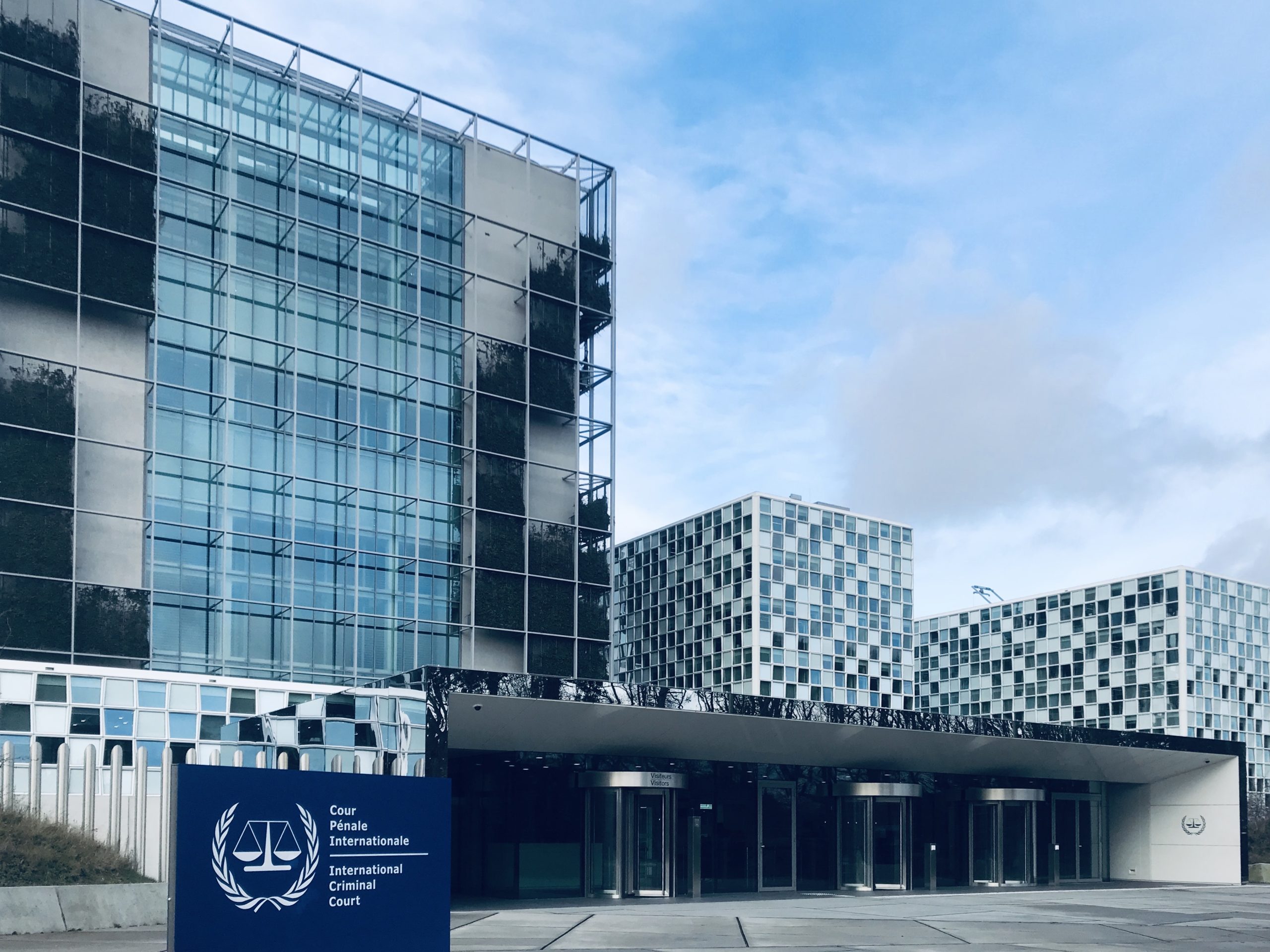
The ICC’s Afghanistan war crimes investigation has been authorised by the court’s Pre-Trial Chamber. Photo: Ehsan Qaane

The resumption of the Afghanistan investigation was authorised by the three judges of the ICC Pre-Trial Chamber II (hereafter ‘the judges’) on 31 October 2022. This was needed because the former government had requested a deferral, saying war crimes were being investigated in domestic courts and there was no need for the ICC to be involved. Following the overthrow of the Republic, the current ICC prosecutor, Karim Khan, had argued that this deferral request should be set aside.

The latest ruling by the judges is their response to Khan’s request for a resumption of the investigation, made in September 2021. It has taken them 13 months to reach this decision. However, their ruling sets limits on the scope of any investigation to: 1) crimes allegedly committed by actors who were mentioned in the prosecution’s original 2017 request to launch an investigation; and 2) crimes committed only up to the time when the authorisation was finally granted in 2020. After eight days of silence, on 7 November 2022, Khan responded to this ruling. He announced his disagreement with the restrictions and launched an appeal, which the ICC’s Appeals Chamber will hear at some future date.

Despite all this, the judges’ 31 October ruling is a milestone in the court’s dealing with Afghanistan, which for a decade and a half has continued to take a long and winding course, with multiple setbacks, delays and periods of waiting for decisions:

2006 The Office of the Prosecutor of the ICC begins a preliminary examination of war crimes and crimes against humanity in Afghanistan (see AAN report).

2017 The then prosecutor, Fatou Bensouda, requests the judges of the Pre-Trial Chamber to authorise an investigation (see AAN report).

April 2019 The judges turn down her request (see AAN report).

September 2019 The prosecution appeals the April 2019 decision of the judges (see AAN report).

March 2020 An appeal ruling finds in favour of the prosecution and an investigation is launched (see AAN report).

March 2020 The former government blocks the investigation by requesting a deferral, arguing that the alleged crimes were already being investigated domestically (see AAN report).

27 September 2021 New prosecutor Karim Khan requests the judges to reject Afghanistan’s deferral request and resume its investigation, but with a narrower focus than Bensouda had asked for – just the Taleban and ISKP – and for other actors (the CIA and US military and the Republic’s armed forces and intelligence agency) to be ‘de-prioritised’ (see AAN report).

31 October 2022 The judges grant Khan’s request, but stress the investigation should be according to the 2017 request.

7 November 2022 The prosecution appeals paragraph 59 of the judges’ decision which limited the scope of the investigation.

This report will first look at the bases for the judges’ decision to re-authorise the investigation, then look at two questions about the scope of the investigation into war crimes related to Afghanistan. First, will it include the CIA, US military and forces of the Islamic Republic, as well as the Taleban? Second, will it include the ISKP and alleged crimes in the post-March 2020 period? Finally, we conclude by looking at what happens next.

How the judges argued that the investigation should be resumed

The judges were asked to rule on how to respond to the deferral request of the old government and the prosecutor’s 27 September 2021 request to reject it and authorise the resumption of the investigation. They provided three arguments for authorising the reopening of the investigation:

  • “Afghanistan is not presently carrying out genuine investigations” of war crimes and crimes against humanity coming under ICC jurisdiction. 

In his September 2021 request, ICC Chief Prosecutor Karim Khan said his office was in possession of “undisputed facts” demonstrating that since the fall of the Republic, neither the Taleban as the de facto rulers of Afghanistan nor the fallen Republic whose diplomats still represent Afghanistan abroad were investigating the alleged crimes. The judges of the Pre-Trial Chamber echoed Khan in their ruling: the laws and mechanisms established by the Republic for domestic investigation were abolished after the Taleban takeover.

  • Afghanistan “has not acted in a manner that shows an interest in pursuing the Deferral Request.” [1]

Afghanistan could have challenged the ICC prosecutor’s request since its submission in September 2021 to cancel its request to defer the ICC investigation. Indeed, said the judges, it had been provided “ample opportunity,” through all possible legal means, to share its “observations.” [2]

However, the judges said neither the Taleban nor the diplomats of the fallen Republic had opposed the prosecution’s request. Three times, the judges said they had invited a response and there had been nothing but silence from the Taleban and ambiguity from the Republic’s diplomats. The two diplomats who had reacted, the judges said, had neither clearly opposed nor supported the prosecution’s request. That could have been because of their lack of decision-making power; the Afghan ambassador to the Netherlands, who is also the Afghanistan permanent representative to the ICC, wrote to the judges in March 2022 that he was “unable to provide any further observations or submissions” due to “security and political developments” in Afghanistan since the fall of the Republic. [3]

As for the Taleban, it could be said that there was no guarantee they would have been listened to even if they had opposed the reopening of the investigation due to their lack of international recognition.[4] (AAN has reported in detail about the judges’ failed attempts to seek ‘Afghanistan’s’ views).

  • The information and supporting documents provided by the Republic in its deferral request, in themselves, “cannot lead to a finding that the ICC investigation must be deferred.” 

In March 2020, the Republic had said it was able and willing to investigate war crimes domestically and so there was no need for an ICC investigation. Thus, the investigation had been put on hold until either Afghanistan proved its claim by providing tangible and detailed evidence of its investigations or the ICC prosecution proved otherwise.

After assessing 1455 documents submitted by the Republic concerning 518 cases which it claimed were evidence of domestic proceedings, the judges found that only 67 cases were “substantiated and relevant” and could be overlapped with the ICC’s investigatory scope. All “concern[ed] (alleged) members of the Taliban.” Of these, “only 11” were of “mid- or top-level perpetrators.” The Republic, the judges said, had not “adequately substantiated its Deferral Request” and had failed “to provide sufficient documentation demonstrating active and ongoing investigations or prosecutions.”

AAN has argued that the main aim of the Republic’s deferral request was to block the investigation and that it had never been serious about investigating war crimes itself.

The scope of the ICC’s investigation 1: the CIA, US military, the forces of the Republic

One of the key questions for AAN and others was whether the judges would agree with Prosecutor Khan’s contention that the ICC’s investigation should be limited to only the Taleban and ISKP, or also include the CIA and US military and the former government’s forces, as his predecessor Fatou Bensouda had requested in 2017. Khan contended in September 2021 that if an authorisation was granted, he wanted to ‘de-prioritise’ some aspects of the investigation because of the limited resources available to his office. In an online meeting with human rights activists, at which the author was present, in November 2021, Khan did subsequently say that de-prioritisation did not mean no investigation, but still, it was difficult to envisage other actors becoming the focus of the court in the distant future.

The author reads the judges’ 31 October decision as a signal to the prosecutor that he should not de-prioritise investigations into the personnel of the US or the Republic, which were authorised in 2020. They did indicate that the prosecutor was not under any obligation from them to pursue either a narrower or a broader investigation, [5] but they did highlight the concerns of “certain victims” who “fear that this focus may result in the Prosecution overlooking crimes allegedly committed by others, including members of armed forces or security and intelligence services of non-State Parties (to the ICC like the US).”

The judges here might be indirectly reminding the prosecutor of his obligation to fulfil “the interests of justice” which would be achieved, among other ways, by fulfilling the interest of all victims. The court collected their views twice, from 11,150 individual victims and 130 families from 8 November 2021 to April 2022 and 6,220 individual victims and 1,690 families from November 2017 to January 2018. On both occasions, the vast majority wanted the ICC to investigate (see AAN report on the first round). The legal representatives of some victims also made representations following Khan’s request to de-prioritise some investigations. For example, lawyers for three men allegedly held by the CIA said in a response published on 7 October 2021:

The gravity of the crimes which took place within the secret CIA detention facilities in Afghanistan, Poland, Lithuania, Romania and other countries, including by nationals of States Parties, as well as the manifestly ineffective nature of national proceedings, call into question the Prosecutor’s deprioritisation of those crimes. These factors rather justify the Prosecutor’s focus on and prioritisation of investigation of these grave and widescale crimes. 

Katherine Gallagher of the Centre for Constitutional Rights, who represents two alleged victims of torture by the CIA at its black site rendition facilities, also said in September 2021 that Khan’s proposed narrowing of the investigation would be “a real problem both because it undermines investigations and because it’s a backdoor way for member states to control the court through the budget.”

At the time, AAN expressed concern that Khan’s request created a ‘hierarchy of victims’, while Human Rights Watch pointed to “double standards” and Amnesty International said his strategy risked the legitimacy of the whole ICC:

In his stated approach, Prosecutor Khan appears willing to bow to political as well as resource pressure, applied by powerful states, whose actions would restrict the activities of a ‘universal’ ICC which may investigate situations where their nationals and interests are affected. 

We recall that, until April this year [2021], US government sanctions were applied on Former Prosecutor Fatou Bensouda and other [Office of the Prosecutor] staff with the overt intention of halting investigations into US nationals – despite the Court having clear territorial jurisdiction to do so. Having faced-down the US government’s egregious attacks, that the Prosecutor would take a decision which aligns with the objectives of those who had sought to infringe his Office’s hard-fought independence, is almost unfathomable. 

Whatever the reason for the judges’ message that Khan should include all actors mentioned in the 2017 request in his investigation, those concerned about universal human rights will welcome their stance.

The scope of the ICC’s investigation 2: ISKP and post-March 2020 war crimes

The judges, in paragraph 59 of their decision, reminded the prosecutor that, in their view, the authorisation to investigate covers:

[O]nly the crimes falling with the situation and the conflict, as it existed at the time of the decision authorising the investigation [2020] and based on the request to open it, can be the object of this investigation. Alleged crimes unrelated to such situation and conflicts or related to any new armed conflict(s)… and new parties to such a conflict, fall outside the scope of the investigation as authorised…

In this paragraph, the judges footnoted their reference to “new parties”:

Compare, e.g., the Prosecutor’s reference to the ‘Islamic State – Khorasan Province’ in his 27 September 2021 press statement.

To investigate any alleged crimes and actors as well as new crimes related to new conflicts [6] which they believe fall outside the scope of the investigation, the judges suggested the prosecutor file a new request for authorisation.

In Khan’s appeal, the prosecutor seems to understand from the judges’ argument in paragraph 59 and the related footnote that they see ISKP [7] as a ‘new actor’ and also that any alleged crimes which have been perpetrated since March 2020 as “unrelated” to the authorisation and therefore as falling outside the investigation. Khan argues that such a restriction was an error in law, and an error in fact, and as contradicting the April 2020 appeal judgement which had granted authorisation. Thus, the prosecution has requested the Appeals Chamber “to reverse and amend paragraph 59 of the Decision and to confirm the scope of the Court’s jurisdiction in this situation in the terms previously articulated by the Appeals Chamber.” The prosecutor said his appeal would not affect the resumption of his investigation into those alleged crimes which the judges’ 31 October decision has permitted.

According to Khan, paragraph 59 of the 31 October authorisation was an error in law because it violated the Appeals Chamber’s 2020 judgement, which said the scope of the investigation was not limited to the incidents provided by the prosecution in its 2017 request for authorisation. Also, the 2020 appeal judgement set no temporal limitation except the one mentioned in the prosecution’s 2017 request, which mandated the beginning of the investigation period as 1 May 2003, the date when Afghanistan became a state party to the Rome Statute, for alleged crimes that took place on Afghan soil and 1 July 2002 for alleged crimes that happened on the territory of other states parties to the ICC which were related to the Afghanistan armed conflict, ie those hosting CIA detention facilities related to the Afghanistan conflict, Poland, Lithuania and Romania.

The judges’ April 2019 decision not only rejected outright the prosecution’s 2017 request to launch an investigation – based on what was found to be an erroneous calculation that an investigation would be against the ‘interests of justice’ – but also set a standard for the scope of any investigation in the following paragraph, in which the judges said they were:

[D]uty-bound to determine in concrete terms whether the investigation of the specific incidents for which the authorisation is sought, and those which are closely linked to the former, must be allowed. Accordingly, the scope of the scrutiny could not encompass incidents and groups of offenders other than those for which the authorisation was specifically requested. Quite logically, the same applies for other alleged crimes that may have occurred after the date of the Request.

However, when the Appeals Chamber overturned the judges’ decision in 2020, they found that the judges’ ruling that any investigation should be restricted was an error in law and unnecessary, as it would impact the “truth-seeking function” of prosecution.

[T]he Appeals Chamber considers that restricting the authorised investigation to the factual information obtained during the preliminary examination would erroneously inhibit the Prosecutor’s truth-seeking function. Such a restriction is also unnecessary to fulfil the purpose of article 15(4) of the Statute in ensuring that the Prosecutor does not embark on a frivolous or politically motivated investigation in that she remains restricted in her investigation to the contours of the situation authorised by the pre-trial chamber. Therefore, the Appeals Chamber considers that authorisation for an investigation should not be restricted to the incidents specifically mentioned in the Prosecutor’s Request and incidents that are ‘closely linked’ to those incidents in the manner described by the Pre-Trial Chamber.

In other words, both prosecutors and the Appeals Chamber have held the view that the judges’ attempt in 2019 to restrict the scope of any investigation was not in accordance with the provision of articles 42, 54 and 58 of the Rome Statute, the ICC founding document, which ensures for independent and objective investigations and prosecutions by the Office of the Prosecutor of the ICC.

Furthermore, according to Prosecutor Khan’s current appeal, paragraph 59 of the judges’ 31 October decision, when it referred specifically to the ISKP as a ‘new actor’ to the conflict, was an error in fact. He said this was a “misreading” of the 2017 request. In that request, he said, it was “expressly clarified that the scope of the investigation included both subsequent crimes and crimes committed by the group known as ‘Islamic State-Khorasan province’, among other groups.” [8] In other words, although the main emphasis was on the Taleban and Haqqani network, the US CIA and military and the forces of the then government, ISKP was also mentioned. It cannot be considered a new actor, therefore.

As explained above, this disagreement over the scope of any investigation is an old fight between the prosecutors and the judges. However, the Appeals Chamber decided in favour of the prosecution in March 2020. Knowing that, it is odd that the judges have yet again brought up an old dispute that had been resolved two and a half years ago.

By appealing paragraph 59 of the judges’ decision, Khan is attempting to regain the prosecutor’s investigatory power over alleged crimes that have occurred – and will occur – since the ratification of the Rome Statute by Afghanistan. They include alleged war crimes reported during the Taleban takeover of power in August 2021 and since. (See Human Rights Watch report and Amnesty International report as examples). It also intended to be able to investigate all alleged actors, including ISKP which has claimed responsibility for many grave crimes, including those the Hazaras and Sikhs (see this AAN report, Human Rights Watch report and the UN Special Rapporteur on Human Rights Situation in Afghanistan’s first report for examples).

What happens next?

The ICC prosecutor has appealed the part of the judges’ decision which says no authorisation to investigate crimes allegedly perpetrated since March 2020 and/or by ‘new actors’ like ISKP which the judges assert were not named in the 2017 request of the prosecution, although the prosecutor contends this. When the appeal hearing will happen has not been publicly announced yet. However, in light of the March 2020 Appeals Chamber decision, the result of the prosecution’s appeal is foreseeable. The Appeals Chamber articulated then that the prosecution’s investigation should not be restricted to the incidents and alleged perpetrators which were prominent in the prosecution’s 2017 request for authorisation to investigate. On the basis of that decision, it is the author’s understanding that to investigate any new conduct and/or actor should not require a new request of authorisation.

For the next couple of weeks, the judges’ decision of 31 October is anyway preliminary: under article 18 (2) of the Rome Statute, Afghanistan has a month to challenge it. The Afghan embassy in the Netherlands, as the agreed-upon diplomatic channel between Afghanistan and the ICC, was notified of the judges’ decision on 31 October 2022. Asked by AAN about his intentions, ambassador Muhammad Asif Rahimi said on 2 November 2022 that the embassy had always supported justice, reparation for victims and prevention of atrocities and he hoped the ICC would be able to satisfy Afghan war victims and the Afghan nation with its impartial and holistic efforts. He confirmed that the embassy would not take any further action instead would wait for the positive efforts of the ICC and its prosecution.

The Taleban have not reacted to the ICC decision, as yet. Even if they did respond, it is not clear how their action would be received, legally, by the ICC as they have not been internationally recognised as Afghanistan’s government. Article 19 of the Rome Statue provides “Afghanistan’ with the right to challenge specific cases during the investigation, as was mentioned by the judges in their decision.

After that, even as the appeal request proceeds, the prosecutor can resume his investigation of the crimes allegedly perpetrated up to March 2020 by four main actors, namely the Taleban, the Haqqani network, the US military and CIA, and the forces of the Republic, which the judges have authorised. Karim Khan could still go with his de-prioritisation investigatory strategy, however. The judges’ emphasis on not de-prioritising the aspects of the investigation, which cover the allegations against members of the US military and CIA members of the former government’s security forces, has no legal implications for the prosecution.

How the prosecutor pursues his investigation has yet to be publicly shared. With an unrecognised, de facto government in power which is one of the main alleged groups, it looks unlikely that the prosecutor would be able to open an office on the ground. Investigating incidents with no on-the-ground access would be difficult. However, this aspect of the investigation was always going to be complicated, even during the Republic, which always publicly acknowledged its support to the ICC, while trying not to give any actual support, and when there was also a widescale and ongoing armed conflict. However, there are enough alleged victims living outside Afghanistan, some already with lawyers and detailed evidence, that an investigation should still absolutely be possible.

Edited by Kate Clark

References

References
↑1 The judges said: In light of the foregoing, the Chamber considers that Afghanistan is not presently carrying out genuine investigations and that it has not acted in a manner that shows an interest in pursuing the Deferral Request. The limited number of cases and individuals prosecuted by Afghanistan, as shown by the materials submitted and assessable by the Chamber, cannot lead to a finding that the ICC investigation must be deferred. The Chamber therefore grants the Prosecution’s Application and authorises the resumption of the investigation in the Afghanistan Situation.
↑2 To make their decision on whether to authorise the investigation, the judges had an obligation to seek Afghanistan’s view about the prosecution’s request.
↑3 Afghanistan’s permanent representative to the United Nations in New York told AAN that in May 2022, that the judges had contacted him and he had advised them to contact the Afghan Embassy in the Netherlands – which is the agreed-upon channel for communications between Afghanistan and the ICC.
↑4 Since 15 August 2021, Afghanistan has been ruled by the Taleban, who came to power by force and have not been internationally recognised, while the country is presented abroad by the diplomats appointed by the fallen Republic. It is not clear, therefore, who should or could speak for Afghanistan in dealing with the ICC.
↑5 The judges said that “the legal framework does not envisage their undertaking a judicial review of the Prosecution’s conclusion,” and that “… the Prosecution’s Application does not contain any fact or circumstances that might justify or explain narrowing the scope of the investigation as authorised by the Appeals Chamber, nor does it specify why the Prosecution does not intend to pursue the investigation in its entirety.”
↑6 One issue which might become relevant is whether any war crimes committed in the context of the ongoing conflict between the Taleban and the National Resistance Front (NRF) or any other armed opposition group which emerges could be covered by the current investigation. Is it the same conflict, already falling under the current authorisation, or a new one?
↑7 The main alleged perpetrators include the Taleban, the Haqqani Network, the Afghanistan national security forces (Directorate for National Security, National Police, Local Police, National Army of the fallen Republic regime), as well as the members of the US armed forces and members of its CIA. Other groups like Islamic State for Khorasan Province (ISKP), Lashkar-e Taiba and Tehrik-e Taleban Pakistan, which their conduct had not been addressed in the 2017 application, were also named as alleged perpetrators.
↑8 The 7 November 2022 appeal referred to paragraph 38 of the 2017 request to back up its argument: 

In any event, the above considerations do not alter the Prosecution’s conclusion that an investigation into the situation in Afghanistan is warranted. Indeed, should the Pre-Trial Chamber’s decide to authorise an investigation under article 15(4), this should not limit the Prosecution’s investigation into only the specific crimes set out in this Request; rather, the Prosecution should be able to conduct an investigation into any other alleged crimes that fall within the scope of the authorised situation. In particular, the situation in Afghanistan is one in which crimes allegedly continue to be committed on a near daily basis, by a wide range of armed actors, including some newly emerging entities, both in support of and against the Government. Accordingly, if an investigation is authorised, the Prosecution should be permitted to expand or modify its investigation with respect to the acts identified in this Request or other alleged acts, incidents, groups or persons and/or to adopt different legal qualifications, so long as the cases brought forward for prosecution are sufficiently linked to the authorised situation.

ICC Afghanistan Investigation Re-Authorised: But, will it cover the CIA, ISKP and the forces of the Islamic Republic, as well as the Taleban?
read more

When I set foot inside the MCG, I felt a joy myself and other Afghan refugees won’t forget

The Guardian
10 Nov 2022

I will never forget seeing our world-class players on the international stage after all Afghanistan has been through

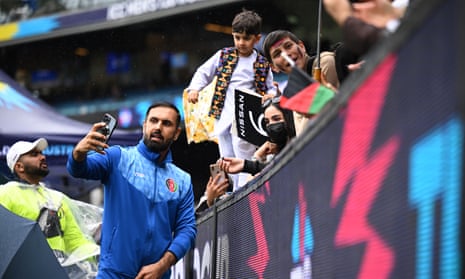
Mohammad Nabi of Afghanistan takes photos with fans at Melbourne Cricket Ground
Mohammad Nabi of Afghanistan takes photos with fans at Melbourne Cricket Ground. Photograph: James Ross

Sitting inside the magnificent arena, I felt every moment of the experience. The joy of seeing my team up close lifted the gloom that I and other Afghan refugees had been feeling, bringing us, momentarily, back to life. I’ve never seen a single resettlement program deliver such joy and sense of belonging, and it made me desperately want to see more of it in the coming days as our team battles for survival – just like us refugees.

I hardly cared about the weather, which was a typical Melbourne day with the sun playing hide and seek with the clouds before the rain washed away the entire game. What meant most to me was seeing our world-class players on the international stage after all our country had been through. They brought with them a connection to the land that we were forced to flee when the Taliban took over last year. Many of us still remain torn apart from our families, who are waiting, anxiously, for visas.

The wait for the game began many days earlier. My housemates and I had gone on a hunt for T-shirts, flags and any other Afghan paraphernalia. We had very little success, apart from securing a few T-shirts from an eager online seller. The most important purchase was a tricolour flag. I know it sounds ultra nationalist, but, take it from me, it meant so much for the millions of Afghans watching the live broadcast around the world to see it hoisted high in the MCG in Australia, while it remained banned in Afghanistan under the Taliban. This was so much more than just a cricket match.

Keen on holding it high enough to grab the attention of the cameras, my housemate bought a large plastic pole, only to have to surrender it to security at the entrance. Before that, we threw a ball in Yarra Park to Afghan music as streams of colourfully dressed new Melburnians from various directions gathered around the gates.

Wearing the national T-shirts and carrying the flags, we got plenty of surprised glares on our way into the city from the south-eastern suburbs. A curious man had a nice chat with me and admired what an excellent player Rashid Khan is. Two young women on the train were surprised by the blue colour of the Afghanistan team’s jersey, which contrasted the green, red and black of the national flag.

I was constantly posting photos to social media, as well as texting and calling people, urging them to tune in so as not to miss this once-in-a-lifetime opportunity. On the walk to the stadium from Richmond train station, we got many return calls from friends who we hadn’t heard from in months.

Once inside the venue, the view of the world’s biggest cricket ground under the floodlights was mesmerising. We grabbed some local coffee and quickly found our seats.

I have never seen young Afghan men, women and children so happy since arriving in Australia. It made us miss our loved ones back home. Eventually the rain burst in and the covers were brought over to protect the pitch. We turned that into an opportunity to explore the MCG as it wasn’t fully booked and there were no restrictions to move around. What a wonderful place this is, I thought to myself.

The rain paused. The boys in blue came out on to the field. Afghanistan was supposed to play against the favourite, New Zealand. The greats, Rashid Khan and Mohammad Nabi, were warming up alongside emerging talents like Rahmanullah Gurbaz, Ibrahim Zadran and Fazalhaq Farooqi. But then the rain came again and never stopped. The match was eventually abandoned.

Caught between a mix of joy and sadness, we decided to count our blessings. We headed back home, leaving the Afghan cricketers to battle with the thundering skies.

  • Shadi Khan Saif is an Afghan journalist based in Melbourne
When I set foot inside the MCG, I felt a joy myself and other Afghan refugees won’t forget
read more

Islamic Emirate Denies Terrorist Groups’ Presence in Afghanistan

The Islamic Emirate once again denied the presence of terrorist groups in Afghanistan, saying that there is no evidence to show that there is any threat to the world from Afghan soil.

This comes as representatives of India and Pakistan at the UNGA plenary meeting on Afghanistan expressed concerns over the existence of terrorist groups in Afghanistan.

“There is no evidence or documentation to show that there is any threat from Afghan soil to the national interest of other countries. So, we must say that the concerns which existed in this regard are based on inaccurate information. We hope the realities in our country are understood,” said Bilal Karimi, deputy spokesman for the Islamic Emirate.

The representatives from India and Pakistan at the 77th session of the United Nations General Assembly expressed concerns over the presence of Jaish Mohamad and Lashkar-e-Taiba groups and Tahrik-e-Taliban in Afghanistan.

“We must develop a comprehensive counter-terrorism strategy. To do so, engagement with the de facto government is essential. Pakistan will support counter-terrorism efforts while respecting Afghanistan’s sovereignty and territorial integrity,” said Muhammad Aamir Khan, the acting Permanent Representative of Pakistan to the UN.

Some political and military analysts gave various opinions on the matter.

“If there are groups in Afghanistan, they are trained by these countries that are now accusing Afghanistan. It may be that they are now reaping what they have sowed,” said Mohammad Saleem Paigar, a political analyst.

The Islamic Emirate has repeatedly denied the presence of terrorist groups in Afghanistan, saying that Afghan soil will not be used against any other country.

Islamic Emirate Denies Terrorist Groups’ Presence in Afghanistan
read more

Uzbek President Seeks ‘Common Approaches’ to Situation in Afghanistan

The former President of Turkmenistan, Gurbanguly Berdimuhamedow, also called for efforts to improve the situation in Afghanistan.

Uzbek President Shavkat Mirziyoyev at the meeting of the Council of Heads of States of the Organization of Turkic States voiced concern over the deteriorating security situation in the world, pointing out that Uzbekistan is neighbors to one of the most conflict-torn countries in the world, referring to Afghanistan.
“Of course, we are all seriously concerned about the situation in neighboring Afghanistan today. … We advocate for a regular dialogue between the foreign ministers of the organization’s member countries in order to develop common approaches to the Afghan issue,” he stressed.
In the meeting, the former President of Turkmenistan, Gurbanguly Berdimuhamedow, also called for efforts to improve the situation in Afghanistan.

“Countries that speak Turkic have a lot in common with Afghanistan, and it’s important to us that Afghanistan has historic sites. The developments in Afghanistan are important to us, and it is our duty to work together and take steps to build peace and stability,” Berdimuhamedow said.

Meanwhile, political experts consider the role of Uzbekistan to be important for solving the current challenges in Afghanistan.

“This issue has two sides, one of which is to make efforts inside Afghanistan and the other is for the international community to make efforts from outside, to build a rapport that would improve the economic situation of Afghanistan,” said Tariq Farhadi, political expert.

“Our country is in a serious economic, political, and cultural crisis, and we need the cooperation with the region’s countries and the international community,” said Hassan Haqyar, a political expert.

The OTS is an interstate bloc, established with the aim of expanding cooperation between Turkish-speaking countries in the fields of politics, economics, science, education, transport, and tourism.

The members of the organization are Azerbaijan, Kazakhstan, Kyrgyzstan, Türkiye, and Uzbekistan. Hungary and Turkmenistan have observer status in the organization.

Uzbek President Seeks ‘Common Approaches’ to Situation in Afghanistan
read more