Senior UN Official to Visit Afghanistan over Ban on Female Aid Workers

Tolo News

30 Dec 2022

Alakbarov added that women made up roughly 30% of aid workers and that they would not be replaced with men. 

Following the Islamic Emirate’s ban on female aid workers, UN aid chief Martin Griffiths will travel to Afghanistan in the coming weeks and will seek to meet with the high-ranking officials, a senior UN official said on Thursday.

Ramiz Alakbarov, UN aid coordinator in Afghanistan, told a press conference as quoted by Reuters that the official of the UN will closely discuss the ban on women’s work in Afghanistan with the leaders of Kabul.

“The UN emergency and relive coordinator will conduct a visit to Afghanistan, there will be several our visits which we are planning to make at the senior level in order to prevail upon the inter locaters upon the de facto authorities side to resolve this situation and this will be taking place in the course of few coming weeks as we are assessing the implications of what is happening” Alakbarov said.

Alakbarov added that women made up roughly 30% of aid workers and that they would not be replaced with men.

“Humanitarian needs of the people are absolutely enormous and it’s important that we continue to stay and deliver. As we do so, it is equally important that the rights of women and girls…are talking so much these absolutely preserved and protected,” he said.

The Islamic Emirate praised the high-ranking UN official’s visit to Afghanistan and urged the United Nations to continue providing help to the Afghan people.

“It will be better if their representative visits Kabul because we will closely discuss the issues that have come up. We will jointly share thoughts to fill the gap that has been created and will resolve the issues,” said Zabiullah Mujahid, the spokesman of the Islamic Emirate.

Meanwhile, Turkey’s Foreign Minister Mevlut Cavusoglu said on Thursday that his country is against the recent decision of the current government of Afghanistan and that they are trying to address the issue on the sidelines of the meeting of the Organization of Islamic Cooperation.

“Unfortunately, the latest decision adopted by the Taliban cannot be accepted. We are against the isolation of women in society. This has nothing to do with Islam. We are still indeed showing a lot of efforts to reverse those decisions adopted by the Taliban,” Cavusoglu said.

“This issue needs to be resolved as quickly as possible or the pause in aid will exacerbate the humanitarian crisis in the country,” said Azerakhsh Hafizi, an analyst.

The US special envoy for women, girls and human rights in Afghanistan, Rina Amiri, the international health non-governmental organization Medecins Sans Frontieres (MSF), or Doctors Without Borders, the UN Human Rights Council’s special rapporteur to Afghanistan, Richard Bennett, and EU High Representative for Foreign Affairs and Security Policy Josep Borrell criticized the recent decision by the Islamic Emirate to ban women employees in non-governmental organizations in the country.

Senior UN Official to Visit Afghanistan over Ban on Female Aid Workers
read more

Afghan refugees in US face uncertainty as legislation stalls

By FARNOUSH AMIRI

Associated Press
30 Dec 2022

WASHINGTON (AP) — Congress has failed so far to create a path to residency for Afghans who worked alongside U.S. soldiers in America’s longest war, pushing into limbo tens of thousands of refugees who fled Taliban control more than two years ago and now live in the United States.

Some lawmakers had hoped to resolve the Afghans’ immigration status as part of a year-end government funding package. But that effort failed, punting the issue into the new year, when Republicans will take power in the House. The result is grave uncertainty for refugees now facing an August deadline for action from Congress before their temporary parole status expires.

Nearly 76,000 Afghans who worked with American soldiers since 2001 as translators, interpreters and partners arrived in the U.S. on military planes after the chaotic withdrawal from Afghanistan in August 2021. The government admitted the refugees on a temporary parole status as part of Operation Allies Welcome, the largest resettlement effort in the country in decades, with the promise of a path to a life in the U.S. for their service.

Mohammad Behzad Hakkak, 30, is among those Afghans waiting for resolution, unable to work or settle down in his new community in Fairfax, Virginia, under his parole status. Hakkak worked as a partner to the U.S. mission in Afghanistan as a human rights defender in the now-defunct Afghan government.

“We lost everything in Afghanistan” after the Taliban returned to power, he said. “And now, we don’t know about our future here.”

For the past year, a bipartisan group of lawmakers, backed by veterans organizations and former military officials, has pushed Congress to pass the Afghan Adjustment Act, which would prevent the Afghans from becoming stranded without legal residency status when their two years of humanitarian parole expire in August 2023. It would enable qualified Afghans to apply for U.S. citizenship, as was done for refugees in the past, including those from Cuba, Vietnam and Iraq.

Supporters of the proposal thought it might clear Congress after the November election because it enjoys overwhelming bipartisan support. But they said their efforts were thwarted by one man: Republican Sen. Chuck Grassley of Iowa, the top Republican on the Senate Judiciary Committee, which oversees immigration issues.

“We’ve never seen support for a piece of legislation like this and it not pass,” said Shawn Van Diver, a Navy veteran and head of #AfghanEvac, a coalition supporting Afghan resettlement efforts. “It’s really frustrating to me that one guy from Iowa can block this.”

Grassley has argued for months that the bill as written goes too far by including evacuees beyond those “who were our partners over the last 20 years,” providing a road to residency without the proper screening required.

“First of all, people that help our country should absolutely have the promise that we made to them,” Grassley told The Associated Press. “There’s some disagreement on the vetting process. That’s been a problem and that hasn’t been worked out yet.”

Proponents of the legislation reject those concerns. More than 30 retired military officers, including three former chairmen of the Joint Chiefs of Staff, wrote Congress saying the bill not only “furthers the national security interests of the United States,” but is also ”a moral imperative.” The White House also has called for passage.

Biden’s press secretary, Karine Jean-Pierre said, in mid-December that it is “important to take care of Afghan allies who took care of us.”

The proposal, if passed, would provide a streamlined, prioritized adjustment process for Afghan nationals who supported the U.S. mission in Afghanistan. The Homeland Security Department would adjust the status of eligible evacuees to provide them with lawful permanent resident status after they have had rigorous vetting and screening procedures. It also would improve and expand ways to protection for those left behind and at risk in Afghanistan.

“The Afghan refugees are a very high priority and had some good Republican support, but unfortunately, the Republican leadership blocked it,” Senate Majority Leader Chuck Schumer, D-N.Y., recently told reporters. “These are people who risked their lives for our soldiers and for our country, and we should be rewarding them as we have done in the past.”

Several congressional aides explained the holdup on the bill by pointing to a seven-page, single-spaced letter, obtained by The Associated Press, that Grassley’s office circulated to all 50 Republican senators in August. The memo outlined his issues with the proposal, resulting in months of back-and-forth negotiation as the sponsors of the bill tried to address them.

U.S. national security and military officials have outlined the stringent screening process that evacuees went through before arriving on American soil. Those security screenings, conducted in Europe and the Middle East, included background checks with both biographic information and biometric screenings using voiceprints, iris scans, palm prints and facial photos.

But Republicans say the vetting system is not fail-safe. They pointed to a September report from Homeland Security’s inspector general that said at least two people from Afghanistan who were paroled into the country “posed a risk to national security and the safety of local communities.”

As a result, mandatory in-person interviews for all Afghan applicants were written into the bill as well as requirements that relevant agencies brief Congress on proposed vetting procedures before putting them in place.

Despite strengthening the vetting process over months of negotiations, the bill never made it out of the Judiciary Committee and failed to win inclusion in the just-passed $1.7 trillion government funding bill.

Sen. Amy Klobuchar, D-Minn., was one of the lead sponsors of the bill. “If this is what we do when they come to our country, and we don’t have their backs,’” she said, “what message are we sending to the rest of the world who stand with our soldiers, who protect them, who provide security for their families?”

But Klobuchar and the lead Republican co-sponsor, Sen. Lindsey Graham of South Carolina, pledged to bring the bill back up again in the new session of Congress starting in January.

“This is the right thing to do,” Graham, an Air Force veteran, told the Senate recently. “There’s no other ending that would be acceptable to me.”

He added: “The people who were there with us in the fight, that are here in America, need to stay. This will be their new home.”

Most people in the United States appear to share that sentiment.

A survey from The Associated Press-NORC Center for Public Affairs Research taken the month after the U.S. withdrawal from Afghanistan found that 72% of respondents regarded giving the Afghans refuge from any Taliban retaliation as a duty and a necessary coda of the nearly 20-year war.

Afghan refugees in US face uncertainty as legislation stalls
read more

Women, kids among 1,200 Afghan migrants jailed in Pakistan

By ADIL JAWAD and MUNIR AHMED

Associated Press
28 Dec 2022

KARACHI, Pakistan (AP) — Pakistani police in multiple raids detained at least 1,200 Afghan nationals, including women and children, who had entered the southern port city of Karachi without valid travel documents, officials said Thursday.

The arrests brought criticism from around Afghanistan after images of locked up Afghan children were circulated online. The detentions underscored the strained relations between the two South Asian neighbors.

Police and local government officials said the detainees will be deported to Afghanistan after serving their sentences or when the paperwork for their release is completed by their attorneys.

Pakistani officials claim that most of the detainees wish to return home.

Although Pakistan routinely makes such arrests, multiple and apparently coordinated raids were launched beginning in October to detain Afghans staying in Karachi and elsewhere without valid documents.

Gul Din, an official at the Afghan Consulate in Karachi, said he was in contact with Pakistan about a “quick and dignified return” of the Afghan citizens to their homeland.

Pictures of some Afghan children crammed into a cell of the central jail in Karachi went viral on social media, drawing appeals for their release along with their parents.

At least 139 Afghan women and 165 children are among those being held at a high-security jail in Karachi, according to a report released this month by Pakistan’s National Commission on Human Rights. The report was based on interviews with scores of imprisoned Afghan detainees.

In the Afghan capital of Kabul, Abdul Qahar Balkhi, a spokesman for the foreign affairs ministry, said embassy officials had expressed their concerns during meetings with their Pakistani counterparts.

“The Pakistani authorities have repeatedly pledged swift release of these detainees,” he told The Associated Press, saying that so far Pakistan had failed to “fully deliver on the commitment.”

“We believe that such degrading treatment of Afghans in Pakistan is not in the interest of any party,” Balkhi said. He said Afghans were advised not to enter Pakistan “unless absolutely necessary and without proper documentation.”

In Karachi, Murtaza Wahab, a spokesman for the Sindh provincial government, said police recently arrested only those Afghans who were residing in the province without valid documents. He said such detainees will be deported. He did not say how many Afghans were arrested for illegally residing in Sindh this year.

But Moniza Kakar, a lawyer who helps such Afghan detainees, said at least 1,400 Afghans were being held in Karachi’s jails. “We are not sure exactly how many Afghans are currently being held at jails in Pakistan. So far, we have facilitated the release of hundreds of Afghans to their country,” she said.

Kakar said some pregnant Afghan women who fled Afghanistan to seek medical treatment and for other reasons, are among those detained in Karachi and elsewhere in Sindh province. She said one of the female Afghan detainees recently gave birth to a child in the Hyderabad jail.

Kakar said dozens of Afghans were deported to Afghanistan last month after they completed their sentences, which are usually up to two months. However, she suggested that such sentences should be only verbal and symbolic — so that the detainees can be sent back to their countries quickly.

Millions of Afghans fled to Pakistan during the 1979-1989 Soviet occupation of their country, creating one of the world’s largest refugee populations. Since then, Pakistan has been hosting Afghans, urging them to register themselves with the United Nations and local authorities to avoid any risk of deportation.

According to a recently conducted U.N.-backed survey, 1.3 million registered Afghan refugees are residing in Pakistan.

“Following the takeover of Afghanistan by the Afghan Taliban, there has been a drastic rise in Afghans seeking to enter Pakistan for a multitude of reasons ranging from fleeing persecution, seeking medical aid and looking for job opportunities,” the report released by the National Commission on Human Rights last week said.

Pakistan and neighboring Afghanistan have a history of bitter relations.

This month, Pakistan twice briefly closed a key border crossing for trade at the southwestern town of Chaman after clashes erupted between Pakistan and Afghan Taliban forces over the fencing of a remote border village.

The Taliban seized power in Afghanistan in mid-August 2021, sweeping into the capital, Kabul, and taking the rest of the country as U.S. and NATO forces were in the final weeks of their pullout after 20 years of war. Since then, over 100,000 Afghans have arrived in Pakistan to avoid persecution at home, although Afghanistan’s Taliban rulers announced a pardon, urging Afghan citizens not to leave the country.

Ahmed from Islamabad. Associated Press writer Riazat Butt in Kabul, Afghanistan, contributed to this story.

Women, kids among 1,200 Afghan migrants jailed in Pakistan
read more

UN tries to resolve Afghanistan aid crisis after women banned from working at NGOs

Martin Griffiths, the head of UN humanitarian operations, is to fly to Kabul to try to resolve the crisis caused by the Taliban’s surprise decision to ban women working for NGO aid groups in the country.

The move came as Ramiz Alakbarov, the UN humanitarian coordinator for Afghanistan, said in New York that aid programmes were already being compromised.

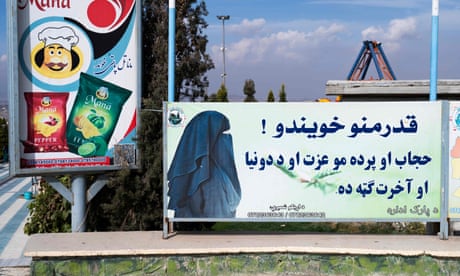
This photograph taken on 9 November 2022, shows a poster reading in Pashto, "Dear sisters! Hijab and veil are your dignity and are in your benefit in this world and in the hereafter", at the Habibullah Zazai Park on the outskirts of Kabul, Afghanistan.
‘In two days, I will have to beg on the streets’: what the Taliban’s bar on women’s NGO work means

However, he said that on the basis of his discussions with Taliban cabinet ministers the ban was not being implemented uniformly in every region, adding that constructive meetings had been held with the minister of health. Alakbarov said it was now going to be necessary for service providers to see how the promises played out on the ground.

He stressed that “aid cannot be conditioned. You cannot condition providing food or health assistance to a starving or dying person. You cannot exclude one gender or any particular category of people.

“Assistance will not be delivered in a place and space where operational independence impartiality or any other operating principles of the UN are compromised.”

Alakbarov stressed that the UN wanted a dialogue with the Taliban and he believed they did respond to pressure, adding he believed younger Taliban members did not necessarily support the ban.

He also said the UN was willing to discuss Taliban concerns about wearing the hijab, but that does not require women to not work or take part in the economic activity of the country. It would be a very last resort to prevent UN aid going to Afghanistan, Alakbarov said.

He added that with the largest footprint in the country, the UN had a responsibility to use its convening power to find a solution for NGOs, many of whom deliver UN programmes.

In a sign of the flux, Médecins Sans Frontières said it was not suspending its activities, unlike some NGOs.

It said: “For the time being, all of MSF’s activities have been maintained as our female colleagues continue to work unhindered in the health facilities managed by MSF and the Ministry of Health. This must not change: prohibiting women from working would effectively prevent women and girls from accessing health care.”

“Excluding women from the workforce is against every principle of humanity and medical ethics to which health professionals subscribe. If women are prevented from working in health facilities, and if women can only be treated by women, then it will be virtually impossible for them to access health care,” said Filipe Ribeiro, the MSF country director. “As a result, no health care provider, including MSF, will be able to deliver medical services in Afghanistan.”

UN tries to resolve Afghanistan aid crisis after women banned from working at NGOs
read more

UN to Hold Meeting on Intra-Afghan Dialogue: Envoy

But the Islamic Emirate denied Faiq’s remarks, saying it doesn’t recognize him as Afghanistan’s ambassador to the UN.

Chargé d’Affaires of the Afghanistan Permanent Mission to the UN, Naseer Ahmad Faiq, said that a meeting would be held by the United Nations to discuss an intra-Afghan dialogue.

He said the meeting will include representatives from all aspects of Afghanistan and that the planning of the meeting is underway.

“Holding a national and international dialogue under the leadership of the UN in which actual representatives of Afghanistan will gather and will make decision about the future of Afghanistan,” he said.

But the Islamic Emirate denied Faiq’s remarks, saying it doesn’t recognize him as Afghanistan’s ambassador to the UN.

“Faiq is an individual. We don’t accept him as a representative or a party. He is an individual and whatever he says is his personal view,” said Zabiullah Mujahid, Islamic Emirate’s spokesman.

Analysts said that intra-Afghan negotiations are the best way to address the ongoing problems in the country.

“The national dialogue is a good step. If it is conducted, it can rescue the country from the crisis,” said Shir Agha Rohani, a political analyst.

“The Islamic Emirate has control over all territory. The time for it (dialogue) has passed,” said Abdul Jamil Shirani, a political analyst.

Former President Hamid Karzai in an interview with the Washington Post this week said an intra-Afghan dialogue would be “good” for the caretaker government and for Afghanistan.

UN to Hold Meeting on Intra-Afghan Dialogue: Envoy
read more

Kabul Witnesses First Snowfall of the Year

Many Kabul residents expressed their happiness about the snowfall but vulnerable families said they are unable to afford the expenses of heating their houses.

The city of Kabul was blanketed with snow on Thursday, something that was widely celebrated by the residents amid severe economic challenges that have affected millions of Afghans across the country.

Many Kabul residents expressed their happiness about the snowfall but vulnerable families said they are unable to afford the expenses of heating their houses.

“The snowfall happened in Kabul. Kabul can be without gold but not without snow,” said Sayed Ghafar, a resident of Kabul.

“As the snowfall happened, everyone, including children and adults, is happy and you see that everyone is playing,” said Mohammad Noor, a Kabul resident.

Other residents said they enjoyed the snowfall and took many pictures of it.

“Today was the first snow in Kabul and some other provinces,” said Hamid, a Kabul resident.

Some other residents said they are facing a tough life as they cannot pay for wood or coal to heat their homes.

“We don’t have anything to eat or to use,” said Sakhi Agha, a Kabul resident.

“I have no food to eat and no wood to heat our home,” said Totia, a Kabul resident.

The snowfall has also caused the closure of some highways, including the northern parts of the country.

Kabul Witnesses First Snowfall of the Year
read more

An interview with former Afghan president Hamid Karzai

Q: It’s been more than a year since the collapse of the former Ghani government. Afghanistan is in a bit of trouble now, most people would say. Western assistance has dried up. Seven billion dollars in funds frozen by the U.S. that’s not going to the central bank. The economy has collapsed. Unemployment is on the rise, hunger, everything. How concerned are you about the direction the country is heading? What are the threats ahead if this trajectory continues?

Former Afghan president Hamid Karzai walks in the garden of his Kabul residence on his way to a meeting on Oct. 5. (Elise Blanchard for The Washington Post)

A: Of course, we Afghan people are tremendously concerned at the way the country is right now and the way it’s heading. But we are also hopeful that we will soon be able to manage things better and take good, reasonable stock of why we are here and how we can get out of this extremely difficult situation for us.

Q: It’s been more than a year now, and the Taliban initially had promised an inclusive government. We’re not seeing that. Most Afghans I have spoken with, especially members of the country’s ethnic minorities, say they have little faith or hope in the Taliban. They cite the fact they are not represented properly in the government today. Do you think the Taliban will ever create an inclusive government? What is needed for this to happen?

A: We saw how things didn’t work for Afghan governments when there was one element of it or the other element of our society absent from it. … For the good of the Taliban themselves and for the good of the country, it is important that they begin a process of inclusivity by launching a grand Afghan dialogue, of Afghans talking among themselves and getting agreements on things and moving forward. This country needs to have a constitution.

Q: I’m sure you’ve discussed this need for an Afghan dialogue with the Taliban. What’s their response?

A: On the principle of things, there is an agreement. They say yes. On a national dialogue being imperative to a better Afghanistan, there is an agreement. On getting it launched and done, we haven’t yet gotten where we should be. I had my last conversation on this issue just last week with a very senior Taliban leader. … I will not say that we will be there soon. It would be very premature for me to say that. But I can tell you I am having better vibes in the past two weeks than I had before that. Let’s call this cautious optimism.

Q: And if the government remains not inclusive and there isn’t this dialogue, could we see the collapse of the Taliban government without this kind of unity?

A: We don’t want the collapse of governments in Afghanistan. We want representative governments in Afghanistan.

Q: Does the United States have a certain amount of responsibility for the state of today’s Afghanistan?

A: Both the United States and Afghanistan. We both are responsible. I have had lots of disagreements and quarrels with the United States on issues. … But I am not going to lay the whole blame at the door of the United States. We Afghans are responsible as well in many, many ways.

Q: How would you describe the Biden administration’s policies right now toward Afghanistan and the Taliban?

A: I strongly disagree with the decision to strip the Afghan reserves, keeping half of it for the possibility of distribution to the 9/11 victims, with whom the Afghan people commiserate fully. … We as the greatest victims of terrorism commiserate fully with American families who lost lives and suffered in that great tragedy of Sept. 11. It is morally wrong to take money from the greatest victim and the poorest victim and give it to another victim when both are victims of the same atrocity, of the same oppression. That’s wrong. … We want the strongest of relations with the American people and the U.S. government. But, of course, we also want those relations to benefit Afghan people as well.

Q: What more should the Biden administration be doing?

A: They should help Afghanistan stabilize.

Q: In what ways?

A: By an international effort, by bringing back a coalition of powers that will support Afghanistan. … We don’t want Afghanistan to be a centerpiece in rivalry between the United States, Russia and China. That’s what happened to us in the 19th century between the British and czarist Russia. That’s what happened to us in the 20th century between the United States and the Soviet Union. We see that trend developing again today. … We don’t say that America has no interest, or America should not have interest in this region. They do. They have. What we’re saying is that you pursue your interest in a way that will not bring Afghanistan to suffering or destruction.

Q: Does the United States have a moral obligation to do this?

Q: What should the Taliban do to gain more trust of the United States and the world?

A: The first thing is creating a situation inside Afghanistan where the will of the Afghan people is expressed. And we get a government that is seen as legitimate inside the country and is supported by the Afghan people. Look at the issue of our schools. Our girls are not able to go to school. Look at the Afghans running away from the country. Look at the increasing poverty. None of that will improve unless girls go to school, unless opportunities are created and unless all the Afghan people find themselves as owners of this country, as present in decision-making for this country, as represented by the government of the country. And as a country and a government that is visibly moving towards the betterment of life here, which isn’t the case right now. When this happens, then we should go to the international community for recognition.

Q: Do you think your own government was partly responsible for paving the way to last year’s collapse?

A: No. Not at all.

Q: How do you respond to this criticism?

A: The war in Afghanistan was not our war. I was against that war. I was not a partner of the United States in that war against Afghan villages and homes. I stood against it, and I worked against it. I changed from the moment I recognized that this war that is fought in the name of defeating terrorism is actually a war against the Afghan people. I stood up to the United States. That was the fundamental issue between me and the United States. And I called the Taliban “brothers” for that reason. Because the Afghans were being killed on both sides of the divide that foreigners created in us for their own objectives.

I wanted the United States of America to be an ally of the Afghan people and not to fight a war in our villages. They knew, the Americans, that the sanctuaries were in Pakistan. They told us that repeatedly. And they would bomb Afghan villages. They would come and tell us that Pakistan was training extremists and terrorists. Then, they would go and pay them billions of dollars. When this was repeated and repeated, I had only one conclusion. The conclusion was either the Americans are doing this on purpose, or that they are extremely naive and out of touch with the realities of this region.

Q: Some of our critics and opponents say you were a little too cozy with the warlords and technocrats who were bilking billions, or millions, of dollars, from Afghanistan who helped destroy the country. Do you regret this?

A: I take full responsibility for the corruption and bribes in the delivery of services, as it is in many parts of the world. But the big contracts, big corruption, in hundreds of millions of dollars or millions of dollars, was clearly a United States of America thing. … Yes, there was corruption, but to blame Afghans or the Afghan government for it, is wrong. We do take responsibility. I would never say there was no corruption. But who was responsible for it? Afghans or our international partners? Mainly our international partners, and they know it. They will admit it.

Q: You have repeatedly called for the Taliban to allow girls above sixth grade to attend schools. This has not happened, despite promises by them. Why is this? Is there some kind of internal struggle going on?

A: This is very difficult to explain. We want them to address this issue. A great many Taliban leaders are very much for education. I can name a lot of them. The fact it is not happening has to be explained.

Q: You talk with the Taliban. Do you get any sense why? Is it one or two people who don’t want this?

A: There is support. But a decision cannot be made.

Q: Would the political situation be different today if President [Ashraf] Ghani had not fled Afghanistan?

A: Yes.

Q: In what way?

A: The state would not have collapsed. Ghani leaving was the collapse of the whole thing.

Q: In contrast, you and [Abdullah] Abdullah did not flee the country, despite the fact that the Taliban brutally killed [former Afghan president Mohammad] Najibullah when they first took over Kabul in 1996. Did you not fear for your security?

A: I did.

Q: What made you stay?

A: This is my country. I don’t leave my country when it is in trouble.

Q: You were thinking about what happened to Dr. Najibullah. Right?

A: Absolutely. I was not sure of my own safety. That’s why I left my house that evening and went to Dr. Abdullah’s house and we stayed together. But I would have never left and I will never leave.

Q: Some say you want to become president again?

A: No. I had a formidable presidency for 14 years, where Afghanistan rose back to be present all over the world, our flag flying high around the world, where I engaged in great relationships with the rest of the world, established strategic partnerships. … I did my time. And that’s enough.

Q: What is your relationship with the Taliban? How often do you speak to its leaders?

A: Some of the leaders come and speak to me very often, and very frank conversations. But the relationship is at times tense as well because of what I say, because of what I ask of them. But I will continue to ask for what I believe is right for Afghanistan and I’ll continue to ask the Taliban leadership to adapt to a situation whereby they benefit from the will of the Afghan people, that allows all Afghans to participate in decision-making for the country,

Q: Deep in your heart, do you think the Taliban will allow [a national Afghan dialogue and a representative government]?

A: It has to happen. They have no other alternative.

Sudarsan Raghavan is a correspondent at large for the Washington Post. He has reported from more than 65 nations on four continents. He has been based in Baghdad, Kabul, Cairo, Johannesburg, Madrid and Nairobi. He has covered the wars in Iraq and Afghanistan, the Israeli-Palestinian conflict, the 2011 Arab revolutions, as well as 17 African wars.
An interview with former Afghan president Hamid Karzai
read more

Major Congressional Probe into Afghanistan Withdrawal Gearing Up

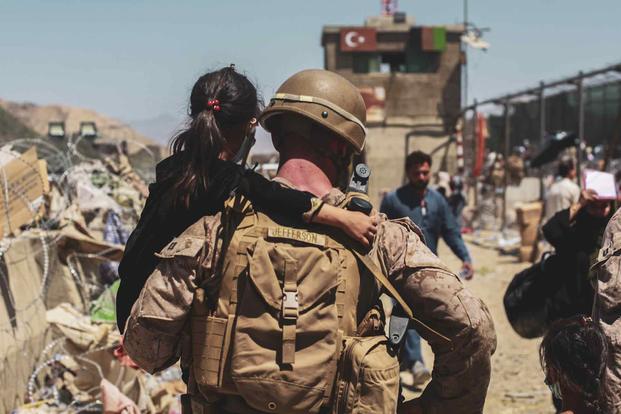
Marine carries a child during evacuation at Hamid Karzai International Airport.
A Marine carries a child to be processed during an evacuation at Hamid Karzai International Airport, Kabul, Afghanistan, Aug. 25, 2021. (U.S. Marine Corps photo by Sgt. Isaiah Campbell)

The new year will see a new Congress, and one of the first orders of business for Republicans is to investigate the Biden administration for how it handled the U.S. withdrawal from Afghanistan — an operation that saw a suicide bombing, and with it, the deaths of 13 U.S. service members and over 100 Afghans in its final few days.

Despite horrifying images of Afghans clinging, then falling from C-17s and stories from veterans reckoning with the war’s chaotic end, the withdrawal — and the 20-year conflict — has largely receded into the background of the broader public debate.

But with plans to probe the administration for its role in the chaotic pullout, those images and stories are expected to return full-force and, for the GOP, are likely to be leveled directly at the White House.


“Why did it go so badly? Why were Americans left behind? Why were Afghan partners we promised to protect, 100,000 of them, left to the Taliban?” Texas Republican and incoming Foreign Affairs Committee chair Michael McCaul told the New Republic last week. “For you to make this kind of decision, for God’s sake have a plan. And what was the plan? I haven’t seen one.”

McCaul is one of many Republicans — including Rep. Michael Waltz of Florida, a Green Beret — who has publicly telegraphed that the probe is coming. As early as last month, Axios reported that before the midterm elections, Republicans sent a letter to the Special Inspector General for Afghanistan Reconstruction requesting documents related to the conflict.

The White House message on the drawdown has been relatively consistent since the last U.S. military boots stepped off Afghan ground for the last time.

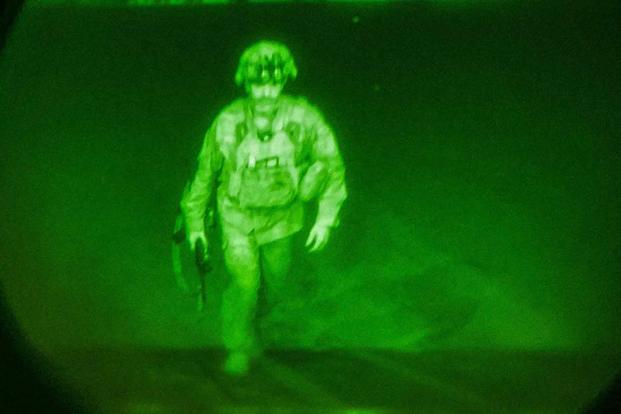
Major General Chris Donahue boards a C-17 at Kabul Airport
Major General Chris Donahue, commander of the U.S. Army 82nd Airborne Division, XVIII Airborne Corps, boards a C-17 cargo plane at the Hamid Karzai International Airport in Kabul, Afghanistan, August 30, 2021. (U.S. Army photo by Master Sgt. Alex Burnett)

The decision to withdraw was meant to save American lives, hundreds of thousands were rescued, the administration assumed the Afghan government could “hold on” after the military drawdown, and that the Trump administration put them in an untenable situation after it made promises to the Taliban about an impending American departure.

“The previous administration’s agreement said that if we stuck to the May 1st deadline that they had signed on to leave by, the Taliban wouldn’t attack any American forces, but if we stayed, all bets were off,” Biden said on Aug. 31, 2021, in an address to the nation after the withdrawal.

“So we were left with a simple decision: Either follow through on the commitment made by the last administration and leave Afghanistan, or say we weren’t leaving and commit another tens of thousands more troops going back to war,” he said.

But according to reporting from the Washington Post, the White House is bracing for political turmoil as a result of the looming probe.

Despite the withdrawal having already been picked apart by both sides of the aisle and a parade of officials having already testified at the Capitol, an investigation rehashing the events of the calamitous withdrawal will put further pressure on the Biden White House and senior military leadership that watched the collapse unfold.

The increased talk of the investigation comes as Congress spiked an omnibus provision that would have provided a pathway for Afghan refugees looking for a more permanent home in the United States — a problem that stemmed from the withdrawal that Republicans want to probe.

The Afghan Adjustment Act, which would give residency to tens of thousands of stateside Afghans facing an uncertain future, was dropped from the $1.7 trillion spending bill — and despite bipartisan support and a worldwide effort from American veterans advocating for the allies that helped them during the war.

Many of those veteran advocates leveled criticism for the spike at Congressional Republicans, some of whom have voiced concerns about the vetting process for refugees.

It is unclear how the potential probe into the drawdown will be conducted in the new Congress, or if the Afghan Adjustment Act has a path forward in its halls. But as the new year looms, the potential for images of the withdrawal and its aftermath to permeate the American consciousness once again are nearing a fierce resurgence.

Major Congressional Probe into Afghanistan Withdrawal Gearing Up
read more

Strangers in Our Own Country: How Afghan women cope with life under the Islamic Emirate

Roxanna Shapour • Rama Mirzada

Afghanistan Analysts Network

The first report in this series, How Can a Bird Fly On Only One Wing? Afghan women speak about life under the Islamic Emirate, published in November, surveyed the consequences of Taleban policies which marginalise women and erase them from public life – on household economies, women’s dreams of education and personal and professional growth, and on the power dynamics within families. Many women described how their independence had been undermined, along with their sense of self-worth and self-confidence, and how they were now struggling to maintain a sense of personhood. For a timeline of the main restrictions on the lives of women and girls since the Taleban came back to power, see footnote 1.[1]
This second report focuses on how women are responding to the onslaughts on their rights and freedoms. We spoke to 19 women living in 15 provinces, all of whom were working or had been working before the takeover.[2] The interviews were conducted in June and July 2022. Their voices have only become more pertinent as Taleban restrictions have tightened through the autumn and into winter, affecting more and more areas of their lives. The interviewees provide significant insights into how women are trying to navigate this ever more difficult landscape, where they often feel no hope, and for some, receive little support from their families. The interviews have been edited for clarity and flow. The names used aren’t their real names.

Where there is no hope 

In the summer of 2021, we asked our interviewees how they were coping with the constraints placed on their lives since the Taleban came to power and how they felt about their future prospects as women in Afghanistan. What resonated most was an overwhelming sense of hopelessness and dejection, a feeling of being strangers in their own country, and a lack of options reaching into the lives of generations of Afghan women to come.

The Taleban say they have fought for 20 years to free Afghanistan. When they say this, I feel like we aren’t from Afghanistan, that we are strangers who have come from another place. I am deeply saddened when I think about these things, I try to give hope to other people, but it is impossible for me to remain strong; I always cry because I have no other options. 

Nilab, 24-year-old single Baluch school principal, Nimruz province 

People are disappointed because the Taleban don’t compromise, and their government is not recognised yet. The girls are hopeless and weary. They’re very talented, hardworking and don’t want to waste even a day of their lives, but now they’re staying at home and thinking that the school gates might never reopen to them.

Ghuncha, 39-year-old married Tajik former civil servant, Ghor province

I have no hope that men and women in Afghanistan will be able to go to work freely. I don’t think this group [Taleban] will ever stop condemning us and I can’t imagine a time when we’ll be able to walk in Kabul freely. 

Khwaga, 32-year-old single Pashtun protestor and former civil servant, Kabul City 

I am disillusioned about living in Afghanistan. In Afghanistan, giving birth to a girl is a big mistake because there are so many problems for them here. 

Kamala, 29-year-old married Pashtun, Kunar province

Increasingly rigorous enforcement

We asked the interviewees if there had been any changes in how the Taleban enforced restrictions on women. While most reported that enforcement had increased, their experiences varied according to where they live, but also what had been ‘normal’ social practice before the Taleban takeover. The NGO worker in Nuristan said not much had changed because women in her area covered their faces and going out with a mahram even before the fall of the Islamic Republic and therefore there was no need for vigorous enforcement.

One point to note here is that, unlike other parts of the Muslim world, when Afghans refer to ‘hijab’, it is a reference to clothing that is bulky and covers both head and body and possibly face, either the chadori (burqa), which covers the face, or the abaya, with or without a niqab, or in some areas, an Iranian-style chador. When our interviewees speak of having to wear ‘hijab’, therefore, they are referring to garments which cover the head, the shape of the body and possibly the face. In Afghanistan, all women and even very young girls always wear headscarves.

In many areas of the country, the picture that emerged is a gradual hardening of enforcement, such as in Kunarwhere Kamala lives: 

In the beginning, there weren’t many restrictions for women going shopping. Now they warn women when they don’t have a mahram or because of their hijab.[3] They also warn women who work with NGOs to have a mahram when they travel to other areas. Amr bil Maruf (the virtue and vice police) is active here and claim they’re defending women’s rights, but actually, they cannot because in the past, women could visit [government] offices to solve their problems. 

According to 28-year-old married Uzbek former teacher, Sima, who lives in Samangan, it was still possible in summer 2022 to move around without a mahram in Mazar-e Sharif where her mother lives:

During the first six months, there was little enforcement [of rules], but now it’s very strict. I was going [from Samangan] to Mazar without a chadori [burqa] or mahram and no one told me anything, but in the past two months, we haven’t been able to go anywhere without a chadori, or abaya, and a mahram. Today [in Mazar], I went to the hospital with my mother in a taxi. No one told us anything, but it is impossible to do this where I live. 

38-year-old former civil servant Khalida recounted her experiences in Kabul:

The enforcement of the restrictions has increased. The Taleban tell me to cover my face and hair whenever I go out. A few days ago, in front of Gulbahar Centre, a Taleb told me that God would not forgive me. I asked why? He said that, because my face was not covered, all non-mahram men could see it. Another time. I was waiting for my friend at Haji Yaqoob Square so we could go to a book fair together. The Taleban came several times to ask me why I was standing there, who I was, and who else was with me. Life is strict for women here. The Taleban try to show the world that nothing [bad] is happening in Afghanistan. The Taleban said that women [government] employees must introduce their husbands or brothers to work in their place. They know this is impossible because everyone’s field of study and work experience is different. They just want to marginalise women and trick people.

For most women we interviewed, fear was a powerful motivator for compliance, and rumours fuelled anxieties. 28-year-old Tamana, a married Tajik primary school principal told us that while they had not witnessed strict enforcement in her area in Takhar province, news reports and rumours were causing women to restrict themselves:

I don’t wear short clothing at school, even though only my [female] colleagues are there because we are afraid of spies. Three months ago, my baby got sick and my husband, mother-in-law and I went to Taloqan. We passed through three checkpoints. The Taleban asked about our mahram and our relationships with each other. One of my friends told me that on the way to Taloqan, the driver lied to the Taleban at a checkpoint and told them that [the woman in his taxi] was his wife and that the Talebs asked him to kiss her [to prove it].

The Taleban have not restricted us in my area from going to the bazaar, but the fear lies in our hearts. We hear that the Taleban have beaten women in other places, but it hasn’t happened here yet. That’s why we are afraid. Yesterday one of my friends went to Khwaja Bahawuddin. She says the Taleban have banned black abayas and ordered all women there to wear the chadori. There is a change in my clothing too. I now wear a very long chapan [coat] and a chadori. I used to wear a shorter chapan because I don’t feel comfortable wearing long clothes. My previous clothes were also modest, but this year we were ordered to wear long chapans. 

28-year-old Najia, a married Pashtun NGO director living in Nangrahar province, told us that while not much had changed for women in her area since the Taleban takeover, she had started to place restrictions on her own movements:

I used to go places in a rickshaw, but now I don’t because I’m afraid, even though no one has said anything about it. I now have a mahram with me because of my own fear, not because it is enforced. The women here can go shopping as before. Women were already wearing the chadori, so there hasn’t been much change in what we wear. I still wear an abaya and niqab now as [I did] in the past.

24-year-old Nilab recounted how the Taleban in Nimruz stop wedding ceremonies where music is being played:

Women must wear hijab and men must grow beards. People obey these restrictions because they’re afraid of being arrested and punished. The restrictions have increased. They can’t bear even the sounds of people’s happiness. When there is a [wedding] ceremony, the Taleban arrive suddenly and order people to turn the music off or they arrest the men of the family. 

The interviews also provide insights into enforcement tactics. In many areas, the Taleban use mosques as a platform to deliver messages about restrictions on women to their menfolk, urging them to ensure the women in their families comply or prepare to face reprisals. Nilab also told us that enforcement had become less visible in her area in Nimruzand that the Taleban were delivering messages in mosques and verbal cautions to men:

They’ve been enforcing the restrictions from the beginning, but now there is Amr bil Maruf – they monitor the clothing of the students and teachers near schools. A month ago, they stopped us going shopping without a niqab and mahram. They told the shopkeepers not to let women without a mahram into their shops. Now [visible] enforcement has decreased, but they still monitor us from afar. Women can go shopping without a mahram, but if they’re not wearing a niqab and a big chador or if they’re wearing makeup, the Taleban find out where they live and threaten their guardians.[4] The Taleban have advised men at the mosques that they should not permit their women to go out of the house, go shopping or go to any public place without them. They said at the mosque that if they see a woman alone and without [proper] hijab, it will be a problem for her guardian. The Taleban also warned taxi drivers not to allow women without a mahram into their cars.

At least in some areas, there do not seem to be serious consequences for violators. For example, 20-year-old unmarried Pashtun midwife Usha who lives in Uruzgan province said no one in her area was following the rules, and she herself was carrying on very much as before:

The Taleban don’t stop women to advise them because they make their announcements in the mosques when men go for prayers, or in the offices where they tell the managers about the orders. For instance, in the hospital there were some rooms used by both males and females, and the Taleban told the director to separate them. It was announced in two or three mosques that women must not go out alone or even with two or three other women, but no one obeys, and the Taleban have not enforced it. I’ve gone to the bazaar, my friend’s home, and taught classes; the Taleban have not said anything to me yet.

Parvana, 26-year-old unmarried Tajik schoolteacher from Panjshir province said that restrictions had increased, but went on the talk about how restrictions were being driven by the ongoing conflict in the province:

I think the enforcement of the restrictions on women has increased and girls cannot go to school or university and women cannot go to work. The Taleban say the situation is normal and there’s peace here, but actually there isn’t. There is fighting in Panjshir, so families are afraid to send their daughters to university for fear of the fighting, car explosions and rape on the way. The university is almost two hours away, so families don’t send their girls – or their boys – because the situation is unstable. 

Some interviewees, such as the 35-year-old Hazara NGO worker, Manija, who lives in Mazar-e Sharif city,reported a scaling back of enforcement since the early days of the takeover:

In the beginning, the enforcement of the restrictions was very serious; now they’re not too strict on women. I don’t know the reason. In the early days, they were rude; for instance, they stopped cars by pounding on them and shouting impolitely. They asked why the women were sitting in the car’s front seats. I don’t know why they’re more polite now. They used a wooden baton to show women to cover their hair and faces. They didn’t look women in the eye when they told them this, but now they look us in the eye and I feel that slowly they too like to see women [outside]. I wear a chadori or an abaya and a mask or no mask and I go out without a mahram. No one has said anything to me yet.

However, 25-year-old protestor, Kowkab, reported a different story from her sister who was at university in Mazar:

In Mazar, girls who live in the [university] hostel cannot go home because the Taleban don’t allow them to travel without a mahram. In the past, female students did everything by themselves, including travel. I know the majority of the female students have no mahram. 

There does appear to be some room for negotiation, at least in some areas or workplaces, such as for Usha the midwife we interviewed in Uruzgan province:

I can move freely and have no problem, though there are a few restrictions on women’s clothing; for instance, the Taleban ordered us to observe hijab inside the hospital and offices; no one is following these orders yet, and no one has been forced to obey them. When the Taleban ordered female staff to observe hijab in the hospital, we told them we can’t wear an abaya inside the hospital because cleaners wash the floors with chlorine and an abaya would get dirty on the wet floor. Now, we’re wearing the clothes we wore in the past, such as shalwar kamiz and our white lab coats. 

The Taleban also ordered the female staff to come to work with a mahram. The hospital told the Taleban that female staff work separately from the men, so there is no need for a mahram, and they’re not necessary because the hospital does not allow them to enter the women’s ward. Female staff aren’t allowed to come to the hospital in a taxi, rickshaw or on foot, even if another woman accompanies them. They must either come with a mahram or use the hospital transport. Female patients aren’t allowed in the hospital without a mahram. The hospital announced this order, but no one follows it and there has been no serious enforcement. For me, there’s no change. I use the hospital transport. I wear the clothes I wore during the Republic in the hospital, and a chadori outside.

Are men in the family supportive?

When we turned to how the men in their families viewed Taleban restrictions on women, nearly all respondents said their close male relatives were generally opposed to the restrictions. This was particularly the case when it came to the closure of girls’ schools, to which most male family members appeared to be unanimously opposed. Many interviewees, however, said their extended families viewed the Taleban’s restrictions positively. The interviewees, themselves, often broadened the conversation to include the socio-cultural dynamics at play when it comes to women’s rights.

Former civil servant Ghuncha, who lives with her disabled husband and two of her seven children in Ghor province, said that men, particularly in rural areas, were happy about the new restrictions on women:

They say it’s good for women to observe the hijab and good that women are forbidden to move around. In the first years [of the Republic], no one liked women being present at meetings, but [gradually] there was a big positive change in women’s roles. So, now, men are very happy again with these restrictions because they like a government that doesn’t give any authority to women, that makes women observe the hijab, and keeps them at home to do housework and not talk loudly. This is what men want, especially the ones in the villages. My husband thinks otherwise. He thinks educated women should serve society and help other women. He says that having a mahram is not bad, but what about those women who don’t have one? My husband is against school closures because he thinks society needs women to work in different sectors such as education, the military, and health. 

The 28-year-old former teacher, Sima, from Samangan province, told us that while her husband was opposed to the restrictions, her own parents’ family were in favour of them:

All men like their wives to observe hijab and stay at home [but] my husband didn’t oppose me, he had no problem when I was going out without a mahram. He’s not happy with the new restrictions, but [the men in] my parents’ family are happy. My husband and I always worry about our children’s education. He says they should be able to study and become independent in the future. My husband wishes for me to have a job so I can help him manage our expenses. 

Tamana lives in Takhar province with her husband’s family, who are in favour of the rules on the hijab and mahram, but would like to see older girls in education:

My husband’s family agrees with the hijab and mahram rules for women, but they’re not in favour of closing schools and keeping girls out of education. Families have different mindsets. For example, my father’s family was not too restricted when it came to the hijab and mahram. I had permission to participate in all programmes, but my husband’s family is not like that and now I am 25 per cent more restricted than I was before [I got married]. 

24-year-old single Nilab lives with her family in Nimruz province she believes that even those, like her father, who disapprove of the restrictions stay quiet about it for fear of Taleban reprisals and peer pressure from the neighbours and family members:

In general, Afghan society is traditional, the education rate is low, especially in my area where the majority of men support these restrictions. Those who are educated and know these restrictions are no good have no right to speak. If they speak, Taleban intelligence will arrest them for speaking against the Emirate. My father doesn’t support these restrictions, but he keeps silent to save himself from public embarrassment. He says the hijab we had before was perfect and if the Taleban’s government is Islamic then they should ensure women’s security, instead of restricting them. 

The insurmountable challenge of finding a mahram 

Making mahrams obligatory was particularly controversial among our interviewees; for them and their male relatives, it has proved an intractable logistics challenge, as 20-year-old Usha, who lives in Uruzgan province with her parents, eight sisters and a younger brother, explained:

My father agrees with the hijab rules and is happy about them. He says girls must study as much as they want, but use the hijab everywhere they go, even if they go abroad, because it is in Islam and in the Quran. My father is against the obligatory mahram. He says he cannot be in two places at the same time.

I was in Kabul when I learned about the obligatory mahram from my colleagues at the hospital. There were female patients who didn’t have a mahram, so they were asking other women with a mahram to tell the hospital they were from the same family. I don’t think the Taleban can enforce this restriction because there are so many patients and I don’t think all of them can bring a mahram. Most bring their small sons with them. Sometimes, when I have something to do and want to go two or three hours late to the hospital, it’s a big hassle. I have to first find out if my father is free to come with me. It would be difficult for me to obey the Taleban’s order that women must be accompanied by a mahram, even if I wanted to. In my family, my mother and I both have jobs. If my father comes with me, then who should go with my mother? 

Taking a mahram along to work was also an added a financial burden for Manija in Mazar-e Sharif, given her already strained household economy:

It’s difficult for me to work because of the mahram [rule]. I must take my husband or my son with me to work, but this is so difficult to manage financially. The office doesn’t pay the travel cost of my mahram so I have to pay for it myself and if I don’t have a mahram, they stop me on the way.

Even Tamana who was able to go to work without a mahram because the school she taught at was so close to her home, reported that the requirement was limiting her professional options and the employment prospects and education of other women:

There’s a big change in women’s education and employment. In the past, the offices were recruiting women, but they don’t hire us anymore and women who work for most NGOs must have a mahram in the office. I don’t go to work with a mahram because the school is near home. My colleagues don’t come to work with a mahram either, but we can’t travel to [the provincial capital] Taloqan [for work] without a mahram. There are many checkpoints on the way and they check each woman’s mahram. I’ve worked in many offices in the past. I was going to the districts and provinces to participate in seminars and conferences without any problems. Now, that is impossible.

Finding ways to cope

In the end, after the initial shock of the takeover abated, uncertainty over the new rules gave way to resignation that they were there to stay and would, if anything increase. Still, most of our interviewees have devised at least some coping mechanisms to at least be seen to stay within the rules and minimise risk.

24-year-old unmarried Tajik, Pakiza, from Paktika province recounted how she and her colleagues complied with the rules at the NGO where she works:

In the beginning, no one was going out for fear of being beaten by the Taleban. After a month, the women started going out. The Taleban here aren’t very serious about hijab but are serious about mahrams. In the beginning, the Taleban warned women to observe hijab and take a mahram. They warned me three times to always observe hijab and have a mahram. Now, when I have a [work] meeting with them, I wear an abaya and niqab and go with a mahram, but otherwise, when I travel to another province or to the districts, I wear my own clothes and a chadori. In the first meeting, the Taleban said that men and women in our office could work together in the same room, but there had to be a distance of one metre [between them]. When we have a meeting with them, there is a one metre distance between men and woman and our mahrams wait outside.

Similarly, Nilab told us how the Taleban in Nimruz had first demanded she send a male colleague to the Department of Education to file her paperwork, but finally relented:

The Taleban’s restrictions on women have affected my mental health. I can’t bear them. We have been ordered to wear a niqab or chadori, but the weather in Nimruz is so hot, when my face is covered, it feels like fire is falling on me like rain. In the past, I could go to [government] offices freely, but when I first went to the education department, they didn’t let me in. They told me I must send a man to process my work, so I sent a male school employee, but he couldn’t process the work properly or accurately. Now, we have permission to enter the office, but we have to call the Head of Education in advance. The Taleban guards let us enter after checking our hijab.

The latest edicts

As Khadija, a 42-year-old married midwife from Kandahar, explained, women have experienced the new restrictions to their lives not in a vacuum, but when they were struggling as well, with the calamitous crash to the economy, fear of worsening poverty and in a climate of uncertainty.

The situation is unacceptable, prices are very high, the fighting might start again and there are no jobs. People are anxious and everyone is waiting for what might happen next.

42-year-old married Pashtun midwife Khadija, Kandahar province

Khadija’s fears of what might happen next were not unfounded. This month two more blows have come in quick succession – to women’s potential to earn money and to any hope that education could be a way forward for some. On 20 December 2022, the Taleban barred female students from universities and on 24 December, they banned women from working for NGOs.

The decree denying Afghan women a university education was signed by Taleban amir Hibatullah Akhundzada, “with immediate effect.” As so many times since the Taleban takeover in August 2021, women in several cities across the country took to the streets to demand their rights (see here and here). The protests were forcefully quashed by the Taleban (see for example this video in Herat where the Taleban used water canon to disperse the protestors and this report from Kabul). This time, however, the girls were joined by some male students, who walked out of classrooms and exams in solidarity with their female counterparts (see for example here and here). At Nangrahar University, male students joined women protesters and at Kandahar’s Mirwais Nika University, they were beaten and fired upon by the Taleban for protesting. More than 60 university professors and lecturers have resigned in protest. The ban was strongly condemned by the United Nations, Western capitals (see here), Muslim-majority countries (see here) and even the Grand Imam of Egypt’s Al-Azhar, the Sunni Muslim world’s leading centre of learning and jurisprudence, Ahmed El-Tayeb who slammed the move as contravening sharia. He urged the Taleban to reverse their decision (see here).

Afghan women were still trying to come to terms with this devastating blow when, four days later, the Emirate announced it was barring women from working for national and international NGOs (see here and here). For many Afghan families, the salaries of mothers and daughters working for NGOs has been a lifeline, keeping the household economy afloat and putting food on the table. For Afghan women, this ban was also a mortal blow to their hopes that the situation might improve over time. It looks to be a decisive move by the Taleban to demonstrate their resolve in removing women from the public sphere altogether. Many of the major international NGOs have called the ban a red line and suspended operations (see, for example, press releases by the International Rescue Commission, and Save the Children, Care International and the Norwegian Refugee Council). They have said that banning their female employees from working is not only a breach of humanitarian principles, but also makes their work, in practice, impossible.

The response to these last two edicts restricting women’s lives has already been greater than to all previous ones. Some Afghan men, students and university professors, have acted publicly in solidarity with female students, while the suspension of assistance in response to actions by the Afghan state that humanitarians find intolerable is a rare move, possibly unprecedented. That suspension of aid, at the start of winter when much of the population is already at breaking point, has the potential to touch off wider discontent across geographies and demographics. The Emirate may find itself under greater pressure than ever before.

Edited by Kate Clark and Martine van Bijlert 


References

References
↑1 Almost immediately after they took power, the Taleban started the campaign of repression against women. Below is a timeline of restrictions on women’s lives since the fall of the Republic on 15 August 2021:

1. First incident of violence against women protestors 5 September 2021

2. Abolished Ministry of Women’s Affairs 17 September 2021

3. Girls’ high schools not re-opened when all others were 17 September 2021

4. Female civil servants told to stay at home until further notice 19 September 2021

5. Women barred from parks and amusement parks without a mahram, a close male relative acting as a chaperone, 11 November

6. Women barred from travelling more than 72 kilometres without a mahram 26 December 2021

7. Amr bil maruf imposes strict hijab rules, including either the Chadori or black Iranian-style chador as the preferred attire 10 January 2022

8.. Universities become gender segregated 26 February 2022

9. Reversal of promise to reopen girls’ high schools 23 March 2022

10. Parks must be gender-segregated 28 March 2022

11. Women barred from driving 3 May 2022

12. Women must cover their faces in public 7 May 2022

13. Abolished Afghanistan Independent Human Rights Commission (AIHRC) 17 May 2022

14. Female TV presenters told to cover their faces on air 21 May 2022

15. Female students barred from selecting civil engineering, journalism, veterinary, agriculture and geology in the annual university entry exams 14 October 2022

16. Women barred from parks, gyms and public baths 13 November 2022

17. First official flogging of three women for moral crimes 18 November 2022 (after Amir issued decree for full implementation of sharia law on 14 November).

18. Women barred from universities and education centres 20 December 2022

19. Women banned from working for NGOs 24 December 2022

↑2 Research for this report was conducted in June and July 2022 – semi-structured phone interviews with 19 women between the ages of 20 to 42. They were from 15 provinces, Daikundi, Ghazni, Ghor, Helmand, Kandahar, Kunar, Mazar-e Sharif, Nangrahar, Nimruz, Nuristan, Paktika, Panjshir, Samangan, Takhar and Uruzgan, eight living in provincial capitals and seven in rural districts, with four other interviewees from Kabul city. Our interviewees came from diverse communities and ethnicities across Afghanistan – one Baluch, four Hazaras, one Nuristani, five Pashtuns, seven Tajiks and one Uzbek. All interviewees were either currently employed or had been working until the Taleban takeover. This was by design as we sought to find out how the changes and restrictions had affected the lives of women who had previously been active in public life. Two of the interviewees were university students and several had had plans to continue their education, but these plans were derailed by the economic problems they encountered after the fall of the Republic. Four of the interviewees were protestors.

The interviews were conducted through open-ended questions in a free-flowing conversation that roughly followed the outline of the following questionnaire. Our intention was to allow interviewees to speak about the one or many significant changes in their lives without being prompted. This approach allowed us to first get a sense how they ranked the significance of these changes before exploring the nuances of their experience in greater detail. The semi-structured questionnaire consisted of nine open-ended questions:

1. What has changed in your day-to-day life since the Taleban came to power?

2. Which of the changes has had the most impact, or do you think is the most important effect?

3. How are these changes affecting you personally and your family in general?

4. How are they affecting other women in your extended family and community?

5. What changes are there in the enforcement of the orders/restrictions regarding women since the Taleban came to power?

6. What do your male relatives think of the recent restrictions?

7. How do you feel about the changes?

8. In what ways would you like the current situation to be different?

9. How do you think this can happen?

↑3 According to officials rules, women should wear a burqa/chadori or an abaya with face veil when outside the home, which they should leave as little as possible and only with good reason. See this earlier AAN report, “We need to breathe too”: Women across Afghanistan navigate the Taleban’s hijab ruling.
↑4 Taleban view a woman’s husband, father or brother, or even son as her guardian, ie legally responsible for her.


Strangers in Our Own Country: How Afghan women cope with life under the Islamic Emirate
read more

UN suspends some Afghanistan programs after ban on female aid workers

The Guardian

28 Dec 2022

Many humanitarian activities ‘paused’ as Taliban decision to bar women NGO workers prevents vital services across the country

UN aid chief Martin Griffiths, the heads of UN agencies and several aid groups said in a joint statement on Wednesday that women’s “participation in aid delivery is not negotiable and must continue”, calling on authorities to reverse the decision.

“Banning women from humanitarian work has immediate life-threatening consequences for all Afghans. Already, some time-critical programmes have had to stop temporarily due to lack of female staff,” read the statement.

“We cannot ignore the operational constraints now facing us as a humanitarian community,” it said. “We will endeavour to continue lifesaving, time-critical activities … But we foresee that many activities will need to be paused as we cannot deliver principled humanitarian assistance without female aid workers.”

The move came as foreign ministers of 12 countries and the EU, including the United States and Britain, urged Afghanistan’s Taliban-led government to reverse its decision barring female employees of aid groups.

The ministers from countries including the US, France, Germany, the UK and Australia, said the Taliban’s “reckless and dangerous order” has put at risk millions of Afghans who rely humanitarian assistance for their survival.

Almost all the large NGO aid agencies operating in Afghanistan have suspended almost all their work while talks continue to persuade the Taliban to rescind or clarify their decision. Tens of thousands of aid workers – many of them the chief breadwinners for the household – have been told to stay at home during the suspension, as the UN seeks to persuade the Taliban of the consequences for ordinary people in Afghanistan.

The aid agencies say under Afghanistan’s customs they cannot provide vital services to women such as health advice without female staff or doctors.

Not all Taliban ministries support the ban on women working for NGOs and are looking at a plan that could allow women to continue working in a way that satisfies the conservative-minded leadership in Kandahar. Ramiz Alakbarov, the UN’s top humanitarian coordinator in Afghanistan, claimed the Taliban health ministry had accepted it should continue its health-related work and women could “report to work and discharge their services”.

Samira Sayed Rahman, a spokesperson for the International Rescue Committee, told the Guardian from Kabul that many of the past issues between aid agencies and the Taliban had been at checkpoints about the lack of a mahran, a male guardian, rather than whether our women workers were wearing the hijab, but that was the issue raised by the Taliban in announcing the ban on women workers at NGOs.

“It puts us in an incredibly difficult situation. Aid prevented a famine last winter. We have 28 million people in urgent need of humanitarian assistance, but the de facto authorities made the decision that women cannot work in national and international NGOs.

“It is practically impossible to continue our work without female staff. This is a conservative society and we need female workers to access women. This is a country where men and women do not interact in the public space. We would be cut off from half of Afghanistan.

“The impact is not just in terms of aid, but lost jobs. We have to be hopeful that the de facto authorities understand the implications of this.”

In a rare show of unanimity the 15-strong UN security council agreed on Tuesday and called for the full participation of women and girls in Afghanistan. “These restrictions contradict the commitments made by the Taliban to the Afghan people as well as the expectations of the international community,” the UN said.

It added it was also “deeply alarmed” by the increasing restrictions on women’s education, calling for “the full, equal and meaningful participation of women and girls in Afghanistan”.

The Taliban have already suspended university education for women and secondary schooling for girls.

Shahabuddin Delawar, the Taliban’s acting minister of mining and oil, said that by April a decision would be made regarding the opening of schools and universities for girls, which was in line with both sharia and “Afghan customs”.

He told TOLOnews TV that the decree of Haibatullah Akhundzada, the leader of the Taliban, regarding the closure of schools and universities might be temporary.

Reuters contributed to this report

UN suspends some Afghanistan programs after ban on female aid workers
read more