
US watchdog ‘cannot assure’ Afghanistan aid not going to Taliban

By

The head of the Special Inspector General for Afghanistan Reconstruction (SIGAR) has decried a lack of transparency from United States agencies that he said has made it impossible to determine if aid allocated to the people of Afghanistan is instead “currently funding the Taliban”.

During a fiery testimony on Wednesday to the US House Oversight Committee, Special Inspector John Sopko accused the State Department and other agencies of failing to provide legally mandated information that would allow the watchdog to perform its oversight duties.

SIGAR is charged with overseeing about $8bn that the US has “provided or otherwise made available” to the Afghan people.

Those funds, US officials have said, are meant to circumvent the Taliban, which Washington still considers a “terrorist organisation”. The Taliban seized power in Afghanistan weeks before the US completed a full troop withdrawal in August 2021.

“I cannot report to this Committee or the American people on the extent to which our government may be funding the Taliban and other nefarious groups with US taxpayer dollars,” Sopko said in a prepared opening statement.

“We simply do not know since the Department of State, USAID, the UN and other agencies are refusing to give us basic information that we or any other oversight body would need to ensure safe stewardship of tax dollars.”

White House spokesperson Karine Jean-Pierre pushed back on the claims.

The administration of President Joe Biden has “consistently provided updates and information” about the spending, she said.

That includes “thousands of pages of documents, analysis, spreadsheets and written responses to questions”, as well as congressional testimony and “hundreds of briefings to bipartisan members and also their staff”, Jean-Pierre explained.

The hearing comes a day after Ramiz Alakbarov, the United Nations Deputy Special Representative and Humanitarian Coordinator for Afghanistan, said the country “remains the world’s largest humanitarian crisis in 2023”, with 28 million people now depending on aid to survive.

He added the country’s gross domestic product (GDP) declined by up to 35 percent in the last 18 months, with the cost of a basic food basket increasing by 30 percent and unemployment by 40 percent.

UN chief António Guterres has said he will convene a meeting of special envoys to Afghanistan on May 1 and 2 in Doha, Qatar, which is meant to “reinvigorate international engagement” on Afghanistan.

UN officials have also suggested the meeting could include “baby steps” towards the international community formally recognising the Taliban, albeit with conditions attached.

US aid to Afghanistan included $3.5bn transferred from otherwise frozen Afghan central banks funds to an international fund aimed at stabilising the country’s economy, Sopko said.

He also noted $2bn in humanitarian and development aid and another $2.8bn from the Department of Defense to support the transport, housing and food needs of Afghan allies evacuated from the country.

He added it was “clear” from the SIGAR’s work that the Taliban were benefitting from the aid, including by imposing customs and vendor charges on aid shipments coming into the country.

Sopko also accused the Taliban of diverting funds away from groups it “considers hostile”, such as the Hazaras ethnic minority, “and toward groups they favour”.

Those findings were detailed in the latest SIGAR report also released on Wednesday.

Later in the hearing, Sopko added: “I haven’t seen a starving Taliban fighter on TV. They all seem to be fat, dumb and happy. I see a lot of starving Afghan children on TV. So I’m wondering where all this funding is going.”

Still, he stressed, the full benefits the Taliban were taking from foreign aid remain unknown.

“When SIGAR asked State how much revenue the Taliban is collecting from the UN, NGOs or other groups delivering international aid, shockingly State’s response was that it didn’t know,” he said.

“Similarly, the UN does not provide State or SIGAR detailed accounts of its expenditures, nor that of its partners. We believe this lack of information makes it impossible to make informed decisions about programme effectiveness.”

The watchdog’s latest report also painted a grim picture of the status of pledges to relocate the tens of thousands of Afghans who worked with the US during its two-decade occupation of the country.

The latest figures show 175,000 Afghans are waiting for the US government to process their Special Immigration Visa (SIV) or US refugee applications. With only about 20 percent of SIV applications already processed, the watchdog noted it could take decades to complete the relocation.

“According to one estimate, at the current pace, it will take 31 years to relocate and resettle all SIV applicants,” the report said.

On April 7, the Biden administration released a summary report of the Afghanistan withdrawal, in which the administration defended its decision to pull out of the country.

The agencies involved in the pullout largely placed the blame for its chaotic execution on decisions made by the administration of former President Donald Trump, including an overall lack of planning.

“Indeed, there were no such plans in place when President Biden came into office, even with the agreed upon full withdrawal just over three months away,” the summary report said.
SOURCE: AL JAZEERA
US watchdog ‘cannot assure’ Afghanistan aid not going to Taliban
read more

Applicants Criticize Rise in Fees for Electronic IDs

This comes as the National Statistics and Information Authority said that the prices have increased due to a surge in operational expenses.

Afghan applicants expressed criticism over the rising of electronic ID cards, saying that they have been asked to pay 500 Afs per one ID.

They also urged the Islamic Emirate to reduce the price.

The price of one ID card has increased from 300 to 500 Afs.

“The people of Afghanistan cannot afford ID cards at this price. We call on the Islamic Emirate to bring the price of Tazkiras to 100 Afs, which it was during the Republic time,” said Subhanallah, an applicant.

“The Tazkira should be less because some of the families are between eight to nine people. They cannot afford this Tazkira,” said Rasul, an applicant.

This comes as the National Statistics and Information Authority said that the prices have increased due to a surge in operational expenses.

“Based on a new decision of the National Statistic and Information Authority, the price of the electronic ID increased from 300 to 500 Afs. The main reason for this is the rise in service costs and the expense of carbonite cards in the international markets,” said Mohammad Haleem Rafi, a spokesman for the NSIA.

Based on the NSIA, between 14,000 to 15,000 ID cards are distributed each day across the country and a total of 3.8 million ID cards were distributed after the Islamic Emirate swept into power.

Applicants Criticize Rise in Fees for Electronic IDs
read more

Kazakhstan to Reopen Afghan Embassy, Consulate: Mullah Baradar

In order to improve relations, the Islamic Emirate asked this high-ranking Kazakh official to receive the diplomats of the current Afghan government.

The first deputy of the prime minister, Mullah Abdul Ghani Baradar, said that Serik Zhumangarin, Kazakhstan’s deputy prime minister and Minister of Trade and Integration, pledged to reopen the embassy and consulate of the current Afghan government in Kazakhstan.

Baradar said that the Islamic Emirate is working on improving interactions with the world.

“They indicated this … yesterday, that we will reopen our embassy or consulate in Afghanistan and assured us that we can also reopen our embassy and consulate there,” Baradar noted.

A delegation of Kazakhstan, led by the deputy prime minister and minister of trade and integration, visited Kabul on Saturday and had meetings with a number of senior officials of the Islamic Emirate, including Mullah Abdul Ghani Baradar.

In order to improve relations, the Islamic Emirate asked this high-ranking Kazakh official to receive the diplomats of the current Afghan government.

Meanwhile, some analysts said that accepting Islamic Emirate diplomats without also recognizing the current government is a one-way relationship.

“Sending and accepting diplomats without official recognition … is a one-way relationship and has one-sided benefits,” said Noorullah Raghi, former diplomat.

“If in general the international community, US, European Union, Russia, China does not give recognition, I don’t think other countries will recognize the Islamic Emirate,” said Noorullah Raghi, a former diplomat.

Although the Islamic Emirate has diplomatic missions in Tehran, Istanbul, Islamabad, Dubai, Moscow, Beijing, and a number of Arab and African nations, no nation has recognized the Islamic Emirate.

Kazakhstan to Reopen Afghan Embassy, Consulate: Mullah Baradar
read more

Taliban close education centers in southern Afghanistan

By RAHIM FAIEZ

Associated Press
17 April 2023

ISLAMABAD (AP) — Afghan authorities are closing education centers and institutes supported by non-governmental groups in the south until further notice, officials said Monday. The centers are mostly for girls, who are banned from going to school beyond sixth grade.

The Education Ministry ordered the Taliban heartland provinces of Helmand and Kandahar to close education centers and institutes while a committee reviews their activities. It did not provide an explanation for the closures and a ministry spokesman was not immediately available for comment.

Mutawakil Ahmad, a spokesman for the Kandahar education department, confirmed that education centers’ activities are suspended until further notice. “The decision was made after people’s complaints,” said Ahmad, without providing further details.

Despite initial promises of a more moderate rule than during their previous stint in power in the 1990s, the Taliban have imposed harsh measures since taking over the country in 2021 as U.S. and NATO forces were pulling out of Afghanistan after two decades of war.

The female education ban extends to universities. Women are barred from public spaces, including parks, and most forms of employment. Last year, Afghan women were barred from working at national and local NGOs, allegedly because they weren’t wearing the hijab, or Islamic headscarf, correctly and a gender segregation requirement wasn’t being followed. This order also includes the United Nations.

At least two NGO officials in Helmand confirmed they knew about the Education Ministry’s order. They spoke on condition of anonymity because they weren’t authorized to speak to the media.

One said the NGO was active in nine districts, offering around 650 classes with 20 to 30 students in each class. Girls and boys attend the classes, he said, but mostly girls as they can’t attend schools.

Most projects are from UNICEF, the U.N. children’s organization, with local NGOs working as sub-contractors or project implementers. Female and male teachers work in separate classes.

Ministry workers supervise all their activities, the official added.

Noone from UNICEF in Afghanistan was immediately available for comment.

An education official in Kandahar said many NGOs are active in the education sector and provide education for girls. But he said there is a need to review their activities as there is no accountability over their expenses and there are concerns over corruption and suspicions about centers and institutes being ghost schools. The official, a district director of education, spoke on condition of anonymity because he was not authorized to speak to the media.

It was not clear how many centers and institutes were shuttered or how many students are affected in the two provinces because of the order.

Taliban close education centers in southern Afghanistan
read more

Taking a Terrible Toll: The Taliban’s Education Ban

Over a year and a half after the Taliban barred girls from secondary education, ‘the sadness is overpowering,’ one female student told USIP.
In March, 20 months after the Taliban banned Afghan girls from receiving secondary education, another school year began in Afghanistan — the only country in the world where girls are prohibited from going to school beyond the primary level. Since the Taliban’s August 2021 takeover, the group has sought to marginalize women and girls and erase them from virtually every aspect of public life. After a September 2021 ban on high school education, the Taliban also barred women from attending university at the end of last year. In a series of interviews with USIP, Afghan mothers, female students, schoolteachers, and university lecturers spoke of the terrible toll the Taliban’s actions have taken on their mental health.

The Taliban have implemented over 20 written and verbal decrees on girls’ education — with each edict adding more and more restrictions. These decrees, among other things, ban: co-education; secondary education for girls; certain majors for female university students (including journalism, law, agriculture, veterinary science and economics); and annual university entry exams for female students. Meanwhile, university female lecturers face severe restrictions designed to keep them from interacting with men on campus.

Beside these draconian rules, the Taliban are also targeting girls’ and boys’ schools. In the past two weeks alone, two girls’ schools in Faryab and Paktia provinces and a boys’ school in Panjshir have been burned down. These attacks exhibit a common tactic used by the Taliban to clamp down on education.

These actions will have devastating, long-term implications not just for women and girls but the very social and economic fabric of Afghan society, with half of the population unable to contribute to their country’s future.

Hard-won Gains

This stands in sharp contrast to the educational gains Afghanistan had made since 2001. Indeed, prior to the Taliban takeover, the country’s education sector was thriving, with access for girls across all 34 provinces at all education levels — except in areas under the Taliban control.

From 2002 to 2021, 3,816,793 girls enrolled in first through 12th grades. According to the Afghan Ministry of Education’s 2020-2021 annual report, there was 18,765 public and private schools in operation. Afghanistan also had more than 200,000 teachers, including 80,554 women. Over 100,000 Afghan women were enrolled in public or private universities in 2020 and, according to 2019 figures, there were 2,439 female lecturers at higher education institutions. Public and private universities flourished in the last two decades, providing women and girls with countless opportunities to contribute to Afghanistan’s future.

These educational advances fostered broader societal achievements and gains for women. Before the Taliban takeover, 63 women were in the Afghan parliament, nine held minister- or deputy-minister level positions. Afghanistan’s judicial system had 280 women judges and over 500 prosecutors. There were over 2,000 women-owned small- and medium-sized businesses.

This is just a snapshot of how women were increasingly playing vital roles in Afghanistan’s traditionally patriarchal society. The Taliban have worked to quickly erase all this progress — and it is wearing on the hearts and minds of women and girls.

The Psychological Impact

The evaporation of these advancements has led to dire psychological impacts. During interviews with Afghan women and girls, USIP heard distressing reports about girls that have been out of school exhibiting signs of post-traumatic stress disorder, depression, anxiety and suicidal thoughts, saying they feel they are living a life with no purpose and an uncertain future. “My students are suffering from attention deficiency. Most have learning difficulty and display signs of depression and anxiety,” said a ninth-grade teacher from an underground private school in Kabul.

Some are even isolating themselves from family, while others have turned to narcotics, further fueling Afghanistan’s drug crisis. Those that are using narcotics see it as a way to escape and create alternate realities for themselves. “I like being in my imaginary world I have created for myself. There, I am safe, and I can do whatever I want,” said one female student from Takhar province who told USIP she was using synthetic drugs. “You are probably going to laugh at me, but in that world, I am going to graduate next year and become a pilot.”

These forlorn sentiments are shared by many in Afghanistan. One sixth-grade student from Kabul told USIP that when she thinks about her future, she is “restless and agitated” and that at times “the sadness is overpowering.” She has dreams of becoming a psychologist and her mother, who is a teacher, tells her that despite the current situation she should continue to hold out hope for a brighter future.

The mother of an eighth-grade student from Maidan Wardak, burst into tears while sharing concern about her daughter’s mental health. “My daughter puts on her uniform several times a day. She talks to herself all day about school, her teachers and her classmates. I feel helpless.”

Afghanistan already had a paucity of female mental health experts and Taliban travel restrictions have exacerbated this situation, making it difficult for these experts to even reach communities in need.

Without mental health counselors and practitioners, these girls have no resources to turn to in this critical juncture of their lives.

The Ministry for the Propagation of Virtue and Prevention of Vice and the Ministry of Education have begun administering religious tests for teachers. These tests are intended as a mechanism for the Taliban to dismiss educated and experienced teachers and replace them with those that are not formally educated or experienced, with the majority only educated at madrassas. The Taliban have also created an incentive structure with the test, providing teachers that pass the religious test with a modest bonus or salary increase. A teacher from northern Kunduz province with over 25 years’ experience was dismissed last fall because she failed the religious knowledge test last year. “Our society is about to sink in a dark pit that the Taliban keep digging deeper and deeper,” she said.A teacher at an elementary school in Kabul noted that harassment and intimidation by the officers of the Ministry of Propagation of Virtue and Prevention of Vice is now routine. The ministry has told teachers that white running shoes, high heels and bright colored clothing are banned. In many parts of the country, teachers are ordered to cover their face even inside classrooms while teaching. “We are faced with constant humiliation by Taliban-appointed school officials within the school and by Vice and Virtue and police outside schools, questioning our knowledge of Islam, harassing us because of our outfits,” she said.

Throughout the country, the Taliban’s decrees and bans have been met with vocal opposition from men and women, including education activists working tirelessly to advocate for girls’ access to education. Matiullah Wesa is one of these individuals. In 2009, he founded Pen Path Civil Society and Pen Path Helping Charity Organization to provide education to disadvantaged girls and boys in remote areas in all 34 of Afghanistan’s provinces. Since its inception, the organization has provided education access to 57,000 children, 35 percent of whom are girls.

On March 27, the Taliban detained Wesa — his whereabout remain unknown to his family. For those like Wesa that push for basic human rights, forced disappearances and abductions have become commonplace. This is a serious human rights violation that has become a routine Taliban practice to spread terror and silence dissenting voices.

Sustaining Focus on the Plight of Afghans

These edicts and bans will not go away overnight, nor can they be wished away. It is therefore incumbent on concerned parties to maintain consistent and firm pressure on the Taliban — at the domestic, regional and international levels — to allow girls to attend school and open access to female university students and lecturers.

Education and protection against discrimination are basic human rights, enshrined in the Convention on the Elimination of All Forms of Discrimination Against Women, the Convention against Discrimination in Education and the Universal Declaration of Human Rights. The Taliban should be forced to observe the principles upheld in these conventions or be brought to justice in international fora.

Given the Taliban’s resilience to international pressure to date, there are very limited policy options to circumvent their draconian strictures or compel them to change behavior. Online educational platforms promise secure learning within the home, but millions of Afghan women and girls living in rural areas have limited internet access. The Organization of Islamic Cooperation (OIC) and Muslim-majority countries have called on Taliban to rescind their bans, but it has resulted in no change and it’s unlikely the OIC will be more engaged on this issue. And the international community’s sanctions have had no demonstrable impact.

The international community has largely turned its attention away from the dire situation in Afghanistan, as it focuses on atrocities in Ukraine and elsewhere. For now, it is vital for the international community to continue to spotlight the Taliban’s abuses against Afghanistan’s beleaguered women and girls. “Please be the voice of Afghan mothers and tell the world about our suffering,” pleaded the mother from Maidan Wardak. That is the least we can do.

The names of those interviewed for this article have been omitted for their safety.

Taking a Terrible Toll: The Taliban’s Education Ban
read more

West Meets Qatar’s Prime Minister, Discusses Afghanistan

“Qatar is a crucial partner as we seek to protect US interests, support the Afghan people and defend their rights,” West said.

US special envoy for Afghanistan, Thomas West, who is on a regional trip, met with Qatar’s Prime Minister Mohammed bin Abdulrahman Al Thani and special envoy for conflict resolution Mutlaq Al-Qahtani to discuss “the way ahead in Afghanistan.”

In a series of tweets about the meeting, West said they consider Qatar as a crucial partner of the US, adding that Washington is committed to defending the rights of the Afghan people.

“Qatar is a crucial partner as we seek to protect US interests, support the Afghan people and defend their rights,” West said.

Meanwhile, Qatar’s Prime Minister Mohammed bin Abdulrahman Al Thani in an interview with a Qatari media outlet, said that his country has played an important role in the agreement between the US and the current government in Afghanistan.

“The government of Qatar has worked and played a significant role in many regional and international cases in the field of mediation and achieved success in the area of the agreement between the US and the Afghan Taliban,” Qatar’s Prime Minister said.

“The people of Afghanistan, all Afghan politicians and officials, as well as countries in the region, hope that the start of Thomas West’s trip to regional and neighboring countries of Afghanistan will be helpful in solving problems faced by the people of Afghanistan,” said Najib Rahman Shamal, a political affairs analyst.

West also met with Hekmat Khalil Karzai, the former deputy foreign minister under the previous government, and discussed the lifting of restrictions on women’s employment and education.

“Over the last few decades, the issue of violation of human rights and women’s rights has been a challenge for the governments in Afghanistan. I hope that the current government takes this matter into consideration so that Afghanistan gets rid of political and economic isolation,” said Zalmay Afghanyar, a political affairs analyst.

Previously, the US State Department in a statement said that its special envoy is visiting the UAE, Qatar, and Turkey at a time when women are not permitted to work in UN offices in the province of Nangarhar.

West Meets Qatar’s Prime Minister, Discusses Afghanistan
read more

Russia Calls for Establishing of Inclusive Government in Afghanistan

The Russian foreign minister also expressed his concerns over the spread of “terrorist groups” and threats from Afghanistan.

Russian Foreign Minister Russian Sergei Lavrov has said that the recognition of the current Afghan government is possible by establishing an inclusive government and respecting the rights of women and girls.

Speaking at the sixth meeting of the CA5+Russia format on Friday, Lavrov said that it is necessary to maintain diplomatic relations between Afghanistan’s neighboring countries and the current Afghan government.

“This will of course be an important step towards official recognition, not only de-facto recognition of the Taliban leadership but de jure recognition of the new Afghan government. It is also fundamentally important to address an issue of voting rights, educational rights for women and girls in order for these issues (of inclusiveness) to be resolved more quickly,” Lavrov noted.

On April 14, Samarkand, Uzbekistan, hosted the sixth meeting in the CA5+Russia format.

It was attended by Foreign Minister of Russia Sergey Lavrov, Deputy Prime Minister and Foreign Minister of Kazakhstan Murat Nurtleu, Foreign Minister of Kyrgyzstan Jeenbek Kulubaev, Foreign Minister of Tajikistan Sirojiddin Muhriddin, Deputy Prime Minister and Foreign Minister of Turkmenistan Rashid Meredov and Acting Foreign Minister of Uzbekistan Bakhtiyor Saidov.

“Almost all of us are unanimous in the need to maintain and develop contacts with the Taliban government, which, despite the weakening of its position due to the growing terrorist threat, still retains power, retains control of the country,” Lavrov said at the meeting.

“The Islamic Emirate should accept the advice of foreign ministers of neighboring countries and respect human and women’s rights,” said Abdul Malik Afghan, a political analyst.

The Russian foreign minister also expressed his concerns over the spread of “terrorist groups” and threats from Afghanistan.

“Terrorists, not only Daesh but also other organizations are rising. There are reasons that our Western friends are involved in encouraging terrorist acts,” Lavrov noted.

According to the Islamic Emirate’s spokesperson, Zabihullah Mujahid, it is beneficial for everyone involved to maintain relations within the context of the regional and neighboring countries’ economic and political cooperation.

The Islamic Emirate officials have often emphasized the importance of fighting against terrorism and preventing Afghanistan’s territory from being used against other countries.

“The countries were assured that Afghanistan’s soil is secure and stable and collaboration should take place with this stability and security. The policy of the Islamic Emirate of Afghanistan was reiterated that no one will be harmed from Afghanistan’s soil,” Mujahid added.

Samarkand hosted various events, including a quadrilateral meeting, the fourth meeting of foreign ministers from Afghanistan’s neighbors, and the Commonwealth Heads of Government meeting on April 13 and 14.

At the Commonwealth Heads of Government Meeting, the participants also discussed regional and global issues.

Russia Calls for Establishing of Inclusive Government in Afghanistan
read more

PM’s Political Deputy Meets Kabul-Based Diplomatic Envoys

For two years no country has recognized the Islamic Emirate, but some countries like Iran, UEA, and Turkey have accepted Islamic Emirate diplomats.

The Prime Minister’s office said that considering the current situation, political and diplomatic agencies can continue their activities with full confidence in Afghanistan.

One Wednesday, Deputy PM Mullah Abdul Kabir held a meeting with ambassadors and representatives of Uzbekistan, Kazakhstan, Kyrgyzstan, Turkey, Pakistan, Iran, Indonesia, and Roza Otunbayeva, special envoy for the UN, UNAMA’s deputy head, and the head of Aga Khan Foundation in Afghanistan, and he said that right now security is ensured in the country.

“It was a friendly invitation for Iftar by the political deputy PM for ambassadors and representatives of Islamic countries, and both sides stressed the need for good relations,” said Mohammad Hussan Haqyar, head of Media at the PM’s office.

According to the statement, in the meeting, acting Foriegn Minister Amir Khan Muttaqi emphasized that the current government wants good relations with all the countries of the world, and pledged to the participants that Afghanistan will not be threatened by other countries.

“The government should consider the interests of the people, girls must be educated, and women should be allowed to work,” said Tariq Farhadi, a political analyst.

“The government of Afghanistan has taken steps to have good relations with the world…” said Najibullah Jami, political analyst.

For two years no country has recognized the Islamic Emirate, but some countries like Iran, UEA, and Turkey have accepted Islamic Emirate diplomats.

PM’s Political Deputy Meets Kabul-Based Diplomatic Envoys
read more

OIC Delegation to Travel to Kabul

According to the OIC, the process of delivering aid to the people of Afghanistan will also be discussed. 

A delegation of the Organization of Islamic Cooperation will travel to Kabul to discuss various issues with the Islamic Emirate, including lifting the ban on women’s work, the organization said.

The OIC ambassador in Afghanistan stressed the need to lift the ban on women’s work and said that work for women should be provided, within the framework of Islam in the country.

According to the OIC, the process of delivering aid to the people of Afghanistan will also be discussed.

“Our representative will discuss economic progress, health, and education in his meeting with Islamic Emirate officials,” said Muhammad Saeed Al-Ayash, head of the OIC office in Kabul. He added: “Our office condemns this decision, and our office has repeatedly discussed it with Islamic Emirate officials and asked for work to be provided for women in the framework of Islam and Afghan culture,”

Meanwhile, the OIC will distribute its second humanitarian aid package for 10,000 families. this aid will be distributed in six provinces in coordination with the Afghan Red Crescent Society.

“This material weighs 62 kilograms (per package), and includes flour, rice, beans, sugar, and dates, and we are trying to increase the donations,” said Tawfiq Ahmad, head of the humanitarian aid section of the OIC.

According to the Afghan Red Crescent Society, after the Islamic Emirate takeover, more than 200,000 families have been helped in the country.

Earlier, the OIC helped with food materials for 280,000 people in five provinces, and this organization is planning to help 10,000 families with food materials in six provinces.

OIC Delegation to Travel to Kabul
read more

Former Afghan interpreter graduates from boot camp to become a Marine

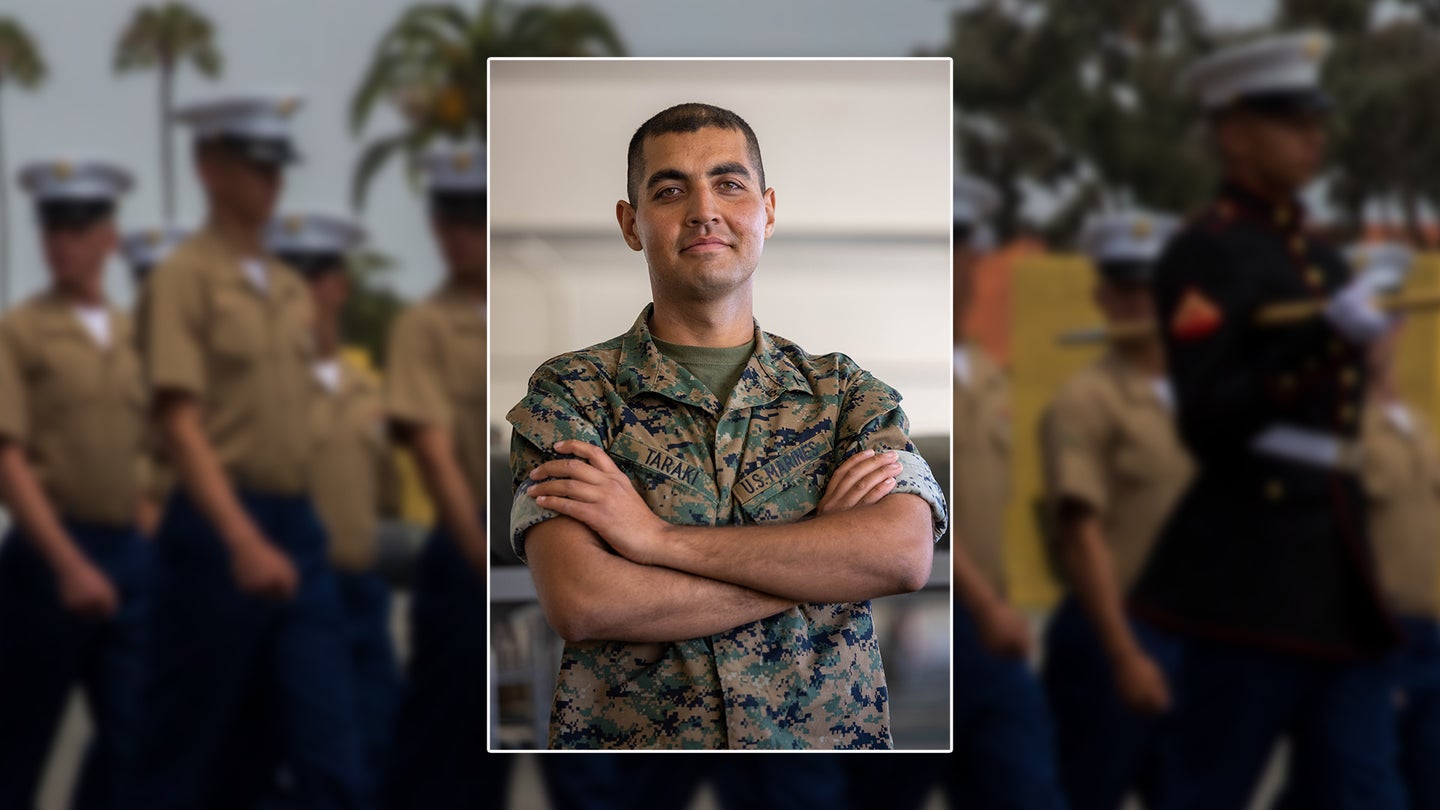
Aformer Afghan interpreter who served with the U.S. Marines in his home country has earned the title of Marine.


Marine Pfc. Aimal Taraki, who left Afghanistan after serving as an interpreter for U.S. forces, graduated from Marine Corps Recruit Depot San Diego on April 7, 2023. Lance Cpl. Alexander Devereux/U.S. Marine Corps.

Pfc. Aimal Taraki, who graduated from Marine Corps Recruit Depot San Diego on April 7, said he was inspired to join the Corps by his time working with the U.S. military in Afghanistan, according to a Marine Corps news story.

Taraki was born in Mazar-i-Sharif in 1994, when Afghanistan was in the midst of a civil war that brought the Taliban to power two years later. His family later fled to Pakistan, where he learned English.

After spending about six years in Pakistan, his family returned to Afghanistan and settled in Kabul. Even though the Taliban were no longer ruling the country, they continued to carry out attacks in Kabul and elsewhere in Afghanistan.

“There’s a place called the Massoud Circle, which is right next to the U.S. Embassy [in Kabul],” Taraki said. “It was a perfect place for the Taliban to make an attack. They filled a car with explosives, and when they detonated it, I was sleeping. I remember waking up to the explosion and all of our windows were shattered even though we were several miles away.”

Former Afghan interpreter graduates from boot camp to become a Marine
U.S. Marine Corps PFC Aimal Taraki at Marine Corps Recruit Depot San Diego, April 3, 2023. (Lance Cpl. Alexander Devereux/U.S. Marine Corps)

The U.S.-led war to oust the Taliban and turn Afghanistan into a functioning democracy lasted 20 years, during which the Taliban insurgency only grew stronger as the war dragged on. Many brave Afghans worked for the American military, often risking their lives in combat to protect the troops they served with.

In 2016, Taraki decided to use the English language skills he developed in Pakistan to become an interpreter for the U.S. and other NATO troops. Two years later, he secured a visa that allowed him to come to the United States, where the rest of his family lives.

“I had a lot of different things I wanted to do with my life after I moved to the U.S.,” Taraki said. “I thought, ‘Should I go to college? Start my own business?’ I decided that I can do any job and have any career, but first I want to be a Marine. This way I can say thank you to the United States and the Marine Corps for helping me.”

Former Afghan interpreter graduates from boot camp to become a Marine
read more