US Representatives Concerned by Misuse of US Aid by Islamic Emirate

The letter was also signed by some other members of the House of Representatives.

US Representative Michael McCaul, chairman of the House Foreign Affairs Committee, in letter to the Administrator of the United States Agency for International Development (USAID) expressed concerns over the “Taliban’s misuse and diversion of US-funded humanitarian and development assistance flowing into Afghanistan.”

The letter was also signed by some other members of the House of Representatives.

“While the humanitarian crisis in Afghanistan undeniable, it is essential that US provided assistance benefits suffering Afghans rather than the Taliban,” they wrote.

But the Ministry of Economy denied the claims in the letter of the US representatives, saying that the Islamic Emirate is attempting to provide aid with transparency.

“We not only interfere in international aid but we provide further facilities for it. Our monitoring is aimed at reaching the people who deserve it, through transparency,” said Abdul Latif Nazari, Deputy Minister of Economy.

Afghanistan plunged into a severe economic crisis after the collapse of the former government that followed with the suspension of international aid and the freezing of more than $9 billion in foreign reserves.

“One of the reasons that this aid does not reach the people who are in need of it, is that they (Taliban) support their own ruling in Afghanistan,” said Sayed Masoud, an economist.

This comes as some economists say that international aid will not solve economic challenges until it is directed at development projects.

“Unfortunately, it has been 42 years that we are being provided with aid. We don’t have any positive result. Its results could be seen when we do fundamental work,” said Abdul Baseer Taraki, an economist.

“Investment of international aid in major economic and intrastromal projects can create jobs and also increase the level of production and it will also increase the level of income,” said Seyar Qureshi, an economist.

Last month, speaking to the US House Oversight Committee, the Special Inspector General for Afghanistan Reconciliation (SIGAR) John Sopko testified that he cannot say whether the US assistance is currently not “funding the Taliban.”

US Representatives Concerned by Misuse of US Aid by Islamic Emirate
read more

Mawlawi Kabir Appointed Acting PM As Mullah Hassan Akhund is Ill: Mujahid

51 years old, Mawalwi Kabir was born in Tangi village of Nahrin district of Baghlan province. But his ancestors are from Paktika.

Mawlawi Abdul Kabir has been appointed acting head instead of Prime Minister Mullah Mohammad Hassan Akhund by the order of the leader of the Islamic Emirate, Mawlawi Hibatullah Akhundzada. 

According to the Islamic Emirate’s spokesman, Zabiullah Mujahid, PM Mullah Mohammad Hassan Akhund is in Kandahar for medical treatment for an extended period of time and the political deputy PM, Mawlawi Abdul Kabir, is managing affairs as acting PM.

51 years old, Mawalwi Kabir was born in Tangi village of Nahrin district of Baghlan province. But his ancestors are from Paktika.

“Kafil (a responsible sponsor) is someone who takes orders from a main person and take actions on their instruction which means that their will be no change in the policies of the interim government towards women and there is no change in issue of inclusive government,” said Torek Farhadi, political analyst.

Kabir has worked in various posts with the Islamic Emirate. Most recently he worked as the political deputy PM before becoming acting PM.

In the first term of the Taliban government, Mawlawi Kabir worked as governor for Logar and Nangarhar provinces. He also worked as head of the political commission of the Islamic Emirate for two years since 2005. Mawlawi Kabir also was a member of the Taliban’s negotiating team during the peace negotiations between the Taliban and the former republican government.

“One possibility is that if Mawlawi Abdul Kabir remains as acting head of the cabinet for a while, hopefully his presence will improve the daily activities of the government,” said Fazal Hadi Wazeen, a political analyst.

“Reshuffling individuals will not bring a fundamental change in the polices of the Taliban. But based on internal polarizations of the Taliban, Mawlawi Abdul Kabir is a meaningful (Kafil) and at the same time, it paves the way for gradual improvement,” said Sayed Jawad Sijadi, university instructor.

Expectations of Kabir are high, as he is younger than Mullah Akhund and reportedly more open for engaging with the international community.

Mawlawi Kabir Appointed Acting PM As Mullah Hassan Akhund is Ill: Mujahid
read more

Qatar Seeking to Make Political Path Between Afghanistan, World

On May 12, Al Thani arrived in Kandahar and met with officials of the Islamic Emirate including Prime Minister, Mullah Mohammad Hassan Akhund.

Qatar’s Foreign Ministry said that it has been trying to create a political path between Afghanistan and the international community.

Speaking to reporters, a spokesman for Qatar’s Foreign Ministry, Majed bin Mohammad Al Ansari, said that Doha played an important role as mediator, particularly at the end of the US involvement in Afghanistan.

Referring to the recent visit of Qatar’s Prime Minister and Foreign Minister, Sheikh Mohammed bin Abdulrahman Al Thani, Al Ansari said that important economic issues were discussed during the visit.

On May 12, Al Thani arrived in Kandahar and met with officials of the Islamic Emirate including Prime Minister, Mullah Mohammad Hassan Akhund.

“In these meetings, delivery of aid and the reduction of challenges of the country, particularly in economic and humanitarian affairs were focused. Qatar has played an important role in helping the brotherly people of Afghanistan. Qatar is currently trying in regards of humanitarian aid and as a mediator and contact path between Afghanistan and international community,” Al Ansari.

Political analysts said that Qatar could play an important role in improving the Islamic Emirate’s relations with the international community.

“No one can improve the relations from inside Afghanistan until the Islamic Emirate bring changes in its policies–its restrictions imposed on women–particularly in human rights areas,” said Wali Frozan, an international relations’ analyst.

“Qatar is one of the important countries involved in (Afghanistan) affairs. The current government of Afghanistan needs to take advantage of relations with Qatar and make contacts with the world and rescue Afghanistan from its current isolation,” said Najibullah Jami, political analyst.

Qatar Seeking to Make Political Path Between Afghanistan, World
read more

I am finally reunited with my family after 13 years. But the threat for Hazaras in Afghanistan remains

Sajjad Askary

The Guardian

Tue 16 May 2023 22.28 EDT

Joy flooded my heart as I finally welcomed my mother, sister and niece in Melbourne last week after 13 years of family separation as a refugee in Australia.

But I feel deep pain when I remember the day Islamist extremists killed my father, who was working as a labourer on a construction site. He was killed because of his ethnic identity as a Hazara.

Despite her immense grief, my mother became our family’s anchor. She raised us with unwavering strength amid the constant struggles and pain that came our way. Her love and determination fuelled my passion, leading me to become an aspiring lawyer and advocate for human rights, refugees and minorities.

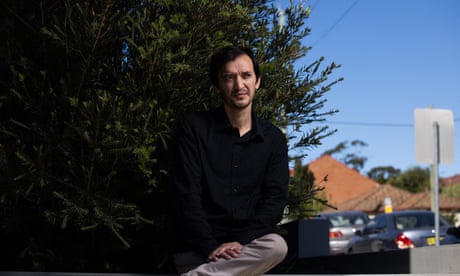
Arif Nabizada near his home in Guildford, Sydney, NSW, Australia.
‘Taliban sharpening their knives’: Hazara community in Australia terrified for relatives in Afghanistan

After arriving in Australia by boat, I spent 13 years separated from my family, facing travel restrictions and a life of limbo with little hope. However, we are finally reunited after enduring unbearable pain and countless tears. Stepping on to Australian soil, my family found hope and the promise of a new home, despite leaving everything behind.

My two brothers came as refugees and have lived in Australia for over a decade. They pay taxes, have built transport and restaurant businesses and have created jobs through their entrepreneurship.

Australia has become a beacon of hope for Hazaras, where we can rebuild our lives and make a new home. In our short history in Australia, the rising generation of Australian Hazaras – thriving professionals, doctors, figures in academia, construction workers, social workers, lawyers and advocates for human rights, democracy and social justice such as myself – have found creative ways to contribute and give back to our communities. With the freedom to live without fear of being killed, Hazaras can help to “rejuvenate and transform” Australia’s economy and communities.

However, the situation remains devastating for the Hazaras in Afghanistan and Pakistan. Hazaras started migrating to Australia in the late 1990s, fleeing decades of what some have called relentless and genocidal violence. Since the return of the Taliban to power in August 2021, Hazaras have been subjected to systematic violence while attacks continue unabated. Hazaras have been suppressed in all aspects of their lives in Afghanistan and further pushed into marginalisation.

It has become increasingly difficult for the Hazaras to mobilise due to heightened security threats and continuous attacks. They have therefore used cyberspace and social media to raise awareness through demonstrations and advocacy for their safety, justice and human rights.

While my mother and sister are lucky to now live safely in Melbourne, women in Afghanistan are more at risk, facing multiple layers of vulnerability due to their gender, ethnic identity, religion and liberal values and for their support for democracy, inclusivity and human rights, making them particularly susceptible to discrimination and violence.

As an Australian Hazara, I am indebted to Australia for its generosity to my family. From personal experience, I am familiar with the systematic violence Hazaras are facing. This is why we, the Australian Hazaras, through the Parliamentary Friendship Group for Hazaras (PFH), are urging parliament to pass a motion to recognise the ongoing escalating systemic violence, discrimination, dispossession and what we deem genocidal threats against the Hazara people and other highly vulnerable groups.

We ask our government to work with the Australian Hazara community to ensure aid is delivered equitably and non-discriminately, pressure the Taliban to protect the Hazaras and provide continued asylum places for Hazaras and other persecuted and marginalised groups. Doing so will uphold our Australian values.

In the meantime, my mum, sister and niece have found a welcoming home in Australia, settling in smoothly and already embracing their new life. They have been warmly received by the Australian Hazara community, who are showing immense support and offering to help them with integration.

With access to education and healthcare, my family will gradually adapt to their new surroundings. Through their resilience and our support, their new life in Australia is filled with hope, opportunity and the promise of a brighter future.

 Sajjad Askary is an Australian Hazara and a juris doctor student at Monash University. He writes on refugees, human rights, Hazara people and Afghanistan

I am finally reunited with my family after 13 years. But the threat for Hazaras in Afghanistan remains
read more

The Other ‘Peace Process’ on Afghanistan: Geneva Talks 1982-1988

PRIO

In the past three years, the US government’s role in the Doha Talks (2010-2020) has attracted scrutiny and criticism within the United States and abroad.

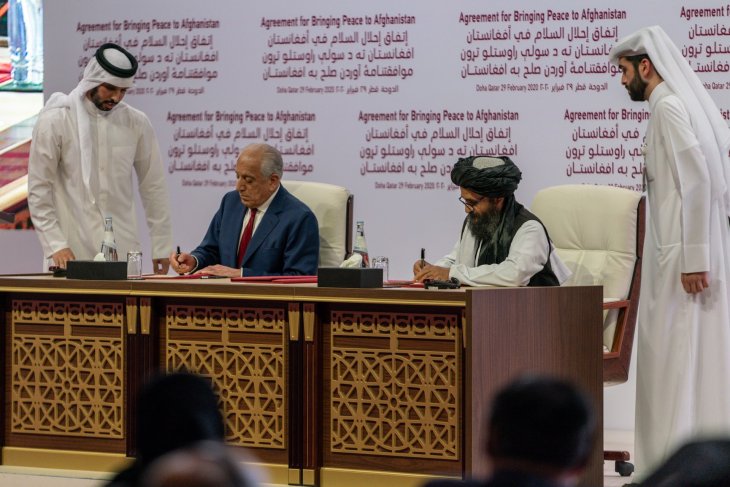
Zalmay Khalilzad (USA) and Taliban representative Abdul Ghani Baradar sign the agreement in Doha, Qatar in 2020. State Department photo by Ron Przysucha/ Public Domain

Starting in November 2010, the Doha Talks was a process of intermittent negotiations between the United States and the Afghan Taliban. The culmination of this process was the Doha Agreement, signed in February 2020. The agreement facilitated the withdrawal of US and NATO troops from Afghanistan.

The Geneva talks

However, about three decades earlier, the US government had also played a pivotal role in another peace process on Afghanistan — Geneva Talks. The outcome of the latter talks was the Geneva Accords which facilitated the withdrawal of Soviet troops from Afghanistan in February 1989.

The Geneva Talks took place in the background of a military occupation of Afghanistan by the Soviet Union. In late December 1979, tens of thousands of Soviet troops invaded Afghanistan to prop up a client regime in Kabul. The regime — also known as the Afghan Communist regime — had been established a year earlier following a military coup in April 1978. Ever since its establishment the Communist regime faced an armed resistance from anti-Communist resistance fighters — Mujahideen. At the time, the United States along with neighboring Pakistan supported the Mujahideen.

The Soviet Union claimed that it had deployed its forces in Afghanistan at the request of the Afghan government to fend off the threat from the Mujahideen. The United States refuted the Soviet claim. According to American President Jimmy Carter, the Soviet Union had occupied Afghanistan as part of an expansionist policy to acquire warmwater ports on the Indian Ocean — which implied further expansion into neighboring Pakistan. Hence, the United States claimed that the rationale behind its support for the Afghan Mujahideen was to stop the claimed Soviet expansion into the Persian Gulf.

Indirect negotiations for six years

Brokered by the United Nations, the Geneva Talks was a series of twelve rounds of indirect negotiations that ran for six years starting from June 1982 to April 1988. The talks nominally took place between the governments of Afghanistan and Pakistan, but the key actors behind the scenes were the Soviet Union and the United States. The outcome of this process was the Geneva Accords which was a set of four interrelated agreements signed on 14 April 1988 by the foreign ministers of Afghanistan and Pakistan and by the US Secretary of State and the Foreign Minister of the Soviet Union as the international guarantors.

At the heart of the Geneva talks was an effort by the United Nations to help the parties find a negotiated solution for the withdrawal of the Soviet troops from Afghanistan. The Soviet Union and the Afghan Communist regime reasoned that the Soviet troops would leave Afghanistan once the threat from the Mujahideen was removed. To remove the threat from the Mujahideen, they demanded the United States and Pakistan to halt their support for the Mujahideen first and then the Soviet forces would withdraw. However, the United States and Pakistan contended that the Mujahideen was not the cause but the consequence of the Soviet involvement in Afghanistan and therefore the Soviet troops must withdraw without any preconditions.

Seeking regime change

In addition to the issue of the Soviet troops, there was another issue at stake which was not overtly part of the negotiations in Geneva but important to both the Soviet Union and the United States. Besides a withdrawal of the Soviet troops, the United States and Pakistan sought a regime change in Kabul. The removal of the Communist regime in Kabul was one of the main objectives behind the US involvement in the Afghan conflict. For that reason the US government, under Jimmy Carter, had supplied covert financial assistance to the Mujahideen about six months prior to the Soviet invasion. However, for the Soviet Union the survival of the regime in Kabul was of paramount importance because according to the Soviet leader, Leonid Brezhnev, the primary reason for the presence of Soviet troops in Afghanistan was to prevent the fall of the regime.

Withdrawal and noninterference

Hence, the two main issues in the Geneva Talks were withdrawal of the Soviet troops and noninterference. Noninterference referred to a cessation of the US and Pakistan’s support for the Afghan Mujahideen. By implication it also meant that the United States and Pakistan would not pursue a regime change in Kabul.

Differences over who would rule Afghanistan after a withdrawal of the Soviet forces withheld progress in the Geneva Talks for several years. In June 1985, following the ascension of Mikhail Gorbachev as the leader of the Soviet Union, the US and Soviet governments launched bilateral negotiations over regional issues, including Afghanistan.

The new Soviet leader was determined to withdraw from Afghanistan — calling it a bleeding wound for the Soviet Union. However, the commencement of bilateral US-Soviet negotiations on Afghanistan meant that the Geneva Talks between Afghanistan and Pakistan was merely a proforma exercise. This meant that substantive negotiations took place between the governments of the United States and the Soviet Union, and their outcomes manifested in the Geneva format which was nominally taking place between the governments of Afghanistan and Pakistan.

In November 1985, Premier Gorbachev and President Reagan met in Geneva. Afghanistan was part of the agenda, and once again, a main point of contention between the two leaders was about the status of the Afghan government. Gorbachev proposed declaring Afghanistan a nonaligned state followed by a withdrawal of the Soviet troops. Reagan, however, demurred. He pointed out that the president of Afghanistan — Babrak Karmal — was a Soviet client and therefore implied that it was not feasible to establish Afghanistan’s nonalignment without a replacement of the Soviet-backed regime in Kabul.

The Soviet Union, however, aimed to preserve the regime in Kabul. In early 1987, the Afghan Communist regime launched a National Reconciliation Program. The program — funded by the Soviet Union — was designed, in addition to offering a share of power to Mujahideen leaders, to lure individual Mujahideen commanders to reconcile with the regime by offering them financial and economic incentives. In other words, the objective of the National Reconciliation Program was to integrate the Mujahideen within the existing political structure in Kabul. Nonetheless, the Mujahideen rejected the program, as they vowed to continue the fight until the destruction of the Communist regime. In Washington, President Reagan also dismissed the Soviet-funded reconciliation program as a “sham.”

Failed reconciliation and intensifying conflict

The failure of the National Reconciliation Program and an intensifying conflict in Afghanistan prompted the Soviet Union to shift its policy from seeking to preserve the Communist regime to preventing a government led by the Mujahideen. In early December 1987, Soviet officials informed their American counterparts that the Soviet Union had made a decision to withdraw from Afghanistan. They urged the Americans to consider mutual interests. A Mujahideen-led government, the Soviet officials said, would also complicate American interests in the region.

Around the same time, Gorbachev and Reagan held another meeting in Washington. On 9 and 10 December 1987, the two leaders discussed the issue of Afghanistan. Reflecting the change in the Soviet position, Gorbachev said that Afghanistan was not a socialist country but a “semi-feudal pluralistic” country. The Soviet Union, he added, was no more concerned about how the people of Afghanistan chose to live. He invited Reagan to “think together in a businesslike approach” to establish a neutral government in the context of a Soviet withdrawal from Afghanistan.

The US position, however, was that a neutral government could not be established without the removal of the Soviet-backed regime in Kabul. Hence, Reagan proposed disbanding the military structures of the Afghan Communist regime in the context of a Soviet withdrawal. In other words, Reagan wanted to dismantle the ruling regime and then “start from scratch.”

Breaking the deadlock

Two months after the Washington Summit, Gorbachev announced on 9 February 1988 that the Soviet Union was ready to start the withdrawal of its troops from Afghanistan on 15 May 1988 and to complete it within ten months. He added that the withdrawal from Afghanistan was no more conditional on an agreement about the future government of Afghanistan. That, he said, is “none of our business.”

The unilateral announcement by Gorbachev broke the insistent deadlock in the Geneva Talks which had been taking place between the governments of Afghanistan and Pakistan but without substantial progress. However, two months after Gorbachev’s announcement, the Geneva Talks concluded in April 1988 with the signing of the Geneva Accords which, among other elements, set a nine-month timeframe for the withdrawal of the Soviet troops from Afghanistan.

Letting the conflict take its course

Following the withdrawal of the Soviet troops in February 1989, the two superpowers allowed the conflict between the Mujahideen and the Afghan Communist regime to take its course. The expression of this policy was best exemplified in a conversation between Gorbachev and the US Secretary of State, James Baker, in February 1990. Referring to the ongoing war in Afghanistan, Gorbachev said: “Let them boil in their own juices over there.” To which, Baker responded: “When you said, ‘Let them boil,’ I thought we have the same feeling.”

***

The Other ‘Peace Process’ on Afghanistan: Geneva Talks 1982-1988
read more

Women Without Male Breadwinners Work As Street Vendors in Herat

Thousands of families lost their members in the war of the past two decades.

Dozens of older women sell clothes and other items on the street as they are faced with economic challenges from losing family members in conflicts in the past 20 years.  

Many of them are selling secondhand clothes on the streets.

Taj, 60, is a breadwinner of a family of 10 members.

Taj said that her husband and son in law lost their lives in the recent war. Taj said that she makes 100 Afs on a daily basis, which is too little to provide for her family’s needs.

“We have nothing to eat. We come and sit here. No one makes purchases and we are exhausted,” she said.

The women said that they are obliged to work to make ends meet for their families.

“The fabric which cost 50 Afs, they (customers) ask to pay 10 Afs. There is no business. I earned 200 Afs within the past two weeks,” said Ziba, a vendor.

“We wake up at 06:00 am and then come here, so I can make about 100 or 150 Afs by 3:00pm,” said Ruqia, a vendor.

The business of these vendors dropped as Afghanistan faces severe economic conditions that has made more than 28 million of the population need humanitarian assistance.

“We have eight people (in the family). Many of them are underage. I come and work here until sunset,” said Aziza, a vendor.

Thousands of families lost their members in the war of the past two decades.

Women Without Male Breadwinners Work As Street Vendors in Herat
read more

The New ISIS: How a Branch of the Terrorist Group Is Becoming a Top Threat

The Islamic State’s Khorasan Province, also known as ISIS-K, has rapidly become the new boogeyman in the Middle East — specifically in Afghanistan, where the overall ISIS apparatus has spread its influence.

The State Department has issued warnings about the group and has previously designated its leaders as top-priority terrorists. Over the last few years, top military generals have said that the group must be eradicated. And perhaps most recent in Americans’ minds is the group’s claim to the Abbey Gate suicide bombing, an explosion that killed 13 U.S. service members and at least 160 Afghans during the chaotic military withdrawal from Afghanistan almost two years ago.

Last month, the Taliban — the reigning draconian regime in Afghanistan that the U.S. fought over the last 20 years of conflict in the country — claimed that they had killed the ISIS-K leader behind the Abbey Gate plot.

The claim marks renewed attention in a new era of conflict for the region. Our guest, Andrew Mines, spent years as a researcher with the George Washington Program on Extremism warning of ISIS-K’s rise, as did other academics. And reporters like Dan Lamothe with The Washington Post have uncovered U.S. documents that indicate Afghanistan is once again a staging ground for global terrorism — this time, with ISIS-K.

Main Topics

  • Andrew F. Lawrence and Rebecca Kheel interview extremism researcher Andrew Mines and Washington Post military reporter Dan Lamothe.

Listen, rate, and subscribe!

Spotify

Apple Podcasts

Google Podcasts

Transcript:

SPEAKERS

Rebecca Kheel, Dan Lamothe, Drew F. Lawrence, Andrew Mines

Drew F. Lawrence

The Islamic State’s Khorasan Province, also known as ISIS-K has been rapidly becoming the new boogeyman in the Middle East — specifically in Afghanistan where the overall ISIS apparatus has spread its influence. The State Department has issued warnings about the group and has previously designated their leaders as top priority terrorists. Over the last few years, top military generals have said that the group must be eradicated. And perhaps most recent in American’s minds is the group’s claim to the Abbey Gate suicide bombing, an explion that killed 13 U.S. service members and at least 160 Afghans during the chaotic military withdrawal from Afghanistan almost two years ago. Last month, the Taliban — the reigning draconian regime in Afghanistan which the U.S. fought over the last 20 years of conflict in the country — claimed that they killed the ISIS-K leader behind the Abbey Gate plot. The claim marks renewed attention in a new era of conflict for the region. Our guest, Andrew Mines, spent years as a researcher with the George Washington Program on Extremism warning of ISIS-K’s rise, as did other academics. And reporters like Dan Lamothe with the Washington Post have uncovered U.S. documents that indicate Afghanistan is once again a staging ground for global terrorism — this time, with ISIS-K. Join us for this special episode where we talk to Andrew, Dan and my co-host Rebecca Kheel about ISIS-K and the worldwide threat the group poses — a prescient conversation held just days before the Taliban claimed responsibility for killing the leader of the Abbe Gate plot.

Hey, thanks guys for being here and Andrew before we kind of get into Dan’s reporting here, I want to talk a little bit about ISIS and ISIS-K in general. I think I’d suggest that the US population probably knows a little bit about ISIS, but maybe not recently. So can you kind of put that group into perspective and tell us a little bit about what ISIS is now?

Andrew Mines

Sure. So ISIS-K really starts back in 2015. And even in the months prior in 2014. What happens after the announcement of the caliphate in 2014 in Iraq and Syria is, all these problems start to form around the globe. And at the start of 2015, the Islamic State announces the official formation of its province in Afghanistan and Pakistan IS Khorasan, also known as the Islamic State in Afghanistan in Pakistan. What happens over the course of a few years is the group forms based on membership from a number of local organizations. We’re talking Pakistani Taliban is the central node that really kicks things off alongside some al Qaeda defectors, Afghan Taliban, other regional militant groups like the Islamic movement of Uzbekistan and others and so over time they’re able to entrench themselves in the region, eventually administer territory somewhat similar to what we saw in Iraq and Syria, and engage in a campaign of violence that by 2018 leads them to be the fourth deadliest terrorist organization on the planet, according to some estimates. At the same time this is all happening, the US and its allied partners in Afghanistan engaged on a really intensive counterterrorism and at once, counterinsurgency operations that when they take out a number of top leadership. Leadership turnover in this organization has been quite tumultuous to say the least. Thousands of rank and file losses on top of that, and eventually the recapture of territory that IS-K or ISIS-K had started administering in the region and so by 2020 This is really an organization pretty much in decline, some calling it defeated. But what happens in 2020 is the formation of a new leadership council under a new leader was announced in about mid-2020. That kicks off this new kind of urban warfare campaign that takes the group through the period of the signing of the Doha deal in early 2020 takes us through 2020 and into 2021. And by this point IS-K has does most people bombings that folks might be familiar with. In 2020, there was a bombing of [a] maternity ward in Kabul. That’ll be familiar to some folks — it was pretty awful — but really leading up to the Kabul airport attack this is an organization that’s just starting to resurge and just starting to find its feet again in urban warfare operations. And that takes us into the Kabul bomb, which of course is very familiar to everybody, I’m sure.

Drew F. Lawrence

Right, Dan, I want to pivot to you too, because that I think, was probably one of the last large points that the US population had heard about ISIS-K was during the Abbey Gate bombing in the withdrawal. ISIS-K claimed responsibility for the suicide bombing. So Dan, I was wondering if you could kind of take us from that last point of recognition on ISIS-K and then bring us into your reporting and explaining what this group is doing in Afghanistan and how big their presence is?

Dan Lamothe

Sure. I mean, I think an important thing that that bombing highlighted, in addition to the immense human suffering that was caused by it in the moment is that the Taliban can’t control ISIS-K. They’re a separate entity. They don’t agree on a lot of things. They’re openly fighting with each other. You’re seeing Taliban raids on ISIS compounds. You know, they you know, while they both have overlapping views of the West and the United States and why they think, you know, kind of a western view is a problem. ISIS-K is even more extreme and has been targeting the Taliban and the Taliban has not been fully successful in stopping that. So you expand that, you know, extremist groups like this often with the ungoverned spaces. The Taliban is able to govern a portion of Afghanistan. They are obviously imposing their will on Afghan people every day. But you know, these documents would highlight that they are unsuccessful in fully stopping you know, ISIS in Afghanistan from planning, plotting, reaching out to the outside world, trying to inspire attacks in other places, and you know, as a result you know, we saw not only us reactions to my story, but actually the Taliban, putting out statements pushing.

Rebecca Kheel

You have a quote in your story from an official I want to read the quote, because it’s pretty crazy. The official says, quote, I would never want to say that we had mortgaged our counterterrorism to a group like the Taliban, but it’s a fact that operationally they put pressure on ISIS-K in a strange world, we have mutually beneficial objectives there. But what you’re suggesting is that the Taliban hasn’t actually really been successful at that. Right?

Dan Lamothe

I would say probably partially successful. You know, there is open source reporting of Taliban raids on ISIS compounds there is, you know, I think a sense that the Taliban is trying to keep pressure on ISIS. I think that probably has had a role in what ISIS is effectively able to do. The documents on one hand point out that there is a effort to expand influence, expand operations. There’s an increasing number of plots that the United States was tracking, as when these documents were put together in February. But the flipside is there was also a lot of ambitions that were highlighted that have not been able to kind of fully for, you know, ISIS seeking out a greater level of knowledge on drone warfare, on chemical warfare, things like that. They have not been able to expand. So I thinkconsequently, the most likely sorts of things that that they’re concerned about at this point are things like driving trucks through crowded, crowded areas, gun attacks, sort of the ISIS inspired stuff that could happen anywhere. And has happened in the past.

Drew F. Lawrence

And with Dan’s reporting, we’re talking about ISIS in Afghanistan, but as both of you in you know, Andrew, you’d mentioned in beginning and then Dan, your reporting you’d mentioned… his is ISIS has a global influence in terms of their their terror, and I’m wondering if you could kind of give us that scope right outside of Afghanistan, what ISIS is doing and Andrew, I’ll toss it over to you first, and then Dan, if you could kind of tell us a little bit about how your reporting fit into that scope.

Andrew Mines

Here’s the thing I think I think the most dangerous thing is that in that resurgence period I was describing really starts back in 2020. IS started is honestly in Afghanistan and Pakistan has already started pivoting to be more of this kind of regional hub. My and I’ve reported foreign fighters from over a dozen nationalities that have at some point get involved with IS-K killed in counterterrorism operations from France all the way over the Philippines on the other side, actually, an American tried to join them back in 2018. Some people might not be fully aware. But what happens during this resurgence period is that the group really starts to through its propaganda output, and also through its attacks in terms of who is attacking and who is highlighting this propaganda showing that it’s a regional force. So we see starting in 2020 2021 2022, Uzbek, Uighur, Indian Tajik and other fighters of different ethnicities and nationalities conducting attacks across the border into their countries, or at least trying to find embassies and other diplomatic presences in the country that still remain even after the withdrawal on the on the airport, of course, 2021. And in 2022 this is an organization that is a third deadliest terrorist organization on the planet. So I think that that point that Dan made about the Taliban trying having the objective of constraining IS-K there certainly they have been at odds since is key information. But this is this is really an environment in which IS-K can thrive. And I think that that last data point that comes out and Dan’s reporting about them really seeking this external operation model, that’s a model that benefited IS in the caliphate in Iraq and Syria. That’s something actively tried to do in setting up higher structures staffed by operatives that were their sole focus was external operations in countries like the United States, United Kingdom, Europe and elsewhere. So I think this is this is a really delicate period. And I’d be interested to see Dan your perspective on on the reporting and how that came out pf the leaks, but, you know, this is, from our perspective, there are a number of data points that should be really concerning.

Dan Lamothe

Yeah, I mean, I would say the documents highlight communication between ISIS operatives in places like Afghanistan, but then reaching out back to Britain, France, Turkey. And those are the things that are doing better to a degree trackable by the US government and others. But you never know what you’re missing until it’s too late. You know, and, you know, if they’re able to stop 98 attacks, the other two will still be a concern. So, you know, there you see in these documents, specific examples, some of which, you know, trying to be responsible, we were very vague with not wanting to you know, kind of cut off, you know, active US efforts to try and stay on top of this. So, we left things out deliberately trying to do that. So, you know, in the vague broad sense, you do see things like Tajikistan come up, you do see Turkey come up if you see the Britain come up, we alluded to an example where there was a discussion between you know, this ISIS facilitator and an individual in Britain, you know, and the discussion and the instructions that were passed. Those are the sorts of things that are, you know, they’re tracking it, they’re they’re you know, they have a number of narratives that they’re following and a number of plots that they’re following. But it would also raise the question, what do you not know about?

Rebecca Kheel

In my congressional hearings I’ve watched, it seems like military leaders often put the timeline for the threat of an external attack at six months. A year ago, they had you had a quote from general Kurilla a few months ago or a month ago, where he also used the six month timeline. Dan, in your reporting, what are military leaders saying about the threat of an external attack by ISIS-K?

Yeah, there seems to be broad acknowledgement and overlap speaking to senior defense officials in uniform and out that this is a concern and it is an increasing concern. I think there is probably differences of opinion on what what’s six months, what’s four months, what’s 12 months? You know, that can be kind of hard to peg. So, you know, I raised that comment from general Kurilla, which came up in open testimony in March before the House Armed Services Committee, and speaking with others you know, they they agree with him broadly, that there’s a rising concern, but you know, that they weren’t really willing to peg it or agree with the idea that six months is a thing.

Drew F. Lawrence

And Andrew before Dan’s report came out, you had done work about ISIS-K attacking humanitarian aid. And when we’re talking about Afghanistan, you know, after withdrawal that has been a huge, not just the attacks, but humanitarian aid to the country after the withdrawal has been an absolutely huge point coming out of the United States and for service members and for veterans. And ISIS-K has disrupted that. Can you talk about some of those disruptions and maybe how this fits into the broader Afghan diaspora and post withdrawal that’s happening and then that goes to you as well, since I know you’ve, you’ve covered a lot especially for servicemembers and veterans who are still kind of talking about and reckoning with that withdrawal.

Andrew Mines

So the campaign against humanitarians in Afghanistan, one of the number of campaigns that I escaped undertakes, we feature tax of course, but also propaganda and official invited senior senior ideologues. So what what’s happened the last couple of years now actually is that ISK senior officials and ideologues turn to humanitarians and said, accepting aid from any Western Affiliated Organization. Whatever, wherever that aid is coming from is not permissible and where possible, Afghans should actively target and push out humanitarian still servicing the country. So this is part of this broader campaign to destabilize the country. When you look at Islamic State doctrine. This is doctrine that IS-K ISIS K adopts but it’s really coming from Iraq and Syria where a lot of the movements core kind of strategists formulating an insurgency warfare strategy, but this is this is a campaign that’s meant to precede that period where you destabilize the current government discredit those who are attempting to serve as the population and create those gaps where is then seeks to fill down the road right that’s that’s that’s the whole model. It’s it’s an insurgency one on one. And so this is this is just one campaign that’s part of a broader effort to both discredit the Taliban broken window fallacy. You’re creating the problems that you then seek to solve at the end of the day, and then painting them as puppets of the West no better than the previous Rudy, right or previous government. And so this is this is all part of IS-K broader, broader insurgency warfare strategy. So I think that just coming back to the you know, what we mean when we talk about IS-K attacks on the west, you know, there’s a humanitarian still servicing the country. Is it on regional diplomatic residence? Is it on homeland on the homeland right to targets here in the US and using some kind of model whether it’s virtual planning, or sending operatives overseas? What have you. So we really need some clarity, I think about what it is that senior officials mean, when they see an Islamic state threat coming from Afghanistan, on Western interests that can be quite vague and it can be quite confusing to the public. I think, to some clarity there. It’s really important.

Dan Lamothe

I would add on on the other side, you know, the Taliban has accepted a large amount of money at this point from the western United States in particular, they are allowing NGOs to continue their work. And there is a great deal of suffering and starvation and drought and other things that the Taliban does not seem to have been able to get their arms around and take care of their own citizens at this point if they’re going to be the governing party. So you look at that and you end up with in these weird, awkward situations where a story like this highlights that ISIS still just in Afghanistan, still concerned that politically is a problem for a lot of people in Washington. But it’s also a problem for the Taliban. Because you know, they’re having to kind of sit on the fence to a degree. They’re accepting the money from the West, but trying to make it clear to Afghan people that they are not of the West. You know, and they are trying to kind of push back this ISIS threat, but at the same time, make the case in the United theater to the United States and others that they’ve got it there’s no problem here. Consequently, one of the things we saw from my story is kind of a weird situation we see unfold, and we had some uncomfortable conversations prior to the story being published, about you know, you know, what can be reported what should be reported? Obviously, these are leaks that makes it extra sensitive as well. But then on the flip side, after publication, you see the Taliban come out, pushing back against the reporting saying, “Hey, this is Western propaganda. You know, these are military documents that were released to the Washington Post.” I can assure you, these are not handed to us under any circumstances that the Pentagon was thrilled with. So you know, like, even in Taliban, the characterization of this is, you know, it kind of flips it on a ear again, in a weird way.

Rebecca Kheel

Now,you just alluded to this, but we should probably take a step back and talk about where this information came from, because that in of itself is a big story. What are the discord leaks?

Dan Lamothe

Yeah. So there’s there’s this ongoing case in which the allegation at least, is that a relatively junior member of 21 years old of the Massachusetts Air National Guard, was basically pulling in documents through you know, illicit means and sharing them within a discord chat app with his online friends, some of which were teenagers. You know, some of these documents lead to other chat rooms, and, you know, that’s kind of how it ended up in employment, public realm. But but it’s to, to this point, still unclear exactly how many documents are kind of out in the wild? How broadly they are out there, you know, and who has access to them? You know, some of these I think they’d be access has been limited now that this case is out in public, you know, you’ve seen servers that are deleted and things of that sort. We, as the Washington Post had sorted through several 100 pages. This this is an example of a story in a doc a set of documents that hadn’t really service widely, hadn’t been reported on elsewhere. But I’m not sure what the full universe of those documents is, at this point. I just know we’re combing through them. You know, we’re doing what we can to report on them to verify them, you know, and it puts the government in an awkward position of, you know, having to address some of this stuff. And generally, it seems like at this point, they’ve reached a place where they’re not going to verify or, you know, confirm that a given slide is accurate, but they are starting to talk more broadly about the issue. You know, if you’re going to be writing on, you know, of the rise of ISIS in Afghanistan, what the threat is of ISIS at this moment, you know, they wouldn’t confirm the documents exist, but they were willing to engage more broadly on the subject.

Drew F. Lawrence

And Dan is the Washington Post military reporter, you’re obviously in tune with service members and veterans. And I’d be remiss if I didn’t ask about how this fits into the broader conversation about Afghanistan. The reason why I want to ask that is because we are 20 months out of the withdrawal at this point. And now, you know, we’re learning that Afghanistan, despite, you know, efforts over the last 20 years, is still very much a hotbed for terrorism, the very thing that United States and servicemembers and veterans were they’re fighting to combat or where they’re combating. So I’m wondering if you could kind of give us a lay of the land or give us some scope about, you know, maybe how veterans or service members might be perceiving the news that you know, even after all this time, there’s still a lot of terrorism and, frankly, new terrorism going on in Afghanistan.

Dan Lamothe

Yeah, I’m wrestling with that myself just haveing spent so much time there. You know, I think as we look at this, you know, kind of looking at the possible counterfactuals if you know, what the other big fork in the road might have what might have led us to obviously the recommendation from General Miller, General McKenzie, Defense Secretary Esper and on up I mean, including that, you know, the current leadership at the Pentagon, they recommended leaving a 2500 or 1000, depending on you know, what the recommendation was on a given month, a reasonably small force there. That would have been very much focused on this issue that was not palatable to the Taliban. That does not appear to have been palatable to President Trump. It does not appear to have been palatable to President Biden. So you are left where you are now with zero US troops on the ground. Them trying to keep a track of this as in as many ways as they can, which I assume includes signals intercepts, you know, satellite monitoring, trying to make sure you’re not seeing training camps pop up from the air, all of those sorts of things. You know, and at the end of the day, I think that discussion will probably end up landing on you know, if you see one of these attacks, it’s seven people get killed in an ISIS inspired ISIS enabled you know, ISIS facilitated sort of attack you know, that like They run the gamut. Some of these are very much like, ISIS did this. Some of these are more like well, ISIS talk somebody into doing different, different different discussion there. But let’s say one of those happens next year, not on unforeseeable, something like that could pop up. You’re gonna end up seeing probably a pretty hot political conversation of whether we are doing enough as a nation at that point. And I think the discussion will end up being you know, does it make sense to put people back on the ground with all of the other things that come with it? deployments, larger budgets, at least focused on this issue? American casualties on the ground would not be unforeseeable? Or do you kind of just take it on the chin with these occasional tacks to to slip through, and you catch 95-98% of them? And occasionally one of them’s going to happen and, you know, that, that, you know, that sort of a worse bad option and I don’t know what the ultimate right answer is. on that. I just know we need to talk about it.

Andrew Mines

I think it’s really important to highlight that the Taliban have been battling ISIS-K since 2015. And they’ve had the benefit of a US led coalition that’s been hammering this group the entire time too. And even then, it took several years to really do great and push this group into some kind of position where people felt comfortable saying they were defeated. Obviously, that was premature. But to I think, to say that, again, I did this too earlier, but to say that the current Taliban regime is an effective counterterrorism force I think is quite a bit of a stretch it’s easy to take their propaganda and they’re quite good at pushing it out to Western audiences, and we’ve got this under control. Everything that you’re seeing is over employed. And what you’re seeing in the news is is Western directed us by propaganda efforts against us, but, you know, historically, they’ve been clashing since 2015. IS-K poses an existential threat to the Taliban as a movement if it’s able to move from a position where it’s a few 1000 or so fighters to a larger insurgency that’s capable of undermining the regime. period we’re seeing now to, you know, something that more resembles the caliphate from Iraq and Syria in 2014. That’s the goal. That’s the vision. And I think what we ended the book with is this quote, I’ll paraphrase it we say when, when IS it over when the Islamic State took over Iraq and Syria in 2014, they’re they’re kind of these two things that kept coming up in America, that we as public and American public’s repeat over and over again, that it was unprecedented. And then it happened rapidly. Right? That is the way that the as long as they swept across Iraq and Iraq and Syria was just just unimaginably fast. And that looks like it, right, that’s what it appears to be. But that is a several years long campaign that really starts since the US withdrawal in 2011 that the Islamic State core group is really seeking to push through and then slowly rebuild. And then build this insurgency and take on all these campaigns, the same ones that we’re seeing IS-K take on today, itt was taking on Iraq and Syria. And so I I would just echo Dan, you know, the question we should be asking is, worst case scenario. Are we comfortable with a caliphate in Afghanistan run by ISIS-K? Is an unacceptable outcome and what are the real things that we should be doing to counteract that? Because I’m not sure that over the horizon is an effective way to do that, to conduct that that campaign.

Dan Lamothe

I would add, I mean, the other the other side of the coin, here is al Qaeda. You know, and we haven’t talked about that yesterday, but that often comes up in the discussion and it is quick discussion when you talk to current US officials, because they point to drone strike that killed SWAT hearing the al Qaeda leader in Afghanistan, a stone’s throw from a former US military headquarter, just by the way, I mean, like right next to downtown Chicago as an example of how this current model can work in you know, there’s I think there’s there’s there’s a couple threads worth discussing. One is that, you know, these documents don’t have much about al Qaeda in there. The sense is from a number of experts that al Qaeda at least, has been diminished to a degree that they you know, are not a major concern at the moment. You know ISIS is, but these individuals often jump one group to another based on which one seems more effective, which one, you know, you know, they protrude from one another. And we’ve seen that with, you know, ISIS in Afghanistan as well. I mean, they have members that were former Taliban you know, they had members that were former tapping involved in Pakistani groups. So where this goes and how this evolves, I think is unpredictable. But you know, the discussion at least of what is the best model probably needs to evolve with it. In an I think everybody is weary of doing anything that includes another 20 year commitment on the ground in Afghanistan. But I think people need to keep their eyes open and you know this will continue to ebb and flow and evolve based on how good the Taliban is at going after ISIS. Based on how well the United States is able to kind of monitor this remotely, you know, through signals intelligence to satellite intelligence, whatever else, whatever other means they can without actually having troops on the ground. And, you know, ISIS will evolve with it, they’ll probably get smarter over time as well. So you know, it’s going to be a complex issue for a long time.

The New ISIS: How a Branch of the Terrorist Group Is Becoming a Top Threat
read more

China’s Belt and Road to Enter Afghanistan in Taliban’s Victory

The Taliban agreed with China and Pakistan to extend the Belt and Road Initiative to Afghanistan, potentially drawing in billions of dollars to fund infrastructure projects in the sanctions-hit country.

Chinese Foreign Minister Qin Gang and his Pakistani counterpart Bilawal Bhutto Zardari met in Islamabad on Saturday and pledged to work together on Afghanistan’s reconstruction process including taking the $60 billion China-Pakistan Economic Corridor to the Taliban-ruled nation.

“The two sides agreed to continue their humanitarian and economic assistance for the Afghan people and enhance development cooperation in Afghanistan, including through extension of CPEC to Afghanistan,” according to a joint statement issued by Pakistan’s foreign ministry following the meeting.

Chinese and Pakistani officials have previously discussed extending the project to Afghanistan built under President Xi Jinping’s flagship Belt and Road initiative that started almost a decade ago. The cash-strapped Taliban government has expressed readiness to participate in the project and the prospect of getting much needed infrastructure investment.

The Taliban’s top diplomat, Amir Khan Muttaqi, traveled to Islamabad to meet his Chinese and Pakistani counterparts and reached an agreement, his deputy spokesman Hafiz Zia Ahmad said by phone.

The Taliban have also harbored hopes for China to boost investments in the country’s rich resources, estimated to be $1 trillion. The government inked its first contract in January with a subsidiary of China National Petroleum Corporation to extract oil from the northern Amu Darya basin.

The Chinese and Pakistani ministers also stressed on the need to unfreeze Afghanistan’s overseas financial assets. The Taliban has been blocked from accessing about $9 billion of Afghanistan’s central bank reserves held overseas on concerns the funds will be used for terror activities.

Frozen Assets

Washington later agreed to release half of it to bolster the economy but put it on hold after the Taliban imposed certain school and work restrictions on Afghan women last year.

The militants-turned-administrators see investments as a way to fix a cash-strapped economy after international aid, accounting for 60% of public spending, was halted following the chaotic withdrawal of US troops in 2021.

China, Russia, and Iran are among a handful of countries that maintain warm ties with the Taliban. They have provided aid in the tens of millions of dollars to the Taliban, but have stopped short of formally recognizing the government.

The US remains the single largest donor to the humanitarian response by global agencies, having provided more than $2.1 billion since the Taliban retook power, according to a report.

A UN agency said last week it requires $4.6 billion this year to help more than two-thirds of the country’s 40 million population who’re living in extreme poverty. A 2022 Gallup poll showed that nine in ten Afghans find it “difficult” or “very difficult” to survive on their present income.

Chinese businesses have been wary of investing in Afghanistan due to attacks by the Islamic State group, which is competing with the Taliban for influence. In December, the militant group took credit for an attack at a Kabul hotel popular with Chinese diplomats and businessmen.

There’s also the presence of the East Turkistan Islamic Movement, a Xinjiang-based separatist group, that’s kept Beijing rather cautious about expanding its influence.

Muttaqi’s second visit to Pakistan comes days after the United Nations stressed the need to engage with the Taliban rulers as Afghanistan is facing the “largest” humanitarian crisis in the world.

China’s Belt and Road to Enter Afghanistan in Taliban’s Victory
read more

What Do the Taleban Spend Afghanistan’s Money On? Government expenditure under the Islamic Emirate

 Kate Clark • Roxanna Shapour

Afghanistan Analysts Network

 print sharing button

When our readers told us about some errors in our report: ‘What Do The Taleban Spend Afghanistan’s Money On? Government expenditure under the Islamic Emirate,” we started checking and cross-checking our sources and the report. We found that several budget lines in the operational budget for the security sector in the 1400 (2021) Q4 mini-budget (Table 2 of Annex 2) had been mislabelled in the English translation we used. We quickly revised the report and uploaded the new, corrected version to our website, but thought it prudent to highlight these mistakes for any reader who had downloaded the original version of the report.

The errors which appeared in the original report related to the mislabelling of several budget lines in the operational budget for the security sector in the Islamic Emirate’s 1400 (2021) Q4 mini-budget, which in turn affected the text of the report. We have corrected these errors and revised the report and our analysis to reflect the correct figures – see What Do The Taleban Spend Afghanistan’s Money On? Government expenditure under the Islamic Emirate.”

We also provide a list of the amendments below to ensure our readers are fully aware of the changes.

We have revised Annex 2 to reflect these corrections, as below:

  1. Table 2 of Annex 2, Security:
  • Budget line 64 General Directorate of Intelligence was mislabelled as National Security Council
  • Budget line 15 General Directorate of Security for the Prime Minister General Directorate of Intelligence
  • Budget line 22 Ministry of Defence was mislabelled as General Directorate of Security for the Prime Minister
  • Budget line 17 Ministry of Defence was mislabelled as National Security Council
  • Table 2 of Annex 2, Economic Affairs and Agriculture:
  • Budget line 58 National Standards Agency was mislabelled as Housing and Community Amenities.

Once we made these corrections, we also found that this mislabelling had led to errors in our report, which we have corrected as below:

  1. In the section titled ‘The Q4 1400 Mini-Budget and Accountability Sessions’, Figure 2 on page 11 has been revised to reflect the correct state entities and their budgets:
  • The text on the same page has been revised to reflect these corrections:

Figure 2 above shows all the ministries, other state bodies or contingency budget lines which were allocated at least 750 million Afs (8.8 million USD) in the mini-budget. Almost half of the planned spending was to go to three entities: the Ministry of Interior, the Ministry of Defence and the Ministry of Education.

  • On Page 12, in the ‘Security spending: defence, intelligence, policing, vice and virtue’ section, we corrected the ranking of the various security ministries and agencies according to the size of their budgets:
  • Ministry of Interior (MoI): 8.9 billion Afs (105 million USD), 16.6 per cent of total budget
  • Ministry of Defence (MoD): 8.5 billion Afs (101 million USD), 15.9 per cent of total budget
  • General Directorate of Intelligence (GDI): 3.6 billion Afs (42.3 million USD), 6.7 per cent of total budget
  • National Security Council (NSC): 3.8 million Afs (4.5 million USD), 0.7 per cent of total budget
  • Ministry for Promoting Virtue and Preventing Vice: 245 million Afs (2.9 million USD), 0.5 per cent of total budget
  • General Directorate for the Security of the Prime Minister: 240 million Afs (2.8 million USD), 0.4 per cent of total budget
  • In the same section, we revised Figure 3 on page 13 to reflect these corrections:
  • The narrative on pages 13-14 has been amended as below:

Ruling over a country no longer embroiled in war and facing only relatively minor insurgencies and threats from the National Resistance Front and Islamic State in Khorasan Province (ISKP), the Emirate allocated a disproportionate amount of public money on security, with much going on internal security: the Ministry of Interior, in charge of policing, was to get the largest allocation of any ministry (16.6 per cent of the total budget), with the Ministry of Defence close behind (15.9 per cent), and a sizeable amount also allocated to the Taleban’s intelligence agency, the GDI (6.7 per cent).

The Ministry of Interior and Defence both reported very high staff numbers at their accountability sessions held on 28 August 2022 – 200,000 and 150,000 respectively (the Ministry of Defence also said that number might increase in the future, and that the ministry had been restructured, with 113 new general-ranked positions proposed and 87 approved). Those staffing numbers are vast. Despite their large budget allocations, the reported force strength looks inflated. If correct, the Emirate’s armed forces would be larger than the Republic’s, which, in 2021, had a reported 300,000 personnel under arms, 119,000 in the Afghan National Police (ANP) and 182,000 in the Afghan National Army (ANA)10. It was fighting an active nationwide insurgency and enjoyed a budget underpinned by huge sums of foreign funding, publicly earmarked for the police and army, as well as unknown sums for the NDS.

Whatever the correct strength of the Emirate’s forces or the overall budget planned for them, one breakdown in the 1400 Q4 seems accurate. Most of the outlay in this, as in every other sector, was to be on operating costs, largely salaries (varying between 63 per cent of the total allocation for salaries at the National Security council to 80 per cent at the General Directorate for the Security of the Prime Minister).

  • In the section titled, ‘Contingencies and Emirate bureaucracy’, the second paragraph on page 19 has been amended as below:

The mini-budget also allocated large sums to the Offices of the Highest Official of the Islamic Emirate of Afghanistan14 and the Prime Minister (962 million Afs/11.3 million USD), and to the General Directorate of IEA Affairs, the renamed Administrative Affairs Office of the President (AOP) (441 million Afs/5.2 million USD). Together with the contingency codes and the sums provided for the Prime Minister’s security, they add up to over 4.4 billion Afs (51.7 million USD) or 4.9 per cent of the Emirate’s budget for the quarter, far more than the entire allocation for healthcare, or higher education, or any of the ‘economic’ ministries and agencies listed above. 

AAN is grateful for the care and attention with which you read our reports and appreciate your comments and feedback, which helps us ensure our reporting is accurate, impartial and of high quality. While to err is human, it is important to us to correct any errors to ensure the accuracy of our reports. With our apologises for any inconvenience these errors may have caused, please find the corrected version of this report here: What Do The Taleban Spend Afghanistan’s Money On? Government expenditure under the Islamic Emirate”

This is the second part of reporting on Emirate finances. Part 1, Taxing the Afghan Nation: What the Taleban’s pursuit of domestic revenues means for citizens, the economy and the state, was published in September 2022.

What Do the Taleban Spend Afghanistan’s Money On? Government expenditure under the Islamic Emirate
read more

Locust outbreak in Afghanistan’s ‘breadbasket’ threatens wheat harvest

The northern “breadbasket” of Afghanistan is battling a potentially devastating outbreak of locusts that threaten to eat their way through up to a quarter of the country’s annual wheat harvest, the UN has warned.

After three years of disappointing, drought-afflicted harvests, Afghan farmers were expecting better this year – a much-needed boost for a country where nearly 20 million people are thought to be at the highest risk of famine in 25 years.

But for those in eight key agricultural provinces, mostly in the north and north-east, the large-scale outbreak of Moroccan locusts will probably be “devastating”, according to Richard Trenchard, the UN’s food and agriculture organisation (FAO) country representative.

The FAO estimates that a full outbreak of the Moroccan locust, one of the most economically damaging plant pests in the world, could result in crop losses of between 700,000 and 1.2m tonnes of wheat, the country’s staple grain.

Compounding the deep economic crisis that gripped Afghanistan after the Taliban takeover in August 2021, the locusts threatened further misery this year and next, said Trenchard.

“This year they were looking at good harvests, and it was like the first time they were seeing a bit of recovery, and just getting back almost to normal. And, in this area, it’s probably going to be – for many, many farmers – devastating,” he said.

“In other areas it will be good, but in this area, the breadbasket, it’s just … something that breaks my heart.”

Afghanistan has had two brushes with the Moroccan locust in recent history, one in 1981, when an outbreak wiped out about a quarter of the national harvest, and another in 2003, when it claimed a more modest 8% due to a strengthened locust-control programme.

However, since the Taliban overthrew Ashraf Ghani’s government, prompting foreign assistance to be cut off, the agriculture ministry’s locust-control programme has foundered. This has left the country vulnerable, as the Moroccan locust is ever present and only requires certain conditions for an outbreak to occur.

Baghlan Province, Afghanistan. Local people dig pits to bury Moroccan locusts
People in Baghlan province, northern Afghanistan, use the traditional control method of digging pits to bury adolescent locusts before they grow into adults. Photograph: Hashim Azizi/FAO

Since noticing early last month that their fields were starting to become carpeted with locusts, communities in affected areas such as Badakhshan, Sar-e Pul and Kunduz provinces have mobilised to use traditional methods to kill the pests.

Thousands of people, many supported by FAO, were now engaged in the “backbreaking” work of trying to sweep groups of adolescent locusts, known as hopper bands, into trenches or tarpaulins to be buried, said Trenchard.

The effort is thought to have averted the worst-case scenario of up to 1.7m tonnes of lost wheat. But its scope was limited, said Trenchard, warning that for many it would be “too little, too late”.

“You kill millions of locusts that way. The problem is there are billions of locusts,” he said.

Already, pistachio orchards have reportedly been devastated in north-western Badghis province. In the past week two areas have reported the emergence of the first adult locusts, which means that within the next six weeks the insects will start to swarm, with each swarm lasting for four to eight weeks. The harvest is also due to start in three weeks.

Farmers, local aid organisations, the FAO and the agriculture ministry were now in a race to kill as many hoppers as possible before they turn into adults and swarm, said Trenchard. But this is to mitigate the impact, rather than remove the threat.

“[The outbreak] will have a significant impact. There is no doubt,” said Trenchard. “How big that impact is … you won’t tell until they start swarming and [see] where they go.”

The Moroccan locust consumes about 150 different plant species, 50 of them food crops, and all of which grow in Afghanistan. Its swarms can cover up to 150 miles (250km) a day.

Moroccan locusts are poured into a pit.
The adolescent locusts, or hoppers, are buried in pits. It’s a race to get rid of as many as possible before they turn into adults and swarm. Photograph: Hashim Azizi/FAO

It also laid far more eggs than most locusts, said Trenchard. “You tend to get a multiplier of about 10 from one year to the next. So 2024 is more worrying than 2023: 2023 is bad, but 2024 is when – if it’s not controlled – we will see something really awful.”

To avoid that, he said, FAO urgently needed more funding to ensure that everything was in place for chemical treatment to be deployed from September. Food assistance delivered through the World Food Programme – which has been reduced this year – must be maintained, he added.

According to the UN, its 2023 Afghanistan humanitarian response plan, which is seeking $4.6bn (£3.65bn) for urgent needs in the country, has so far only received $303m – 6.6% of the total funding required.

Locust outbreak in Afghanistan’s ‘breadbasket’ threatens wheat harvest
read more