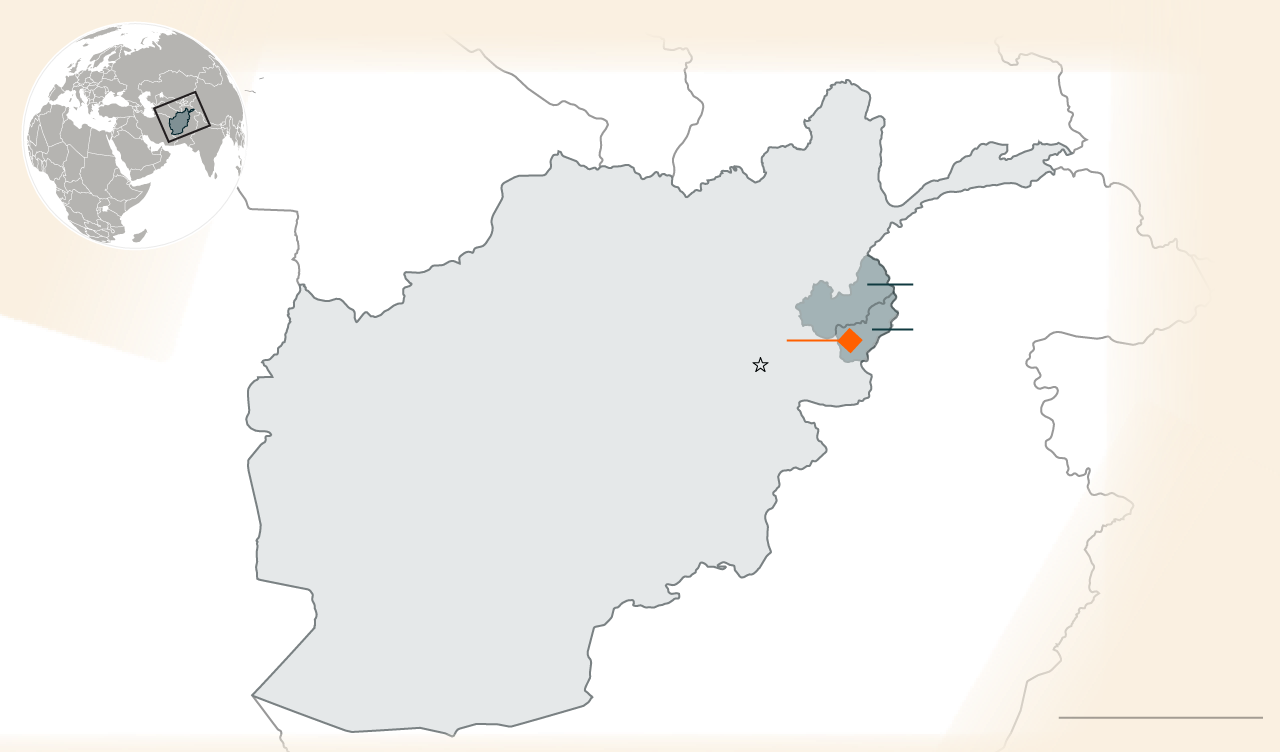
US officials to meet Taliban representatives in Doha

By

Washington, DC – United States diplomats will meet with Taliban representatives in Qatar this week, the US State Department has announced, in what will be rare, direct talks between Washington and the ruling Afghan group.

The State Department said on Wednesday that Thomas West and Rina Amiri will hold meetings on Afghanistan in Astana, Kazakhstan, with representatives from Kazakhstan, the Kyrgyz Republic, Tajikistan, Turkmenistan, and Uzbekistan.

West, the US special representative for Afghanistan, and Amiri, the US special envoy for Afghan women, girls, and human rights, will then meet a delegation of Taliban representatives and other Afghan ministry officials in the Qatari capital, Doha.

The pair will discuss “critical interests in Afghanistan” during the Doha meeting, the State Department said in a statement.

“Priority issues will include humanitarian support for the people of Afghanistan, economic stabilization, fair and dignified treatment of all Afghans, including women and girls, security issues, and efforts to counter narcotics production and trafficking.”

US forces withdrew from Afghanistan in August 2021 after a 20-year war. The Taliban took over the country amid the US withdrawal as the country’s Western-backed government collapsed.

Washington still does not recognise the Taliban government in Kabul and has imposed sanctions against the group and its leaders.

The State Department said later on Wednesday that the upcoming meetings in Doha do not signal a change in the US position.

“We have been very clear that we will engage with the Taliban appropriately when it is in our interest to do so,” spokesperson Vedant Patel told reporters.

“This is not intended to mean any kind of indication of recognition, or any kind of indication of normalisation or legitimacy of the Taliban.”

Since returning to power in 2021, the Taliban has faced international condemnation, including from several Muslim-majority countries, over restrictions the group has imposed on women’s education.

The group banned women from attending university and subsequently prohibited girls from going to school past sixth grade. Earlier this month, the group also imposed a ban on women’s beauty parlours.

Late last year, US Secretary of State Antony Blinken warned the Taliban of consequences if the group does not change its policies on the education of women and girls.

“And to be clear, we’re engaged with other countries on this right now – there are going to be costs if this is not reversed, if this has not changed,” Blinken said in December, without specifying what those measures might include.

Afghanistan continues to face a humanitarian crisis, with almost half of its population – 23 million people – receiving assistance from the World Food Programme (WFP) last year.

Taliban officials have expressed a willingness to work with the US if Washington lifts its sanctions against the group.

The US and a coalition of its allies invaded Afghanistan in 2001 after the 9/11 attacks by al-Qaeda in New York and Washington, DC. At that time, the Taliban, which was in control of the country, hosted al-Qaeda leader Osama bin Laden.

The US-led forces were able to swiftly remove the Taliban from power, but they never managed to ensure a lasting defeat of the group or fully wrest control over the country. The war became Washington’s longest armed conflict.

The administration of former US President Donald Trump signed a deal with the Taliban in 2020, agreeing to pull US troops out of Afghanistan.

President Joe Biden honoured the agreement, but the chaotic US withdrawal sparked a domestic backlash against his administration.

In recent internal reviews assessing the departure of US forces from Afghanistan, the Biden administration has acknowledged shortcomings in the operation while also criticising Trump for failing to plan for the withdrawal after the 2020 agreement.

US officials to meet Taliban representatives in Doha
read more

Taliban Shut Beauty Salons, One of Afghan Women’s Last Public Spaces

The New York Time

All women’s beauty salons in Afghanistan were set to close on Tuesday, officials said, as part of a Taliban administration announcement early this month that the women-only spaces were forbidden under Shariah law and caused economic hardship for grooms’ families during wedding celebrations.

The closing of the salons — one of the few public places left in Afghanistan where women could congregate outside the home — represents another grim milestone for women’s rights in Afghanistan. Since the Taliban seized power in August 2021, the government has steadily rolled back women’s rights, barring women and girls from most public spaces, from traveling any significant distance without a male relative and from attending school beyond sixth grade.

The salons had been given a one-month grace period to end their operations.

Taliban security forces in Kabul, the capital, made the rounds on Tuesday to ensure that salons were complying with the ban, according to Sadeq Akif Muhajir, the spokesman for the Taliban administration’s Ministry for the Propagation of Virtue and the Prevention of Vice.

The initial announcement ordering salons to close prompted a rare public protest early this month in Kabul, the capital, where dozens of salon owners and beauticians marched down the street while holding signs opposing the ban. Security forces with the Taliban administration broke up the protest using fire hoses and shot weapons into the air to disperse the crowd.

The use of force drew criticism from the United Nations mission in Afghanistan, which tweeted that “Afghans have the right to express views free from violence. De facto authorities must uphold this.”

For many women in Kabul, beauty salons have been cherished as one of a handful of safe spaces where women could gather away from men outside the home.

Shukriya Afshar, 46, has worked as a beautician in the Gul Raihan Beauty Salon in Kabul for two years. She said that her husband earned just a few dollars a week as a day laborer and that the money from the salon was critical to supplementing the family’s income.

The work also offered her a badly needed mental-health outlet as she watched her rights erode under the Taliban administration.

“I could get away from anxiety and mental pressure by going to the salon and working,” she said.

Previous Taliban edicts have restricted women from most employment opportunities outside health care and private businesses, and about 60,000 women were employed by roughly 12,000 salons across Afghanistan, according to the Afghanistan Women Chamber of Commerce and Industry.

“This isn’t about getting your hair and nails done,” Heather Barr, the associate director of women’s rights at Human Rights Watch, said in a statement. “This is about 60,000 women losing their jobs. This is about women losing one of the only places they could go for community and support.”

Such restrictions have also drawn widespread international condemnation, including from other Islamist governments like those of Iran and Saudi Arabia, and prompted international human rights monitors to label Afghanistan one of the most restrictive countries in the world for women.

“Women and girls in Afghanistan are experiencing severe discrimination that may amount to gender persecution — a crime against humanity,” Richard Bennett, the United Nations special rapporteur for Afghanistan, said in a statement last month. “The de facto authorities appear to be governing by systemic discrimination with the intention to subject women and girls to total domination.”

Safiullah Padshah contributed reporting.

Christina Goldbaum is the Afghanistan and Pakistan bureau chief for The Times. 

Taliban Shut Beauty Salons, One of Afghan Women’s Last Public Spaces
read more

Scholarships have helped displaced Afghan students find homes on university campuses across the US

BY JAMIE STENGLE

Associated Press

25 July 2023

Dozens of Afghan students who fled their homeland when it came under Taliban rule have received scholarships to attend U.S. universities and many are nearing graduation.

DALLAS (AP) — As the Taliban swept back into power in Afghanistan in the summer of 2021, Fahima Sultani and her fellow university students tried for days to get into the Kabul airport, only to be turned away by gun-wielding extremists.

“No education, just go back home,” she recalled one shouting.

Nearly two years later, Sultani, now 21, is safely in the U.S. and working toward her bachelor’s degree in data science at Arizona State University in Tempe on a scholarship. When she’s not studying, she likes to hike up nearby Tempe Butte, the kind of outing she enjoyed in her mountainous homeland.

Seeing students like Sultani rush to leave in August 2021 as the U.S. withdrew from Afghanistan after 20 years, colleges, universities and other groups across the U.S. started piecing together the funding for hundreds of scholarships so they could continue their education outside of their home country.

Women of Sultani’s generation, born around the time the U.S. ousted the Taliban after the 9/11 attacks in 2001, grew up attending school and watching as women pursued careers. The Taliban’s return upended those freedoms.

“Within minutes of the collapse of the government in Kabul, U.S. universities said, ‘We’ll take one;’ ‘We’ll take three;’ ‘We’ll take a professor;’ ‘We’ll take a student,’” said Allan Goodman, CEO of the Institute of International Education, a global not-for-profit that helps fund such scholarships.

The fears leading the students to quickly board flights were soon justified as the Taliban ushered in a harsh Islamic rule: Girls cannot attend school beyond the sixth grade and women, once again required to wear burqas, have been banned from universities, parks and gyms and are restricted from most employment.

Sultani is one of more than 60 Afghan women who arrived at ASU by December 2021 after fleeing Afghanistan, where she’d been studying online through Asian University for Women in Bangladesh during the pandemic.

“These women came out of a crisis, a traumatic experience, boarded a plane not knowing where they were going, ended up in the U.S.,” said Susan Edgington, executive director and head of operations of ASU’s Global Academic Initiatives.

After making their way to universities and colleges across the U.S. over the last two years, many are nearing graduation and planning their futures.

Mashal Aziz, 22, was a few months from graduating from American University of Afghanistan when Kabul fell and she boarded a plane. After leaving, she began scouring the internet, researching which schools were offering scholarships and what organizations might be able to help.

“You’ve already left everything and you are thinking maybe there are barriers for your higher education,” Aziz said.

She and three other Afghan students arrived at Northeastern University in Boston in January 2022 after first being taken to Qatar and then a military base in New Jersey.

Aziz graduated this spring with a bachelor’s degree in finance and accounting management. She plans to start working on her master’s degree in finance this fall at Northeastern.

The hurdles for students who left can include everything from needing help to overcome language barriers to getting credit for the courses they completed in their home country to affording tuition, Aziz said.

Just two days after the fall of Kabul, the University of Tulsa in Oklahoma announced it had created two scholarships for Afghans seeking refuge in the U.S. Later, the university created five more scholarships that went to some of the young Afghans who settled in the area. Five more Afghans have received scholarships to study there this fall.

Danielle Macdonald, an associate anthropology professor at the school, has organized a regular meetup between TU students and college-aged Afghans who have settled in the Tulsa area.

Around two dozen young people attend the events, where they talk about everything from U.S. slang to finding jobs. Their outings have included visiting a museum and going to a basketball game, Macdonald said.

“It’s become a really lovely community,” she said.

For many young people leaving Afghanistan, familiarity with the U.S. made the country a natural destination.

That was the case for Hamasa Zeerak, 24, and her 30-year-old husband, Hussain Saifnijat. In Kabul, Zeerak attended the American University of Afghanistan, while Saifnijat worked for a U.S.-based technology company.

They both began studying at Rutgers University, in New Jersey, last fall. He may be able to graduate as early as this fall with a master’s degree in electrical and computer engineering. She is studying to get her bachelor’s degree in business administration and graduates in 2025.

“My worries were a lot at the beginning because I was thinking about how to continue our life in America; how can we find a job?” Zeerak said. “It was stressful at the beginning but everything goes smooth.”

Sultani, like many others who left Afghanistan, often thinks about those who remained behind, including her sister, who had been studying at a university, but now must stay home.

“I can go to universities while millions of girls back in Afghanistan, they do not have this opportunity that I have,” Sultani said. “I can dress the way I want and millions of girls now in Afghanistan, they do not have this opportunity.”

There will be 20 Afghans studying this fall at Western Kentucky University in Bowling Green. Atifa Kabuli, 46, had studied nursing there for the last two semesters but now is focused on studying for exams that will allow her to practice medicine in the U.S.

Older than most of the arriving students, Kabuli left behind her career as an obstetrician and gynecologist. During the Taliban’s first rule, from 1996 to 2001, she was only able to continue her education by studying in Pakistan.

When the Taliban regained control, she knew she and her husband would have to leave so their daughters, now 15 and 10, would be able to continue going to school. Her time at WKU, she said, helped her find the confidence to pursue a medical license in the U.S.

Since the initial flurry of scholarships, efforts to assist Afghan students have continued, including the creation of the Qatar Scholarship for Afghans Project, which has helped fund 250 scholarships at dozens of U.S. colleges and universities.

But there are still more young people in need of support to continue their educations in the U.S. or even reach the U.S. from Afghanistan or other countries, explained Jonah Kokodyniak, a senior vice president at the Institute of International Education.

Yasamin Sohrabi, 26, is among those still trying to find a way to the U.S. Sohrabi, who had been studying law at American University of Afghanistan, realized as the withdrawal of U.S. forces neared that she might need to go overseas to continue her studies. The day after the Taliban took Kabul, she learned of her admission to WKU but wasn’t able to get into the airport to leave Afghanistan.

A year later, she and her younger sister, who also has been accepted at the university, got visas to Pakistan. Now they are trying to find a way to get into the U.S. Their brother, who accompanied them to Pakistan, is applying to the school, as well.

Sohrabi said she and her siblings try not to focus on what they have lost, but instead on how to get to the U.S. to continue their studies.

“That’s one of the things in these days we think about,” she said. “It keeps us going.”


Scholarships have helped displaced Afghan students find homes on university campuses across the US
read more

Taliban again denies TTP presence in Afghanistan

Long War Journal
July 21, 2023

The Taliban continues to claim that there are no foreign terror groups operating inside Afghanistan, despite plenty of evidence to the contrary. The latest denial came this week when the Taliban was pressed about the Movement of the Taliban in Pakistan (TTP), which shelters inside of Afghanistan while it wages a deadly insurgency inside Pakistan.

In response to Pakistan’s Defense Minister Khawaja Asif recent accusation that the Afghan “is not abiding by the Doha Agreement” and “terrorists who shed the blood of Pakistanis can find refuge on Afghan soil,” Taliban spokesman Zabihullah Mujahid said that Afghanistan “is not used against Pakistan and Pakistan is a brother and Muslim country.”

Asif referred to the defunct Doha Agreement, in which the U.S. agreed to leave Afghanistan in exchange for nebulous and unenforceable promises from the Taliban. Under the agreement, the Taliban said it would “prevent any group or individual, including Al Qaeda, from using the soil of Afghanistan to threaten the security of the United States and its allies.” [See LWJ report, Analysis: Taliban leader declares victory after U.S. agrees to withdrawal deal.]

Mujahid responded by saying that the Taliban “signed the Doha agreement with America,” implying that Pakistan was exempted, and perhaps is not a U.S. ally.

The Taliban, of course, has lied about not allowing Afghanistan to be used as a base for foreign terror groups. That was made fact on July 31, 2022, when the U.S. killed Al Qaeda emir Ayman al Zawahiri in a safe house in Kabul, the capital of Afghanistan. Zawahiri was sheltered by a subordinate of Sirajuddin Haqqani, the Taliban’s Interior Minister and one of the group’s two deputy emirs.

The Taliban has lied about Al Qaeda’s presence in Afghanistan for the past two decades, claiming the group’s members left after the U.S. invasion in 2001. The Taliban has maintained this lie even as both Al Qaeda and the Taliban has admitted that top leaders of the group have been killed in the country since then.

In the past, the Taliban has also attempted to assure the U.S. that Al Qaeda leaders based in the country were no threat to the U.S. As the 9/11 Commission found, the Taliban told an American diplomat in April 1998 that it didn’t know where Osama bin Laden was and, in any event, he wasn’t a threat to the United States. Four months later, on Aug. 7, 1998, Al Qaeda operatives drove two truck bombs into the American embassies in Kenya and Tanzania. [See LWJ report, The Taliban promises China it won’t allow terrorists to use Afghanistan as launching pad.]

The TTP’s presence in Afghanistan is undeniable. Thousands of TTP fighters maneuver in southern and eastern Afghanistan, and the group played a key role in the Taliban’s takeover of Afghanistan in the summer of 2021. In a 2020 video released by the TTP that celebrated its second emir, Hakeemullah Mehsud, the TTP admitted that both he and his predecessor, Baitullah Mehsud, fought alongside the Afghan Taliban in Afghanistan. The video stated that TTP’s men fought alongside the Afghan Taliban in Khost, Paktika, Paktia, Nangarhar, and Helmand.

In the mid-2000s, there were numerous reports of bodies of slain Pakistani Taliban fighters being brought back from Afghanistan to be buried. Faqir Mohammad, the former deputy emir of the TTP, was captured in Afghanistan in 2013 and freed after Afghanistan fell to the Taliban in Aug. 2021. The U.S. military struck a TTP training camp in eastern Afghanistan in 2018. After the U.S. withdrawal from Afghanistan, the Afghan Taliban invited the TTP and the Pakistani government to Kabul to broker a ceasefire.

The ties between the TTP and the Afghan Taliban are also undeniable. The TTP’s emir has sworn allegiance to the leader of the Islamic Emirate of Afghanistan. Noor Wali Mehsud, the emir of the TTP, has said that his group “is a branch of the Islamic Emirate of Afghanistan.”

The latest report on Afghanistan by the United Nations Security Council’s Analytical Support and Sanctions Monitoring Team, which was released on June 9, noted that Afghan Taliban is directly sheltering, supporting, and training the TTP with the help of Al Qaeda. TTP fighters are training at a camp in Kunar province run by Al Qaeda. The UN estimated that more than 4,000 TTP fighters, commanders and leaders are sheltering in Afghanistan.

The Afghan Taliban continues to lie about TTP’s presence in an effort to obscure its relations with foreign terror groups, even if there is evidence to the contrary in plain sight.

Bill Roggio is a Senior Fellow at the Foundation for Defense of Democracies and the Editor of FDD’s Long War Journal.

Taliban again denies TTP presence in Afghanistan
read more

Rich lode of EV metals could boost Taliban and its new Chinese partners

and Lorenzo Tugnoli

Correspondent Gerry Shih and photographer Lorenzo Tugnoli drove 15 hours from Afghanistan’s capital, Kabul, along boulder-strewn roads to the remote northeast of the country to explore its lithium industry, hiking two hours up a mountain to reach the mine shafts. Shih is The Washington Post’s New Delhi bureau chief, responsible for covering much of South Asia, and Tugnoli is a Pulitzer Prize-winning contract photographer for The Post based in Barcelona.

The Pentagon dubbed Afghanistan ‘the Saudi Arabia of lithium.’ Now, it is American rivals that are angling to exploit those coveted reserves.

CHAPA DARA, Afghanistan — Sayed Wali Sajid spent years fighting American soldiers in the barren hills and fertile fields of the Pech River Valley, one of the deadliest theaters of the 20-year insurgency. But nothing confounded the Taliban commander, he said, like the new wave of foreigners who began showing up, one after another, in late 2021.

Once, Sajid spotted a foreigner hiking alone along a path where Islamic State extremists were known to kidnap outsiders. Another time, five men and women evaded Sajid’s soldiers in the dark to scour the mountain. The newcomers, Sajid recalled, were giddy, persistent, almost single-minded in their quest for something few locals believed held any value at all.

“The Chinese were unbelievable,” Sajid said, chuckling at the memory. “At first, they didn’t tell us what they wanted. But then I saw the excitement in their eyes and their eagerness, and that’s when I understood the word ‘lithium.’”

A decade earlier, the U.S. Defense Department, guided by the surveys of American government geologists, concluded that the vast wealth of lithium and other minerals buried in Afghanistan might be worth $1 trillion, more than enough to prop up the country’s fragile government. In a 2010 memo, the Pentagon’s Task Force for Business and Stability Operations, which examined Afghanistan’s development potential, dubbed the country the “Saudi Arabia of lithium.” A year later, the U.S. Geological Survey published a map showing the location of major deposits and highlighted the magnitude of the underground wealth, saying Afghanistan “could be considered as the world’s recognized future principal source of lithium.”

But now, in a great twist of modern Afghan history, it is the Taliban — which overthrew the U.S.-backed government two years ago — that is finally looking to exploit those vast lithium reserves, at a time when the soaring global popularity of electric vehicles is spurring an urgent need for the mineral, a vital ingredient in their batteries. By 2040, demand for lithium could rise 40-fold from 2020 levels, according to the International Energy Agency.

Afghanistan remains under intense international pressure — isolated politically and saddled with U.S. and multilateral sanctions because of human rights concerns, in particular the repression of women, and Taliban links to terrorism. The tremendous promise of lithium, however, could frustrate Western efforts to squeeze the Taliban into changing its extremist ways. And with the United States absent from Afghanistan, it is Chinese companies that are now aggressively positioning themselves to reap a windfall from lithium here — and, in doing so, further tighten China’s grasp on much of the global supply chain for EV minerals.

The surging demand for lithium is part of a worldwide scramble for a variety of metals used in the manufacture of EVs, widely considered crucial to the green-energy transition. But the mining and processing of minerals such as nickel, cobalt and manganese often come with unintended consequences — for instance, harm to workers, surrounding communities and the environment. In Afghanistan, those consequences look to be geopolitical: the potential enrichment of the largely shunned Taliban and another leg up for China in a fierce, strategic competition.

In interviews, Taliban officials, Chinese entrepreneurs and their Afghan intermediaries described a frenzy reminiscent of a 19th-century gold rush. Globe-trotting Chinese traders packed into Kabul’s hotels, racing to source lithium in the hinterlands. Chinese executives filed into meetings with Taliban leaders, angling for exploration rights. In January, Taliban officials arrested a Chinese businessman for allegedly smuggling 1,000 tons of lithium ore from Konar province to China via Pakistan.

Taliban leaders have paused lithium mining and trading in recent months while they seek to negotiate a concession with a foreign firm, and the Chinese are seen as leading contenders. But even after a contract is awarded, extraction may not begin for years because of the challenge of bringing lithium to market, industry experts warn. There are no paved roads linking the craggy, mineral-rich mountains of northeast Afghanistan’s Konar and Nurestan provinces to the outside world, while abundant and more accessible reserves are found in countries such as Chile and Australia.

But what is certain, according to Afghans, Chinese and Americans alike, is that Afghanistan is in the midst of a sweeping transition after decades of war.

“In an alternate universe, our projects could’ve been generating meaningful employment and tax revenue within years that would provide an economic base and empower the Afghan people to govern themselves,” said Paul A. Brinkley, the former U.S. deputy undersecretary of defense who oversaw the Task Force for Business and Stability Operations until he left in 2011 and the office disbanded.

Instead, Brinkley said, “we’ll have Chinese companies mining lithium to feed a supply chain that will ultimately sell it back to the West, all in a world where there’s simply not enough lithium.”

No one knew its value

Nesar Ahmad Safi trundled alongside the Pech River in a battered Toyota pickup, expounding on two forces that have long shaped life in Konar province: the war — and the mines.

“The Americans called it the Valley of Death,” he said, nodding toward the broad mouth of the Korengal Valley. Next to a bend in the rushing river were the tall gray walls of Nangalam military base, once the most remote outpost in the valley, now a vestige of the U.S. presence.

An hour past the abandoned base, the valley turned steep and rocky, and the snow-dusted mountains of adjacent Nurestan came into view. Safi pointed out dozens of small shafts that pierce the hillsides like dots of ink on brown parchment. Since antiquity, the mines have been a supplemental source of income for farming families, who extract precious stones such as quartz, tourmaline and kunzite, a glassy, purplish crystal, and sell them to the bazaars of Central and South Asia.

As they dig out high-quality kunzite, miners routinely discard heaps of milky rock. Locals called it “takhtapat” — waste kunzite. But geologists know it as spodumene, lithium-bearing ore. “No one knew the value of waste kunzite until Chinese businessmen started arriving,” said Safi, the former head of a village council who now works as a representative for local miners. “They were excited, then everybody got excited.”

Last year, Safi and local Afghans recalled, some Chinese traders bought as much ore as they could, sending brimming trucks down the valley’s bomb-cratered road. Other Chinese prospectors tested the rock with handheld spectrometers and voiced doubts that the lithium content was high enough to make industrial-scale mining viable, Safi said.

In the 1960s, Soviet geologists first reported significant lithium deposits in large crystal-laced rocks called pegmatites along the Hindu Kush range. After the U.S. invasion in 2001, U.S. Geological Survey teams working as part of the Pentagon task force ventured under Marine escort to southern Afghanistan’s salt-crusted lakes, where they found lithium content so high it rivaled the brine deposits of Chile and Argentina, some of the world’s biggest lithium producers. They also estimated, using aerial surveys, that Konar and Nurestan were rich in lithium-bearing rock, but the valleys were too dangerous to visit, said Christopher Wnuk, a former USGS geologist who participated in the Pentagon study. Even today, the exact size of Afghanistan’s lithium reserves remains undetermined.

“As a geologist, I have never seen anything like Afghanistan,” said Wnuk, who now works on private-sector mining projects in Asia and Africa. “It may very well be the most mineralized place on earth. But the basic geologic work just hasn’t been done.”

Even if Afghanistan’s mountains prove to hold high-quality lithium, the mines will be cost-efficient only if new roads, railways, ore-processing plants and power plants are built around them.

Not a problem, say China’s strategic thinkers.

“Afghanistan lacks an industrial base, [but] they have great mineral resources, and no Westerners can compete with the Chinese when it comes to building infrastructure and tolerating hardship,” said Zhou Bo, a retired People’s Liberation Army senior colonel who is now an international security expert at Tsinghua University.

In a rare interview, Shahabuddin Delawar, Afghanistan’s minister of mines and a senior Taliban leader, told Washington Post journalists that just 24 hours earlier, representatives of a Chinese company had been in his office presenting the details of a $10 billion bid that included pledges to build a lithium ore processing plant and battery factories in Afghanistan, upgrade long-neglected mountain roads and create tens of thousands of local jobs. His ministry identified the Chinese company as Gochin.

Delawar did not detail the timeline for awarding any mining concessions. He said a commission of senior Taliban officials led by Abdul Ghani Baradar, the deputy prime minister for economic affairs, “will weigh whatever good proposals we receive,” adding that the government would welcome Western and even U.S. bidders if sanctions were dropped. U.S. sanctions currently prohibit all transactions with the Taliban, with exceptions for humanitarian aid.

“We always said if the United States takes its soldiers and killing machines out of Afghanistan, it too could invest here,” he said. “The demand for oil is decreasing, but the demand for lithium is only going up. We have 2.5 million tons in Nurestan alone. Extract it, and Afghanistan can be one of the richest countries in the world.”

By 2030, when about 60 percent of all cars in China, Europe and the United States will be electric, the world is expected to face a lithium shortfall, said Henry Sanderson, executive editor of Benchmark Mineral Intelligence and the author of “Volt Rush: The Winners and Losers in the Race to Go Green.”

“China’s lithium sector is in a really enviable position: They dominate the processing, they’ve got the battery materials and factories, but that whole supply chain goes defunct if you don’t have raw material to feed the industrial machine,” Sanderson said. “That’s why they’re going to Afghanistan. They need to secure as much as they can.”

The Chinese gold rush

The first message that greets every passenger who walks out of Kabul’s international airport isn’t in English or Dari. It’s written in giant Chinese characters.

“The Belt and Road Initiative is the bridge spanning China and Afghanistan,” reads a massive billboard facing the terminal, referring to China’s global infrastructure program. “Welcome to China Town. Incubate in an industrial park. Let your investments take root.”

The billboard was erected by Yu Minghui, a fast-talking entrepreneur who hails from a village near the famous Shaolin Temple in China’s Henan province and first came to Kabul in April 2002, shortly after the U.S.-led invasion. He was 30 years old then, he said, and arrived with little more than a basic knowledge of Persian and searing ambition.

Today, Yu co-owns Afghanistan’s first steel mill and has permits for a 500-acre industrial park outside Kabul. The China Town project he advertises at the airport is a 10-story tower that Yu sees as a kind of Chinese chamber of commerce and showroom for imported goods. It sells power tools, diesel generators and even office tables that Chinese companies might need once they enter Afghanistan and start mining. In his office at China Town, Yu showcases chunks of Afghan lapis lazuli and lithium — along with his political savvy. In one framed picture, he’s striding alongside former Afghan president Ashraf Ghani’s brother Hashmat. In a more recent photo, Yu poses with a turbaned man who helped overthrow Ghani: the Taliban’s current commerce minister, Haji Nooruddin Azizi.

In late 2021, Yu recalled, he saw an influx of Chinese seeking opportunities in Afghanistan’s postwar vacuum, just as he did 20 years earlier. Within months, according to Yu and other Chinese residents, more than 300 of their compatriots had descended on Kabul. Some carried passports from Pakistan, Sierra Leone or other countries where they had immigrated to mine. Others showed up carrying a few packs of instant noodles in their backpacks, “wanting to get into the battery business,” Yu recalled.

“It felt like every Chinese wanted to come,” said Wang Quan, who has been mining gold in Afghanistan since 2017. “There were articles on the internet about how the Russians and Americans always said there was lithium here. At that time, lithium prices were truly amazing.”

Many Chinese packed into the downtown Guiyuan Hotel, which had a buzzing hot pot restaurant on the ninth floor. Yu Xiaozhang, the Chinese owner of a Kabul guesthouse, said she had three mah-jongg tables running round-the-clock in her basement. The boom even benefited the community of about 100 Afghan interpreters in Kabul who speak fluent Mandarin, thanks to the Chinese government-run Confucius Institute at Kabul University. They were enlisted to help arrange lithium purchases in Konar.

Then, late last year, the Guiyuan Hotel was struck by a bombing, which injured dozens. The Islamic State, which has targeted Chinese in Afghanistan, asserted responsibility. The attack raised new concerns about the safety of foreign businesspeople, adding to wider worries over the country’s investment climate. Soon after, the Afghan government imposed what it said was a temporary ban on private lithium sales while negotiating with mining companies and crafting new laws to regulate what had become a frenzied free-for-all.

Raffaello Pantucci, an expert on Chinese-Central Asian relations at the S. Rajaratnam School of International Studies in Singapore, said the large-scale Chinese investment that the Taliban seeks may not be imminent, or transformative. In 2007, Afghanistan granted a $3 billion, 30-year lease on the Mes Aynak copper mine to the state-owned China Metallurgical Group Corp., yet little work has been done so far.

“The big Chinese companies are still very cautious,” Pantucci said. “If anything, China-Afghan economic relations will be driven not by the state, but by small private actors on the ground, just having a go.”

These days, a small, dedicated group of Chinese miners is still in Kabul waiting for the lithium trade to resume.

One of them is Yue, a gruff, chain-smoking native of Manchuria who has mined in Pakistan, Russia and Indonesia. He came to Afghanistan in late 2021 and plans to stay, he explained, because the Taliban is working hard to ensure foreigners’ security and even assigned him his own bodyguards. Afghanistan’s mineral potential is too great to walk away from, he added.

“After this many years of conflict, Afghanistan’s resources are untouched,” said Yue, who did not give his first name. “No mining licenses have really been given. There’s no place like it on Earth.”

Yue spends most days playing mah-jongg at a guesthouse, which serves Lanzhou beef noodles prepared by Afghan cooks. He’s still holding meetings with prospective investors. But mostly, he’s killing time until mining begins again.

“It won’t be frozen forever,” he said one afternoon in the courtyard of his home. “I’m happy to wait.”

The view from behind a glacier

In the inky underground darkness, a miner pressed his diesel-powered drill against the hard earth, caking everything — hair, clothes, lips — in a layer of fine white dust. Another stooped to fill a handcart with rocks, then pushed it 70 yards along the watery shaft, back into the light.

Hussain Wafamel squatted outside, where he examined the haul.

He held up a streaky, green stone: tourmaline, the kind of gemstone he and his men were seeking. Then he picked up a white rock — takhtapat, lithium ore — and chucked it over his shoulder, sighing with regret.

Last year, after Chinese buyers first arrived, the price of lithium ore was driven up to about 50 cents a kilogram, providing a windfall, Wafamel said. It was a shame that the Taliban had cracked down on the trade, he said, because the mountains here in Nurestan were full of the stuff.

“We have an entire mine of pure takhtapat,” said Wafamel, a squat and muscular former Afghan special forces soldier who mines with six men from his old unit. “We could be extracting a ton of it a day if it weren’t banned. Instead, we have to leave it.”

In some ways, the remote mine where Wafamel and his men toil day and night captures the practical challenges — and the dreams of progress — that lie in Afghanistan’s lithium wealth. His mine in the Parun Valley is hidden behind a glacier, high above the Pech River at an elevation of 12,000 feet. Outside his mine, in a cramped clearing overlooking a sheer drop, Wafamel complained about his fickle generator and his shoddy drill bits, the need to transport everything by donkey and the never-ending struggle to make ends meet.

Until two years ago, Wafamel and his team were each making $280 a month in the Afghan army, he said. They lost their jobs when the government fell. In a poor valley ringed by pine-covered mountains, where farming barely yielded enough food to keep families alive, the only option was to go to the mountains. So the men largely taught themselves what types of rock held rich veins, how to set sachets of ammonia explosives and where to drill.

“We want a bigger team and proper equipment, someone to show me how to use this,” Wafamel said, banging an oil-stained machine. “I’d be desperate for a foreign company to come.”

In recent weeks, Wafamel said, he has pleaded with government officials to allow lithium mining to resume. He said he was encouraged by their response that a deal may be signed with a foreign company, possibly this year, and optimistic that peace would engender investment. “If a villager can walk to the next province without trouble,” he said, “why wouldn’t foreigners want to invest here?”

A half-day’s drive down the mountain, not too far from the Valley of Death, Sajid, the 38-year-old Taliban commander who serves as governor of lithium-rich Chapa Dara district, was even more bullish.

Eighteen months ago, Sajid was flustered by the influx of Chinese prospectors. But these days, Sajid said, he’s “desperate” for them to return and bring jobs for locals and new infrastructure. Sitting in his compound with two captured American Humvees in the parking lot, Sajid said he was hearing promising whispers. A friend, a fellow Taliban governor, recently learned from senior officials in Kabul that a deal may be signed with Chinese investors in just a few months.

Sajid was already counting on a new asphalt road in his district. He was looking forward to new bridges.

And he relished the prospect of America losing again in his remote corner of the Hindu Kush, this time in a contest over minerals. “Sometimes I’m happy America sanctioned Afghanistan because American companies can’t invest in our lithium,” he said. “Actually, I believe it is the revenge of God.”

Mirwais Mohammadi in Chapa Dara, Pei-Lin Wu in Taipei, Taiwan, and Rick Noack in Paris contributed to this report.

 

Rich lode of EV metals could boost Taliban and its new Chinese partners
read more

The Daily Hustle: Women take to street peddling to feed their families

Sayed Asadullah Sadat • Roxanna Shapour

Afghanistan Analysts Network

 print sharing button

After the Taleban came to power in August 2021, the flow of international funds into the country that helped prop up the economy declined precipitously, and a significant number of people lost their jobs. Women, facing new legal restrictions on work from the Islamic Emirate, have been hit disproportionately hard by unemployment. With few options available to them, an increasing number of women, especially widows and single heads of household, have taken to selling goods from handcarts in an effort to earn a living. AAN’s Sayed Asadullah Sadat has heard from three female street vendors. Their arresting accounts of how the lack of paid work or forced unemployment, driven by the Emirate’s mounting restrictions on women working outside the home, have pushed them into joining the ranks of their male counterparts as street pedlars in Kabul.

When the Taleban took power, they told the tens of thousands of women who worked for the government to stay at home.[1] The Emirate continued to pay these women. 26-year-old Nilofar was one of those to lose her government job. She said that the Emirate eventually stopped paying her salary. Faced with the responsibility of supporting her family of 10 – her two children, disabled husband and his father and four sisters, she took to street peddling to support the family.

Things took a turn for the worse for our family when my husband, who was in the military, lost both his legs and damaged his spine on the battlefield. Money-wise, we had to tighten our belts, but back then, I was working for the government and my salary was enough to keep us going. After the Taleban came to power, I lost my job. They kept paying my salary for a while, but eventually stopped paying me.

I used some of my savings to buy a karachi [handcart]. I sold soda, cigarettes and cold water, but my husband’s injuries required medical attention, so I had to sell the handcart to pay for his treatment. After that, I started selling ice cream. The company gave me the handcart and I get a percentage of what I sell – 2 afghanis [about two and a half US cents] for every small ice cream cone, which sells for 10 afghanis [12 US cents] and 5 afghanis [about five and a half US cents] for the large ones, which go for 20 afghanis [24 US cents]. It comes out at 100 to 200 afghanis [1.17 to 2.33 US dollars] a day. That is enough to pay for our basic needs, including rent and utilities.

Life is hard for a woman in this country and for women street peddlers, it’s doubly hard. We have to endure street harassment which is an unfortunate pastime of some Afghan men. They say and do disgusting things without a second thought.

The Taleban make it difficult for me to work. In the early days, they wouldn’t let me work. They kept telling me that I couldn’t do this work without a mahram. Eventually, a nice Taleb agreed to come to my home and see the situation for himself. He saw the house full of women, my elderly father-in-law and my bedridden husband for himself and helped me get official permission to sell my ice cream. He cautioned me to observe the hijab and stay in one place, but I have to move around. People are poorer these days, they don’t have enough money for luxuries like ice cream and I have to keep moving to crowded locations in search of customers. It’s a game of cat and mouse, evading the Talebs so I can sell my ice cream. Some of them are nice and when I explain my situation, they let me be, but there are those who have no sympathy for my situation at all, they make me move on and leave the area.

So this is how I spend my days, peddling ice cream from Kart-e Parwan to Shahr-e Naw and Wazir Akbar Khan and sometimes all the way to the airport. At the end of the day, I go back to the ice cream company, turn over that day’s earnings and they give me my share every day. I leave the karachi at the company and they fill it overnight with ice cream for me to sell the next day.

I take my meagre earnings and rush home. I pick up some bread along the way. Sometimes when I have the money, I get some vegetables or yoghurt, but I’m worried about the winter when people don’t buy ice cream.

Another Kabuli, 35-year-old Leilma, supports her two daughters and infant son by selling socks and masks in the west of the city. She said she had lost her stock several times after the Taleban confiscated her karachi because she was selling on a main road without a permit from the municipality.

I used to work for a private company as a cook. My husband worked too. We didn’t have an extravagant life, but we had enough money to live a good life and our children were in school. But after the Taleban took over, the economy went bad, and both my husband and I lost our jobs. Last year, after looking for a job in Afghanistan for over a year, my husband went to Iran in search of work. He was caught by the police in Iran and spent some time in jail. Finally, with the help of some friends, he was released. He has a job now, but everything is so expensive in Iran and he can’t send us much money. So it’s up to me to support the family.

I looked for work too, but there were no jobs for women. Finally, I decided to buy a karachi with the money I had left. I bought socks and masks from the Mandawi [Kabul’s central open-air market]. Now, I spend all day hawking my socks and masks. I make 2 afghanis [about two and a half US cents] in profit for every mask I sell and 5 afghanis [about five and a half US cents] for a pair of socks. People aren’t buying masks so much anymore, so I don’t make much money. Most days, I go home without enough money to even buy bread for my children.

My infant son is now malnourished. I heard some organisations give people food and treat malnourished children, but we haven’t received anything and I don’t know where to go to get help. We don’t have a man at home to follow up on these things and find the offices and I don’t have time to do it myself. I can’t miss time from work because every hour I’m not on the street is money lost.

Every day is like an obstacle course. I have to keep on the move because the municipality has rules about street peddlers staying in one place. The Taleban are always bothering me and telling me to move on. Sometimes, they confiscate my karachi and I have to go to the police station to get it back. When I do get it back, my stock is missing and I have to find the money to buy more things to sell. They made me sign a paper several times promising I would not sell on the main roads, but I don’t have a choice; there is no footfall and no customers on the side streets.

48-year-old Maryam has been her family’s sole breadwinner since her husband was killed by a suicide attacker several years ago. Her older daughters used to help her, but she finally decided to leave them at home to protect them from attention from the Taleban and street harassment.

I used to have a proper job working for an international organisation, but after the Republic fell, I lost it and couldn’t find another one. Now, they say women can’t work in offices anymore. I’m a widow with six daughters and a son. It’s up to me to feed my family. There is no one else to provide for us. So, I borrowed money from a relative, bought a karachi and started selling vegetables and greens on the street. At first, my eldest daughters would come along to help me, but they attracted too much attention and we were constantly harassed by men on the street. I finally decided to leave them at home and go it alone. I’m older and I don’t get harassed as much.

Most people are friendly and respectful, but there are always those few bad apples who say off-colour or hurtful things. What can I say? It’s the lot of women on the streets of Kabul. We hear a thousand and one unpleasant things every day. We have to tolerate it; there is no other way. Sadly, this is our culture. When you’re down, people look down on you.

Some Taleban treat me well, but most think women should not be working outside the house and definitely not as street peddlers where all the men can see us. They stop and tell me that I’m not allowed to operate a karachi on the street among non-mahrams [men who are not close relatives]. But I try to meet all obstacles head-on and find a way to get past them. What else can I do? I have to feed my family.

Life is getting more difficult every day. I wish the Taleban would let women work for the government or foreign organisations. Many women don’t have a husband to provide for them and have to find ways to provide for their children. If I could get a job, I could make as much as 5,000 afghanis a month [58 USD] – a living wage. I’m ready to do any kind of work, cooking, cleaning, anything really. I wish I had enough money to start a small business at home and put my girls to work. But I have borrowed money from everyone I know and no one will lend me any more money because they don’t think I can pay them back.

I earn about 150 to 200 afghanis [1.75 to 2.30 USD] a day; if I work every day, it’s enough to meet our expenses. But sometimes, when business is bad or when I’m prevented from selling by the Taleban, I don’t make enough money and we have trouble making ends meet. If I get sick, that’s one day’s earnings gone. Some days, I can’t afford to buy much stock from the vegetable market because the prices have shot up overnight. Still, I have to keep trying. I have no other choice. I’m two months behind on rent and the landlord has been hassling me. The rent is 3,000 afghanis [35 USD] and I don’t know how I’m going to find the money to pay him. I stay up nights worrying that we will end up without a roof over our heads.

At the end of the day, I take a look at what’s left on my cart. Some things will keep for another day, but people buy only fresh produce, so I take the wilted greens and rotten vegetables home and we eat them ourselves. It eats into my profits, but it keeps food on the table and keeps my losses to a minimum.

During the Republic, my husband and I had so much hope for our daughters. They were all in school and we helped them with their homework. We thought they would grow up educated, get office jobs and support us in our old age. Now that future seems like an impossible dream. I don’t know what to do. Where should I raise my voice to ask for help? There is no one to hear us.

Edited by Roxanna Shapour

References

References
↑1 Shortly after the Taleban takeover women in the civil service were told to stay home until further notice. Over the ensuing months more rules and decrees were introduced preventing women from working in December 2022 for NGOs and eventually in April 2023 for the UN. Some working in foreign embassies have also been hit by this ban. Most recently, in July 2023, the Emirate ordered all beauty parlors to shut down, closing off one of the last all-female income sources for women in Afghanistan.

The Daily Hustle: Women take to street peddling to feed their families
read more

Female Afghan judge wins legal battle to come to UK

Diane Taylor

The Guardian

Sun 23 Jul 2023 11.17 EDT

‘Overjoyed’ justice and son, who spent two years in hiding in Pakistan, reunited with family after landmark case

A female Afghan judge who was in hiding in Pakistan after fleeing the Taliban has won a landmark right to sanctuary in the UK.

The 53-year-old judge, whose true identity cannot be disclosed due to security concerns but is referred to as Yosra, was granted the right to come to the UK after a long legal battle with the Home Office.

She and her adult son crossed the border into Pakistan where they went into hiding after the fall of Afghanistan to the Taliban in August 2021.

Earlier this year it was reported that hundreds of Afghans who had fled to Pakistan after the Taliban takeover had been forcibly returned.

Initially, the Home Office refused to grant Yosra and her son permission to come to the UK, although they had been told they were eligible under the Afghan relocations and assistance policy, and her lawyers lodged an appeal.

The Home Office has now accepted the pair to the Afghan citizens resettlement scheme. They recently arrived here and have been able to reunite with British relatives.This case could open the door for many other vulnerable Afghans in hiding in Pakistan who are eligible for one of the UK resettlement schemes but have so far not been granted permission to enter the country.

During her two-decade career as a judge in Afghanistan, Yosra held a number of senior positions, including one in the Afghan criminal court. She adjudicated cases involving the Taliban in crimes such as murder, kidnapping, violence against women, rape, terrorism offences and conspiring against the Afghan government.

Yosra welcomed the Home Office’s decision. “We are overjoyed to finally be with our family in the UK. The last almost two years have been the most gruelling time we’ve ever been through. Our initial hope to be granted a visa to come to the UK over time turned into hopelessness and despair,” she said.

“In Pakistan, the ongoing fear for our life and the restrictions we faced as a result placed an enormous burden on us mentally and emotionally. We only left the small apartment our family in the UK rented for us to go and buy groceries or see the doctor.

“Two days before we flew to the UK, our apartment block got raided by police to arrest Afghan refugees. Luckily, we were out at the doctor’s at the time. Now that we are finally safe in the UK, we so much enjoy being able to walk around safely and freely now, sitting in our family’s garden and feeling just peace around us, and sleeping quietly and comfortably, knowing next day we will wake up in our safe new home.”

Lawyers Lucy Blake from Jenner & Block and Oliver Oldman from Kingsley Napley acted for the judge and her son pro bono.

Oldman said: “We are so relieved for the judge and her son. While long overdue, this is absolutely the right result. She, her son and their family in the UK have been living with the constant threat of deportation to Afghanistan hanging over their heads for almost two years, which has really taken its toll. We are thrilled to see them reunited at last, but remain concerned about the other vulnerable Afghans, including judges, who remain in hiding.”

A government spokesperson said: “Whilst we don’t comment on individual cases, we remain committed to providing protection for vulnerable and at-risk people fleeing Afghanistan – including female judges – and so far have brought around 24,500 people to the UK. We continue to work with like-minded partners and countries neighbouring Afghanistan on resettlement issues, and to support safe passage for eligible people.”

Female Afghan judge wins legal battle to come to UK
read more

Ultimate Goal is to Use Afghan Trust Fund to Recapitalize DAB: Mehrabi

According to Mehrabi, the $3.5 billion funds are not intended for humanitarian needs.

Shah Mohammad Mehrabi, Da Afghanistan  Bank (DAB)-Central Bank- supreme council member and board member of the Afghan Trust Fund in Switzerland, said that as a “trustee my role is to protect and preserve” the $3.5 funds of Afghanistan’s foreign reserves along with any generated income to maintain exchange rate and prices stability, and the “ultimate goal is to return these funds for the recapitalization of the Central Bank.”

The Swiss-based Afghan Fund was set up last year with half of about $7 billion in central bank funds that were frozen in the Federal Reserve Bank of New York in August 2021 after the Islamic Emirate took control of the country as the last foreign forces withdrew following two decades of war.

According to Mehrabi, the $3.5 billion funds are not intended for humanitarian needs.

“Before these frozen funds can be recapitalized, the United States has set specific requirements that DAB (Da Afghanistan Bank) must fulfill including implementing anti-money laundering (AML) and combating the financing of terrorism (CFT) controls, undertaking capacity-building efforts and accepting a third-party monitor,” he said.

Speaking at a press conference, the acting Minister of Industry and Commerce, Nooruddin Azizi, called for release of Afghanistan’s foreign reserves.

“I request the international community, the UN, to not put pressure on only this one issue. They should put an end to the sanctions. Everyone knows that the private sector has been affected by this and the nation has been affected by this,” he said.

Economist Seyar Qureshi said that until the Islamic Emirate has not been recognized, Afghanistan’s assets in reserves will not be released.

“Until this political knot is not solved between the Taliban and the US and its allies—and as long as the Taliban are not recognized—and as long as Islamic Emirate’s leaders are on the UNSC, I don’t think the US will release Afghanistan’s assets,” he said.

This comes as Reuters reported that a US-funded audit of Afghanistan’s Islamic Emirate-run central bank has failed to win Washington’s backing for a return of bank assets from a $3.5 billion Swiss-based trust fund, citing two US officials and a former US official.

Ultimate Goal is to Use Afghan Trust Fund to Recapitalize DAB: Mehrabi
read more

FAO Says Widespread Drought, Harsh Winter Impacted Afghan Farmers

FAO requires USD $252.4 million to assist 8 million people in Afghanistan in 2023, the organization said.

The Food and Agriculture Organization reported that “severe and widespread drought, in addition to an extremely harsh winter, have impacted farmers…”

The FAO, referring to Afghanistan, said “with 80 percent of families dependent on agriculture for their food and income, humanitarian livelihood support is critical.”

In 2022, the FAO said in a report, “every USD $1 spent to protect rural livelihoods saved around USD $7 in additional humanitarian assistance, generated further income for Afghan families and supplied food in local markets.”

FAO requires USD $252.4 million to assist 8 million people in Afghanistan in 2023, the organization said.

Abdul Baseer Taraki, an economist, said that as the Islamic Emirate is not recognized, the amount of aid is less to Afghanistan.

“Currently, our country is not recognized, the banking system is problematic, the business is down and we are forced to accept less than 30 to 40 percent of assistance,” he said.

Meanwhile, the Deputy Minister of Economy, Abdul Latif Nazari, said that the imposed sanctions on Afghanistan and suspension of international assistance for infrastructural projects are the main reasons for poverty.

“The sanctions and freezing of Afghan assets will undoubtedly have their effects on the livelihood of the people of Afghanistan,” said Abdul Latif Nazari, Deputy Minister of Economy.

Last June, An OCHA report said that the estimated number of people in need of humanitarian assistance in Afghanistan has increased to “28.8 million (up from 28.3 million at the beginning of 2023).”

FAO Says Widespread Drought, Harsh Winter Impacted Afghan Farmers
read more

108 Contracts for Mine Extraction Signed in Last Solar Year

According to Delawar, the Islamic Emirate is committed to establishing “justice, transparency and professionalism” in the mining sector.

The Ministry of Mines and Petroleum (MoMP) said that at least 108 contracts to extract various mines were signed in 16 of 34 provinces during the last solar year.

Acting Minister of Mines and Petroleum Shuhabuddin Delawar said in the ministry’s press conference for annual reporting that previous government employees are still working in the ministry and no one, including female employees, has been fired from this ministry for being an employee of the previous government.

“Those sisters who are at home and are not coming to their administrations, their salaries are being paid the same as the previous government and not even one person has been dismissed from his position,” he said.

According to Shuhabuddin Delawar, mines are the wealth of all people, and the Islamic Emirate is committed to establishing “justice, transparency and professionalism” in the mining sector, and the revenues of this ministry are used in the implementation of “fundamental and national projects” for the purpose of providing facilities to the people.

“The national and foreign investors have been provided with good opportunities, and serious efforts are underway to draw their investment,” he said.

The MoMP also pledged that the extraction of mines from Mes-Aynak will begin after the transfer of historic relics has been completed.

“Many of the mining areas, which previously were being extracted illegally, are now suspended. This ministry is trying to record these areas, so the illegal extraction of the mines is stopped forever,” said Homayon Afghan, a spokesman for the MoMP.

108 Contracts for Mine Extraction Signed in Last Solar Year
read more