Accountability for war crimes and human rights violations in Afghanistan has been on the agenda this week at the 57th annual session of the United Nations Human Rights Council. For almost half a century, various Afghan factions, governments and foreign forces have perpetrated abuses – indiscriminate bombing, torture and rape, arbitrary arrest and enforced disappearance, massacres and land grabbing. Women’s rights have been violated, as has the right to free speech, assembly and protest. While many of these crimes are well-documented, instances of accountability are rare in the extreme. This week, says AAN’s Kate Clark, two reports that take stock of accountability options have been debated at the Human Rights Council: the annual report on human rights in Afghanistan by the Office of the UN High Commissioner for Human Rights’ (OHCHR) and a second, far stronger report published by the Raoul Wallenberg Institute. It addresses head-on the politics of why there has been so little accountability and has some suggestions for what could be done now.Instances of accountability for war crimes and human rights violations committed In Afghanistan since 1978 are so few it is possible to list them in a few sentences. There have been a few trials: the Khalqi head of intelligence, Abdullah Sarwary, was convicted in 2006 by an Afghan court of mass killing (AAN reporting here), while a handful of Afghans have been put on trial in Europe under universal jurisdiction – among them, Hezb-e Islami commander Faryadi Sarwar Zardad convicted in the UK in 2005 of hostage-taking and torture (AAN reporting here) and three Parchamis convicted in the Netherlands, Pul-e Charkhi commander Abdul Razaq Aref (recently acquitted on appeal as AAN reported), Director of KhAD Military Intelligence Hesamuddin Hesam and Head of KhAD Military Interrogation Habibullah Jalalzoy (more details here).Some states that fought in Afghanistan after 2001 have carried out investigations that have uncovered evidence of war crimes committed by their own forces. A United States Senate report detailed the CIA’s use of torture, rendition and black sites (published in
redacted form in 2014; AAN analysis
here). President George Bush had authorised the torture. President Barack Obama admitted it but also downplayed it – “we tortured some folks” – and effectively ruled out prosecutions. President Donald Trump praised his country’s use of torture and said waterboarding was not harsh enough (see AAN reporting
here). (He also pardoned four contractors who had been convicted of murder or manslaughter for killing fourteen Iraqi civilians, described as a “massacre” by FBI investigators). One Afghan, the last known person to be tortured by the CIA and rendered to Guantanamo, Muhammad Rahim, remains in the prison camp (AAN reporting
here).
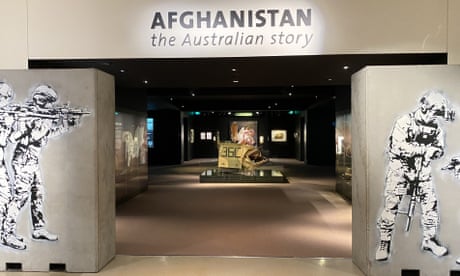
An inquiry by the Inspector-General of the Australian Defence Force, Major General Paul Brereton, reported evidence in 2020 of the murders of 39 people and cruel treatment of two others by members of the Australian Special Forces: one man has been charged. An ongoing inquiry by the UK Ministry of Defence, begun in 2022, is looking into allegations of possible extra-judicial killings by UK special forces between 2010 and 2013.
The International Criminal Court began a preliminary examination into the situation in Afghanistan in 2006, but only, finally, got permission to investigate in 2022 (a timeline of events up to that point can be read here), at which point the Chief Prosecutor, Karim Khan, narrowed the focus to just looking into the Taleban and Islamic State in Khorasan Province (ISKP), ie he dropped the US military and CIA and the forces of the Islamic Republic from his investigation, thereby creating the impression of a hierarchy of victims and perpetrators.
In Afghanistan itself, after 2001, great efforts at transitional justice programme were made over many years, but these were repeatedly stymied by hostile political actors – President Hamed Karzai, cabinet ministers, MPs, the United States and UNAMA – all of whom either did not want their own records, or those of their allies, laid bare, or they feared scrutiny would trigger instability. (For more on this see this recent report by the author. It also links to the 2004 UN Mapping Report, which brought together published documentation of war crimes from 1978 to 2002, was suppressed at the time and was recently posted by AAN). As to Afghan actors admitting wrongdoing, it is difficult to think of any, apart from General Abdul Rashid Dostum who made a public apology in 2013, which appeared to be a condition of his joining Ashraf Ghani’s ticket in the 2014 presidential election. Instead, MPs in 2007 voted for a blanket amnesty for “[a]ll political factions and hostile parties who were involved in one way or another in hostilities before the establishing of the Interim Administration.”
In light of such a poor record on holding those responsible for grave abuses and the current human rights situation in Afghanistan, which, according to the OHCHR report, is “very serious,” what more could or should be done?
Considering accountability at the UN
OHCHR’s annual report on the human rights situation was presented to the Human Rights Council on 9 September. After summing up the current situation, it presented a “stocktaking of accountability options and processes for human rights violations and abuses.” The report does not grapple with why, after the establishment of the Islamic Republic, “there was little impetus for accountability or transitional justice processes at the national level,” nor does it address why “a number of initiatives to map and document past human rights violations and abuses and develop options for a domestic accountability and transitional justice process” failed to bear real fruit, including the 2004 UN Mapping Report, which OHCHR itself had undertaken and that was buried because of political pressure.
Far more substantial is the report published by the Raoul Wallenberg Institute (RWI), ‘Accountability for Human Rights Violations and Violations of International Humanitarian Law’, authored by Latifa Jafari Alavi, Mehdi J Hakimi, Kobra Moradi, Orzala Nemat, Haroun Rahimi, Huma Saeed and Ehsan Qaane. The RWI report describes the “almost complete impunity for all state actors – of varied ideologies – that have held power, and for all armed forces, including those of foreign states, that took part in the conflict” and how “[c]ycles of violence have fed off each other … as those in power have replicated many of the same patterns of abuse and retribution against their foes as they had experienced when out of power, ensuring unstable transitions and fuelling grievances that have led to further violence.” It looks at attempts to analyse why previous efforts at accountability failed and proposes “ways that some progress could be achieved.” Like the OHCHR report, but far more emphatically, it embeds current concerns about human rights violations in the context of the last 46 years of conflict and includes, for example, an important section on economic crimes, such as land-grabbing, under the Republic, and even back to earlier conflicts and atrocities.
The RWI report lists the Emirate’s institutions of accountability, such as the Ministry for Promoting Virtue and Preventing Vice and Hearing Complaints, which is the address for members of the public to complain about Emirate officials. It concludes, however, that the prospect of holding human rights offenders accountable under the current authorities is “discouraging.” Since taking power, the report says, the Emirate has “dismantled the existing institutional setup and in its place set up exclusionary institutions with narrow focus and questionable effectiveness, suggesting a lack of political will to hold human rights abusers to account.”
The report also lists a wide range of international accountability mechanisms, their shortcomings, potential benefits and problems that includes the ICC, the International Court of Justice, regional judicial bodies like the European Court of Human Rights (ECHR) and various UN mandates, such as special procedures, and the use of universal jurisdiction by courts outside Afghanistan. It has a final section on non-judicial, or not necessarily judicial routes to accountability – documentation, memorialisation, oral history, archiving and truth-telling initiatives.
The RWI report recommends the establishment of a UN-mandated international investigation and accountability mechanism that would look into past and current human rights violations and abuses by all parties to the conflict in Afghanistan.
It calls on member states to support the work of the ICC, which should itself “[e]xpedite the Afghanistan investigation and avoid further delays.” It should also “reaffirm its mandate to address the most serious abuses by all parties to the conflict” and “reverse the decision to deprioritize” alleged crimes pursued in its preliminary investigation and widen the scope of its current investigation to include the US military and CIA and the forces of the Islamic Republic, the report urges. It goes on to call on the UN to enhance UNAMA’s monitoring and reporting function and ensure it cooperates with the ICC “particularly with regard to information on abuses contained in its database.” On sanctions, it calls for ways to be found “to ease current sanctions-related harm to banking and liquidity” and focus on targeted sanctions such as travel bans and asset freezes on individuals responsible for grave abuses.
The RWI report urges the UN to finally make public the 2004 Mapping Report and also has some interesting recommendations for international and Afghan civil society organisations, including looking into publishing the Afghan Independent Human Rights Commission (AIHRC) conflict mapping report, which documented alleged crimes committed between 1978 and 2001, based on historical documents and extensive field research in all of Afghanistan’s provinces. “This report likely includes information about perpetrators, the conditions and causes of violations,” the RWI report says, and their impact on affected populations. Its release is important for shedding light on past abuses, promoting transparency, and validating and recognizing the experiences of victims,” it says. It urges their collaboration on expanding the AIHRC Mapping Report to document alleged crimes to 2001-2024 and beyond, and the establishment of an online registry system for war victims in Afghanistan whereby Afghans inside and outside the country can access, submit information and register as war victims.
Accountability after 2001, and after 2021
The main problem with pushing for accountability during the Republic was that those who had power opposed it. Even though major state backers of the government (and the government itself) spoke about human rights and democracy, the US, in its initial intervention, had facilitated the takeover of the Afghan state largely by men who were dogged by allegations of war crimes, but who had helped the US get rid of the Taleban. At every turn after that, Washington kept supporting its new allies, squashing moves to have a more representative government or curb the power of the new elites. The men who had come to power on the back of the US intervention viewed the now very lavishly funded state as a means of enrichment, enabling them to build up their networks and restrict or target their opponents. Technocrats who gained government positions, mainly later on, were often just as corrupt. In those early years, the US special forces and CIA hounded men they believed to be Taleban. They carried out mass arbitrary arrests and used torture, often duped by their Afghan allies to pursue personal or factional enemies. After that, allies in the police and NDS did the same, with police in Kandahar alone carrying out some 2,000 enforced disappearances – a crime against humanity. Meanwhile, those in power in the Afghan government, its Western backers and the UN blocked attempts to pursue transitional justice.
The opportunity lost after 2001 to deal with past crimes tastes even more bitter in hindsight than it did at the time. In those years, there had been enough of a rupture with the past to face up to it, especially as Afghans assumed the war was finally over and hopes for a brighter, fairer, peaceful future were commonplace. Yet, under the Republic, there was not merely a lack of accountability for past or continuing abuses but a failure to acknowledge or speak about those crimes. The gaslighting by the new elite after 2001 was extreme: groups and individuals that had perpetrated war crimes were publicly celebrated as national heroes and patriots and going against this hegemonic discourse was dangerous. However, if power and politics failed or obstructed any sort of accountability after 2001, the politics appear even worse now. The underlying problem is not a lack of evidence of wrongdoing or even a lack of accountability mechanisms, but the absence of political will.
The Islamic Emirate, for its part, is either proud of what activists say are human rights violations, including ‘gender apartheid’, or denies them, for example, accusations that it persecutes individuals from the former government and armed forces, or it feels it is acting positively on past abuses, for example, taking back state land that was usurped by powerful individuals during the Republic (AAN reporting here).
Meanwhile, Western backers of the Republic, who remain Afghanistan’s largest donors of civilian aid, have largely tried to ignore the country since the debacle of their forces’ withdrawal in 2021. There might be interest among some of them for backing an accountability mechanism that targeted the Emirate, but would they support something which put a spotlight on their own conduct or that of their former allies? It is difficult to imagine.
Now, yet another cycle of a regime falling and another rising in its place has only added a new layer to the complexity of the pain and suffering of Afghans and the difficulties of getting accountability. Veteran human rights activist Patricia Gossman (her first visit to Afghanistan was in 1990 when she interviewed President Nabjibullah) described in 2018 how, in various national and international surveys asking Afghans for their views on the conflict, “one common theme emerges as a minimum requirement for a functioning polity: the need for acknowledgement and truth about what has happened.” She also said that in interviews with victims of both insurgent bombings and coalition airstrikes, “the (predominantly poor) survivors” told her they wanted “acknowledgement by those who had caused their suffering, and they want material help, something reparations could potentially help address.” Researchers involved in the (still unpublished) AIHRC Conflict Mapping Report had also found, she said, the experience of interviewing victims across different districts and provinces revelatory, that they had a “shared history beyond what their own community, tribe or ethnic group has suffered.”
One reason, the author was told by an AIHRC commissioner that they never leaked the report was that its benefit as a stand-alone document was limited and indeed could have been harmful. It needed to be the spearhead of a push to open up a nationwide conversation about what Afghans had suffered, an acknowledgement of the crimes of the past, an opportunity for truth-telling, and perhaps reconciliation. That realisation of a shared history seems further away than ever now, while truth-telling by Western states, Moscow and Afghanistan’s neighbours as to the part they have played has been slow to come or remains non-existent.
Edited by Roxanna Shapour
 Afghanistan Peace Campaign