The Taliban’s Misogyny Finally Needs a U.S. Response

By , a columnist at Foreign Policy.
Foreign Policy
September 18, 2024

In its latest assault on basic freedoms, Afghanistan has banned women and girls from speaking in public. It marks a new low in the Taliban-led government’s enforced gender apartheid.

Promises that girls and women would be allowed to study and work were broken shortly after the Taliban returned to power. The group banned girls from going to school beyond sixth grade and outlawed them from pursuing higher education at university. It even prohibited them from taking a stroll in the park or going to the gym, and from nearly all professions that could earn them a living and a semblance of independence and dignity.

And yet even as Afghan women are kept prisoner in their homes and denied basic rights, neither the Islamic nations in the region nor the United States have taken an active interest in compelling the group to reverse its misogynistic policies.

The new rules were announced in the middle of the presidential campaign in the United States, but both candidates kept mum on the issue of women’s rights, even though each of their respective governments knowingly left Afghan women to a fate that was hardly unexpected.

When Kamala Harris and Donald Trump faced off in a debate last week, Afghanistan was raised only in the context of the domestic ramifications of American withdrawal. No mention was made of what happened to Afghans left behind. Neither candidate said a word about how the U.S. exited without securing any guarantees from the Taliban on the future of women and their rights.

The Taliban, firmly in control, brushed off all of its atrocities on Afghan women and violation of their very basic rights as “Afghan values’’ in a conversation with Foreign Policy. Taliban spokesperson Suhail Shaheen said the group was open for engagement with the West, but on economic issues only.

“They can invest in minerals,’’ he told FP. “China, Russia, all have business ties with us, the West can also do that. It is good for them and good for us.’’

“Women’s rights and those things are up to us, and we will determine them according to Afghan values and traditions,’’ he added, as if speaking and reading were matters of Afghan sovereignty and not basic human rights.

Mahbouba Seraj, an Afghan women’s rights activist who was nominated for the Nobel Peace Prize last year, blamed both the Trump and Biden administrations for the circumstances the Afghan girls and women find themselves in.

“When they were discussing the agreement in Doha, we were not even given the visa to come to Qatar because we would have asked questions, we would have confronted the Taliban, but that could have scuttled the deal and the Trump administration didn’t want that,’’ she told FP over the phone.

“Biden may not have had enough room to change the deal, but that was not the reason he stuck with it,’’ she said. The Biden administration “wanted to get out.’’

But even the word “women’’ is missing from it. A post-withdrawal concern has been that a deteriorating humanitarian situation could exacerbate the refugee crisis, particularly in Europe.

In order to address these concerns, and heed calls by humanitarian actors, the U.S. agreed to ease some sanctions and infuse Afghanistan with billions in cash. That helped Afghans, but it also kept the Taliban afloat and emboldened it to carry on as it pleased.

“Since August 2021, the U.N. has purchased, transported, and transferred at least $2.9 billion to Afghanistan using international donor contributions,’’ according to a report by the Special Inspector General for Afghanistan Reconstruction (SIGAR) in January. It added that the U.S. is the largest donor, with $2.6 billion of that sum contributed by the American taxpayer.

While throwing money at the problem has somewhat mitigated a humanitarian crisis, it has also kept the Taliban in power and allowed it to maintain a support base. The report said that the Taliban has accumulated, “a large supply of U.S. dollars, through the conversion process of dollars for afghanis.’’

Some Afghan analysts argued that stopping the cash flow will weaken the Taliban, reduce its acceptability, and ideally encourage an anti-Taliban uprising. Or, at the very least, force them to make some concessions.

22-year-old Miryam, whose name has been changed to protect her identity, pleaded that the West, and especially the U.S., “should stop sending money to the Taliban.’’ Her education was cut short when the Taliban took over in 2021, she can’t wear what she wants, or do anything professionally, or step out of the house.

“Don’t recognize the Taliban,’’ she said from Kabul in her message to the international community, “put pressure on them to at least give women the right to work and study.’’

Davood Moradian, founder and the director-general of the Afghan Institute for Strategic Studies (AISS) now based in London, argued in favor of slashing the aid. “America is the main source of Afghan currency,’’ he told FP. “The moment the U.S. stopped funding, the Taliban will face a serious challenge,’’ to its rule, he added.

Others said if the Taliban didn’t break under 20 years of American presence, they wouldn’t abandon their hardcore ideology now, due to a cash crunch. Seraj, the women’s rights activist, advocated a diametrically different approach and said that the West should instead open the floodgates of developmental aid in a way that upward mobility emboldens the Afghan people to rebel against Taliban’s excesses and fight for women’s rights.

“You can’t even use the word women with them,’’ she said. “You have to come up with things like more investments and business deals and let that create the right conditions.’’

Thus far, the U.S. has threatened the Taliban with a global boycott if it doesn’t grant women their rights. But efforts ostracize the group from the international community are a farce since China, Russia, Pakistan, Qatar and several others continue to engage the group for economic and security reasons.

The truth is there hasn’t been an active U.S. policy to try and bring about a change or help the women of Afghanistan since the U.S. retreated. The policy has been outsourced to the U.N., which is engaging the group, often on the terms set by the Taliban. For instance, in July the U.N. organized Doha III, a dialogue platform to engage the Taliban and various stakeholders on the future of Afghanistan. But to appease the Taliban and make sure they attended, not a single women’s rights activist was invited.

One idea, way short of full recognition, could be to bring together a coalition of Islamic nations to challenge the Taliban’s understanding of Shariah and compel the group to let women and girls study and work, just as they can in other Islamic countries.

In April, the Organisation of Islamic Cooperation (OIC) called on the Taliban’s deputy chief minister Abdul Kabir to end the ban on education and employment for women and girls. Last year, Turkish President Recep Tayyip Erdogan said that preventing education for girls is “inhumane and un-Islamic.” Abdulkhaleq Abdulla, a prominent political advisor in the United Arab Emirates, told FP that an Emirati delegation visited Kabul to discuss women’s rights. “There are so many trends in Islam, some more moderate, others more extreme. The Taliban, they are following a very backward ideology,” he said.

But Afghan women’s rights activists say that the condemnations from fellow Islamic countries appear to be more perfunctory and unserious. It could carry weight if it was a cohesive regional policy pushed by the U.S. as one of the pillars of its Afghanistan strategy. The Taliban, after all, is carrying out its oppression in the name of Islam.

Shaheen, the Taliban spokesperson, seemed to make some room for concessions when he told FP that the decision on education and employment for girls and women was pending, and subject to a report by an Afghan “committee.”

As for the next American president, ignoring Afghanistan would be at their own peril. Caging women in their homes and denying them basic rights represents a pattern of the Taliban reneging on promises—and it’s easy to imagine that extending to foreign policy.

“They are all there, all there,’’ Seraj, the activist, said. “ISIS-KP, Al Qaeda, other terrorist groups, they are all there. They are all getting training. Don’t think nothing is happening. The American intelligence knows what’s going on.”

The Taliban’s Misogyny Finally Needs a U.S. Response
read more

Ruling Uncharted Territory: Islamic Emirate governance in northeastern Afghanistan

The relationship between central government and political actors at the periphery has long been studied in Afghanistan in order to understand representation, legitimacy, patronage and conflict. In the years of the insurgency and since the re-establishment of the Islamic Emirate of Afghanistan (IEA), the Taleban movement has remained a cohesive force in Afghanistan’s highly fragmented political landscape. However, the IEA faces challenges similar to those experienced by previous governments in how to rule, in a centralised way, a large and varied country beset by structural hurdles in terms of infrastructure and budget. This themed report focuses on northeastern Afghanistan, an area which, before August 2021, had never come under Islamic Emirate rule – the provinces of Takhar, Badakhshan and Panjshir, plus parts of Baghlan. In a new themed report, Fabrizio Foschini has been looking at the constraints and challenges that have been faced by the IEA in organising its administration there over the last three years.

A view of Ragh area, Badakhshan province. Photo by Fabrizio Foschini, 2012You can preview the report online and download it by clicking here or the download button below.

The northeast of Afghanistan constitutes a case of particular interest, given its geographical, historical and socio-political specificities. In the years between 1996 and 2001, it saw the most effective military opposition to the first Islamic Emirate. In the years after 2001, political-military networks hailing from the region maintained their importance both locally and at the central level, reaping the rewards of having helped the United States topple the first IEA. The emergence of an insurgency and its ultimate conquest of state power has removed or marginalised these elites. Elsewhere, the Emirate had years of solid shadow administration with cadre ready to take over administrative and military posts, but in the northeast, core affiliates waiting to take over were less numerous or had limited social influence.

Also complicating central rule are four decades of internal conflicts and foreign interventions, which have left scars on Afghanistan’s political landscape at the sub-national level. In the northeast, the role of local politico-military powerbrokers, based on the key elements of regional/ethnic belonging, personal connection and shared economic interests and with strong ties to the centre, was particularly evident during the Republic.

Since 2021, the IEA has had to devise strategies to expand and consolidate its rule in this region, and safeguard against possible threats to its control. In some areas, such as Panjshir, this has been pursued primarily through military occupation. Elsewhere, in most of Takhar and Badakhshan, the emphasis has been more on co-option, seeking to appease local elites in order to prevent any thought of opposition and also to tap into their influence in local communities in order to strengthen and expand the status of local IEA commanders. In doing so, Kabul initially acknowledged the relevance of locally specific human and social features: for example, wherever possible, it selected senior local officials from among its own cadre from whatever group is locally in the majority, Uzbeks or Tajiks.

Starting from late 2022, once its hold on power at the national and local levels had been consolidated, the IEA began to adopt a more hands-on approach to sub-national governance in the northeast: appointments at the provincial level became less mindful of local origins and ethnic balances of power and many prominent Taleban commanders, initially tasked with mollifying their home areas, were transferred to other provinces, while their troops – recently expanded by new recruits with no record of previous allegiance to the Emirate – have been subjected to vetting. Instances of rebellion by local IEA commanders who felt wronged have been suppressed.

This appeared to show that the IEA is wary of the risk of infiltration by hostile groups or the accumulation of unsanctioned autonomy and power by its peripheral commanders. The change in IEA strategy also pointed to the emergence of another priority – reclaiming control of mines and other economic assets from local Taleban powerbrokers and centralising the extraction of revenue.

The single most coherent IEA policy aimed at enhancing its support among locals in the northeast and creating future loyal cadres has been the expansion of the religious education system. It is also counting on government-run madrasas to counter the influence of religious groups which it opposes or mistrusts, such as Hezb ut-Tahrir and the Salafis, of particular concern to the IEA in this part of Afghanistan as a possible medium for political opposition.

Currently, the IEA seems bent on enforcing tighter control over local appointments and resources and implementing its policies more uniformly throughout northeastern Afghanistan. In doing so, it may clash with the vested interests of some of its local supporters. Its willingness and capacity to rule this region in a more centralised way without stirring opposition is still unclear.

You can preview the report online and download it by clicking here or the download button below.

AUTHORS:

Fabrizio Foschini

Ruling Uncharted Territory: Islamic Emirate governance in northeastern Afghanistan
read more

Human Rights Watch: Ban on girls’s educaiton in Afghanistan enters 4th year

Human Rights Watch reports that the ban on education for Afghan girls has entered its fourth year, yet the international community has not taken meaningful action to lift this restriction.

On Thursday, September 19, Human Rights Watch noted in a post on X/Twitter that the ban has drawn significant global attention this week as it marks its fourth anniversary.

The organization states that the ban on girls’ education is a systematic and misogynistic attack by the Taliban on women’s rights, entrenching gender inequality in Afghanistan’s education system.

Human Rights Watch describes the prohibition of education for girls above the sixth grade as a systematic attack that institutionalizes gender inequality in Afghanistan’s educational framework.

The organization emphasizes that this ban negatively impacts all areas of Afghan life, leading to severe social, developmental, and economic consequences for the country.

It further warns that Afghanistan will face a serious shortage of female doctors, nurses, teachers, and professionals as a result of this action.

Human Rights Watch stresses that the ban undermines women’s roles in Afghanistan society, creating an unequal and impoverished community devoid of female participation.

The organization calls on the Taliban to immediately end the ban on girls’ education and provide quality education for all. It insists that the international community must pressure the Taliban to fulfill its commitments and swiftly revoke the ban.

The ongoing restriction on girls’ education represents a grave violation of human rights and hinders Afghanistan’s progress. Urgent action is needed from the global community to restore educational opportunities for Afghan girls and support their fundamental rights.

Human Rights Watch: Ban on girls’s educaiton in Afghanistan enters 4th year
read more

US Envoy to UN: Normalization of Taliban relations depends on its actions

US Ambassador to the United Nations, Linda Thomas-Greenfield, stated on Friday that any steps toward normalizing relations with the Taliban government will depend on its actions, especially regarding the treatment of women and girls.

She expressed on social media platform X that the Taliban’s restrictions on women and girls are “deeply troubling.”

“The United States has been clear: Any meaningful steps toward normalization will be based on the Taliban’s actions, including its treatment of women and girls,” she reiterated.

Earlier, on Wednesday, Thomas-Greenfield mentioned that the situation for women and girls in Afghanistan continues to worsen under the Taliban regime.

She added, “We believe more needs to be done to hold them accountable and push them to change,” while speaking to reporters at the Washington Foreign Press Center on UN Reform.

The international community, including the United States, remains concerned about the continued restrictions on women’s rights in Afghanistan, which have sparked global criticism.

The normalization of relations with Afghanistan will likely remain stalled unless significant changes are made in the treatment of women and girls, highlighting the growing tension between the Taliban and the international community.

It remains to be seen whether the Taliban will address these concerns or continue its current policies.

US Envoy to UN: Normalization of Taliban relations depends on its actions
read more

UNAMA Chief: Only 30% of Afghanistan Aid Budget Secured

Otunbayeva also said that the freezing of Afghanistan’s central bank assets has limited the country’s private sector.

Roza Otunbayeva, the head of the United Nations Assistance Mission in Afghanistan (UNAMA), said in a UN Security Council meeting that out of the three billion dollars requested for Afghanistan this year, only $900 million have been received.

Otunbayeva also said that the freezing of Afghanistan’s central bank assets has limited the country’s private sector.

According to the UN Secretary-General’s representative in Afghanistan, the activities of 260 fixed and mobile health centers that provided primary healthcare services in Afghanistan have ceased, affecting 2.9 million people. It is also expected that the activities of 171 more health centers will be stopped in the coming months.

Roza Otunbayeva said, “I am greatly concerned that 2024 Afghanistan humanitarian response plan is only 30% funded, with around 900 million dollars received of the three billion dollars required.”

Naseer Ahmad Faiq, Chargé d’Affaires of Afghanistan’s Permanent Mission to the UN, said in the Security Council meeting: “85% of Afghanistan’s population now living below the poverty line, 23 million people suffer from acute food insecurity, with six million people at immediate risk of starvation.”

Munir Akram, the Pakistan’s permanent representative at the UN, said: “The request to address the humanitarian situation in Afghanistan has received less than 25% of its budget. This budget must be fully paid. Pakistan is cooperating in Afghanistan’s economic recovery through trade and the banking sector.”

The representatives of Kazakhstan and Uzbekistan also emphasized economic stability in Afghanistan during the meeting, saying that integrating Afghanistan into the regional economic system is beneficial for Central Asia.

The representative of Kazakhstan said, “The people of Afghanistan need support from its neighbors and international organizations, today we can’t allow the continuation of … poverty and hunger in this long suffering.”

The representative of Uzbekistan said, “We believe that to establish lasting peace in Afghanistan, the focus should be on building the national economy and transport projects.”

The Ministry of Economy said that economic sanctions, the freezing of national assets, and the reduction of humanitarian aid are among the reasons for the increase in poverty. To achieve economic growth, the global community needs to expand its economic interactions with Afghanistan.

Abdul Latif Nazari, the technical deputy of the Ministry of Economy, told TOLOnews: “The most important factor for the increase in poverty in the country is the freezing of Afghan people’s assets, which has also harmed the private sector. We want the assets of the Afghan people to be released as soon as possible. In addition, we have a special focus on job creation and infrastructure projects to accelerate Afghanistan’s economic growth and development.”

The United Nations Assistance Mission in Afghanistan said in the Security Council meeting that since the return of the Islamic Emirate, more than seven billion dollars have been provided by international donors for humanitarian aid, and more than four billion dollars for supporting the basic needs of the Afghan people.

UNAMA Chief: Only 30% of Afghanistan Aid Budget Secured
read more

Baghlan Sees Surge in Tourist Visits Amid Improved Security

Haqqani told TOLOnews that among these visitors, over one hundred were foreign tourists, and the rest were domestic.

Izzat Mir Haqqani, the acting head of Baghlan’s Department of Information and Culture, reported that in the first four months of this solar year, more than 40,000 domestic and foreign tourists have visited the scenic spots of this province. 

Haqqani told TOLOnews that among these visitors, over one hundred were foreign tourists, and the rest were domestic.

The acting head of Baghlan’s Department of Information and Culture stated: “In the past quarter, according to the statistics we have, more than 40,000 domestic tourists and one hundred foreign tourists have visited various sites in Baghlan.”

According to Izzat Mir Haqqani, Baghlan is one of the provinces with many historical sites; however, due to insecurity in recent years, the number of tourists visiting has been low. He pledged that security has now been established throughout the province.

The acting head of Baghlan’s Department of Information and Culture added: “Tourists from many countries, such as Germany, Japan, China, the United States, France, and recently from other countries, have visited Baghlan.”

At the same time, some military experts emphasize that to increase the number of tourists in the country, more attention should be paid to addressing security concerns.

Aziz Stanikzai, a military affairs expert, said: “Tourists who travel from one country to another are accompanied by specific individuals, both for security and health reasons, to ensure they don’t encounter any problems. We expect the Islamic Emirate to create these conditions for foreign tourists.”

Kamran Aman, another military affairs expert, said: “The government should strive not to impose restrictions on domestic and foreign tourists, as any such restrictions will result in a decrease in the number of tourists.”

Previously, officials from the Ministry of Information and Culture reported that over the past year, nearly 9,000 foreign tourists visited the country’s historical sites, generating an income of 48 million afghani.

Baghlan Sees Surge in Tourist Visits Amid Improved Security
read more

Where is Afghanistan Three Years into Taliban Rule?

Lacking formal recognition from all member states, the Taliban will not be present at the U.N. General Assembly next week. Their absence speaks volumes about how the international community struggles to constrain a regime that has repeatedly defied U.N. treaties, sanctions and Security Council resolutions. Three years into Taliban rule, the Afghan people are beset by a host of human rights, economic and humanitarian challenges, with women and girls particularly impacted. Meanwhile, the international community still has no clear approach to dealing with the Taliban, with the regime rejecting a U.N. Security Council resolution calling for a special envoy to develop a roadmap for normalizing Afghanistan’s relations with the international community.
As world leaders prepare to gather and discuss the most difficult global problems, USIP’s Afghanistan experts examine the challenges of living in and engaging with Afghanistan under the Taliban and the implications of the present situation on moving forward.

How bad is the human rights situation, particularly regarding the Taliban’s approach to justice and civil liberties?

Belquis Ahmadi: Since taking control, the Taliban has issued over 100 decrees aimed at restricting the rights of women and girls to education, employment, healthcare and mobility, among other things. The Taliban’s latest vice and virtue law consolidates previous edicts and introduces harsher restrictions, including classifying a woman’s voice as awra — an intimate element that must not be heard publicly. The law marks a new phase in the Taliban’s systematic efforts to erase women from all aspects of Afghan society. If it is enforced, women will disappear from television and radio broadcasts, public employment and will be further restricted in getting an education.

Just as women’s fundamental rights are being eliminated, Afghans’ ability to seek justice has deeply eroded. Under Taliban rule, Afghanistan’s justice system has been transformed from a system that, while imperfect, was grounded in the rule of law with civil society playing a crucial role in ensuring that decisions were consistent with the country’s legal framework, to one in which unqualified clerics can apply their own (mis)interpretations of Shariah. In one of their earliest actions after seizing power, the Taliban suspended the constitution, a document that, while recognizing the primacy of Shariah, also acknowledged the Universal Declaration of Human Rights and enshrined the principle of equal rights before the law for both men and women.

Just as women’s fundamental rights are being eliminated, Afghans’ ability to seek justice has deeply eroded.

The Taliban have taken further steps to dismantle the existing legal framework, including the suspension of the Afghanistan Independent Bars Association, a vital institution that once played a key role in safeguarding legal rights, ensuring access to justice, advocating for fair trials and providing legal representation to those in need. Male lawyers are now subjected to a religious knowledge assessment, and only those who meet the Taliban’s criteria and expectations have been relicensed. This shift has subordinated the legal profession to the Taliban’s ideological agenda. Meanwhile, female lawyers, judges, prosecutors and court clerks have been dismissed from their positions.The Taliban’s so-called justice often consists of swift, brutal punishments, frequently ordered by a single judge with unchecked power. Since taking control, hundreds of Afghan men and women have been subjected to public floggings, followed by imprisonment for up to two years. The rule of law has been replaced by the rule of force, where justice is not administered in courts but meted out through fear and violence.

Women face significant barriers in accessing justice, noted Richard Bennet, the U.N.’s special rapporteur on the situation of human rights in Afghanistan, in a 2023 report. Obtaining legal aid and counseling is particularly challenging, as women often need to rely on a mahram (a male guardian) to access the courts. In some cases, the mahram may be the very reason the woman seeks justice, complicating the process further. The Taliban dismissal of female legal actors combined with restrictions on interactions between men and women, exacerbates these challenges and leaves women in a desperate situation.

How has the security situation evolved for Afghans over the last three years?

Joyana Richer and Jill Baggerman: Armed conflict has decreased now that the Taliban has ended its violent insurgency. Though threats of violence and terrorism remain, the Taliban can accurately demonstrate that large-scale violence is at its lowest level in decades. Afghanistan’s streets are clean and “safe” in some respects — as long as the Taliban’s harsh restrictions on women are heeded. Tourism is up and kidnappings are down.

However, the absence of armed conflict represents only a negative peace. Broader human security has decreased for much of the population due to increased poverty, hunger and the Taliban’s repression and structural violence. Human rights advocates, former government officials, and people who break the Taliban’s strict interpretation of Islamic law are subjected to extrajudicial killings, disappearances and floggings. The regime enforces it policies through fear, coercion and discrimination.

The current low level of violence shouldn’t be conflated with peace nor become a distraction from addressing remaining sources of conflict. Afghanistan’s history is marked by deep-seated grievances, cycles of revenge and resource disputes. The Taliban’s current approach to security suppresses these issues, but those long-standing divisions will persist until they are resolved in a way that meaningfully benefits all of Afghanistan’s diverse population. Throughout Afghan history, political exclusion has often led to armed resistance, frequently fueled by foreign patrons of different factions. Avoiding this cycle of repression and violence will require collaborative efforts between local communities and external actors, who could potentially leverage this stage of domestic physical safety to address long-standing root drivers of conflict.

What about the Afghan economy and humanitarian situation?

William Byrd: Over the past three years Afghanistan’s economy has gone through three phases, with a drastic initial economic shock stabilizing at a low-level equilibrium that shows little prospect of improving any time soon.

  1. Free-fall in the months following the Taliban takeover, precipitated by the cut-off of some $8 billion per year of aid and large international military expenditures in-country, exacerbated by stoppage of foreign financial transactions, freezing of Afghanistan’s $9 billion of foreign exchange reserves, and other shocks. Afghanistan’s GDP fell by more than a quarter, unemployment and underemployment increased, inflation soared and personal incomes fell, with tens of millions of people dependent on humanitarian aid. The urban service sector (bloated by foreign inflows of money) shrank greatly. Afghan women suffered disproportionately due to Taliban gender restrictions. Rural areas saw improvements in security with the end of the war, but any economic “peace dividend” was overwhelmed by the aid cut-off and other shocks.
  2. Subsequent stabilization of the economy at a low, arguably below-subsistence level supported by humanitarian support and better-than-expected Taliban economic management. Inflation fell back, poverty and unemployment seem to have stabilized albeit at high levels, the exchange rate improved, imports recovered, exports grew and revenues were effectively collected despite the weak economy. Humanitarian aid funding reached a peak of $3.8 billion in 2022, and associated U.N. shipments have in the past two and a half years injected $3.8 billion in cash into the economy. Human capital development, however, is being decimated by the prohibition against women and girls’ education and many boys dropping out to seek work.
  3. Current economic stagnation with downside risks and little prospect for robust growth. Exports and revenues seem to have plateaued, and the World Bank projects limited growth in coming years. The Taliban’s opium ban has devastated millions of rural households previously dependent on poppy cultivation to make ends meet, while not stemming flows of opiates out of the country from existing inventories. Humanitarian aid funding was halved in 2023 (to $1.9 billion) and is unlikely to increase in 2024. Basic development assistance, perhaps amounting to several hundred million dollars per year, will not offset this decline. Moreover, development projects currently underway and envisioned will not contribute much to overall economic growth. Most of the projects, which could be labeled as either humanitarian or development, will require money on a recurrent, in many cases, yearly basis. So, there will be little or no reduction in aid dependency, and overall a bleak economic picture.

How does the international community see the Taliban’s rule three years on?

Baggerman: The international community lacks consensus on how to engage with the Taliban. No state has officially recognized the Taliban as a legitimate government. However, China, Russia, Turkey, Iran, Pakistan, multiple Arabian Gulf countries and a few others have cautiously moved toward a realpolitik acceptance of Taliban rule.

International actors’ core dilemma centers on principled versus pragmatic engagement. Many civil society groups and U.N. human rights bodies take a principled stance, focusing on promoting human rights, especially for women and girls. Pragmatic or tactical engagement — seen by the U.N.’s Doha meetings and humanitarian efforts — addresses immediate needs, but tends to normalize Taliban authority.

Most global engagement with the Taliban centers on counterterrorism. Taliban rule has created a safer haven for terrorist groups that threaten regional and international security. The Taliban has not expelled al-Qaida members, and ISIS-Khorasan (while opposed by the Taliban) has managed to secure a foothold in the country from where it has conducted recent attacks in Moscow and Iran. Pakistan is deeply threatened by the Tehreek-e-Taliban Pakistan (TTP), which the Taliban have given safe haven.

Overall, neither pragmatic nor principled approaches seem to have influenced senior Taliban policymaking in the last three years.

Regional nations take a pragmatic approach toward navigating shared challenges like border security, economic interdependencies and transboundary water challenges. Central Asian countries are  apprehensive about infiltration by violent Islamic groups such as ISIS-K and ones with Central Asian roots but lack the power to change the Taliban and have thus resorted to policies of normalization and practical engagement. Kazakhstan and Kyrgyzstan have both removed the Taliban from terrorist lists. The region is enacting multiple deals that predated the Taliban takeover. For instance, the Turkmenistan-Afghanistan-Pakistan-India energy transfer deal began in Afghanistan on September 11 and the Taliban’s construction on the Qush Tepa Canal deepen Central Asia’s engagement. Tajikistan has raised the most objections to accepting Taliban rule, but recent signals indicate this position may be veering toward normalization.Overall, neither pragmatic nor principled approaches seem to have influenced senior Taliban policymaking in the last three years.

What does this mean for U.S. policy?

Scott Worden: Afghanistan has largely disappeared from high-level foreign policy debates as more acute crises like Gaza and Sudan and more strategic challenges like China and Russia have come to the fore. Afghanistan has taken a back seat in U.S. foreign and defense policy and neither presidential campaign has put forward detailed policy proposals about how they plan to deal with the country’s challenges if elected. The current administration has also avoided significant discussion about Afghanistan policy beyond condemning women’s rights violations and noting the absence of terrorist attacks on the homeland despite having no troops on the ground. In the background of all this silence is an uncomfortable sense that there are few good ideas on how to change a frustrating and depressing status quo.

U.S. policy toward Afghanistan is also hampered by the same tensions between a principled vs. pragmatic engagement approach discussed above. On one hand, maintaining a functional relationship with the Taliban is needed to achieve core U.S. interests of counterterrorism cooperation on ISIS-K and individuals that have been wrongfully detained. On the other hand, the U.S. condemns the Taliban’s women’s rights restrictions and does not want to be seen as “rewarding” the Taliban for their authoritarian behavior. Economic assistance is caught in the middle. Sanctioning the Taliban and withholding development assistance is a normal response toward an adversarial regime — yet it ultimately hurts Afghans the U.S. wants to support and increases humanitarian needs. Essentially, the Taliban’s human rights violations provide a low ceiling for U.S. engagement and the need to mitigate terrorism and migration risks put a floor on the degree of isolation the U.S. can afford. Policy will likely fluctuate within this middle band for the foreseeable future unless and until some surprising security shock like a foreign terrorist attack jolts the system.

Where is Afghanistan Three Years into Taliban Rule?
read more

What an ICC Case on Mali Means for Prosecuting Taliban Gender Crimes

Since the Taliban took power in August 2021, the situation for Afghan women and girls has dramatically deteriorated. Yet there has been little international action, as many in the international community lament the lack of legal, and other, avenues to hold the Taliban accountable for these draconian measures. However, a recent case at the International Criminal Court (ICC) may provide a legal roadmap to prosecute the Taliban.
On June 26, 2024, the ICC announced its judgment in the case of The Prosecutor v. Al Hassan Ag Abdoul Aziz Ag Mohamed Ag Mahmoud (the “Al Hassan case”), convicting the defendant, the head of Ansar Dine’s Islamic Police in Timbuktu, Mali, of crimes against humanity and war crimes. But the panel of judges found that while the crime against humanity of persecution on the basis of gender (hereinafter “gender persecution”) was ongoing at the time Al Hassan committed war crimes and crimes against humanity, criminal liability for the gender persecution did not attach to him.The court’s decision has been viewed with disappointment by many advocates for accountability for gender persecution and gender-based crimes, particularly advocates and women in Afghanistan who had eagerly awaited the decision to inform their efforts to seek accountability for Afghan women and girls. While Al Hassan was not convicted of the crime, the panel’s decision provides important indicators of what constitutes gender persecution, as well as instructive jurisprudence on potential opportunities and challenges in proving it.

The Crime of Gender Persecution

As defined by the Rome Statute of the ICC, persecution is “the intentional and severe deprivation of fundamental rights contrary to international law by reason of the identity of the group or collectivity.” Persecution rises to the level of a crime against humanity when committed on a widespread, systematic basis “against any identifiable group or collectivity on political, racial, national, ethnic, cultural, religious, gender … or other grounds that are universally recognized as impermissible under international law, in connection with any … crime within the jurisdiction of the [ICC].” Persecution therefore requires the commission of another crime outlined in the Rome Statute to be charged. Prior to the Al Hassan case, gender persecution had not been charged by the ICC prosecutor, although the Prosecutor’s Office had taken steps to further define the crime and its approach to the crime through policies on gender persecution and gender-based crimes.

The Al Hassan Case

The Al Hassan case considers the defendant’s conduct during Ansar Dine’s and al-Qaida in the Islamic Maghreb’s (AQIM) 2012-2013 occupation of Timbuktu, Mali. Al Hassan was recruited by these groups to head the Islamic Police and was responsible for enforcing their restrictive interpretation of Shariah law. While these policies impacted the entire population, women and girls faced particularly severe restrictions, including requiring them to wear a veil and cover their bodies, constraining their ability to move freely, and subjecting them to forced marriages. Women were frequently beaten or detained for violations of these restrictions, in sharp contrast to men who were more likely to receive a warning. Female detainees were subjected to sexual assault, including gang rape.

Al Hassan surrendered to the ICC in March 2018 and was charged with crimes against humanity, including torture; other inhumane acts, among them forced marriage; persecution on the basis of religion and gender; and war crimes including torture, mutilation, and passing sentences without previous judgment pronounced by a regularly constituted court.

The ICC’s panel first considered whether the charged crimes had taken place under the Ansar Dine-AQIM occupation. The majority found that these groups committed persecution on the basis of religion and gender during the occupation of Timbuktu, intentionally and severely depriving the city’s population of fundamental rights, among them the right to freedom of thought, conscience and religion; the right to freedom of movement; and the right to freedom from discrimination based on gender. In finding that Ansar Dine/AQIM had committed persecution on the basis of gender, the panel noted that “specific rules and prohibitions were aimed at women and girls, and their violation was repressed with especially harsh punishment and detention conditions, involving gender-specific violence.” These specific rules were based on Ansar Dine/AQIM’s roles and expectations about the behavior of women.

The panel then turned to Al Hassan’s culpability. Al Hassan was found guilty of persecution on the basis of religion, among other crimes. However, he was acquitted of gender persecution, with all three judges taking different positions on his culpability. In separate and partially dissenting opinions, two of the judges considered the question of gender persecution, and their findings provide important, although less persuasive, precedent in future gender persecution cases.

Judge Kimberly Prost of Canada found that gender persecution had occurred for which Al Hassan was responsible and should be found guilty, and thus dissented from the majority’s acquittal. Judge Prost argued that gender persecution was fundamentally intertwined with religious persecution, and that “women and girls were not only particularly affected, but they were also specifically targeted on the basis of gender.” While Judge Antoine Kesia-Mbe Mindua of the Democratic Republic of Congo found that Ansar Dine/AQIM had committed gender persecution, he found Al Hassan not guilty of all charges by reason of duress and mistake of law. Judge Tomoko Akane of Japan, while also acquitting Al Hassan on the charge of gender persecution, dissented from the finding of judges Prost and Mindua that Ansar Dine/AQIM committed gender persecution, finding instead that none of the crimes against humanity committed met the “connection with” requirement for gender persecution and that the gender-based violence associated with the occupation was outside the common purpose of Ansar Dine/AQIM in occupying Timbuktu.

Applying Al Hassan to Afghanistan

The Al Hassan decision, while not the resounding victory advocates of gender persecution had hoped for, provides helpful insights into situations in which gender persecution is alleged, including Afghanistan. These insights relate to the rights violated by Taliban edicts and comments, the mechanisms for enforcement and patterns of punishment, the Rome Statute crimes committed “in connection with” gender persecution, the rejection of pre-existing discrimination on the basis of gender as a defense, and the potential need to overcome a “common purpose” challenge related to sexual and gender-based violence.

The Al Hassan decision provides helpful insights into situations in which gender persecution is alleged, including Afghanistan.

Taliban Edicts Amount to Severe Deprivation of the Fundamental Rights of Afghan Women and Girls

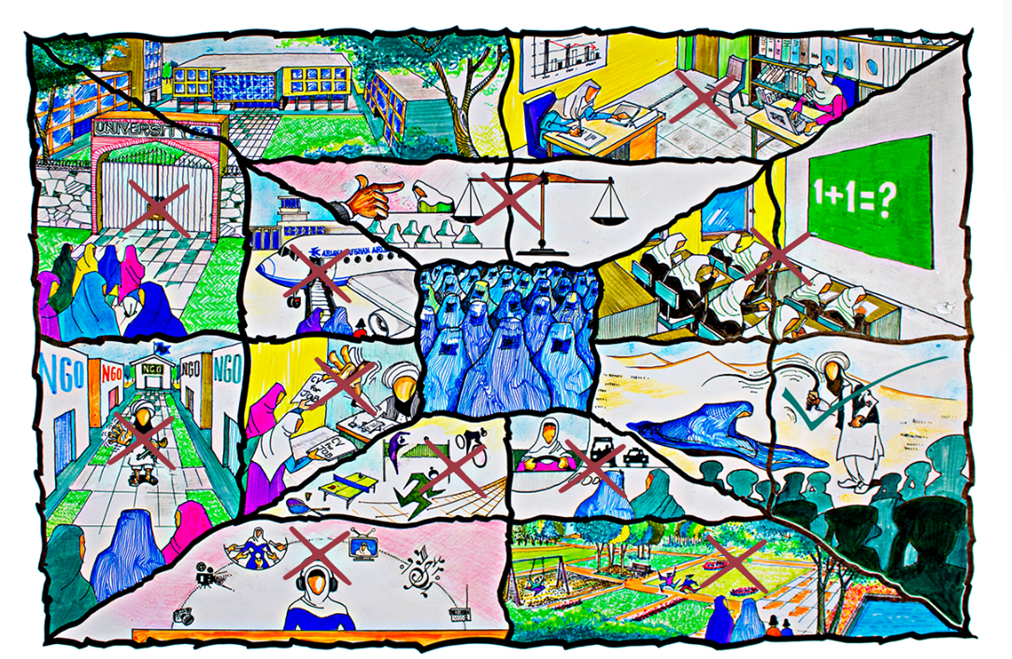
Taliban leaders have restricted the rights of women and girls in Afghanistan through a series of edicts designed to push women out of public spaces. As in Al Hassan, these edicts are based on a strict interpretation of Shariah law that defines what women “are suited for” within the Taliban’s vision of society. These restrictions undermine several fundamental rights under international law, including freedom of movement and association, and freedom from gender-based discrimination. The Taliban’s efforts differ from those of Ansar Dine/AQIM in the higher volume of edicts, which present an arguably more formalized attempt at repressing women on the basis of gender, and the expansiveness of the rights impacted. Repressive Taliban edicts include a harsh dress code forcing women to cover themselves entirely while in public and harsh limitation on the right to marriage, freedom of movement and association, and restrictions on access to education, employment, healthcare and cultural engagement. (For a comprehensive list of Taliban anti-women edicts, click the below infographic.)

Original artwork by Ahmad Fahim Hakim
Finally, as if the situation for women in Afghanistan was not already dire, a new vice and virtue law consolidates various previously issued edicts and instructions into a more rigid and comprehensive framework, adding several new restrictions. Among these, it now classifies a woman’s voice as “awra” — a private, intimate aspect that must be concealed from the public sphere, effectively silencing women from participating in any form of public discourse.

Similar Patterns of Punishment, and More Gender-Specific Enforcement Mechanisms

In the Al Hassan decision, the Court recognized a pattern of punishment for violations of Ansar Dine/AQIM edicts that was more severe for women than men as central to a finding that gender persecution occurred. This included corporal punishment and arbitrary detention in inhumane conditions, during which women were subjected to sexual assault. The Taliban has pursued a similar pattern of using more severe enforcement tactics, including corporal punishment and arbitrary detention, to implement edicts targeting women. A number of women have reported instances of sexual assault while in detention.

In addition, the Taliban has taken the additional step of creating specific enforcement mechanisms to police women’s compliance. The Ministry of Vice and Virtue created the female morality police in 2022 to “guide” women in following Taliban edicts. These police are thought to be stricter with women than their male counterparts. Men have been similarly empowered to enforce Taliban edicts within their families and communities, increasing the risk of violence against women.

Similar Rome Statute Crimes Committed in Connection with Gender Persecution

The crime of persecution can be charged only “in connection with” other crimes against humanity or crimes outlined within the Rome Statute. In the Al Hassan decision, the crimes against humanity charged that satisfied this requirement included torture and other inhumane acts, among others. The majority found that the existence of other ongoing Rome Statute crimes fulfilled the connection requirement. Further, while crimes considered to be part of the persecution charge had been committed, they were not necessary to fulfill the connection requirement. Similar crimes are ongoing in Afghanistan, stemming both from the Taliban’s treatment of women as well as their treatment of the population as a whole. Additional crimes against humanity alleged in Afghanistan include imprisonment, enforced disappearance and forced marriage. Given the majority’s ruling, these crimes would likely satisfy the connection requirement.

Pre-Existing Discrimination Against Women is not a Defense

A notable development from the Al Hassan decision is the court’s distinction between pre-existing discrimination against women and the systematic discrimination alleged as part of the crime of gender persecution. The panel dismissed a defense argument that the pre-existing levels of gender discrimination in Malian society should be considered in evaluating the extent of the discrimination emerging from the alleged gender persecution. This finding may be used to counter any potential defense argument surrounding the historical treatment of women in Afghanistan as a defense to the Taliban’s current treatment.

Overcoming Potential “Outside the Common Purpose” Argument

In her dissenting opinion, Judge Akane distinguished gender-based and sexual crimes — rape, sexual slavery, and forced marriage — from the remainder of crimes committed as outside the “common purpose” of Ansar Dine/AQIM in occupying Timbuktu. The common purpose doctrine recognizes that individuals who engage in a joint criminal venture share responsibility for the crime, allowing courts to hold them accountable for acts committed by others as part of a common purpose. Judge Akane viewed these crimes as opportunistic, committed by actors who exploited women’s vulnerability in detention or in situations of forced marriage. Commentators on the Al Hassan decision have starkly disagreed with Judge Akane’s findings as relying too heavily on long-debunked ICC precedent that rape within a “coercive environment” does not necessarily bring rape into a group’s common purpose. This line of thinking suggests that “those who created the coercive environment appear to have done so with the explicit shared purpose of controlling sexual and other aspects of the lives of women and girls in Timbuktu,” according to law professors Rosemary Grey and Valerie Oosterveld.

In Afghanistan, the Taliban have sought to control all aspects of the lives of women and girls. With such extensive control, it would be hard to argue that the Taliban does not aim to control women’s sexuality, as well as other aspects of their lives, arguably bringing sexual violence such as forced marriage and rape into their common purpose.

Conclusion

The striking similarities between the Al Hassan case and the Taliban’s policies underscore a critical need for ICC intervention. The Taliban’s systemic gender persecution mirrors the grave offenses identified in the Al Hassan case. They fall under the purview of the Rome Statute, which mandates accountability for such egregious acts. The international community must act decisively to prosecute those responsible for these crimes, ensuring that perpetrators of gender-based persecution face justice. This action is not only crucial for upholding the rule of law but also for affirming a global commitment to protecting human rights and dismantling impunity for gender-based violence.

Grace Luloff is a second-year master’s student at Georgetown University in the Conflict Resolution program. Her research focuses on atrocity prevention and transitional justice in Afghanistan and Central Africa.

What an ICC Case on Mali Means for Prosecuting Taliban Gender Crimes
read more

Afghanistan risks polio outbreak as Taliban restricts women from delivering vaccines

Afghanistan is at risk of a polio outbreak, health officials have warned, after the Taliban suspended the vaccination campaign over security fears and restrictions on women.

The World Health Organization (WHO) has confirmed 18 new cases of polio infection in the country so far this year, a significant increase from the six cases reported in 2023. Local healthcare workers say these numbers could be higher as many cases will not yet have been detected.

The Taliban had “temporarily suspended” polio vaccinations in Afghanistan, a health official involved with the campaign confirmed to the Guardian, because of security concerns and women’s involvement in administering vaccines.

A highly infectious viral disease, polio can cause paralysis and death, particularly in infants and young children.

“The reason behind the postponing of the polio campaign is the issues with the modality of implementation,” the health official explained on condition of anonymity. “The leadership of the current government has ordered us to not conduct door-to door campaigns.”

Instead, the Taliban government wants to shift vaccination efforts to local mosques, with the expectation that families would bring their children to get doses.

“This is very bad news for the polio programme,” the official said. “For the eradication to be successful, we need to cover more than 95% of the children with two doses of the vaccine.

“But without the door-to-door campaigns, we will not be able to reach [that target]. It puts the whole country at risk, even the region.”

Afghanistan and Pakistan are the only two remaining countries in the world where the polio virus is endemic.

“One of the reasons for banning door-to-door campaigns was security. The south, especially Kandahar, is where the Taliban leaders live, and they are concerned the campaigns could reveal their locations to foreign threats,” the official said.

Fake vaccination campaigns in Afghanistan and Pakistan were reportedly used by US intelligence agencies to identify and confirm terrorist hideouts, including those of Osama bin Laden. This led to massive mistrust of the campaigns across the region, with several attacks on polio workers over the past decade.

A local healthcare worker in Kandahar said that door-to-door vaccination was already banned in southern Afghanistan.

“In Kandahar and even in parts of Uruzgan province, vaccinations have been taking place only in the local mosques for many years now,” one of them said.

While the Taliban have banned women from working in various sectors, women in healthcare have largely been allowed to remain in their jobs.

However, the healthcare worker said: “Women in the southern region face restrictions from local authorities in participating in the programme, particularly in the rural areas.”

The health official agreed. “Women have been crucial to the success of the door-to-door campaigns and raising awareness of the vaccines among mothers and families since, in a deeply conservative society, men would not be allowed into those spaces,” they said.

Of the 18 cases reported this year, 11 are in Kandahar. “In the rest of Afghanistan, there are no issues with female polio workers, and in those areas where we have female workers, we don’t have cases of polio. They are directly responsible for the eradication of polio in those parts,” the official added.

“When the Taliban took over, I was happy because I thought now we would have the opportunity to completely remove polio from Kandahar,” said one 23-year-old former female polio worker, who asked to be identified only as Farhanaz.

“I was eager to travel to remote regions if needed to administer the vaccines. But when I faced restrictions, I was heartbroken,” she said.

Farhanaz said she had been working with the local vaccination campaign since she was a teenager but was forced to resign shortly after the Taliban takeover in 2021.

“Our work was crucial and effective. Preventing us [women] from doing our job will hurt the country and our children will suffer for no fault of theirs,” she warned.

The WHO has been approached for comment.

Afghanistan risks polio outbreak as Taliban restricts women from delivering vaccines
read more

Uzbekistan opens free economic zone on Afghan border

Voice of America


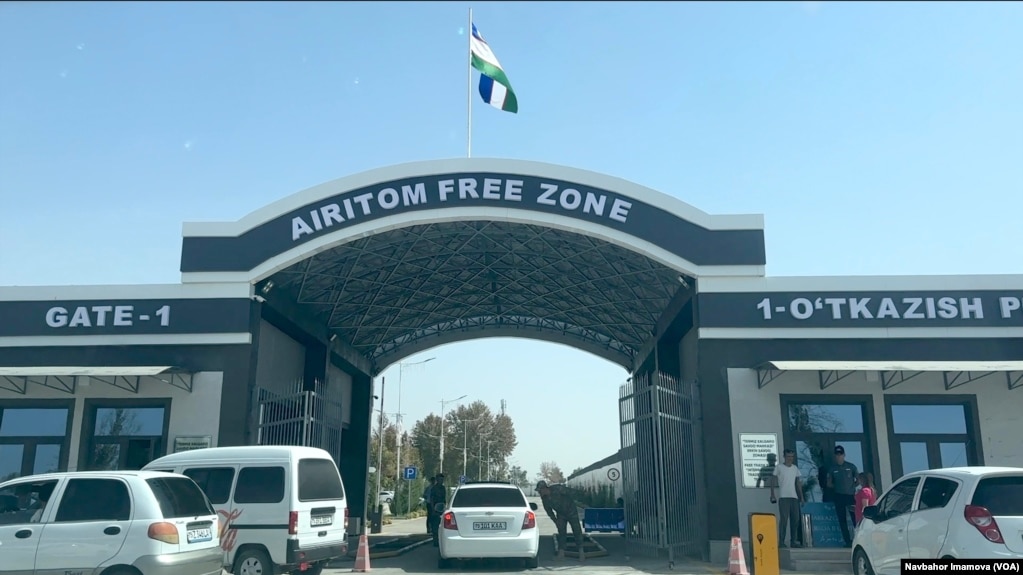
The entrance to the Airitom Free Zone from Termez, Uzbekistan, Sept 5, 2024.
Afghans longing for closer connections with the outside world are finding an outlet in the border city of Termez, where neighboring Uzbekistan invites them to visit a new international trade center aimed at boosting regional trade and creating business opportunities.

“It’s uplifting to be here, as we’ve been dreaming about creating a common market for so long. Perhaps this is the beginning of it, despite all the challenges,” said Ajmalik Nader Saghpi, a visitor from Afghanistan’s Laghman Province.

Nearby, other Afghan men approach along a dedicated corridor leading from the border control area and lounge on a green lawn in front of a prayer hall.

Branded as the Airitom Free Zone, the facility sits on the banks of the Amu Darya, a river marking the border between Uzbekistan and Afghanistan and feeding much of Central Asia. Airitom is a neighborhood in Termez, the administrative center of Uzbekistan’s Surkhandarya region, which also borders Tajikistan and Turkmenistan.

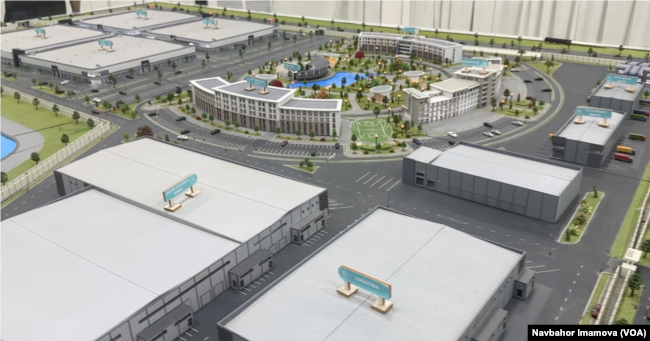
Built at a cost of around $70 million, the zone spans 36 hectares and is guarded by special forces and police. It features a customs office and storage area capable of handling 100,000 trucks and 900,000 tons of goods a year.

FILE - With the free economic zone on the border, the Uzbek government hopes to boost commerce with Afghanistan and expand regional trade. This Aug. 6, 2024, photo taken in Termez, Uzbekistan, shows a model of the zone.
FILE – With the free economic zone on the border, the Uzbek government hopes to boost commerce with Afghanistan and expand regional trade. This Aug. 6, 2024, photo taken in Termez, Uzbekistan, shows a model of the zone.

It also includes a Hilton Garden Inn, a high-tech hospital, an academic campus, Uzbek and Turkish restaurants, and 50,000 square meters of business space, along with banking and legal services. It is separate from the nearby Termez Cargo Center, an international transport and logistics hub.

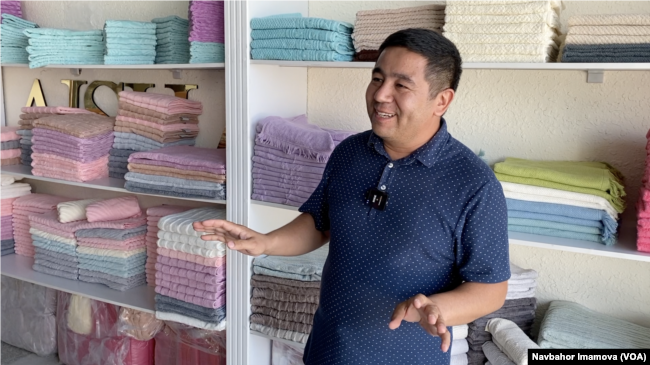
Abdulgaffor Ergashev, representative of the Uzbek manufacturer Aisha Home Textile, said his company is eager to export to Afghanistan and beyond. Termez, Uzbekistan, Sept. 5, 2024.

When VOA toured the zone in August and saw the model, managers said the site, once fully functional, is projected to generate $1.2 billion in trade and attract 1.5 million visitors a year.

Uzbekistan Urges Other Nations to Help Neighboring Afghanistan

“We’re not fantasizing,” said Bakhtiyor Rahimov, the zone’s manager, acknowledging challenges in the region. “We believe this is realistic because we have studied the neighboring country and others around us, surveyed businesses, and discussed our vision with Afghan leaders. We know they are keen to work with us.”

Those high hopes have been echoed by high-profile visitors including Uzbek Prime Minister Abdulla Aripov, Taliban’s acting Prime Minister Abdul Ghani Baradar, and cabinet members from Kyrgyzstan, Kazakhstan, and Azerbaijan.

Uzbek Border Town Adjusts to the Taliban as Neighbors

Any foreigner can stay in the zone for two weeks visa-free. Visitors can conduct commerce in any currency, customs-free.

President Shavkat Mirziyoyev instructed that 40% of the space be allocated to Afghan manufacturers and traders, and up to 30% of the projected 5,000 jobs can go to them.

Hakim Yar, a businessman from Balkh, the nearby Afghan province, plans to open a couple of offices here for export-import and for an agricultural firm he runs in the Afghan city of Mazar-i-Sharif. He is satisfied with what’s available in the zone and is among those Afghans already occupying 5% of the space.

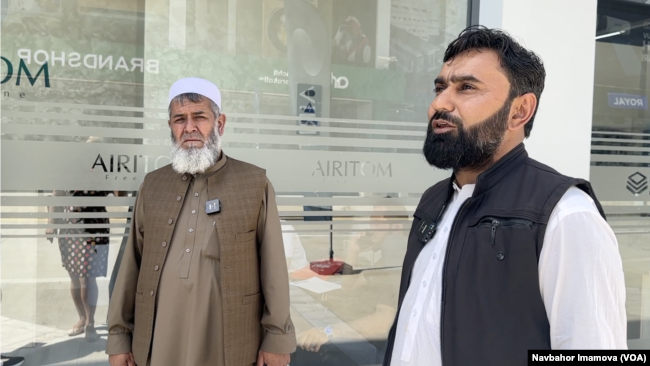
Qari Shergulan from Nangarhar and Ajmalik Nader Saghpi from Laghman provinces of Afghanistan talk with VOA in the Airitom Free Zone, Termez, Uzbekistan, Sept. 5, 2024.

Qari Shergulan, from Nangarhar, envisions that more Afghans will come if entrepreneurs like him return home with positive experiences. He says his people are eager to seize opportunities wherever they find them and won’t waste any chance to grow.

“We have not lost our potential. We can still work, build, trade, earn, expand, and invest,” Shergulan told VOA when asked about the economic conditions in Afghanistan.

None of the Afghan visitors VOA spoke with complained about the Taliban. Instead, they praised Kabul’s cooperation with the Uzbek government and its support for efforts like the new trade center.

However, they mentioned electricity shortages, unemployment, diminishing manufacturing, and lack of opportunities across Afghanistan, particularly for youth.

Tashkent-based Central Asian University is opening a campus in the zone, promising free education and residence for 200 Afghans, as well as business training for others.

“We will soon have a visa office here,” said Mirkhamid Mirpulatov, the zone’s CEO. “Foreigners seeking work, study, or services here for a longer period can apply for visas.

“The special corridor on the border, once you cross the bridge over the Amu Darya, is only for our zone. The access is limited to this area. Those interested in doing business outside the Airitom Free Zone need additional permissions,” Mirpulatov explained.

Airitom is on the main transportation route linking Pakistan, Afghanistan, Uzbekistan, Kazakhstan, and Russia. This is a key factor for landlocked Uzbekistan, which is eager for access to ports on the Indian Ocean. The zone is also starting daily bus service between Airitom and Mazar-i-Sharif, about 60 kilometers away.

The private hospital in the zone is a branch of Tashkent-based Akfa Medline.

“The costs here are lower than in the capital,” Mirpulatov said. “Afghans have been patients for years, so offering health care here on the border simplifies everything for them.”

With 315 staff members and state-of-the-art operating and treatment facilities, Akfa Medline has adjusted its services to mainly cater to Afghans, creating separate units for men and women, something it does not do in Tashkent.

“We’re doing this out of respect for our neighbor’s culture, just as we’re not allowing alcohol in the zone,” Mirpulatov said, denying that Airitom is run under Taliban rules. “We do discuss business with them but make our own decisions.”

Uzbek tycoon behind enterprise

Jahongir Artikkhodjayev, an Uzbek business tycoon and former mayor of Tashkent, is the mastermind behind the Airitom Free Zone. Mirpulatov confirmed that the zone is under Akfa Group, one of the largest Uzbek industrial holdings, founded and run by Artikkhodjayev.

As with other major projects in the country, President Mirziyoyev entrusted Artikkhodjayev with delivering this trade center, according to Mirpulatov, who calls Artikkhodjayev his mentor.

Akfa Group secured the funds for the zone. There is no Western involvement so far, though South Asians, Russians, Chinese and Arabs have shown interest.

Uzbekistan Seeks to Engage Taliban Without Alienating West

US view on development

When VOA asked U.S. Ambassador to Uzbekistan Jonathan Henick about the Airitom Free Zone, he underscored America’s overall position on Afghanistan and the Taliban.

“Broadly speaking, we support anything that helps ordinary Afghan people and contributes to stability along the border. We recognize that Uzbekistan has legitimate economic concerns that need to be addressed,” he said.

“That should be separate from the question of the Taliban’s desire for international recognition and access to funds. These issues must continue to be handled collectively by the international community through the Doha process,” under which some 30 countries have been discussing how to advance international engagement on Afghanistan.

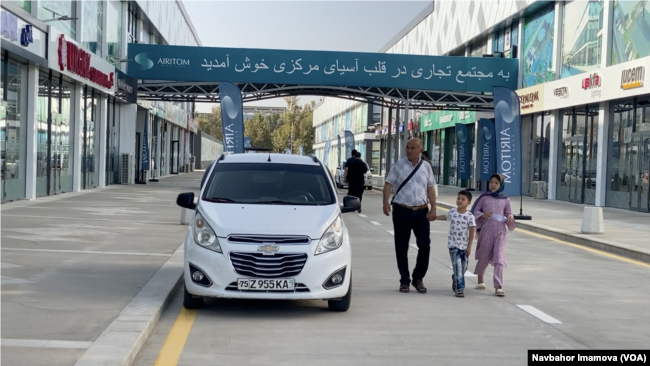
An Afghan family checks out the newly opened international trade center in Termez, Uzbekistan, Sept. 5, 2024.

Henick added, “We have a very strong dialogue with Uzbekistan about Afghanistan. Uzbekistan is an active participant in the Doha process. Our interests are closely aligned.”

Other Western diplomats in Tashkent agreed with Henick that recognizing the regime in Kabul, based on human rights and governance conditions, is key to normalizing relations and attracting investment.

The Taliban remain angry over a recent deal under which several dozen U.S. aircraft that were flown to Uzbekistan as the Taliban seized control in Afghanistan have been transferred to Uzbek control. But, Henick said, Washington and Tashkent maintain “a robust military and security relationship.”

At the same time, Henick told VOA: “The U.S. is the largest contributor of humanitarian assistance to Afghanistan to this day. We provide enormous amounts of aid because, like Uzbekistan, we have an interest in ensuring there is no humanitarian crisis in Afghanistan.”

Uzbekistan opens free economic zone on Afghan border
read more