Gender, nationality ‘sufficient’ to grant Afghan women asylum: Top EU court

Al Jazeera

The European Court of Justice (ECJ) has ruled that gender and nationality alone are “sufficient” for a country to grant asylum to Afghan women.

The ECJ ruled on Friday that discriminatory measures adopted by the Taliban towards women “constitute acts of persecution” justifying the recognition of refugee status.

“The competent authorities of the member states are entitled to consider that it is unnecessary to establish that there is a risk that the applicant will actually and specifically be subject to acts of persecution if she returns to her country of origin,” the ECJ ruled.

So far, Sweden, Finland and Denmark have already granted refugee status to all Afghan women seeking asylum.

The ruling comes after Austria refused to recognise the refugee status of two Afghan women after they applied for asylum in 2015 and 2020.

Advertisement

The two women challenged the refusal before the Austrian Supreme Administrative Court, which then asked for a ruling by the ECJ.


According to a court document, one of the women, identified as AH, first fled Afghanistan with her mother to Iran at the age of 13 or 14 after her drug-addicted father tried to sell her to fund his addiction.

The other woman, referred to as FN and born in 2007, has never lived in Afghanistan because her family had been living in Iran without residency permits, so her family had no right to work, and she could not receive an education.

The ECJ case document said FN told the court that if she is deported to Afghanistan, as a woman, “she would be at risk of abduction, would be unable to attend school and might be unable to support herself”.

Since the Taliban returned to power in Afghanistan in 2021, it has rolled back women’s rights, including limiting schooling, work and general independence.

Advertisement

In August, the Taliban set a long list of rules governing morality, which includes mandatory dress codes, the requirement for women to have a male guardian, and the segregation of men and women in public places.

The United Nations human rights chief has called for the Taliban to repeal the “egregious” laws, which he said were an attempt to turn women into “faceless, voiceless shadows”.

SOURCE: AL JAZEERA AND NEWS AGENCIES
Gender, nationality ‘sufficient’ to grant Afghan women asylum: Top EU court
read more

UN Donor’s Conference on Afghanistan kicks off in Dubai

The donors’ conference for Afghanistan began on Thursday, October 3rd, hosted by the United Nations in Dubai.

At this conference, both domestic and international organizations, along with political representatives from various countries, are discussing aid to Afghanistan, which is currently under Taliban control and facing a severe humanitarian crisis.

Participants discussed ways to provide aid to Afghanistan, exchanging views on the best approaches and reaffirming their commitment to continue offering humanitarian support to the people of Afghanistan.

They reviewed monitoring mechanisms and emphasized the importance of transparency in delivering aid to ensure it reaches those in need.

Participants also expressed that Afghanistan remains at the center of the strategies of donor organizations and countries.

However, they stressed that “it is the responsibility of all stakeholders to create conditions where Afghans can sustain themselves through employment, rather than relying continuously on international aid.”

The conference also addressed the challenges posed by the Taliban’s new restrictions under the “Promotion of Virtue and Prevention of Vice” law. This law has imposed severe limitations, particularly against women. Under this law, women cannot leave their homes without a male guardian, and their voices are considered indecent in public spaces.

According to a United Nations report, Afghanistan is facing one of the largest humanitarian crises in the world. At least 23 million people in the country require humanitarian assistance. However, there are concerns about the reduction of these aid efforts.

Some countries and international organizations have also expressed concerns that the Taliban may misuse humanitarian aid for other purposes.

Karen Decker, the U.S. Chargé d’Affaires for Afghanistan, who attended the donors’ conference, told the media that since the fall of the Afghan Republic, the United States has provided $2.3 billion in humanitarian aid to Afghanistan.

Ms. Decker also mentioned that the results of the work conducted by two economic and narcotics groups from the “Doha 3” discussions would soon be reviewed by the United Nations, and the next major Doha meeting will also take place.

The donors’ conference highlights both the urgency and complexity of providing humanitarian aid to Afghanistan. While there is a commitment to helping millions of Afghans in need, concerns about transparency and the Taliban’s restrictions, especially on women’s rights, continue to challenge the international community’s efforts.

The call for a long-term solution emphasizes that Afghanistan’s future should not rely solely on aid. Sustainable employment and self-sufficiency must be at the core of any strategy to help the Afghanistan’s people build a better future.

UN Donor’s Conference on Afghanistan kicks off in Dubai
read more

No Consensus yet on Taliban’s participation in BRICS Summit: Russia

MOSCOW, RUSSIA – MARCH 25, 2022: Russia’s Deputy Minister of Foreign Affairs Andrei Rudenko is seen during a meeting between Russia’s Minister of Foreign Affairs Lavrov and Abkhazia’s President Bzhania at the Reception House of the Russian Ministry of Foreign Affairs. 

Russian Deputy Foreign Minister Andrey Rudenko has stated that there is no consensus on whether the Taliban officials will participate in the upcoming BRICS summit in Kazan.

According to the TASS news agency, Rudenko explained to reporters that invitations to the summit are made based on the consensus of BRICS members.

He also mentioned that the Taliban’s unrecognized status poses a challenge, which will be considered when deciding its participation.

The Ministry of Foreign Affairs in  Kabul has officially requested to attend the BRICS summit in Kazan.

The summit will begin on October 22 and last until October 24, 2024.

Russia’s state news agency, RIA Novosti, reported that the Taliban sent a letter to Yuri Ushakov, an aide to Russian President Vladimir Putin, requesting participation in the BRICS summit in Kazan. Abdul Ghani Baradar, the Taliban’s Deputy Prime Minister, expressed interest in attending the summit.

BRICS members include Brazil, Russia, India, China, and South Africa. This year, the group expanded to include Egypt, Saudi Arabia, the UAE, Iran, and Ethiopia.

Despite being on Russia’s blacklist, the Taliban maintain diplomatic relations with Moscow. Amir Khan Muttaqi, the Taliban’s foreign minister, is in Moscow for an Afghanistan meeting on October 4 under the Moscow Format.

The Taliban’s diplomatic engagement with Russia highlights their efforts to gain international recognition despite being officially unrecognized by the global community.

No Consensus yet on Taliban’s participation in BRICS Summit: Russia
read more

Mawlawi Abdul Kabir: Islamic Emirate Will Not Bow to Foreign Demands

Hanafi said that some foreign countries, by deceiving the youth abroad, are trying to stir up regional and ethnic divisions.

Mawlawi Abdul Kabir, the Deputy Prime Minister for Political Affairs, emphasized national unity in a meeting with local officials and elders of Panjshir.

Kabir also said that the Islamic Emirate will not bow to the demands of foreigners.

The deputy prime minister said that there is no discrimination in implementing developmental projects between provinces, and development projects will be equally distributed across all provinces.

Mawlawi Abdul Kabir said: “We must not become the slaves of anyone. We only serve Allah, the Almighty, and adhere only to Islam. We should not accept the demands of foreigners. We must not be swayed by factional, regional, or ethnic propaganda.”

Mohammad Khalid Hanafi, the acting Minister of Vice and Virtue, also spoke at the meeting, saying that the Islamic Emirate is obliged to pay attention to the legitimate demands of the people.

Hanafi said that some foreign countries, by deceiving the youth abroad, are trying to stir up regional and ethnic divisions.

The acting Minister of Vice and Virtue said: “In France and other places in Europe, they are trying to destroy our country from there. They are instigating sectarianism and group divisions. They are deceiving and exploiting our youth.”

Fasihuddin Fitrat, Chief of Staff of the Ministry of Defense of the Islamic Emirate, said: “The Ministry of Defense has spent most of its construction budget in Panjshir to build outposts and centers so that the Mujahideen are removed from the people and their homes.”

The Governor of Panjshir and several local representatives also shared their challenges and demands with officials of the Islamic Emirate.

Mohammad Agha Hakim, the Governor of Panjshir, said: “The leadership of the province and all the people of Panjshir request that the province be included in the second category as an exception.”

“The roads in the districts of Paryan and Dara are completely destroyed. We hope these roads are cleared so people can travel freely,” said Masihullah Mosadeq, a religious scholar.

This comes as Iran’s Ambassador and Special Representative to Afghanistan claimed in an interview with an Iranian media outlet yesterday that ethnic, linguistic, and religious minorities in Afghanistan are facing discrimination.

Mawlawi Abdul Kabir: Islamic Emirate Will Not Bow to Foreign Demands
read more

Top US General Milley calls Afghanistan withdrawal a ‘Strategic Failure’

The former Chief of Staff of the U.S. Army acknowledged the mistakes made during the withdrawal from Afghanistan, admitting that political and strategic failures marked it.

Mark Milley stated that the 20 years spent by the U.S. and its allies in Afghanistan were a valuable opportunity, but in the end, the Taliban took control of the country.

On Wednesday, during a session at Princeton College, General Milley commented on the U.S. military presence in Afghanistan: “In my opinion, those 20 years were long and significant, but ultimately, the Taliban occupied the capital and seized the entire country.”

He acknowledged the political and strategic shortcomings during the U.S. military withdrawal from Afghanistan, stating, “Our experiences in Afghanistan offer many lessons.” Milley added that it will take years for historians to fully extract and analyze these lessons and other critical insights.

He pointed out flaws in the Doha agreement and noted that the U.S. forces’ lack of proficiency in local languages was another significant weakness, which the Taliban exploited in rural areas. He said, “The U.S. didn’t fully understand what was happening on the ground.”

The withdrawal from Afghanistan has left lasting consequences on U.S. foreign policy, raising debates about the future of American military interventions. The U.S. is now reflecting on its broader strategy to avoid repeating similar failures in other conflict zones.

Top US General Milley calls Afghanistan withdrawal a ‘Strategic Failure’
read more

Afghanistan in Front of the World Court? What can be expected from a legal challenge to the Emirate’s violations of women’s rights

The government of Afghanistan has been warned that its violations of women’s rights will trigger a referral to the United Nation’s highest court – the International Court of Justice (ICJ) – unless it changes its policies. The initiative, taken by Australia, Canada, Germany and the Netherlands and supported by 22 other states, centres on alleged violations of the Convention on the Elimination of All Forms of Discrimination Against Women (CEDAW) to which Afghanistan is a signatory. According to the procedures of the court, the Afghan government is offered a chance to resolve the dispute, failing which, the ICJ will take up the case. A spokesman for the Islamic Emirate immediately dismissed the allegations. While the court lacks enforcement power, it is not without teeth and a judgement against the IEA could lead to additional sanctions against the Emirate, as well as political pressure on those actors inclined towards normalisation. Rachel Reid provides an overview of the process, its potential impact and pitfalls.
The move to take Afghanistan to the ICJ could be groundbreaking: CEDAW has been in place for more than 40 years, but never before has the court been asked to look into a state’s alleged breach of it.[1] The initiative was announced by four foreign ministers at a side event at the UN General Assembly on 25 September 2024 in an emotional speech from the German minister, Annalena Baerbock, who described the restrictions on Afghan women and girls.

You are not allowed to go to high school. You are not allowed to do sports. You are not allowed to travel. You are not allowed to work. To take the bus. To speak to a man or boy. To see a doctor on your own. It sounds like prison. But this has been the reality for women and girls in Afghanistan since 2021. In Afghanistan, the Taliban are removing every last shred of freedom from women and girls. And now, they have even banned women from speaking in public. In German, we have an expression for that: ‘mundtot’. It literally means mouth-dead. To kill someone, by killing their voice. That’s what is happening right now.[2]

In announcing their initiative, the four states accused the Afghan government of being responsible for “systematic gender discrimination,” as outlined here on the website of the Australian Foreign Ministry. It listed a broad range of restrictions: “Afghan women and girls are being socially, politically, economically and legally marginalized. The recently enacted so-called ‘vice and virtue’ law seeks to silence half the population and erase women and girls from public life.”

The four countries involved – Australia, Canada, Germany and the Netherlands – have effectively put the Islamic Emirate of Afghanistan (IEA) on notice that they intend to pursue legal proceedings at the ICJ, if it does not change its policies. In a statement published by the Australian government, they called upon “Afghanistan and the Taliban de facto authorities” to cease their violations of the human rights of women and girls and “to answer to the request for dialogue to address the concerns of the International Community on this matter,” including recommendations made through the UN’s Universal Periodic Review process.[3] In addition to their side event in New York and media statements, AAN understands that a formal notification has been given to IEA officials.

There was a characteristic dismissal of accusations of discrimination by IEA officials, here in a tweet from deputy spokesman Hamdullah Fitrat:

The Afghanistan Islamic Emirate is blamed for violation of human rights and gender apartheid by some countries and factions. Human rights are protected in Afghanistan and no one is discriminated against. Unfortunately, efforts are ongoing to spread propaganda against Afghanistan on the say-so of a number of women to make the situation look bad.

IEA leaders are consistently proud of their policies on women. In his Eid al-Adha message in June 2023, for example, Supreme Leader  Mullah Hibatullah Akhundzada said (as reported by AP):

The status of women as a free and dignified human being has been restored and all institutions have been obliged to help women in securing marriage, inheritance and other rights.

Given the Emirate’s stance that what others see as restrictions on women’s freedoms and behaviour are in accordance with divine law and, anyway, are a domestic matter that other countries have no right to interfere in, it seems all but inevitable that the ICJ will eventually take up the case. Should that happen, it would be the first time any country has been summoned to the court for discrimination against women.

How does the ICJ work?

The International Court of Justice, often called the ‘World Court’, is the judicial arm of the United Nations. It settles legal disputes between states in accordance with international law, as well as providing advisory opinions on legal questions referred to it by UN organs and agencies. Countries can file a case with the ICJ against another signatory country, which will be reviewed by its 15 judges, who come from all over the world. Decisions are binding, but the court lacks its own enforcement power – more on that later. Confusingly, the ICJ is based in The Hague in the Netherlands, which is also home to the International Criminal Court (ICC), an entirely separate court that addresses war crimes, crimes against humanity and genocide by individuals, not states.

The ICJ initiative focuses on violations under CEDAW – effectively a bill of rights for women – to which Afghanistan became a party in 2003. Conventions are signed by countries, not governments, so they remain in force regardless of changes in government. So, although the Emirate will no doubt question the jurisdiction of CEDAW, it remains bound by it under international law. Noticeably, none of the countries taking this initiative addressed the ‘Islamic Emirate of Afghanistan’ in their statements, choosing instead to refer to the ‘de facto authorities’ or the Taleban. They also sought to underline, in the words of the German foreign minister in the statement cited previously:

[B]y doing this, we are not politically recognising the Taliban as the legitimate government of Afghanistan. However, we stress that the de facto authorities are responsible for upholding and fulfilling Afghanistan’s obligations under international law. 

The possibility that taking the IEA to the ICJ might contribute to its de facto recognition was a concern raised by women in consultations held over the past two years (such as one organised by the Afghanistan Human Rights Coordination Mechanism in January 2024, attended by the author). Parwana Ibrahimkhail Nijrabi, one of the women who led protests in Afghanistan after the fall of the Islamic Republic, who is now in exile, told AAN: “The ICJ initiative is a valuable and important effort, provided it does not result in the recognition of the Taleban.” Nijrabi adds: “In any process related to this initiative, it is essential that women, who have been victims of the Taliban’s crimes, are given an active and meaningful role.”

For Afghanistan’s rulers, however, it will undoubtedly seem unfair that they are bound by a treaty they did not sign, particularly when the complainant states do not recognise the Emirate as Afghanistan’s government. It puts the IEA in a bind: without recognition, it cannot represent the state of Afghanistan in order to withdraw or apply reservations to international conventions. At the same time, in order to receive recognition, it is possible that, among other things, it would need to stop violating CEDAW.

The IEA may, however, find some sympathy among some Muslim nations, some of whom have chosen not to ratify CEDAW, while others have done so with reservations (in an analysis of CEDAW in the Middle East and North Africa by Amnesty International in 2021, of the 14 signatories from the region, eight had registered reservations in the light of what they saw as parts that were incompatible with sharia law).[4] When the Interim Afghan Government ratified the treaty in 2003, it was the first Muslim country to do so (rather “unexpectedly” according to this academic review, CEDAW and Afghanistan, which notes a context in which the new government was under pressure to demonstrate a commitment to gender equality). It is also striking that the United States itself has never ratified CEDAW, on grounds that the IEA would sympathise with – legal sovereignty, interlaced with some conservative ‘family values’ (summed up in this Heinrich Böll article ‘CEDAW and the USA: When Belief in Exceptionalism Becomes Exemptionalism’).

There are two stages before the court could step in: negotiation and arbitration, as laid out in Article 29 of the Convention. The IEA has been notified and invited to resolve the alleged breaches of CEDAW and now there needs to be signs of a “genuine attempt” to resolve the situation through negotiation. No time period is stipulated for this stage.[5] The second stage, arbitration, has a six-month window. If the Emirate fails to respond, or arbitration cannot resolve the dispute, the case would go in front of the court.

Once a case reaches the court, final rulings can take years.[6] However, interim decisions, or ‘provisional measures’, can be issued within weeks or months. For example, in a case filed by South Africa on 29 December 2023 against Israel, which it accused of violating the Genocide Convention in the Gaza Strip, the ICJ issued provisional measures within 28 days. It is likely that the four countries in the Afghan case would request provisional measures when filing a complaint against the Emirate.

What impact can the court have? 

The ICJ is limited to issuing orders, such as instructing compliance with international obligations.[7] For the most part, states adhere to ICJ rulings, although there are plenty of examples of states ignoring them.[8] Instructing compliance might seem a relatively benign prospect for the IEA, which is accustomed to being chastised for breaches of international law. However, the ICJ’s orders are legally binding and failure to comply could result in a referral to other UN entities, most significantly the Security Council.

The politics of the Security Council are never straightforward. There are no guarantees that it would back up the court to enforce measures against the IEA. Not only is the US a CEDAW abstainer, but another permanent member, China, has not agreed to CEDAW’s article 29, the provision that allows for the court to step in when states have a CEDAW dispute.

That said, a number of IEA officials are already subject to Security Council sanctions, so it is possible for additional sanctions and/or oversight mechanisms to be imposed. This is where the potential teeth of this initiative start to be seen – the Emirate would like travel bans eased, not further sanctions imposed. It also wants UN recognition with all that flows from it, including taking Afghanistan’s seat at the UN General Assembly and having its diplomats recognised in capitals around the world. Even provisional measures from the ICJ could therefore pose an impediment to Emirate ambitions.

The other way that the ICJ has an impact is on the behaviour of other states. The furore that surrounded another ICJ examination – relating to Israel and its occupation of Palestine (further to this request from the UN General Assembly in 2022) – shows the potential ramifications of the court’s involvement. The court ruled in July 2024 that Israel’s long-term occupation of Palestinian territory was “unlawful” and amounted to de facto annexation, adding that Israel was in violation of the international prohibition on racial segregation and apartheid.

Israel itself has ignored the court, accusing it of antisemitism (see this statement from Prime Minister Benjamin Netanyahu), but the court ruling has ramifications for other states that could result in sanctions, arms embargoes, as well as other diplomatic and economic relations. There had been previous calls from the Human Rights Council and UN experts for an arms embargo on Israel, which had gone unheeded. But by finding that Israel violated human rights protections against apartheid, the ICJ put pressure not only on Israel but, as the Executive Director of Human Rights Watch, Tirana Hassan stated: “The court has placed responsibility with all states and the United Nations to end these violations of international law.” This includes those that are signatories to the UN Arms Trade Treaty and the International Convention on the Suppression and Punishment of the Crime of Apartheid. How an ICJ ruling could put pressure on states to act is explored in this opinion piece, ‘Why ICJ ruling against Israel’s settlement policies will be hard to ignore’ and this statement calling on other states to take action made by UN experts. In another case brought before the ICJ by Nicaragua, which aimed to stop German arms sales to Israel, the court chose in February 2024 not to issue provisional measures (finding that German arms sales had, in fact, decreased), but the judges did not dismiss the case and it seems that Germany may, in response, have halted arms sales.[9] A host of other legal efforts to stop arms exports to Israel are underway, all of which will be strengthened by the ICJ’s ruling.[10]

The ripple effect of an ICJ ruling – or even provisional measures – should, at least, give the IEA pause. If the IEA was found to be in breach of CEDAW, a strong court ruling or measure might have ramifications for how countries around the world and international organisations interact with it.

Who is behind the initiative

While Australia, Canada, Germany and the Netherlands took the limelight when this move was announced, the initiative was the culmination of almost three years of advocacy by Afghan and international women’s rights defenders, which included identifying countries willing to lodge a complaint before the court.[11] The Open Society Justice Initiative has worked behind the scenes on this initiative for three years (as stated in this tweet), including providing this useful briefing on the process and hosting consultations with Afghan women. Among Afghan supporters, Shaharzad Akbar, Executive Director of Rawadari and former chair of the Afghanistan Independent Human Rights Commission (AIHRC), told AAN she hopes that “finally women in Afghanistan might see they are not forgotten.” Shukria Barakzai, former member of parliament and ambassador to Norway, is a co-founder of the Afghanistan Women’s Coalition for Justice, which has been engaged in advocacy on a range of justice initiatives, including supporting the ICJ route. Barakzai told AAN that “even with this simple announcement, it shows the Taliban they will be held to some kind of accountability.”

The countries bringing the complaint to the ICJ, however, are less than ideal for some advocates. All four states sponsoring the initiative previously backed the Islamic Republic and had troops on the ground in Afghanistan; the IEA will see them as inherently hostile actors. Moreover, although the German Foreign Ministry claimed its “partners” included “those from the Islamic world,” the list of 22 states supporting the initiative had only one Muslim majority country – Morocco.[12] Given the Emirate asserts that its policies on women and girls are ordained by sharia, this is not ideal. Finally, as noted above, Germany itself has been involved in a fraught wrangle at the ICJ over its close relationship with Israel despite that state’s violations of Palestinian rights, which undermines its legitimacy – both in terms of upholding international human rights law and in leading a legal action that will take on the IEA’s interpretation of divine law. Barakzai says this baggage was a real concern for the Afghanistan Women’s Coalition for Justice, but that they are trying to win more support from Muslim states, prominent Islamic scholars and the Organisation of Islamic Cooperation (OIC).

The ICJ is not the only proposal using international law to challenge the Emirate on its policies on women and girls. In February 2023, the Special Rapporteur, Richard Bennett asked the International Criminal Court to consider the crime of gender persecution in its Afghanistan investigation.[13] The ICC has taken strides to improve its track record in investigating and prosecuting gender-based crimes in recent years and in December 2022, released a new policy on gender persecution, a year later releasing a revised policy on gender-based crimes.[14]

If this route were pursued, the case would be against individuals within the IEA leadership, not Afghanistan, as a state, in contrast to the ICJ initiative.[15] As yet, though, the ICC chief prosecutor has said little in public about his Afghanistan investigation, to the frustration of victims who have already suffered years of delay (the court began its preliminary examination of the Afghanistan situation in 2006, but was only finally authorised to investigate in 2022).[16] The prosecutor had already decided that he would only investigate alleged crimes by the Taleban and ISKP, ‘de-prioritising’ those allegedly perpetrated by former Republic forces, the international militaries or the CIA.

It is not known whether he has chosen to include the crime against humanity of gender persecution as part of his investigation. It could be that he has already requested authorisation from the judges of the ICC’s Pre-Trial Chamber for arrest warrants for this crime. Warrants can be issued ‘under seal’ (that is, in secret) to increase the prospects of apprehending the suspects (although given travel bans and the limited movement of the IEA leadership, the chances of arresting individuals while they visit an ICC-friendly country are already slim). Or the court might decide, if it did indict, that it would be better to make the warrants public, with the hope of it having a deterrent effect upon the IEA to the benefit of Afghan women and girls.

Alongside the push for legal proceedings against the Emirate for gender discrimination through the ICJ and possibly the ICC, since March 2023, a group of prominent Afghan and Iranian human rights defenders have led a campaign to establish a new crime of ‘gender apartheid’. The international crime of apartheid is defined in the Rome Statute as “inhumane acts” committed “in the context of an institutionalized regime of systematic oppression and domination by one racial group over any other racial group or groups and committed with the intention of maintaining that regime.” The new crime would broaden the definition of apartheid to include gender as well as racial hierarchies.

Creating new international crimes is not quick or straightforward, but one potential avenue for this is a new standalone treaty on Crimes Against Humanity (bringing it into line with treaties for war crimes and genocide). This process is creeping forward, but it has many obstacles ­– and years to go (see this article on ‘Adding Gender to Apartheid in International Law’).

Conclusion 

In the short term, the women and girls of Afghanistan cannot expect any immediate benefits from the ICJ initiative, as the German Foreign Ministry acknowledged when making its announcement:

Making use of the possibilities of the women’s rights convention will not change the situation in Afghanistan today. But it gives the women of Afghanistan hope. We see you, we hear you. We speak for you when you are silenced. 

The rights of Afghan women and girls have been mentioned constantly by diplomats and in international fora since the IEA returned to power in August 2021, with repeated demands to the Emirate to reverse their policies. Yet official edicts restricting women and girls have only tightened. Meanwhile, notes Akbar, “normalisation continues.” The initiative to take Afghanistan to the ICJ could “at the very least,” she says, “delay their recognition and normalisation.”

There is often a question among activists about whether yet more international pressure for women and girls might result in a perverse hardening of restrictions by the IEA. When asked if that was a risk, Barakzai took a breath. “Can they make it any worse? We can’t breathe oxygen directly. We can’t even laugh in our house with a loud voice. What is left to be worse?”

Edited by Kate Clark 


References

References
↑1 CEDAW came into force in 1981 and has been ratified by 189 of the 193 UN Member States. See: ‘Committee on the Elimination of Discrimination against Women’, OHCHR.
↑2 Statement by Foreign Minister Baerbock on Women’s rights in Afghanistan at the Side Event of the UN General Assembly on CEDAW’, Federal Foreign office newsroom, 25 September 2024.
↑3 The Universal Periodic Review (UPR) process offers a periodic review of the human rights records of all UN Member States. On 29 April 2024, during the 46th session of the Human Rights Council, Afghanistan was presented with 243 recommendations from 70 states on a host of human rights issues, with many focused on the rights of women and girls. The outcome of the review can be downloaded here: ‘Universal Periodic Review – Afghanistan’, United Nations Human Rights Council.
↑4 ‘Reservations to the Convention on the Elimination of All Forms of Discrimination against Women – Weakening the protection of women from violence in the Middle East and North Africa region,’ Amnesty International, September 2021.
↑5 There is a precedent where negotiation took two years, as in the case, Canada and The Netherlands v Syria, which revolved around the Convention against Torture (see ‘Application of the Convention against Torture and Other Cruel, Inhuman or Degrading Treatment or Punishment (Canada and the Netherlands v. Syrian Arab Republic)’). However, there is no reason to assume a negotiation period would need to take that long.
↑6 For example, a highly complex complaint from Bosnia and Herzegovina against Serbia and Montenegro for violating the Genocide Convention, submitted on 20 March 1993 to the ICJ took almost 25 years to resolve. See ‘Bosnia Appeal in Genocide Case Against Serbia Rejected’, Balkan Insight, 9 March 2017. While, the Croatian complaint against Serbia for the same thing took 15 years to resolve. See the ICJ case: ‘Application of the Convention on the Prevention and Punishment of the Crime of Genocide (Croatia v. Serbia)’.
↑7 See ‘How the Court Works’, International Court of Justice. See also: ‘Bringing a Case Before the International Court of Justice for the Rights of Afghan Women and Girls – Q & A Briefing,’ Open Society Justice Initiative (OSJI), April 2024. The OSJI briefing lays out the following possible actions: a formal declaration that Afghanistan has breached its obligations under CEDAW; an order for Afghanistan to perform its obligations under CEDAW; an order requiring Afghanistan to make assurances and guarantees that it will halt its violations of CEDAW; an order instructing Afghanistan to prevent the destruction and to ensure the preservation of evidence related to acts that violate CEDAW.
↑8 For example, Israel disregarded a 2004 advisory opinion that a separation wall around Palestinian territory was illegal and should be dismantled. The advisory opinion: ‘Legal Consequences of the Construction of a Wall in the Occupied Palestinian Territory’ ICJ, 9 July 2004. (On Israel’s non-compliance, see ‘Israel’s separation wall endures, 15 years after ICJ ruling,’ Al Jazeera, 9 July 2019.
↑9 A Reuters news article cited a German government source saying German arms exports had been suspended while it dealt with legal challenges. See: ‘Germany has stopped approving war weapons exports to Israel, source says,’ Reuters, 19 September 2024.
↑10 Nicaragua has also given notice of its intention to take the UK, Canada and the Netherlands to the court for their support to Israel. There are cases to try to stop arms exports also in domestic courts in the UK, France, Canada, the Netherlands, Denmark and Germany. See ‘More and more cases on war and genocide are being litigated at the ICJ,’ Chatham House, 4 September 2024.
↑11 The Open Society Justice Initiative’s Mariana Pena tweeted on the day of the announcement, “Together with Afghan partners, @OSFJustice has been researching and advocating for an ICJ case under CEDAW for the past three years.”
↑12 Albania, Andorra, Belgium, Bulgaria, Chile, Croatia, Finland, Honduras, Ireland, Iceland, Republic of Korea, Latvia, Liechtenstein, Luxembourg, Malawi, Morocco, Moldova, Montenegro, Romania, Slovenia, Spain and Sweden [see Baerbock Statement FN 2]. Albania was historically a Muslim majority state, but its most recent census showed that less than 50 per cent of the population identified as Muslim. ‘Albania’s Muslim population drops below 50% for first time in centuries,’ Turkey Today, June 28 2024.
↑13 A/HRC/52/84: Situation of human rights in Afghanistan – Report of the Special Rapporteur on the situation of human rights in Afghanistan, Richard Bennett,’ 9 February 2023, paragraph 59.
↑14  This was indicative of a growing trend to use international justice to target gender persecution. see Kyra Wigard: ‘A Groundbreaking Move: Challenging Gender Persecution in Afghanistan at the ICJ,’ Blog of the European Journal of International Law, 30 September 2024.
↑15 For more on this, May 2023 report by Ehsan Qaane includes a legal analysis, ‘Gender Persecution in Afghanistan: Could it come under the ICC’s Afghanistan investigation?’.
↑16 See Ehsan Qaane’s report: ‘ICC Afghanistan Investigation Re-Authorised: But will it cover the CIA, ISKP and the forces of the Islamic Republic, as well as the Taleban?’ AAN, 11 November 2022.


Afghanistan in Front of the World Court? What can be expected from a legal challenge to the Emirate’s violations of women’s rights
read more

Sixth Moscow Format Consultative Meeting to Begin Friday

The Russian Ministry of Foreign Affairs said that the main part of the meeting will be held behind closed doors.

The sixth Moscow Format consultative meeting will take place tomorrow (Friday, October 3) in Moscow with the participation of representatives from ten neighboring and regional countries, including China, Iran, and Pakistan.

The Russian Ministry of Foreign Affairs said that the main part of the meeting will be held behind closed doors, with the focus on strengthening the “national reconciliation” process in Afghanistan, enhancing regional countries’ engagement with the interim government, and combating terrorism and drug trafficking.

Maria Zakharova, spokesperson for the Russian Ministry of Foreign Affairs, said about the meeting: “The meeting’s main proceedings, to be held behind closed doors, will be opened with a welcome address by Foreign Minister Sergey Lavrov. The discussions at the Moscow Format Consultations will focus primarily on advancing the Afghan national reconciliation process and enhancing practical cooperation between regional states and Kabul in political, economic, counter-terrorism, and anti-drug efforts.”

The Russian Foreign Ministry spokesperson also added that the Russian Foreign Minister is scheduled to meet with Amir Khan Muttaqi, the Foreign Minister of the Islamic Emirate, on the sidelines of the meeting to discuss key issues, including bilateral cooperation between Moscow and Kabul, and a joint statement will be issued at the conclusion of the meeting.

Meanwhile, Karen Decker, Chargé d’Affaires of the US Mission to Afghanistan, who has taken on the responsibility of leading US foreign policy towards Afghanistan, told reporters in a meeting that the US representative will not participate in the Moscow Format meeting.

Zakharova added: “On the sidelines of the event, Sergey Lavrov will hold a meeting with Amir Muttaqi to address key issues of bilateral cooperation between Moscow and Kabul.”

Hamdullah Fetrat, Deputy Spokesman of the Islamic Emirate, also expressed optimism about the holding of the Moscow Format meeting, calling it a good opportunity for expanding the Islamic Emirate’s relations with neighboring and regional countries.

Fetrat further added about the meeting: “We consider this [Moscow Format meeting] a positive development. Once again, we emphasize that the countries of the region play a good role in supporting Afghanistan, and in this way, economic prosperity and stability in the region can be ensured.”

“There are concerns we have with some of the countries participating in this meeting, and we should discuss them, especially sharing our security concerns with them,” Hewad Zazi, a political analyst, told TOLOnews.

It is worth noting that the participants in the final declaration of the fifth Moscow Format Consultative Meeting stressed the formation of an inclusive government, the fight against terrorist groups, and respect for human rights, especially women’s right to work and education in Afghanistan.

Sixth Moscow Format Consultative Meeting to Begin Friday
read more

TTP’s Alliance with the Afghan Taliban: In ISKP’s Crosshairs

Insights

The Global Network on Extremism and Technology

Introduction 

The exit of the US forces and the Taliban’s subsequent takeover of Kabul in August 2021 has significantly reshaped the Afghanistan-Pakistan militant landscape, emboldening the Taliban’s allies and adversaries alike. Its ally, Tehreek-e-Taliban Pakistan (TTP), Pakistan’s largest militant group, has experienced a strong resurgence, intensifying attacks against Pakistani security forces while also operating from its safe haven in Taliban-controlled Afghanistan.

Despite the Islamic State in Khorasan province (ISKP) – IS’s Afghan affiliate – facing senior leadership losses from the Taliban’s aggressive crackdown, the group has waged a persistent and deadly insurgency against Taliban forces and Afghan minorities, mainly Shia Hazaras. Concurrently, it has also diversified and expanded its recruitment and media campaigns. The group’s superior external operations capabilities are evident in its involvement in recent terror attacks across Russia, Iran, and Turkey, as well as recent terror plots in Europe, reflecting ISKP’s growing transnational threat.

Simultaneously, ISKP has also stepped up its constant flow of anti-Taliban propaganda campaigns through its mouthpiece, Al Azaim-media foundation, to undermine the Taliban’s governing credentials and religious authority. Specifically criticising the Taliban’s dealings with Western powers, ISKP argues that the Taliban’s actions are contrary to Islamic law. ISKP claims the Taliban has “abandoned the global jihad against infidel regimes” after being installed in power by Americans. The group further accuses the Taliban regime of serving as pawns of foreign powers like the US, Russia and China in return for international legitimacy and financial gain while ignoring the worldwide suffering of Muslims. Rooted in the ideological rift from the 1980s, ISKP, a Salafi jihadist group, accuses the Taliban of following the “highly flawed” Deobandi school of thought, labelling it as an apostate “Pashto-centric ethno-nationalist movement.”

However, in contrast to its aggressive posture toward the Afghan Taliban, Al Qaeda, and other jihadist groups, ISKP’s interactions with the TTP have been notably distinct. Although ISKP was born out of the disaffected TTP and Afghan Taliban members, it had, until last year, largely avoided physical confrontations and open hostilities in its media propaganda with the group. This is to deprive their common enemy, Pakistani security forces, of any strategic advantage, with both groups ostensibly having tactically co-operated in their areas of control in Pakistan.

Furthermore, ISKP’s criticism of the TTP was relatively less belligerent, with the TTP’s relationship with the Afghan Taliban not being overtly targeted in its polemical rhetoric.  However, since June, ISKP has produced media products issuing ideological rebuttals to attack the TTP’s apostasy, which it believes stems from its deep historical and organisational ties with the Afghan Taliban. This Insight explores ISKP’s recent anti-TTP and Taliban narratives disseminated through its mouthpiece, Al Azaim Foundation, and similar criticisms raised by pro-ISKP supporters.

TTP’s primary media outlet, Umar Media, has also increased its output of sophisticated media productions over the past two years. It releases print and audiovisual material in Pashto, Urdu, English, and Dari, predominantly propagating a virulent anti-state narrative while largely avoiding overtly reproaching IS or ISKP.

ISKP’s recent anti-TTP discourse 

At the end of May 2024, in a video shared on X, Qari Shoaib Bajauri, a senior ideologue and member of the TTP leadership council, rebuked ISKP as being composed of ‘extremist elements from the TTP’, al-Qaeda, and the Afghan Taliban. He stressed that the TTP has no affiliations or agreements with ISKP, but is, however, not at war with them. He stressed the TTP’s primary objective is to wage jihad against the Pakistani state and establish its control in Pakistan’s tribal areas where it can enforce its own interpretation of Shaira.

Following this, ISKP’s Al-Azaim media retaliated by releasing a 47-minute audio message in July titled “They Lost Their Credibility in Islam by Whitewashing Themselves to the Infidels.” In this rebuttal, ISKP decried the statement of the senior TTP leader and said that the TTP defectors who joined ISKP initially, such as ISKP’s founding leader Hafiz Saeed Khan,  Gul Zaman Fateh, were “authentic mujahideen”, dismissing any ideological affinity and cooperation between both the groups. ISKP further slammed the TTP as a ‘tribal Deobandi local militia’ that restricts its fight within the borders of Pakistan, contrary to its global offensive jihad. Since 2018, TTP has emphasised that it doesn’t have any regional or global agenda beyond Pakistan.

Furthermore, in the audio recording, ISKP argued that the Taliban not only directs the TTP’s ideological stance, but also wields control over its operational trajectory in Pakistan. It further slammed the TTP as a proxy of pro-democratic forces and Pakistan’s Islamist political parties like  Jamiat Ulema-e-Islam Fazal (JUI-F), which has been regularly targeted by ISKP.

This later sparked similar discussions amongst pro-ISKP supporters on Telegram, who reiterated that the TTP has “strayed from its proper ideological path” following the killing of its leader, Hakeemullah Mehsud, in the US drone strike in 2013. Following his death, there were disputes over leadership succession, and TTP faced growing internal rifts, leading to the defection of its senior commanders, who went on to pledge allegiance to IS, subsequently forming ISKP in  2015.

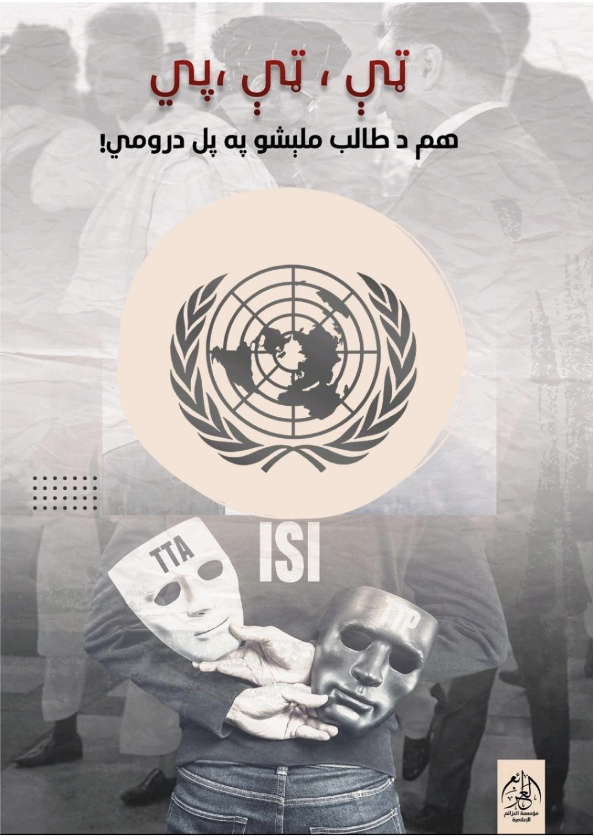
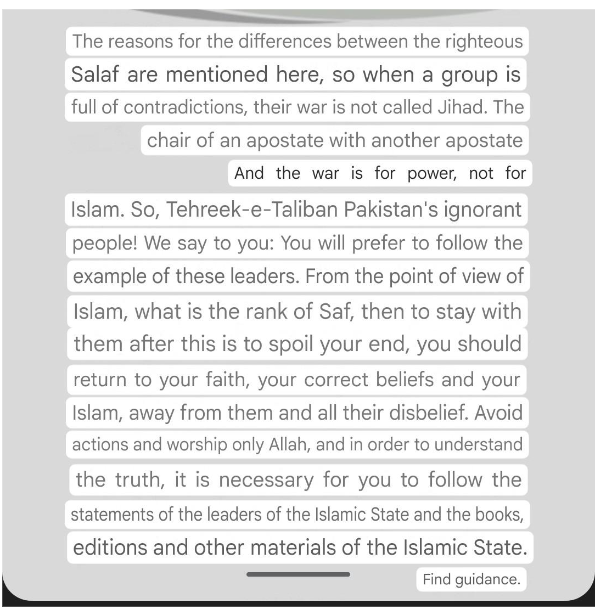
ISKP supporters further contend that the Taliban regime “is desperate to establish official diplomatic ties” and curry favour with foreign states, mainly Pakistan and China, at the expense of TTP’s strategic interests.  They allege the TTP has “allowed itself to be exploited by the Taliban regime,” which they claim has shielded Pakistan from TTP attacks and coerced TTP earlier into unsuccessful ceasefire negotiations with the Pakistani government. Further, in a book released in June 2024 discrediting the Taliban regime’s Islamic credentials (Figure 1), ISKP advised the “ignorant TTP leadership” to thoroughly study IS’s theological literature in depth to correct its theological beliefs that are dictated by the Afghan Taliban as shown in Figure 2. Yet, ISKP sympathisers argue that ISKP should avoid initiating hostilities unless provoked by the TTP and instead absorb its militants into ISKP’s ranks through proselytisation. 

Figure 1: Cover page of ISKP’s book released by Al Azaim media foundation “TTP on the path of Taliban militia”

Figure 2: ISKP advises TTP to sever its ideological ties with the Taliban and instead adopt the Islamic State’s doctrine to rectify its beliefs.

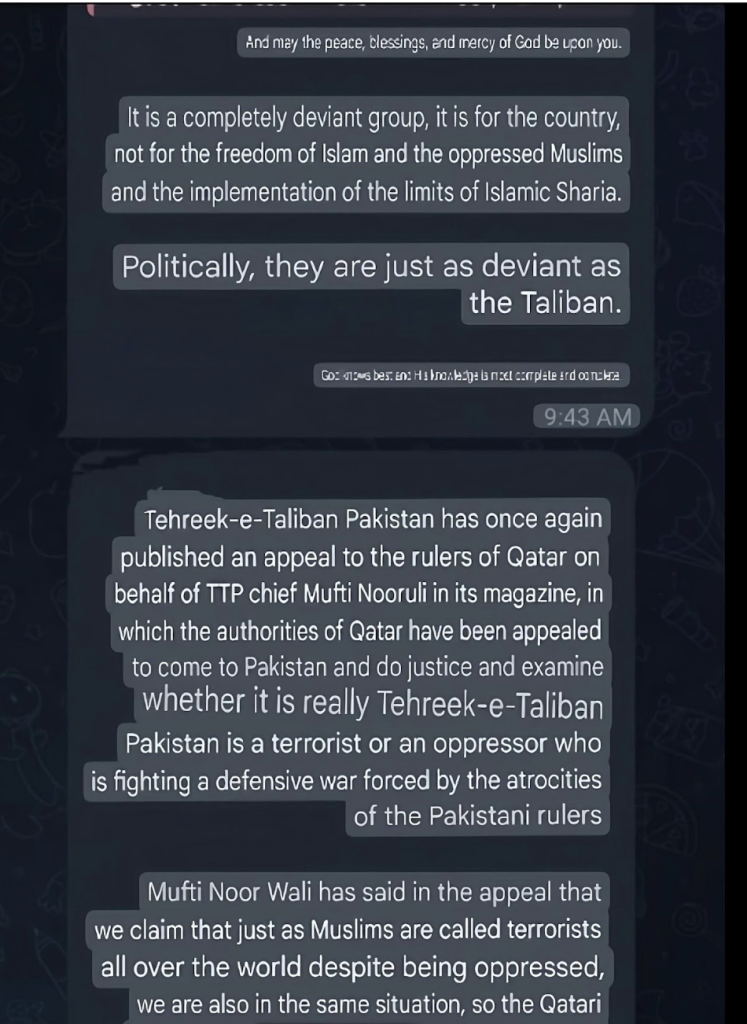
Figure 3: Supporters in a pro-IS discussion room denounce TTP as a deviant group owing to its allegiance to the Afghan Taliban.

In a 71-minute audio released at the end of July,  an ISKP ideologue rebuked former TTP deputy leader Sheikh Khalid Haqqani, who had questioned the legitimacy of the IS’s caliphate, arguing it lacked the essential conditions for establishing one due to a lack of expansive territorial control and disapproval from other jihadist groups and the Ummah (Muslim community). ISKP’s imam thus discredited Sheikh Khalid as an “uneducated mullah”, calling him a hypocrite and dismissing his criticisms as baseless.

The ISKP ideologue pointed out inconsistencies in the TTP’s own theological standards, questioning how the TTP could pledge allegiance to a “deviant” Taliban Emir Haibatullah Akhundzada, who only wields control over a “small corrupt emirate” in Afghanistan. He further asserted that the TTP’s scholars are attacking IS’s theological credentials to dissuade “believers” from joining its ranks. In recent issues of ISKP’s Pashto Voice of Khurasan magazine, denunciations of the TTP have become more nuanced. The TTP leadership is portrayed as prioritising worldly comforts over jihad, exploiting the religious sentiments of Pakistani youth to recruit them, appeasing foreign powers, and being backed by India.

In light of ISKP’s intensifying anti-TTP media offensive, it is notable that, unlike other jihadist groups that have overtly condemned IS and ISKP for their extremist violence, TTP leader Noor Wali Mehsud has shied away from declaring an official stance or openly denouncing ISKP. Meanwhile, the Taliban has aggressively countered ISKP’s hostile narratives through its Al Mirsad media website.

Conclusion 

Despite frequent takedowns of ISKP’s official and supporter accounts on its digital lifeline Telegram, the group has become adept at evading moderation, continuing to produce and disseminate a steady stream of content in multiple languages, allowing the rapid circulation of its media propaganda, attack claims also running crowdfunding donations for their activities.

TTP and its supporter communities have primarily relied on Telegram and WhatsApp, to disseminate their propaganda, political commentaries, regional security developments and attack claims.  Unlike IS and other extremist groups like Al Qaeda, as per the authors’ monitoring, TTP’s Umar Media and its supporter networks have faced fewer digital crackdowns on Telegram and other social media platforms.

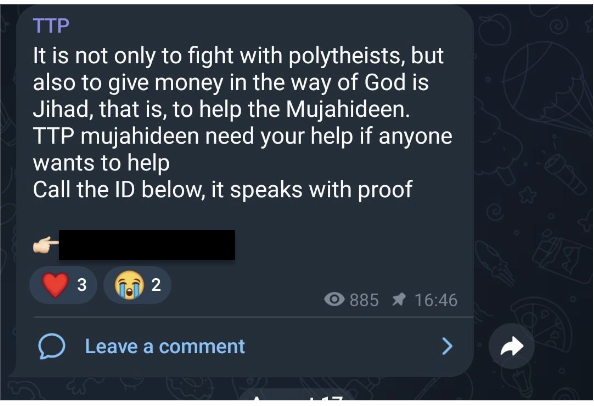
This can be attributed to global intelligence agencies like Europol and tech companies prioritising the fight against more lethal global terror groups such as IS, Al-Qaeda and their affiliates, both on the battlefield and in the digital realm. As a result, terror groups with a local or regional focus, like the TTP, have been able to slip through the cracks to operate with relative freedom on Telegram. The TTP’s Umar Media,  and other supporter TTP media channels with hundreds of subscribers and discussion groups on Telegram have been operating without interruption or bans for over a year. TTP media propagandists have also openly solicited donations for the organisation on Telegram, raising growing concerns about the platform’s enforcement of its content moderation policies. This comes at a time when Telegram’s founder, Pavel Durov, is already facing intense legal scrutiny for his application’s role in hosting and facilitating the spread of illicit content, such as child pornography and extremist propaganda.

Figure 4: TTP media propagandists posted a plea for donations for the organisation on Telegram.

In conclusion, tech companies should prioritise developing advanced AI detection systems to detect the unique propaganda tactics these groups employ, such as regional languages, dialects and coded language. Additionally, forming region-specific monitoring teams with expertise in militancy and security issues coupled with knowledge of local languages and cultures can enhance the effectiveness of content moderation. Finally, establishing stronger cross-platform coordination can prevent extremist groups from easily migrating their media content to other platforms.

Meanwhile, the online feud between ISKP and TTP has the potential to turn into violent confrontations, potentially benefiting Pakistan’s counterterrorism efforts. To bolster their operational strength and longevity, TTP and ISKP have opportunistically forged strategic alliances and mergers with other like-minded groups operating in Pakistan’s newly merged districts bordering Afghanistan. TTP and ISKP have also, on multiple occasions, claimed responsibility for the same attacks, further reflecting growing competition amongst the groups for influence and recruits. Thus, the fluid militant landscape in the Afghanistan-Pakistan region, marked by shifting alliances and deepening rivalries among insurgent groups, presents a formidable challenge to Pakistani and regional counter-terrorism agencies. This necessitates a rigorous monitoring of their operations and media propaganda to counter the growing terror threat from these groups.

TTP’s Alliance with the Afghan Taliban: In ISKP’s Crosshairs
read more

Awakening the Ashes: An Intellectual History of the Haitian Revolution (Review)

Rebeca Joy Blemur

North American Congress on Latin America/NACLA
May 10, 2024
A new book recovers the intellectual contribution of Haitian revolutionaries to ideas of freedom, equality, and sovereignty in the Atlantic World.

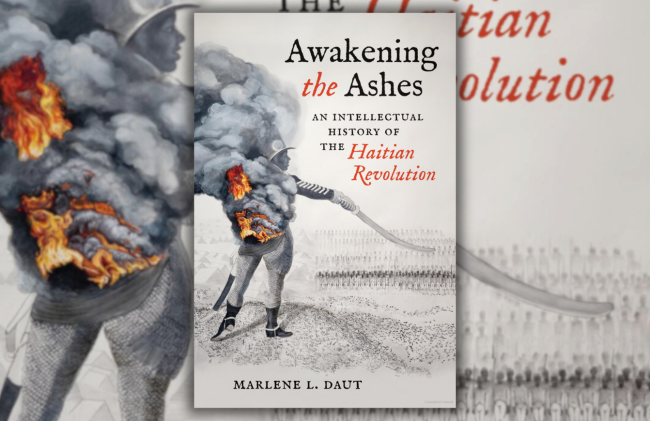
The cover of "Awakening the Ashes: An Intellectual History of the Haitian Revolution" by Marlene L. Daut. (UNC Press, 2023)

The cover of “Awakening the Ashes: An Intellectual History of the Haitian Revolution” by Marlene L. Daut. (UNC Press, 2023)

“Envision your cities shrouded in mourning… envision the care you took upon yourself, night and day, to revive your companions, envision your children, your soldiers, the peaceful inhabitants of the countryside crippled by the French,” wrote Louis- Felix Boisrond-Tonnerre, an early 19th-century Haitian thinker and former secretary to Jean-Jacques Dessalines, as he urged Haitians’ to remember their shared experience of the 1791–1804 Haitian Revolution.

The gravity of the Haitian Revolution is incessantly muffled by constant news coverage spotlighting an impoverished Haiti while also criticizing its functionality as a free state. As a consequence, our shared memory of Haiti has forgotten the radical changes the Haitian Revolution and a sovereign Haiti brought to our modern world. Late 18th and early 19th-century Haitian thinkers, like Boisrond-Tonnerre, subjected to and shaped by the institution of enslavement, most certainly did not forget. Marlene L. Daut examines this collective remembrance in her book Awakening the Ashes: An Intellectual History of the Haitian Revolution. A book overflowing with the words of Haitian thinkers like Baron De Vastey, who knew not only the power of remembering their ancestral past but the significance of committing it to paper.

Today, as Haiti’s civil unrest dominates public media, it is hard to fathom that “Haiti” and “radical change” once existed in the same sentence. A Haiti free of disaster and political instability appears far from public imagination as conversations surrounding another military occupation emerge. For many years, the Western World has been fixated on how it can “fix” Haiti, ignoring its own responsibility for the country’s problems. As a Haitian-American and scholar of Haitian history, I find myself presented with the question “What is wrong with Haiti?” in conversations regarding Haiti’s history or its present situation.  These conversations usually end with me, a spirited junior scholar, sharing a bullet point list with extensive verbal footnotes, of all the reasons why this line of questioning is problematic. “Fixing” Haiti has led to U.S. military occupations, economic stagnation, extraction, a large Haitian departure from the island, and a dismissal of Haitians’ intellectual contributions to our current world. It was the work of pioneering Haitian sociologist Jean Casimir, followed by scholars including Brandon Byrd, Chelsea Steiber, and Mame-Fatou Niang, who engaged with his texts that taught me how global hegemonic structures oppressed Haitians and subverted Haiti’s sovereignty. Marlene Daut is one of these crucial scholars whose contagious passion for Haitian history fuels this groundbreaking account of Haitian intellectual history.

Haitian thinkers not only exhibited a commitment to freedom for all in Haiti but also pledged themselves to the formation of a historical narrative composed by Haitians concentrated on Black freedom and sovereignty.Awakening the Ashes tells the story of the Haitian Revolution through the commitments, arguments, and ideals of the Haitian revolutionaries themselves. According to Daut, Haitian revolutionaries, pamphleteers, historians, and politicians utilized the long history of Saint Domingue as they advocated for freedom. A conscious consideration of colonization and Indigenous and African enslavement shaped their vision of a liberated Haiti. When Haiti achieved independence in 1804, Haitian thinkers not only exhibited a commitment to freedom for all in Haiti but also pledged themselves to the formation of a historical narrative composed by Haitians concentrated on Black freedom and sovereignty. This Haitian-made intellectual milieu is evident in the extensive spread of newspapers, books, and pamphlets circulated throughout Haiti and examined by Daut. Daut argues that it was this devotion to Haitian history that “justif[ied], defend[ed], [and made known] the existence of Haiti [to] a world of slavery and colonialism.”

The success of the Haitian Revolution influenced freedom movements in other regions, including Guadeloupe and Jamaica. Haiti’s newfound independence also impacted the debates over slavery in the United States, France, and Britain during the 19th century. Daut reminds readers of this fact and stresses how Haitian writers were dedicated to true definitions of liberty and basic human rights. They aimed to create a country and history devoted in both action and word to freedom for all.

Furthermore, Awakening the Ashes addresses a gap in current North Atlantic scholarship that continues “to silence the influence of Haitian thinkers, writers, and politicians on [developing] Western intellectual practices.” Daut makes this claim clear in her introduction by examining Michel-Rolph Trouillot’s recently translated and republished Ti dife boule, the first account of Haitian revolutionary history written entirely in Haitian Creole. She suggests that English-language Haitian historiography has privileged Trouillot’s Silencing the Past over Ti dife boule. North Atlantic scholars have disregarded Haitian writers due to minimal engagement with Haiti’s languages. This lack of engagement has resulted in current practices of “historical reading” that regard Haitians “as objects of study rather than producers of studies.”

The book consists of nine chapters split thematically into three parts to contribute to a Haitian-rooted storytelling of Haiti’s enslavement, colonialism, revolution, and state-making. Part I: Colonialism shows how Haitian intellectuals criticized Indigenous decimation, enslavement, and the development of color prejudice in Haiti. In this section, Daut exhibits how “Haitian authors developed a series of historical and political inquiries designed to disrupt the idea that colonialism was a harmless method of ‘settling’ the so-called new world.” This section relies heavily on the work of Haitian writers like Emile Nau, Baron de Vastey, and Julien Raymond to unsettle this ‘harmless’ notion of colonialism. Part II: Independence explores the Haitian Revolution’s process of decolonization and its impact on the transnational abolition of slavery and, most importantly, the potential global influence of the Haitian notion of liberty. Part III: Sovereignty explores Haiti’s journey towards state recognition by focusing on Haitian print culture like books, pamphlets, and newspapers. Post-revolutionary writing, according to Daut “provides distinct keys for understanding how sovereignty in Haiti unfolded (and eventually fell apart) in the nineteenth century after the Haitian Revolution.” It is in this section that we are able to view the Haitian response to Haiti’s “figurative and literal foreign occupation” as writers like Janvier and Delorme grappled with the threat of U.S. imperialism.

As a result, the book’s goal is to “go beyond simply mentioning Haiti ” in a larger historical narrative related to the Atlantic World in the post-revolutionary period. Instead, Daut aims to take Haiti’s liberation and intellectual history seriously. Haitian “anti-racist, antislavery, and anti-colonial revolutionary thought” is proven to not only exist but to have had a broader impact on the development of 19th-century global ideals of freedom. Specifically, the global centrality of Haitian thought is demonstrated through Daut’s examination of Haitian print material from writers like Toussaint Louverture, Louis Joseph Janvier, Julien Raimond, Herard Dumesle, Juste Chanlatte, Demesvar Delorme, and more. These writers, poets, and politicians provide additional Haitian literary accounts of the island’s colonization, enslavement, revolution, and statehood. These accounts do not just recount violent events but theorize the need to upend existing structures of colonial power to communicate ideas of racism, class, and decolonization. Daut brilliantly locates how Haitian writers described white supremacy in terms of racial class distinction and opposition to imperialism in the Haitian revolutionary period, developing what she terms “the 1804 Principle.”

The 1804 Principle embodies the rejection of colonialism and enslavement. Daut argues that the “modern understanding of freedom and equality in operation today… stems more acutely from Haitian revolutionary thought” than from the American or French revolution, despite popular perceptions to the contrary. Haiti’s 1804 Declaration of Independence created a “commonsense understanding” that slavery and imperialism were “incompatible with liberty.” Furthermore, the Haitian writers’ rhetoric during and after the Haitian Revolution created the foundation for “antislavery, and anti-racist ideas in the modern political grammar of Western philosophy.” Daut redefines intellectual history by focusing on a “history of ideas that regards both act and actes [deed and discourse] as intellectual.” The book considers both Haitian action and postulation as intellectual history because, according to Daut, revolutionary action is evidence of anti-colonial and anti-racist thought.

Daut has laid the groundwork for future scholars to examine the intellectual work of Haiti’s broader population who do not fully identify socially with prominent Haitian political figures.In Awakening the Ashes, Daut has produced an intellectual history of the Haitian Revolution that will inform the research of future scholars and graduate students. It is worth noting, however, that the writings of elite individuals—with access to publishing and printing networks— have often shaped the field of intellectual history. Consequently, by centering her analysis on the work of early Haitian writers who served as government officials or in other positions of political influence, Daut tends to favor the writing of Haiti’s formative, predominantly male, elite class. In doing so, Daut has laid the groundwork for future scholars to examine the intellectual work of Haiti’s broader population who do not fully identify socially with prominent Haitian political figures.

Awakening the Ashes is a significant advancement in Haitian scholarship that emphasizes the importance of Haitian history curated by Haitian minds. It is a call for scholars of the field to take Haitians seriously as thinkers, theorists, and historians by learning their language, culture, and dedicating the time to allow their words to inform new scholarships. Most of all, Daut invites readers to “awaken the ashes of the ‘numerous [Haitian] victims’ whom enslavers, colonists, and neo-colonists have sought to conceal, to ensure that we never forget.”


Rebeca Joy Blemur is a doctoral student in History at Baylor University.

Awakening the Ashes: An Intellectual History of the Haitian Revolution (Review)
read more

Thomas West steps down as US envoy for Afghanistan

Thomas West, announcing his resignation as Washington’s special envoy for Afghanistan, stated that the U.S. remains committed to supporting Afghanistan and its people. West mentioned that the “resilience and courage” of Afghans have given him hope for the country’s future.

A few hours earlier, U.S. Secretary of State Antony Blinken announced that West had been appointed as the acting head of the Office of Sanctions Coordination at the U.S. State Department.

Karen Decker, the Chargé d’Affaires of the U.S. Embassy for Afghanistan, Rina Amiri, the U.S. envoy for Afghanistan’s women, and another official will now take over West’s duties.

It remains unclear whether the U.S. government will appoint a new special envoy to replace West or if the politically driven role will be eliminated.

West wrote that he “led U.S. diplomacy toward Afghanistan during a very challenging period” and reflected positively on his accomplishments over the past three years.

West has faced many critics, primarily due to his approach toward the Taliban. He was known for distancing himself from anti-Taliban groups and maintaining a softer tone in his dealings with the Taliban.

West stated that the “resilience and courage of countless Afghan journalists and human rights activists” have been a source of hope for him.

During his tenure, West made several trips to neighboring countries but was unsuccessful in convincing those nations to use their influence to change the Taliban’s policies and behavior.

Thomas West’s departure leaves questions about the future of U.S. diplomacy towards Afghanistan. The ongoing challenges in engaging with the Taliban and securing meaningful change in the region highlight the difficulties in shaping Afghanistan’s political landscape post-West.

Whether a new envoy will be appointed remains to be seen, but the need for continued support for Afghanistan’s civil society and human rights remains paramount.

Thomas West steps down as US envoy for Afghanistan
read more