 Afghanistan Peace Campaign
India Today.
27 Jan 2026
Afghanistan’s Taliban’s newly issued Criminal Procedure Code has triggered alarm among rights groups about dividing Afghan society into rigid classes, where religious elites (mullahs) will enjoy near-immunity from punishment for crimes. Critics say the Taliban have revived slavery-like legal categories and given legal sanctity to violence.
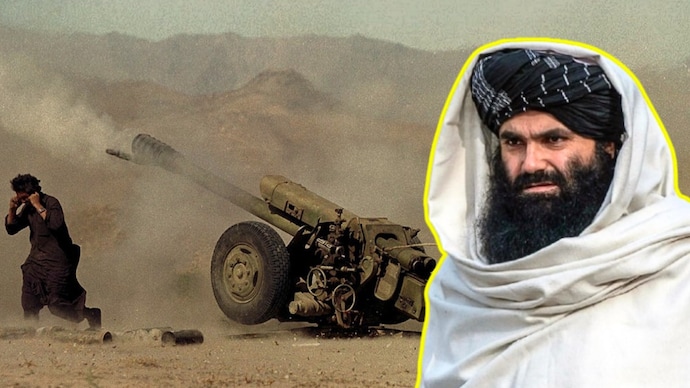
The Taliban-administered Afghanistan’s new “Criminal Procedure Code for Courts”, a document intended to guide judicial processes, has sparked outrage among human rights bodies, officials of the older regime, and international observers, over its contents. The Taliban Code, which divides citizens into four unequal classes, legitimises slavery (referred to as “ghulami” or “ghulam“) through explicit references to slaves as a legal category, say human rights groups. It also makes mullahs or clerics immune to trials for crime.
The new Taliban Code’s Article 9, divides Afghan society into four classes, where the top spot is occupied by religious scholars. If the mullahs (religious scholars) commit any crime, they would merely be advised, while those at the bottom would suffer both incarceration and corporal punishment, according to Rawadari, the human rights body founded by activists, many of whom were forced into exile following the Taliban’s return to power in August 2021.
Punishments for the same offence in Taliban-controlled Afghanistan will now vary based on the offender’s class.
What is striking is that the code bans only specific forms of physical violence that result in “bone fractures” or the “tearing of the skin”, reported the Afghan International, a London-based Afghani news outlet. It added, a “father might punish his 10-year-old son for actions such as neglecting prayers”.
The media cell of the National Resistance Front (NRF) said that the “Taliban regime legalises slavery, court will give a verdict based on the social status of the accused.” On X, the anti-Taliban body, led by Ahmad Massoud, added, “The upper class will be protected, and poor class will be punished, same like Brahmin and Shudder system in India”.
The Taliban is infamous for its long-standing Islamic jurisprudence and inhuman violent policies used as a tool of control. Such spectacles were common during the Taliban’s first regime and have resurfaced after 2021. They are now backed by courts and decrees sanctioned by supreme leader Hibatullah Akhundzada. What has changed is the formalisation, where human rights violations are increasingly embedded into law and judicial process.
Earlier this month, Akhundzada signed and distributed a new “Criminal Procedure Code for Courts,” a 119-article document meant to guide judicial processes in Taliban-ruled Afghanistan.
These provisions contradict principles of equality, human dignity, and international prohibitions on slavery, and are “far worse than the Middle Ages”, said The Supreme Council of National Resistance for the Salvation of Afghanistan, a coalition of political leaders and factions opposed to Taliban rule.
The new code comes around a month after a 13-year-old boy in public executed a man convicted of murdering 13 members of his family in Afghanistan’s eastern province of Khost. Around 80,000 people watched the execution, which was ordered by the Afghan Supreme Court and sanctioned by the Taliban’s supreme leader, Akhundzada. The public execution was condemned by the UN Special Rapporteur on Afghanistan in December 2025.
The execution marked the 11th judicial killing carried out by the Taliban since their return to power in 2021, according to Afghanistan’s Supreme Court.
TALIBAN’S NEW PENAL CODE DIVIDES SOCIETY INTO FOUR SOCIAL CLASSES
The document, titled “Criminal Procedure Code for Courts” (De Mahakumu Jazaai Osulnama), was issued on January 4, and circulated to provincial courts for implementation. Human rights organisation Rawadari said that the Code by the Taliban contradicts international human rights standards, including equality before the law, presumption of innocence, prohibition of torture, and fair trial rights. The code relies heavily on confessions and testimony for proof, lacks provisions for defence lawyers or the right to remain silent, and allows broad discretionary punishments (ta’zir), it added.
The Code explicitly divides society into four hierarchical categories. They are, religious scholars (ulama), the elite (ashraf or aristocrats), the middle class, and the lower class.
Punishments for the same offence vary based on the offender’s class rather than the crime’s severity.
Rawadari quotes the provision as follows. For crimes committed by religious scholars, “only advice is given”; for elites, “summons and advice”; for the middle class, “imprisonment”; and for the lower class, “imprisonment plus corporal punishment”.
This structure, critics say, entrenches social stratification and violates the principle of proportionality in sentencing.
Former Afghan Ambassador to Austria, Manizha Bakhtari, described it as creating “unequal legal classes where upper classes escape punishment through advice and warnings, while lower classes face the full force of discretionary punishment”, reported the Hasht-e Subh English, Afghanistan’s independent daily.
TALIBAN LEGITIMISES SLAVERY (GHULAMI) IN AFGHANISTAN
The code repeatedly uses the term “ghulam” (slave) to distinguish legal statuses, implicitly recognising slavery.
Article 15 of the Code says that “In the case of any crime for which a ‘hadd’ (prescribed punishment) has not been specified, ta’zir (discretionary punishment) is ruled, whether the criminal is free or a slave.”
Paragraph 5 of Article 4 specifies that hudud punishments are executed by the “Imam“, while ta’zir punishments can be carried out by the “husband” or the “master” (badaar). Hudud refers to fixed punishments under Islamic law for specific crimes considered violations of God’s rights.
Rights bodies have argued that this contradicts international law, where slavery is prohibited as a peremptory norm. The provision also enables masters and husbands to enforce punishments. This has raised concerns about institutionalised domestic violence and slave-like conditions, particularly for women and children.
The Taliban last year banned 140 books written by women. The order, issued in late August 2025, also prohibited the teaching of 18 subjects that Taliban officials said clash with Sharia law and their policies. Last year, Taliban-imposed gender restrictions compounded the tragedy for Afghan women following the deadly earthquake, which killed at least 2,200 people. Women were often the last to be rescued, or not rescued at all, due to the “no skin contact with unrelated males” rule that forbids male rescuers from touching them.
CRITICS, RIGHTS BODIES SLAM TALIBAN’S NEW LEGAL CODE
Former Attorney General of Afghanistan Mohammad Farid Hamidi called the code “a document proclaiming the conviction of all citizens”, an “unjust criminal policy based on open discrimination” that institutionalises violence against women and children while dividing citizens by status, wealth, and poverty, reported the Hasht-e Subh English.
Former National Directorate of Security chief Rahmatullah Nabil said it proves “politicised religion and rigid interpretations offer no future for Afghanistan”. The Afghanistan Women’s Justice Movement condemned it as “the legalisation of brutality” that entrenches gender apartheid.
The UN Special Rapporteur on human rights in Afghanistan, Richard Bennett, noted the code’s “deeply troubling” implications and said he was reviewing it from human rights and Sharia perspectives. Rawadari urged an immediate halt to its implementation and sought its repeal, calling on the United Nations, International Criminal Court, and global human rights bodies to intervene.
Meanwhile, the UN’s Under-Secretary-General Rosemary DiCarlo concluded her visit to Kabul on 25 January. During the visit, she “raised concerns regarding restrictions on UN Afghan female staff, as well as the broader limitations on women’s access to education, work, and public life, and urged their immediate lifting”.
Taken together, the Taliban’s new legal code formalises inequality, legitimises coercion, and embeds violence into Afghanistan’s justice system under the guise of religious law, as flagged by experts and critics of the regime. By dividing society into hierarchies and recognising slavery-like legal categories, it marks an opposition to the basic principles of equality and human dignity. What is being enforced, experts caution, might normalise fear, exclusion and punishment as brutal tools of governance.