Venezuela, SKorea, Afghanistan lose vote for UN rights body

By EDITH M. LEDERER

Associated Press

October 11, 2022

UNITED NATIONS (AP) — Venezuela, South Korea and Afghanistan lost contested races for seats on the top U.N. human rights body in Tuesday by the General Assembly, which faced criticism for electing countries like Vietnam and Sudan, which have been accused of having abysmal human rights records.

The 193-member assembly voted by secret ballot to fill 14 seats on the 47-member Human Rights Council. Seats are allocated to regions to ensure geographical representation, a rule that has regularly led to many regions putting forward uncontested slates — as Africa, Eastern Europe and Western nations did this year.

Human rights groups have long criticized this practice, saying it denies U.N. member nations any choice of countries on the council and virtually guarantees seats for some countries with poor rights records.

In this year’s election, the most hotly watched race was in the Latin America and Caribbean regional group, where Chile, Costa Rica and Venezuela were vying for two seats. The result saw Chile get 144 votes, Costa Rica 134 and Venezuela 88.

Venezuela narrowly won a seat on the Human Rights Council in 2019. Louis Charbonneau, U.N. director for Human Rights Watch, welcomed Tuesday’s result, saying the General Assembly “rightly closed the door” on Venezuela’s attempt to remain on the council.

“U.N. investigators have found evidence that (President Nicolas) Maduro and other officials may have been responsible for crimes against humanity against their own people,” Charbonneau said.

“A government facing these kinds of allegations has no business sitting on the U.N.’s top rights body. Now U.N. member states should seek ways to hold accountable those Venezuelan officials responsible for grave human rights violations, including extrajudicial killings and torture,” he said.

The other closely watched race was in the Asia-Pacific region, where Afghanistan, Bangladesh, Kyrgyzstan, Maldives, South Korea and Vietnam contested four seats. Bangladesh received 160 votes, Maldives 154, Vietnam 145 and Kyrgyzstan 126 and were declared the winners, beating South Korea with 123 votes and Afghanistan with 12 votes.

Charbonneau said that “electing abusive governments like Vietnam to the council only undermines its credibility.”

The Global Center for the Responsibility to Protect, which campaigns against mass atrocity crimes, said: “The election of Sudan — a state that is currently implicated in excessive and lethal force against peaceful protesters and that has a history of perpetrating atrocities — undermines the credibility” of the Human Rights Council.

In the uncontested regions, the assembly elected Africa’s slate of Algeria, Morocco, South Africa and Sudan, Eastern Europe’s candidates of Georgia and Romania, and the Western nations’ candidates of Belgium and Germany.

General Assembly President Csaba Kőrösi announced the results, read the names of the 14 winners and said the newly elected countries will take their seats Jan. 1 and serve until Dec. 31, 2025. Diplomats in the assembly chamber then burst into applause.

The Human Rights Council was created in 2006 to replace a commission discredited because of some members’ poor rights records. But the new council soon came to face similar criticism, including that rights abusers sought seats to protect themselves and their allies.

On April 7, the General Assembly approved a U.S.-initiated resolution to suspend Russia from the Human Rights Council because of the rights violations it committed in invading and taking control of parts of Ukraine.

The vote, 93-24 with 58 abstentions, was significantly lower than on two resolutions the assembly adopted in March demanding an immediate cease-fire in Ukraine, withdrawal of all Russian troops and protection for civilians.

The assembly voted overwhelmingly on May 10 for the Czech Republic to replace Russia on the council.

Venezuela, SKorea, Afghanistan lose vote for UN rights body
read more

Guterres References Afghanistan on ‘Intl Day of the Girl Child’

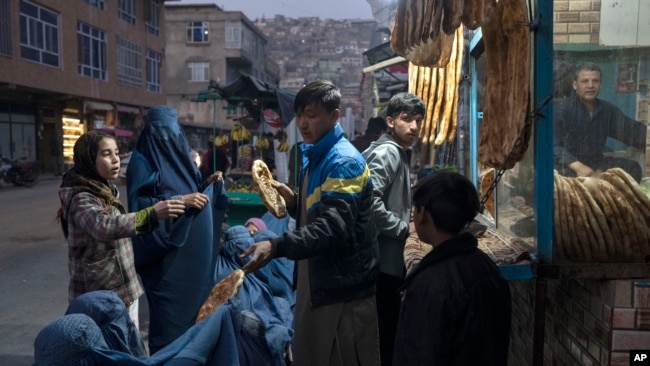
Thousands of girls work as venders on the streets of Kabul due to poverty.

As the International Day of the Girl Child is being celebrated around the world, millions of Afghan girls have been facing severe challenges, including the closure of their schools above grade six.

UN Secretary General Antonio Guterres said on Twitter that he is “extremely concerned by the continued exclusion of girls from school in Afghanistan.”

“This is deeply damaging to girls themselves and to a country that desperately needs their energy and contributions,” Guterres said, calling on the Islamic Emirate to “let girls learn.”

Thousands of girls work as venders on the streets of Kabul due to poverty.

Nazdana, a street vendor, said she is working as a vendor to make ends meet for her family of eight.

“We are eight people. My father is jobless,” she said.

At a corner of Kabul, many other young girls are working as vendors.

“I sell water and make 50 to 60 Afs,” said a young girl.

“I have a lot of responsibility. I also study and work,” said Kamila, a street vendor.

Meanwhile, the deputy Minister of Public Works, Makhdom Abdul Salam Sadat, said there are plans to distribute assistance provided by aid organizations to the children.

“There are some organizations, including UNICEF and others, who are ready to cooperate in addressing the challenges of children,” he said.

Guterres References Afghanistan on ‘Intl Day of the Girl Child’
read more

Afghanistan is Candidate for UN Human Rights Council: Faiq

Faiq said that 14 countries including Afghanistan have been nominated to be selected for membership in the OHCHR.

The Chargé d’Affaires of the Afghanistan Permanent Mission to the UN, Naseer Ahmad Faiq, said that Afghanistan is a candidate for membership in the UN Human Rights Council.

Faiq said that 14 countries including Afghanistan have been nominated to be selected for membership in the OHCHR.

Afghanistan would compete with five other countries to be a candidate for OHCHR membership.

“The important of this council (OHCHR) is that it collects the recommendations and proposals of countries to maintain human rights and introduces them to the UN General Assembly,” Faiq said.

Political analysts gave various opinions on the matter.

“We hope that Afghanistan could one day become the center of Islamic and human rights values. However, the chance for Afghanistan is very small,” said Torek Farhadi, a political analyst.

“We call on the UN member countries to vote for Afghanistan’s membership in this council so the voices of the Afghan people will be heard and the ground for engagement with the Islamic Emirate will be paved,” said Ahmad Khan Andar, political analyst.

The Islamic Emirate wants the Afghanistan seat in the UN to be given to its ambassador.

“We want the UN to recognize our government because we are an important member of the UN and also an important country of the world, so it should give us our seat,” said Zabiullah Mujahid, a spokesman for the Islamic Emirate.

The OHCHR was established in 2006.

Afghanistan is Candidate for UN Human Rights Council: Faiq
read more

Niklasson Calls for Increased Aid for Afghans

Niklasson said on Twitter that the “authorities” must respond firmly to the increasing number of “terrorist attacks” in Afghanistan.

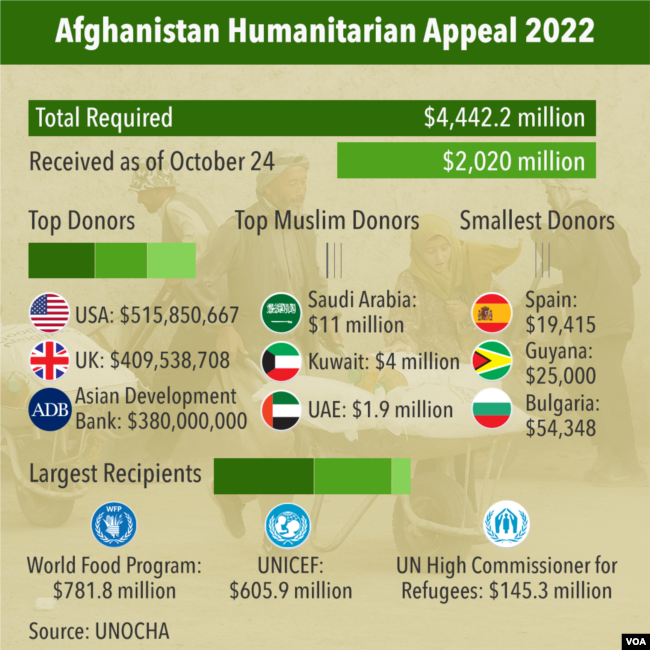
The European Union’s Special Envoy for Afghanistan Tomas Niklasson said that Afghanistan is facing a harsh winter and that the “UN humanitarian appeal is only funded at 45 percent.”

Niklasson in a series of tweets urged Russia, China and the OIC members to take significant steps to provide humanitarian assistance to Afghanistan, and to “follow the example of the UK, the US, the EU.”

The EU special envoy recently paid a visit to Afghanistan.

Earlier, speaking at a press conference in Kabul, the EU special envoy said that the “Taliban should ensure that schools open throughout the country for boys and girls, young women and men to prepare the next generation of Afghanistan who can become the first Afghan generation in four decades not to experience insurgency or war.”

Niklasson said on Twitter that the “authorities” must respond firmly to the increasing number of “terrorist attacks” in Afghanistan.

“They have an obligation to protect all Afghans and bring perpetrators to justice under due process. They must also prevent the use of Afghan soil for threatening other countries,” he said.

The EU envoy also expressed concerns over the deterioration of human rights conditions in the country.

“Major concerns include the regression in women’s and girls’ right to education, to work and to participate in social and political life, the rights of Hazaras and other minorities, and severe restrictions on the freedom of expression,” Niklasson said.

He argued that inclusivity is a path to legitimacy and stabilization of Afghanistan and region.

“The EU remains committed to engagement, based on non-recognition and our benchmarks,” he said. “This is a better course of action than closing doors.”

Niklasson Calls for Increased Aid for Afghans
read more

US, Islamic Emirate Held ‘Detailed’ Talks in Doha

Finding solutions for the dispute and allaying suspicions were reportedly the purpose of the talks.

After the report by CNN, a source from the Islamic Emirate confirmed that a delegation of the Islamic Emirate met with US officials in Doha and held detailed talks on Saturday. 

The meeting between officials from the US and Islamic Emirate was the first in three months, following the US announcement that the leader of the al-Qaeda network, Ayman al-Zawahiri, was killed in a drone strike in Kabul.

According to the source, the Islamic Emirate delegation was comprised of representatives from the intelligence department, the Foreign Ministry and the Defense Ministry. The US delegation included the US special envoy for Afghanistan, representatives from the CIA as well as the State Dept and Department of Defense, the source said.

Finding solutions for the dispute and allaying suspicions were reportedly the purpose of the talks.

“These negotiations, which spread through the media and of which everyone is now aware, might have achieved some agreements that called for the Islamic Emirate to take action with two or three issues. First to fulfill the Doha agreement, second to observe human rights and to reopen girls’ schools, and third to form an inclusive government,” said Sayed Ishaq Gailani, leader of the National Solidarity Movement of Afghanistan.

Prior to these talks, the US Chargé d’Affaires Karen Decker said that she sees no chance that Washington would militarily engage in Afghanistan. “In the interest of opening a dialogue and giving you my thoughts, I would say there is no chance that the US would engage militarily in Afghanistan and that no one should be counting on that outcome,” Decker said.

Despite the resumption of talks and new progress, both sides still give slightly different versions of the talks. Kabul says the talks focused on the issue of US drones in Afghan airspace and drone strikes in the country, violations of the Doha agreement and its fulfillment, restrictions on Afghan banks, and the transfer of Afghan assets from the Swiss bank.

But Washington said its delegation discussed matters relevant to countering terrorism, women’s access to work and education as well as the formation of an inclusive government.

“The Americans may reach agreements on some issues with the (Afghan) government in Doha; for example issues related to intelligence. But on some other issues, such as the formation of an inclusive government, and changes in Afghanistan, they (US) may not get an immediate result,” said Torek Farhadi, a political analyst.

The mistrust between the two sides has increased after the US drone strike hit a residence in the Shirpor area of Kabul city and the US  reported the attack killed Ayman-al-Zawahiri, leader of the al-Qaeda network.

US, Islamic Emirate Held ‘Detailed’ Talks in Doha
read more

Afghan Foreign Funds Still Being Discussed: UNDP’s Wignaraja

“It’s important that the Islamic Emirate divides power equally between Afghan tribes,” said Ahmad Munib Rasa, political analyst.

The Assistant Secretary-General and Director of the Regional Bureau for Asia and the Pacific, Kanni Wignaraja, said that talks on the $3.5 billion of Afghan assets are still continuing, particularly on how to provide the funds to Afghanistan. 

Kanni Wignaraja made the remarks at a UN press conference which was held on the situation in Afghanistan.

“How it (Afghan assets) would be useful, has not been worked out yet. They are looking at setting up a board with multiple partners and stake holders to look at that decision. The only… The US administration is discussing this and the State Department is discussing how this would be… multiple stakeholders on this board, who would then look at the use of this fund. There was not a discussion on the other half of the moneys, but certainly on the $3.5 billion the understanding is on how can it get into the country to stabilize the macroeconomy and to look at private sector engagement and to look at some of the essential services including electricity in the – in the country,” she said.

Some political analysts believe that the reopening of schools is the key to progress in negotiations between the United States and the Islamic Emirate.
“From the Afghanistan side, reopening girls’ schools will be a progressive step to negotiations between the Islamic Emirate and the international community,” said Tariq Farhadi, political analyst.

“It’s important that the Islamic Emirate divides power equally between Afghan tribes,” said Ahmad Munib Rasa, political analyst.

Meanwhile, US special envoy for Afghanistan Thomas West met with Pakistan’s Minister of State, Hina Rabbani Khar, and discussed Afghanistan, with both sides expressing commitment for a peaceful, prosperous and stable Afghanistan, Pakistan’s foreign office said.

Afghan Foreign Funds Still Being Discussed: UNDP’s Wignaraja
read more

No Chance US Would Engage Militarily in Afghanistan: Decker

The Islamic Emirate said that it wants good relations with the world countries and that the disagreements could be solved via negotiations.

The Chargé d’Affaires of the US Mission to Afghanistan, Karen Decker, said there is no chance that Washington would re-engage militarily in Afghanistan.  

The Islamic Emirate said that it wants good relations with the world countries and that the disagreements could be solved via negotiations.

“In the interest of opening a dialogue and giving you my thoughts, I would say there is no chance that the US would engage militarily in Afghanistan and that no one should be counting on that outcome,” Decker said.

The head of the Islamic Emirate’s political office in Qatar, Suhail Shaheen, said that the Doha agreement makes it clear that no country including the US can engage militarily in Afghanistan.

“The Islamic Emirate also wants positive relations based on Islamic values and national interest. If anyone is in dispute with anyone, solutions can be found via negotiations,” he said.

Some political analysts believe that there is a very small possibility of US military interference in Afghanistan.

“Considering the current situation, the US cannot repeat the 2001 scenario and attack Afghanistan. The UNSC council will not allow it. Neither Russia nor China will allow it,” said Aziz Maarij, a political analyst.

“Her main message is to eliminate the rumors about the return of the US here and also give a message to Afghans that they should do their work themselves,” said Wahid Faqiri, a political analyst.

The Chargé d’Affaires of the US Mission to Afghanistan said that Washington will use all diplomatic and political efforts to hold the “Taliban to its commitment to respect human life, to respect human dignity and to respect human rights.”

No Chance US Would Engage Militarily in Afghanistan: Decker
read more

UNDP Releases Annual Report on Afghanistan

The report is titled “One Year in Review: Afghanistan Since August 2021”. 

The United Nations Development Program released a new report on Afghanistan’s economic situation, saying that the already-declining licit Afghan economy lost nearly US$5 billion after August 2021 and is reversing “in 12 months what had taken 10 years to accumulate.” 

The report is titled “One Year in Review: Afghanistan Since August 2021”.

Talking to a UN Press Conference, Kanni Wignaraja, the Assistant Secretary-General and Director of the Regional Bureau for Asia and the Pacific, said that even before the “Taliban”, Afghanistan had a small economy of $20 billion.

“What was already a very small economy. If you think about pre-Taliban, it still was a $20 billion economy but then in a year though, lost about $5 billion,” she said.

Talking at the same conference, the UNDP representative in Afghanistan, Abdallah Al Dardari, said that humanitarian aid alone cannot solve the Afghan crisis.

“It cannot be dealt with by just providing humanitarian, despite the very importance of that humanitarian assistance, and therefore, livelihoods, creating jobs and even trying to recover local economies has been crucial. So we have been working with local communities through cash for work, microfinance technical assistance, local infrastructure development and so on, we have successfully created 5,600 temporary jobs,” he said.

The report said that the cost of a basket of essentials needed to avoid food poverty has meanwhile risen 35 percent, forcing poorer households to go deeper into debt or sell off assets just to survive. According to the report, nearly 700,000 jobs have vanished.

“Among jobs women have lost in government ministries and entities, more than 14,000 or 82 percent were in the Ministry of Education, following restrictions on girls’ education,” the report said.

“Afghanistan has experienced an economic implosion over the past 12 months and the UN’s strong, coordinated response to the crisis has proved critical in averting a catastrophe last winter. Building upon what worked last year including tailored efforts across multiple sectors to improve the livelihoods of more than half a million people, there is a pressing need to support further measures to prevent a deeper crisis,” said UNDP Administrator Achim Steiner.

The economists believe that the situation in Afghanistan will be worsen if the existing sanctions are not lifted.

“Until these restrictions are not lifted and Afghanistan is not recognized, the situation will be worsen and there is a possibility of human catastrophe,” said Abdul Naseer Rishtia, an economist.

“The exit of investment from Afghanistan over the last year is due to mistrust and the political as well as security situation in Afghanistan that also caused the liquidity crisis in the country,” said Seyar Qureshi, an economist.

UNDP Releases Annual Report on Afghanistan
read more

Afghan Foreign Funds Still Being Discussed: UNDP’s Wignaraja

Islamic Emirate divides power equally between Afghan tribes,” said Ahmad Munib Rasa, political analyst.

The Assistant Secretary-General and Director of the Regional Bureau for Asia and the Pacific, Kanni Wignaraja, said that talks on the $3.5 billion of Afghan assets are still continuing, particularly on how to provide the funds to Afghanistan. 

Kanni Wignaraja made the remarks at a UN press conference which was held on the situation in Afghanistan.

“How it (Afghan assets) would be useful, has not been worked out yet. They are looking at setting up a board with multiple partners and stake holders to look at that decision. The only… The US administration is discussing this and the State Department is discussing how this would be… multiple stakeholders on this board, who would then look at the use of this fund. There was not a discussion on the other half of the moneys, but certainly on the $3.5 billion the understanding is on how can it get into the country to stabilize the macroeconomy and to look at private sector engagement and to look at some of the essential services including electricity in the – in the country,” she said.

Some political analysts believe that the reopening of schools is the key to progress in negotiations between the United States and the Islamic Emirate.
“From the Afghanistan side, reopening girls’ schools will be a progressive step to negotiations between the Islamic Emirate and the international community,” said Tariq Farhadi, political analyst.

“It’s important that the Islamic Emirate divides power equally between Afghan tribes,” said Ahmad Munib Rasa, political analyst.

Meanwhile, US special envoy for Afghanistan Thomas West met with Pakistan’s Minister of State, Hina Rabbani Khar, and discussed Afghanistan, with both sides expressing commitment for a peaceful, prosperous and stable Afghanistan, Pakistan’s foreign office said.

Afghan Foreign Funds Still Being Discussed: UNDP’s Wignaraja
read more

Building a New Life in an Unlikely Migrant Destination

Peter Kujawinski, an author and a former American diplomat, reported this article from Nashville.

The New York Times

“Life in Afghanistan, in Kabul,” said Alyas Tajik, “was perfect.” It was a bright morning in September, and the 20-year-old was sitting in the living room of a newly built rental townhouse in south Nashville, alongside his parents and two younger siblings.

Alyas explained that before they immigrated, he, his family and his wife lived in a Kabul apartment they owned in the residential neighborhood of Khair Khana. Neighbors “respected us a lot, because of my mom and my dad,” said Edris, Alyas’s 13-year-old brother.

Their mother, Manizha Tajik, worked in a local clinic as a medical professional, and their father, Abdul Latif Tajik, worked for U.S. government contractors. Extended family lived nearby, and on weekends, everyone would spend time together.

In 2021, Alyas was recently married and preparing to enter university. He liked to go out with friends for late-night pizza. It’s what he was doing one night in August, when the Taliban entered Kabul. He only realized what had happened when he saw his mother’s terrified face the next morning.

The Tajiks belonged to a group of 540 Afghans that were resettled in Nashville, a number that increased from an initial 350 because of the area’s capacity to welcome refugees. Now the family occupies a transitory place between Afghanistan and their new home. The plants, furniture, dishes and decorations in their new townhouse were already included: The only memento they brought from Afghanistan is a pair of small camel statues, which sit tentatively on a ledge under a flat screen television, on either side of a book entitled “Country Music Hair,” which also came with the house.

Acting as the spokesman and translator for his family, Alyas recounted their frantic departure from Kabul. (The Tajiks were particularly concerned about their safety given Abdul Latif’s work with U.S. government contractors.) As the Taliban spread throughout the city, Abdul Latif told the family to join him at the airport, where, as luck would have it, he had been working. They quickly abandoned their apartment, along with most of their possessions. They finally arrived after a harrowing night on the street hiding from the Taliban.

Abdul Latif arranged for a car from inside the secured airport to pick the family up. As they were about to enter, Alyas recently remembered a Taliban soldier telling him, “If you come back again, I swear we will kill you.”

The family left Kabul on a military cargo plane and arrived in the United States on Aug. 29, 2021. Their first three months were spent in Fort Pickett, a military base in Virginia that temporarily housed Afghans awaiting resettlement. Communication with the outside world was spotty.

The Tajiks landed in Nashville at 2 a.m. late last November. They knew nothing about the city. The airport was empty and at first, they could not find anyone. Alyas remembers asking himself questions for which he had no immediate answers: “How do we spend our time? How do we start our life?”

Making the transition even more difficult was Alyas’s separation from his wife, Khoshbo Ayoubi. She had been visiting family in Tajikistan, but because of the speed of the Taliban takeover, she was unable to get to the Kabul airport and join Alyas and his family on their journey to the United States. She and her family remain in Tajikistan. “It was not our plan for me to go alone and leave my wife,” Alyas said. “She said, ‘You are going, what am I going to do here?’ I said, ‘Let me go, and I will find a way to bring you here.’”


This article is part of How I Got Here, a series about immigrants and migrants in America.


Nashville is known for its music scene and bachelorette parties, not necessarily as an entry point for refugees and immigrants. But a growing number of families like the Tajiks now call it home: a center of Americana transformed by new arrivals. The Kurdish community in Nashville, for example, is over 22,000 people, the largest in the United States. It has substantial economic, cultural and political power. Kurds call it “Nashmil,” which is a Kurdish female name.

“In terms of Nashville being a friendly city for immigrants and attracting immigrants, I would brag about that,” said former Mayor Karl Dean of Nashville. (In 1990, 2.5 percent of the Nashville-area population was foreign-born, compared to 12.9 percent during the period between 2016 and 2020, according to the U.S. census.)

Mr. Dean said when he first arrived in 1978, Nashville did not have a diverse population. “You sort of had a significant white population and a significant Black population,” he said. “But it was not a diverse city in terms of a rich ethnic mix.” It was around that time, however, when the city welcomed its first wave of Kurdish refugees fleeing conflict in Iraq. Successive waves of Kurds arrived in the following decades in response to more outbreaks of conflict and oppression. Refugees from other countries, including Afghanistan, followed.

With the assistance of their resettlement agency, the Nashville International Center for Empowerment, or N.I.C.E., the Tajik family have found jobs, a place to stay and help with necessities such as getting a driver’s license. Abdul Latif has a physically demanding job cutting beef at a meatpacking plant from 4 p.m. to midnight. Manizha, a respected health care provider in their Kabul neighborhood, works on a packaging line filling medicine orders. Alyas and his cousin work there, too.

Edris is in eighth grade, and his sister, Khoshi, is starting sixth. They have climbed onto the first rung of becoming new Americans — the entire family is seeking U.S. citizenship — but the next steps are not easy. Before resuming her better-paying and more satisfying medical work, for example, “I have to learn English first,” said Manizha.

The Kurdish community had already taken root in Nashville when Nawzad Hawrami and his wife arrived in 1997, part of an evacuation of Kurds from northern Iraq as Saddam Hussein’s forces moved in. Like the Tajik family, they fled fearing they would be targeted for having worked with the United States. Mr. Hawrami had heard positive reports about Nashville before arriving.

Mr. Hawrami, one of the leaders of the city’s Salahadeen Center, said it has become common for politicians to visit. Now an American citizen, Mr. Hawrami says Nashville has been a welcoming place. He fondly remembers the birth of his first child, which took place only days after he and his wife arrived in Nashville. Neighbors showered them with gifts.

The number of Kurdish refugees in Nashville has tailed off in recent years, but recent refugees from other countries such as Afghanistan and Ukraine benefit from the city’s attributes: a booming regional economy, plentiful jobs, a lower cost of living and support networks for “New Americans.” According to N.I.C.E., an average of 600 to 700 refugees are resettled in Nashville each year, though in 2022, that number is trending higher.

Though Alyas likes Nashville, he cannot stop thinking about Kabul. “I lost my whole life,” he said. There, he was a respected member of a community, with endless possibilities before him. Speaking of his current situation, he said, “I don’t like this life — it’s so hard.”

Most days, Alyas comes home from work around 8 p.m. and eats dinner with everyone in his family except for his father, who would be still at the meatpacking plant. He then heads upstairs and spends many hours deep into the night on WhatsApp with friends in Afghanistan and his wife in Tajikistan. For many immigrant families, tools like WhatsApp, FaceTime and social media have become an essential tether to their homelands. Alyas often does not go to bed until 3 or 4 in the morning, which means his days in Nashville are on Afghanistan Time. The Tajik family has a WhatsApp group of over 30 people — a virtual recreation of their life in Kabul.

These intense virtual connections do not give the Tajik family much solace. “Actually, I have a lot of tension and depression,” Alyas said. He is terrified that the Tajikistan government may deport Ms. Ayoubi back to Afghanistan before she is granted humanitarian parole to enter the United States. If she is forced to return to Afghanistan, she is in more danger and their chances of reuniting soon are lower because there is no U.S. Embassy in Afghanistan to process the humanitarian parole. He carries the fate of his wife and his family on his shoulders. “Every problem is on me,” he said. “I’m doing this all myself.”

There are other sorrows. Manizha’s cousin was killed by the Taliban on July 19. The family believes it was because he had been a Kabul police officer. They send whatever money they can to their extended family in Afghanistan. They pore over YouTube and Instagram videos of people in Afghanistan pushing and shoving for food. “We feel so upset and sad,” Edris said.

And just as they started to carve out a foothold for themselves, the family had to uproot themselves once again when the lease on the townhouse ran out and could not be renewed. It took Alyas weeks to find a new place; the family’s minimal credit history made the search especially hard. When they move this month, they will have to start over again in another house that is not a home. It’s all part of relearning how to live their lives from scratch. “We come here like a new baby born,” Alyas said.

This experience is not atypical for today’s immigrants, said Robin Cohen, author of “Global Diasporas” and emeritus professor at Oxford University. The migration concept of laying down roots signified a physical connection between territory and identity that has loosened in our modern connected world. “We are all now digitally connected,” he said. “We are routed rather than rooted.”

Although preoccupied by worries of family left behind and haunted by a life that ended in August 2021, the Tajik family is determined to build a new life in Nashville. Each family member has specific hopes: Abdul Latif would like to open a grocery store. Alyas dreams of completing his education. Khoshi would like to be a dentist, and Edris wants to be a soccer star. And Manizha has other plans beyond learning English and resuming her medical career.

“After that, I want to save money to buy a home,” she said. “The important thing is home.”

Building a New Life in an Unlikely Migrant Destination
read more