Afghanistan to remain major crisis in 2026, UN, partners warn

Humanitarian resources to support women and their children are diminishing in Afghanistan.
United Nations press office
December 30, 2025

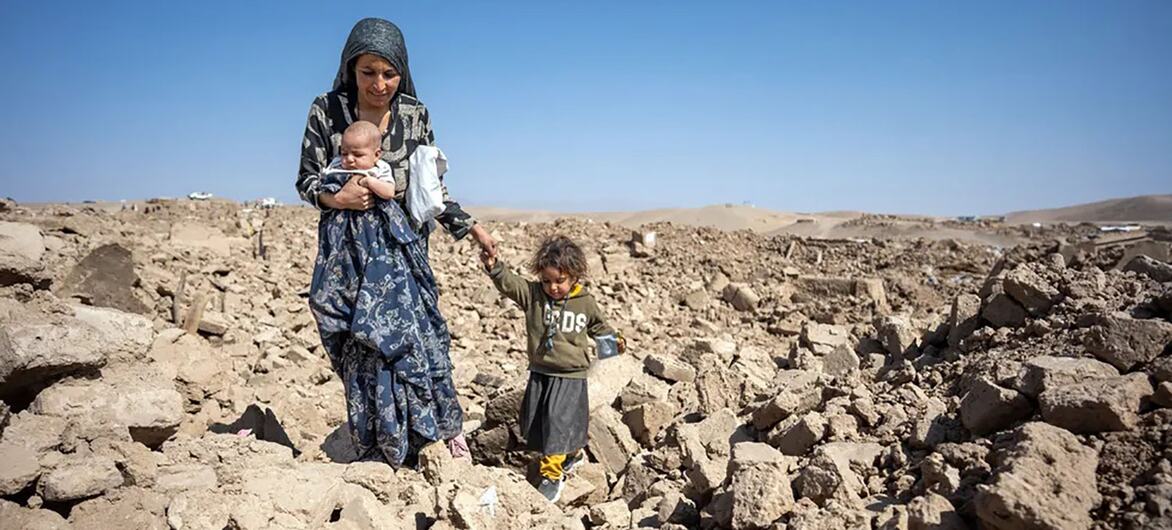
025A mother holding a baby and guiding a young child through a field of rubble in Afghanistan, likely after a flood, under a clear blue sky.

© UNICEF/Mark Naftalin

Afghanistan is expected to remain one of the world’s largest humanitarian crises in 2026, UN agencies and humanitarian partners warned on Tuesday, launching a $1.7 billion appeal to assist nearly 18 million people in urgent need.

Years of conflict, compounded by worsening food insecurity, recurrent natural disasters, climate change impacts and large-scale returns of displaced people, have left an estimated 45 per cent of the population – some 21.9 million people – in need of humanitarian assistance next year.

Of those, 17.5 million people – more than three-quarters of them women and children – have been prioritised for support under the coordinated response.

Food and basic hygiene

Food security and sanitation remain among the most urgent needs.

The Afghanistan Humanitarian Needs and Response Plan projects that during the 2025-2026 lean season, more than one-third of Afghanistan’s population will face crisis-level or worse food insecurity, as defined by the Integrated Food Security Phase Classification (IPC).

This means many households will meet minimum food needs only by depleting essential livelihood assets – a sharp deterioration compared with the previous year.

The ongoing drought has also led to the failure of nearly 80 per cent of rainfed wheat crops in several regions, leaving many families without food stocks for the winter.

Sanitation conditions are equally dire: an estimated 25 per cent of households relied on unimproved water sources this year, while 37 per cent lacked soap for basic hygiene.

The response will prioritise water, sanitation and hygiene needs in areas most affected by drought, cholera outbreaks, disasters and large-scale returns.

Returning home to crisis 

Afghanistan is facing one of the world’s largest and fastest-growing returnee-related displacement crises, with around five million people returning to the country this year.

More than 2.6 million Afghans returned from Iran and Pakistan, driven largely by tightened migration policies and deteriorating protection conditions.

Many have returned to districts already grappling with poverty, food insecurity, drought and limited access to basic services, further straining local capacities.

More aid for less

In 2026, humanitarian partners aim to reach more people with fewer resources.

The $1.71 billion required represents a 29 per cent reduction compared to the resources needed in 2025. Yet it aims to reach about 4 per more than the target last year.

These changes have been “driven by sharper prioritisation, notable efficiency gains, and a strategic shift away from high-cost, less sustainable interventions,” the response plan noted.


Afghanistan to remain major crisis in 2026, UN, partners warn
read more

‘That video saved our lives’: how women are defying the Taliban’s brutal crackdown on protest

Zahra Nader and Sayed Abdali for Zan Times

It was nearly dark on 19 January 2022 when the knocking began. At first soft, then insistent, the sound echoed through the flat in the Afghan capital, Kabul. Zarmina Paryani and her sisters froze. They had known this day was coming.

“We always knew the risks of protesting and we were prepared to die on the streets,” the 26-year-old activist told the Guardian. “But I never imagined they would come for us like that – in the middle of the night, breaking into our home.”

Just three days earlier, she and dozens of women had protested on the streets and burned a burqa in a symbolic act of defiance against the Taliban’s growing restrictions. The protest had been organised via WhatsApp groups and word of mouth.

The image of the burning burqa, shared on social media, had gone viral and ignited uproar among Taliban soldiers and supporters, who were demanding the women be stoned to death for disrespecting the garment. Now, they were at her door.

As masked men began forcing their way inside, Paryani says she made a desperate decision. “I couldn’t bear to be taken alive. I couldn’t watch them enter our bedroom, violate us or behead us in the night.” She jumped from the three-storey window.

Zarmina Paryani stands in an open urban space on an overcast day
Zarmina Paryani now lives in exile in Germany with her sisters. Photograph: Sayed Abdali

Miraculously, she survived the fall with minor injuries. Just as fortunately, before the Taliban could break down their door, her sister Tamana Paryani recorded a short video in which she screamed that the Taliban were outside. She sent the footage to a journalist and it was immediately posted on social media, with their arrest initially denied by the militants.

“That video saved our lives. It was the only weapon we had.”

Zarmina grew up in Panjshir, in a deeply religious family. For years, before she moved to Kabul, her education consisted only of mosque schooling. “From a young age, we were taught that women were ‘deficient in mind’. I believed it. I adjusted myself to it.”

But school brought questions. Why were her high marks never enough to prove her worth compared with her brother? Why did neighbours mock her for attending school at all? Her mother, who had been denied an education, encouraged her daughters to keep going. “She used to say: learn so you will never need to depend on a man.”

Zarmina trained as a midwife, but when the Taliban returned to power in August 2021, the small gains that women and girls had made evaporated overnight. “It felt like a storm had come. Everything we had, even the little things, they took away.”

In the early weeks of the takeover, a spontaneous women’s protest movement emerged. Largely leaderless, composed of ordinary women – students, police officers, teachers, midwives – it began as scattered, small-scale marches. Zarmina and her sisters joined.

“We didn’t tell our father. He would never have let us go. Like many families, they didn’t support the protests because they feared for our safety.”

They covered their faces with masks, met in secret, and hid signs inside black plastic bags. Sometimes they changed locations at the last minute to evade Taliban patrols. Their demands were simple: the right to study, to work, to live without fear.

“We were not affiliated with any political party. We were just women asking for our rights,” says another protester, who was detained and beaten by Taliban officials after a protest near Kabul University in December 2022.

By January 2022 and the raid on Zarmina’s home, the sporadic arrests had turned into a targeted suppression. The video her sister sent to the journalist spread across international media and prompted global outrage. But inside Afghanistan, the result was clear: dissent would be met with brutal force.

The Taliban were arriving at the site of protests sometimes before the protest had started, says Zarmina, with women repressed into silence.

Today, no women come to the street to protest. The last known public protest took place in west Kabul in September last year. Indoor protests, symbolic acts, such as dancing alone in a mosque or burning the burqa, are now the only forms of resistance.

Since the Taliban’s return to power, women and girls have been barred from nearly every aspect of public life: schools, universities, most jobs and even parks.

Zarmina spent 27 days in detention before being released and told: “If you speak again, we will cut your throat.”

People sit at a long table on a platform as an audience looks on
A session of the hearings for the People’s Tribunal for Women of Afghanistan, held in Madrid in October. Photograph: Courtesy of Rawadari

She managed to escape to Pakistan disguised in a burqa and plastic shoes and now lives in exile in Germany. “I don’t feel secure even here. And when I write or speak, I wonder: will my father be harmed? Will my family be punished?”

Despite her fears, she testified at the People’s Tribunal for Women of Afghanistan during a hearing in Madrid in October, one of the few venues where Afghan women have spoken publicly about gender apartheid under Taliban rule. “It didn’t change what happened to me, but at least it’s a record for history.”

Rashida Manjoo, chair of the Tribunal, said: “The systematic exclusion of women and girls [by the Taliban authorities] from education, employment, healthcare, freedom of expression, public life and freedom of movement constitute gender persecution.”

Zarmina and other anti-Taliban protesters in exile say they continue to get messages from girls in Afghanistan who have been pushed into marriage, or forced to do sex work to be able to afford to feed their children.

“We used to think the Taliban were just a group of religious men. Now we see what their rule really means. Maybe next time, people won’t be fooled. Sometimes I think this generation, with all this suffering, might finally learn who the real enemy is.”

Zahra Nader is editor-in-chief and Sayed Abdali a reporter at Zan Times journalist

‘That video saved our lives’: how women are defying the Taliban’s brutal crackdown on protest
read more

What Afghans May Read: Banned books under the Islamic Emirate

Since its re-establishment in 2021, the Islamic Emirate of Afghanistan (IEA) has implemented a number of policies with far-reaching consequences for the country’s cultural life. They include a ban on all musical performances (AAN), severe limitations on poetry (Hasht-e Subh) and, most notably, the exclusion of girls from education beyond the sixth grade (BBC). Thousands of educated Afghans, including writers, artists and musicians, have left the country fearing reprisals or having found it impossible to continue working and living there.

In 2025, the Islamic Emirate of Afghanistan intensified its efforts to circumscribe the information available to Afghan citizens, following its October 2024 order to libraries and bookstores to remove books that were now prohibited. In July 2025, a special committee was set up to scrutinise university curricula. It subsequently abolished whole courses and removed hundreds of textbooks deemed contrary to Emirate beliefs and policies. The Afghan book market had already been at a standstill, for various reasons, since the Taliban returned to power in August 2021. In this report, AAN’s Fabrizio Foschini examines the known lists of banned books to understand which titles they contain and why the IEA may have decided to prohibit them.

In this context, the banning of books may appear a lesser step. However, as is often the case, censorship of this type is an important tool for governments seeking to exert greater control over their citizens. The prohibition of specific items serves a dual purpose: restricting access makes it more difficult, expensive and risky for people to obtain banned items, while at the same time making it easier for the authorities to punish violators by transforming transgressions from the abstract into concrete, enforceable violations. Moreover, as is often the case with political movements that ground their authority in moral and religious assertions, such actions reinforce their claims to superiority over the masses and the consequent need to guide them. They may also endow supporters with a sense of purpose by unleashing a ‘witch hunt’ against those perceived to be violating the rules. History abounds with such examples. It was, after all, only in the latter part of the 20th century (1966) that the Catholic Church ceased to uphold what was possibly the largest and longest-lasting of such lists, its Index Librorum Prohibitorum (List of Prohibited Books).

Against this backdrop, few were surprised when it emerged that the Emirate had issued a list of banned books to libraries and bookstores in October 2024 (Amu TV). While it is unclear how high a priority the implementation of the censorship rules represents for the IEA, reports indicate that pressure has been exerted on booksellers to comply with the directives. Even before the circulation of the list of more than 400 titles, a significant number of books had already been confiscated – some 50,000 in Kabul alone during the first week of January 2024 – and inspections had been carried out in bookshops and libraries across Afghanistan (Radio Azadi, Kabul Now).

October 2024, however, would not be the last time a list of banned books was circulated. In fact, another major list of banned books was announced in mid-September 2025. This time, it included university textbooks and was followed by the cancellation of a number of academic courses, and then by additional blacklists related to the curricula of particular universities in mid-November 2025.

The rationale for the control of culture

Since the mass diffusion of printed books, censorship of publications has constituted a primary field of action for autocratic governments. Where political power has been coupled with religious authority, this has often made it easier to prohibit specific texts by labelling them as blasphemous or claiming they would corrupt people’s minds. Since the movement’s inception, part of the Taliban’s ideological baggage has revolved around the rejection of many secular notions of education and culture, often labelled as ‘modern’ or ‘Western’. Although this aspect was initially less prominent than in other Islamist movements – such as Boko Haram in West Africa – it became increasingly relevant for the Taliban during the years leading to their second ascent to power as the Islamic Emirate of Afghanistan.

This shift is closely linked to the transformations in Afghan society and culture during the two decades of foreign intervention (2001-2021). During the First Emirate (1996-2001), there was relatively little to ban. The Taliban assumed power from an already conservative Islamic government formed by mujahedin parties, which, alongside fighting each other and plunging the country into civil war, had already implemented restrictions on education and culture in the wake of their victory over the ‘infidel’ communist government in 1992. In a country that had experienced limited modernisation – mainly in the cities – and had been laid to waste by invasion and internecine fighting, there was relatively little written material for the Taliban censors to ban.

They did, nevertheless, act against a number of perceived threats. For example, footage of the public destruction of televisions, VHS tapes and music cassettes went viral in the outside world, contributing to shaping the image of the Taliban abroad during this period.

If the prohibition of books and printed material did not feature prominently in news reporting during the first Emirate, this was due both to the powerful visual impact of these other forms of cultural censorship and to the limited availability of books, especially as new publications and translations of foreign authors were scarce, given the previous decade and a half of war and restrictions on the free publishing and circulation of books imposed by previous regimes, first under the PDPA and later under the mujahedin.

By contrast, Afghanistan in 2021 offered a far wider range of potential targets for censorship. Over the previous two decades, book publishing had blossomed in Afghanistan, with the emergence of numerous Afghan authors across fields ranging from political science to fiction and poetry. Additionally, a large number of foreign works had become available in translation in both national languages, Dari and Pashto, while previously unavailable books from Iran and Pakistan had been widely distributed. Meanwhile, partially as a reaction to the unprecedented development of higher education in the country, the Taliban discourse had come to include, as a major component of their ideology, the rejection of what they saw as the incipient ‘Westernisation’ of Afghan society, exposed as it had been to modern curricula[1] and the circulation of foreign ideas and texts. Such distrust lies behind much of the intent to ban certain books. In this report, we examine which books and topics the IEA has objected to and how it has justified outlawing them, first by looking at the list of now-banned university textbooks and amended curricula, before turning to the more general ban affecting libraries and the wider book market.

Reshaping university teaching

Changing university curricula has often been the prerogative of governments that come to power after a period of turmoil, when disruption has affected a country’s higher education system. This was the case for the Islamic Republic of Afghanistan, which was established after two decades of high-intensity conflict, territorial fragmentation and lack of government capacity had all but destroyed Afghanistan’s university system. However, such reform is rarely easy or smooth.

The author recalls, for example, the lengthy process that led to the creation of new curricula for the faculties of law and sharia at Kabul University in 2004-05, during which Ashraf Ghani was serving as chancellor. Extensive research and consultations across the Muslim world – and at times heated debate – accompanied the quest for the textbooks that would forge a new generation of Afghan jurists. The subsequent failure of the Republic’s judicial system and the comparative success of the Taliban courts can hardly be attributed to faulty curricula, however. Rather, they were the inevitable outcomes of the corruption and abuse of power by influential people during the Republic.

By contrast, the IEA’s efforts to reshape university curricula have been sudden, swift and opaque. At a 13 July 2025 meeting of the Ministries of Religious Affairs, Information and Culture, Education, and Higher Education, it was announced that a committee had been formed, composed of their respective representatives, who were tasked with reviewing books and referring “suspicious contents to clerics for further scrutiny” (The Independent). At the origin of this initiative lies, arguably, an order by Taliban leader Hibatullah Akhundzada urging the removal of books deemed liable to mislead and corrupt society.

The outcome of the newly formed committee’s activities did not take long to materialise. In mid-September 2025, a list containing 679 banned textbooks – described as “conflicting with Sharia and the IEA policies” – was issued to all universities in Afghanistan (BBC). At the same time, the committee also issued lists of university subjects that were now banned (18 courses), or that should be handled with caution and taught only within certain parameters (201 courses). The committee has remained active, however, releasing additional lists of textbooks to be excluded from teaching at various Afghan universities, including one listing 96 titles at Kabul University in mid-November 2025 (Hasht-e Subh).

The eighteen university subjects banned by the committee in mid-September were:

  • Fundamental Laws of Afghanistan;
  • Islamic political movements;
  • Good governance;
  • Electoral systems;
  • Afghanistan’s political system;
  • Political sociology of Afghanistan;
  • Gender and development;
  • Human Rights and democracy;
  • Analysis of the Constitution of Afghanistan;
  • Globalisation and development;
  • History of religions;
  • Sociology of women;
  • Moral philosophy;
  • Sexual harassment;
  • Employment diversity in relation to gender;
  • Small group leadership;
  • Gender relations;
  • Role of women in mass communications.

Six of these subjects relate directly to women or gender studies. The IEA may assume that, given women’s exclusion from universities, there are no prospective students for such courses, or that they are neither relevant nor appropriate for male students. Other subjects may have been considered redundant, such as studying a political system or constitution that no longer exist. Finally, subjects such as the History of Religions, Human Rights and Democracy, and Moral Philosophy might have been considered too controversial and potentially dangerous to be taught at all.

Additionally, more than two hundred other subjects, while still permitted, are subject to limitations and further scrutiny. Among them, one can find a much wider range of topics, from the somewhat expected, such as the History of Western Political Thought and Child Psychology, to the seemingly non-controversial, such as Consumer Protection Rights and the Solar System. Peace and Conflict Resolution is also included in this list.

The list of banned textbooks features a high proportion of titles by Iranian authors or published in Iran (310) and by women (140). Most of the banned books pertain to the curricula of the faculties of Law and Political Sciences, Administration and Public Policy, Sociology, Communication Sciences and Journalism, Educational and Professional Sciences and Psychology. The latter has been particularly affected, with its curriculum severely curtailed due to the elimination of a large number of subjects. Other faculties that have seen the elimination of a number of relevant textbooks include Sharia, Languages and Literature, History, Geography, and Economics. The Arts have also seen some titles banned, especially those on the history and critique of theatre and cinema – subjects that hold little appeal for IEA ideologues.

The sciences fare only slightly better, with a high proportion of excluded texts by Iranian authors, particularly in the faculties of Engineering and Physics. In the scientific fields, banned titles tend either to have been written by women or Iranians, or deal with issues the Taliban view as controversial, either because they are ideologically or politically sensitive, such as evolution by natural selection in Biology, or mining laws and international labour rights in Geology.

However, when it comes to sensitive topics, even if addressed by male Afghan authors, the same pattern applies in all faculties. Such topics include those concerned with fundamental rights, electoral systems, penal jurisprudence, Islamic philosophy – and even the history of Sufism. This means that writing about evolution is objectionable, even if by a Pashtun man. At the same time, the work of authors from Iran is rejected even when the subject is relatively innocuous, such as Techniques of Gilding. It seems it is unacceptable to read a book, even on a topic such as topographic drawing, if it has been written by a woman, whether Afghan or foreign. This cannot be due to concerns that the feminine gaze could alter the proper perception of landscape. IEA officials have acknowledged that there is a general ban in Afghan universities on teaching any book written by a woman (BBC). A similarly categorical justification has been offered for the ban on books by Iranian authors, which was motivated, in the words of a member of the committee to the BBC, by the need “to prevent the infiltration of Iranian content in the Afghan curriculum.” This, however, ignores the fact that even some Afghan authors writing in Dari are better able to publish in Iran, and that Persian has long served as the medium through which global knowledge and literature reach the Afghan public.

Besides the mostly Afghan and Iranian women and men, the translations of Western books, some by outstanding scholars writing well before the Taliban, are also banned. One such example is History of Afghanistan’s Political Relations by the doyen of Afghan Studies, the late Ludwig Adamec[2] (see AAN’s obituary). The works of many other foreign scholars of Afghanistan, as well as those of Afghan authors, had already been targeted in a previous proscription list issued by the IEA in October 2024 and aimed at the general book market and libraries, which is the subject of the next section of this report.

A somewhat random Index Librorum Prohibitorum

One could say that the state of the book market after the fall of the Republic was too bleak to justify the state seeking to exert intellectual control over what gets published and read. The Afghan book market had already largely gone cold after the Taliban’s ascent to power, owing to the flight of many intellectuals and educated youth and to the economic crisis, which rendered the purchase of books a relative luxury (Al Jazeera). Many potential readers still in Afghanistan have grown reluctant to spend money on books, given the reduced value of education and cultural capital in the job market, or the lack of access to education altogether. Many publishing houses have shut down and the country’s declining literary output has been only partially compensated for by various new publications tolerated or even promoted by the IEA (AAN). Despite this, in October 2024, Emirate officials informed libraries and booksellers that 433 books (though a couple of titles are repeated) were now subject to bans or restricted circulation.

The titles included both non-fiction and fiction by Afghan and international authors. Overall, the list is neither comprehensive nor fully representative of what is available to Afghan readers on bookshop shelves, in terms of world literature. It is, however, sufficiently varied to prompt one to describe it as somewhat random and therefore warrants a closer look to make sense of the reasons behind the selection of titles.

Roughly three-quarters of the books on the list are by Afghan authors, the rest by foreigners, including a substantial number of Iranians and Western writers, as well as some from Pakistan and a small number from other countries. Most of the books are simply banned, while ten titles on the list can be consulted, with authorisation, for research purposes only. Some of the latter are well-known works such as Max Weber’s The Protestant Ethic and the Spirit of Capitalism; Mahatma Gandhi’s autobiography, The Story of My Experiments with Freedom; acclaimed Albanian writer Ismail Kadare’s novel The Twilight of the Eastern Gods; and essays on postmodernity by David Lyon and Francis Fukuyama.

Most of the banned titles are about Afghanistan’s recent history and are written by both Afghan and foreign authors. Several prominent international scholars of United States foreign policy and of Afghanistan appear on the list, including Steve Coll, Bruce Riedel, Peter Marsden, Ahmad Rashid, Antonio Giustozzi, Christine Fair, Anand Gopal and Bette Dam. Notably, some of these authors explored a wide range of perspectives on the Afghan conflict, including Taliban viewpoints, during the insurgency and well before the Taliban had made their spectacular comeback.

The choice to ban these authors reflects one of the IEA’s clear concerns: rewriting Afghanistan’s recent history according to its own narratives. While effacing the large body of publications produced over two decades by Afghan and foreign authors might prove too monumental a task even for the IEA’s zealous censors, removing texts that extensively explore aspects of the Taliban’s insurgent modus operandi, leadership structures and regional links is more feasible. Notably, those titles that explore highly controversial issues, such as the use of suicide bombers against both military and civilian targets during the conflict or the movement’s relationship with Pakistan, have been earmarked for prohibition.

The issue of suicide bombers appears to be particularly sensitive for the IEA. A number of the relatively few titles devoted to the phenomenon appear on the banned list, including those by Afghan as well as foreign authors. So much so that even a dystopian black-comedy novel – The Suicide Shop by Jean Teulé – is included even though it does not deal with religiously or politically motivated suicide bombers, possibly because of the connection with suicide itself, which is clear from the title (retained in Dari), rather than because of its broader mockingly nihilist undertones.[3]

Books on the Islamic State and Afghan-Pakistani relations are also forbidden, including those by former Pakistani officials and titles dealing with issues such as the Durand Line. More generally, some books on the countries of the region, whether or not they specifically focus on their role in the Afghan conflict, are also banned.

Also featured are several books by prominent Republic-era figures and members of the intelligentsia. Of particular concern seem to have been the various biographies or memoirs devoted to slain anti-Taliban commander Ahmad Shah Massud, both the more serious and informative ones by historians and the hagiographic pamphlets produced by admirers across the globe. Works by, or related to, other notable military and political adversaries of the Taliban, such as Burhanuddin Rabbani, Qasim Fahim, Rashid Dostum, Abdul Ali Mazari, Muhammad Mohaqiq and Karim Khalili, all prominent members of the United Front (commonly known as Northern Alliance) and most also of the later Republican establishment, are also banned.

The same fate has befallen books about former communist president Najibullah or his policies, such as his national reconciliation programme. This seems a logical attitude towards a political figure whom the Taliban killed – and whose body they desecrated – when they first took Kabul in 1996. Other books by Najibullah’s biographer, the investigative journalist-turned-historian, Razaq Mamun, are also banned, as are works by members of the previous communist governments, such as Sulayman Layeq (see AAN’s obituary).

Another category comprises books on religion, whether on Islam or, more broadly, on religious or existential themes. Books on Shia theology – especially those on the Ahl al-Bait (the family of the Prophet) are targeted, not least because many of them come from Iran. For example, many titles by Iranian religious thinker Abdul Karim Soroush are banned as being against national interests and, at times, even against belief. Research on Afghan Shia communities is sometimes disqualified under the label of “disputed issues,” such as in the case of the volumes entitled A Profile of the Ashura Incident, by a research centre, and Hazaras by Hassan Poladi.

Books by Sunni theologians, however, have not been spared either. Some works on Sufism, including ancient and well-known Sufi treatises such as the Kashf al-Asrar [The Unveiling of Secrets], an 11th century spiritual Quranic exegesis by Herat’s most revered Sufi saint, Khwaja Abdullah Ansari, are also banned.

The Emirate appears to be taking a cautious attitude towards any debate over issues of theology or Islamic jurisprudence (fiqh). In some cases, there is an ‘even-handed banning’, such as books that defend and support both sides of a dispute, such as in the case of Wahhabism. The IEA officially adheres to the Hanafi school of jurisprudence and rejects Wahabi doctrines, which are derived from the Hanbali school. The banning of its principal text, by Muhammad ibn al-Wahab, is, therefore, no surprise. However, the list also bans a refutation of Wahabism by two muftis, motivated by “research problems.”

Several other titles are banned on grounds that they proselytise Christianity. These also form a motley list, ranging from the 15th century devotional manual, The Imitation of Christ, by Thomas à Kempis, to the 1926 collection of aphorisms, Sand and Foam, by Lebanese-American writer, Khalil Gibran Khalil, who is also accused of blasphemy for his The Madman, the Forerunner and the Wanderer (1918). Other books by Christian thinkers or closely connected to Christian theology, such as the 5th century The City of God by Saint Augustine, Dante’s 14th century poem The Divine Comedy,and the Book of Mormon by Joseph Smith (1830), are also on the list.

Then, predictably, there are books dealing with philosophical, socio-economic, and political systems opposed by the IEA, such as books by or about Karl Marx and titles about the Cuban Revolution.

As expected, a relatively large number of titles revolve around the condition of women in Afghanistan or feminism more broadly: from Le Deuxième Sexe (The Second Sex) by Simone de Beauvoir (published in 1949) to Kabul Beauty Schoolby hairdresser Deborah Rodriguez (2007), and Rachel Hollis’ self-help book Girl, Wash Your Face (2018). Titles by Afghan or Iranian female authors, from Women’s Political Participation by Fatima Jaffari to the Wives of the Prophet and Women with the Prophet by Marzieh Mohammadzadeh, are also banned, along with I Am Malala by Malala Yousafzai. Again, no big surprise.

Alongside works by prominent Afghan novelists, the list includes a number of translations of Western fiction. Inexplicable, at least to the writer, is the seemingly random selection of some Western novels, especially as they hardly represent the full range of translated titles in Dari, if not Pashto, available to the Afghan public. The inclusion of Heinrich Boll’s The Clown (1963), a critique of Germany’s post-World War II society, its conformism, loss of values and the Protestant vs Catholic split, is one such. Even more puzzling is the appearance on the list of Renee Carlino’s novel, Swear on this Life (2016), which centres on “two childhood best friends who fall in love and dream of a better life beyond the long dirt road that winds through their impoverished town in rural Ohio.” Of all plots of potential concern to the IEA, these are hardly the first that one would single out – unless maybe the IEA censors are way subtler than assumed.

Against national interests

The list provides a range of reasons for banning titles. In most cases, the books are deemed to be “against national interests.” This designation may stand alone or be coupled with other alleged transgressions, such as being contrary to “beliefs,” “culture,” “policies,” “principles” or “values.” More rarely, two or more of these terms also appear in combination, without “national interests” being at stake.

Broadly speaking, the charge of being against national interests is applied to all books about Afghanistan’s recent history, political figures opposed to the Taliban, the Hazaras or Shia communities in general, neighbouring countries and women’s rights. However, many texts dealing with world history or the history of world religions also fall under this category, such as Hendrik Willem van Loon’s The Story of Mankind, a 1921 book originally intended to explain global history to children.

Justifications can be quite blunt: Islamic State: Digital Caliphate (2015) by Palestinian-British author Abdul Bari Atwan is dismissed as “mind-numbing.” Occasionally, less generic accusations are formulated against specific titles. For example, some essays by pro-Republic Afghan scholars, together with memoirs by (retired) Pakistani generals, are labelled “negative propaganda,” while An Introduction to the Philosophy of Religion by Michael C Rea and Michael J Murray (2008) is seen as going against Islamic principles and mid-17th century Thomas Hobbes’ Leviathan is considered to be against religion tout court.

Several books on Nawruz, the vernal equinox celebrated as the new year in many parts of Afghanistan and the wider region, are also banned. The text by an Afghan youth cultural association, Nawruz, a Celebration of Transformation and Insight, is denounced as “contrary to culture,” rather than being deemed against Islamic principles, as per the longstanding position of the Taliban and some conservative Afghan clerics. This designation substantiates the impression that, for the IEA, Afghan culture must totally overlap and coincide with a narrowly defined set of orthodox Islamic practices, leaving little room for anything else, created or perpetuated by the Afghan people over the centuries, or even, as in this case, millennia, to be considered culturally legitimate – or even allowed to exist. On a lighter note, “contrary to culture” is also the reason given for discarding The Rules of Love, a self-help manual for “happier, more fulfilling relationships” by Richard Templar (aka Richard Craze).

A story that is still unravelling

The published lists are by no means a definitive or exhaustive tool for deciding which books are allowed; booksellers have complained that individual IEA officials assess the permissibility of books according to their own judgement, both in shops and at customs checkpoints. According to these accounts, officials may decide on the spot to confiscate volumes that are not included on the list, based on their own understanding of the content or on the presence of images depicting living beings (The Independent).

Publishers have reported being instructed to contact the authorities and obtain permission from the Directorate of Information and Culture before printing new volumes (VoA) and have given accounts of the difficulties they have encountered in getting such approval.

Proscribing printed texts is not the only means through which the IEA has sought to circumscribe and control people’s access to information and knowledge. Since early October 2025, following a 48-hour nationwide internet shutdown, a number of filters have been applied to social media platforms, such as Facebook, Instagram and X (BBC). Moreover, a set of rules for journalists and television and radio hosts had already been introduced (RSF); see also the 2024 Law on the Promotion of Virtue and Prevention of Vice, which gives the ministry’s enforcers the power to ensure the media does not publish reports that “contradict Islamic law and religion,” “deride or humiliate Muslims,” or depict animate objects (article 17) (see AAN’s translation and commentary on the law).

During the past decade, some authors have argued that the recruitment of a new generation of Taliban, some of whom had received higher education and were exposed to the Republic’s education system, had increased the Taliban’s cultural sophistication (New Lines Magazine). Similar changes are apparent across Afghan society more broadly and the 2021 takeover was widely expected to enhance this phenomenon, as individuals from diverse backgrounds joined the ranks of the Taliban. Instead, taking control of the levers of power appears to have brought the more conservative elements of the leadership to the fore, revealing the comparatively limited influence of the younger members.

If the first list of banned books can be understood as an attempt to remove titles perceived as blasphemous, offensive or aberrant, or to erase rival narratives of Afghanistan’s recent history, the lists targeting university textbooks point to a more long-term and far-reaching objective. These later efforts seem to indicate that the IEA views book banning as part of the fight against cultural Westernisation, driven by the belief that modern education is part of an external political agenda aimed at promoting female emancipation and critical thinking as tools to weaken the fabric of the Afghan nation and its connection to Islam.

This viewpoint is outlined in a rare treatise on the juridical and political foundations of the IEA authored by one of its highest-ranking figures, The Islamic Emirate and its System of Governance, by Abdul Hakim Haqqani, the IEA’s Chief Justice, which was published in 2022 (read AAN’s review). While modern sciences and knowledge are discussed at length in three chapters of the book and acknowledged as necessary, their importance is downplayed. They are presented as subordinate to religious learning and as exposing Muslims to the risk of moral corruption. Studying them is permissible only to the extent necessary and in accordance with religious studies (Zan Times).

Even more than the theoretical principles expounded by Haqqani, recent IEA actions lend credence to the blunt words of one Afghan commentator: “The Taliban are staunch and uncompromising in their beliefs because they have always received a single-source education and they believe that diversity in the sources of knowledge leads to deviation and disbelief” (Hasht-e Subh).

After four years in power, the Taliban leadership has made clear that their vision of society and the world diverges from that of a significant segment of Afghanistan’s population – namely, those Afghans who benefited from higher education and exposure to global knowledge and culture prior to the takeover. They are, therefore, resolved to gradually reshape future Afghan generations by making sure that the youth who will be able to attend university, and indeed the wider reading public, are exposed only to those notions that align with the Taliban’s own beliefs. Whether these notions alone will provide future generations of Afghans with a sufficient foundation of knowledge to meet the challenges of rebuilding their war-ravaged country, only time will tell.

Edited by Jelena Bjelica and Roxanna Shapour

References
References
↑1 The term ‘modern education’ has been used in Afghanistan to differentiate the state schooling system or that offered by secular private institutions from the religious-centred madrasa education. For recent developments in madrasa education see Sharif Akram, Living a Mullah’s Life: The evolution of Islamic knowledge among village clerics, Afghanistan Analysts Network, 20 July 2025.
↑2 Originally published in English as: Afghanistan’s Foreign Affairs to the Mid-Twentieth Century: Relations with the USSR, Germany, and Britain (1974).
↑3 Indeed, some authors whose works have been proscribed argued that the IEA censors did not even bother to read the full books, but rather banned those whose titles raised their suspicions (Radio Azadi).


What Afghans May Read: Banned books under the Islamic Emirate
read more

UN Reports Northern Afghanistan Farmers Struggle to Replace Opium Income

Khaama Press
December 29, 2025

A United Nations report on Monday, December 29, revealed that farmers in northern Afghanistan are struggling to replace income lost from opium cultivation, highlighting urgent economic and livelihood challenges.

A new United Nations report reveals that opium farmers in northern Afghanistan are struggling to replace lost income following bans on poppy cultivation. Surveys conducted in Badakhshan, Balkh, and Kunduz provinces show 85 percent of households have been unable to offset revenue losses, leaving communities in urgent need of economic support.

The UN Office on Drugs and Crime (UNODC) noted that while poppy cultivation in Badakhshan has increased in certain areas, nearly 95 percent of former poppy farmers reported halting cultivation due to legal restrictions. Wheat and other grains have become the dominant alternative crops, cited by more than 90 percent of respondents.

Background reports indicate Afghanistan produces over 80 percent of the world’s opium, fueling a global narcotics trade. International efforts to reduce cultivation have historically faced challenges due to persistent rural poverty and limited alternative livelihoods.

Additional studies highlight how repeated droughts, irregular rainfall, and water scarcity have further reduced agricultural productivity. Families face constrained options for sustainable recovery, forcing many to revert to opium cultivation despite official bans.

The UN report emphasizes the severe economic shock to farming communities and calls for targeted humanitarian and livelihood interventions to support sustainable alternatives.

Meanwhile, analysts stress that without focused aid programs, Afghanistan rural populations risk deepening poverty and food insecurity. Support must include access to water, credit, and market linkages for alternative crops.

UNODC warns that the failure to implement effective substitution programs could undermine Afghanistan’s broader security and development objectives, potentially reversing recent gains against narcotics production.

Repeated droughts, irregular rainfall, and water shortages have significantly reduced agricultural productivity, leaving families with limited options for sustainable recovery. Despite efforts, the Taliban have so far been unable to eliminate opium cultivation in Afghanistan.

UN Reports Northern Afghanistan Farmers Struggle to Replace Opium Income
read more

Afghanistan Ranked Among Six Most Insecure Countries Globally Amid Rising Poverty, Migration, and Humanitarian Crisis

Khaama Press

Afghanistan is ranked among the world’s most insecure countries, with political instability, economic hardship, humanitarian crises, and restricted opportunities for women driving widespread migration and insecurity.

An international research institute has named Afghanistan as one of the six most insecure countries in the world. Following Afghanistan, Yemen, the Democratic Republic of Congo, Sudan, Russia, and war-torn Ukraine were also identified among the least secure nations globally.

The Institute for Economics and Peace (IEP) noted that although armed conflicts have decreased since the Taliban returned to power, poor governance, humanitarian crises, and political instability continue to fuel insecurity. Security in Afghanistan, the report emphasizes, is not limited to armed clashes.

Data released on Saturday, December 27, show Afghanistan as the least secure country in South Asia. Factors such as widespread access to weapons by unaccountable groups, rising violent crime, political instability, and large-scale internal and external migration place the country at the bottom of global peace rankings.

According to the IEP, Afghanistan under Taliban rule ranks 158 out of 163 countries worldwide in terms of human security and peace. The report also notes that Afghanistan and Ukraine bear the highest economic costs of violence, exceeding 40 percent of their GDP.

The Global Peace Index, published annually by the Institute for Economics and Peace, identifies Iceland, Ireland, New Zealand, Australia, and Switzerland as the world’s most peaceful countries, highlighting the importance of political stability, economic security, and social cohesion.

The report defines insecurity beyond armed conflicts, assessing social safety, internal and external tensions, and the degree of state militarization. True peace, according to the IEP, requires social, political, and economic stability, not just the absence of fighting.

Access to essential services is also a key indicator of social peace. Afghanistan’s health system is under severe strain due to declining foreign aid, with the World Health Organization reporting that 80 percent of its services were reduced this year because of budget shortfalls.

Afghanistan is also among the top four countries generating international refugees. By mid-2024, more than half of all registered refugees at the UN High Commissioner for Refugees came from Afghanistan, Syria, Ukraine, and Venezuela.

Despite the end of active conflict between the Taliban and Afghanistan’s former government, lack of economic opportunities, fear of Taliban enforcement, and restrictions on women’s education and employment have pushed many citizens to migrate abroad. These conditions undermine social and economic security for families.

Ongoing tensions between the Taliban and neighbouring countries such as Iran and Pakistan have led to mass expulsions of Afghan migrants. International organizations warn that Afghanistan’s current infrastructure and public services cannot accommodate the returning populations, increasing humanitarian and environmental pressures.

Afghanistan Ranked Among Six Most Insecure Countries Globally Amid Rising Poverty, Migration, and Humanitarian Crisis
read more

UNICEF Warns Funding Cuts Could Push Six Million Children Out of School by 2026

UNICEF warned that continued cuts to global education funding could deny schooling and essential services to six million children worldwide by 2026.

The UN children’s agency UNICEF has warned that continued cuts to global education funding could force up to six million children out of school by the end of 2026.

In a statement posted on X on Sunday, December 28, UNICEF said children in crisis-hit regions, including Somalia and Palestine, face losing access to schooling and essential services provided through schools.

UNICEF stressed that education for every child is “life-saving and life-changing,” urging donors and governments to shield learning systems from the impacts of conflict and humanitarian crises.

According to the agency, schools in fragile settings often serve as more than learning spaces, providing food, psychosocial support, and a sense of safety for vulnerable children.

Prolonged conflicts, displacement, climate shocks, and economic pressures have already disrupted education for millions worldwide, with funding gaps widening as humanitarian needs increase.

UNICEF warned that shrinking budgets threaten not only education but also children’s access to nutrition, mental health care, and protection services linked to schools.

The agency said the loss of these services could deepen long-term inequalities, increasing risks of child labour, early marriage, and exploitation.

Meanwhile, UNICEF called on international donors to urgently reverse funding cuts and prioritize education as a core humanitarian response.

It added that sustained investment in children’s education is critical to preventing a “lost generation” and ensuring stability and recovery in crisis-affected societies.

UNICEF Warns Funding Cuts Could Push Six Million Children Out of School by 2026
read more

Millions of Afghans face hunger as aid cuts deepen a humanitarian crisis

By ABDUL KAHAR AFGHAN

KABUL, Afghanistan (AP) — For 10 hours a day, Rahimullah sells socks from his cart in eastern Kabul, earning about $4.5 to $6 per day. It’s a pittance, but it’s all he has to feed his family of five.

Rahimullah, who like many Afghans goes by only one name, is one of millions of Afghans who rely on humanitarian aid, both from the Afghan authorities and from international charity organizations, for survival. An estimated 22.9 million people — nearly half the population — required aid in 2025, the International Committee for the Red Cross said in an article on its website Monday.

But severe cuts in international aid — including the halting of U.S. aid to programs such as food distribution run by the United Nations’ World Food Program — have severed this lifeline.

More than 17 million people in Afghanistan now face crisis levels of hunger in the winter, the World Food Program warned last week, 3 million more than were at risk more than a year ago.

The slashing in aid has come as Afghanistan is battered by a struggling economy, recurrent droughts, two deadly earthquakes and the mass influx of Afghan refugees expelled from countries such as Iran and Pakistan. The resulting multiple shocks have severely pressured resources, including of housing and food.

UN appeals for help

Tom Fletcher, the U.N. humanitarian chief, told the Security Council in mid-December that the situation was compounded by “overlapping shocks,” including the recent earthquakes and increasing restrictions on humanitarian aid access and staff.

While Fletcher said nearly 22 million Afghans will need U.N. assistance in 2026, his organization will focus on 3.9 million facing the most urgent need of lifesaving help due to reduced donor contributions.

Fletcher said this winter was “the first in years with almost no international food distribution.”

“As a result, only about 1 million of the most vulnerable people have received food assistance during the lean season in 2025,” compared to 5.6 million last year, he said.

The year has been devastating for U.N. humanitarian organizations, which have had to cut thousands of jobs and spending in the wake of aid cuts.

“We are grateful to all of you who have continued to support Afghanistan. But as we look towards 2026, we risk a further contraction of life-saving help — at a time when food insecurity, health needs, strain on basic services, and protection risks are all rising,” Fletcher said.

Returning refugees

The return of millions of refugees has added pressure on an already teetering system. Minister of Refugees and Repatriation Affairs Abdul Kabir said Sunday that 7.1 million Afghan refugees had returned to the country over the last four years, according to a statement on the ministry website.

Rahimullah, 29, was one of them. The former Afghan Army soldier fled to neighboring Pakistan after the Taliban seized power in 2021. He was deported back to Afghanistan two years later, and initially received aid in the form of cash as well as food.

“The assistance was helping me a lot,” he said. But without it, “now I don’t have enough money to live on. God forbid, if I were to face a serious illness or any other problem, it would be very difficult for me to handle because I don’t have any extra money for expenses.”

The massive influx of former refugees has also sent rents skyrocketing. Rahimullah’s landlord has nearly doubled the rent of his tiny two-room home, with walls made half of concrete and half of mud and a homemade mud stove for cooking. Instead of 4,500 afghanis (about $67), he now wants 8,000 afghanis (about $120) – a sum Rahimullah cannot afford. So he, his wife, daughter and two young sons will have to move next month. They don’t know where to.

Before the Taliban takeover, Rahimullah had a decent salary and his wife worked as a teacher. But the new government’s draconian restrictions on women and girls mean women are barred from nearly all jobs, and his wife is unemployed.

“Now the situation is such that even if we find money for flour, we don’t have it for oil, and even if we find it for oil, we can’t pay the rent. And then there is the extra electricity bill,” Rahimullah said.

Harsh winters compound the misery

In Afghanistan’s northern province of Badakhshan, Sherin Gul is desperate. In 2023, her family of 12 got supplies of flour, oil, rice, beans, pulses, salt and biscuits. It was a lifesaver.

But it only lasted six months. Now, there is nothing. Her husband is old and weak and cannot work, she said. With 10 children, seven girls and three boys between the ages of 7 and 27, the burden of providing for the family has fallen on her 23-year-old son – the only one old enough to work. But even he only finds occasional jobs.

“There are 12 of us … and one person working cannot cover the expenses,” she said. “We are in great trouble.”

Sometimes neighbors take pity on them and give them food. Often, they all go hungry.

“There have been times when we have nothing to eat at night, and my little children have fallen asleep without food,” Gul said. “I have only given them green tea and they have fallen asleep crying.”

Before the Taliban takeover, Gul worked as a cleaner, earning just about enough to feed her family. But the ban on women working has left her unemployed, and she said she developed a nervous disorder and is often sick.

Compounding their misery is the harsh cold of the northern Afghan winter, when snow halts construction work where her son can sometimes find jobs. And there is the added expense of firewood and charcoal.

“If this situation continues like this, we may face severe hunger,” Gul said. “And then it will be very difficult for us to survive in this cold weather.”

Associated Press writers Farnoush Amiri at the United Nations, Jamey Keaten in Geneva and Elena Becatoros in Athens contributed to this report.

Millions of Afghans face hunger as aid cuts deepen a humanitarian crisis
read more

Tajikistan-Taliban border clashes: What’s behind them, why it affects China

Tensions are flaring along the Tajikistan-Afghanistan border in Central Asia with the Tajik government reporting multiple armed incursions this month, straining its fragile relationship with Afghanistan’s Taliban leaders.

More than a dozen people have been killed in attacks by men whom Tajik authorities call “terrorists” and the resulting clashes with Tajik forces, officials in Dushanbe and Beijing said. Victims include Chinese nationals working in remote areas of the mountainous former Soviet republic.

In the latest fighting this week, at least five people were killed in Tajikistan‘s Shamsiddin Shokhin district, including “three terrorists”, officials said.

Tajikistan has long opposed the rise of the Taliban in Afghanistan, a country it shares a largely unsecured 1,340km (830-mile) border with.

Despite cautious diplomatic engagement between the two countries to adjust to new regional realities, analysts said, the frequency of the recent border clashes risks eroding the Taliban’s credibility and raises questions about its capacity to enforce order and security.

Here is all we know about the clashes along the Tajik-Afghan border and why they matter:

What’s happening on the Tajik-Afghan border?

The border runs along the Panj river through the remote, mountainous terrain of southern Tajikistan and northeastern Afghanistan.

On Thursday, Tajikistan’s State Committee for National Security said in a statement that “three members of a terrorist organisation” crossed into Tajik territory on Tuesday. The committee added that the men were located the following morning and exchanged fire with Tajik border guards. Five people, including the three intruders, were killed, it said.

Tajik officials did not name the armed men or specify which group they belonged to. The officials, however, said they seized three M-16 rifles, a Kalashnikov assault rifle, three foreign-made pistols with silencers, 10 hand grenades, a night-vision scope and explosives at the scene.

Dushanbe said this was the third attack originating from Afghanistan’s Badakhshan province in the past month that has resulted in the deaths of its personnel.

These attacks, Tajik officials said on Thursday, “prove that the Taliban government is demonstrating serious and repeated irresponsibility and non-commitment in fulfilling its international obligations and consistent promises to ensure security … and to combat members of terrorist organisations”.

The Tajik statement called on the Taliban to “apologise to the people of Tajikistan and take effective measures to ensure security along the shared border”.

Tajikistan has not suggested what the motive for the attacks may be, but the assaults have appeared to target Chinese companies and nationals working in the area.

How is China involved in all this?

Beijing is Tajikistan’s largest creditor and one of its most influential economic partners with a significant footprint in infrastructure, mining and other border-region projects.

China and Tajikistan also share a 477km (296-mile) border running through the high-altitude Pamir Mountains in eastern Tajikistan, adjacent to China’s Xinjiang region.

Two attacks were launched against Chinese companies and nationals in the last week of November. On November 26, a drone equipped with an explosive device attacked a compound belonging to Shohin SM, a private Chinese gold-mining company, in the remote Khatlon region on the Tajik-Afghan border, killing three Chinese citizens.

In a second attack on November 30, a group of men armed with guns opened fire on workers employed by the state-owned China Road and Bridge Corporation, killing at least two people in Tajikistan’s Darvoz district.

Tajik officials said those attacks had originated from villages in Afghanistan’s Badakhshan province but did not disclose any affiliation or motive behind the attacks.

Chinese nationals have also come under attack in Pakistan’s Balochistan province and along the Afghanistan-Pakistan border.

China’s embassy in Dushanbe advised Chinese companies and personnel to evacuate the border area. Chinese officials demanded “that Tajikistan take all necessary measures to ensure the safety of Chinese enterprises and citizens in Tajikistan”.

Who is carrying out these attacks?

While the attackers have not been identified, analysts and observers believe the attacks carry the hallmarks of the ISIL (ISIS) affiliate in Khorasan Province (ISKP), which, they said, aims to discredit Afghanistan’s Taliban leaders.

“The ISKP has attacked foreigners inside Afghanistan and carried out attacks on foreigners inside Afghanistan as a key pillar of their strategy,” said Ibraheem Bahiss, a Kabul-based analyst at the International Crisis Group think tank.

“The aim is to shatter the Taliban’s image as a security provider with whom the regional governments should engage,” Bahiss told Al Jazeera.

How has the Taliban reacted to these attacks?

Kabul expressed its “deep sorrow” over the killings of Chinese workers on November 28.

The Taliban blamed the violence on an unnamed armed group which, it said, is “striving to create chaos and instability in the region and to sow distrust among countries”, and it assured Tajikistan of its full cooperation.

After this week’s clashes, Sirajuddin Haqqani, the Taliban’s interior minister, said Kabul remains committed to the 2020 Doha Agreement, its deal with the United States for a phased foreign troop withdrawal from Afghanistan in exchange for Taliban commitments to prevent Afghanistan from being used as a base for attacking other countries.

Addressing a police cadet graduation ceremony at the National Police Academy in Kabul on Thursday, Haqqani said Afghanistan posed no threat to other countries and the door to dialogue remains open.

“We want to address problems, distrust or misunderstandings through dialogue. We have passed the test of confrontation. We may be weak in resources, but our faith and will are strong,” he said, adding that security had improved to the extent that Taliban officials now travel across the country without weapons.

The Taliban insists that no “terrorist groups” are operating from Afghanistan. However, in a recent report, the United Nations sanctions-monitoring committee cited the presence of multiple armed groups, including ISKP, Tehreek-e-Taliban Pakistan, al-Qaeda, the Turkistan Islamic Party, Jamaat Ansarullah and Ittehad-ul-Mujahideen Pakistan.

Jamaat Ansarullah is a Tajik group linked to al-Qaeda-aligned networks and active primarily in northern Afghanistan near the Tajik border.

How are relations between Tajikistan and the Taliban?

For decades, the relationship between Tajikistan and the Taliban has been defined by deep ideological hostility and ethnic mistrust with Dushanbe one of the group’s fiercest critics in Central Asia.

In the 1990s, Tajikistan aligned with the anti-Taliban Northern Alliance, led by Afghan military commander and former Defence Minister Ahmad Shah Massoud.

After the Taliban’s return to power in Afghanistan in August 2021, Tajikistan stood as the lone holdout among its neighbours in refusing to officially recognise the new government.

However, pragmatic diplomatic engagement quietly began about 2023, driven by economic necessity and shared security fears over the presence of ISKP. Stepping up the restoration of relations, a high-level Tajik delegation visited Kabul in November, the first such visit since the Taliban’s return to power.

But the two governments continue to trade accusations that the other is harbouring “terrorists”, the major thorn remaining in their bilateral relationship, and that drug smuggling is occurring across their border.

The Tajik-Afghan border has long been a major trafficking route for Afghan heroin and methamphetamine into Central Asia and onwards to Russia and Europe, exploiting the area’s rugged terrain and weak policing.

“The rising frequency [of the clashes] is new and interesting and raises a point: whether we might be seeing a new threat emerging,” Bahiss said.

Badakshan province, from which Tajik authorities said the attacks on Chinese nationals originate, presents a complex security situation for the Taliban as it has struggled to stem the threat from armed opposition groups, Bahiss added.

This security issue has been further complicated by the Taliban’s crackdown on poppy cultivation in the province, he said. The Taliban has faced resistance to this policy from farmers in the north. This is largely because the terrain of Badakshan means poppies are the only viable cash crop.

How is the Taliban faring with other neighbours?

Since the Taliban retook control of Afghanistan in 2021, some of its neighbours have maintained a pragmatic transactional relationship while others have not.

Relations with Pakistan, previously its patron, have particularly deteriorated. Islamabad accuses Kabul of harbouring fighters of Tehrik-i-Taliban Pakistan, also known as the Pakistan Taliban. Tensions over this issue boiled over in November when Pakistan launched air strikes in Kabul, Khost and other provinces, prompting retaliatory Taliban attacks on border posts.

Dozens of people were killed before a ceasefire was brokered by Qatar and Turkiye. However, both sides have engaged in fighting since, blaming each other for breaking the fragile truce.

The Taliban denies Islamabad’s allegations and has blamed Pakistan for its “own security failures”.

Meanwhile, the Taliban is now invested in developing a new relationship with Pakistan’s archrival, India, with delegations visiting Indian cities for trade and security discussions. New Delhi was earlier part of the anti-Taliban alliance. However, that approach has changed with the deteriorating ties between Pakistan and the Taliban.

Tajikistan-Taliban border clashes: What’s behind them, why it affects China
read more

Republicans Who Backed Afghan Visas Are Mum as Trump Halts Them

Back in 2021, as Kabul fell to the Taliban following the chaotic U.S. military withdrawal from Afghanistan, Republicans in Congress were among the loudest voices in Washington arguing that the United States had to throw open its doors to those Afghans who had assisted Americans during roughly two decades of war.

At the time and in the years since, G.O.P. lawmakers have pressed for the expansion of a special visa program for Afghan allies, insisting in letters to the administration, in hearings and in news conferences staged outside the Capitol, that it be expanded.

Then Rahmanullah Lakanwal, an Afghan man who enlisted in a paramilitary force that worked with Americans and who was evacuated by the U.S. military in 2021, was charged with shooting two National Guard members in downtown Washington just before Thanksgiving, killing one and severely wounding the other.

President Trump declared that the United States “must now re-examine every single alien who has entered our country from Afghanistan” during the Biden administration. And even though Mr. Lakanwal was not admitted under a Special Immigrant Visa, the administration halted that program, closing the last legal pathway for Afghans to enter the country.

Republicans who were some of the leading advocates for the United States to provide refuge for Afghans have now gone quiet, apparently resigned to the demise of the Special Immigrant Visa program.

“Politically, I wouldn’t say it’s dead on arrival, but it’s severely damaged now,” Representative Michael McCaul, Republican of Texas, said of the push to issue more visas. “It’s just hugely unfortunate, because they fought alongside our military. They are veterans.”

Yet there has been no move by the Republican-led Congress to scrutinize the administration’s decision to suspend the visas, or to attempt to force the administration to resume issuing them.

Since 2021, the United States has allowed more than 190,000 Afghans to settle in the country, some on green cards as Special Immigrant Visa recipients, and others who were permitted to enter the country temporarily while they applied for permanent residency or asylum.

A bipartisan coalition of lawmakers had been pressing for an additional 20,000 visas to be issued, writing in a letter to senior appropriators in May that the program included “rigorous vetting” and was critical to providing “a lifesaving path to safety for Afghan nationals who face deadly retribution as a result of their work alongside U.S. troops, diplomats, and contractors.”

But the shooting shattered the bipartisan consensus.

“What happened changed things,” said Representative Lloyd K. Smucker, a Pennsylvania Republican who was among those calling for more visas in the spring. “I’ll defer to the president on what he thinks is the right thing to do.”

“After this,” said Senator Lindsey Graham, Republican of South Carolina, referring to the shooting, “we’re going to have to look at everything.”

Senator Susan Collins of Maine, the Republican chairwoman of the Appropriations Committee, said it was “evident” that more vetting was needed, but that “there were an awful lot of Afghans who were invaluable in assisting our troops and helping to keep them safe.”

Some Democrats were far more blunt. Representative Seth Moulton of Massachusetts, a Democrat who flew to Kabul in 2021 on an unauthorized trip to witness the evacuation of Americans and Afghans, said his Republican colleagues no longer appeared interested in collaborating on a solution for the visa program.

Republicans widely condemned the Biden-era parole program that allowed tens of thousands of Afghans to stay in the country for two years while they applied for legal permanent residency. Mr. Lakanwal entered the country under that temporary legal status and was granted asylum in April.

Some immigration hard-liners in Congress have called for beefing up the vetting of such immigrants, including by rescreening and possibly deporting some Afghans.

But Republicans have argued that vetting for the special visa program — which required applicants to undergo background checks, biometric screenings and interviews, and to submit a written recommendation from a top military or diplomatic official — is meticulous.

“We’ve had veterans in the past who have created horrific acts of violence, like Tim McVeigh, Lee Harvey Oswald,” said Mr. McCaul, who was the top Republican on the Foreign Affairs Committee during the Afghanistan withdrawal. “But we don’t condemn the whole community. What it’s doing is it’s basically saying that all Afghans are terrorists. And they’re not.”
Senator Markwayne Mullin, Republican of Oklahoma, who attempted to enter Afghanistan amid the evacuation, said the Biden administration had “dumped” Afghans with Special Immigrant Visas into the country with insufficient federal programs to assist them.

“We need to put a pause on until we get ahold of the people that came here through the S.I.V. program, and we have touched base with them, know where they’re at and make sure they’re all in a good space,” Mr. Mullin said.

Representative Jason Crow, Democrat of Colorado, who worked closely with Republicans in 2021 to push for a robust resettlement program for Afghan partners, said Republicans were too afraid of political backlash to challenge Mr. Trump’s pause on the visa program.

“There are Americans alive today who would not have come home had it not been for Afghans who stood and protected them,” Mr. Crow said. He said Republicans had lost sight of the role of Congress to “be a check on the presidency, regardless of whether the president in office is your party or not.”

Republicans Who Backed Afghan Visas Are Mum as Trump Halts Them
read more

Bloomberg: Afghans in U.S. Summoned to Present Documents During Holidays

According to the report, this move has drawn sharp criticism from immigrant rights organizations.

Bloomberg reported that the U.S. Immigration and Customs Enforcement (ICE) has summoned Afghan migrants residing in the United States to present their documents during the official Christmas and New Year holidays.

According to the report, this move has drawn sharp criticism from immigrant rights organizations, who view it as a sign of intensifying immigration policies under President Donald Trump’s administration, particularly targeting Afghan migrants.

Mohammad Jamal Muslim, an immigrant rights activist, stated: “Supporting immigrants’ rights and defending civil rights reflects the strength of a government. If such arbitrary actions are not curbed, internal division between lawmakers and the government could grow, and democratic values and civil rights in the West will lose their meaning.”

Following the shooting by Afghan national Rahmanullah Lakanwal, who allegedly opened fire on two members of the U.S. National Guard near the White House, American media have reported that with his case being transferred from the Supreme Court to a district court and the introduction of new federal charges, the likelihood of a death sentence has increased.

Ruhollah Sakhizad, a legal expert, said: “Preliminary courts have jurisdiction over early stages of criminal cases. Considering the proportionality of crime and punishment, as well as the clarity of motive and cause, it will be determined whether the suspect will be sentenced to death.”

Earlier, Reuters reported that Rahmanullah Lakanwal’s initial court hearing was held online on December 2. Although he remained hospitalized, Lakanwal denied all charges and pleaded not guilty.

Bloomberg: Afghans in U.S. Summoned to Present Documents During Holidays
read more