Desperate people dig out dead and injured from quakes that killed over 2,000 in Afghanistan.

BY RIAZAT BUTT
Associated Press

ISLAMABAD (AP) — Men dug through rubble with their bare hands and shovels in western Afghanistan Sunday in desperate attempts to pull victims from the wreckage left by powerful earthquakes that killed at least 2,000 people.

Entire villages were flattened, bodies were trapped under collapsed houses and locals waited for help without even shovels to dig people out.

Living and dead, victims were trapped under rubble, their faces grey with dust. A government spokesman said Sunday that hundreds were still trapped, more than 1,000 hurt and more than 1,300 homes destroyed.

Saturday’s magnitude 6.3 earthquake hit a densely populated area near Herat. It was followed by strong aftershocks.

A Taliban government spokesman on Sunday provided the toll that, if confirmed, would make it one of the deadliest earthquakes to strike the country in two decades.

An earthquake that hit eastern Afghanistan in June 2022, striking a rugged, mountainous region, wiped out stone and mud-brick homes and killed at least 1,000 people.

People in Herat freed a baby girl from a collapsed building after she was buried up to her neck in debris. A hand cradled the baby’s torso as rescuers eased the child out of the ground. Rescuers said it was the baby’s mother. It was not clear if the mother survived. The video was shared online and verified by The Associated Press.

The U.S. Geological Survey said the quake’s epicenter was about 40 kilometers (25 miles) northwest of Herat. It was followed by three very strong aftershocks, measuring magnitude 6.3, 5.9 and 5.5, as well as lesser shocks.

With much of the world wary of dealing directly with the Taliban government and focused on the conflict between Israel and the Palestinians, Afghanistan hasn’t received an immediate global response. Almost 36 hours after the first earthquake hit Herat province, there have been no planes of aid flying in, no specialists.

Aid agencies and nongovernmental groups have appealed for the international community to come forward but only a handful of countries have publicly offered support, neighboring China and Pakistan among them.

The International Rescue Committee warned that the lack of rescue equipment could push up the death toll in western Afghanistan because trapped survivors cannot be freed.

People injured in the quake on Saturday can’t get the treatment they need because of poor medical infrastructure so they are losing their lives. A lack of food, shelter and clean water are increasing the health risks among communities.

Ben Aissa’s colleague, Jawed Niamati, said Herat city is empty. People are sleeping in the open air, on roadsides and in parks, because they fear more quakes. Temperatures drop to 10 degrees Celsius (50 degrees Fahrenheit) at night, he said.

The world rushed in aid after an earthquake rocked Syria and Turkey this year, killing tens of thousands of people.

Abdul Wahid Rayan, a spokesman at the Ministry of Information and Culture, said Sunday that hundreds of civilians were buried under the debris in Herat, and he called for urgent help.

At least a dozen teams have been scrambled to help with rescue efforts, including from the military and nonprofit organizations like the Red Crescent.

The United Nations migration agency deployed four ambulances with doctors and psychosocial support counselors to the regional hospital. At least three mobile health teams were on their way to the Zenda Jan district, which is one of the worst-hit areas.

Doctors Without Borders set up five medical tents at Herat Regional Hospital to accommodate up to 80 patients. Authorities have treated more than 300 patients, according to the agency. UNICEF dispatched thousands of supplies, including winter clothes, blankets and tarpaulins as temperatures dropped.

Irfanullah Sharafzai, a spokesman for the Afghan Red Crescent Society, said seven teams were busy with rescue efforts while others were arriving from eight nearby provinces. They set up a temporary camp for the displaced, Sharafzai said.

Some aid groups, like the World Food Program, were already on the scene with essential items.

The first quake was the strongest, causing the most damage and casualties, photographer Haqjoo said, quoting survivors.

Save the Children said the scale of the damage was horrific. “The numbers affected by this tragedy are truly disturbing – and those numbers will rise as people are still trapped in the rubble of their homes in Herat,” said the aid group’s country director for Afghanistan, Arshad Malik. “This is a crisis on top of a crisis. Even before this disaster, children were suffering from a devastating lack of food.”

He called for an “urgent injection” of money from the international community.

Neighboring Pakistan said it was in contact with Afghan authorities to get an assessment of the urgent needs.

China’s ambassador to Afghanistan, Zhao Xing, said his government and the country’s charitable institutions were ready to provide all kinds of help. “We are in contact with Afghan government aid agencies to provide aid to the needy,” he said on X, formerly known as Twitter.

Afghan cricket star Rashid Khan is donating all his Cricket World Cup fees to help Herat’s earthquake survivors. “Soon, we will be launching a fundraising campaign to call upon those who can support the people in need,” he told his 1.9 million followers on X.

Japan’s ambassador to Afghanistan, Takashi Okada, expressed his condolences on the social media platform X, saying he was “deeply grieved and saddened to learn the news of earthquake in Herat province.”

Associated Press writer Rahim Faiez contributed to this report.

Desperate people dig out dead and injured from quakes that killed over 2,000 in Afghanistan.
read more

At least 320 dead after 6.3-magnitude earthquake hits west Afghanistan

Guardian staff and agencies

A magnitude 6.3 earthquake has killed at least 320 people in western Afghanistan, the UN has said.

The epicentre was 24.8 miles (40km) north-west of the region’s largest city, Herat, and was followed by an aftershock with a 5.5 magnitude, the United States Geological Survey (USGS) reported.

Crowds of residents fled buildings in the city at about 11am as the quakes began, lasting for over an hour. There have been reports of landslides and people being trapped under buildings

“We were in our offices and suddenly the building started shaking,” 45-year-old Herat resident Bashir Ahmad told Agence-France Presse. “Wall plasters started to fall down and the walls got cracks, some walls and parts of the building collapsed.”

“I am not able to contact my family, network connections are disconnected. I am too worried and scared, it was horrifying,” he said.

Women and children stood out in the wide streets, away from tall buildings, in the moments after the first quake.

“Significant casualties are likely and the disaster is potentially widespread,” a preliminary USGS report said. “Past events with this alert level have required a regional or national level response.”

A map posted on the USGS website indicates seven earthquakes in the region, including a magnitude 5.9 earthquake 21.7 miles north-north-west of Herat, a 6.3 magnitude earthquake 20.5 miles north-north-east of Zindah Jan and another 6.3 magnitude earthquake 18 miles north-north-east of Zindah Jan, which is about 26 miles west of Herat city.

“All people are out of their homes,” Samadi said. “Houses, offices and shops are all empty and there are fears of more earthquakes.

“Me and my family were inside our home, I felt the quake.”

There was no immediate comment from Taliban government officials on possible casualties or damage.

Telephone connections were down, causing difficulties in obtaining precise details from the impacted areas. Social media videos showed hundreds of people in the streets outside their homes and offices in Herat city.

Heart province borders Iran. The quake was felt in the nearby provinces of Farah and Badghis, according to local media reports.

In June 2022, a powerful earthquake struck a rugged, mountainous region of eastern Afghanistan, flattening stone and mud-brick homes. The quake was Afghanistan’s deadliest in two decades, killing at least 1,000 people and injuring about 1,500.

The country is frequently hit by earthquakes, especially in the Hindu Kush mountain range, which lies near the junction of the Eurasian and Indian tectonic plates.

Afghanistan is already in the grip of a grinding humanitarian crisis, with the widespread withdrawal of foreign aid since the Taliban returned to power in 2021.

At least 320 dead after 6.3-magnitude earthquake hits west Afghanistan
read more

Learning from Failed Peace Efforts in Afghanistan

Over the course of 20 years, the United States made strategic mistakes in its war with the Taliban that helped fuel the insurgency and likely precluded an earlier end to the war. The U.S. government became fixated on a purely military solution, to the neglect of a political solution. This overwhelming focus on dealing the Taliban a decisive defeat was reinforced by the perceived political risks of negotiating a peace agreement with an organization that was seen solely through the lens of the war on terror. The United States should learn from its experience in Afghanistan and the opportunities it missed to reach a better and faster outcome to the war. Policymakers should apply these lessons to other conflicts — starting with the war in Ukraine.

Lesson 1: Seek opportunities for peace when military leverage is greatest.

The United States’ moment of greatest leverage with the Taliban was in late 2001, when the regime was militarily defeated and ousted from power. From 2001 through 2004, dozens of senior Taliban offered various forms of surrender and reconciliation in exchange for amnesty. The United States rejected these, excluded the Taliban from the new political order, and barred Afghan interim leader and later President Hamid Karzai from talking with the Taliban. We will never know whether greater openness to such offers might have averted two decades of war.

Later, as the Taliban insurgency emerged and grew, the United States increased its military presence, which peaked in 2011 with roughly 100,000 U.S. and 30,000 NATO troops in the country. Despite Taliban willingness to talk, U.S. leaders were highly skeptical about the prospects for a negotiated settlement. Military commanders sought to capitalize on the troop surge to strengthen the U.S. position in advance of any talks, and overestimated President Obama’s willingness to maintain the larger military presence. Some officials also feared that negotiations would undermine the war effort by forcing the military to enter into a cease-fire or reduce violence against the Taliban.

The Taliban made steady gains as the foreign troop presence declined over the next decade. By the time the United States came to the negotiating table in 2018, in desperation to end the “forever war,” it did so from a position of weakness. The tragedy is that, in the February 2020 U.S.-Taliban agreement, the United States acquiesced to Taliban demands that it never would have considered earlier in the war but might have been able to resist or counter when it was stronger. The deal secured for the United States only the safe withdrawal of its troops, which in turn fatally undermined the Afghan Republic government in its negotiations with the Taliban — and later precipitated the collapse of Afghan security forces and the government that the United States had supported for 20 years.

Lesson 2: Be careful not to neglect peace efforts, particularly when overconfidence in the war effort might dampen support for negotiations.

The United States never seriously invested in a peace process to end the war in Afghanistan until it was too late. Up until 2018, the United States consistently sought to achieve a complete victory against the Taliban on the battlefield, either through its own military operations or those of Afghan forces. The overwhelming U.S. focus on winning militarily — rather than exploring a political settlement — illustrates retired Army colonel and scholar Christopher Kolenda’s argument that the U.S. government “has no organized way of thinking about war termination other than seeking decisive military victory.”

Despite years of warning signs that the Afghan government was losing the battle for legitimacy and that its security forces would not be able to sustain the fight against the Taliban without significant ongoing support, U.S. leaders continued to pursue a strategy that hinged on those trends reversing themselves. They believed — wrongly — that time was on their side. Defense Department reports to Congress overestimated Afghan forces’ strength and legitimacy relative to the Taliban’s. Part of the problem was that defense officials were using bad data and changing metrics for Afghan army and police capabilities that overestimated their actual strength and cohesion. In turn, overconfidence in the war effort limited policymakers’ appetite for pursuing peace. Why prepare for and invest in a political track to end the war if U.S. and Afghan forces were expected to turn the corner in the next six to 12 months?

Lesson 3: Pursuing peace can entail greater political and bureaucratic risks than continuing war.

Even as the United States doubled down on counterinsurgency efforts at the start of Obama’s presidency in 2009, a handful of senior officials in the White House, State Department and Pentagon quietly agreed that the United States needed a Plan B. In an interview, a former senior White House official told me that in early 2010, these officials created a small “Conflict Resolution Cell.” The cell helped pave the way for secret U.S.-Taliban talks, which began later that year. Those talks proceeded episodically over the next several years, but largely remained “talks about talks” and focused on prisoner releases. They were stymied by diplomatic snafus, the eroding U.S. relationship with President Karzai, and the Taliban’s refusal to include the Afghan government in talks (a U.S. demand).

But backchannel talks were also hamstrung by serious political and bureaucratic obstacles within the U.S. government. A former senior State Department official told me that “there was never a willingness to take political risks that would have been necessary to advance the peace process.” For example, prisoner releases faced an array of barriers: disagreements between the State Department and Defense Department, congressional certification required for releases from Guantanamo prison, and cabinet-level secretaries’ aversion to associate themselves with a politically risky prisoner exchange or with the talks themselves.

So, at the peak of the United States’ military leverage, the Obama administration never resourced peace efforts in a significant way (e.g., as in the Balkans in the 1990s), nor aligned both Defense and State Department efforts behind a peace process. There was no single U.S. official on the ground in Afghanistan who was responsible for coordinating military and political tracks, much less one who was empowered to do so.

Lesson 4: Do not demonize the enemy. When opportunities for peace negotiations arise, it will be harder to garner political and public support for talks.

For most of the U.S. war in Afghanistan, talking with the Taliban was taboo. U.S. presidents saw negotiations — and the prospect of any concessions to the Taliban — as politically toxic, even as many policymakers acknowledged that there was no military solution to the war. The taboo was rooted in the maxim that the United States does not negotiate with terrorists, the Taliban’s brutal treatment of women, and post-9/11 rhetoric that made little distinction between the Taliban and al-Qaida despite the two organizations’ different origins and goals and the fact that no Afghans were part of the 9/11 attacks.

The problem with a black-and-white, dehumanized portrait of the Taliban was that it sharply constrained U.S. policy options and blunted inclinations to better understand the movement. As early as 2001, simplistic perceptions of the Taliban — combined with the trauma of 9/11 and political pressures for vengeance — cut off pathways for negotiations. These factors led the Bush administration to rebuff Taliban attempts at reconciliation. A decade later, the same factors undercut the Obama administration’s backchannel talks and made even modest confidence-building measures a political lightning rod with Congress and the public.

Lessons for Other Conflicts

The U.S. experience in Afghanistan suggests that the pursuit of military leverage should be paired (perhaps quietly) with diplomatic and other tools of national power. And it shows how the failure to do so can prolong a conflict in ways that do not serve the interests of the United States and its partners, and may lead to a less-favorable negotiated settlement down the road. It also demonstrates that accurate intelligence about battlefield trends and military capabilities, and political will to admit that U.S. leverage is declining, are crucial for weighing when to pursue a peace process. Further, without White House attention and resources, U.S. efforts on peace negotiations may well founder and fail.

As the topic of negotiations becomes ever more taboo in the Ukraine war, there are echoes of Afghanistan. U.S. policymakers should seek to maintain space for discussion — including within U.S. agencies — of various scenarios, outcomes and the potential for a political process. The work of thinking through the conditions that would be conducive to negotiations, redlines to hold and what outcomes could prevent a relapse in hostilities can be done now. Critics might say such efforts signal weakness and risk emboldening Russia. But if the United States fails to identify or shape potential opportunities for a just peace in Ukraine, U.S. leaders may not be prepared to seize those chances when they arise.

This article was originally published by Lawfare.

Learning from Failed Peace Efforts in Afghanistan
read more

Ahmad Massoud and the Arduous Path of Fighting Against the Taliban

In the current period, Ahmad Massoud, the leader of the National Resistance Front of Afghanistan (NRF), finds himself residing in France. During his stay, he has engaged with numerous leaders from French political parties and the Afghan community living in the country. He also took part in the unveiling ceremony of a book published under his name. Massoud stands out as one of the rare opposition figures against the Taliban, advocating for armed resistance, emphasizing that the Taliban comprehend only the language of weapons. Additionally, he participated in an interview with France Inter radio, addressing several queries posed by the radio station. To thoroughly assess the content of this interview, it is essential to delve into the following points.

At the commencement of the interview, Ahmad Massoud declared, “We, the opposition against the Taliban, stand alone, and I am here to amplify the voice of the Afghan people to the world.” He further stated, “When Kabul fell, the French Embassy suggested I relocate to France, yet I declined, choosing instead to stand alongside the people, refusing to abandon them.” Massoud’s statement underscores his solidarity with the populace, his relocation to Panjshir post the fall of Kabul, and his initiation of resistance against the Taliban. Nevertheless, his portrayal of standing with the people while donning battle attire and leading the Panjshir war against the Taliban requires scrutiny.

Despite fervently denouncing the Taliban from Panjshir, Massoud fled the battleground before the Taliban seized the province, leaving the vulnerable citizens, who had placed their hopes solely on him, to grapple with innumerable challenges. His passionate anti-Taliban rhetoric and claims of resisting until his last breath earned him considerable acclaim, transforming him into a legend when others fled. Regrettably, this approach only exacerbated the suffering of the defenseless and innocent people, subjecting them to torture and persecution instead of offering assistance. Over the past two years, the leadership of the front committed the same error repeatedly, organizing armed demonstrations that left numerous young people in Panjshir Province and the Andarab district as victims.

When questioned about the situation in Panjshir Province, Massoud asserted, “Our forces occupy certain mountains and valleys. The Taliban aspire to control our strongholds but are unable to do so. They are confined to the large valleys, while we operate in other areas.” However, these statements do not align with the actual circumstances. Following the demise of Commander Malek and Commander Khanjar, alongside dozens of their companions in the heights of Dara district in September 2022, the NRF lost its presence in Panjshir, both on the roads and in the heights. Over the past year, the Taliban dedicated substantial efforts to establish dominance at Panjshir’s highest points, hindering the armed opposition’s activities. They constructed roads to various elevated locations in the valley. The leaders and commanders of the resistance front, present in Panjshir until 2022, fled to neighboring countries, ceasing to pose any threat to the Taliban. Consequently, no military action against the Taliban has occurred in Panjshir over the past year. It raises the question: are the military officials of the Resistance Front misleading Massoud, or is he deliberately asserting the opposite?

Massoud emphasized, “I did not seek foreign forces’ intervention in Afghanistan in 2001, nor do I advocate for it now. At that time, I opposed the establishment of foreign military bases as well.” Readers must contemplate the following: given Massoud’s current age of 34, he was merely 12 years old in 2001. How could a 12-year-old child decide whether American troops should enter Afghanistan, especially considering his father’s leadership in the anti-Taliban resistance? At that juncture, what role did he play in the anti-Taliban front, granting him the authority to permit or prohibit foreign involvement? Ahmad Massoud’s narrative of the past remains perplexing and subjective, leaving room for deeper examination and analysis.

Ahmad Massoud fervently calls upon the global community to impose sanctions on the Taliban, extend political support to their opponents, and seek a reasonable resolution to the crisis in Afghanistan. He also urges regional nations to increase their involvement in crafting a political solution. Both Western nations and neighboring countries perceive their interests as intertwined with engaging the Taliban. In the realm of realpolitik, ethical considerations often take a backseat. Human rights and women’s rights issues within a country are overlooked in favor of safeguarding governments’ interests. Thomas West, the U.S. special representative for Afghanistan, explicitly stated that women’s and human rights issues are internal matters for Afghanistan, not concerns of the international community.

It is naive to assume that the Taliban solely attained power through sheer military might. Various pieces of evidence suggest that this group is part of a plan devised by some Western countries to extricate themselves from the Afghan quagmire. Diplomatic visits, even by security officials, from certain Western nations to Kabul have likely revealed crucial insights to analysts studying the situation.

The eminent British philosopher Bertrand Russell posited that great world leaders emerge at pivotal moments in history. He stressed that the success of political or military leaders, besides their individual talent and efforts, is contingent upon the prevailing circumstances and contexts. Ahmad Shah Massoud, the former Afghan guerrilla commander, gained prominence due to global and regional dynamics supporting him, in addition to his exceptional personal abilities. Aspiring to replicate Massoud’s achievements in vastly different circumstances is unrealistic and disregards essential facts. Ignoring the surrounding situations and global dynamics only leads to wasted efforts. A wise leader navigates within the realm of possibilities.

Furthermore, if the Taliban opposition lacks strength and control over specific territories, it becomes challenging for the world to heed their requests. Countries are reluctant to antagonize the heavily armed Taliban, who dominate Afghanistan entirely, boast hundreds of thousands of seasoned fighters, and pose unnecessary threats in the volatile region. Moreover, these nations believe that engaging with the Taliban can safeguard their regional interests. If anti-Taliban forces managed to secure a portion of Afghanistan’s geography, the world might be more receptive to their concerns. Superficial meetings with parliamentarians or party leaders yield negligible results.

The Taliban’s rule over Afghanistan constitutes a full-scale catastrophe, necessitating collective efforts to bring it to an end. However, indulging in wishful thinking and illusions won’t resolve this dire situation. Mere slogans and bravado do not cure our woes. Over the years, we have witnessed leaders who, at the first sign of adversity, abandoned their slogans and chose flight. A leader’s empty rhetoric confuses followers, preventing them from perceiving reality. A genuine leader refrains from misleading their people, presenting a clear and pragmatic perspective to guide them through challenging times.


Ahmad Massoud and the Arduous Path of Fighting Against the Taliban
read more

ayib: ‘Gender Apartheid’ Belongs on UDHR Meeting Agenda

Zabiullah Mujahid, said the Islamic Emirate is committed to the rights of women within a Sharia structure.

The Afghan envoy at the UN Human Rights Council in Geneva suggested that the issue of “gender apartheid” be an “item on the agenda of the 75th anniversary of the UDHR (The Universal Declaration of Human Rights).”

The legal advisor of the Afghanistan Mission in Geneva, Mohibullah Tayib said this at a meeting voicing concerns over issues of human rights in Afghanistan.
Meanwhile, Hannah Neumann, a German member of the European Parliament, urged that “flexible visas” be provided for human rights defenders who are

“under threat” in Afghanistan.She said that the situation in Afghanistan “seems devastating, media spotlight has shifted – but our attention should not!”
“There are things we can do: advocate for gender apartheid to be recognized as a crime under international law, make sure that human rights defenders under threat are given flexible visas, so that they can continue their important work in Afghanistan,” she said.

Human rights defenders meanwhile urged the Islamic Emirate and the international community to pay attention to the rights of women in Afghanistan.
“In the current circumstances, there is no attention to the situation of women; neither by the Islamic Emirate nor from the international community,” said Frozan Daudzai, a human rights activist.

The Islamic Emirate’s spokesman, Zabiullah Mujahid, said the Islamic Emirate is committed to the rights of women within a Sharia structure.

“The Islamic Sharia has determined the rights of men and women. The Islamic Emirate is committed to the rights which it has given to the men and women…. Afghanistan is an Islamic country, and its people also seek Islamic law and sharia laws,” Mujahid said.

The US special envoy for Afghan women and human rights, Rina Amiri, in a meeting held on the margins of the UN General Assembly last month, called on the Islamic Emirate to reconsider their decisions.

ayib: ‘Gender Apartheid’ Belongs on UDHR Meeting Agenda
read more

Several Strong Earthquakes Shake Western Region of Country

The spokesman of the ministry said in a video that some houses in Farah and Badghis provinces were also partially destroyed.

Residents witnessed successive earthquakes in the western region of the country today (Saturday, 15th Mezan).

Janan Saiq, the spokesperson of the Ministry of Disaster Management, said that at least 15 people in three villages of the “Zinda Jan” district of Herat died in today’s earthquake and nearly 40 others were injured.

The spokesman of the ministry said in a video that some houses in Farah and Badghis provinces were also partially destroyed.

AP reported that a strong earthquake with several aftershocks was reported Saturday from Herat province in western Afghanistan, according to an eyewitness.

According to the U.S. Geological Survey (USGS), six earthquakes occurred in western Afghanistan the largest one was at a magnitude of 6.3.

Based on the information from (USGS), the latest earthquake with a magnitude of 5.9 occurred at a depth of 7.7 km in the “Zinda Jan district of Herat.”

The quake also was felt in the nearby provinces of Farah and Badghis, according to local media reports.

Some organizations like WHO and the Iran Embassy in Kabul expressed their condolences for the earthquake and announced they will cooperate to help the victims.

Several Strong Earthquakes Shake Western Region of Country
read more

Peace has not stopped Afghanistan’s depopulation

Hujjatullah Zia

This summer, I visited my village in Jaghori district in Ghazni province for the first time since 2017. I had never been so at ease while travelling from Kabul to my birthplace.

Just a few years ago, undertaking this 260km trip meant risking one’s life. In 2009, for example, on my way to the village with some relatives, our car got caught in the crossfire of a battle between Afghan forces and the Taliban. We narrowly survived.

This time around, I travelled without witnessing any explosions or fighting or being stopped and searched at a checkpoint.

When I arrived, I was struck by how much my village had changed. I hardly recognised the place. It looked almost deserted. My relatives and friends had all left. The house I grew up in was occupied by strangers – internally displaced people from another province. The streets were empty; I saw just a few lonely children roaming around.

The village of my childhood looked completely different. It was full of people and full of life, with crowds of children running in the streets and playing. Our favourite place was the local stream, which was surrounded by greenery and attracted all kinds of birds and small animals.

There was a small dam, deep enough for us children to swim and play in. Women would come to the stream to chat and catch up on gossip while filling up their jugs with water to carry home. During prayer times, the men would also show up to do their ablutions.

Water from the stream irrigated the nearby fields. Villagers grew wheat, potatoes, beans and other vegetables; they also kept orchards of apricot, apple and plum trees.

Eager to remember those good times, I rushed to the stream, but what I found was devastating. Prolonged droughts had reduced it to a trickle. The green, lively valley of my childhood was no more; in its place lay a dry, silent strip of parched land. The fields lay mostly barren, as there was not enough water to irrigate them; I could see just a few orchards here and there still being kept.

The once bustling community of 170 people now has no more than 40 left, most of them internally displaced people – too poor to make it to urban centres or abroad.

I found a few of the original residents – old people, whose children and grandchildren had left for the country in search of a better life or had moved to bigger cities like Kabul and Herat.

I felt nostalgia for the good old days, but also an uneasy premonition for what the future holds for my country. I realised that the depopulation and desolation I saw in my village are the reality in many places across rural Afghanistan.

Decades of conflict have pushed almost a quarter of the Afghan population of 40 million to flee abroad. The return of security to the country after the Taliban’s takeover of Kabul in 2021 has certainly made a difference in the lives of many Afghans and given us hope for better times. It has enabled humanitarian access to all provinces, including the areas which had been out of reach for decades.

But this has not resulted in refugees rushing to come back to the country. According to the UNHCR, some 1.3 million out of 4.5 million IDPs have returned to their home areas since August 2021 and some 6,000 registered refugees came back voluntarily to the country last year.

The growing hostility against Afghans in neighbouring Iran and Pakistan, which host the majority of refugees from my country, has not resulted in a large movement of people returning home, either.

The recent announcement of a crackdown on “illegal immigrants” by Pakistan’s Interior Minister Sarfraz Bugti is likely to put more pressure on Afghan refugees. But many of them, especially those who lived in Pakistan for years, have no homes in Afghanistan to return to and would find it hard to survive in a country, where unemployment is rife.

If the Pakistani authorities act on their threats and deport Afghans, it is unlikely many of them would stay in Afghanistan. They would most likely attempt to leave again.

In response to the announced crackdown, the Taliban’s spokesperson Zabihullah Mujahid wrote on X: “The behavior of Pakistan against Afghan refugees is unacceptable. The Pakistani side should reconsider its plan. Afghan refugees are not involved in Pakistan’s security problems.”

This indicates that the Taliban government also realises that the country cannot provide for a large number of returnees. Two years have passed since the war ended, but Afghanistan is still struggling to recover.

Worse still, another menace is on the horizon, which is as dangerous as a conflict but cannot be resolved with arms. Climate change has stricken Afghanistan, prolonging droughts and shrinking the already limited water reserves of the country.

Between 1950 and 2010, temperatures in Afghanistan rose 1.8 degrees Celsius on average – about twice as much as the rest of the world. Rainfall across the country has fallen by as much as 40 percent.

In 2018, as the war between the international coalition and the Taliban was still going on, droughts displaced some 370,000 Afghans – as many as the conflict did.

Dry spells have decimated the rural areas, destroying harvests and depopulating villages like my birthplace in Jaghori district. There is little hope for these areas.

As the effects of climate change worsen in the coming years, the depopulation of Afghanistan will likely continue. People from rural areas will flock to the big cities, fleeing hunger and increasing exponentially the population of the urban poor. Those Afghans who have the means will continue to try to leave the country in search of better economic opportunities. Sadly, more unique places that used to be filled with life – like my village – will be lost.

The views expressed in this article are the author’s own and do not necessarily reflect Al Jazeera’s editorial stance.

Peace has not stopped Afghanistan’s depopulation
read more

Pakistan Turns Up Heat Over Cross-Border Attacks 


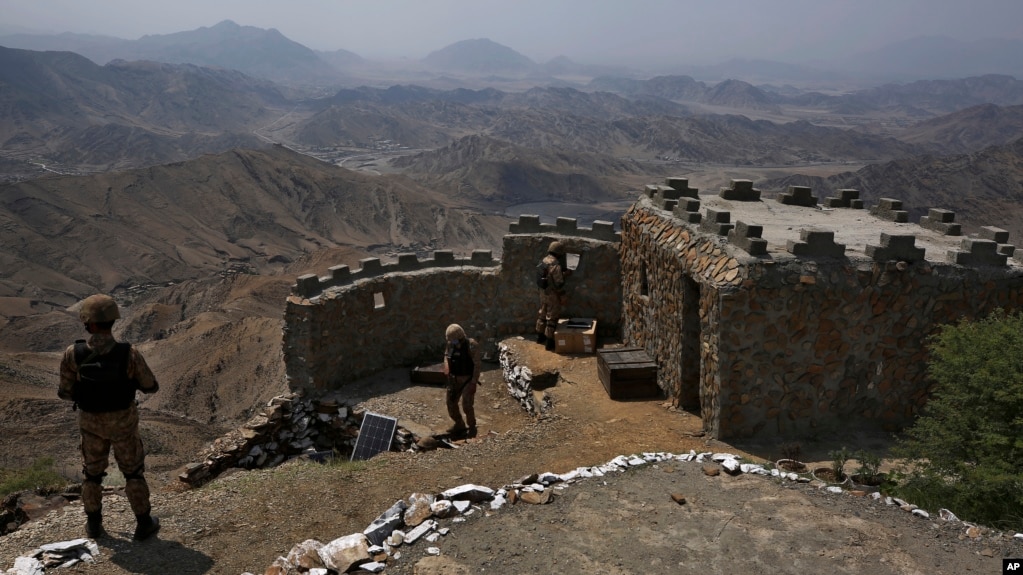
FILE - Pakistan army troops observe the area from hilltop post on the Pakistan-Afghanistan border, Aug. 3, 2021. Pakistan says increased terrorist attacks from the neighboring country are straining an already difficult bilateral relationship.
FILE – Pakistan army troops observe the area from hilltop post on the Pakistan-Afghanistan border, Aug. 3, 2021. Pakistan says increased terrorist attacks from the neighboring country are straining an already difficult bilateral relationship.
A senior Pakistani diplomat said Thursday that while the Taliban had brought peace and security to Afghanistan, increased terrorist attacks from the neighboring country threatened stability in Pakistan, putting strains on an already difficult bilateral relationship.

“Unfortunately, the peace dividends for us are missing,” Asif Durrani, Pakistan’s special representative on Afghanistan, told an international seminar in Islamabad.

He said his government was engaged in a sustained dialogue with the Taliban to seek an end to the cross-border terrorism orchestrated by fugitive leaders and militants of the Tehrik-i-Taliban Pakistan, or TTP, a globally designated terrorist organization.

“The TTP attacks on Pakistan along the borders have increased. They are taking shelter on the Afghan soil,” the envoy stated.

“I cannot blame the government in Afghanistan at the moment,” Durrani stressed. “But we as Pakistan expect that the kind of peace they have brought in their land should also contribute to peace in our borderlands, and those TTP people who are taking shelter in Afghanistan either should be returned to Pakistan or be neutralized.”

The seminar was organized by the state-run Institute of Strategic Studies Islamabad in collaboration with the United States Institute of Peace.

Surge in militant attacks

Since the Taliban seized control of the neighboring country in August 2021, Pakistan has seen a dramatic surge in militant attacks that have killed hundreds of civilians and security forces. Officials say TTP leaders and other members have moved their operation bases to Afghanistan since the Taliban takeover and enjoy greater freedom of movement there.

The rising TTP-led attacks in Pakistan are the primary source of tensions between Islamabad and de facto Taliban rulers in Kabul, amid allegations Afghan nationals have also taken part in some of the recent suicide bombings and other terrorist raids.

Last month, members of a Durrani-led delegation to Kabul were reportedly told by their Taliban interlocutors that the Afghans had captured 200 TTP members for their involvement in cross-border attacks and had taken other steps to “neutralize” the militant activity. But Pakistani officials said the measures did not lead to a reduction in attacks.

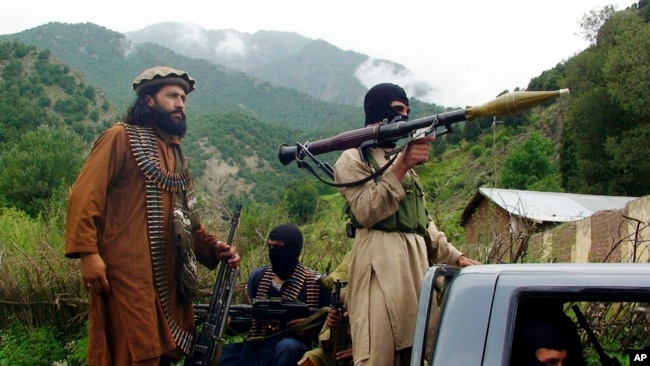
FILE - Pakistani Taliban patrol in Shawal, in the Pakistani tribal region of South Waziristan, Aug. 5, 2012. The Taliban win in Afghanistan in August 2021 has given a boost to militants in neighboring Pakistan.
FILE – Pakistani Taliban patrol in Shawal, in the Pakistani tribal region of South Waziristan, Aug. 5, 2012. The Taliban win in Afghanistan in August 2021 has given a boost to militants in neighboring Pakistan.

TTP calls itself an extension of the Afghan Taliban to Pakistan, and its leaders pledge allegiance to Hibatullah Akhudzada, the supreme leader of the Taliban government in Kabul.

This week, the militant violence prompted the Pakistani government to order all illegal immigrants, including more than 1.7 million Afghans, to leave the country by November 1 or face deportation. The Taliban decried the move and urged Islamabad to review the decision.

“Pakistan’s decision to expel Afghans is unjustifiable and inhumane, and we condemn it,” Taliban Defense Minister Muhammad Yaqoob told a graduation ceremony at the police academy in the Afghan capital.

However, Durrani said that Pakistan and Afghanistan “enjoy a symbiotic relationship” and attempted to downplay tensions as mere “rivalries between cousins” under local traditions. “But that does not mean that we have become enemies. Not at all.”

Foreign ministers meet

Meanwhile, Pakistani Foreign Minister Jalil Abbas Jilani and his Taliban counterpart, Amir Khan Muttaqi, met on the sidelines of a China-hosted international conference Thursday.

Jilani’s office in Islamabad said he “underscored that challenges confronting regional peace and stability be addressed in collaborative spirit through collective strategies.”

Muttaqi’s spokesman said the two sides had discussed bilateral trade and problems facing Afghan businessmen and refugees in Pakistan. The Taliban foreign minister cautioned Jilani that “negative media statements, hurdles facing transit trade and harassing Afghan refugees” could adversely affect mutual ties.

Pakistan provides landlocked Afghanistan access to international markets through its land and seaports.

This week, Islamabad banned more than 200 items “prone to smuggling” under its Afghan transit trade agreement with Kabul and imposed a 10% process fee on commercial goods imported into Afghanistan through Pakistan.

The restrictions have upset the Taliban, and they have urged Pakistani officials to reverse them, warning they would harm bilateral trade and transit cooperation.

Pakistan also conducts its trade with landlocked Central Asian countries through Afghanistan, and there has been a significant increase in the transit trade since the Taliban takeover two years ago.

Pakistan Turns Up Heat Over Cross-Border Attacks 
read more

Education Ministry Striving to Provide Religious, Modern Education

The Administrative Office of the Islamic Emirate said education was an issue in talks.

The Acting Minister of Education, Habibullah Agha, said at the ceremony celebrating International Teacher’s Day that the ministry is working to improve educational opportunities for students in the country.

Speaking at the ceremony, which was held at Amani High School in Kabul, the Acting Minister of Education called education a necessity for the progress and self-sufficiency of the country.

“The Ministry of Education is dedicated to providing its educational services in the areas of religious and modern education in all parts of Afghanistan in a balanced manner,” Habibullah Agha said.

Mullah Abdul Salam Hanafi, the Islamic Emirate’s second deputy prime minister, said during the event that strengthening education is one of the Islamic Emirate’s top priority. “Some parts of Afghanistan were deprived of education over the years or had neither schools nor madrasas. The Islamic Emirate of Afghanistan is trying to build schools and madrasas in all parts of Afghanistan,” Hanafi said.

The Administrative Office of the Islamic Emirate said education was an issue in talks.

“There were talks with the world regarding the relations. The negative answer of the Americans, and non-recognition, was conditional on that the education curriculum should be according to their wishes. The government did not accept,” said Noorulhaq Anwar, the head of the Administrative Office of the Islamic Emirate.

According to Mullah Abdul Salam Hanafi, the Islamic Emirate’s second deputy prime minister, during the two years of the Islamic Emirate’s rule, the Ministry of Education organized and regulated 10 million students in 18,498 schools and madrasas with more than 200 thousand teachers.

Education Ministry Striving to Provide Religious, Modern Education
read more

New Delhi Says Afghan Embassy is ‘Functioning’

Political analysts suggested that the Islamic Emirate should pursue the issue to find a solution for it.

Arindam Bagchi, spokesperson of the Ministry of External Affairs of India, said that “my understanding is that the embassy in New Delhi is functioning or continuing to function.”

This comes as the Afghan embassy in New Delhi said in a statement late September that it is ceasing its activities on October 1, 2023.

Bagchi said the Indian External Ministry is in touch with the Afghan diplomats “who are there in the embassy, as well as with the Afghan diplomats who are in consulates in Mumbai and Hyderabad.”

“However, we received communication last week … from the embassy, indicating that it intends to suspend operations at the end of September … of course such a decision is an internal matter of foreign mission,” Bagchi said.  “On our part, we will continue with our efforts to assist the people of Afghanistan.”

The Consul General of Afghanistan in Hyderabad, Zakia Wardak, and acting Consul General of Afghanistan in Mumbai, Sayed Mohammad Ibrahimkhil, met with senior officials of the Indian Ministry of External Affairs on October 3, 2023, according to a joint declaration of the consulates, which was shared by Zakia Wardak.

The statement gave details of meetings between the Afghan Consuls General and Indian officials:
–           The Indian government will not close the Afghan embassy in New Delhi and both consulates will remain functional and continue their operations for the benefit of Afghan nationals.
–           The Indian government assured continued humanitarian assistance to Afghanistan.
The declaration also criticized an “assertion” by Afghan ambassador in New Delhi Farid Mamundzai, saying that the Consulates General “unequivocally disavow and seek to clarify the assertion made by Mamundzai concerning the alleged closure of the Consulates General and other related allegations” and “it is crucial to note that Ambassador Farid Mamundzai has been absent from the Embassy for an extended period, and these decisions have been undertaken without prior consultation or consensus with the leadership of the Consulates General in Mumbai and Hyderabad.”
“These decisions appear to be motivated by personal and internal matters within the embassy,” the statement said.

Political analysts suggested that the Islamic Emirate should pursue the issue to find a solution for it.

“The continuation of the support of India from the Afghan diplomats have solved the concerns regarding the closure of Afghanistan’s embassy in India,” said Nisar Ahmad Sherzai, political analyst.

“The Foreign Ministry of India put forward two choices for the Afghan diplomats. One of them was to engage with the Taliban and accept the envoys of the Taliban,” said Sayed Noorullah Raghi, a former Afghan diplomat.

The Islamic Emirate has yet to comment in this regard but earlier said that the Foreign Ministry seeks a solution for the ongoing chaos in the Afghan embassy in India.

The Afghanistan embassy in its statement named the “key factors” affecting its ability to continue its mission effectively as “lack of support from the host government, failure to meet expectations in serving Afghanistan’s Interests.”

New Delhi Says Afghan Embassy is ‘Functioning’
read more