His alarm rings at 5 a.m. He wakes his 16-year-old brother, Arshad, and the pair arrive at Blake less than two hours later. After school ends at 2:30 p.m., wrestling practice runs for three hours. When that’s over, Shujaee works a five-hour shift at Costco. He gets home around 11:30.
On a typical night, Shujaee sleeps for about five hours. He said he doesn’t need much to feel refreshed.
The junior hasn’t had much time to rest since moving from Afghanistan 11 months ago. Shujaee works five days a week at Costco, practices wrestling for three hours a day and helps care for his three siblings. His coaches often praise his work ethic — it’s why they think he has a chance to wrestle collegiately. Shujaee hopes they’re right.
“We are new here. It’s hard to pay off our rent because it’s very expensive,” Shujaee said. “I want to be a champion in the future. … I am here to get a scholarship from a college and wrestle.”
Shujaee moved to the United States in January. His father had worked with the U.S. Army, meaning the Shujaee family — his mother, two brothers and sister — received special visas granted to those who aided the U.S. government abroad.
When he came to the United States, he brought with him a love of wrestling. He picked up the sport at 14 years old, hoping to lose some weight. In Afghanistan he practiced freestyle wrestling, the preferred international style. U.S. wrestlers use folkstyle. It is not too different from freestyle, but it is typically slower and more methodical. Shujaee said he found folkstyle easier, but he needed time to get accustomed to new techniques.
Upon arriving at Blake, he wanted to join the wrestling team immediately. But it was spring by then, and the season had just ended. Blake Coach Jim Potts connected Shujaee with local clubs, and he quickly began training at Capital Wrestling Club in Gaithersburg. Because of his unusual situation, the gym allowed him to train free.
“He was able to acclimate and learn the new rule set in a really short period of time, which I think is a testament to his athleticism and knowledge of the sport,” said Max Meltzer, co-founder and coach at Capital Wrestling Club.
Outside of the sport, Shujaee said, the biggest difference between the United States and Afghanistan is the price of goods. He could buy six pairs of shoes for $100 in Afghanistan. That barely covers a single pair of quality athletic shoes here.
Shujaee’s first meet of the season took place at the Mad Mats tournament at Magruder on Dec. 8. He used an old pair of wrestling shoes given to him by a friend. The black Rudis sneakers have small tears near the white sole. They didn’t stop him from defeating his first opponent by technical fall in just 2 minutes 15 seconds.But there wasn’t much time to celebrate. He grabbed his gray sweatshirt and rushed to an adjacent gym to cheer on Arshad, who had his first match of the day. After Arshad won, his brother was waiting with a hug.
“I enjoy having him here with me,” said Arshad, a sophomore. “He works very hard. He is really interested in wrestling and likes wrestling. He also works hard for our family.”
The work ethic that defines his wrestling skill set is the same that has him scanning the QR code on his employee ID to start his shift at Costco in Wheaton. It’s the same that helps him stock shelves through the evening.
“I can’t explain how proud I am of my son. I know he is a hard worker,” Mohammed Bashir said. “I want him to get everything he wants.”
On the second day of Mad Mats, Zahid lost in the championship round in a 12-5 decision in the 150-pound weight class. Despite his disappointment, he remains optimistic about the rest of the season. His coach shares his confidence.
“Being that it was a whole new thing and a whole different set of rules, I thought he did a great job,” Potts said.
Next year, Shujaee will be ineligible to wrestle with Blake as a senior because he’ll be 19 at the start of the season, putting him over the Maryland Public Secondary Schools Athletic Association age limit. Potts said Shujaee could become a team manager instead. He could also enroll in a postgraduate private school, allowing him to continue wrestling while also pursuing his high school diploma.
No matter which route he chooses, Shujaee knows he won’t stray far from the mat.
“This is my life,” Shujaee said. “This is something I learned. Wrestling is in my blood. I have to do this.”
After emigrating from Afghanistan, a young wrestler feels at home on the mat
An oasis stretched far into the desert, a vast sea of emerald stalks and scarlet poppy flowers that grew to the horizon.
The Taliban operated openly, running a social experiment unlike anything in the country. Tens — then hundreds — of thousands of people flocked here to escape the war and grow poppy, fleeing the American efforts to wipe out the crop.
The Taliban opened a trauma hospital to treat their wounded and earned a fortune, not just from opium, but also from methamphetamines and taxes on goods moving in and out of Afghanistan, bringing them millions upon millions of dollars every month.
During the war, this remote district became a laboratory for a future Taliban state, providing money for the war and a sanctuary for the men fighting it.
All that has changed. The Taliban boom town is rapidly going bust.
The same insurgents who embraced opium to help finance their war have put an end to it, ordering a ban that has all but cleared Afghanistan of poppy and other illicit drugs.
What the United States and its allies failed to do in two decades of war, the Taliban has managed in two years of peace. In an area where poppy once dominated the landscape, barely a stalk remains.
Hundreds of labs set up to process heroin and methamphetamines have been closed or destroyed. The drug bazaar that powered this part of southern Afghanistan has been all but emptied. And the nation, already reeling without international aid, has lost a sizable piece of its economy as a result.
On top of that, the Taliban government has stiffened its taxes, leaving residents bitter and angry. Many have moved away, except those too poor or invested to leave, like Abdul Khaliq.
“This is all coming to an end,” he said, waving his hand toward the emptying villages.
There was almost nothing in this district, Bakwa, when he arrived 25 years ago, just an empty desert plain. He built an empire out of sand, selling the pumps and solar panels that provided water for the opium boom, helping turn Bakwa into a frontier outpost for smugglers, traders and farmers.
Now his story, like Bakwa’s, has come full circle: the foreigners gone, the Taliban back in power, the earth stripped of poppy and the land returning to dust.
“It’s a matter of time,” he said.
The war in Afghanistan was many things: a mission to eliminate Al Qaeda and oust the group that gave safe harbor to Osama bin Laden; an ambitious drive to build a new Afghanistan, where Western ideals ran headlong into local traditions; a seemingly endless entanglement, where winning sometimes mattered less than not losing.
It was also a drug war.
The Americans and their allies tried again and again to sever the Taliban’s income and stop one of the world’s worst scourges: opium and heroin production.
The United States spent nearly $9 billion on heavy-handed eradication and interdiction, yet Afghanistan eclipsed its own records as the largest producer of illicit poppy in the world.
What did change was where that poppy was grown. Little by little, farmers flooded once empty deserts in southwestern Afghanistan, barren pockets of sand with almost no populations to speak of before.
Communities formed in starburst patterns along ancient irrigation lines, then moved farther into the desert to farm as they pleased. The Taliban followed, finding sanctuary in the utter remoteness of districts like Bakwa and their unnavigable roads.
At its height, the Taliban oversaw a narco-state here, a farm-to-table drug operation with hundreds of field labs processing opium into heroin and wild ephedra into methamphetamines for Europe, Asia and elsewhere. By the end of the war, Bakwa had become an entrepôt of the drug trade, home to the largest open-air drug market in the country.
The Taliban showed flexibility, too, both morally and financially. Despite banning poppy on religious grounds before the American invasion, the Taliban allowed farmers to grow as much of it as they wanted during the war.
And they taxed it loosely, often whatever farmers could afford, adopting a hearts-and-minds strategy. They also taxed smugglers, who were happy to help fund a Taliban war machine that didn’t interfere with business.
Bakwa soon became an incubator for governance. Taliban courts adjudicated all manner of disputes, while millions of dollars flowed monthly to help finance the Taliban mission beyond Bakwa and the southwest.
Western officials took aim at that money. They began with eradication, then tried persuading farmers to grow legal crops, and ended with fighter jets bombing makeshift labs made of mud.
“At least $200 million of this opium industry goes into the Taliban’s bank accounts,” Gen. John Nicholson, the U.S. commander in Afghanistan in 2017, a year of peak poppy production, said at the time. “And this fuels — really pays for the insurgency.”
But the Taliban’s customs checkpoints were just as essential in Bakwa, or even more so, taxing goods to the tune of $10 million a month or more, according to Taliban officials.
“The money from agriculture, poppy included, funded the war” in these regions, said Haji Maulavi Asif, now the Taliban’s governor for Bakwa District. “But the money from the customs operation helped fund the entire movement.”
Now that poppy has been banned, the farmers the Taliban once relied on feel betrayed, while the Taliban is trying to govern without the money it brings.
“While economically, the decision to ban poppy costs a lot, politically it makes sense,” said Mr. Asif. “We are silencing the countries of the world who say we are growing poppy and participating in the global drug trade.”
‘Desert people’ to opium entrepreneurs
When the war started in 2001, Mr. Khaliq barely noticed.
He had only recently bought land on a roadless expanse in Bakwa that cooked under the summer sun. But just beneath the surface, there was water, so bountiful that reeds grew in some areas. Mr. Khaliq, a mechanic, opened a tiny workshop to fix water pumps.
There were no phones and few neighbors back then, so when the Americans invaded, he heard about it only weeks later.
“We were desert people,” he said. “We didn’t care about the war. That was the concern of city people.”
That changed quickly. Before the American invasion, the Taliban had banned poppy production, sending opium prices skyrocketing. Now that they were gone, Mr. Khaliq switched from growing wheat to poppy.
Others soon joined, and the desert took on new hues. Bright flowers and verdant stems softened the landscape. The money was good — so good that the new Afghan government came knocking.
One day, Bakwa’s new police chief showed up to marvel at how productive Mr. Khaliq’s poppy fields were.
“I bet there’s over half a ton of opium here,” Mr. Khaliq recalled the chief saying.
“I told him it wasn’t that much, but he charged me for that amount anyway,” Mr. Khaliq said with a laugh. “And then he also asked for a bribe.”
With the Americans in control of Bakwa, eradication programs gained momentum. The district governor soon arrived with great fanfare, bringing a tractor, cameras and an entourage of police.
He gathered the farmers and announced there would be no more poppy because the foreigners were serious about getting rid of Afghan opium.
Mr. Khaliq and others watched with quiet indignation as the tractor plowed through a neighbor’s field. But after a short exhibition, the tractor stopped and a photographer was summoned.
“They took pictures of the small destroyed area,” Mr. Khaliq recalled. “Then, they took bribes and left.”
So went the early American-backed eradication campaigns in Bakwa, and the farmers adapted right away. They began pooling their money to compensate whoever’s crops were destroyed for show.
As word spread, newcomers began arriving in droves. Unfamiliar faces turned up weekly to Mr. Khaliq’s garage, dragging motors for him to fix. He stocked spare parts and water pipes, and began selling gas.
“Our business grew with the population, but we never expected it to grow so much,” he said.
The Taliban’s ‘pivot’
Mr. Khaliq didn’t care much for the Taliban at first. He found them harsh and overbearing, propagandizing about their faith while turning on the people around them.
“They were killing people and denouncing them as spies, even visitors who came to see family,” said Haji Abdul Salam, one of Bakwa’s largest landowners.
But they learned from their mistakes as they notched military gains. By 2006, a resurgent Taliban was carrying out its first major offensive since being ousted, laying waste to nearby districts in Helmand Province.
A steady stream of refugees arrived in Bakwa, and more Taliban followed, from fighters to mullahs, seeking shelter and opportunity.
“I moved to this area because it was safe,” said Haji Naim, Mr. Khaliq’s cousin, a Taliban fighter.
Bakwa turned out to be a great place to hide. The terrain was flat, making it easy to spot incoming raids. The ground was silty, which made planting roadside bombs simple. The roads meandered with such arbitrary vigor that only locals knew how to navigate them.
“There is not a single straight road in Bakwa,” said Mr. Khaliq. “If you spot a Taliban, you can’t even chase him.”
As they claimed more territory, the Taliban “learned to pivot,” said Mr. Salam, who helps oversees the main tribal council in Bakwa. “They began to prosecute their own officials and brought real justice and accountability.”
The Taliban eventually squeezed the Afghan government into a tiny corner of the district, forcing it to abandon any pretense of control over the area.
Hundreds of workers descended on Bakwa to collect opium sap each harvest, while an industry of buyers and smugglers coalesced around an open-air drug market known as the Abdul Wadood Bazaar.
The bazaar drew thousands at times, a vast collection of frontiersmen trading in illicit goods. An entire logistics network developed to serve the trade.
The Taliban ran neither the market nor the drug trade but taxed all of it.
The money added up — and caught the eye of the Americans.
Solar panels and mobile courts
Eradication wasn’t working. In 2007, the peak of the effort — with officials reporting 19,000 hectares of poppy destroyed — Afghanistan still broke a record for poppy cultivation.
Increasingly, the Americans and their allies began prosecuting a more conventional drug war in places like Bakwa, staging raids on smugglers and their networks. Violent interdiction became the norm, infuriating residents.
The Taliban, by contrast, endorsed the drug trade, at least while it was serving their interests. Though they had banned poppy before, they didn’t seem to worry much about the contradiction during the war. To the contrary, they appointed Islamic scholars who delivered sermons on the importance of supporting the jihad and expelling foreigners.
“The secret to their success was religious propaganda,” said Haji Abdullah Khan, a lifelong Bakwa resident. “People didn’t like the Taliban, but they didn’t want Christians or Jews here.”
On more administrative matters, the Taliban also assigned a district governor. Such shadow governors, as they were called, were high-value targets for the Americans and Afghan forces. But Bakwa was so safe for the insurgents that it became a magnet for senior Taliban leaders.
The Taliban established mobile courts, with judges riding around the district, meting out justice on the road. Prisoners would be locked in cars while the officiants went about their business, including the execution of thieves and murderers.
Sometimes, the Taliban would ask locals to host the courts, including Mr. Khaliq. Too frightened to refuse, he said he held more than a few on his compound, just as he sold them gas and offered them tea whenever they came through. But he never warmed to the insurgents.
Which made it all the more frustrating to him when U.S. forces, who operated out of bases in nearby areas, raided his home on multiple occasions.
“I just did what I needed to do regardless of who was in power,” he said.
A constant stream of visitors came to Mr. Khaliq’s expanding compound, which by about 2014 included new storage units, a new garage and a small kiosk selling snacks and sodas.
Lines of customers waited in his courtyard — sometimes for days — to purchase the most revolutionary piece of farming technology to emerge during the war: solar panels to run Bakwa’s ubiquitous water pumps.
“We must have sold tens of thousands of units,” Mr. Khaliq said.
The desert was transformed once more, now with the black tiles of solar setups. Water reservoirs became the norm, an incredibly wasteful method of irrigation that uses open-air pools, which evaporate quickly in the desert heat.
Newcomers claimed even more pieces of desert. The growth was so rapid that international experts on poppy cultivation, like David Mansfield, tracked it via satellite imagery, monitoring the stamps of green invading a sea of brown.
“The Americans and their allies pushed the farmers and sharecroppers into the desert, where they were greeted by the Taliban and welcomed with open arms,” said Mr. Mansfield, an analyst on Afghanistan.
By 2016, he added, more than 300,000 acres of land were being cultivated in Bakwa, a sixfold increase from 2003. The population more than quintupled to an estimated 320,000 people.
The Taliban grew with it. That same year, they finally claimed the district center in Bakwa, the last remaining symbol of the Afghan government.
The squat concrete building had been constructed with American money just four years earlier, in 2012. (Insurgents had burned down the previous one.) Once in control of the $200,000 facility, the Taliban turned it into a hospital.
“The hospital would treat 200 to 250 patients a day,” said Abdul Wasi, a nurse there. “It was a trauma center for the Taliban. Fighters from all over the region would come here.”
The local Afghan government, having abandoned the district altogether, moved to a few containers along the side of a highway.
Heroin, meth and taxes
Bakwa became a Taliban financial capital, collecting taxes like any other formal authority.
Though the American-backed government controlled the official customs checkpoints in and out of Afghanistan, the Taliban set up their own.
They placed them on highways leading to and from Iran, Turkmenistan and Pakistan, charging hundreds of dollars per commercial vehicle. The Taliban even issued receipts.
The money, estimated at around $10 million a month, overshadowed the taxes from poppy farmers and smugglers, local Taliban officials say — and it was all administered from Bakwa.
The district changed yet again. Poppy had been like an anchor tenant in a vast drug emporium. Next, labs began sprouting up to process heroin, a more lucrative venture. Those, in turn, gave way to new labs producing methamphetamines.
The labs proliferated along the edges of the open-air market. Some used cough medicine, draining amber bottles of pseudoephedrine and cooking it down. But ephedra, a shrub that blanketed the central highlands of Afghanistan, soon transformed the industry.
Hundreds of people, if not thousands, worked in the burgeoning meth trade, transporting, milling and producing the drug from the wild ephedra crop.
Mr. Mansfield estimated that hundreds of tons of meth were produced in Bakwa alone, even as poppy continued breaking records. In 2017, Afghanistan cultivated more opium than in any year since the start of the war.
The United States, desperate for a forceful response, redoubled its efforts. Fighter jets and B-52 bombers launched a two-year campaign to destroy labs across southwestern Afghanistan, including in Bakwa.
An estimated 200 labs were destroyed, many of them mud huts and lean-tos leveled by munitions that cost many times what they had obliterated. Little changed. By 2020, hundreds of labs were still churning out heroin and meth..
A drug market turned ghost town
The collapse came as quickly as the boom. One year, it seemed to Mr. Khaliq, business was bountiful. The next, Bakwa was practically empty again.
He noticed the change before many of his neighbors. Fewer customers came. Solar panel orders got smaller. Some were being canceled altogether.
It was 2019, not long after U.S. airstrikes in Bakwa killed 30 people, including many women and children, he said. Yet all anyone wanted to talk about was water.
There had been so much water, for such a long time, that no one considered it might run out. Experts commissioned by U.S.A.I.D. in 2009 had found a huge aquifer under Bakwa, one that seemed destined to last.
“I was surprised at the amount of water they had in the area,” said Darren Richardson, who had commissioned the study. “That was a significant aquifer.”
And yet, only a decade later, the water was growing scarce.
Despite the American airstrikes and water worries, Bakwa remained a center of the drug trade. Poppy had a long shelf life once harvested. Its watering needs coincided with the spring snowmelt from the neighboring mountains. The trade could hold on, residents reasoned.
But then the war ended.
The Americans withdrew for good in 2021 and the Taliban took over. Months later, the supreme leader, Haibatullah Akhundzada, declared that poppy cultivation was “absolutely prohibited in the whole country.”
The Taliban claimed to have arrested numerous traffickers, seized nearly 2,000 tons of drugs and raided hundreds of heroin labs. In 2023, the Taliban destroyed dozens of labs in Bakwa, setting them ablaze.
Where the Americans had cherry-picked from the sky, killing or injuring innocents along the way, the Taliban removed nearly every laboratory in Bakwa. The Abdul Wadood Bazaar hollowed out.
With ruthless efficiency, the Taliban did what the United States had hoped for. They got rid of poppy farming, and in doing so, severed one of their economic lifelines.
The remnants of the boom haunt the landscape: abandoned well derricks, stark against the acid sky; old food wrappers and animal droppings desiccated in vacant courtyards.
Farmers blame the Taliban for their misery. For nearly 15 years, their poppy — and the taxes the Taliban collected from it — supported the insurgents’ war to establish a government.
Now that the Taliban got what they wanted, they have forgotten the people of Bakwa who made it all possible, residents grumble. Farmers too poor to leave now send their sons to work on harvests elsewhere, renting them out as labor.
“We have no choice but to stick it out,” said Haji Hawaladar, who had moved his entire family to Bakwa, trading his herd of goats for land. Now, he added, “we could not even give this land away for free.”
The Taliban seemed to have no reservations about leaving. Today, the district is largely empty of administrators and fighters. Many have moved on to bigger roles in other places.
“This was like a test, or an exam,” said Mr. Asif, the district governor. “Trusted people got important positions. The people who did well in Bakwa were top of that list.”
In Mr. Khaliq’s compound on a recent evening, as a honeyed light washed over the desert, nieces and nephews played in the courtyard, while a son stood idly by the gas pumps, waiting for customers who never came.
A few years earlier, his grounds would have been teeming with life. Today, he is selling a tenth of what he once did.
“The only thing that might help would be growing poppy with the water that is left,” said Mr. Khaliq. “But those who tried, the Taliban came and destroyed their crop.”
A few farmers have turned their fields to wheat, and shocks of green punctuate vast brown fields. Mr. Khaliq’s neighbors have moved away, leaving him alone with his crumbling fortune.
Like others, Mr. Khaliq holds the Taliban responsible. They could have enforced water rights agreements, as exist all over Afghanistan. They could ease their ban on poppy to keep the farmers afloat.
“The Taliban did not solve the biggest issues, water and the economy,” he said.
Like others, he knows some people are still hoarding opium reserves to sell at a high price, given the ban. Prices have more than quintupled since 2021, and some are still getting rich.
But everything he owns has lost value: his land and equipment, and hundreds of solar panels that sit in tidy rows, waiting for farmers who will never come back. The barren furrows of earth swirl like fingerprints over a monochromatic desert, a reminder of what was.
“This is life,” he says. “Everything ends. I will be done one day, too. But even if this ends, somewhere else will be beginning.”
Azam Ahmed is international investigative correspondent for The Times. He has reported on Wall Street scandals, the War in Afghanistan and violence and corruption in Mexico, Central America and the Caribbean
The Once Booming Drug Town Going Bust Under Taliban Rule
Parwiz Bakhtari worked for the Afghan government before the Taliban swept to power in 2021
Living in constant fear of kidnap. Making up stories at Taliban checkpoints. Being separated from his family to be questioned.
These are experiences that Parwiz Bakhtari, an Afghan man who is being housed by the British military in south Oxfordshire, said he was hoping to put behind him.
Mr Bakhtari worked for the Afghanistan National Defense and Security Forces, a department of the Afghan government that was deposed by the Taliban in 2021.
After a “nightmare” journey into Pakistan, Mr Bakhtari, his wife and teenage daughter were finally given the protection of the British military in Islamabad, before being flown to the UK.
ADVERTISEMENT
Before the Taliban came to power, Mr Bakhtari worked as an intelligence officer for the Afghan government, working alongside British forces. As such, his job made him a high profile target for reprisals.
“We lived in constant fear that the Taliban might kidnap our family members,” he said. “My office was attacked several times.
“I was not harmed. Tragically, several of my colleagues were not as fortunate.”
More than 15,000 people were evacuated from Afghanistan in 2021 after the Taliban took control
ADVERTISEMENT
When the Taliban swept to power, Mr Bakhtari was faced with the decision to flee his home in Kabul on his own, or take his family with him and try to make it to Pakistan. He chose the latter.
“I couldn’t bear the thought of leaving them behind knowing the Taliban could easily target them,” he said.
The journey to the Pakistan border was highly dangerous. On the way, he faced the real prospect of detention at Taliban checkpoints.
“Fortunately, we didn’t have any identification documents on us,” he said. “We made up different stories at each checkpoint.”
Once they reached the border crossing, they were questioned by Pakistani police.
After being given accommodation in Islamabad by the British military, he and his family arrived in the UK.
‘Debt of gratitude’
They were resettled under the Afghan Relocations and Assistance Policy (ARAP) for Afghan citizens who worked for or with the UK Government in Afghanistan.
Operation Lazurite has seen the British army find housing for Afghans and their families, before local councils help them to find more permanent homes.
Mr Bakhtari and his family are currently staying in military accommodation in Watchfield, near Shrivenham.
South Oxfordshire District Council said its housing needs team was working with landlord to find Afghan families private rented accommodation.
Major James Cooke-Rogers, who has been part of the operation in south Oxfordshire, said: “These people risked their lives and their families lives and everything to try and support our forces.
“We owe them that debt of gratitude to look after them and provide them that safety away from persecution.”
Mr Bakhtari is now looking forward to a brighter future for his children, despite the pain of having to leave his home country.
He said: “To leave everything behind, a country that I’ve grown up in, that gave me [an] education and my wife and kids, was a nightmare.
“But now I’m lucky to be able to send my daughters to school and give them [everything] they deserve.”
The Islamic Emirate has not yet commented on the contents of this report.
The Swedish government has stated that there are “few hopeful signs” in Afghanistan’s current situation, and the country no longer receives the same level of international attention as it once did.
In a report titled “Experiences and Lessons Learned,” Sweden expressed concern about the current state of women and girls in Afghanistan.
The report examines Sweden’s engagement with Afghanistan from 2001 to 2021 and notes: “The current situation in Afghanistan shows few hopeful signs. For women and girls in the country, the situation is particularly dire. Afghanistan is no longer the object of as extensive international interest as it once was. Other international crises and conflicts are now in the foreground.”
The Islamic Emirate has not yet commented on the contents of this report.
The Swedish government, in the report, highlighted the activities of various Swedish organizations, including the Swedish Committee for Afghanistan, and mentioned that over the past 20 years, Sweden has had extensive and long-term engagement with Afghanistan, working alongside many other countries to support Afghanistan and improve the living conditions of its people.
Salim Paigir, a political analyst, told TOLOnews: “When NATO and US forces were in Afghanistan, it was natural for Afghanistan to receive special attention from those countries. But when they left Afghanistan, naturally, their interest in the Afghan people and the interim government declined.”
Najib Rahman Shamal, another political analyst, said: “We hope that the officials of Afghanistan’s interim government will take practical and necessary steps to address issues and meet the demands of the international community.”
Meanwhile, Sweden’s Ministry of Foreign Affairs has recently requested Abbas Noyan, the former Afghan government’s ambassador in Stockholm, to conclude his work in the country.
According to Abbas Noyan, his mission will end at the end of this month at the host country’s request, and the embassy’s assets will be handed over to Sweden’s Ministry of Foreign Affairs.
Sweden: ‘Current Situation in Afghanistan Shows Few Hopeful Signs’
The Islamic Emirate has not yet commented on this matter.
Matthew Miller, the spokesperson for the US Department of State, said during a press briefing that Washington engages with Afghanistan’s interim government to advance its own interests.
The State Department spokesperson told reporters: “We have engagements with the Taliban to advance United States national interests, and we have engagements with HTS to advance United States national interests, including of course finding and returning home the American journalist Austin Tice.”
Sayed Qareebullah Sadat, a political analyst, said: “US engagement with the Islamic Emirate equates to global engagement. If the US decides to recognize the Islamic Emirate tomorrow, within a week, 40 or 50 countries might recognize Afghanistan as well.”
Janat Faheem Chakari, another analyst, said: “The US and Europe, as the world’s leading powers, are capable of successfully pulling Afghanistan out of its political and economic quagmire.”
Although the Islamic Emirate has not yet commented on this matter, it has previously expressed its willingness to engage with various countries, including the United States.
US ‘Has Engagements’ With Islamic Emirate to Advance ‘National Interests’
According to the report, the approved law allows Russia’s Supreme Court to suspend the ban on groups that have been blacklisted by Moscow.
Reuters has reported that the Russian parliament passed a law yesterday paving the way for normalizing relations with Afghanistan’s interim government.
According to the report, the approved law allows Russia’s Supreme Court to suspend the ban on groups that have been blacklisted by Moscow.
Reuters stated in part of its report: “Russia’s parliament passed a law on Tuesday that would allow courts to suspend bans on groups designated by Moscow as terrorist organisations – paving the way for it to normalise ties with the Afghan Taliban.”
Idris Mohammadi Zazi, a political analyst, commented on Russia’s move, saying: “I commend this decision by the Russian parliament in the current context. It can further strengthen political and economic relations between Russia and Afghanistan and enhance political stability in Afghanistan and the region.”
Earlier, the lower house of the Russian parliament, the Duma, approved a bill on the 20th of this month, enabling the removal of the “Taliban” name from the country’s blacklist. Afghanistan’s interim government called this a significant step in expanding relations between Russia and the Islamic Emirate.
Sayed Akbar Sial Wardak, another political analyst, said: “There are many positive aspects to this. It builds political trust at the regional and global levels, which could lead other countries to make similar decisions regarding the Islamic Emirate in the future.”
Meanwhile, two Central Asian countries, Kazakhstan and Kyrgyzstan, have removed the Islamic Emirate from their list of terrorist groups earlier this year.
Russia Passes Law to Normalize Ties with Islamic Emirate
Earlier, some Iranian media outlets, quoting officials, reported that Iran has expelled over 1.5 million illegal migrants in the past year.
Zabihullah Mujahid, the spokesperson for the Islamic Emirate, urged Afghan citizens to refrain from illegal migration, emphasizing the government’s ongoing efforts to create job opportunities and improve the domestic economy.
Mujahid said: “Afghans should not try to leave the country. Many of our migrants in Iran have returned to their homeland. On the other hand, the Islamic Emirate is making serious efforts to create employment opportunities and improve the country’s economy to address the people’s economic challenges.”
Earlier, some Iranian media outlets, quoting officials, reported that Iran has expelled over 1.5 million illegal migrants in the past year.
“Over the past year, we have expelled more than 1.5 million undocumented individuals from cities and villages and started biometric and technical processes, such as fingerprinting, to prevent these individuals from returning under different identities,” the report reads.
Abdullah, a resident of Takhar province, who has been to Iran six times and faced harsh treatment before being deported, is once again preparing to leave for Iran to provide for his five-member family. Abdullah told TOLOnews: “This is the seventh time I am going to Iran. Each time, I get deported. We stay for five or six months, and then they beat us and send us back to Afghanistan. I have five children, and I am forced to go to Iran again for work.”
Fatima, a returnee from Iran, told TOLOnews: “Despite having legal documents, there is a lot of pressure. For instance, even I, who was born there, face difficulties—let alone those without documents.”
Previously, the Ministry of Refugees and Repatriation reported that more than 900,000 Afghan migrants have returned from Iran, Pakistan, and Turkey over the past eight months.
Islamic Emirate Appeals to Citizens to Stay in Afghanistan
The Afghanistan Chamber of Industries and Mines described the leader’s recent decisions as impactful for Afghanistan’s economic growth and development.
The Economic Deputy of the Prime Minister’s Office announced on Tuesday that the leader of the Islamic Emirate chaired an extraordinary meeting of the Economic Commission, where decisions were made across eleven key sectors.
The meeting addressed issues such as identifying harmful customs, establishing industrial parks, allocating land for industrialists in all provinces, reclaiming seized land, distributing land for mineral processing factories, and constructing mosques for men and women along highways.
The statement outlined the decisions made in the meeting, which have been directed to the relevant institutions as follows:
Identifying harmful customs to reduce unnecessary expenses.
Developing a comprehensive procedure for reclaimed lands and townships confirmed as government property.
Facilitating construction activities for citizens.
Allocating land for light and small industries in the capital.
Establishing industrial parks in 29 provinces.
Leasing government lands near water sources to citizens.
Submitting the plan for the Kokcha River Canal to the Economic Commission.
Preparing the plan for the Hajigak iron ore project.
Preventing the export and import of goods banned by the Islamic Emirate.
Developing mechanisms to prevent the smuggling of medicines and food items.
Abdul Nasir Rashtia, an economic affairs analyst, commented on implementing these decisions: “One of the major challenges for industrialists has been the shortage or lack of land. If this program is implemented and land is provided to industrialists, undoubtedly, many factories will begin operations, creating more job opportunities for people.”
Meanwhile, the Afghanistan Chamber of Industries and Mines described the leader’s recent decisions as impactful for Afghanistan’s economic growth and development and emphasized the need for further facilitation for industrialists in the country.
Sakhi Ahmad Paiman, first deputy of the Chamber of Industries and Mines, told TOLOnews: “This new approach can create jobs in Afghanistan. At the same time, the industrial sector is facing land and energy shortages. If these facilities are provided to industrialists, we will see significant growth in the near future.”
In Asad 1402 (July–August 2023), the leader of the Islamic Emirate issued a three-article decree emphasizing the need to facilitate the private sector, promote positive engagement with traders and industrialists, and prioritize the use of domestic products.
Leader of the Islamic Emirate Overseeing Critical Economic Decisions
When Khalid Riaz turns off a dusty, single-lane road into a village in Guzara district, half an hour south of the bustling heart of Herat city in western Afghanistan, he is immediately greeted by a group of children.
Some barefoot and sucking their thumbs, the children surround the car as Riaz begins unloading bags of flour and rice from the trunk of a blue sedan. With the help of a fellow volunteer from a nonprofit group called Aseel, Riaz carries the bags over uneven ground, walking carefully through a maze-like jumble of homes built of sand-colored mud.
Looking down at his papers to check if he’s arrived at the correct house, Riaz lowers the food packages onto the fuchsia carpet of a local couple’s living room. That day’s delivery – an emergency donation of everyday necessities like grains and cooking oil – will hopefully be enough for the couple and their three young children to survive for the next few months.
Riaz sits down to greet the couple. But before he can speak, a dozen women and children begin crowding the doorway. The mother tries to wave them away but they refuse to leave.
“Please let me register. I have nine children,” says one of the women, waving a handful of loose papers in Riaz’s face. The air is stifling as more women arrive, all talking over each other as they plead for help.
“I’m sorry, we only have two deliveries today,” mumbles Riaz, the 25-year-old volunteer, shrinking into the corner of the room.
Through Aseel, a U.S. nonprofit started by an Afghan entrepreneur, individuals can donate around $100 for a single food package to be sent to a family in Afghanistan. But there are always far more people requiring aid than individuals donating.
“I don’t want to promise something to anyone,” Riaz says. “I can’t lie to them.”“Imagine Afghanistan as a body with no part unscathed, a body completely covered in wounds. We can only bandage some parts of it.”
With Afghanistan’s economy reeling and millions of people going hungry, nonprofit groups like Aseel are trying to fill a growing humanitarian void, providing aid to destitute families.
Reuters traveled around Herat city and surrounding villages in October, accompanying non-government volunteers delivering food and visiting nutrition clinics run by aid organizations like World Vision. Everywhere, there was a sense of desperation: Mothers begging aid workers for food. Young children working physically exhausting jobs on the street to feed their families. And doctors treating malnourished children and worrying what winter will bring in remote areas where people burn cardboard boxes to keep warm.
Afghanistan under the Taliban demonstrates the vital role non-government organizations play in keeping people alive in countries stricken by hunger. Like Aseel, these groups face arduous challenges in delivering aid, especially in conflict-scarred countries where they often navigate harsh government restrictions.
Afghanistan poses special difficulties: It has been shut out of development aid, because not a single foreign state officially recognizes the Taliban administration. Its treatment of women is impeding its path to recognition, Western diplomats say. Afghanistan’s leaders have said they respect women’s rights in accordance with their interpretation of Islamic law.
Source: OpenStreetMap contributors
These NGOs are part of a sprawling global network geared to detect and fight hunger and famine. Reuters is examining how this system is faring at a time when food crises have put hundreds of millions of people at risk of disease and death in places like Sudan, Gaza, Ethiopia and Afghanistan.
More than a third of Afghans are enduring dangerous levels of food deprivation. The world’s leading hunger monitor, the Integrated Food Security Phase Classification (IPC), said in a May report that while it saw “marginal improvements” in the food situation, an estimated 14.2 million people were experiencing high levels of acute food insecurity.
NGOs are required to comply with the law, said Abdul Rahman Habib, spokesperson for the economy ministry, responding to questions on Taliban rules about women who work in these organizations. But “there are no obstacles to the humanitarian aid activities of NGOs.” Aid, he added, shouldn’t be used as “a tool to achieve political objectives.”
‘Real need’
For two decades, Afghanistan was mired in a war that ended abruptly in August 2021 when the United States made its chaotic withdrawal. Today, the country is isolated by sanctions that affect the banking system and other measures. Economic output plunged 27% between 2020 and 2023.
Billions of dollars in foreign aid for development and security were also cut after the U.S. left. That money had formed the backbone of Afghanistan’s government finances. United Nations humanitarian funding is declining, too: As of December, only 45% of the Afghanistan plan drawn up by the U.N. and aid organizations for 2024 had been funded, leaving a $1.7 billion shortfall.
Other needy places face shortfalls as well. Afghanistan is competing for donor attention as wars in Gaza, Ukraine and Sudan draw humanitarian aid.
Heading back to his car after dropping off the food package at the couple’s home, Aseel’s Riaz is followed by the crowd of women trying to get his attention.
“Please, please help us,” begs one woman dressed in a dark purple abaya.
At least the women aren’t trying to snatch the aid by force, Riaz says. Earlier this year, a few months after an earthquake had leveled homes and killed hundreds in Herat province in late 2023, angry villagers pelted Riaz with rocks when he told them to wait in an orderly line to receive their aid. It was chaotic, he says, but he can understand why the villagers acted this way.
“It’s coming from a place of real need,” he says.
Riaz was born only a few years before the U.S. invaded Afghanistan in 2001. For most of his young life, venturing outside his hometown in Herat, one of Afghanistan’s largest cities, was unthinkably dangerous. He remembers his family worrying every time his late father, an engineer, traveled to remote regions of Afghanistan to build water treatment projects during the war.
The end of the war in 2021 has made it safer for Afghans like Riaz to travel around their own country. But many of his old professors and classmates have left, pursuing education and job opportunities abroad.
“It’s a fact that no one wants to abandon their home country,” Riaz says. For those who emigrate, “it’s a choice between bad and worse” – staying in Afghanistan with all its problems or abandoning home and family.
Riaz, who studied urban planning at Herat University, dreams of pursuing a master’s degree and eventually creating a nonprofit focused on improving Afghanistan’s polluted environment. To further his education and find people who can help him with his venture, he says he may need to leave, too.
Before the Taliban returned, Riaz had taught himself how to play classical guitar and the piano using YouTube videos. Now, there are restrictions on playing music in public.
On days he’s not volunteering for Aseel, Riaz tutors students online from home. He recently discovered German philosophers.
“Now’s the time to read Nietzsche!” he laughs, explaining that the philosopher helped him find his own meaning in what sometimes feels like an increasingly meaningless world.
Male guardians
Policies imposed by the Taliban regarding women have made it more challenging for nonprofits to operate, diplomats and humanitarian officials say.
Besides barring girls from attending school beyond sixth grade and requiring women to cover their faces, the Taliban prohibits women from traveling without a male guardian. It also issued orders to NGOs and the U.N. to stop their Afghan female staff from working. The government has made some exceptions, like in the healthcare sector.
Afghanistan’s donor base isn’t expanding, and the “restrictive policies towards women and girls,” along with competing crises around the world, have contributed to a “decrease in funding,” according to Indrika Ratwatte, the U.N.’s deputy special representative for Afghanistan and humanitarian coordinator for the mission there.
The U.S. Agency for International Development says it has provided more than $2 billion in humanitarian and basic needs assistance to Afghanistan since 2021. The humanitarian crisis in Afghanistan was “a direct result of the Taliban’s draconian edicts and policies – which we condemn,” a spokesperson for the agency said.
The economy ministry’s Habib said Afghan women are involved in commercial and service-related activities “in accordance with the applicable regulations,” including health, education and banking.
On Aseel’s second delivery of the day, Riaz hangs back while Madina, a 19-year-old female volunteer, approaches a one-room house on the edge of another village outside of Herat. Madina, who prefers to go by her first name for privacy reasons, is joined by her 15-year-old brother Mohammad, who accompanies her as her “mahram,” or male guardian.
Inside the home, an exhausted mother sits on tattered carpets next to her two crying children. Flies buzz around the room and settle on empty bowls of food on the ground. The mother, a 21-year-old, lost her husband in the days following the earthquake last October when a destroyed wall collapsed on top of him. Madina fills out a form, then hands the mother an emergency food package.
Later, after she returns to a taxi idling outside the home, Madina explains that she can empathize with many of the young women and mothers she encounters because her family is also struggling.
“Like the families we distributed aid to today, we also compromise,” she says, sitting in the backseat of the taxi, squeezed in next to her younger brother. Her family can afford a few staples like rice and beans; meat is too expensive.
Madina’s father died two years ago and her mother lost her job at another nonprofit due to a lack of funding. After the Taliban returned to power, they barred girls from secondary school and Madina couldn’t finish her studies. Now, her family relies on a small stipend she receives from Aseel every time she completes a delivery.
Each time Madina volunteers for Aseel, her little brother has to leave classes to accompany her. Looking over at her, Mohammad says he doesn’t mind.
Young breadwinners
Back in Herat city, the taxi carrying Madina and her brother speeds down a busy market road. Shops filled with meat and other produce line the street. Despite the appearance of abundance, four wholesalers in Herat’s main market say sales are down significantly since the fall of the previous Afghan government.
A survey conducted by a nonprofit initiative called REACH found that more than three-quarters of Afghan families are in debt. Farmers have been hit hard by climate shocks like droughts and floods. That has hurt their ability to cultivate crops – leaving less money in their pockets. To stock up on food supplies before winter, they now must buy more on credit.
Many of these families have fled rural provinces to cities like Herat, where even middle-class Afghans have been pushed into precarity.
Nowhere is this more obvious than on the city’s streets, where large numbers of young children can be seen doing an array of menial jobs. Many are the primary breadwinners in their families.
As Madina’s taxi drives deeper into the city, more and more young boys can be seen outside, pushing carts laden with fruit, polishing shoes, or baking bread. Many have been forced to leave school to support their families. Most look several years younger than Madina’s brother.
Off the busy main road, in a quiet alley, over 20 girls sit behind neat rows of desks facing a whiteboard. The girls are all elementary school age and wear matching white hijabs as they learn Dari phrases in a small classroom. A family charity called Khana e Meher, which translates to “House of Kindness,” runs the school for young girls and boys. The charity’s founder, Abdul Qadir Salehi, is a longtime social worker from Herat.
His wife, Najiba, identifies working children from families requiring assistance, and their daughter helps teach classes. The goal of the charity, Salehi says, is to encourage the children’s families to let them study instead of work. Once they finish their studies, Salehi refers the boys to apprenticeships for skilled work like carpentry that can guarantee stability and more income in the future.
“Our role is like that of a father and mother for these children because their families don’t have anything to support them,” he says.
The children at the school fall into two categories: Those who are neglected by their parents and those who have lost a father or mother. Some of the children are still working: The girls make money cleaning houses or shelling nuts, while the boys work grinding jobs like making mud bricks for construction sites.
Even before the Taliban took power, Afghanistan had a large population of working children. But aid workers like Salehi say the number has jumped since 2021. A 2023 Save the Children survey of six Afghan provinces, which didn’t include Herat, found that more than a third of children had been pushed into work to help their families.
Inspectors from the Ministry of Labor and Social Affairs are monitoring child labor and “advise employers to refrain from hiring children for arduous work,” said ministry spokesperson Samiullah Ibrahimi. Repeat offenders are “referred to judicial authorities.”
While there are more children in need of help, donations to Salehi’s charity have fallen. Middle-class Afghan families can no longer afford to be generous, he says. Women and men who used to live comfortably off jobs at international nonprofits or had other employment and income can no longer provide support. Before 2021, Salehi’s school enrolled 90 children. Now, with donations down, he can support 60.
Najiba, dressed in all black with a surgical mask hiding her face, listens to her husband while a young boy lingers next to her skirt. The boy, named Omar, was shining shoes and collecting trash on the street when Najiba noticed him walking with a limp.
“This little one, his father was killed, and he’s the oldest in the family,” Najiba says, squeezing the boy’s shoulder. At 11, Omar is his family’s only son and the sole breadwinner for his mother and two sisters.
Like many others, Omar’s family moved to Herat from a province in northern Afghanistan two years ago.
Omar would take home 40 or 50 Afghanis (about 60 to 70 U.S. cents) after working a full day on the streets, barely enough to buy a few pieces of bread for his family. When Najiba offered to enroll him in the school program, Omar was elated but explained he couldn’t attend because of his responsibilities.
“I asked him, ‘Do you go to school, son?’ and he replied, ‘No, I don’t go to school because if I do, who will provide bread for us at home?’”
When Najiba visited Omar’s home in a particularly impoverished area of Herat city, his mother was using street trash as kindling to bring water to a boil. The family’s only food was bread and tea, Najiba says, pausing to wipe away tears.
In the past, the Salehis were able to distribute food to families of the working children twice a month but they now only give out food once a year as they don’t have enough donations. Providing lessons and a haven for children is what they can offer now.
“It’s the smallest service we can do for our country,” says Abdul Salehi, her husband.
“Imagine Afghanistan as a body with no part unscathed, a body completely covered in wounds,” he says. “We can only bandage some parts of it.”
Salehi unlocks his phone to show a stream of desperate messages from people asking for assistance.
“In Israel and Palestine there’s a war, where we see blood being shed,” he says, tucking his phone away in his jacket pocket. He pauses and swallows.
But the suffering of the Afghan people is invisible, he adds.
“They are suffocating and dying from poverty, yet, unfortunately, the world doesn’t see it. It’s like we’re experiencing the end of the world.”
Malnourished children
The U.N.’s World Food Program, a major food aid distributor that plays a vital role in Afghanistan, says a lack of funding means it will reach just over six million hungry people this winter with emergency food aid – less than half of those who need it.
Among children, malnutrition is on the rise. An estimated 2.9 million Afghan children will suffer acute malnutrition in 2024, according to the Humanitarian Response Plan for this year. Another 570,000 children are expected to become malnourished next year, according to Harald Mannhardt, the WFP’s deputy country director for Afghanistan.
Doctors at remote clinics run by international nonprofits are among the first to catch the most desperate cases.
Just a few minutes outside of Herat city, crowded markets and leafy boulevards give way to vast skies and sand-colored dwellings that look as though they’re carved into the arid landscape. Goats and sheep roam over desert terrain that resembles the rocky surface of Mars.
About two hours drive along the wide asphalt road that connects Herat to the Turkmenistan border is a health clinic called Yaka Dokan. It’s run by World Vision, a nonprofit active in Afghanistan for over two decades. The clinic, housed in several adjoining white shipping containers, serves 16 villages with a combined population of 5,400 people. It sees up to 150 patients a day, mostly children.
One weekday in October, more than an hour before the Yaka Dokan clinic is scheduled to open, a dozen women in billowing black burqas wait outside the gates. They huddle against the white wall circling the clinic, trying to shield their children from the bitter wind. By the time World Vision doctors drive up to the clinic in their minivan, more than 20 women and a dozen of their male guardians are assembled outside.
A few minutes after the clinic opens, dozens of women with babies and toddlers are queued up outside the office of Gulnisa, a 28-year-old doctor who serves as a community nutrition promoter for World Vision. Gulnisa and the other doctors interviewed for this story asked that only their first names be used, in line with the media policies of their organizations.
Wearing a white coat and a tartan scarf to cover her hair, she begins pulling out worn notebooks. A mother cradles a nine-month-old baby while another child sits quietly beside her.
Gulnisa instructs the mother to roll up the baby’s sleeves so she can use a color-coded tape to measure the boy’s upper arm. The baby begins to wail loudly as the doctor helps the mother lay him on a small scale. A wooden measuring device is then used to check his height. Once the boy is back in the mother’s arms, Gulnisa carefully touches his feet to see if there is any swelling visible on his limbs, an indicator of acute malnutrition. The doctor checks the measurements against a chart, which helps her determine whether the boy is malnourished.
The baby is too small for his age and is on the cusp of moderate malnutrition, Gulnisa tells the mother.
“He cries day and night and doesn’t sleep,” the mother says as she tries to hold the wiggling child in her arms. They have traveled from a village several hours away.
“Auntie, come sit down,” Gulnisa says, waving at a gray plastic chair. “Is he breastfeeding?”
“I give him goat’s milk,” the mother says in a tired voice.
“Why not breast milk?” Gulnisa asks. Informational posters about basic hygiene and the myriad benefits of breastfeeding cover the doctor’s walls.
“How can I? I have no milk at all,” the mother replies.
The doctor hands the mother a plastic bag with 15 sachets of therapeutic food supplements. Leaning over her desk, she demonstrates how to knead the small red and white sachet before cutting it open to squeeze out the supplement.
“Before giving him the food, you need to wash your hands with soap. Not only your own hands, but you must also wash your child’s hands,” Gulnisa says, explaining in detail how to also try and feed the boy soft foods like porridge.
“You must also collect the packaging and bring it with you when you come back. Every 15 days, which is two weeks later, you should come here on a Wednesday,” she says. “What day should you come? How many days later?”
“After 15 days,” the mother repeats after her.
“You must give the food only to this child and no one else, understand? Who should you give the food to, Auntie?”
“This child,” the mother replies.
If doctors were to screen an average of about 50 patients in a day, they’d find 20, sometimes 25 cases of moderate malnutrition, says Nisar Ahmad, another doctor at the clinic. An additional 10 patients or less would have severe malnutrition. Of those most severe cases, three or four of the children will have complications caused by a lowered immune system that need to be referred to a larger hospital.
“The situation is moving toward a crisis,” says Nisar Ahmad, 31.
Both doctors worry about what the winter will bring. Gulnisa spent last winter working in an even more remote clinic several hours northeast of Herat city. She says many families in far-lying villages there only had dry bread or potatoes to eat.
“In the villages where we work, things have gotten worse,” Gulnisa says.
Since the Taliban returned to power, the number of sites treating malnutrition has quadrupled, health ministry spokesperson Sharafat Zaman told Reuters. “We are fully prepared for this winter,” he said.
‘We have nothing’
When doctors at rural clinics like Yaka Dokan find a child suffering from severe malnutrition with medical complications, they are referred to the Herat Regional Hospital, where medical charity Médecins Sans Frontières (Doctors Without Borders, or MSF) operates a pediatric emergency room, an intensive care unit and an inpatient therapeutic feeding center.
On a late October day, the hospital, which stands behind a brick and concrete gate in the center of the city, is a hub of activity. Women and children pace around the parking lot, walking past rows of tents set up by families who cannot afford to stay elsewhere while their child receives treatment.
Inside, MSF doctors rush around the intensive care unit and adjoining feeding center, where dozens of babies and toddlers lie in cots next to concerned mothers and grandmothers.
Sediqa, an MSF doctor who works in the emergency room, says the number of patients with severe acute malnutrition and other complications is increasing daily. These children, most under two, have chronic conditions like congenital heart disease and neurological disorders, as well as severe issues like pneumonia, measles or sepsis.
Some of the children require surgery or other treatments that aren’t readily available in Afghanistan. Those with congenital heart defects in the MSF-supported pediatric department are usually put on a waitlist for surgery. In early November, 41 were awaiting cardiac operations.
“The capacity of treatment and surgery is low, so we have lots of patients who are dying while they are on the waitlist,” Sediqa, 26, says.
She makes her rounds in one of the wards of the therapeutic feeding center, where four babies lie in their cots. She leans over one, a two-and-a-half-month-old called Haliza, who balls her fists and cries when the doctor carefully lifts her yellow lace dress to check her heartbeat. A tiny breathing tube sits under her nose.
The baby’s grandmother, who has traveled eight hours by bus from rural Farsi district to bring Haliza to the hospital, says the girl is suffering from pneumonia and convulsions. Gaunt and clad in a floor-length black abaya, the grandmother says it’s the second time the baby has been admitted to the ward for malnutrition.
Last time, Haliza spent 19 days here, she says.
Looking over at the hospital staff, the grandmother says her seven-year-old niece back in the family’s village is also malnourished.
“We took her to the doctor many times, but she still hasn’t recovered,” she says. “You must help,” she says, with more urgency. “We have nothing.”
In aid-starved Afghanistan, relief workers fight a forgotten hunger crisis
House prices and rents in the Afghan capital are on the rise again, according to estate agents and tenants. There was a sharp decline in both prices and rents when the Islamic Emirate of Afghanistan (IEA) took power in August 2021. Now, people who need to move are discovering just how difficult it is to find a place they can afford to live in. AAN’s Sayed Asadullah Sadat and Kate Clark have been speaking to real estate agents and tenants, finding out why rents and property prices plummeted in 2021, why, in 2024, they are again on the rise and how this is affecting the citizens of Kabul.A view of Kabul city centre, with unplanned houses perched on the mountain slope of Koh-e Asmai/Asamai (aka TV Hill), comprising the western side of the Deh Afghanan neighbourhood, and upscale projects in the background. Photo: Fabrizio Foschini, 2012
I’ve been living in rental houses for 30 years. I’ve never faced such a situation before. It’s hard to find a vacant house in Kabul. If you do find one, someone has already reached an agreement with the owner to rent it. Rahmatullah has rented his four-room home in the Yekeh Tut area in district 9 (PD9) of the capital since the 2021 takeover. He was paying 5,000 afghanis (USD 73) a month, but the owner recently more than doubled the rent, putting it up to 12,000 afghanis (USD 176). He has been looking for another house to rent at a more reasonable rent, but is finding that his landlord’s deal is probably the best on offer:
I have to leave this house because I can’t afford it. It’s been a month since I started looking for another house, but I still can’t find one. I went to many property dealers. There are houses with very high rents. Wherever you go, you can’t find four-room houses with rents lower than 16,000 [USD 235]. During the Republic, I also lived in a rental house. I used to pay 7,000 afghanis [USD 100], but it’s now 12,000 afghanis [USD 176].
Rahmatullah even tried to fund a home with a gerawi mortgage,[1] but found they were too high as well. His experience is typical, according to other tenants and estate agents we interviewed. Aminullah, an estate agent in Qala-ye Fathullah in PD10, said that under the previous government, “the price of buying, selling, rent and mortgage in this area was high,” but prices “dropped to unprecedentedly [low] levels,” with the change in government. The fall of the Republic was accompanied by the mass emigration of Afghans with links to other countries: according to The New Humanitarian, around 124,000 Afghans were evacuated from Afghanistan on or just after 15 August 2021 when the Taleban re-took power. More left later or considered trying to leave (see also BBC report here). Those leaving “sold their houses for half the price,” said Aminullah, “and that reduced rents and mortgages.” Another estate agent, Sayed Hamidullah, in the Kart-e Naw area in PD8 also said that, in the central areas of Kabul, such as Shahr-e Naw, Qala-ye Fathullah and Taimani, many NGOs run by foreigners who had paid high rents, closed, again dampening the market.
In the first year after the takeover, Hamidullah also remembered that some people with two or three houses feared the new government would take or destroy their properties, so they sold them at low prices. At the same time, people in Kabul who had money were reluctant to buy property because the future was uncertain. People worried that the economic situation would worsen, he said, or there would be war. House prices fell, as did rents.
Tenants were delighted. Kabul resident Harun told Tolonews on 15 September 2021 that he was glad the exorbitant rents of the Islamic Republic were over: “I have lived in a rented house for 20 years and was paying 10,000 afghanis [USD 145] for a three-room house. I am very happy that the rent of the house has now been reduced to 5,000 afghanis [USD 72].”
Map of Kabul with police district boundaries marked. Source: iMMAP for AAN, 2018
Estate agents were less happy. Immediately after the takeover, reported Pajhwok, their business came to a standstill. Rents for an average three-room house, one broker told the news agency, were down by a third, from 300 USD to 200 USD: “Overall,” he said, “there is no business, no one rents a house, no one buys it.” In early 2022, estate agents reported that rents, prices and mortgages had fallen by more than 50 per cent in the previous six months (see Pajhwokreporting).
The new rents
The tide has now turned well and truly. Estate agents supplied us with rental price increases that they have witnessed:central districts, such as Shahr-e Naw, Qala-ye Fathullah, Kart-e Char and Kart-e Naw, they say, have witnessed a 40 per cent increase in rents this year, they said, while in the suburbs of Kabul, rents have increased by 20 to 30 per cent. Demand also varies within neighbourhoods. Estate agent Aminullah said demand was still low for renting or buying big houses in his neighbourhood of Qala-ye Fathullah, but the market was hot for small houses, leading to a hike in prices for these dwellings (see also this online property dealer website). Another estate agent, Sayed Hamidullah, in the Kart-e Naw area in PD8, described the increase in the price of land and housing in Kabul as unprecedented. “In some areas,” he said, “prices are increasing to such an extent that ordinary people and even the middle class are unable to buy. Selling and buying lands in these areas is only for the rich and high-ranking government officials” (see also RFL reporting).
One broker gave some average rents to illustrate the general fall and rise – see the figure below.
Average rents and real estate prices in Qala-ye Fathullah and Kart-e Naw since August 2021, in USD.
The shooting up of rents and prices has made life difficult for many. Mursal, who lives with her husband and only child in a rented house in Kart-e Naw in the 8th district of Kabul, said that at the beginning of Islamic Emirate rule, she was paying 6,000 afghanis (USD 85) in rent, but now the house owner has increased the rent to 9,000 afghanis (USD 135). Looking to see if she could get a cheaper rent if she moved, she said: “Wherever you go, you can’t find a two-room house to rent for less than 12,000 afghanis [USD 171] and apartments aren’t so cheap either.”
Another resident, Ahmad Shah, who rents an apartment in Stanakzai Mina in PD8, said the rent rises “have made life difficult for those who don’t own a home,” but “whatever rent the owner asks for, you need to pay it.” Recent rises have been crippling, he said, a three-room apartment renting for less than 200 USD three years ago is now going for 300 USD. “There is no authority to control apartment rents in Kabul,” he complained and stressed that the hikes have added to the struggles many people have to afford basic necessities. He also said that for those with roots in the countryside, going home is also not the safety net it used to be:
We don’t know where to go. … It used to be good that when there was no work in the city, you’d go to your village and work on the farms, but now there’s no [work] in the villages either – there isn’t enough water to irrigate the lands. The economic situation of the rural people is very bad. Here, if there’s nothing, a dry piece of bread can be found. At least, if there’s no work, we can sell plastic bags to get a piece of bread, but in the countryside, there’s nothing.
Rahmatullah, who lives in the Yekeh Tut area, is a hawker supporting a family of seven and is no longer allowed to sell goods inside the city. He said he is squeezed from both sides by high rents and little earning potential:
We are confused and don’t know what to do. Food prices are very high, but rents have also got so high … [how] should we pay the rent and have something to eat? I earn 100 to 200 Afghanis [USD 3] a day and use it all for daily expenses. At the end of the month, I’m in debt for the rent. Right now, I’m in debt to the landlord for three months. I don’t know where I’ll find the money. The landlord has told me to leave the house because the rent’s increased to 12,000 afghanis [USD 171]. The government neither controls house rents nor does it allow hawkers to work in the city, but beats them [if they do]. What can we do? Where can we go?
Tenants under particular pressure – those whose homes have been demolished
In October 2022, the IEA established the Land-Grabbing Prevention and Restitution Commission within the Ministry of Justice. Its purpose is to investigate past grabbing of state land and reclaim it. (For a December 2023 overview of how the commission works in different cities, including Kabul, see AAN’s ‘Land in Afghanistan: This time, retaking instead of grabbing land?’). The decree that established the commission demanded that homeowners living on usurped land now rent what had been their property from the government; this was the case even if they had bought the land in good faith. Others, however, have seen their homes demolished. This was the case if the municipality decided the land was needed for expanding roads. Some of those who have lost their homes had lived in their houses for many years and have been left without shelter. Moreover, not all who lost their homes to the commission were compensated, which makes moving all the more difficult.
One Kabuli to lose her home is Sahar. She was widowed in one of the suicide attacks that struck Kabul during the Republic and now heads her family – four little girls and her elderly parents – in the Hawa Shanasi area near Kabul Airport in PD9. Her father, she said, is very old and can no longer work and his government pension has stopped. She also lost her office job with the coming of the Emirate. They now have no income – and no home. Last year, she said the municipality destroyed the home her family had lived in for 40 years because of road development:
At first, the municipal officers came and told us that the government was obliged to pay us to cover the cost of our house and land. They asked us for property documents. When people presented the documents of their houses to the Kabul municipality, they reviewed and checked them and then said: “The land belongs to the government, so we won’t pay you anything for it. We’ll only pay you for the house you built there.”
Exacerbating all her difficulties was the extremely tight deadline they were given to evacuate their homes – just 15 days – and the fact that hers was one of more than 500 households who had been living in the neighbourhood, all needing to move. (The municipality said it gave them six months to leave.) “There were just no houses in our area to rent,” said Mursal, “or the rent was excessively high.” For a whole month, she said she went from street to street and house to house, looking for an affordable house to rent, but could not find one.When the deadline was over, she said she tried to get the municipality to give her a stay of execution, but they refused. She had gone, in a matter of days [or weeks], from homeowner to homeless and in desperate need of somewhere, urgently, to rent:
Eventually, I found a two-room, mud-built house in a remote area at a high rent. Such a house would not have been rented for more than 2,000 afghanis [USD 28] during the Republic, but I had to pay 5,000 [USD 71]. I had no choice. Even then, the owners said they’d only rent us the house if I paid six months’ rent in advance. I begged them to accept two months and finally they agreed.
All 500 families made homeless, she said, were like her own, poor people who had lived in Hawa Shanasi for a long time and built their houses with a lot of difficulty. She asked the officials about the promised compensation, she said: “They told me, ‘We don’t have any budget now. When there is money, we’ll give it to you.’ … Now I’m wondering what to do. I’m a widow and in charge of my family. There’s no man in our family to work.” Sahar and her family have had to move twice. She was evicted the first time because she could not pay the rent and did not have the proper paperwork (more on this below). Her children, she said, now have to go without enough food because they have to prioritise the rent.
Another interviewee, Sayed Ikram, who was also living in Hawa Shanasi and saw his home destroyed, said that, according to the law, the municipality must pay compensation first, before it demolishes people’s houses. (According to Articles 2 and 8 of the Kabul municipal law, the municipality must pay and acquire property first, and then it can start the demolition.) Ikram complained that acquisition forms were not given out properly: some people received them and some did not, but even those who filled out the forms have yet to be compensated. Even so, the municipality went ahead and destroyed their houses.
In his case, he said, people were given neither enough time to move nor paid what was owed them. “Our request,” he said, “is to receive the money or land they promised us as soon as possible so we can use it to support our lives or buy a house elsewhere.”
Ikram and Sahar appear not to be alone. Other residents have spoken to the media about unpaid compensation (see, for example, Tolonews report here). However, a representative of Kabul municipality, Nematullah Barakzai, pledged that all those who were eligible for compensation would be paid in full. “Over the past year, during 2023, 2,398 properties have been expropriated, and compensation for more than a 1,000 of these properties has been paid out … [with] more than 1.5 billion afghanis already distributed to the people. We have also allocated another half a billion afghanis for this same purpose,” he said during Kabul Municipality’s 2024 accountability session on 12 September.[2] He did, however, stress:
If the land is government land, it’s undoubtedly the government’s property and cannot be acquired under any circumstances. In special cases, if necessary, payments will be made to those whose houses have been damaged. If the land’s private, apart from paying for the building, compensation is also given for the land.
Why are rents and house prices increasing?
Supply and demand
In Afghanistan, there is no rent control – something many interviewees, like Ahmad Shah and Rahmatullah above, complained about. Property dealer, Haji Baryali, of Qala-ye Fathullah in the 10th district of Kabul city said there was nothing estate agents could do about rising rents either:
House rents have been increasing every year. The owners set the rent as they wish and no government body has the right to interfere. Property dealers have nothing to do with this either. They only have consulting roles and sign contracts between landlords and tenants according to the law and real estate policy.
Instead, the market – supply and demand – determines real estate prices and rents. Demand for homes in the capital has surged, said Barylai, because more Afghans want to live in the city – and that is a long-term trend:
More than 70 per cent of the people who fled Afghanistan to neighbouring countries in the 1980s and 1990s were rural people. But [in exile], they lived in cities, in urban areas, and when they returned to Afghanistan, they started living in cities here. Some people still living in the [Afghan] countryside have also moved to Kabul city, which has also pushed rents up.
Baryalai said that migration to Kabul was again pushing up demand for houses. Baryalai and many other interviewees pointed to a surge of people, including Taleban, coming from the countryside to the cities. Sayed Hamidullah commented that “people are trying to come to the city and live here because there’s no work in the provinces and rural areas. Their economic situation is very bad. They have come to the city. Everyone is busy in the city trying to find something for their family to eat.” There are also returnees forced to leave Pakistan who are coming to Kabul (almost three-quarters of a million in the year up to the end of September, according to the International Organisation for Migration, IOM). One contact pointed to another trend, of Afghans living abroad who have second passports returning.
All interviewees, including Baryalai, pointed to Taleban employees and “the new authorities” coming to live in Kabul as another factor pushing up demand for housing and contributing to the hike in rents. Estate agent Aminullah said: “Most Taleban authorities have two, three or even four wives and they rent a separate house for each,” driving up rents more generally, he claimed, and driving down supply. Mursal said the Taleban “pay more rent than other people and therefore rents have gone up again.” Rahmatullah in Yekeh Tut area in PD 9 also claimed that Taleban are bringing their families to Kabul and “can pay high rents, but we are jobless, so how can we pay rent and provide for our families?”
Estate agent Aminullah said that, in general, following the first bleak year after the takeover, the economic outlook had improved and rich people had begun to invest again. Most of the NGOs also resumed their activities, he said, and houses that had been empty, especially in Qala-ye Fathullah, Shahr-e Naw, Wazir Akbar Khan and Shirpur, were now rented. All this drove up property prices and rents.
Bureaucracy makes it harder to move
Ahmad Shah also pointed to another driver of the rent rises. More stringently enforced bureaucracy was making it more difficult to move, so once a person was in a house, they would swallow rent increases rather than try to find a cheaper home to rent:[3]
To rent a home, you have to have a passport-e sahawi or you have to apply for one, and two people have to guarantee you and you have to give it to the relevant police district and the property dealer. If someone doesn’t have a passport-e sahawi, they can’t rent a place to live elsewhere. That’s why many people don’t move. They keep living in the same house even if the rent is very high. Once someone rents a house, they don’t leave it. Because if you move to a new area, you must bring a guarantee from the house-owner where you used to live and the wakil-e guzar [head of the neighbourhood] and police district should confirm you lived in that area and that you didn’t commit any crime there.
There is also another form for changing your location, with permission from the police district. The relevant district and the wakil-e guzar must confirm that you’ve lived there and for how long. They must also confirm that you haven’t committed any crime. You also need to explain in the form why you want to leave that area and this too has to be confirmed by the old police district and the wakil-e guzar. After that, they will send your form to the wakil-e guzar in the new area where you want to live.
The passport-e sahawi system also existed under the Republic, but was not implemented so seriously. Ahmad said its rigorous implementation has “created a lot of problems for people. On the one hand, there’s unemployment and on the other hand, there are high house rents, these relocation forms and the challenges of getting guarantees – it’s all very hard for people.”
This system hit Sahar badly. She was forced to leave the neighbourhood where her family had lived for four decades and everyone knew them and then move twice, needing a new passport-e sahawi each time: “It’s very problematic because if you move to an area where you don’t know anyone,” she said, “they don’t guarantee you and you can’t rent.”
Demolitions, the Kabul master plan and supply-side problems
After the IEA established a special court in 2022 and banned construction on state land, many settlements built during the Republic, as well as land that had been seized and sold to the people by powerful figures in the past, were declared state-owned (read examples of rulings here and here). The IEA appears to have different responses to this in different areas. It has rented some houses back to their old owners, while destroying some houses built on state land. (It should be noted that the Amir has also reserved for himself the right to give away state property, including land and property.)[4]
The demolition of homes built on state land may also be affecting the supply side of housing in the capital. According to Kabul Municipality representative Barakzai, the municipality has expropriated almost 2,400 properties in the past year. Whether these were also destroyed or just taken over and rented back to the old owners, as the decree setting up the land-grabbing commission demands (text here), he did not say (see his interview with Salam Watandar here).
Demolitions may only hurt the total supply side of housing marginally, but can still be significant locally, especially in working-class neighbourhoods, as in Sahar’s case. Key neighbourhoods affected by demolitions are Qasba in PD15, Sar Kotal-e Khairkhana in PD17, Hawa Shanasi in PD9), Kart-e Naw in PD8, Dasht-e Barchi in PD13, Kot-e Sangi in PD5 and Kompani in PD5. However, one of the most upmarket neighbourhoods has also come under the commission’s scrutiny. In late November 2024, it declared that more than 60 hectares had been declared state land in Shepur, according to media, including Ariana News. “The Islamic Emirate claimed,” reported Ariana, “that no documentation had been provided by occupants to prove private ownership of the parcels of land and instead the area had been developed ‘arbitrarily and against planned designs.’”
Sherpur was where then Minister of Defence Fahim Qasim ordered the bulldozing of poor people’s homes built on ministry land in 2003 and then redistributed plots to commanders, cabinet ministers and other well-connected individuals, about half of whom were from his faction, Shura-ye Nizar, which had captured Kabul in 2001.[5] It was in one of the mansions built on this land where al-Qaida leader Aiman al-Zawahri was living when the United States killed him in a drone attack on 31 July 2022 (see AAN reporting here).
Estate agent Aminullah in PD 10 said the commission’s actions and orders were having an impact on the housing supply, and not just because of the demolitions. All real estate brokers have been banned, he said, from buying and selling land and houses built on what the land-grabbing commission has decreed is usurped state land. No real estate agent is allowed to buy or sell houses in areas that are not in the municipality’s master plan (see Fabrizio Foschini’s backgrounder on the Kabul master plan ‘Kabul Unpacked: A Geographical Guide to a Metropolis In The Making’). The strict adherence to the Kabul master plan, said Aminullah, has implications for the housing supply, as it was pushing down the supply and helping to drive up rents and prices.[6] Estate agent Hamidullah, in the Kart-e Naw area in PD8 of Kabul agreed:
Kabul municipality doesn’t allow building houses in areas, which are not in its master plan. In the past, people used to build houses in those areas and there were a lot of one-storey buildings and families were living there. Then, when their family members were increasing, they were either getting separated and living in different houses or were changing their old houses to two-storey buildings. However, now no one has the right to build or construct anything. Only the people who live in areas that are based on the master plan can build houses with the permission of the municipality. Otherwise, they can’t build until further notice. This also caused the prices of houses and rents to increase.
The municipality’s policy was outlined by Kabul Municipality representative Barakzai at a press conference on 5 August 2023, that the municipality was indeed preventing the construction of homes and other development in the state land or area. He added: “Construction is ongoing in Kabul City, but the municipality does not allow construction on government and usurped properties, as well as unplanned areas.” (Kabul Municipality’s reports can be read here and here). Barakzai, speaking to RTA on 20 November 2024 about road and house-building, also outlined the procedure for those wanting to build:
First, permission should be obtained from Kabul Municipality.Second, the land should be specified where it is, whether it is government land or private and if it is in a green area. Then, the municipality will allow him to work and the person can builda house there. If it is government land or a green area, the municipality will never let any construction there.
Kabul municipality has pushed back on criticism, including in apparent response to a hard-hitting 18 November article in The Guardian alleging that Kabul’s ‘regeneration’ programme had made thousands of people homeless and had an ethnic bias. In a series of tweets published on 24 November, it insisted that compensation was being given and proper procedures followed: “The citizens whose properties are being purchased for new road building projects are also notified by Kabul Municipality to complete the administrative stages of their paperwork as soon as possible,” it said, “and to contact Kabul Municipality to claim their rights.” It described the municipality as “a vast service-provider administration that implements its objectives in accordance with balanced development principles” and said that Kabul is the “home of all Afghans.”
Conclusion
In 2021, the Islamic Emirate took over a capital city that, in terms of houses built legally, was a mess. According to estimates by the World Bank, already in 2004, informal settlements, that is, houses built outside of the master plan and in most cases on state-claimed land, accounted for 70 per cent of residential areas and were where 80 per cent of the population in Kabul. The Republic neither tried to demolish them nor discouraged new building, which in fact continued up to 2021. Nor did it recognise residents’ legal ownership or uniformly expand public services (including healthcare, schools, sanitation, transport) to those areas. This knotty problem was widely perceived and debated already under the Republic, but attempts at addressing it were frustrated by the rivalry between the Kabul Municipality and the Ministry of Urban Development Affairs, the economic interests of powerful actors and the difficulty of coping with the high numbers of returnees and new urban residents.[7] It is possible, then, that the amount of land in Kabul that the land-grabbing commission has thus far declared to belong to the state, on which properties may or may not then be demolished, is the tip of an iceberg.
The informal settlements have compounded Kabul’s sanitation and transportation problems because the settlements were allowed to expand without the municipality providing services. It seems the IEA is keen on tackling transport, at least as far as building roads, which have been the driver of most of the demolitions so far.
Even so, the land-grabbing commission’s actions and orders are but one factor, and not the most important one, driving up the cost of real estate in Kabul. Increased demand for urban housing, hottest in the Afghan capital, is outpacing supply, pushing up house prices and rents. At the same time, bureaucratic procedures are exacerbating the tendency of sitting tenants to try to stay where they and accept any rent increases because moving is so difficult.
As rents and house prices have skyrocketed, anxiety is growing among many citizens: How can they pay the rent and feed their children when paid work is scarce and living expenses are soaring? Kabul Municipality insists that “Afghanistan is a unified nation, and Kabul City is home to all Afghans.” This, however, stands in sharp contrast to the realities faced by the city’s poorest residents. For them, the gap between the haves and the have-nots in Afghanistan’s capital seems to be widening, and their voices are yet to be listened to.
Edited by Roxanna Shapour
References
References
↑1
Gerawi is an agreement whereby a person pays a large amount of money to the house owner for using his or her house, for example, for a year and the house owner repays the money if the person leaves the house after a year.
↑2
More recent figures have come from the head of Kabul Municipality’s Acquisition Department, Abdul Matin Hanif, who tweeted on 24 November that the mmunicipality “has disbursed around AFN 2 billion (USD 28,985,507) to the 2000 residents whose properties have been acquired over the last three years, and this number is expanding on a daily basis.”
↑3
Ahmad Shah refers to a passport-e sahawi, (seen here). It is a form which wakil-e guzars and property dealers give to residents [or people moving] to fill in and submit to their district police station. Only after receiving the form back will the owner or property dealer rent out the home. The form shows the logos of the Ministry of Interior, Kabul Municipality and General Department of Intelligence and is in three parts: the house owner must enter his or her name and all the details of the house address in the first part; the tenant must enter their name and the details of any family living with them; and two personal guarantors for the tenant must sign the third part.
↑4
In October 2021, the amir banned land-grabbing for a second time (for land whose ownership was unclear). The decree also said that the amir, “Based on necessity and expediency, can give [such land] to a member (of the Muslim community) as property.” The decree drew a parallel with what it said was the amir’s right to “withdraw from the public coffer [bait ul-maal]” and presumably give money to someone, again because of expediency. In March 2023, the ban on officials selling land, or transferring land to individuals or corporations, was repeated, unless there was a specific decree from the amir (for the texts of the decrees up to March 2023 and an accompanying report, (see here and here).
↑5
The opulent homes built on the seized land became known as ‘poppy palaces’ because of the alleged links of their owners with the narcotics trade. They became, as Joanna Nathan writing for the Middle East Institute (MEI) described, “monuments to the powerlessness of ordinary Afghans and a daily reminder to Kabulis of the impunity of the new administration and international inaction.” For more on this, see our 2023 report into the Emirate’s land-grabbing commission, which includes a list of those receiving plots compiled by the Afghanistan Independent Human Rights Commission (AIHRC), published by MEI, with added biographical information from AAN. See also a September 2003 statement by Special Rapporteur on Adequate Housing and this Watandar Plus video report on the ongoing demolitions in Sherpur).
↑6
The distinction is underwritten by property owners having different legal documents: those whose lands or houses are part of the master plan have legal deeds (qabala-ye sharayi); those in areas which are not part of the municipality master plan have customary deeds (qabala-ye urfi).
↑7
For more on informal housing under the Republic, see this 2017 USIP report by AAN’s Fabrizio Foschini.
A Place to Call Home: What is driving up house prices in Kabul and pushing the poorest residents into homelessness?
The United Nations says aid workers are still in a “race against time” to remove rubble and rebuild after the devastating earthquake struck eastern Afghanistan last month, killing at least 2,200 people and cutting off remote areas.
The 6.0-magnitude quake on Aug. 31 was shallow, destroying or causing extensive damage to low-rise buildings in the mountainous region. It hit late at night, and homes — mostly made of mud, wood, or rocks — collapsed instantly, becoming death traps.
Satellite data shows that about 40,500 truckloads of debris still needs to be cleared from affected areas in several provinces, the United Nations Development Program said Wednesday. Entire communities have been upended and families are sleeping in the open, it added.
The quake’s epicenter was in remote and rugged Kunar province, challenging rescue and relief efforts by the Taliban government and humanitarian groups. Authorities deployed helicopters or airdropped army commandos to evacuate survivors. Aid workers walked for hours on foot to reach isolated communities.
“This is a race against time,” said Devanand Ramiah, from the UNDP’s Crisis Bureau. “Debris removal and reconstruction operations must start safely and swiftly.”
People’s main demands were the reconstruction of houses and water supplies, according to a spokesman for a Taliban government committee tasked with helping survivors, Zia ur Rahman Speenghar.
People were getting assistance in cash, food, tents, beds, and other necessities, Speenghar said Thursday. Three new roads were under construction in the Dewagal Valley, and roads would be built to areas where there previously were none.
“Various countries and organizations have offered assistance in the construction of houses but that takes time. After the second round of assistance, work will begin on the third round, which is considering what kind of houses can be built here,” the spokesman said.
Afghanistan is facing a “perfect storm” of crises, including natural disasters like the recent earthquake, said Roza Otunbayeva, who leads the U.N. mission to the country.
 Afghanistan Peace Campaign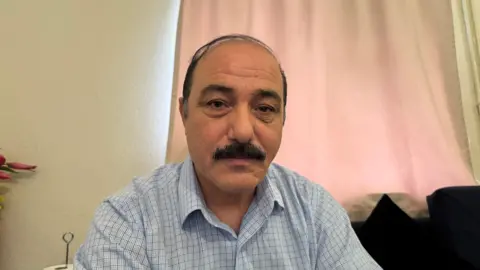
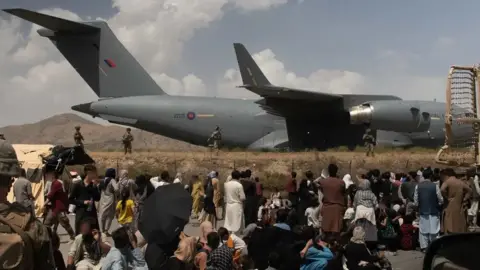

 A view of Kabul city centre, with unplanned houses perched on the mountain slope of Koh-e Asmai/Asamai (aka TV Hill), comprising the western side of the Deh Afghanan neighbourhood, and upscale projects in the background. Photo: Fabrizio Foschini, 2012

