Fitrat added that the Islamic Emirate has not requested assistance from the United States.
Hamdullah Fitrat, deputy spokesperson of the Islamic Emirate, has rejected claims of billions of dollars in US aid to Afghanistan, stating that the interim government has not received any funds from the United States to date.
Fitrat added that the Islamic Emirate has not requested assistance from the United States.
According to the deputy spokesperson, US aid was spent through international organizations during the withdrawal of foreign forces, with another portion allocated to the United Nations for humanitarian assistance.
Hamdullah Fitrat further stated: “The truth is that the US has not given even a single rupee to the Islamic Emirate but has seized and frozen billions of dollars belonging to the Afghan people. The Islamic Emirate neither expects aid from the US nor has it ever requested it.”
Donald Trump, the US president-elect, stated during a press conference in Florida last night that Washington has sent not millions, but billions of dollars to Afghanistan, which is unacceptable. The US president-elect added that this situation should not continue.
Speaking to reporters, Trump said: “It is not even believable. Billions of dollars–not millions, billions– we pay billions of dollars to essentially the Taliban, Afghanistan, and that’s given by Biden. That’s the same man that took away fifty to sixty trillion dollars worth of value from the United States.”
Previously, UNAMA stated that the United Nations transfers cash to Afghanistan for use by UN agencies. This money is neither deposited in Afghanistan’s central bank nor provided to the Islamic Emirate’s authorities by the United Nations.
In this regard, UNAMA stated: “None of the cash brought into Afghanistan is deposited in the Central Bank of Afghanistan nor provided to the Taliban de facto authorities by the UN.”
Graeme Smith, a senior analyst at the International Crisis Group, commented on the aid, saying:
“I think aid is likely to continue declining now, especially US aid under the Trump administration, and what’s needed now is exit-strategies. There has to be a way to shift from short-term emergency handouts towards more long-term interventions that allow Afghans to feed themselves without needing the external help from foreign donors.”
Economic experts believe that US assistance to Afghanistan has been effective in maintaining Afghan stability, reducing food prices, and preventing an economic crisis.
“There is no doubt that US assistance over the past three years has played a vital role in Afghanistan’s governance, especially amid the political crisis. Without this aid, Afghanistan would have faced economic fragility,” Mir Shakir Yaqubi, an economic analyst, told TOLOnews.
“There is no doubt that it will have an impact—a negative impact. We ask the US, as a powerful country, to improve its relations and interactions with Afghanistan,” Abdul Shakoor Hedayatwal, another economic analyst, told TOLOnews.
Meanwhile, Tim Burchett, a member of the US House of Representatives, recently called for the immediate cessation of US aid to Afghanistan in a letter to Donald Trump.
Islamic Emirate: We Have Not Received Any Financial Aid from US
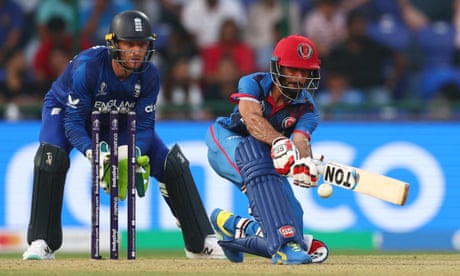
The Taliban uses the success of its men’s team as propaganda – cricket’s powerbrokers should pursue a collective boycott
“There’s all types of lines you can draw. We’ve drawn a line.” So explained Mike Baird, the chair of Cricket Australia, last month in explaining the governing body’s stance on playing against Afghanistan, the country that has just banned women from looking out of windows.
According to a new decree from the Taliban government, new buildings must not be constructed with windows through which women can be seen. Existing buildings with windows must be walled up or covered. “Seeing women working in kitchens, in courtyards or collecting water from wells can lead to obscene acts,” said Zabihullah Mujahid, a spokesperson for the government.
ECB urged to boycott Afghanistan game in Champions Trophy by UK politicians
At present Cricket Australia – in common with the England and Wales Cricket Board – are refusing to schedule bilateral series against Afghanistan out of concern for “the deterioration of basic human rights for women in Afghanistan”. But, confusingly, both countries are perfectly happy to play them in global competitions – Australia at last year’s Twenty20 World Cup, England at next month’s Champions Trophy.
Which, however you square it, is a weirdly precise place to draw your moral line. Our concern for the women and girls of Afghanistan apparently kicks in at 1.5 cricket matches. Two or more games in a single sitting: an unconscionable act of collusion in a murderous, misogynist, medieval death cult. Fewer than two: all right lads, crack on.
00:00
03:36
Read More
At which point, we run into the equivocation and realpolitik of the cricketing establishment, arguing against a sporting boycott of Afghanistan on the grounds that it would extinguish the hope and joy generated by the men’s team over the past two decades, while achieving little tangible benefit.
“I don’t think it would make a jot of difference to the ruling party there to kick them out,” the outgoing International Cricket Council chair Greg Barclay said last month. Which, you have to say, is a pretty high bar to set for sporting activism. Fair enough, wave your banners. But until you’re actually capable of literally overthrowing the Taliban, then stop wasting our time.
We are warned not to punish the richly gifted men’s team for the sins of their government, as if the dignity and humanity of 20 million Afghan women were simply acceptable collateral damage against the wider backdrop of Rashid Khan’s availability for the next T20 World Cup. We are reminded that Afghanistan had little culture of women’s cricket before 2021 in any case, with the implication that – basically – the erasure of an entire international team is no great loss in the grander scheme of things.
To be blessed with this kind of benign adult wisdom! And yet, even to address this argument on its own terms is to subject it to greater strain than it can remotely handle. The very existence of the men’s team – pretty much the only representative side given official blessing – is evidence enough of its propaganda value.
High-ranking Taliban officials have posted photos with the team at official functions, called senior players to congratulate them after wins, allowed games to be shown on big screens in public parks to a grateful male-only audience. This is politics: how could it not be? Cricket is uniquely popular among the young Pashtun men who form the backbone of the Taliban’s appeal. This is the only reason the fun police have allowed it to continue: this team is now essentially a client outfit, a PR offensive, a form of cricketing diplomacy.
And of course the easy targets here are the empty shirts at the ECB, Cricket Australia and the ICC, trapped between two forms of countervailing cowardice. Cancelling a loss-making bilateral tour costs nothing. Boycotting a big tournament game has significant implications for broadcasters, sponsors and future commercial value.
But of course the ICC is basically an events management company now, a governing body that has largely given up on governance. The ECB and Cricket Australia are peripheral figures here, merely underlined by the response from the former’s chief executive, Richard Gould to calls for a full boycott. The centre of gravity in this issue, as with pretty much everything in cricket these days, is India. And so the relevant question here is less what “should” happen than: what is the realistic range of possibilities that Jay Shah, the new ICC chair and acolyte of Narendra Modi, will allow to happen?
Officially, the Modi government does not recognise the new Afghan regime. In reality, the past couple of years have seen a pragmatic rapprochement, in defiance of the cultural and religious divides between the two countries. Diplomatic ties were restored in June 2022. Meanwhile, the Afghan embassy in Delhi and its two consulates in Mumbai and Hyderabad are said to have passed quietly into the control of pro-Taliban officials.
Driven by an ever-present fear of Chinese influence, and encouraged by a slight frosting of relations with Pakistan, the Modi government has spotted an opportunity to build bridges. Naturally, cricket has played a prominent role in diplomatic ties: Afghanistan play their home matches in Greater Noida just outside Delhi, India invited them to play a white-ball series in January, and when Afghanistan reached the T20 World Cup semi-finals last summer they issued a statement thanking India for their “continuous help in capacity-building of the Afghan cricket team”.
And so, if India are overly perturbed by the disappearance of women’s rights under the Taliban, let’s just say it’s not immediately apparent. Afghan players continue to staff the Indian Premier League. Afghan men’s teams continue to be welcome to tour India, to use Indian facilities and draw on Indian expertise. The Afghan economy has collapsed since 2021 and is in desperate need of new trade partnerships. Anyone want to connect the dots here?
None of which is to argue against the power of the sporting boycott. But to focus on unilateral gesture at the expense of collective action is essentially to acquiesce to the status quo. To oppose the iron age misogyny of the Taliban must also be to oppose the structures of capitalist power that keep it in place, from the commercial cowardice of sporting administrators to the cynical collaboration of the Modi government. Too much? Too hard? Too radical? Then, like the factotums who run the game, you’ve also chosen to draw your line in an entirely pragmatic place.
Dignity and humanity of Afghan women must be worth more than game of cricket
Amid widespread criticism of continued U.S. cash aid to the Taliban, a U.S. Congress representative has called for an end to such aid and urged President-elect Donald Trump to halt the country’s financial assistance to the Taliban.
Tim Burchett, a member of the U.S. House of Representatives, has urged President-elect Donald Trump to immediately halt cash aid sent to Afghanistan, stating that the United States should not fund its enemies abroad.
In a letter on Monday, Burchett asked Trump to take decisive action to end “wasteful foreign aid spending” and support Congress’s efforts to prioritize the interests of the American people.
Burchett emphasized that providing “$40 million a week to our enemies is an insult to those who have served in the military,” referencing the sacrifices of U.S. armed forces.
Over the past three years, the U.S. has provided more than $2 billion in aid to relief organizations operating in Afghanistan. The U.S. State Department maintains that this funding is strictly for humanitarian programs addressing famine, hunger, and food shortages affecting ordinary Afghans.
Critics, however, argue that such aid indirectly supports the Taliban by sustaining their operations through taxation of aid organizations and the establishment of sham relief entities. These critics advocate for an immediate cessation of financial assistance.
International organizations, including the United Nations, warn that halting aid to Afghanistan could result in catastrophic humanitarian consequences. They have called for increased funding from donor countries to prevent widespread suffering.
Trump has appointed national security officials with experience fighting the Taliban in Afghanistan. Analysts believe these appointments may signal a tougher U.S. policy toward the Taliban, potentially increasing pressure on the group.
Recent conciliatory remarks by Abbas Stanikzai, the Taliban’s deputy foreign minister, suggest the group is concerned about the incoming administration. Stanikzai praised Trump’s decisiveness and expressed readiness to collaborate with the new U.S. government.
The debate over aid to Afghanistan underscores the complexities of balancing humanitarian needs with counter-terrorism goals. While halting aid could weaken the Taliban, it also risks exacerbating the suffering of ordinary Afghans.
International efforts must focus on ensuring that aid reaches those in need without empowering terrorist groups. This requires stringent oversight, transparency, and collaboration with credible organizations on the ground.
US Congressman urges Trump to halt financial aid to Taliban
The World Food Programme (WFP) in Afghanistan has expressed deep concern over the country’s worsening economic crisis as temperatures drop, highlighting that millions are in urgent need of aid.
In a statement posted on its X page on Tuesday, January 7, WFP stated that Afghan families are forced to choose between feeding their children and keeping them warm during the harsh winter.
The organization emphasized the need for immediate humanitarian assistance as the cold season sets in, exacerbating the challenges faced by vulnerable populations.
This comes as several international aid organizations have issued warnings about rising poverty and the growing need for humanitarian support in Afghanistan during the winter months.
Earlier, WFP reported that due to a funding shortfall, it cannot provide food assistance to millions of people in Afghanistan during the winter.
According to WFP, it can only support six million people this winter, while an estimated 15 million Afghans will require humanitarian aid to survive.
Simultaneously, the United Nations Office for the Coordination of Humanitarian Affairs (OCHA) reported that in 2025, approximately 22.9 million Afghans — nearly half the country’s population — will require life-saving humanitarian assistance.
As Afghanistan faces an escalating humanitarian crisis, the international community must act swiftly to address the funding gap. Increased collaboration among donor nations, aid agencies, and humanitarian groups is essential to save lives.
Efforts to provide immediate aid must be coupled with long-term strategies to address Afghanistan’s systemic issues. Sustainable solutions, such as improving food security and infrastructure, will be crucial to preventing similar crises in the future.
WFP expresses concerns over Afghanistan’s Economic Crisis
The major mines contracted this solar year include various minerals such as cement, salt, ruby, barite, and other resources.
The Ministry of Mines and Petroleum has informed TOLOnews that since the beginning of the current solar year, it has awarded contracts for nine major mines to domestic and international companies.
According to Homayoun Afghan, the spokesperson for the Ministry of Mines and Petroleum, the value of these contracts amounts to 213 billion afghani.
The major mines contracted this solar year include various minerals such as cement, salt, ruby, barite, and other resources.
The spokesperson told TOLOnews: “From the beginning of 1403 (solar year) to date, nine large-scale mining contracts have been awarded by the Ministry of Mines and Petroleum to domestic and foreign companies, with investments in these projects valued at 213 billion afghani.”
Afghan further stated that during this period, 18 contracts for small-scale mines have also been signed, with a value of 1.8 billion afghani.
Homayoun Afghan added: “Approximately 18 contracts for small-scale mines have been awarded to domestic companies, with investment in these small-scale projects amounting to 1.8 billion afghani.”
Some experts view the extraction, exploration, and processing of the country’s mines as beneficial for Afghanistan’s economic growth and emphasize providing more facilities to domestic and foreign investors.
“If a country wants to stand on its own feet, its economy must also stand strong. When a country’s economy improves, the country progresses. Afghanistan’s mines are also vital for economic growth, provided they are processed domestically,” said Ismail Zadran, an economic analyst.
Previously, the Ministry of Mines and Petroleum had stated that interest among investors from various countries, including China, Iran, Turkey, Qatar, Turkmenistan, Uzbekistan, Kazakhstan, India, and Russia, in Afghanistan’s mining sector has increased.
Afghanistan Awards Major Mining Contracts Worth 213 Billion Afs
Shabana Basij-Rasikh is co-founder and president of School of Leadership, Afghanistan (SOLA).
The Washington Post
January 6, 2025
Especially for girls, hope is difficult to come by. But it has not been extinguished.
This past December marked two years since women could attend college in Afghanistan. March will mark three years since girls could go to school past sixth grade. And only a few weeks ago, the Taliban barred women from studying to become midwives or nurses.
For a long time, Afghanistan was the country with the highest rate of maternal mortality. That’s no longer the case — that awful distinction is now held by South Sudan. But Afghanistan’s rate remains the highest of any nation outside Africa. And that’s only on the national level. Certain remote regions of Afghanistan see a maternal mortality rate that’s much higher than the national one, particularly regions such as Badakhshan in the northeast.
A few weeks ago, I talked to a 13-year-old girl in Badakhshan over Zoom.
She was telling me about her parents. Both are nurses. Her mother was no longer permitted to work in a clinic, but she could see patients at their home, and she saw many of them. These home visits inspired the girl.
“I want to be an OB/GYN,” she told me. “Women die here when they give birth. So many women die here. If I become a doctor, I can serve my people and I can change that.”
“If I don’t find a way to study, I’ll have a dark future here,” she said. “I’ll keep trying. Failure is a part of life. I have lots of plans. I will make them happen. I’m going to build a clinic in this village someday.”
“I want to study. I want to go to school. I’m living in a place that is two seasons under the snow,” she said. She’s right. Winters last a long time in Badakhshan.
Two days after the girl and I spoke, the Taliban issued their decree forbidding women to become nurses like the girl’s mother.
A different 13-year-old girl told me that she dreams of leaving Afghanistan to study. She said she sees many girls her age hoping to find some way out of their homeland, too, though via a different path. They are looking to find Afghan men living overseas to whom they can offer themselves as wives. Thirteen-year-old girls.
Some girls reach for the humor in anger. They bitterly mock the Taliban in private. One girl told me how proud she was to already be a graduate, which means she made it through sixth grade. What an accomplishment. And now a whole world of opportunity awaits.
Others keep working to get out despite the obstacles. One girl told me she was taking online classes to learn to code when she realized they wouldn’t help her get into any international university, as she still lacked some sort of widely accepted credential. Which is why she and a small group of her friends are working with a teacher online to get their GEDs, the U.S.-based high school certification.
I’ve spoken to girls who climb up on the roofs of their homes every day to get a usable cellular signal. One girl from the provinces would even climb into the hills so that she could be alone and speak freely.
As parents of older teens in the United States will know, it’s early decision and early action season for college acceptances. Recently, an Afghan high school student I had come to know, a girl enrolled outside of Afghanistan, invited me to virtually join her and her family on the morning she would learn whether she had been accepted to the college of her choice. There was a lot of excitement and plenty of nerves. The morning came and there I was online with this girl and her family who were dialing in from Badakhshan.
I saw her father, mother and siblings by the illumination of a solar-powered light. They were gathered near a sawdust-burning stove. There was a little girl there who looked quite young. I learned later that she’s 4, and she’s the student’s little sister. The sisters have seen each other in person only once ever.
We all watched as the student — their sister, their daughter — opened the message she’d received from the school she wanted so badly to attend.
Silence for a moment and then jubilation. She was laughing. We all were. I saw her father’s and her mother’s faces so clearly: They were crying. Happiness. Pride. She’d gotten in. She’d done it.
It’s easy to say there’s not much hope to be found in Afghanistan today. And there’s not. But hope is not extinct. It exists only in small bursts, in hidden places, under the snow. It exists in the relentless spirit of girls on winter rooftops. It exists in the faces of a father and mother in the Badakhshan cold, sitting by a sawdust stove, warmed and illuminated by a girl and a dream that she made real.
It’s rare and precious. But it exists.
A long time under the snow for the women of Afghanistan
Iran’s Foreign Ministry spokesperson, Esmail Baghaei, stated that Tehran will use all available tools to secure its water rights from shared and border rivers with Afghanistan. He emphasized that the issue has been a priority for the Islamic Republic since Afghanistan began constructing dams.
According to IRNA news agency, Baghaei responded to questions about Afghanistan’s dam projects, saying, “The Foreign Ministry, as the authority on national diplomacy, has consistently pursued Iran’s water rights from shared and border rivers as a fixed agenda.”
Baghaei added that Iran’s efforts to secure its water rights from the Harirud border river date back to the early 2010s.
During a press conference, he noted, “From the time Afghanistan started planning several dams, the issue became a focus for the Islamic Republic, and our protests have been officially recorded.”
The spokesperson highlighted that the water flowing from Afghanistan to Iran for thousands or even millions of years has established rights for all stakeholders on both sides of the border.
Baghaei also mentioned that Iran possesses specific agreements and documents regarding its water rights. He emphasized that Iran expects the Taliban to address this issue seriously, based on customary international law, environmental considerations, and the principle of good neighborliness.
Baghaei stated that Alireza Bigdeli, Iran’s ambassador in Kabul, is actively pursuing the matter, while officials in Tehran continue to use all available means to address the issue.
Iran’s water rights, particularly from the Helmand River, have become a contentious issue in recent years, especially as dam construction projects in Afghanistan, such as Salma, Pashdan, and Bakhshabad, have intensified.
Iranian officials view these dams as a significant threat to downstream regions, including Khorasan Razavi and Sistan and Baluchestan provinces. The Helmand River is a crucial water source for eastern Iran, particularly for Sistan and Baluchestan.
According to the 1973 treaty, Afghanistan is obligated to provide Iran with its rightful share of water from the Helmand River.
Iran expects Afghanistan, particularly the Taliban government, to honor existing agreements and ensure a fair distribution of water resources. Diplomatic engagement and adherence to international norms are essential to avoid further escalation.
Given the critical role of water in regional stability and development, both nations must collaborate to find sustainable solutions. Addressing the concerns of both upstream and downstream regions can pave the way for improved relations and long-term water security.
Iran warns Taliban it will use all means to secure water rights from Afghanistan
This comes as the issue of women’s education in Afghanistan has been a contentious topic over the past three years.
The Organization of Islamic Cooperation (OIC) is set to hold a summit focused on women’s education in Islam. This summit will take place in Islamabad, the capital of Pakistan, within a week.
According to Pakistani media reports, the discussion will center on female education in the Muslim world. This comes as the issue of women’s education in Afghanistan has been a contentious topic over the past three years.
Pakistani media stated: “While the detailed agenda of the conference remains under wraps, sources revealed to The Express Tribune that one of its primary aims is to build pressure on Afghanistan’s interim Taliban government to reconsider its ban on girls’ education.”
Zahiruddin Zahir, a political analyst on the OIC and its activities, said: “The control of this organization lies in the hands of others. What have they done in the past three years? What have they accomplished in our relations with the world?”
According to the media reports, the participation of nearly 30 foreign ministers from OIC member states has been confirmed so far, but nothing has been said about the Islamic Emirate’s attendance at this summit. On the other hand, the Islamic Emirate has not yet commented on its participation or lack thereof.
Meanwhile, some political analysts consider the discussion on Afghan women’s education in this summit to be significant.
“The OIC meeting in Islamabad is good news for Afghanistan, as it is being held in a neighboring country. Secondly, it discusses girls’ education from the perspective of Islamic teachings to clarify whether there is any religious prohibition against girls’ education,” said Aziz Maarij, another political analyst.
The OIC summit on women’s education in Islam is scheduled to take place on January 11-12, in Islamabad. This comes as the Islamic Emirate has suspended women’s education in Afghanistan for over three years until further notice.
OIC Summit in Islamabad to Address Women’s Education in Islam
These migrants have stated that, fearing arrest, they are unable to even leave their homes.
Some Afghan migrants in Pakistan have reported that the arrests of Afghan migrants by Pakistani police are ongoing.
These migrants have stated that, fearing arrest, they are unable to even leave their homes.
“They took my son away in a vehicle, and I have no information about him yet. We are currently in a very bad situation. The area where we live is surrounded by police, and every hour we hear news about the arrest of Afghans,” said Younas, an Afghan migrant in Pakistan.
“The police came to our door and gathered everyone living in our block and took them to the police checkpoint. We are currently at the police checkpoint,” said another Afghan migrant.
Meanwhile, the Afghanistan Human Rights Defenders Committee has stated that Afghans in Pakistan are facing harassment and extortion. The committee has called on the international community and organizations supporting migrant rights to protect Afghan citizens in Pakistan.
The Afghanistan Human Rights Defenders Committee said: “The Afghanistan Human Rights Defenders Committee expresses its deep concern over the worsening situation of Afghan refugees and migrants in Pakistan, particularly following the recent directives issued by Pakistan’s Counter-Terrorism Department. These measures have added to the existing challenges of Afghan refugees and have exacerbated issues such as harassment, extortion, and other administrative obstacles.”
The Ministry of Refugees and Repatriation has called on host countries, particularly Iran and Pakistan, to refrain from mistreating Afghan migrants.
Abdul Mutalib Haqqani, the spokesperson for the Ministry of Refugees and Repatriation, told TOLOnews: “Our request to all host countries, particularly Pakistan and Iran, is to exercise patience with the migrants and not forcibly return them.”
“Women and children are the primary victims of this situation. Women and children are spending these cold nights in camps, while on the other hand, human rights organizations and international bodies are paying no attention to Afghan migrants,” said Fazel Saberi, a human rights activist.
Meanwhile, the department of Information and Culture in Nangarhar province has reported the release of 54 Afghan prisoners after serving their sentences in Pakistan.
Tensions between Kabul and Islamabad escalated when Pakistani forces conducted airstrikes on Barmal district in Paktika province, prompting retaliatory attacks by Islamic Emirate forces on positions across the Durand Line.
Afghan Migrants in Pakistan Face Arrests, Harassment, Escalating Tensions
The United Nations Children’s Fund (UNICEF) reported that more than 500 Afghan children were killed or injured in 2024 due to explosions from unexploded ordnance and remnants of war. UNICEF stated that last year, it trained 3 million children and their guardians on how to identify and avoid the dangers of explosives.
On Sunday, January 5, UNICEF shared a photo on its social media account depicting children undergoing training to recognize and avoid explosive remnants.
The HALO Trust, a demining organization, announced on November 12 that over 65 square kilometers of land in 26 Afghan provinces remain contaminated with improvised explosive devices (IEDs).
The organization identified Afghanistan as one of the four most heavily mine-contaminated countries globally. It stated that HALO operates with 2,235 demining personnel across the country.
During the previous government, the Taliban planted landmines on roads and farmland without any systematic mapping, targeting former government and foreign forces’ security lines.
The continued contamination of Afghan land poses a severe risk to communities, particularly children. Enhanced demining operations and educational campaigns are essential to mitigate these risks and prevent further casualties.
The international community must increase its support for demining efforts in Afghanistan and provide resources to organizations like UNICEF and HALO Trust. Strengthening these initiatives can help safeguard lives and rebuild affected communities for a safer future.
Over 500 Afghan children killed or injured by explosives in 2024: UNICEF
The United Nations says aid workers are still in a “race against time” to remove rubble and rebuild after the devastating earthquake struck eastern Afghanistan last month, killing at least 2,200 people and cutting off remote areas.
The 6.0-magnitude quake on Aug. 31 was shallow, destroying or causing extensive damage to low-rise buildings in the mountainous region. It hit late at night, and homes — mostly made of mud, wood, or rocks — collapsed instantly, becoming death traps.
Satellite data shows that about 40,500 truckloads of debris still needs to be cleared from affected areas in several provinces, the United Nations Development Program said Wednesday. Entire communities have been upended and families are sleeping in the open, it added.
The quake’s epicenter was in remote and rugged Kunar province, challenging rescue and relief efforts by the Taliban government and humanitarian groups. Authorities deployed helicopters or airdropped army commandos to evacuate survivors. Aid workers walked for hours on foot to reach isolated communities.
“This is a race against time,” said Devanand Ramiah, from the UNDP’s Crisis Bureau. “Debris removal and reconstruction operations must start safely and swiftly.”
People’s main demands were the reconstruction of houses and water supplies, according to a spokesman for a Taliban government committee tasked with helping survivors, Zia ur Rahman Speenghar.
People were getting assistance in cash, food, tents, beds, and other necessities, Speenghar said Thursday. Three new roads were under construction in the Dewagal Valley, and roads would be built to areas where there previously were none.
“Various countries and organizations have offered assistance in the construction of houses but that takes time. After the second round of assistance, work will begin on the third round, which is considering what kind of houses can be built here,” the spokesman said.
Afghanistan is facing a “perfect storm” of crises, including natural disasters like the recent earthquake, said Roza Otunbayeva, who leads the U.N. mission to the country.
 Afghanistan Peace Campaign