The U.S. Can No Longer Ignore the Threat Arising in Afghanistan

Javid Ahmad

President Trump has promised a bold new American approach to the world. Nowhere is that more urgently needed than in Afghanistan. Not only have its Taliban rulers crushed dissent and stripped away the rights of the country’s women and girls; they have also taken Americans hostage and are allowing Afghanistan to serve as a nerve center of violent jihadist networks such as Al Qaeda. We all know what happened on Sept. 11, 2001, the last time this state of affairs existed.

The Trump administration faces a stark choice: Let Afghanistan spiral further into jihadism or engage pragmatically with the Taliban. Engagement is of course a tough case to make, given the regime’s brutal nature and America’s painful history in Afghanistan. But dealing directly with the Taliban may be the only way to gain enough leverage to minimize serious potential threats to U.S. national security and interests.

The Biden administration’s approach — neither toppling the regime nor normalizing relations — has allowed the Taliban to entrench its rule without hope of the United States exerting any positive influence over it. Afghanistan requires realpolitik — putting results over ideals. The hard-nosed deal-making aspects of Mr. Trump’s “America first” outlook may offer the right framework.

The Trump administration should establish at least a limited diplomatic presence in Afghanistan or even reopen America’s embassy in Kabul to facilitate regular contact with Taliban leaders toward the ultimate goal of deploying specialized intelligence teams in the country to track and respond to potential threats.

The administration’s policy toward the Taliban remains unclear, but there is reason to believe that Mr. Trump would embrace a new approach. He has criticized past U.S. policy in Afghanistan for overreach and unrealistic goals. And he has taken bold action toward Afghanistan before. In 2020, his first administration negotiated the U.S.-Taliban agreement — later executed by President Joe Biden — that ended America’s longest war.

More recently, Mr. Trump has made clear his interest in recovering the military equipment, valued at $7 billion, left behind by the United States. He has also said the huge Bagram Air Base should have been kept under U.S. control as a check on China’s power in the region. These objectives are impossible without direct contact with the Taliban.

Mr. Trump is right to worry about China’s influence in Afghanistan. After the U.S. withdrawal in 2021, China kept its diplomatic mission open in Kabul and has expanded ties with the Taliban. It welcomed a Taliban ambassador to Beijing, forged relationships with Taliban security forces and Chinese companies have secured commercial contracts in industries like oil and minerals extraction. Beijing sees Afghanistan as important for its plan to increase Chinese influence in the region through economic ties. But the Taliban still see the United States as a preferred partner, and a proactive U.S. policy could help keep China’s influence in check.

Purely from the terrorism standpoint, Afghanistan demands U.S. attention. The country is home to militant groups that, with the Taliban in control, now have freer rein. The Taliban have opened thousands of madrassas, religious schools where young men may be exposed to notions of jihad and potential breeding grounds for future generations of extremists. The taking of foreign hostages has resulted in prisoner swaps with the United States that have freed Taliban terrorists and drug traffickers.

A particularly potent threat exists in the Islamic State Khorasan Province, or ISIS-K, the group’s regional affiliate in Afghanistan and Pakistan. ISIS-K, which is at odds with the Taliban, has been expanding external operations and recruitment, especially in Pakistan and Central Asia, and has carried out targeted assassinations in Afghanistan. The Department of Homeland Security warned in October of the growing risk of attacks outside Afghanistan from groups like ISIS-K, and various plots and threats already have come to light. Jihadist groups are just a text message away from radicalizing recruits in the West, including in diaspora communities. This means that any counterterrorism efforts directed at Afghanistan must also include more robust intelligence-gathering in the United States itself, as well as outreach to trusted diaspora leaders to help identify and disrupt threats.

The Taliban also retain longstanding ties to Al Qaeda, offering the group sanctuary in exchange for its promise not to plot attacks from Afghan soil. This arrangement is dependent on the Taliban remaining isolated, which helps shield Al Qaeda from foreign pressure. The Taliban thus hold significant potential leverage over the jihadist network, which could be employed to serve U.S. interests.

Michael Waltz, Mr. Trump’s new national security adviser, has said the administration needs to re-examine American intelligence and counterterrorism measures regarding Afghanistan to make sure the United States is not again caught off guard as it was in 2001. Ultimately, effective counterterrorism hinges on establishing communication with Taliban clerics. The United States lacks this, leaving Washington blind to the group’s internal power structure and potential factional rifts that might otherwise present opportunities to achieve its objectives.

The Taliban may appear monolithic, but they are not. Reflecting the group’s ethnic diversity, its hard-line emir, Sheikh Haibatullah Akhundzada, leads an uneasy coalition of factions and tribes with different priorities and levels of extremism. As with any governing organization, there are the usual internal tensions over personnel issues and policy, including the emir’s rigid stance on denying women and girls access to education, his tight control over government resources, how forcefully to suppress dissent and the expansion of madrassas at the expense of regular schooling. More pragmatic factions favor rapprochement with the United States to give the regime more global legitimacy and improve Afghanistan’s dire economic situation. The Taliban’s deputy foreign minister last month praised Mr. Trump as “decisive” and “courageous,” called for the reopening of the U.S. embassy and said that if the United States extended the hand of friendship, the Taliban would reciprocate.

The Taliban will be difficult to deal with. But Afghanistan is an important piece in the broader jihadist puzzle. To continue standing by and waiting for the Taliban to collapse is unrealistic and risky. Direct engagement, on the other hand, may open pathways for tracking and disrupting terrorist plots. In the longer term, it may even give the United States enough influence to help improve Afghanistan’s overall direction, including on human rights.

Engaging with the Taliban would be a bitter pill for America to swallow, but as Secretary of State Marco Rubio recently pointed out, U.S. foreign policy is often about choosing the “least bad” option.

Javid Ahmad is a research scholar focused on counterterrorism and author of the Taliban Leadership Tracker at the Middle East Institute. He is also a senior fellow at the Atlantic Council and teaches at George Washington University.
The U.S. Can No Longer Ignore the Threat Arising in Afghanistan
read more

US-China dispute over Afghanistan resolutions escalates at UNSC

By

AMU TV

17 Feb 2025

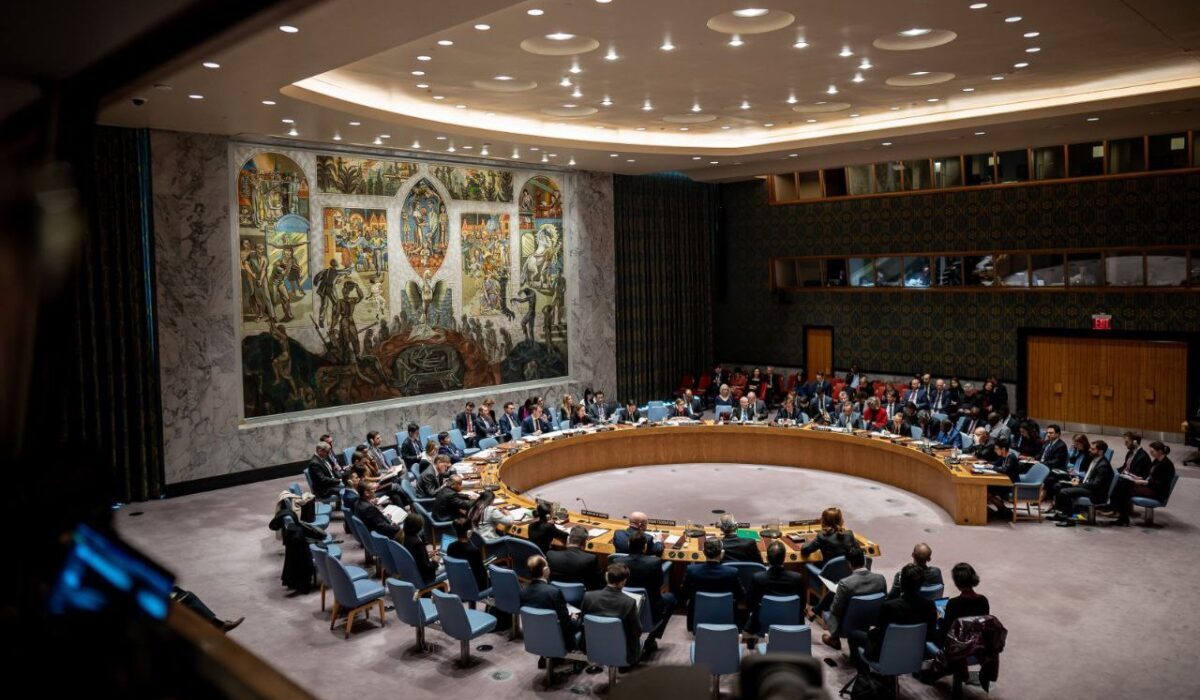
File-Photo United Nations Security Council

A diplomatic dispute over control of United Nations Security Council resolutions on Afghanistan has escalated into a broader clash between the United States and China, raising tensions within the global body, Just Security reported.

The disagreement, which has been simmering since late 2024, has intensified in recent weeks following the return of the Trump administration. The dispute could shape not only the U.N.’s engagement with the Taliban-led government in Kabul but also Beijing’s growing influence in the Security Council.

“While the Trump administration has made headlines by pulling out of U.N. mechanisms like the Paris climate pact and the World Health Organization, this argument in the council could be a harbinger of more Sino-American tensions over multilateral security,” the report stated.

At the center of the dispute is which country should serve as the Security Council’s “penholder” on Afghanistan. In U.N. terminology, the penholder is responsible for drafting resolutions, initiating negotiations, and shaping key mandates related to the country in question.

Some council members have suggested a shared arrangement, with South Korea acting as a pro-Western counterbalance to China’s influence. However, Pakistan has asserted its right to take the lead, citing its geographic proximity and security concerns related to Afghanistan.

Security Council resolutions are binding documents aimed at maintaining international peace and security. They can include sanctions, the deployment of peacekeeping forces, and diplomatic measures, all of which member states are obligated to enforce.

Resolutions on Afghanistan typically address counterterrorism efforts, support for the peace process, oversight of U.N. missions—such as the United Nations Assistance Mission in Afghanistan (UNAMA)—human rights, and sanctions enforcement.

The Just Security report noted that U.S. officials are increasingly concerned about China’s influence at the U.N. and are reluctant to allow Beijing to shape Afghanistan’s agenda. The tensions over Afghanistan’s Security Council resolutions have further intensified with Donald Trump’s return to office.

Trump has repeatedly emphasized the strategic importance of Bagram Air Base in Afghanistan. Two weeks ago, he stated that if he had been in office at the time of the U.S. withdrawal, he would have retained control of the base. He also claimed—without evidence—that China currently controls the facility.

Historically, the three Western permanent members of the Security Council—the United States, France, and the United Kingdom—have held significant influence over resolution drafting. According to Just Security, in 2024, the U.S. served as penholder on six country-specific issues, France on seven, and the U.K. on six. Russia has led on matters concerning Central Asia and co-leads with the U.S. on the U.N. peacekeeping mission in the Golan Heights.

With Beijing’s influence at the U.N. growing, the battle over Afghanistan’s Security Council resolutions is likely to remain a key flashpoint in U.S.-China relations.

US-China dispute over Afghanistan resolutions escalates at UNSC
read more

The Daily Hustle: A home school for girls is shut down 

Hamid Pakteen • Roxanna Shapour

Afghanistan Analysts Network

print sharing button

For six years, I ran a home school for the girls in my village. I started the school when my family moved back to Afghanistan from Pakistan. My father was concerned about security and money was always tight, so I couldn’t even contemplate going to university. So, when the opportunity presented itself for me to teach classes at home for the girls in the village, I jumped at it. From its humble beginnings, my little class grew and eventually an NGO started supporting the school, which meant that the Ministry of Education would officially recognise us and the NGO would give us resources like schoolbooks and other educational materials as well as pay me a salary. But two months ago, the NGO informed us I’d have to close the school down because the Emirate would no longer allow it to operate.
 Today’s Daily Hustle features a young woman who we last heard from in June 2023 when she was running a home school for girls in her village. Now, a year and half later, she has been ordered to close it. Even before the fall of the Islamic Republic, many Afghan girls had no access to education – whether because of conflict or local conservative mores, a lack of female teachers, or because functioning schools did not exist. After the Republic fell, communities in these areas were hopeful that schools might open – or reopen – now the conflict was over. But for older girls across Afghanistan, this was not to be. One of the first things the Taleban did after they took power was to ban older girls from education. Many families in rural Afghanistan have also struggled to get even their younger daughters an education because no schools were ever built in their areas. However, they may be local NGO-supported home-based or community-based schools. In 2023, we spoke to one young Afghan woman who had set up such a school. Hamid Pakteen spoke to her recently and she had bad news.

From humble beginnings 

I live in one of the largest and most populated districts in our province in southeastern Afghanistan. During the Republic, there was fighting between the government and the Taleban over control of our province. In those years, most schools were closed, and when they were open, there were either no qualified female teachers or the Taleban wouldn’t allow girls to attend. Still, many families wanted their daughters to go to school. So, the tribal elders asked each village to find an educated woman in their community who could teach girls in their home and asked the parents to pay the teachers whatever they could afford. This is how, six years ago, I started running a home school in one of the rooms in our house.

At first, my father was opposed to the idea of me running a school. He was worried about what the community would think. He said people would gossip about a woman in our household working and supporting the family, which in our area is seen as shameful. But my older brother, who at the time was a teacher himself, convinced him to let me go ahead with it. He could see I was anxious about staying at home with nothing to do and convinced him that teaching would occupy my time and make good use of my education and my energy.

My little school began with only a few girls from the neighbourhood, but by the end of the first year, there were 20 students. As our reputation improved and more people learned about our classes, the number of students continued to grow until I eventually had 50 students aged between 7 and 18.

An official home school for girls, with a new curriculum

One day, the village malek (headman) told my brother there was an NGO that wanted to support classes for girls in our village: “I thought about your family and, if you’re ok with it and your sister’s willing, the NGO will give her a salary and support her class.”

This was exciting news. If we could manage to get support from this NGO, our classes would become official. A team from the NGO came to assess my class. They wanted to see the classroom environment and watch one of my lessons. I also had to take a test to show I had the knowledge and skills to teach. Finally, we got the word that they’d accepted our school for their programme.

They gave us books, notebooks, and other things such as school bags and pens, as well as a new curriculum based on the one introduced by the province’s Directorate of Education and UNICEF – Pashto, life skills, maths, calligraphy, art and religious education, which includes fiqh [Islamic jurisprudence] and hadiths [the sayings and actions attributed to the Prophet Muhammad] and the Holy Quran. The official school hours were from 7 am to noon.

I had to keep an attendance sheet, a lesson plan, results sheets and report cards, and a team from the NGO and the district education office came twice a month to monitor my classes and make sure I was sticking to the curriculum and the quality of teaching was up to par. They also gave me a salary of 9,000 afghanis (USD 105) each month, so I didn’t have to rely on money from the parents in these hard economic times when families are struggling to survive.

They also wanted a photo of each student. This last requirement proved to be a temporary setback because several families objected to having their daughter’s picture taken and took them out of school. After that, my brother and the village malek talked to the fathers and convinced them to allow their girls to be photographed.

There were also other obstacles. My father voiced his opposition once again. This time, he was concerned about me getting a salary from an NGO: “What will people say? They will say that our daughter is working for an NGO and getting paid,” he grumbled. But times were hard, and my salary was our family’s only source of income.

When the Republic fell, my father was too old to work and my brothers lost their jobs. My small salary was supporting 14 people – my parents, my three brothers, their wives and children, my sister and myself. So, faced with the reality of our economic situation, he finally relented.

Making our school official meant the older girls could no longer attend because of the ban on them going to school. I had to reduce the number of students from 50 to 35 and limit them to girls between 7 and 12 years old. So, after lunch, I used to hold free Quran classes for the older girls.

Things were going well. The NGO supported my school for almost three years. Last year, the school took first place at the district level – a well-deserved distinction for my students, who took their studies very seriously.

The order to close my school 

A couple of months ago, as my cohort of students was preparing to begin grade six and looking forward to graduating in March 2025, the NGO told us we’d have to close the school because the Ministry of Education had ordered the closure of schools like mine until further notice. As far as I know, the ban only affects schools like mine. In some places, younger girls can still attend the community-based school where they study each class in one year up to grade six.

There’s a lot of speculation in the village about why the school was closed. Some people say it’s because the local government doesn’t want girls walking on the street no matter what their age. But the houses in our village are interconnected – each house has a door leading to the house next to it – and the girls never walked on a public street to get to class. Besides, everyone in the village knows our family and they know that the men leave the house when I hold classes. Other people say the NGO has lost its funding or stopped operating and that another NGO will step in soon to take over the programme. Others say the government’s told NGOs not to operate classes beyond grade three and since my cohort of students was going to be starting grade six, the NGO had no choice but to close the school down. Still others think it was because I held Quran classes in the afternoons for older girls, but these classes had nothing to do with my home-based school. It was a private initiative and the classes were held outside school hours and were free of charge. Anyway, what’s wrong with teaching girls the Quran?

Whatever the reason, the day I told my class that the school was closing was one of the hardest days of my life. Everyone was very upset. We spent the rest of our time together talking about how disappointed we felt and the girls were crying when they left my little classroom for the last time. Among my students were girls with high hopes and dreams for the future. Some of them, believing that the Emirate would reopen girls’ high schools soon, had wanted to become doctors and some said they would become teachers so that they could serve the people, as I do.

The entire community is upset by the sudden shuttering of my school. Home-based schools like mine that operated with help from NGOs and without any support from the government were the only option for many. My brothers have spoken to the local education officials and the NGO to get them to change their minds. But the NGO told my brother not to hold private classes at home under any circumstances, including the free Quran classes for the older girls that I had going in the afternoons. They told him I had to stop all activities. Being told I couldn’t even teach classes privately and for free was a big disappointment. My students’ parents went to the village malek several times and asked him to go to the district centre and convince the education department to let us have classes, but the malek said this matter was beyond his authority and that no one would listen to him on this matter. This was an order from the authorities, he said, and we had to obey.

Sacrifices and hope

When I think about all the obstacles I overcame to get the school going and keep it running, I’m overwhelmed by sadness. It wasn’t easy and I had to make many sacrifices. I had to put off my wedding because I’d have had to have moved to Kabul after I got married. I didn’t want to abandon my students in the middle of their studies, especially since this was the final year for my cohort of students. I talked it over with my fiancé and he agreed. A delay would also give him time to save enough for our wedding.

My students and their parents are disappointed too. Not a day goes by without someone stopping by our house to ask after the school. They say the school was a blessing for the village and ask me to reopen it because their daughters are depressed and want to start studying again. But there’s no word either from the NGO or from the district officials.

Since the school closed, I haven’t been paid and it won’t be long before our savings run out. God only knows what will happen to my family after that.

To be honest, I can’t understand why anyone would keep girls from studying. I taught the Quran and religious lessons and the books that the Ministry of Education gave to the schools. I wouldn’t teach anything else. What could be wrong with helping girls gain literacy and numeracy skills and learn the Holy Word of God?

Still, I hold out hope that one day soon, someone will knock on the door and tell me I can reopen the school.

Edited by Roxanna Shapour

The Daily Hustle: A home school for girls is shut down 
read more

Afghanistan’s exports to India grow

By Fidel Rahmati

Indian media has reported that over the past two years, the country’s imports from Afghanistan have increased, with bilateral trade between India and Afghanistan reaching a value of $642.29 million.

According to the report, the largest exports from Afghanistan to India include agricultural products such as saffron, raisins, figs, apples, potatoes, almonds, apricots, onions, garlic, pomegranates, and mixed nuts.

Meanwhile, the National Statistics and Information Authority of the Taliban government has stated that the country’s exports decreased by $28 million in January compared to December, with a total export value of $162.2 million through the country’s customs in the past month.

It is reported that the highest exports were made to Pakistan, India, and the United Arab Emirates, while the highest imports came from Iran, Pakistan, and China.

Based on the statistics from this authority, the total export value of the country in the January 2025 was $190.2 million, while the import value was $1,041.5 million.

It is worth noting that the significant trade deficit and the increase in imports from other countries have turned Afghanistan into a consumer nation.

Additionally, the World Bank reported a 14% decline in Afghanistan’s exports from January to September compared to the same period last year.

Meanwhile, Afghanistan continues to maintain trade relations with neighboring countries, the growing import dependence and declining exports suggest challenges for the nation’s economic stability. The trade imbalance is a concerning trend, which highlights the need for efforts to boost local production and reduce reliance on foreign goods.

Afghanistan’s exports to India grow
read more

Ministry: Women’s Rights Accusations Used to Pressure Islamic Emirate

Saif-ul-Islam Khyber, the ministry’s spokesperson, said that Afghanistan is an Islamic country, and Islamic laws have defined fair rights for women, children, and all segments of society.

Khyber said: “Criticism of the laws, activities, and strategies of the Ministry for the Promotion of Virtue and Prevention of Vice under the name of women’s human rights reflects the double standards of international norms, using human rights slogans as a tool for political pressure.”

A day earlier, female foreign ministers from 17 countries, including Canada, Australia, Germany, and representatives of the European Union, expressed concerns in a joint statement regarding the restrictions imposed on women in Afghanistan.

They stressed that no government can achieve sustainable peace, prosperity, and a viable future without the participation of women and urged the Islamic Emirate to lift the restrictions imposed on Afghan women.

The joint statement read: “Today, women foreign ministers from around the world convened to discuss and reaffirm their deep concerns about the ongoing and systematic violations and abuses of human rights in Afghanistan by the Taliban de facto authorities, particularly those affecting women and girls.”

“Both women and men play significant roles in society. Without women’s participation, we cannot achieve goals such as the country’s progress and development,” said Faryal Saidzada, a women’s rights activist.

The ministers highlighted that a peaceful and stable Afghanistan depends on the participation of all Afghans, including women, in the country’s future and called on all countries to ensure the full and meaningful participation of women in discussions about Afghanistan.

The statement added: “We know that a peaceful and stable Afghanistan is only attainable if all Afghans, including women and girls, can fully participate in and contribute to the country’s future. This includes discussions and decisions happening within the country, but also on the international stage.”

“We cannot move forward with only one segment of society; people have different mindsets and demands. We must have women’s representatives in organizations and international conferences,” said Fatima Fayzi, a women’s rights activist.

According to the statement, while Afghanistan faces high maternal and child mortality rates, the Islamic Emirate has decided to ban girls from attending health centers starting from December 2024.

Ministry: Women’s Rights Accusations Used to Pressure Islamic Emirate
read more

UNSC Grants 23-Day Travel Exemption to Mullah Abdul Ghani Baradar

In a statement, the committee said that the purpose of this exemption is for Baradar’s travel to Doha for medical treatment.

The United Nations Security Council sanctions committee has announced a 23-day travel exemption for Mullah Abdul Ghani Baradar, deputy prime minister for economic affairs.

In a statement, the committee said that the purpose of this exemption is for Baradar’s travel to Doha for medical treatment.

The Security Council’s statement mentions that this exemption has been issued under resolution 1988 and is valid from February 9 to March 3, 2025.

The UN Security Council sanctions committee stated: “On 7 February 2025, the Security Council Committee established pursuant to resolution 1988 (2011) approved a travel ban exemption for Abdul Ghani Baradar Abdul Ahmad Turk (TAi.024) regarding his visit to Doha, State of Qatar, from 9 February 2025 to 3 March 2025 for medical treatment.”

“If Mullah Abdul Ghani Baradar’s travel is for medical purposes, I hope it also has a political aspect to help Afghanistan emerge from economic and political isolation,” said Zalmai Afghanyar, a political analyst.

The statement also mentioned that a three-day travel exemption to Russia has been granted to the head of Afghanistan’s Central Bank.

The committee added that this exemption was granted for his visit to Yekaterinburg, Russian Federation, to participate in the Ural Cybersecurity in Finance Forum, scheduled from February 19 to 21.

“For Afghanistan’s economic growth and to bring the country out of isolation, Mr. Baradar and his colleagues should take steps during this trip,” said Samim Shamsi, another political analyst.

Previously, the UN Security Council sanctions committee had also issued travel exemptions this year for three officials of the Islamic Emirate, including the acting ministers of interior, foreign affairs, and Hajj and religious affairs.

UNSC Grants 23-Day Travel Exemption to Mullah Abdul Ghani Baradar
read more

Taliban Confirms Hand Grenade Attack At Aybak Mosque in Samangan

Volant Media UK Limited

Feb 14, 2025, 12:26 GMT

The Taliban police command in Samangan has confirmed an explosion at the Joi Zindan Mosque in the city centre of Aybak.

Hashmatullah Rahmani, the Taliban police spokesperson, stated that the incident occurred when two individuals threw a hand grenade into the mosque during prayers, reportedly over a “personal dispute.”

Rahmani indicated that at least four worshippers were injured in the attack. He added that Taliban security forces arrived promptly at the scene and subsequently arrested the perpetrators, confirming that the two attackers were armed. The incident is currently under investigation, and the injured have been transferred to Mazar-e-Sharif Provincial Hospital for treatment.

Earlier reports from local sources told Afghanistan International that an explosion and subsequent gunfire had been heard inside the Grand Mosque in the Joi Zindan area, with a grenade being thrown followed by gunfire. Doctors from the Samangan Public Health Department reported that dozens of worshippers were injured during the attack.

This attack is the latest in a series of explosions in Afghanistan in recent days. On the morning of Thursday, 13 February, a suicide attack targeted the Taliban’s Ministry of Urban Development in Kabul, resulting in multiple casualties.

Prior to that, on Tuesday, 11 February, a suicide bomber detonated explosives outside the Kabul Bank office in Kunduz, where Taliban officials and military personnel were awaiting their salaries. ISIS-K later claimed responsibility for the Kunduz attack.


Taliban Confirms Hand Grenade Attack At Aybak Mosque in Samangan
read more

UNICEF and ADB officials highlight support for women and children in Afghanistan

Tajudeen Oyewale, the UNICEF representative in Afghanistan, emphasized support for women and children during a meeting with officials from the Asian Development Bank (ADB).

On Friday, February 14, Oyewale stated on his X account regarding the meeting with ADB officials, discussing how they can support women and children in Afghanistan.

He described the meeting as a “strong partnership for a brighter future for women and children in Afghanistan” and stressed that they are working together to expand essential services and create more opportunities to help those in greatest need.

He emphasized that during the discussion, both parties agreed to expand essential services and provide more opportunities for those in need. No further details have been released about the meeting’s discussions.

This comes at a time when several international humanitarian organizations have expressed concern over the worsening humanitarian situation in Afghanistan, especially for women, after the suspension of U.S. aid.

According to reports, Afghanistan’s economic and social crises have intensified, leaving millions of women and children reliant on humanitarian aid to meet their basic needs. Recently, the World Bank reported that Afghanistan is facing a severe food security crisis, with at least 2.9 million people currently on the brink of hunger.

UNICEF and ADB officials highlight support for women and children in Afghanistan
read more

Muttaqi Warns Against Unjust Criticism, Disobedience

During his speech, the acting foreign minister described unjust criticism as a cause of ruin.

Amir Khan Muttaqi, acting minister of foreign affairs, stated during a ceremony at a religious school in Kabul that those who disobey the Amir (leader) will face downfall.

During his speech, the acting foreign minister described unjust criticism as a cause of ruin.

Muttaqi said: “Now that Allah has granted us a society where we have elders, youth, teachers, an Amir, ministers, governors, and district chiefs, if we entertain wrong thoughts, follow other groups, engage in gossip, undermine our own community, and offer unjust criticism, it will lead to ruin.”

In another part of his speech, Muttaqi urged members of the Islamic Emirate to avoid narrow-mindedness and not to act in ways that alienate the people.

The acting foreign minister added: “The Taliban should not be narrow-minded, should not rely solely on themselves, or consider themselves perfect. They must view every individual in society with respect and dignity.”

Salim Paigir, a political analyst, told TOLOnews: “The Islamic Emirate of Afghanistan has not taken significant steps in this area over the past three and a half years. It must also accept the Afghan people and political figures to collectively solve the current challenges of the country.”

This comes as the spokesperson of the Islamic Emirate recently acknowledged differences in views among its members but clarified that these differences do not imply division or conflict.

Muttaqi Warns Against Unjust Criticism, Disobedience
read more

Younus Akhundzada: No Internal Divisions in the Islamic Emirate

During the ceremony, the acting minister emphasized that the current system was established through sacrifice.

Mohammad Younus Akhundzada, acting minister of rural rehabilitation and development, stated during the inauguration of a project in Maiwand district of Kandahar that there are no divisions within the Islamic Emirate.

During the ceremony, the acting minister emphasized that the current system was established through sacrifice, and both officials and citizens have specific responsibilities toward it.

According to Akhundzada, the presence of the Islamic Emirate’s leader ensures that the enemies’ dream of creating divisions among the members of the Islamic Emirate will never come true.

Mohammad Younus Akhundzada also stated, “As long as this Amir is present, the idea that divisions could arise within the Islamic Emirate to the point of fragmentation is nothing but a dream. I assure you there are no divisions—do not worry. The system is moving forward on the path paved by sacrifices. You have responsibilities toward this system, and so do we.”

During the event, the acting minister inaugurated a 30 million afghani road reconstruction project. Akhundzada highlighted that connecting rural areas and providing services to their residents are key priorities for the ministry.

The acting minister added, “There are numerous ongoing projects—hundreds, in fact—in water supply networks, canals, dams, and roads. However, after 45 years of destruction in a country, it is extremely challenging to rebuild and restore it within just two or three years.”

Meanwhile, several residents of Maiwand district in Kandahar province stated that the implementation of reconstruction projects plays a vital role in addressing the people’s challenges.

Mohammad Qasim, a resident of Maiwand, told TOLOnews, “Besides the road, we need electricity, schools, and religious institutions, which must be provided to us.”

According to the Ministry of Rural Rehabilitation and Development, most of its development programs, launched under the balanced development initiative, are nearing completion across the country.

Younus Akhundzada: No Internal Divisions in the Islamic Emirate
read more