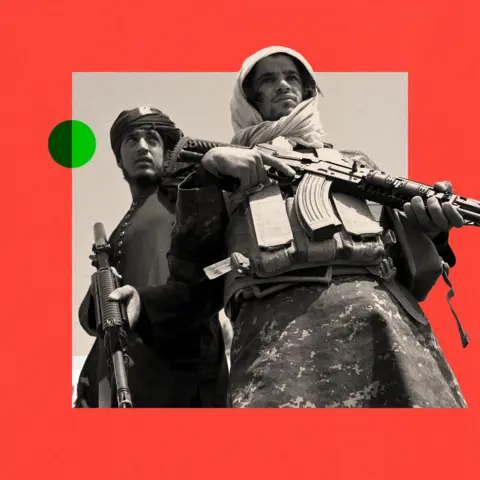
Taliban government spokesman Zabihullah Mujahid delivers a news conference in Kabul. Further ministers and deputies were named as part of the Taliban interim government, none of them are women. (is associated with: «Taliban defend complete ban on protests in Afghanistan») Oliver Weiken/dpa
Taliban government defends complete ban on public protests in Afghanistan, citing Islamic law and national security concerns
The Taliban government on Wednesday defended a complete ban on public protests in Afghanistan, asserting that demonstrations have no place under the Taliban’s interpretation of Islamic law and that the measure is necessary to preserve national security and stability.
Speaking at a press conference in Kabul, government spokesman Zabihullah Mujahid responded to international criticism regarding the newly ratified Police Law. One of the articles banned all forms of demonstrations within Afghan territory.
Mujahid stated that the legal document has been drafted to reflect the realities of Afghan society and contains clauses that are vital for the security and stability of the country. He added that demonstrations are associated with societies where different legal frameworks, such as a democracy or a republic, are dominant.
“In an Islamic system, if a demonstration implies a peaceful protest, there are various administrative bodies to which people must appeal. However, wasting the public’s time, damaging people’s property, chaos and lawlessness must be prevented,” he said.
Since returning to power in 2021, the Taliban government has banned all forms of demonstrations and forcefully suppressed dissent. The codified protest ban has drawn sharp criticism from international human rights groups, who state that the measure further severs remaining civic spaces and fundamental freedoms in Afghanistan.
Taliban defend complete ban on protests in Afghanistan
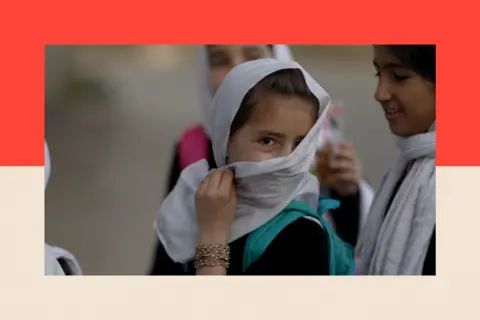
The closure of schools for girls beyond grade six is the most glaring example of the Emirate’s discrimination against women and girls. Without access to secondary and higher education, most teenage girls and young women see little hope for a future beyond family life. But for some, the restrictions are not absolute. Whether through their own initiatives or those of their communities or NGOs, some Afghan girls are finding opportunities to learn beyond grade six, particularly in the virtual realm. Rachel Reid, with input from Rama Mirzada, has been hearing from students and teachers about the rewards and limitations of informal education.
Being a student in my position is a bittersweet experience. On the one hand, I feel incredibly resilient and proud that, while many doors have been closed to girls, I’m still standing and fighting for my right to learn. On the other hand, it feels heavy. It’s not just about books for us; it’s about carrying the weight of the uncertainty about our future.
Sima is one of the lucky few – a teenage girl in Afghanistan who is managing to continue her studies. Six days a week, she attends grade 11 via online classes. With girls’ secondary schools closed since 2021, this is more than most Afghan girls can dream of. But hers is not an isolated story.
Older girls’ continuing education is a grey area: while the vast majority remain excluded, nobody counts how many girls have found a way to keep studying, either because it is done unofficially, circumventing restrictions, or because of the fragility of efforts that are outside formal education but have a degree of state sanction. This report will focus on the unofficial, alternative end of the spectrum, for those excluded from grades 7-12. These efforts range from very small and local, such as student-driven efforts to help each other’s continuing education or the efforts of a determined teacher to keep girls in her own community learning, to larger-scale schemes run by NGOs offering physical, online or hybrid classes, often from outside the country. Some follow the old school curriculum of the Republic or international curricula, others offer a more informal medley of courses, from literacy to coding. The educational landscape for older girls has also changed since 2021-22, as this report details: some of what was safe early on may now feel risky, with far more happening online than is possible in person.
There was much attention – understandably – on the courage of those running clandestine schools in the first years after the Emirate seized power. As that power has consolidated, with enforcers exerting more control over society, including education, some providers of underground education have been forced either to close or pivot to online learning, while others have chosen to move to at least some digital provision to increase access. Others collaborate with providers of video and radio content, as explored in a 2025 AAN report on radio education. There are also pockets of learning for older girls that are outside the formal system but state-sanctioned to some degree, although that is not the focus of this report.
This paper focuses on the unofficial ways in which girls are managing to keep learning beyond sixth grade (approximately aged 12-13 upwards). It focuses on alternative learning channels, primarily online. It is based on 28 interviews – nine students,[1] seven teachers or psychologists working directly with physical or virtual schools and twelve key informants working for or running NGOs delivering education services. Of the students, three were interviewed remotely, the others shared voice notes of their experiences in response to voice note questions, as a means of reducing their exposure. Most were in grades 9-12, approximately aged 14-19, though ages tended to vary given the disruptions they had encountered. All of those based in Afghanistan have been given single-name pseudonyms for their own protection. Given the sensitivity of the work, identifying details of some of the educators and their work are also omitted.
Background: girls’ education before 2021
Education has been far from universal in Afghanistan, regardless of the prevailing political winds. Children in rural areas, particularly girls, were often excluded, given the mix of conservative gender attitudes, high levels of poverty and low levels of development, including literacy, as well as decades of conflict. Formal education in schools has always been supplemented by madrasa education or other community-based learning.
Under the first Taliban rule in the 1990s, all girls’ schooling, including primary education, was banned. However, it was not a uniform picture, particularly for younger girls in rural areas (AAN). Pockets of education for girls continued, organised by communities, Afghan NGOs and educators, often in homes or community buildings, often in secret. The writer, Axana Soltan, studied in a secret basement school, thanks to her mother’s determination, as she recalled for the HuffPost: “when I turned seven, she wrapped my books in grocery bags, dressed me in my brothers’ clothing and sent me to an underground secret school for girls.” Not all girls’ education was clandestine – some NGOs negotiated permission to run girls’ schools from the authorities (AAN). In 2000, AAN’s Kate Clark visited a girls’ primary school in the capital and a mixed primary school in Kabul province run by an NGO. However, while some schools had permission to teach girls, it could always be revoked or officials might choose one day not to ‘look the other way’. Teachers and students always risked punishment.
Under the Islamic Republic, more schools were built, teachers were trained and investment was made to enrol children across the country. For girls, the increase was dramatic – from a fraction of girls enrolled in primary school in 2001 to over 80 per cent in 2021, according to UNESCO, though the actual number of school students was always lower than the corruption-inflated figures claimed (mostly through ‘ghost’ schools and teachers, which existed only as a budget line) (AAN). The jump was not as big for older girls, however, with around 45 per cent of girls finishing grade nine in 2019, compared to 75 per cent of boys (World Bank).
Access to education varied by geography. In areas where the conflict raged, schools were often caught in the firing line, with teachers’ and students’ access imperilled. In areas where the Taliban took control, they sometimes banned or indirectly prevented older girls from going to school, particularly prior to 2009. After that, in areas under their control, they tended towards a more passive role, allowing girls’ access where it already existed, at least in primary schools, though these were often rural communities where girls’ access was already quite low (AAN). For children in remote or hard-to-reach areas, efforts were made to reach them through a parallel system of community-based education, which often involved classes in homes or mosques, mostly provided by the United Nations and international NGOs and often prioritising girls (UNICEF). So, overall, the Republic offered a mixed picture, though certainly one marked by a strong trend towards greater access.
Closing the door on older girls’ education
Within weeks of seizing power in August 2021, the Emirate ordered the reopening of primary and secondary schools for boys. In theory, the wait for secondary-age girls to go back to school was temporary, with various justifications given. Indeed, at the start of the next school year, on 23 March 2022, girls’ secondary schools did open, but within hours the Taliban’s leader, Amir Hibatullah Akhundzada, ordered them shut and the girls were sent home – this time for good. (AAN’s account of the full, convoluted tale, including the arguments over this issue within the movement, was published later that week).
Afghans who had lived through the first Taliban Emirate may not have been surprised by this, but many students were blindsided. Zolaikha was a year away from finishing grade 12 when the Taliban seized power. She told AAN that for her, the new rulers were just an abstract idea: “I didn’t really understand what the Taliban really were until the spring of the year after they took over.” During the Covid-19 pandemic, schools had been closed, then the situation was confusing in the autumn of 2021 – while a few provinces opened girls’ secondary schools, most did not. Zolaikha’s school remained closed until the new school year began on 23 March. On her first day back, she initially just noticed that the class size had shrunk:
People had been talking about whether we’d still be able to go back to school, but I couldn’t believe they’d stop girls studying. Then after just an hour or two in class, the principal came and said, “I’m sorry, they’ve cancelled girls’ education until further notice, so you need to go home.” Just like that. It was such a shock.
Among the many justifications, an insistence on gender segregation, for both girls and female teachers, was the most prominent. “I was so, so mad,” said Zolaikha. “In my school, girls and boys were already separated, we were in different buildings, so it made no sense to send us home.”
What was officially claimed as a temporary ban, however, was followed by a series of additional barriers to education for girls and women, which made the wider intent clear.[2] They included closing private educational centres for girls beyond grade six, preventing women from attending universities in December 2022 (Zan Times) and barring medical training for women and girls in December 2024 (BBC). There are also indirect barriers to girls’ education, such as Emirate restrictions on women’s ability to travel and work. Other obstacles that had also existed under the Republic persisted, for example, conservative families or communities and financial constraints. All told, the UN estimates that since the Emirate seized power, restrictions on education beyond grade six have directly affected at least 1.5 million girls (UNESCO, p1).
Despite the ban: education opportunities for older girls
While the impact of these restrictions is profound, they are not absolute. Officially, madrasas remain open to older girls, although what girls are taught varies hugely: some focus on religious studies, while others provide core subjects such as maths, science and social studies.[3] Standards also vary: one girl in the capital described to AAN how, during the Republic, religious education at school had been to a far higher standard than anything she had found in a madrasa.
There has also been some non-formal education for adolescent girls taking place outside the state system but with a degree of state sanction, though these have faced growing scrutiny. They include programmes by UN agencies, international NGOs and Afghan NGOs registered with the Islamic Emirate of Afghanistan (IEA). Some are vocational education programmes, such as embroidery, computing and language classes, some of which are (or were) open to older girls.[4] Interviewees said that accelerated learning programmes, which mostly provide an ‘accelerated’ catch-up for those who missed primary education, also sometimes include adolescent girls. Community-based education (CBE) also provided a little leeway for older girls – for a while at least. The number of students enrolled in CBE classes held in community buildings, homes and mosques, peaked in 2023 at around 1 million, of whom 60 per cent were girls (UNICEF, 2025, p11). But in 2023, the IEA began restricting CBE programmes, first closing CBE classes in two provinces in April, then informing international NGOs and the UN to hand over management of CBE programmes to the local authorities or registered Afghan NGOs (RFE/RL).[5]
Alternative education
Unofficially, there is a complex web of informal education being provided without state sanction, sometimes described as ‘alternative education’, which is the focus of this report. This includes online education, which seems to attract little attention from the authorities and is often provided by educators who had already been offering tech solutions to education during the pandemic and before, as well as by new actors in the field. Some families or communities have taken the high-risk approach of creating ‘secret schools’ or classrooms based mostly in homes or other community locations, without permission, as many communities had done under the previous era of Taliban rule. As the education restrictions hardened, however, some of these providers have been forced to shut classes down or shift their work into the virtual realm.
One example of the latter is LEARN Afghan, founded by Pashtana Durrani in her home province of Kandahar in 2018. It began working in fairly conservative communities, finding different ways of getting girls into education, including digital education, teacher training and working with existing schools to add accelerated learning. After the Republic fell, there was a limbo: “Although the ban was not yet there, they were not opening the schools either,” Durrani told AAN. “People tend to forget that it had been COVID and the schools were closed, so the girls went from COVID into the Taliban regime without having exposure to school.”
Initially, she opened a school in Kandahar in October 2021, expecting it to be a “temporary lifeline” for two or three months. But as the months passed and there was still no sign of girls’ secondary schools reopening, she was approached by someone in central Afghanistan who had heard about what she was doing in Kandahar. “Although it was a very different ethnicity and different geography, the thing we had in common was that their girls couldn’t go to school like our girls.” They went ahead. Soon after, they received a request from a community in the northeast and within four years, LEARN Afghan was in 25 provinces, providing a mix of in-person and online learning.
Informal schools like these grew, mostly under the radar, all over the country. Interviewees told AAN of both the opportunity and the high cost of operating in the shadows. Student Khadija attends a community school operated by another NGO, Daricha:
We fear people may discover we’re studying. We fear going to the course and not returning home safely. We fear that death or injury could happen at any moment. We fear the Taliban may find out we’re continuing our education. These fears are a part of our daily lives, but still we continue because education means hope for us.
The only way to navigate this degree of risk, for those determined to defy the ban, is through strong community ownership. Durrani says that when they are approached by a community, they are very clear about who takes responsibility for security from the outset:
We say we’re going to provide you with laptops, salaries, internet, teacher training, curriculum, pedagogy training, everything you need, but you need to provide the security because it’s your community, you have the understanding around it and you need to make sure that you have a security parameter.
The students and teachers are selected by the community, providing another level of protection. Roya, in western Afghanistan, works for another NGO that sets up schools in homes, with “trustworthy schoolteachers” and “trusted students.”The discretion they ask for, though, is also designed to manage a level of demand that is higher than they can meet:
When we enrol a student, we ask that she doesn’t inform other candidates because there are many families who want to send their daughters, but we cannot manage them all. This shows the community’s support for education: everyone wants to enrol their daughters, but the office does not have a big enough budget to support them.
The levels of vigilance required vary from province to province, says Durrani. In some provinces, “[the schools] are secret. Nobody tells anybody anything.” Only the teachers know where the students gather, and she is confident that even when they move on, “they don’t go and snitch on us. It’s that simple because they know they’re part of an ecosystem that has to be secret.” However, in other provinces, “there is less pressure, the wider community knows.” This does not necessarily mean that the local authorities are tolerating them, Durrani says. It may be that the school is “completely ignored or is under surveillance – you never know which.”
Durrani, like many of those running such programmes, now lives in exile. Those taking the greatest risks tend to be the teachers, particularly when they have to travel to teach. Mina has been teaching at a school run by another Afghan NGO for two years. She says that holding classes in someone’s home is “the only way we can be sure that the government don’t know about us. But it’s dangerous. I worry about this, in case we have any problems with the government.”
Mina says the risk is personally worthwhile: her work gives her a sense of purpose in an otherwise difficult time. Her dream had been to become a doctor, but when the Taliban took over, she pivoted to training as a midwife, until that road, too, was blocked. “At first, when I decided to become a teacher, it was very hard, it didn’t feel real, with all my dreams gone,” she admitted, “but now that I am teaching, I feel so much better. I learned to laugh with the students. I feel responsible for them; a teacher should treat her students as she treats her own children.”
Some NGOs lower the risk threshold by having teachers join remotely while students gather in person. AAN talked to two NGOs that have adopted this practice at least in some of their locations. Roya is employed by one of them to provide psychological support to students. For this, she does need to visit in person:
The teachers at these schools teach in their own homes and know their students. But for people like me, the situation is different because we don’t know anyone at those schools. When I commute between my house and the schools, there is fear in my heart. I am afraid of being stopped at the checkpoints or followed by someone.
She hasn’t had problems so far, which she says is partly because she closely observes the dress code for women. Mina, who teaches at an underground school in an eastern province, also relies on her clothing for protection. “For now,” she said, when she travels to work, “I just wear a big scarf,” and “they haven’t stopped me so far.” She needs textbooks, but “I can’t take anything in my hands,” so she uses digital copies, in case she gets stopped on her way. She teaches maths, English and biology.
They don’t want us to do this, they don’t want girls to learn, they don’t want them to study, they have so many problems with girls. They say they shouldn’t study ‘foreign’ subjects, they shouldn’t study mathematics, chemistry, physics. These [subjects] are not for girls. You should only teach girls the Quran.
More pressure from the authorities
Operating under the radar has become harder as restrictions on girls’ education have been formalised and the Amir’s grip on power has tightened.[6] Enforcers from the Ministry for the Promotion of Virtue and Prevention of Vice now conduct regular inspections of places of learning, including schools, madrasas and officialcommunity-based education (UNAMA 2025, p14 and UNAMA 2026, p4). The General Directorate of Intelligence (GDI) has detained education workers and activists, including some high-profile cases, such as Wazir Khan, who was detained for a month in March 2025 (Kabul Now) and Matiullah Wesa, who was held for over 200 days in 2023 (Al Jazeera). AAN is aware of several additional cases that have not been made public.
Over time, as these pressures mounted, physical classrooms have become harder to sustain. One Afghan NGO worker told AAN:
There was a tightening up across the country and the Taliban started coming after NGOs in this sector. Our NGO was a target because we had a lot of students. It started in 2021, but in 2024 they got really harsh.
A 2025 report by the Women and Children’s Research Organisation on the impact of the education ban noted a crackdown against “informal and underground schools,” starting in mid-2023, with “community-based learning circles harassed and dismantled” (pp6-7). Beneath the surface of such harassment, there can be more than a straightforward enforcement of the law. In 2024, LEARN Afghan had a colleague detained when auditing a school. “They were arrested and tortured for almost six months,” said Durrani. Her assumption is that the local authorities had been wrongly tipped off that she was coming in person and that they were probably hoping to detain her for extortion, since she comes from a well-known southern family. “So, it might be about what they can get out of it – the Taliban can be very transactional.”
Another interviewee working for an education NGO was aware of two incidents where education workers had been detained. In both cases, the arrests appeared to have been triggered by parents who had reported the school. In one example, a tip-off meant “the head was jailed and tortured, [but] with the intervention of elders, he was released.” The school was able to continue in some form. In the other example, “a girl had refused child marriage, she was saying ‘I want to continue my studies.’ The father became angry and reported the school to the Taliban.” The school was shut down.
Other schools, however, have reached a local accommodation. One of AAN’s student interviewees, Tamana, said: “The enforcers came to my class twice,” but “they take a bribe from the school” so it can stay open. This does not stop her from fearing the enforcers’ return and the possibility of being arrested. Student Ghazal similarly recalled that “when there were rumours that the Emirate would search house-to-house, I used to hide my books and notebooks.” However, her fear, she said, remains.
A shift towards hybrid and online schools
After an initial expansion of home-schooling efforts, education providers have had to be more cautious. Many shifted to online learning, both for safety and in hopes of reaching more girls, since underground schools tend to require very cohesive communities. There are lots of hybrid variants, too, with tuition via radio or the internet, as well as in-person elements such as when students need to conduct a science experiment or sit an exam. This flexibility cuts the risk without sacrificing all the benefits of in-person study.
Setarah is in grade 12 and studies online in a class of women aged 18-22 for five hours a day, six days a week. She explained her school’s learning system:
Our teachers record lessons for us, which we watch at home. The system is student-centred learning, so after watching the videos, we prepare for a presentation and join our classes in the evening. … For the first 30 minutes or so of each class, the students explain what they’ve learned, one by one, and then the teacher gives more explanation and concludes the lesson.
They have midterms and final exams, all online. “The school provides us with the certificate at the end of each year, just as they did before the Taliban,” though, she says “our daily activities and attendance are more important than the exams.”
Studying online is generally cheaper in terms of enrolment and tuition fees. Setarah’s school, for example, charges 500 afghanis (USD 7.50) for enrolment but does not charge tuition. The real cost, however, is internet access and devices. “My school does not pay any money for students’ internet,” says Setarah, “but it provides some names of organisations which disadvantaged students can apply to and get some funding.”
Azizullah Paeyndah runs a digital education platform in Afghanistan, Setaragan Zirak Online School. He says that less well-off families find ways to cover their costs:
You would expect rich families to provide this opportunity for their girls, but most rich families don’t care. This matters to ordinary families, those without big incomes. The poorest people are often the most committed to learning. We can’t charge fees for some students from poor families. But for most, we charge around 1,000 afghanis [USD 15] a month for fees and another 1,000 for internet.
When Shakardokht Jafari and fellow volunteers launched an online school in 2022, now called Flying Wings, she faced significant criticism, with fellow Afghans telling her that because she lived in the UK, she did not understand the poverty trap her compatriots faced. “I respond [that] I’m from the most deprived area of Afghanistan and my cousin climbs a mountain to get a signal to change his Facebook profile. So, if [they have] the same level of enthusiasm for education, they can reach it.”
This spirit was echoed by student Setarah, who is mostly learning online. She said that in her region in central Afghanistan, “families are 100 per cent happy with our studies.” She gave the example of a classmate, “whose brother accompanies her every day to a mountain so that she can access the internet.” Other classmates, she said, have to “walk two hours to reach an area where the internet is available.”
Some providers go to great lengths to make their online content as accessible as possible, including by making all content free. The Begum Academy, which grew out of the women’s radio station, Radio Begum, provides free courses from grades 7 to 12 in 12 subjects, as well as several vocational courses. SOLAx also provides free courses in Dari, Pashto and English, with classes all delivered through WhatsApp, which requires a smartphone, but only a basic mobile connection. SOLAx grew out of the School for Leadership Afghanistan (SOLA), which was evacuated to Rwanda in 2021. They set up the online platform after receiving over 2,000 applications in 2023 from Afghan girls wanting to move to the East African country to join the school, which could offer only 31 places. They launched in 2024 and, by 2026, had over 360,000 learners, with the ambition to teach half a million Afghan girls.
Not all families or communities, however, are supportive, even of online learning. Sakina, who studies online, says she knows many girls whose education is no longer supported by their families or relatives, because they “do not believe in their abilities as students, so because of this, many girls expect to get married at a young age and stop their education.” Problems with online learning
Realistically, online learning will not be feasible for most girls. Internet access, already limited, is a luxury for families struggling financially – one in three Afghan families is in need of food assistance, according to a March 2026 World Food Programme estimate. On top of this, electricity can be patchy and women and girls tend to have more limited access to smartphones and laptops than men and boys.
“Internet access,” said student Sakina, “can sometimes make it hard to attend online classes, which affects the quality of learning. Many students can’t join their lessons on time, or follow their teacher properly and as a result, they may fall behind in their studies or lose motivation.” Virtual learning can also be a reminder for students of what they’ve lost. “Believe me, learning through a screen can be very isolating,” says Sima. “I really miss the energy of a real classroom, the face-to-face interaction with my teacher and the support of my friends.”
For educators, the move from physical to virtual learning was difficult, as teacher Shukria told AAN: “It was an unhappy time when we moved to online because most students were not familiar with online classes. It was a new experience for all of us, so we faced lots of problems.” A 2025 report by the Women and Children Research and Advocacy Network suggested that many girls who enrol in online courses drop out, mostly because of poor or unreliable internet access (report available from Princeton Library, p29).
This high dropout rate was also experienced by Shakardokht Jafari at the online school, Flying Wings. They had 500 students enrolled in their pilot year, but “attendance rates were around 20 to 25 per cent,” she told AAN. “Students struggled with digital literacy, with their internet access, with the whole system.” They adapted, however: “We created a crash course for students and teachers – there had also been resistance from teachers.” The following year, she said, attendance rates rose to 65 per cent, thanks to this crash course.
SOLAx co-founder Mati Amin says they quickly realised they could not view attendance in the same way as in a traditional school: “A girl might be using her mother’s phone, her father’s phone. She might have internet today and not tomorrow, and she may disappear for a few weeks, then come back.” That’s why they developed courses that can be accessed on a “basic smartphone with WhatsApp,” allowing families to enrol multiple girls in different classes on one shared device. “We have tried to design SOLAx around her reality. The learning is self-paced and asynchronous [on-demand] and lessons are short, so she can pick up where she left off. The idea is to let learning fit into the small windows that she has.”
Online teaching requires particular skills from teachers. Azizullah Paeyndah, who runs Setaragan Zirak Online School, says they seek candidates with a bachelor’s degree and, ideally, a master’s degree, as well as “experience of online teaching and a demonstration video of their teaching style.” He tries to build a learning culture: “Every week, we have some kind of training for [the teachers]. We come together, we speak about our education practices and methodology, we have many seminars, including best practice from other countries.” Teacher Shukria also said their teachers needed specialist training, “so that they learned how to make the lessons interesting and keep the students engaged.” However, she says the motivation levels are unquestionable:
All the teachers care so much; they aren’t just working for the salaries. They’ve been through these experiences themselves and they are all working from their hearts, so they try every day to make them more interesting.
There are, however, weaknesses in the teaching standards of both online and underground schools. Underground schools often have to resort to using one teacher per class across all subjects. Back in the Republic days, says student Ghazal:
If we were studying five subjects at school, we had five different teachers each specialising in those subjects. Here we only have one teacher who teaches all five different subjects. If the teacher is good at one subject, of course she is weak in the other subjects. Because of this, we have to use online sources like Google, ChatGPT and [other] AI. These sources are not as helpful as a teacher who can make us understand concepts in class.
There are more low-tech options for girls with limited internet access. One is the Behdukht Academy, which, says founder Fatema Uzgan, “is designed to reach village girls.” She says that girls in cities “have more opportunities, they can participate in online classes, some can even go in person to do some courses. But most of the rural girls don’t have this opportunity.” Uzgan’s motivation is very personal: when the Taliban first took power, in 1996, she was in sixth grade:
I lived in a rural district. There was no internet, no school, no courses, no nothing. So I was one of those girls who struggled to get any education at that time. … I understand what it means when life is like a prison, when you have no hope. So Behdukht is about hope.
The majority of her students, she says, “have to work to help their family financially,” so they run classes in the evenings for just a couple of hours. She initially tried live online classes, but found that only a small number of the girls could connect. So, she decided to work only with a messaging service, because “most families can only afford the one package for WhatsApp.” For each class, a teacher sends voice notes to the group, with written notes for those who do not have the bandwidth to download them:
The students are online and can ask the teacher questions. They are given homework, which they have time to complete before their next class. They must send a voice note back to the group, explaining what they learned and what they didn’t learn or understand.
Uzgan went into exile in 2021, first to Turkey and then to the United States.During the Republic, she had worked as a defence lawyer. While in the US she is “still looking for a good job” and runs Behdukht as a volunteer initiative. She sees that spirit of volunteerism in her students, with a number of girls who are now in higher grades offering to tutor those in lower grades. “They are helping each other. They want to transfer their knowledge.”
A medley of curricula and standards
The forms of alternative education on offer provide an assortment of standards, pedagogy and curricula. Uzgan, like other interviewees, says she’s not attempting to replicate what a school can offer: “These girls are a long way from getting a complete education.” Other providers have focused on meeting the academic standards of formal education, at least in terms of accreditation as the end goal. One example is the comparatively well-resourced Canadian organisation, Right to Learn Afghanistan, which set up an online school in 2022, in addition to its long-standing free online library and scholarship programme. Their school has around 700 students and teaches the old Afghan curriculum from grade seven, then transitions students to the Canadian curriculum by grade 10, using English as the medium for teaching, so that students are able to take Canadian-accredited exams at the end of grade 12.
Executive Director Lauryn Oates says, “Overall it’s a very rigorous system. … The key moment is that transition to taking classes in English in grade 10, we offer lots of support outside their classes around that time.” They experimented with on-demand classes to make it more flexible for students, but “we lost on quality.” They experience some dropouts, mostly because of struggles with the English language. Oates says they work hard to prevent dropouts “because it’s expensive [as a mode of teaching], and the students don’t pay anything. The demand is so high – we have thousands of applications every year. I get to see the applications; I have an acute sense of how coveted it is.” Oates says they keep track of a growing number of accredited learning opportunities for Afghan girls, so they can point disappointed applicants elsewhere. “There are Afghan girls studying alongside girls from other parts of the world in accredited and good quality organisations,” she says, which “range from free – with full scholarships to partial scholarships to private schools, but almost all have some kind of subsidy for Afghan girls.”
Having started out with an online school, Shakardokht Jafari soon felt that the alternative education sector was becoming “pretty much saturated,” while “the biggest missing piece was accreditation.” Jafari launched a spin-off from Flying Wings, Education Bridge for Afghanistan (EBA), which provides two types of high school diplomas, one based on the Afghan curriculum and the other aligned with UK-based qualifications. EBA now has over 250 schools as partners using the certification scheme and secure examination methodology. “Despite the risks, the demand is increasing, more people are signing up,” says Jafari. She says parents are starting to believe in the system. “Now they have seen their daughters sitting the exams, receiving the reports, they can [privately access] their grades online. It is very transparent.”
Online skills and vocational training are another growing sector, often focused on jobs that can be done remotely. Afghan Women Forward, for example, offers free courses in subjects including graphic design, programming, cybersecurity and teaching English as a foreign language. LEARN also offers skills training for a narrow range of jobs, including midwifery and computing alongside its secondary school curriculum. Durrani is realistic about the narrow funnel of opportunities her students face:
I’m not going to say, “Oh my God, it’s so easy.” No. We get to pick only 15 girls to go on to midwifery from among 100 girls. Another 15 girls to study mental health. It breaks my mind because many girls have a lot of potential, but we can only pick 40 women out of 400 for the technology programme. It’s hard.
The benefits of keeping girls in education go well beyond improving access to higher education or employment, of course, with well-documented impacts such as lower rates of child marriage, maternal mortality and child mortality (UNICEF). In addition, all interviewees stressed the psychological importance of alternative education.
Mental health and keeping motivated
Education symbolises what many girls and women have lost, both in terms of education and future careers. Recognising the widespread mental health problems among their students, many educators have added psychological support to their services. These emotional pressures exist whether students are attending underground schools or studying online, says Jafari:
When it comes to physically going to classes, sometimes the Taliban go there and have a terrible attitude towards the girls, sometimes they beat the students and teachers and sometimes they close them down. Sometimes, [the girls] have to stay home for a while. This creates stress and anxiety for teachers and students. For those who study from home, they are lonely and suffer from depression; they can lose motivation.
Psychologist Roya says that “since everything, including jobs and education opportunities, is banned for women,” depression is common. She also notes, however, that domestic stress is also increased: “because more people stay home and spend more time together, there tend to be more problems arising in the family.”
Another interviewee, Laleh, also works as a part-time psychologist. She visits home schools once a month: “Whenever I go see the girls … it feels as though they have been carrying all the psychological problems they have faced throughout the month, waiting for an opportunity to share them with me.” The students are also coping with their families’ economic problems, which for many, she says, “have forced them to go and work their land, along with the men in their families. Their parents have lost their jobs and they have no choice but to work with them to put food on the table.” This makes it difficult to find time to study.
Sima, an online student, said that sometimes it is hard to focus on “complex tenth-grade subjects when my mind is on real-world challenges.” Her description at the start of this report of studying as a “bittersweet experience” captures the tone of several interviewees: continuing her education gives her hope, but it also takes a toll: “Sometimes it’s exhausting just to be strong enough just to do something as simple as attending a class,” she said. Like her fellow students, however, she thinks it is better to study than not: “My identity as a student is what gives me hope and a sense of purpose.” For another student, Fariba, “staying disciplined” is the biggest challenge: “keeping ourselves away from getting mentally burned out and staying positive for our future life.”
Educator Azizullah Paeyndah believes that the pressure of study itself is the best remedy for these existential doubts. “When they are busy with study and homework and school activities, there is no time to think about the restrictions and adversity they face.” This is one reason they have opted for fortnightly tests. “It is hard to keep people motivated in this situation. This is the way that we create some stress for them, it keeps them regular with their study.” Jafari says regular testing helps prepare students for their end-of-year exams, since many had a gap in studying: “We need to hold their hands.” Teachers and students alike try to innovate ways to keep students engaged. Shukria says their teaching assistants created some social activities, such as book clubs, art groups and competitions between years and schools.
For Zolaikha, the digital realm helped ease her sense of purposelessness. She was particularly inspired by an online global youth exchange, in which she participated in 2021: “It was amazing to meet all these other young people. In Afghanistan we aren’t very exposed to other cultures and other ideas.” Still in her late teens, the experience gave her an idea of “helping all my former classmates to get access to other peers from around the world to learn and have conversations, see life from a different perspective.” Zolaikha launched a global mentoring initiative: “In Afghanistan, we have such a closed environment, it’s easy to think that everywhere people live the same way as you, but they don’t.”
She started with a small group of volunteers and a few international tutors, who were prepared to give an hour or two of their time to regular sessions with Afghan girls. After two years, she had 600 students, all in Afghanistan, and a big roster of volunteer tutors almost entirely outside Afghanistan. Teaching or mentoring is almost entirely done via one-to-one video calls, with a few specialist teachers offering small group classes. Zolaikha has received some support from universities and an NGO, particularly with the curriculum, but it is still mostly a volunteer operation. She is frank about her motivation for starting it:
Honestly, it was a way to help myself. I was feeling so dead. I wasn’t getting anywhere. I was attending classes online, but even if I could finish my university education online one day, I can’t work in Afghanistan. I am not allowed to do anything. So, helping other people, helping connect girls like me with people outside Afghanistan to teach and talk to these girls helped me as well as them.
An uncertain lifeline
Opportunities for online education look set to keep growing even as the prospects for circumventing the Emirate’s restrictions on girls’ education diminish. So far, this digital sphere has not been banned by the state. There was one notable interruption to internet access in September 2025, when Amir Hibatullah Akhundzada ordered a complete shutdown. In the end, it was overturned after a few days under pressure from businessmen and senior Talibs, but for already isolated female online students, it was a frightening time (UN Women). There have also been restrictions on the use of smartphones, though these have so far been limited to government officials (Guardian). In theory, however, since older girls and women do not need to leave home to study, it would seem hard for the state to justify interference on the grounds of safety or segregation. That said, the authorities have exercised growing control over what gets taught in schools and universities, not just where, including changing the state curriculum with a growing emphasis on Islamic subjects (UNICEF, p5).
With more and more students graduating every year from online or underground schools and with limited opportunities to study abroad, the development of online higher education and employment opportunities is a natural and much-needed extension. However, Zolaikha warns that there is no certainty that even online learning will survive: “You never know with the Taliban. They might wake up one morning angry and close some more things down.”
The students themselves tend not to dwell on how they learn. For them, it is the opportunity that matters. As student Ghazal says: “Despite all the difficulties, this school is giving us hope that we will not just become housewives.” Others are keenly aware of their less fortunate sisters. Several students interviewed, including Fariba, were painfully aware that their continuing education put them in a minority. Fariba captures the ambivalence:
There’s happiness because I was lucky and took my rights seriously and found a way to study every day. Sadness, too, because I may be learning, but there are so many more girls whose hopes and motivation to study came to an end.
Interviewees in the alternative education sector share a sense of urgency that each excluded girl matters. “Five years is a long time in the life of a child. A girl who was finishing grade six when the Taliban seized power in 2021 is now approaching adulthood,” said Mati Amin. “She can’t get those years back.”
Edited by Kate Clark and Jelena Bjelica
References
References
↑1
This report generally refers to those studying grades 7-12 as ‘students,’ though in some education systems, such as the UK, ‘pupils’ is more commonly used for school-aged children. However, the connection between ages and grades is quite blurred in Afghanistan given the exclusion of girls and young women from secondary education, and ‘students’ was the term most commonly used in English by Afghan interviewees. Students can also refer to those in higher education, but this will be the focus of a separate AAN report.
There have been reports of training centres being closed down in several provinces in 2025, including Kabul, Herat, Daikundi and Bamiyan, with several teachers arrested, according to the NGO Afghan Witness, citing multiple sources in the Afghan media.
↑5
See, for example, the Afghanistan strategy of the UN’s global fund, Education Cannot Wait, which is focused on expanding community-based education and accelerated learning programmes “for adolescent girls who are unable to access the formal education system.” Vocational training includes livelihood initiatives and efforts to train female primary school teachers or medical workers outside formal training colleges, which were closed to females in 2023 and 2024. However, all of these faced growing restrictions over 2025 and 2026, according to interviewees. See also Afghanistan Education Situation Report 2025, UNICEF/UNESCO 2025, pp10, 34 and 43.
Indian Prime Minister Narendra Modi said at the Shanghai Cooperation Organisation (SCO) summit that lasting stability in Asia would be difficult to achieve without addressing the situation in Afghanistan, stressing that New Delhi would continue its engagement with the people of Afghanistan.
Speaking at the 26th SCO summit in Bishkek, Modi described Afghanistan as an important factor in maintaining regional security and stability, noting that developments in the country could have consequences for neighbouring states.
Modi said India had stood by the Afghanistan people in recent years through humanitarian assistance and development support.
He added that New Delhi intends to maintain this approach and continue providing humanitarian and development assistance to the people of Afghanistan.
India has focused much of its engagement with Afghanistan in recent years on humanitarian assistance, including supplies of food and medicine, while stressing the importance of stability in the country for regional security.
This comes amid sharply deteriorating relations between Pakistan and the Taliban regime, with disputes over border security, militant activity and the presence of the Tehrik-e-Taliban Pakistan (TTP) becoming major sources of tension. Pakistan has repeatedly accused the Taliban regime of allowing militants operating against Pakistan to use Afghanistan territory, allegations the Taliban denies. The tensions have led to border clashes, diplomatic disputes and disruptions to trade and cross-border movement.
This comes as Pakistan has increased pressure on the Taliban regime through measures affecting Afghan nationals and bilateral trade, while urging Kabul to take action against militant groups. The Taliban has rejected Pakistan’s accusations and called for dialogue to resolve the disputes.
India’s Modi Says Afghanistan Stability Is Vital to Regional Security
More than 40,000 people were killed and over 77,000 injured during Afghanistan’s armed conflict between 2009 and 2021, according to a new report by the United Nations Assistance Mission in Afghanistan (UNAMA), which documents the long-term human cost of two decades of war.
The report, released on Tuesday, September 1, examines violence and conflict in Afghanistan from 2001 until the Taliban’s return to power in 2021. It is based on interviews with 195 victims and family members, 23 humanitarian organizations, and 23 government officials, making it one of the UN’s most comprehensive assessments of the conflict’s impact.
UNAMA said the findings show that the consequences of the war continue to affect survivors years after the fighting subsided. Nearly all interviewees reported suffering psychological trauma, including depression, anxiety and recurring traumatic memories, while more than half said they continue to live with physical injuries and chronic pain caused by the conflict.
The report warns that the legacy of the war extends beyond casualties, leaving many families with lasting emotional, social and economic hardships that continue to shape daily life in Afghanistan.
UNAMA said addressing the needs of victims, including medical care, mental health support and long-term rehabilitation remains essential for Afghanistan’s recovery after decades of conflict.
The period between 2009 and 2021 was the deadliest phase of Afghanistan’s conflict, marked by intensified fighting between the former Afghanistan government, Taliban insurgents, Islamic State affiliates and international military forces. The conflict ended with the collapse of the previous government and the Taliban’s return to power in August 2021.
Although nationwide fighting has declined since 2021, UNAMA has repeatedly warned that the humanitarian and psychological consequences of the conflict continue to affect millions of Afghans, particularly survivors, displaced families and communities that experienced prolonged violence.
UN Report Says Afghanistan’s War Killed Over 40,000 Civilians Between 2009 and 2021
The report is based on interviews with 195 victims and their family members, 23 non-governmental organizations, and 23 Islamic Emirate officials.
UNAMA said in a new report that victims of armed conflict in Afghanistan from 2001 to August 15, 2021, continue to face severe physical, psychological, and economic consequences, while many lack access to justice and support.
According to the report, from January 2009 to August 15, 2021, more than 40,000 civilians were killed and 77,000 others were wounded. Efforts to uphold victims’ rights and hold perpetrators accountable have faced numerous obstacles.
The report is based on interviews with 195 victims and their family members, 23 non-governmental organizations, and 23 Islamic Emirate officials.
According to the findings, 95% of those interviewed reported psychological or emotional harm, while 58% reported physical injuries, chronic pain, or disabilities. Meanwhile, 55% had taken no action to seek justice or compensation, and 64% of those who had sought assistance complained of administrative barriers and a lack of response.
Victims identified compensation, access to justice, and preventing the recurrence of violations as among their main demands.
UNAMA’s findings on victims of the conflict from 2001 to August 15, 2021, show:
95% reported psychological or emotional harm
58% reported physical injury or disability
55% took no action to seek justice or compensation
81% called for compensation
48% called for justice
47% called for preventing the recurrence of violations
Samiullah Ahmadzai, a political analyst, said: “They bombed civilians in schools, madrasas, and mosques, and the effects are still being felt by Afghans and will continue for a long time. The negative impact on people’s mental and psychological well-being remains, and Western countries and the United States now have a responsibility to address the suffering.”
In the report, UNAMA called on all parties to the conflict to take responsibility for their actions and urged the Islamic Emirate to establish comprehensive programs to uphold the rights of victims and provide them with support.
The organization also called on UN member states to provide more assistance to Afghanistan, focusing on the needs and priorities of victims of armed conflict.
Idris Mohammadi Zazai, a political analyst, said: “In addition to reporting, another responsibility of UNAMA is to facilitate the process of obtaining compensation for individuals and families who have suffered harm.”
Asadullah Nadim, a military analyst, said: “Now that the Islamic Emirate is in power, it is responsible for managing these issues and should establish government-level programs to address the needs of war victims.”
The Islamic Emirate has not yet commented on the matter.
Families of victims of foreign military operations in Afghanistan have previously called for judicial investigations, accountability for those responsible, and compensation.
In recent years, cases concerning the conduct of Australian and British special forces in Afghanistan have also been raised, with some still undergoing judicial proceedings and legal reviews.
UNAMA: Afghan War Victims Still Face Lasting Harm, Lack Access to Justice
Relations between Afghanistan and Pakistan have faced growing tensions since October last year.
Sardar Ahmad Shakib, the Islamic Emirate’s ambassador in Islamabad, described Afghanistan and Pakistan as interconnected countries during remarks at Pakistan’s National Defence University, emphasizing the deep ties between the peoples of the two countries.
He said Afghanistan does not want its territory to be used against Pakistan, but Pakistan’s security concerns should not become a justification for military action on Afghan soil.
Shakib added that security allegations should be specific, precise, and based on clear information and concrete cases.
Shakib said: “Afghanistan does not want its territory to be used against Pakistan. At the same time, Afghanistan cannot accept Pakistan’s security concerns being used as a justification for military action on Afghan soil. If Afghanistan is expected to cooperate on specific concerns, Afghanistan also wants to directly discuss its own security concerns with Pakistan.”
In another part of his remarks, Shakib stressed that Afghanistan’s relations with one country should not be interpreted as a position against another. He said maintaining relations with other countries is the right of every independent state.
“Pakistan has its national interests, and Afghanistan has its national interests. Being neighbors does not mean that one country must approve all the strategic choices of the other. Rather, it means that both countries should be able to make independent decisions while also taking into account each other’s legitimate security and national concerns,” Shakib said.
Meanwhile, Maulana Fazlur Rehman, leader of Pakistan’s Jamiat Ulema-e-Islam, criticized the government’s policies, saying Pakistan’s relations with India, Afghanistan, China, Iran, and Bangladesh should not be determined solely by the government’s perspective.
He added that disagreement with government policies should not be considered an act of betrayal and that the consequences of Pakistan’s security and foreign policies should also be discussed and assessed.
Fazlur Rehman said: “It is not the case that whatever you say and whatever path you determine, we simply say, ‘We hear and obey.’ No, that is not the case. What should our relations in the region look like? What should our relations with India, Afghanistan, China, Iran, and Bangladesh be? On all these issues, a political party has its own position. But if its position differs from yours, do you label it a traitor? Have some shame; this is not right.”
Relations between Afghanistan and Pakistan have faced growing tensions since October last year.
During this period, several Pakistani political figures and religious scholars have criticized Islamabad’s policies toward Afghanistan and emphasized resolving differences through dialogue and diplomacy.
Shakib: Pakistan’s Security Concerns No Excuse for Military Action
The President of Uzbekistan called for the resumption of regular dialogue between the SCO and Afghanistan.
Member states of the Shanghai Cooperation Organization (SCO), in the final declaration of the Bishkek summit, said that forming an inclusive government with broad participation of Afghanistan’s ethnic and political groups is the only way to achieve lasting peace in the country.
TASS news agency, citing the declaration, reported that SCO member states emphasized their support for the establishment of an independent, neutral, peaceful Afghanistan free from terrorism, war and drugs.
TASS wrote: “The member states reiterate that the formation of an inclusive government with broad participation of representatives of all ethnic and political groups in Afghan society is the only way to achieve lasting peace.”
At the summit, Indian Prime Minister Narendra Modi said that peace and stability in Afghanistan are linked to the shared goal of regional countries to have a peaceful and secure Eurasia.
The President of Uzbekistan called for the resumption of regular dialogue between the SCO and Afghanistan.
Pakistan’s Prime Minister also said that Islamabad wants a peaceful, stable and prosperous Afghanistan.
Pakistani Prime Minister Shehbaz Sharif added: “Pakistan wants a peaceful, stable and prosperous Afghanistan. But there should be no ambiguity: as long as terrorists use Afghan soil to shed the blood of innocent Pakistani citizens and citizens of other countries, lasting peace will remain beyond our reach.”
Meanwhile, as the SCO summit was underway, the Islamic Emirate’s spokesman told TOLOnews that Afghanistan’s participation in regional meetings is essential for safeguarding the interests of regional countries.
Zabihullah Mujahid emphasized that Afghanistan should participate in such meetings as a responsible party and assume its responsibilities regarding the decisions made.
Zabihullah Mujahid, spokesman for the Islamic Emirate of Afghanistan, said: “Regional meetings are held for the interests of the region, which include regional security, economic development and social solidarity. Afghanistan is part of all three. If Afghanistan is absent from these meetings, we can say that the meetings cannot take an appropriate position on Afghanistan, secure commitments regarding Afghanistan, or preserve Afghanistan’s position. Afghanistan needs to participate in these meetings and, as a responsible party, fulfill its responsibilities regarding the decisions made.”
TASS also reported that following the SCO summit in Bishkek, an “SCO Plus” meeting is expected to be held with the participation of Afghanistan and several other countries.
SCO Leaders Stress Inclusive Government, Peace, Stability in Afghanistan
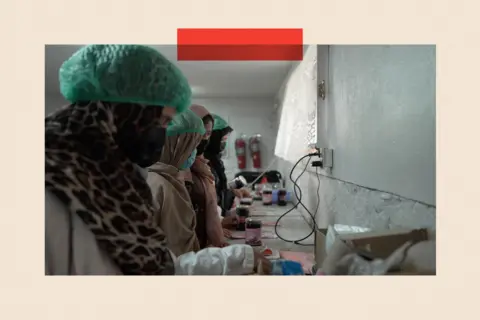
In a whitewashed basement in a village south of Kabul, a dozen young women bustle about, stirring cauldrons of bubbling cherries and plums, and sticking labels on glass jam jars. Ventures like this are one of the rare spaces where women are still able to gain skills and employment in Taliban-ruled Afghanistan.
It is run by Najia, a 47-year-old Afghan entrepreneur and mother of nine children who was married at the age of 14.
If the authorities hadn’t barred girls and young women from secondary schools and universities, many of the women in this workshop, including Naija’s daughters, would be studying for a different kind of future.
Jam-making workshops are one of vanishingly few ways women can still learn and make money
But now, even this is being squeezed too. Recent rules say women have to ask men to take their products to market, and only men can sit at their stalls to show their wares at trade fairs. The Taliban gives various reasons for this, including claiming that women aren’t wearing proper hijab or head covering.
“The world has to talk to the Taliban in a different way because it’s just not working,” says Najia. “The lives of Afghan women have to change because we’re losing hope.”
Five years after this ultra-conservative Islamist movement took charge, women are banned from much of the public sphere and girls are prohibited from going to school over the age of 12. Many inside and outside Afghanistan are asking the same pressing question: what’s the best way to engage the Taliban to try to achieve meaningful change?
The issue is deeply divisive. There are fissures between many groups, with a huge array of conflicting issues at stake. These include women’s rights, unpredictable Taliban edicts, international sanctions and aid cuts during a spiralling humanitarian crisis. The international response is split between Western countries often focused on human rights and others more interested in investment opportunities. And the West itself is divided on the best response.
Many now accept that whatever they’re doing, it’s not working.
Engage, not isolate
Few voices call for absolute isolation, not when the United Nations warns that 22 million Afghans – nearly half the of the population – rely on some form of foreign assistance to help them survive.
The country has been battered by multiple shocks: an agonising economic crisis; devastating natural disasters; clashes with neighbouring Pakistan, and the influx of millions of Afghans deported from countries near and far into this impoverished land.
And there’s no avoiding it – the Taliban are in charge now.
In the years since their fighters swept into Kabul on 15 August 2021, they’ve grown in confidence and consolidated control despite intermittent attacks by armed opposition groups based abroad, as well as Islamic State fighters.
The Taliban are collecting tax revenues and signing deals in mining, energy and more with Beijing, Moscow, Abu Dhabi, and Tashkent, along with other neighbours
But they’re still strangled by international sanctions linked to terrorism and human rights. Russia is the only country to formally recognise their rule, and they haven’t been allowed to take up what they see as their rightful seat at the UN in New York.
But formal diplomatic recognition is no longer the focal point.
“The West is losing the argument over recognition,” says a former senior UN official who requested anonymity because they continue to work in Afghanistan. They point to the growing number of countries which have conferred de facto recognition by clinching deals, accrediting diplomats, operating embassies, and more.
“There’s no doubt the Taliban would like to be recognised at the UN but it’s no longer as potent a bargaining chip as it was at the beginning,” they assess.
Behind the soaring blast walls of the foreign ministry in Kabul, in the sprawling compound of manicured lawns and graceful historic buildings, Taliban diplomats keep adding names and flags to the growing collection of Afghan embassies worldwide which are now under their control, rather than the last holdouts of the government they ousted. The current tally is more than 40.
“We need to come closer diplomatically rather than talking from a distance if we want to make progress in our relationship,” says Zabihullah Mujahid, the main Taliban spokesman.
We meet in Kandahar in southern Afghanistan, the real seat of power. This is where the Taliban’s reclusive emir, Hibatullah Akhundzada, has been steadily building his political and military base and issuing hundreds of edicts, many of them focused on erasing women and girls from public life – what he portrays as an Islamic obligation to protect them.
This five-year mark is widely seen as an inflection point.
“An unstable and potentially dangerous equilibrium,” is how the situation was described in closed-door remarks by a senior UN official at a recent international gathering.
And, yet, Afghanistan has fallen far under the world’s radar. Wars in Ukraine and the Middle East absorb international attention, and Europe’s burning issue is how to stop so many Afghans fleeing towards their shores. It’s a startling reversal.
“It’s extraordinary given the scale of Western effort from 2001-2021 how ignored Afghanistan is now,” remarks a Western diplomat who recently served as an envoy to the country. They did not want to be named because they’re still in the diplomatic service.
“The real diplomatic gap is the US,” they added, in reference to the current US administration’s decision to eliminate their special envoy position and dismantle many agencies, including the US Agency for International Development (USAID), which once led the world’s approach on almost every Afghan issue.
Even within Taliban ranks, especially among those known to differ with some of the strictest edicts handed down by their emir, there is frustration that the world doesn’t seem willing or able to forge a different kind of relationship.
“We want to be part of the international community,” emphasises Mullah Abdul Salam Zaeef, a founding member of the Taliban who now runs a madrasa for boys and girls on the outskirts of Kabul. Unlike mainstream schools, madrasas take girls of all ages and some, especially those run privately, are teaching more than religious classes.
“Just putting pressure won’t work,” he tells us. He takes the long view of Afghanistan’s history of resisting foreign invaders. “We didn’t surrender to the Russians, to the Americans, so why would the Taliban surrender now?”
Open dialogue
UN officials believe their presence in Afghanistan makes a difference, however limited. They point to progress on issues such as the treatment of prisoners, their detailed discussions on the harsh implementation of the morality code known as the Propagation of Virtue and Prevention of Vice, as well as efforts to improve humanitarian access.
“Engagement is slow, progress is incremental, and reversals are frequent,” is the UN’s sober summary of the past five years of on-off dialogue.
But it still insists it needs to stay the course.
“A stalled process is better than no process,” emphasises Georgette Gagnon, a deputy special representative of the secretary-general for Afghanistan, who is now the acting head of the UN mission in Kabul.
The UN has been criticised for not pushing back enough against the Taliban, including for holding forums such as the so-called Doha Process, in which a Taliban delegation travelled to the Qatari capital in 2024 to discuss a range of issues, on condition that no Afghan women’s representatives were at the table. UN officials insist all issues were discussed, and that subsequent meetings included their participation.
A new process called Mosaic approaches negotiations in a more structured format, on six core issues. On one side there are human rights including women’s rights, inclusive governance, and counterterrorism. On the other, there are Taliban demands – sanctions relief, unfreezing assets, diplomatic representation.
“Confidence and reciprocity are beginning to take shape to open the door to engagement on the most difficult issues,” says Gagnon whom we meet inside the UN’s vast, heavily fortified compound. She calls them “small steps on the long road”.
She insists it has to be done through a collective effort, not only through discussions by individual governments. “Pressure has not worked so far, threats have not worked; our best chance lies in consistent and common messaging and action.”
For some sceptics, even inside the UN, there’s worry that the Mosaic approach isn’t going to work either.
But just keeping the lights on, preventing a slide into isolation, and continuing protection work with vulnerable communities, especially women, is seen as essential.
Talk quietly
In dusty provincial capitals and farmers’ fields, where international and Afghan aid agencies wrestle with ways to work on the ground, the conversations continue day in day out.
It’s there that edicts handed down by the reclusive emir are translated into what are known as workarounds. These workarounds can mean women are able to work in some agency sectors from home, or in different rooms, on different floors, or even in different buildings to men.
“Everything in Afghanistan is relationships, and day-to-day that can help make things easier,” says Chris Kinder, the chairman of Afghanaid, a British charity which has been working in Afghanistan for more than 40 years. He emphasises that most of these conversations on access and implementation are conducted by experienced Afghan staff.
My own visits to provincial cities and towns in recent years have underscored how some local Taliban officials try to find pragmatic solutions. But others remain deeply suspicious of any foreign assistance.
Local agreements were described by another charity as “verbal and fragile”.
Kinder rejects criticism that aid agencies have had to compromise on principles to keep their projects in place.
“The Taliban have their red lines and we, and our donors, have ours. We discuss approaches so both sides understand where they are coming from.”
Here too, many aid officials call for a more unified approach.
Talk tougher
“We need to keep talking, but now we need to set conditions,” is the view of Najia the jam maker. It’s a stance also taken by women activists in the diaspora and human rights groups who say dialogue has been a one-way street, with the Taliban not offering any significant changes in return.
They insist discussion should not go beyond aid issues until they do.
A recent flashpoint was the decision by EU officials in June to host a Taliban foreign ministry delegation in Brussels for the first time since the Taliban returned to power. Representatives of 15 member states joined this one-day meeting to discuss processes to send back Afghan nationals who had no legal right to remain in the EU.
The EU called them “technical-level” talks. The Taliban saw them differently. A spokesperson described the agenda as including possible consular presence in Europe and the “need for trust-building measures”.
“The diplomatic community is well aware that there are already existing channels through which technical issues can be discussed with the Taliban,” says Rina Amiri, an Afghan-born former American diplomat who served as the US special envoy for Afghan women, girls and human rights from 2022 to 2025 and also grappled with the terms under which to meet the Taliban.
“Meeting in Brussels was clearly a decision that was about politics, not logistics,” she says.
The critics call it “creeping normalisation”.
Will it work?
“After these last five years I spent in Afghanistan, what do I have to show?” asks Mahbouba Seraj, an Afghan activist who runs a shelter, when we visit her in Kabul. When the Taliban took over in 2021, Seraj made headlines when she announced that she would stay in her country to fight for women’s rights.
Seraj, 78, now says she’s preparing to leave.
Her last shelter, which provided a life-saving refuge for more than 30 Afghan women fleeing domestic abuse, was shut down in December. Her repeated appeals to Taliban leaders to re-open classrooms for women and girls have been ignored.
“These small windows that the world sees, the little openings here and there including secret schools for girls, are just meant to fool everybody,” she laments with visible sadness.
But Seraj calls on the international community to keep talking.
“They have to talk, but they have to make sure that when they sit down and talk, it’s not just a lot of people just filling the air.”
Activists say women and girls have been forgotten
There are others who say the same.
“Only more capable diplomacy through quiet and confidential engagement can deliver the change,” says a former Afghan official who’s been involved in discreet discussions with Taliban officials. He hopes whoever is chosen as the new UN Secretary General and takes office at the start of next year will engage more effectively.
But, in the end, it’s not the international community which is in the driving seat of any change.
“I don’t think the answer is the world finding the right language to talk to the Taliban,” says a Western analyst who’s long been involved in Afghanistan and like others interviewed for this article asked to remain anonymous. “Five years on, it’s very clear that real change can only come from within.”
Some senior Taliban officials have occasionally spoken out about the emir’s harshest orders, in particular the closure of girls’ schools, and there’ve been rare instances when some were able to find ways to roll back his rules. One such case was last year’s nation-wide internet shutdown which paralysed daily life and was later reversed.
The emir’s edicts are regarded as absolute. The movement has shown it values unity, and power, above all else. Even the entreaties of Islamic scholars and officials of Islamic countries the world over have not bent the iron will of the emir and his enforcers, especially on the most sensitive issue of education.
Five years on, there are no simple or swift solutions.
At Najia’s jam workshop, a table bristling with her framed training certificates – from local Afghan institutes to the now defunct USAID – attests to her efforts to become a bigger and better entrepreneur in the face of cascading restrictions.
Year on year, a new society starts to take shape. But many Afghans still keep pushing and praying for a different future – and hope the world won’t forget them.
Five years after the Taliban swept to power, does the West have any influence?
Watch: BBC’s Lyse Doucet reports on the biggest cross-border movement of people
The elderly grimace, hobbling on crutches, and wide-eyed children stare, cradling chickens carried from homes they were forced to leave behind.
“It feels good to be in my own country,” 35-year-old Nazia says, just minutes after she crosses from Pakistan, where she was born, into Afghanistan.
The Torkham crossing, known as “Zero Point”, is where one hard life ends and another begins.
“But I’ve never been to Afghanistan before and many people here don’t even have enough bread to eat,” Nazia sighs as she heads, two of her children in tow, toward registration counters festooned with white and black Taliban flags.
Nearly her entire family, eight sisters and their offspring, were deported to Afghanistan this year from Pakistan or Iran.
They are part of the biggest cross-border movement of people anywhere in the world.
Millions of Afghans have fled across the borders to Pakistan and Iran for decades – seeking refuge or employment – and the number escaping Afghanistan has continued to rise since the Taliban takeover in August 2021.
Most are now being forced to return as these two neighbours crack down on undocumented migrants. Nazia and her family were undocumented but the UN and human rights groups say the security sweep is reaching far beyond that group to include registered Afghans too. Even Pakistan now publicly says that Afghans with Proof of Registration cards are not exempt.
The expulsions show no sign of stopping.
The number forced to return this year from Pakistan and Iran has already reached another million, according to the UN’s Refugee Agency, the UNHCR.
“In a little under three years, we’ve seen six million people, a population that is itself the size of a small country, come back to Afghanistan,” observes Charlie Goodlake, spokesperson for the UNHCR in Afghanistan.
“We’ve never seen in recent history a return movement on this scale,” he underlines, standing in the baking heat in the tented village close to the border.
It’s a desolate landscape of tarpaulin and plastic shelters, many now tattered and torn, erected by the UN and other aid agencies to provide refuge for a few nights for a people arriving with nowhere to go.
Many returnees have not set foot in Afghanistan for decades; many like Nazia have never been here at all.
“I left 45 years ago during the Soviet invasion of Afghanistan and most of my brothers were born in Pakistan,” explains Sarwar, who arrived a few days earlier with seven brothers and their families in a convoy of 40 people and the jumble of their worldly goods packed into a lumbering Pakistani lorry.
“We spent a long time there, so of course I felt heartbroken when they forced us out of our home,” he says.
“But, despite all that pain, I am also happy because I am finally free of harassment by Pakistan’s police.”
Every family we met told us they had experienced prejudice and harassment by authorities in Pakistan.
The Pakistan government has not responded to the BBC’s questions, but a foreign ministry spokesman told a briefing in Islamabad on Sunday that “the Government of Pakistan undertakes the necessary measures to prevent any instance of harassment or maltreatment of Afghan nationals in Pakistan. If such incidents have taken place, they are sporadic and are dealt with fully in accordance with the law”.
Both Pakistan and Iran say it’s past time for Afghans to go home, accusing some of posing a security risk, and others of being a financial burden.
The expulsions from Pakistan and alleged abuse intensified after a major escalation in fighting between Pakistan and Afghanistan last October. In February, Human Rights Watch highlighted “door-to-door raids, late-night home searches and arrests without warrants”.
In Iran, which claimed last year to host more than four million undocumented Afghans, the mass deportations were accelerated after its 12-day war with Israel and the US in June 2025.
The New York based Centre for Human Rights in Iran accused the authorities of using the post-war climate to “cast suspicion on Afghan migrants – accusing them of espionage and branding them as potential spies for Israel”.
The UN’s refugee agency continues to underscore the humanitarian principle that any return should be “voluntary, safe and dignified”.
But in Torkham, Sarwar’s sister-in-law Zarina laments the precarious future they face: “We have no resources to start a business or earn a living, and we don’t even own a tent to live in”.
Zarina, 40, is among the million Afghan who have returned this year alone
Inside the barren transit tent, which provides little escape from scorching 41C heat, Zarina sits alongside an anxious huddle of women and their children.
Are they worried about the future for women and girls in a country where the Taliban has barred women from much of public life, including secondary school and university?
Forty-year-old Zarina turns to make a sweeping gesture with her arm: “Look at them, they’re all girls. Of course I’m worried.”
Some returnees are not just worried; they’re terrified.
“I don’t leave this house,” a former Afghan security guard, first deported from Iran and then Pakistan, nervously tells us when we meet him far from the border in what he hopes is a safe house.
“We are all living in fear including my wife and children who are also afraid to go outside.”
He dismisses the Taliban government’s amnesty, announced days after their return to power which declared that former government officials, security personnel and civil servants would not face retaliation and were encouraged to return to work.
“I have no trust in their amnesty because many of my colleagues have been killed.” He says his case had been registered with the UN but was deported before he could be transferred to a safer country.
Financial hardship magnifies the pain. The steep cuts in foreign aid worldwide are especially sharp in Afghanistan where the Taliban are still stuck in sanctions linked to terrorism and human rights.
Pakistan confirmed on Sunday that 16,000 vulnerable Afghans have now been granted, on humanitarian grounds, a temporary exemption from being deported – a decision welcomed by the UN.
But sources estimate that the number of Afghans in Pakistan at risk of serious harm, including women and girls who would be denied education, could be as high as 250,000.
Zarina says she is worried about the future of the girls who cannot attend secondary school and university in Taliban-run Afghanistan
At the graceful foreign ministry compound in Kabul, Taliban Foreign Minister Amir Khan Muttaqi tries to put on a brave face.
“There’s no doubt that we need some help,” he admits. “There is pressure due to their return but in the long run, it will benefit them as well as Afghanistan.”
In the first years after the Taliban swept to power in 2021, some of their ministers made light of humanitarian issues, saying God would provide.
The UN now estimates that 21.9 million people, nearly half the country, need assistance this year to survive. The UN’s children agency, UNICEF, said last week that one million children faced “life-threatening” malnutrition.
“No country in the world could handle this kind of crisis on its own,” UNHCR spokesperson Goodlake assesses, while acknowledging Taliban government efforts to help returnees as they arrive.
But, he adds, “We also know that many of the restrictions and edicts they put in place, particularly on women and girls, don’t help us elicit international support”.
Muttaqi reiterates his government’s line that matters like girl’s education are “internal issues” for Afghans to resolve.
The severe restrictions on the lives of girls and women is one of the major issues in the Taliban’s international relationships and that has cost them. Five years on, only one country, Russia, has formally recognised their rule.
But when asked about this, Muttaqi points to the deepening diplomatic and economic ties with neighbours such as China and India, as well as Central Asian states.
As for Kabul’s relative isolation from western nations, he asks, “those who didn’t have relationships with us over the past five years, what have they achieved?”
He answers his own question: “Nothing.”
We heard that word – “nothing” – from every family we met at Zero Point, but in a much different sense.
All were embarking on the hardest of homecomings, beginning all over again – with almost nothing.
‘I’ve never been to Afghanistan’: Six million deportees forced to start over under the Taliban
Afghans areno longer welcome by those who once helped thme leave Afghanistan, abandoning them, no longer wanted. Western Values eh? Go figure.
Once welcomed, Afghans are now being deported. Once only those with criminal records. Now not so much. Taliban invited to Germany to aid with the deportation
Germany has turned to Afghanistan’sTaliban to assist its deportation of Afghans back to Afghanistan, from where they fled. It’s quite the about face even for the West.
The foreign ministry says there are about 450,000 Afghan nationals in Germany. It didn’t say how many they wanted to deport, but the spokesman, Sebastien Giese made it pretty clear at Monday’s press conference in Berlin that it is Germany’s hope to deport as many as they can.
“It is the clear objective of the Federal Government to increase the number of deportations to Afghanistan. We are also working toward that,” said Giese, thus the need to get the Taliban to Germany to give Germany’s new center-right Christian Democratic Union (CDU) Party a hand.
It seems more than a little hypocritical of Germany to refuse to reopen its embassy in Afghanistan because it abhors the Taliban’s regressive laws which Afghans are forced to live under, including those targeting women and girls, yet Germany invites the Taliban to Germany to help deport Afghans, who fled Taliban rule, back to Afghanistan.
Western values eh? Go figure.
Last year, after Germany opened the Afghan diplomatic mission in Bonn to the Taliban, the Taliban launched an advertising campaign looking for interns seeking “to gain practical and professional experience at the Consulate General of Afghanistan in Bonn, working within a diplomatic mission.” The upside: It didn’t say women need not apply.
Germany has sought to sidestep the question of diplomatic recognition, which Germany, like all countries, except Russia, have refused to give the Taliban governemnt, with talk of seeking “technical” aid from the Taliban. But that seems disengenuous given that the Taliban are at the Afghan diplomatic mission in Bonn. You can’t have it both ways Germany.
Germany also says it is deporting those Afghans with a criminal record. Not true. On the last plane load of 81 Afghans sent from Germany to Afghanistan, at least one had no criminal record. It was the first, but given the ramped up efforts to deport Afghans it most certainly won’t be the last.
Germany appears to be the first country to openly seek the Taliban’s assistance in deporting Afghans. However it is not likely to be the last.
Because the Taliban effectively govern Afghanistan under the international-law principle that those controlling most of a country function as its government, Germany or any country returning Afghans does indeed need their help. Certainly Germany can’t just fly a planeload of Afghans to Kabul, dump them off and fly away. Nor it would seem can any country seeking to fly deported Afghans home.
It’s a far cry from the 2021 welcome many western countries gave Afghans fleeing Kabul when the Taliban defeated the United States and its NATO allies and returned to power.
The open arms were never really about affection for Afghans, but more a gesture intended to assuage the collective guilt of the largely western world for its failed 20-year invasion and its desperate and humiliating departure from Kabul.
Rather than admitting they were abandoning Afghans and Afghanistan, taking their planes and going home, the departing invaders sought to take those who had befriended them, ignoring the 42 million other Afghans, who had also hoped for a better day back in 2001 when the invaders first arrived.
As a result, there are thousands stranded in Pakistan who were helped to leave Afghanistan by their so-called foreign friends, living in fear of being deported back to Afghanistan or thousands more living in western countries, now uncertain of their future, living in countries whose governments want them gone.
Western values eh? Go figure.
Germany Invites Taliban To Aid Afghan Deportations
The United Nations says aid workers are still in a “race against time” to remove rubble and rebuild after the devastating earthquake struck eastern Afghanistan last month, killing at least 2,200 people and cutting off remote areas.
The 6.0-magnitude quake on Aug. 31 was shallow, destroying or causing extensive damage to low-rise buildings in the mountainous region. It hit late at night, and homes — mostly made of mud, wood, or rocks — collapsed instantly, becoming death traps.
Satellite data shows that about 40,500 truckloads of debris still needs to be cleared from affected areas in several provinces, the United Nations Development Program said Wednesday. Entire communities have been upended and families are sleeping in the open, it added.
The quake’s epicenter was in remote and rugged Kunar province, challenging rescue and relief efforts by the Taliban government and humanitarian groups. Authorities deployed helicopters or airdropped army commandos to evacuate survivors. Aid workers walked for hours on foot to reach isolated communities.
“This is a race against time,” said Devanand Ramiah, from the UNDP’s Crisis Bureau. “Debris removal and reconstruction operations must start safely and swiftly.”
People’s main demands were the reconstruction of houses and water supplies, according to a spokesman for a Taliban government committee tasked with helping survivors, Zia ur Rahman Speenghar.
People were getting assistance in cash, food, tents, beds, and other necessities, Speenghar said Thursday. Three new roads were under construction in the Dewagal Valley, and roads would be built to areas where there previously were none.
“Various countries and organizations have offered assistance in the construction of houses but that takes time. After the second round of assistance, work will begin on the third round, which is considering what kind of houses can be built here,” the spokesman said.
Afghanistan is facing a “perfect storm” of crises, including natural disasters like the recent earthquake, said Roza Otunbayeva, who leads the U.N. mission to the country.
 Afghanistan Peace Campaign