U.S. Official: Taliban Have ‘Relatively’ Cooperated in Counterterrorism

Sebastian Gorka added that there are groups in Afghanistan that pose a threat to the current ruling authority as well.

Sebastian Gorka, Deputy Assistant to the U.S. President and a senior member of the National Security Council on counterterrorism affairs, has said that the “Taliban” have cooperated with the United States in the fight against terrorism.

Sebastian Gorka added that there are groups in Afghanistan that pose a threat to the current ruling authority as well.

He stated: “Cooperative counterterrorism partners, because there are certain threat groups in their country, Muslim threat groups that threaten them as well, and so we’re working together. We don’t have a complete overlap in threats, but not bad. The biggest concern is, of course, and you understand this, is with the surrender of Kabul under Biden, it’s very hard to see everything we need to see happening in that region.”

The senior U.S. official also spoke of some progress, particularly regarding U.S. citizens who, according to him, are detained in Afghanistan.

Sebastian Gorka emphasized that after August 2021, the United States lost its full oversight over the situation in Afghanistan.

He added: “With regards to Afghanistan, some very promising things I can’t give full details about are in motion right now, especially when it comes to US citizens who are being detained in Afghanistan. My greatest concern, and the Taliban, this sounds strange coming out of my mouth, but the Taliban have been moderately cooperative counter-terrorism partners, because there are certain threat groups.”

Meanwhile, U.S. President Donald Trump once again criticized the manner of the U.S. withdrawal from Afghanistan.

At a press conference in the White House, Trump said that Biden left behind a large amount of U.S. military equipment in Afghanistan.

“We gave a lot of it away to Afghanistan, but relatively small compared to the overall, but I think it was the most embarrassing day and period in the history of our country that they allowed those 13 wonderful people, but it’s really hundreds of people were killed,” Trump said.

The Islamic Emirate has not yet commented on this matter, though it has previously rejected the presence of terrorist groups in Afghanistan.

This is the first time since Donald Trump assumed the U.S. presidency that a senior American official has made such remarks about the Islamic Emirate.

U.S. Official: Taliban Have ‘Relatively’ Cooperated in Counterterrorism
read more

Peace Changed the Village Where War Changed Me

Joao Silva

Reporting from Deh-e Kuchay, Afghanistan

The New York Times

Aug. 21, 2025, 8:58 a.m. ET

Fifteen years after a combat photographer lost his legs to a land mine, he returned to the place in Afghanistan where it happened.

The village elder was out in his pasture, as he is every morning, crouched low in waist-high alfalfa. He ran his sickle through the thickets, and he and his grandsons gathered the plants into heaping bundles, lugging them on their backs to the two cows sheltered behind the walls of the family’s homestead.

The last time I was in this small farming community in southern Afghanistan, these simple tasks were impossible. The village was a front line in an interminable war. Buried beneath the earth was an endless arsenal of explosive devices, the Taliban’s weapon of choice against American forces.

“We were afraid of being killed, of explosions, and of bullets,” the elder, Haji Muhammed Zarif, 58, told me recently, his weathered features deepening as he squinted into the early sun.

One of those explosions he remembers distinctly. On Oct. 23, 2010, U.S. soldiers were searching Mr. Zarif’s apricot fields when a blast rang out in a nearby compound. A small cloud of smoke rose into the sky as he watched from a safe distance. Minutes later, a helicopter landed, and Mr. Zarif could see soldiers carrying someone toward it.

That distant figure, I told Mr. Zarif, had been me. While working as a photographer for The New York Times, I stepped on a land mine and lost both of my legs.

From the moment I picked up a camera again, I had wanted to return to this village, Deh-e Kuchay, in the fertile Arghandab Valley. That became possible after the war ended in 2021. And now, more than 30 years since my first visit to Afghanistan and nearly 15 years after my injury, I was allowed back, seeing the country as I had never seen it before: at peace.

I was here in search of closure, but not the emotional kind. I had unfinished journalistic business. My time in Afghanistan had ended abruptly. I had missed the U.S. withdrawal and the Taliban takeover, and I was sad that I had not seen the story through. But now I would pick it back up in a new chapter.

I had no idea what life would now be like under the Taliban, and was open to whatever I would see. I harbored no anger toward the Taliban. My legs had been lost to an act of violence, but I did not take it personally. The mine was buried for whoever came along first. I had not been surprised, after the war had killed or maimed so many, that I was next.

On that long-ago autumn day, I had been on a patrol with a platoon from Task Force 1-66 of the U.S. Army’s Fourth Infantry Division, documenting mine-removal operations with a Times correspondent, Carlotta Gall. It was the height of the American presence in southern Afghanistan, months into President Barack Obama’s troop “surge” aimed at turning around the faltering war effort.

Setting out from their combat outpost, the soldiers intuitively fell into single-file formation. As they approached an abandoned Taliban checkpoint, a prime location for roadside bombs, the patrol was ordered to halt. Three soldiers then pushed forward, sweeping the road ahead.

Two of them — Sgt. Brian Maxwell, who handled the sniffer dog, and Sgt. Anton Waterman, who provided security — continued on to a destroyed compound. They stepped inside, and I followed eagerly in tow, determined to keep my camera close to the action.

I don’t recall hearing an explosion, but there was a metallic click of sorts, followed by an immeasurable electric shock that ripped through my lower body, overpowering all my senses. I collapsed into a rising cloud of smoke and dust.

“Guys, I need help!” I remember saying. As I lay in the dirt, I instinctively tried to take pictures of my shredded legs but failed. I managed to shutter three frames of the soldiers I was with — they suffered concussions but were otherwise uninjured — before the pain took hold, forcing me to drop the camera.

Within seconds, I was being carried to the relative safety of the nearby road. I asked for a cigarette. When Carlotta materialized at my side, I used the satellite phone she was carrying to call my wife, Vivian, back home in South Africa. I figured that it would be better for her to hear the news from me rather than from an editor in New York. Part of me also wanted to hear her voice one more time, just in case.

I asked for another cigarette, but my request was declined as medics worked frantically to keep me alive. My memory fades as I was loaded into the medevac helicopter.

I returned to Deh-e Kuchay in May, I first met Mr. Zarif, the village elder, outside a small police outpost. He said he had thought that the person who was hit by the explosion that day in 2010 had died. “But today, I’m happy to hear that the person was you, and that you are alive,” he said, his eyes burrowing into mine.

He told me how much had changed now that the country was free of war.

“In the past, we were only living. We couldn’t enjoy our lives,” Mr. Zarif said. “But now, since there is security, we enjoy every moment of life, and have come to realize that we are truly alive.”

He took me to the exact location where I had lost my legs, but I did not recognize what I was staring at. The compound was gone. In its place stood a pomegranate orchard in flower, the petals glowing blood red in the afternoon sunlight. It gave me some comfort to see that life now grew from what had been a place of destruction.

Map located Deh-d Kuchay and the Arghandab River near Kandahar in the Kandahar Province of Afghanistan.

Behind us, the checkpoint that the soldiers of the Fourth Infantry Division had once warily approached was again controlled by the Taliban. A flag of the Islamic Emirate of Afghanistan, as the Taliban call their government, mocked 20 years of a futile war that killed more than 160,000 Afghans and over 6,000 Americans. A policeman sat on a plastic chair, his rifle resting on his lap, as he kept an eye on the village’s somnambulant traffic.

The checkpoint commander, Muttaqi Saheb, 43, and his crew took refuge under a mulberry tree, a rest area where tea is drunk and prayers are recited. Mildly curious, he listened to my story and asked how I was feeling now.

“I am good. Strong,” I said, and he nodded in appreciation. I had spent about 19 months recovering at Walter Reed Army Medical Center. My injuries meant that I would never photograph combat again, but I eventually resumed my work, even if I must now allow the action to come to me instead of rushing toward it.

As tea was served, Mr. Saheb and I talked about the war.

“The United States, with all its resources and air and ground forces, could not establish security in Afghanistan,” he said. “But the Taliban, who had nothing except motorcycles and Kalashnikovs, were able to take over the entire country in a short period of time and provide security.”

Deh-e Kuchay is once again a hive of rural activity as its residents carve a living from the land. Its roughly 250 families are served by two small stores on opposite ends of the village. One doubles as a motorcycle repair shop, fixing punctures and the like.

The village school is filled with the sound of children’s laughter. Young men play cricket on an open ground that once served as a landing pad for American helicopters.

Signs of the occupation are slowly disappearing. The old U.S. base in the village is gone, but blast walls still line part of a road. Where houses for American soldiers once stood, workers were laying foundations for new homes that will be occupied by villagers.

I sought out Haji Muhammed Jan, 67, a farmer Carlotta and I had met on the day before my injury.

He has expanded the pomegranate orchard where we had gathered all those years ago. He said he was happy that peace had returned, but he complained that life remained difficult, that the economy was not good. Huge cuts in international aid, crippling sanctions related to the Taliban’s harsh restrictions on women and girls, and a postwar ban on opium cultivation have led to hardship for many Afghans.

“Since our young people don’t have jobs or employment, the rate of theft has increased,” Mr. Jan said. “Anything that can be sold, they steal and take away.”

As the morning sun cleared the horizon, we sat on a ground covering at the edge of Mr. Jan’s field, breaking bread and sipping tea, while he reminisced about the war, including the day when U.S. troops kicked down the gate to his orchard. He fondly recalled a soldier named Nick, a man he described as skinny but very strong. It had taken all of Mr. Jan’s strength to defeat the soldier in arm wrestling, he said.

A neighboring farmer with manic eyes and wild hair made a sudden appearance. He held a bouquet of roses and other flowers. The news of a foreigner’s presence in the village had spread fast. Foreign journalists working in Afghanistan face reporting restrictions, and I had been drawing a crowd when I stopped to take photographs.

“In the past, we were planting I.E.D.’s for you,” the man, Sher Ahmad, 50, said as he handed me the flowers, sitting down unceremoniously and joining us. “Now we give you flowers.”

It took me a while to process his remark. In Pashtun culture, giving flowers can be a gesture of love, respect and a sense of security. I wondered if the roses were a peace offering.

I soon learned that Mr. Ahmad’s brother was a prominent Taliban combatant and, according to the school’s principal, Mawlawi Hafizullah, had planted many bombs targeting American forces.

The fighter, who goes by the nom de guerre Sardar Agha, is well known and admired in the community. He financed an opulent mosque with a towering minaret that dwarfs the surrounding mud structures. Mr. Ahmad said that Sardar Agha had told him to “welcome the journalist properly.”

Through an intermediary, I asked Sardar Agha if he would meet with me, and initial indications were positive. But as much as I would have reveled in the chance to sit and talk, in the end he refused.

I was disappointed but not surprised, because somewhere in the recesses of my mind I knew it was a long shot. It left me to wonder whether Sardar also wants to put the war behind him, or whether he was counseled not to meet me.

As we left the village and the sky dawned in subdued hues, I felt content to have walked on that ground again, even if through the aid of prostheses, and to have come this far, even if Afghanistan itself has so far to go.

Joao Silva is a Times photographer based in South Africa.

Peace Changed the Village Where War Changed Me
read more

A year of Propagating Virtue and Preventing Vice: Enforcers and ‘enforced’ speak about the Emirate’s morality law

Kate Clark • AAN Team

Afghanistan Analysts Network

It is a year since the Islamic Emirate issued a new law to propagate virtue and prevent vice. The goal, of changing Afghans’ dress and behaviour, has been an abiding mission of the Taliban’s since they first emerged as a movement in the 1990s. The law laid out not only the actions that the Emirate deems obligatory or forbidden for Afghan men and women, but also the duties and powers of those enforcing it. It gave them extensive powers to both police and punish wrongdoers, and one privilege to male enforcers – they are legally allowed to interact with unrelated women as part of their duties. This policing of women causes great fear and anxiety among Afghans, as Kate Clark and the AAN team found when they interviewed women and men about the law. However, three enforcers, also interviewed, all of whom work in Kabul, expressed not a desire to strike fear into the hearts of the people, but, rather, uneasiness and difficulty in policing the moral behaviour of Kabulis. They found the capital alien and alienating, many of its people disrespectful and women, in particular, hard to deal with.
This report is drawn from research which will be published in full as a thematic report. 

You can read AAN’s short translation of the law here and a full version, with footnotes, here.

One of the first actions of the Islamic Emirate of Afghanistan (IEA) on regaining power in August 2021 was a profoundly symbolic one – turning the Ministry of Women’s Affairs into the Ministry for Propagating Virtue and Preventing Vice.[1] Then, a year ago, on 21 August 2024, the power of the ministry was amplified by a decree from Supreme Leader Mullah Hibatullah Akhundzada. It consolidated and codified many of the Emirate’s existing rules, repeating some of those he had already issued as decrees, orders or instructions, broadening others and adding new types of behaviour or actions that became obligatory or forbidden.

The articles of the 45,000-word-long law which are most heavily policed are: men must grow beards that are at least as long as their fists and wear loose-fitting clothes, and pray on time and in a mosque; and women must wear what the Emirate calls ‘sharia hijab’, ie be fully covered, except for their eyes, with their voices also considered to be awra (a term used usually to refer to parts of the body that should be hidden). The stated rationale for the strict rules on women’s dress is to prevent fitna, meaning temptation, or social disorder that facilitates sin. Worth noting here is that interviewees sometimes refer to women as “not wearing hijab” (bi-hijab). This does not mean they are not covering their heads, but that they are wearing less bulky or less covering clothes than the speaker thinks is ‘proper’ or ‘permissible’.[2]

The law also laid out the duties and powers of those policing it, the enforcers (muhtasibin), who are charged with amr bil-maruf wa nahi an il-munkar, ‘propagating virtue and preventing vice’. In this report, we refer to both this type of policing and its enforcers by the shorthand used by Afghans, amr bil-maruf, as well as ‘vice and virtue’.

We interviewed nine members of the public, six women and three men, from a variety of urban locations: Bamyan, Mazar-e Sharif in Balkh, Ghazni, Herat, Qalat, provincial capital of Zabul, one of the urban centres in Loya Paktia and Kabul. Some had travelled and could compare their experiences of amr bil-maruf in different provinces. We also spoke to three male enforcers, from Panjshir, Wardak and Paktia, who all now work in the capital.[3] The names of all the interviewees have been changed to safeguard their anonymity. Any details that might identify them have also been omitted.

A climate of fear

Almost all of our non-enforcer interviewees were frightened of amr bil-maruf and had taken steps to change their behaviour or dress so as to avoid confrontations. For women, the threat is felt deeply. For example, Pari, a midwife working in Kabul, described how after three encounters with amr bil-maruf when outside, she now felt forced to cover her face – they had not accepted her excuse that she had difficulty breathing. She described the third occasion they stopped her in the street:

I was near Pul-e Surkh when suddenly, I was surrounded from all sides by these amr bil-maruf officers – about six of them. All six grabbed my arms and said, “We warned you the other day not to wear these clothes or show your face like this again. Why didn’t you obey?” I was so terrified by this that I couldn’t even speak and was shaking. Eventually, with tears in my eyes, I said, “Mawlawi Sahib, I apologise. My clothes are fine, but I can’t wear a niqab because I have difficulty breathing; it feels like my heart is constricting.” He replied that, if you feel your heart constricting, then don’t go outside. Now, should I call the police to take you to the station? 

The men threatened to summon her family to the police station to guarantee she dressed ‘properly’ in the future. “Hearing their words,” Pari said, “my whole body began to tremble.” She said one of the enforcers took pity on her and let her go, but she was left in a state of “absolute terror,” and now either asks her father to walk her to work or takes a car. She also said that every time she leaves the house, her mother worries and calls her several times a day to check that she is OK, even when she is at work. This may seem like an overreaction, but, Pari said, amr bil-maruf also come to the hospital “two or three times a day” to make sure staff are segregated and that women are wearing full hijab, including covering their faces. If they do not, she said, they will be fired:

We are, thank God, Muslims, and we have always observed hijab in the past, but we did not wear long cloaks or Arabic-style hijab. … I’ve been working in hospitals for nearly eight years now and it’s impractical for [medical staff] to wear full hijab or traditional long dresses because [our] work environment differs from other workplaces.

Pari was not the only interviewee to be stopped on the street or at their place of work by the enforcers. Samira works as a teacher and a midwife – she switched careers after the Emirate stopped her progressing to her fifth year of medical training, when they banned women from higher education. She spoke about her experiences teaching in educational centres in Bamyan and Kabul:

In Bamyan, every Thursday, [the enforcers] would visit the centre to inspect the girls’ hijab. They’d train us on how to advise our students to wear niqab and hijab properly and how to comply with the amr bil-maruf law, instructing us to tell our students to wear long abayas, black scarves, black shoes, black socks, and, if possible, black gloves, and stressing that they should avoid white shoes and scarves.

Samira also described a raid on the Kabul educational institute where she taught:

Around 15 enforcers arrived in half a dozen vehicles. Suddenly, our institute’s guard started calling the girls to wear their scarves properly, warning that the enforcers would arrest anyone who didn’t comply. … There were 85 students in my class. When the enforcers arrived, they said our hijabs looked acceptable, but then they also stood near the gate, checking the girls’ hijabs again from head to toe. I witnessed girls fainting and some even hiding in the toilets out of fear. They did not have a single female enforcer with them. It was all men who checked our clothing. It was such a terrifying scene because they came in such force and with so many vehicles.

The first theme to emerge in these and other interviews, and the starkest, is the climate of fear engendered by amr bil-maruf. The threat to women of being spoken to, insulted or even arrested has had a strong deterrent effect. It ensures women not only keep to the Taliban’s dress code. Some of our interviewees also reported that they (or their female relatives) now rarely leave the house, or only with a man. The reason why the threats are so powerful was explained by Hasina, a worker with an NGO in Kabul, who relayed what her brothers had said: “They say that God doesn’t want any of us taken to the authorities, as it would bring shame on our family. If one of us were taken for not wearing hijab, people would not believe that was the actual reason. They would think of other, negative reasons for the arrest.” Parvez, a teacher from Ghazni, also explained: “In this traditional society, when amr bil-maruf arrests a woman or imprisons her, people will think badly of the woman. They don’t think she must have left her home because she had to.”

Families ‘self-policing’

The deterrent, then, goes beyond the individual. The threat of unrelated men admonishing or even arresting their wives, daughters or sisters has led many families to police their female relatives, even if they do not actually agree with the new rules. In Mazar-e Sharif, businesswoman Safira, for example, said she can no longer go out alone. Previously, her husband, “a broad-minded person,” was more relaxed, but since the new law, she said, “he has also become very conservative, meaning he doesn’t let me go out alone. He might accompany me or ask our son to do so. My husband has brought these restrictions as he’s frightened that the enforcers might stop, arrest and detain me. We heard they’d even arrested women who were wearing hijab. Even if you’re fully covered, they might still find a pretext to take you with them.”

The law thereby also infantilises women: Safira, who owns and runs a factory, has to rely on her husband or son when she goes out. Hasina, the NGO worker, who used to travel to different provinces for work, now has to take her brother or a 14-year-old nephew with her if she wants to leave the house.

Going beyond the law and a major paradox

Also emerging from our interviews is that enforcers go above and beyond even the tight restrictions of the current laws. Safira in Mazar, for example, was told she must wear a burqa and several women have been told to wear gloves. Many were told that they must have a mahram when they are outside. Yet, an earlier rule had specified that this is only obligatory if a woman is travelling more than 72 kilometres, while a law on women’s clothing issued in May 2022, as well as the vice and virtue law itself, acknowledges that women may have to leave the house if necessary. Neither specifies that this must be with a mahram.[4]

What is striking as well is that although the law forbids unrelated men and women from looking at each other, amr bil-maruf are charged with just this task: scrutinising women, speaking to them and even detaining them. The three enforcers we interviewed (more from whom below) all said they were not comfortable dealing with unrelated women and would certainly rather not talk to them. Yet there appear to be enforcers who are not loathe to go into female-only classrooms or parts of a hospital.

Men’s experiences

One of the men we heard from, Parvez, the school teacher in Ghazni, when asked about the impact of the law, said restrictions on men were harsh, but far harsher for women. He described how his wife could no longer “go out freely due to fear of the enforcers.” A teacher herself, she is now unemployed because of Taliban restrictions and “can’t go out without a mahram and can’t dress how she wants to, but must wear black clothes, a niqab and even gloves: “This is what we don’t like,” he said. “We don’t want others to interfere in personal issues. We’re Muslim, so we know what sharia asks us to do, but the Taliban overdo it. They’re excessive [efrat mekonand].” Parvez had himself lost one job over beard and clothing violations, but managed to get another. He was still “very young,” he said, and liked to wear the latest fashions, but after being stopped twice, the second time with the threat of prison for trimming his beard a little, he now conformed to the demands of amr bil-maruf.

In Kandahar, businessman Ahmad Khan said he himself was not bothered by amr bil-maruf. His age, as well as his beard and clothes – similar to the enforcers’ – gave him some protection and in the upmarket part of Kandahar, “a civilised township,” where he lives, the enforcers were respectful. However, he said:

This law has robbed us of our freedom [as a family] to go to restaurants and eat a meal, or to an ice cream parlour. Women cannot go to restaurants even with a mahram. I can’t take my female family members with me on a picnic. I can’t even travel with my wife in my own car with my heart at ease. 

He said the enforcers do stop and question the young men in his family if they are out driving with female family members: “My sons and I no longer go out with our wives unless it’s necessary,” he said. “We’re afraid they’ll beat us or threaten us in front of our wives.”

Only one of our interviewees reported an easier experience, Zarghuna, the principal of a girls’ primary school in one of the urban centres of the southeast. She explained that, because her province was “traditional,” the new law had made no difference to what women there wore. She and her fellow teachers also still walked to work without mahrams: all of them “are from the same area,” she said, “and so we don’t need a mahram.” Families could also still go out to recreational areas together.

Local women, she said, rarely go shopping – men generally do that – but sometimes, women without a mahram or a man at home do have to go to the market. There never used to be a problem, she said. However, they had started to see a clampdown. Shopkeepers – including pharmacists – had been told not to serve unaccompanied women and warned that if they were caught doing so, their pharmacy or shop would be closed and sealed. She said some shopkeepers in the market, out of fear of the Taliban, would not now sell anything to female customers, not even medicine. Also, for the last two years, women had been required to be accompanied to government offices and hospitals. Even women in need, if unchaperoned, would now be turned away from hospitals. Women who don’t have a mahram at home,” she said, “are really facing problems.”

Most of the interviewees described being stopped and questioned at checkpoints if they travelled out of town, but Zarghuna said that, when travelling to and from Kabul, amr bil maruf had never stopped the car. She had also seen women on that road travelling without a mahram. A woman alone would not be allowed to board a bus or a shared taxi to a distant place, she said, but they could travel in a group of three or four.

Her comments shed some light on regional differences. Where amr bil-maruf rules on dress and behaviour are normal, there appears to be less friction between enforcers and the populace. Another interviewee, Rashid Khan in Zabul, for example, when asked about the impact of the law on his female family members, said it had not affected their freedom at all. They could “still go to the wedding parties of neighbours and relatives as in the past – they’re held in homes, not in wedding halls, which have been banned in other provinces[5] – and there have never been parks or other entertainment places in Qalat city that women can go to.”

However, Zarghuna’s experience also points to possibly greater leeway in her ‘traditional’ province than a city like Kabul – or greater respect for the populace, or fear, if enforcers are concerned that male relatives might react badly if they challenge women over their behaviour, especially if it has always been deemed acceptable, such as the teachers walking to work unchaperoned. There are also fewer enforcers than in the major cities, like Kabul, Mazar and Herat, where, as well, women – and men – have had greater freedom, and the enforcers see more ‘wrongdoing’ that they want to correct – and come down more heavily. Our interviews with the three enforcers also shed some light on this. None are from Kabul, but all are now working there and they find it an alien and alienating city.

The enforcers’ experience

Mullah Hamdullah from Paktia and Mawlawi Niamatullah from Wardak both described joining amr bil-maruf in terms of getting a (well-paid) job. Our third enforcer interviewee, Qari Abdul Aziz from Panjshir, said he had always had a strong attraction to da’wa – inviting Muslims to strengthen their faith or non-believers to embrace Islam – and as a graduate of sharia, the job of amr bil-maruf was, for him, a calling. All three had found that the Afghan capital was rife with wrongdoing, as Mullah Hamdullah said:

It’s a hugely populated city, with people from all across Afghanistan and the amount of munkarat [wrongdoing] is high. Immorality is widespread. Hijab is a major issue, as many women don’t observe it. Many young people shave their beards, adopt Western-style haircuts and engage in drug use and other harmful behaviour. Extra-marital relationships are also a serious concern.

“The most common problem among men,” said Mawlawi Niamatullah, “is the use of drugs like tablet k.[6] The other issue is flirting with girls. Among women, the major problems are not wearing proper hijab, and again, flirting with men.”

Qari Abdul Aziz said working in Kabul was far more difficult than in his home province, where he was familiar with the people and understood their culture:

It was easier to ‘invite’ women [in Panjshir] than in Kabul because I didn’t have to face women there. If a woman in the area was without hijab, I’d call her family, her father and brother, and the head of the village and tell them that she shouldn’t go outside without a hijab. Our job was easy there because I faced [only] the men and we knew the people. I’d convey my message to women through her family. 

In Kabul, there are many women without hijab, but we can’t find their families. Nor do we have the courage to speak directly to an unrelated woman. However, we try to guide them through various means. We make them understand, so they realise they should observe hijab. This is extremely difficult because we can’t stop an unrelated woman and have a conversation with her.

He said that, most of the time, it was good to seek help from the local elders, the wakil-e guzar (neighbourhood head) or the imam from the mosque, or they informed the residents of the area that women must observe “full sharia-compliant hijab.” However, in the markets, he said, they encountered all kinds of people, and sometimes a woman, asked politely to observe hijab or maintain her distance from men, would “respond rudely and we’re obliged to remain silent and leave the area because we don’t use force – we only speak to them gently.”

All three enforcers felt disrespected, even wary of the people they had to deal with, especially Kabuli women, as Mawlawi Niamatullah explained:

Women in Kabul are not like women. They’re actually men, or even more than men. When we ask them why they don’t wear hijab, they argue and behave very rudely. I personally try to avoid them as much as possible and tell others to deal with them.

In the past, I was in Logar. There was also wrongdoing there, but not as much. People there had some sense of shame. When you told or warned them once, they’d stop. Here, people don’t care about shame and do whatever they want. We therefore had a good time, as people would listen and cooperate. But not here. People neither listen to us nor respect us.

Mullah Hamdullah said they were instructed to deal with people respectfully and to try to persuade them in “a kind, convincing manner to abandon their wrongdoing,” as sharia instructs. He believes this approach is failing:

For the past four years, we’ve taken a soft approach, but we haven’t seen much change. To be honest, there’s very little difference compared to the time of the previous government. Markets are still full of women, men are clean-shaven and copying female styles, and hijab is barely observed. I believe this is the result of our soft approach. We just say, “Do this,” and “Don’t do that,” and that’s all. But it’s not enough. When we try to enforce something, or use a stricter method, people complain, and then we get questioned by the authorities about our actions.

Qari Abdul Aziz had a more balanced view of the populace:

The people’s attitude toward the enforcers isn’t very good. They view them quite negatively because they believe we disrupt their lives and that makes them bitter. The majority of the youth are dissatisfied with our work. But there are also good people in the community who regard us positively and treat us as the ulema. They’re satisfied with our efforts. Even so, in Kabul, we treat everyone equally. We don’t compromise with anyone, and no one has told us to compromise with the people. But because we’re all religious scholars, we enforcers are always gentle. Perhaps some enforcers sometimes deal with people seriously and harshly. But where I work and where my colleagues are, we haven’t been serious with anyone yet. We’ve always been gentle.

How the enforcers are viewed

The interviews reveal a mismatch between how the enforcers see their jobs and how the interviewees viewed them. For example, small businesswoman Aisha in Herat said: “They’re all the same, very cruel. At least, that’s the case in Herat. I haven’t seen any differences among them. Whenever I go out – out of necessity – I see them in different parts of the city and they all appear frightening.” Overall, she said, they do not consider women to be “human beings.” NGO worker Hasina also said she did not, in any way, trust the amr bil-maruf:

These morality enforcers undermine religion and present a distorted and inhumane image of Islam, which is unacceptable to me because our Islam is not defined in the way the Taliban portray it. They implement everything according to their own desires, not based on sharia or Afghan culture. … Essentially, they impose their own interpretation of Islam on people. Whatever they want, they force people to accept – sometimes by coercion, sometimes by persuasion. In my opinion, Islam is not what they claim it to be; Islam is not this harsh. After all, we’re all Muslims – whether they enforce it or not. Most women observe hijab. However, it must be said that, among them, there are good and bad. Some speak to people with kindness and gentle words, while others behave harshly, especially when dealing with what they consider a ‘crime’ – although we may not call it a crime. In our view, a crime is when someone commits a shameful act that harms society, not when a bit of hair is visible.

The one interviewee with a more favourable view of amr bil-maruf – although not of other aspects of Emirate rule – was Zarghuna, the school principal from Loya Paktia:

I trust the enforcers because they seem to be good people. Most of them are religious scholars and preach the truth. No one’s been bothered by them yet. The only thing that bothers me, and most people, is the restriction on girls’ education. Hijab is a religious requirement, whether the Taliban say it or not. We are, thank God, Muslims and we respect the hijab.

However, as she has travelled to Kabul, she could also comment on how different things were in the capital, including the many more enforcers. “I believe,” she said, “they act more strictly in Kabul than in [my province] because Kabul is home to diverse people with different cultures and women move around more freely than in rural areas. Their style of clothing is also different – many girls in Kabul wear Punjabi-style clothes[7] or don’t observe hijab, which is why the enforcers are stricter in Kabul than in the provinces. Perhaps [the enforcers’] behaviour towards people also differs.”

A year of fear and deterrence

The Emirate’s law to propagate virtue and prevent vice has undoubtedly had a profound impact on the lives of many Afghans. It is the vehicle by which the state seeks to ensure compliance with its dress code and various aspects of behaviour, especially that men should pray in the mosque and women stay hidden at home. As Hasina said, this law is not so much about propagating virtue, as seeking outward conformity and compliance. It is explicitly aimed at public behaviour, not, as it says, “prying into people’s private sins” (article 10). Yet Hasina was not alone in feeling the state is now intruding into Afghans’ personal lives.

In a February 2023 AAN report about five Taliban who had come to live and work in Kabul, what was fascinating was how their view of the city and its people changed once they lived there. They had understood it to have been degraded by Western ways, but found men going to the mosque and “unlike villages where a lot of people go to the mosque to impress others,” said one, “[p]eople in Kabul go there just for the sake of Allah.” You could also see, he said, an Uzbek, a Pashtun and a Tajik going to the same mosque and living in a single building.” They were alarmed by the number of women outside and not ‘properly’ dressed, but one of the interviewees, enrolling on a computer course and finding one of his fellow students was female (when that was still allowed), discovered that all hell did not break loose. The five missed the freedom of the jihad and hated the nine-to-five routine of office work, but so much of what they encountered in the capital was positive that all but one planned to move his family there.

That report was somehow hopeful, suggesting that human interaction could increase knowledge and respect for ‘the other’. This research on amr bil-maruf has suggested otherwise, with both enforcers and enforced feeling alienated and uneasy, or even frightened. The law is certainly proving a success for the Emirate, forcing compliance directly or through deterrence, and for women, using their families and the fear of scandal to impel self-policing. Many Afghans have changed their behaviour and dress, albeit out of fear. However, that fear may actually be an additional benefit of the amr bil-maruf system for the Emirate, given its belief in the absolute authority of the leader and the necessity of obedience to him, a characteristic familiar in authoritarian states everywhere. Significantly, as well, the drive to further induce conformity has, as yet, no end in sight. Mullah Hamdullah, the enforcer from Paktia, summed up the continuing mission of amr bil-maruf – to reform Afghans, even if that takes time:

I believe that if someone is truly a Muslim, a real Afghan with dignity, they should support what we do. Amr bil-maruf is a central pillar of Islam and of any Islamic system. I understand there may be problems in how we implement it, but people’s resistance to it is mostly due to the moral decay in society. For twenty years, a secular government ruled with the direct support of non-believers. They tried to distance people from Islam and Afghan values. So now, when we try to reverse that, naturally, some people are offended. That’s to be expected, but in time, things will change.

Edited by Jelena Bjelica and Roxanna Shapour
References

References
↑1 The full name of the ministry is the Ministry of Propagation of Virtue, Prevention of Vice and Hearing of Complaints (wazarat-e amr bil-maruf wa nahi an il-munkar wa sam-e shekayat). As we reported, in June 2022, there were more moderate and more hardline factions within the ministry in its first months, although there was consensus within the movement that it was an Islamic state’s duty to police the behaviour of its citizens. This is not the view in most Muslim countries, but it has precedents in Afghanistan.
↑2 The enforcers interviewed used ‘bi-hijab’ to refer to women not adhering to the Taliban’s conception of ‘sharia hijab’, as outlined above. However, the term is used more widely in Afghanistan. See, for example, this June 2021 AAN report from Herat about some young women choosing not to wear the chador, a large, black, head-to-foot covering, in favour of the shaal, a large headscarf that covers a woman’s head and upper body. Both leave the face exposed. Reza Kazemi, “A Future of One’s Own”: One young woman’s struggle to thrive in modern Herat.
↑3 As of the end of March 2025, according to UNAMA, the vice and virtue ministry was employing 3,300 male enforcers around the country, albeit with many more in some provinces than others, eg 14 in Paktia and Paktika, compared to 540 in Kabul. UNAMA could only find female enforcers employed in Baghlan’s provincial capital, Pul-e Khumri, but said that, in some provinces, the ministry deploys female volunteers (students and teachers from madrasas) or policewomen or unofficially pays women “to monitor and report on compliance.”
↑4 In December 2021, it was reported that the Ministry of Propagation of Virtue and Prevention of Vice had ordered that women travelling more than 45 miles (72km) should be accompanied by a mahram (BBC). This rule was also referred to by an enforcer in this June 2022 AAN report. The May 2022 order about women’s clothing required women to wear ‘sharia hijab’, defined as the burqa, or “customary black clothing and shawl,” with the face also covered, although the eyes could be left exposed. It also said: “Not venturing out without cause is the first and best type of adherence to sharia hijab.” See AAN reporting here.
↑5 Wedding halls are not banned in all provinces, although they may be restricted in terms of playing music and what women can wear.
↑6 Tablet k is a cocktail of methamphetamine, heroin and MDMA/Ecstasy; its name derives from the Russian word for a pill, tabletka.
↑7 ‘Punjabi-style’ here refers to piran tomban, also known as shalwar kameez, a long tunic and light, loose, pleated trousers, worn, in Afghanistan, with a headscarf.


A year of Propagating Virtue and Preventing Vice: Enforcers and ‘enforced’ speak about the Emirate’s morality law
read more

Humanitarian Crisis: Afghan Refugees with Legal Papers Forced to Live in Islamabad Parks

By Fidel Rahmati
Khaama Press

Afghan refugees with legal documents, expelled from homes in Islamabad, now live in public parks without food, shelter, or medical care, creating a growing humanitarian crisis.

Afghan refugees with legal documents who were evicted from their homes in Islamabad are now spending nights in a city park, struggling with hunger, heat, and cold.

According to a Reuters report on Wednesday, August 20, the displaced families said they face scorching heat during the day and rain and cold at night, with little access to food or medical care.

The United Nations has warned that Pakistan has begun expelling even documented refugees before the September 1 deadline, a move that could force more than one million Afghans to leave.

Dozens of police officers have been deployed around the park. Refugees claim officers have repeatedly threatened them with removal, though police have denied these allegations.

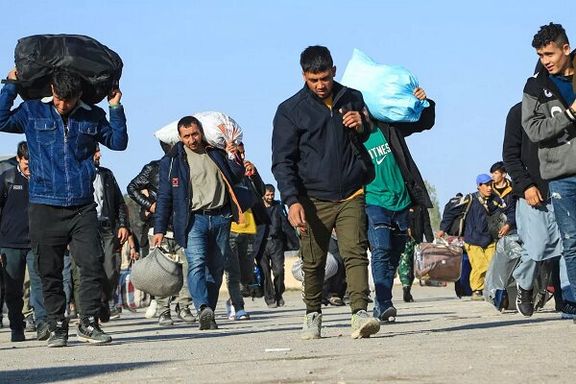
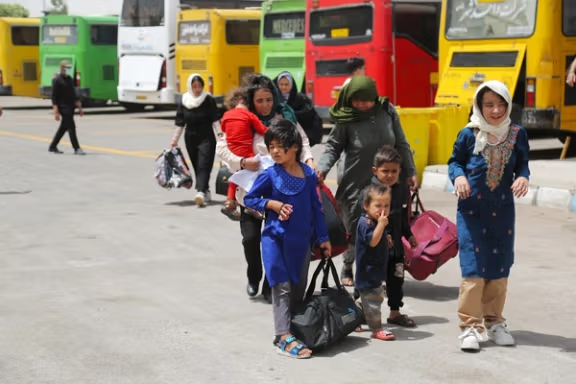
Meanwhile, the UN reports that nearly 700,000 Afghans have also been deported from Iran, marking the largest refugee return crisis since the Taliban regained power in Afghanistan.

These developments have sparked growing concern among humanitarian organizations, who warn that the mass expulsions are leaving vulnerable families without shelter, food, or protection.

With Afghanistan still facing economic collapse and insecurity, aid groups stress that Pakistan and Iran must uphold international obligations and ensure the treatment of Afghan refugees is humane and lawful.

Humanitarian Crisis: Afghan Refugees with Legal Papers Forced to Live in Islamabad Parks
read more

Don Brown Appointed as U.S. Chargé d’Affaires for Afghanistan

By Fidel Rahmati

Don Brown, a career diplomat and former deputy chief of mission, has been appointed U.S. Chargé d’Affaires for Afghanistan, succeeding Karen Decker after her dedicated service.

The United States Embassy for Afghanistan, now operating from Doha, announced the appointment of Don Brown as Chargé d’Affaires ad interim on Thursday, August 21. The embassy confirmed the transition in a statement posted on its official X account, writing: “We bid farewell to Chargé d’Affaires Karen Decker, thanking her for her years of dedicated service and leadership to the U.S. Mission to Afghanistan. Join us in welcoming Don Brown as our new Chargé d’Affaires (CDA), ad interim; CDA Brown has served as Deputy Chief of Mission since November 2023.”

According to the US Embassy statement, Brown, a career member of the U.S. Foreign Service, formally assumed the role in July 2025. Since November 2023, he has served as Deputy Chief of Mission at the U.S. Mission to Afghanistan. Prior to this appointment, he specialized in counterterrorism, political-military affairs, and disrupting transnational crime and illicit finance.

The statement also pointed out that his extensive diplomatic service includes international postings in Baghdad, Berlin, Gaborone, New Delhi, Jeddah, Kampala, and Lima, with roles ranging from political and economic counselor to deputy director in the Bureau of Intelligence and Research (INR). In Washington, Brown also served as foreign policy advisor to Marine Corps Forces Central Command (MARCENT) and worked in the Bureau of Economic and Business Affairs on threat finance and sanctions.

Brown began his career in diplomacy in 1997 after ten years as a U.S. Air Force officer. A native of Pasadena, California, he graduated from the U.S. Air Force Academy in 1987. He has studied Spanish and Arabic and currently resides in Doha, Qatar, with his wife and mother-in-law.

Meanwhile, his predecessor, Karen Decker, had served as U.S. Chargé d’Affaires for Afghanistan since 2021, following the withdrawal of American forces from Kabul. Decker’s tenure was marked by navigating complex political realities and ensuring continued U.S. engagement with Afghanistan civil society under difficult circumstances.

Brown’s appointment comes at a time when the U.S. seeks to maintain diplomatic presence and humanitarian engagement with Afghanistan despite the absence of an embassy in Kabul. His background in counterterrorism, political-military strategy, and regional diplomacy is expected to play a key role in shaping U.S. policy in the region moving forward.

Don Brown Appointed as U.S. Chargé d’Affaires for Afghanistan
read more

Afghanistan Afghan, Pakistani Diplomats Urge Resolution of Bilateral Tensions

The Islamic Emirate’s ambassador in Islamabad, emphasized the Emirate’s balanced and economy-focused foreign policy.

The Institute of Strategic Studies in Islamabad held an online discussion reviewing four years of the Islamic Emirate’s rule in Afghanistan.

Speaking at the event, Sardar Ahmad Shakib, the Islamic Emirate’s ambassador in Islamabad, emphasized the Emirate’s balanced and economy-focused foreign policy.

Sardar Ahmad Shakib said: ” In foreign relations, the Islamic Emirate continues to pursue a balanced policy with an emphasis on economic-oriented diplomacy. Afghanistan today is neither dependent on one bloc nor in conflict with another one, but rather seeks relations with all countries on the basis of mutual respect and shared interests.”

Meanwhile, Mansoor Ahmad Khan, Pakistan’s former ambassador to Kabul, stated that tensions between Afghanistan and Pakistan still persist and must be resolved.

He said: “Pakistan-Afghanistan relationship has, you know, continued to show an interesting pattern. There has been a state-to-state friction that has existed for last five, six decades between Pakistan and Afghanistan, whether it was 1980s, state-to-state friction was there, whether it was 1990s, whether it was 2001 to 2021 US and NATO presence. And even after Taliban assuming the reins of the state.”

Political analyst Najib Rahman Shamal also said: “The Pakistani government should reconsider its approach toward Afghanistan, taking into account Afghanistan’s circumstances and the Islamic Emirate’s past four years of rule, in order to ensure peace in the region.”

One of the main issues straining relations has been Islamabad’s repeated claims about Afghan soil being used against Pakistan, an issue that, over the past four years, has frequently led to verbal disputes and even armed clashes between the two sides.

Afghanistan Afghan, Pakistani Diplomats Urge Resolution of Bilateral Tensions
read more

UN, China, Pakistan Voice Concern Over Terrorist Presence in Afghanistan

The Chinese envoy further urged regional countries to make use of existing initiatives, such as SCO, to strengthen regional counterterrorism efforts.

Although the Islamic Emirate has repeatedly denied the presence of terrorist groups in Afghanistan, Pakistan’s representative to the UN Security Council, Asim Iftikhar Ahmad, once again claimed that TTP, ISIS, and the Balochistan Liberation Army (BLA) are operating from Afghan soil.

Speaking at the same UN Security Council meeting on “Threats to international peace and security caused by terrorist acts – Security Council meeting,” China’s representative also called on the Islamic Emirate to take action to eliminate terrorist groups in Afghanistan.

The Chinese envoy further urged regional countries to make use of existing initiatives, such as the Shanghai Cooperation Organization (SCO), to strengthen regional counterterrorism efforts.

At the meeting, Vladimir Voronkov, UN Under-Secretary-General for Counter-Terrorism, also claimed that ISIS-K poses a growing threat from Afghanistan to Central Asian countries.

The Islamic Emirate, however, has maintained that ISIS has been suppressed in Afghanistan and that no country currently faces any threat from Afghan soil.

UN, China, Pakistan Voice Concern Over Terrorist Presence in Afghanistan
read more

Lawmakers announce legislation to restore office for Afghan relocation

Military Times

Aug 20, 2025

Lawmakers introduced new legislation Tuesday that would reinstate a previously dissolved U.S. government office that led relocation efforts for Afghan allies and refugees.

Rep. Sydney Kamlager-Dove, D-Calif. — along with several other lawmakers — announced the Enduring Welcome Act, which would legally codify the Office of the Coordinator for Afghan Relocation Efforts, or CARE. The Trump administration closed the office just last month.

“We will not turn our backs on the brave Afghans who risked everything to protect our service members,” said Kamlager-Dove in a press release. “Their courage helped save American lives, and now it is our duty to protect theirs.”

Reps. Mike Lawler, R-N.Y., Dina Titus, D-Nev. and Michael McCaul, R-Texas, assisted with the bill.

CARE handled planning and logistics for the relocation of Afghans who qualified for Special Immigrant Visas, Immigrant Visas and the United States Refugee Assistant Program, or USRAP.

Special Immigrant Visas are granted to Afghans who were employed by the U.S. government, often assisting the U.S. during the war in Afghanistan.

Operation Enduring Welcome, a program instituted by the Biden administration and implemented by CARE, helps to relocate Afghan nationals who are endangered because of their affiliation with the U.S. government. The program is set to end Sept. 30.

The new legislation reinstitutes the CARE office within the U.S. State Department for five years and awards it the authority to assist with voluntary departure requests from Afghans; help coordinating with other agencies on security vetting, facilitating relocation and helping reunite families — including those of U.S. service members; and assisting with medical care.

It also tasks CARE with keeping a database that tracks all Afghan relocation cases.

“A bipartisan introduction here demonstrates that Congress and the administration don’t agree on this,” VanDiver told Military Times. “The administration is actually still working through what their policy is gonna be… It seems like they should have figured that out before they stopped a bunch of things, but they didn’t.”

That’s why the legislation is important, he said.

The Enduring Welcome Act isn’t the only current legislation aimed at honoring the United States’ commitment to its Afghan allies.

Congressman Jason Crow, D-Colo., a former Army Ranger who serves on the House Armed Services Committee, introduced the Afghan Adjustment Act on Aug. 5.

The legislation would create a pathway for Afghans in the United States to obtain lawful permanent residence status.

Both proposed laws likely face a long path toward approval, but VanDiver said he expects a Senate introduction for the Enduring Welcome Act soon.

In May, Secretary of Homeland Security Kristi Noem announced the end of temporary protected status, or TPS, for Afghanistan, stating that the region’s “improved security” meant individuals could move back without fear for their safety.

TPS, which was instituted during the Biden administration to protect Afghans from being deported back to their home nation after the U.S. withdrawal in 2021, ended July 14.

The end of TPS affects 9,000 people, including their authorization to work, according to the International Rescue Committee, an organization that helps provide humanitarian relief.

Advocates and U.S. service members openly disagreed with Noem and DHS’s evaluation of safety in the region when the announcement was made.

“Afghanistan remains under the control of the Taliban,” VanDiver said in a statement at the time. “There are still assassinations, arbitrary arrests and ongoing human rights abuses, especially against women and ethnic minorities.”

Afghan relocation efforts stopped completely when President Trump suspended USRAP on Jan. 20.

The same day, Trump issued an executive order that halted travel for individuals with Special Immigrant Visas.

“There has not been a single relocation flight for Afghans since Jan. 20, 2025,” VanDiver said.

AfghanEvac estimates that 150,000 to 250,000 Afghans are currently attempting to immigrate to the U.S.

The ban also affects U.S. service members.

Military personnel with family members currently in Afghanistan told Military Times in February that they feared for their kin, who were actively being hunted by the Taliban because of their affiliation with the U.S. government.

Roughly 200 family members of U.S. troops are caught in resettlement purgatory, AfghanEvac stated.

Trump promised at a White House event on July 30 that U.S. officials would help Afghan allies relocate to the U.S., while casting doubt on the motives of some in the immigration pipeline.

“We know the good ones, and we know the ones that maybe aren’t so good,” Trump said in response to a question about Afghan refugees. “We’re going to take care of those people, the ones that did a job [for us], the ones that were told certain things.”

Riley Ceder is a reporter at Military Times, where he covers breaking news, criminal justice, investigations, and cyber. He previously worked as an investigative practicum student at The Washington Post, where he contributed to the Abused by the Badge investigation.

Lawmakers announce legislation to restore office for Afghan relocation
read more

China, Afghanistan hold talks on mining, Belt and Road participation

KABUL, Aug 20 (Reuters) – China told Afghanistan on Wednesday that Beijing was keen on exploring and mining minerals in Afghanistan and wanted Kabul to formally join its Belt and Road Initiative, the Afghan Taliban foreign ministry said.
Chinese Foreign Minister Wang Yi is visiting Kabul and held talks with Afghanistan’s acting Foreign Minister Amir Khan Muttaqi, the ministry said in a statement, adding that both countries wanted to expand cooperation in a range of areas.
Beijing will continue to support the Afghan government to achieve long-term peace and stability, Wang told Muttaqi, according to a readout of the meeting released by China’s foreign ministry.
China was willing to deepen mutual political trust with Afghanistan and step up cooperation in areas including trade and agriculture, Wang said.
He called on Afghanistan to combat militant forces, adding that tighter security ties would provide a guarantee for bilateral economic cooperation.
“Mr. Wang Yi also mentioned that China intends to initiate practical mining activities this year,” the Afghan statement said.
In a separate meeting with the Afghan Taliban prime minister, Mohammad Hassan Akhund, Wang said “China will continue to uphold justice, oppose unilateral bullying, and engage in cooperation in various fields with Afghanistan”.
Wang urged Akhund’s government to take seriously Chinese concerns over “terrorist forces” and step up efforts to combat them, according to a readout of the meeting from Wang’s ministry.
China was the first country to appoint an ambassador to Afghanistan under the Taliban and has sought to develop its ties with the hardline Islamist group that took control of the war-torn country in 2021.
The impoverished country, rich in lithium, copper and iron deposits, could offer a wealth of mineral resources to boost Beijing’s supply chain security, analysts say.

Reporting by Mohammad Yunus Yawar. Writing by Sudipto Ganguly. Editing by YP Rajesh and Mark Potter

China, Afghanistan hold talks on mining, Belt and Road participation
read more

‘Economic suicide’: Afghan expulsions spark labor crisis in Iran

Maryam Sinaiee

Iran International

Iran’s economy is reeling from an acute labor shortage following the mass deportation of undocumented Afghan migrants, with key industries such as construction and agriculture struggling to function.

For decades, Afghans have formed the backbone of Iran’s low-wage workforce, filling jobs few Iranians were willing to take.

Their sudden absence now threatens both growth and jobs.

Conservative economist Mohammad-Hossein Mesbah called the push to send Afghans home “economic suicide.”

“Abbasabad industrial town [south of Tehran] was almost entirely closed today,” he posted on X. “Why? Shortage of labor. Job ads everywhere … Not a single worker to be found.”

From open borders to expulsions

Before the Taliban’s return to power in 2021, the Afghan population in Iran rarely exceeded two million, including about 780,000 with official refugee status. Under former President Ebrahim Raisi’s “open borders” policy, that number surged to more than seven million.

President Masoud Pezeshkian has since reversed course under public pressure.

Following Iran’s recent 12-day conflict with Israel, the government accelerated the deportation of undocumented Afghans, linking some expulsions to national security.

Officials say more than one million migrants have left in the past 100 days, though an estimated six million remain—four million without legal status.

The government has vowed to enforce labor laws, including fines of around $20 per day for undocumented workers, doubling for repeat offenses. Yet enforcement remains patchy in sectors long dependent on informal labor.

Iran has sent back more than a million Afghans to Afghanistan in the past few months

Afghans’ role in the Iranian workforce

According to the Ministry of Cooperatives, Labor, and Social Welfare, 433,000 registered Afghan workers were active as of June 2025—roughly 2 percent of the total labor force.

More than half worked in construction, while others were employed in industry (19 percent), agriculture (11 percent), and mining (less than 1 percent).

A Chamber of Commerce study noted that Afghans, once concentrated in unskilled jobs, had increasingly moved into skilled and technical roles.

Their disappearance is now raising alarms about productivity and output across the economy.

Industry and construction hit hardest

The owner of an industrial workshop in Boumehen, near Tehran, told Shargh newspaper that even legally employed Afghans have left in fear. “We still haven’t found replacements, and nobody responds to our job ads,” he said.

Construction has been hit hardest.

In 2024, estimates suggested that Afghans made up three-quarters of Iran’s 1.5 million construction workers, and nearly half of those in Tehran.

With deportations underway, projects have stalled, and labor costs have jumped by 30–50 percent. The spike is expected to push housing costs even further out of reach.

Rising costs for food and services

Agriculture has also been disrupted. Farmers report delays in harvesting summer fruits and other perishable produce, including pistachios and saffron—two of Iran’s top non-oil exports.

Higher labor costs threaten to drive up food prices at a time when inflation is already high.

Urban services are showing strain as well.

In Tehran, the deportation of hundreds of Afghan street cleaners employed by municipal contractors has left piles of garbage and recyclables in some neighborhoods. Overflowing trash has become a visible sign of how deeply the deportations are reshaping daily life.

Some contractors have lost up to 80 percent of their workforce, according to city official Naser Amani.

‘Economic suicide’: Afghan expulsions spark labor crisis in Iran
read more