 Afghanistan Peace Campaign
Afghanistan International
17 Nov 2026
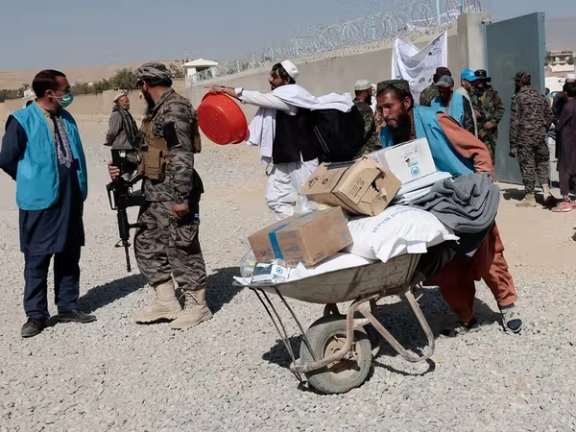
The United Nations recorded 29 incidents of humanitarian access restrictions and interference with aid operations in Afghanistan in October, 11 of which had gender-related implications.
The UN said Taliban interference and restrictions on women’s participation in humanitarian activities had disrupted aid delivery and access to essential services.
In a report published on Tuesday, 17 November, the UN Office for the Coordination of Humanitarian Affairs (OCHA) said most of the reported restrictions and interference involved the implementation of humanitarian programmes.
Of the 29 incidents documented, 21 involved interference with humanitarian activities, four involved violence against humanitarian personnel, assets and facilities, three were related to military operations and ongoing hostilities, and one involved the denial of humanitarian needs or rights.
Western Afghanistan recorded the highest number of incidents, with 15, followed by the southern region with six and the southeastern region with three. The eastern region and central highlands each recorded two incidents, while the northern region recorded one.
Of the 21 incidents involving interference with humanitarian activities, four concerned restrictions on female aid workers’ participation, three involved delays or difficulties in signing memorandum of understanding, four involved interference with programme implementation, and three concerned requests for sensitive information about humanitarian personnel or aid recipients.
Two incidents also affected women’s access to humanitarian assistance and services.
OCHA warned that gender-related restrictions remained a serious concern and continued to disrupt the humanitarian response, affecting both female aid workers’ participation in humanitarian operations and women and girls’ access to essential services and assistance.
These restrictions included curbs on the activities of female teachers and healthcare workers, women’s participation in livelihood programmes, and their access to hygiene and dignity supplies.
In some instances, the restrictions also disrupted education, healthcare and other humanitarian programmes.