 Afghanistan Peace Campaign
Reaching the ‘white areas’
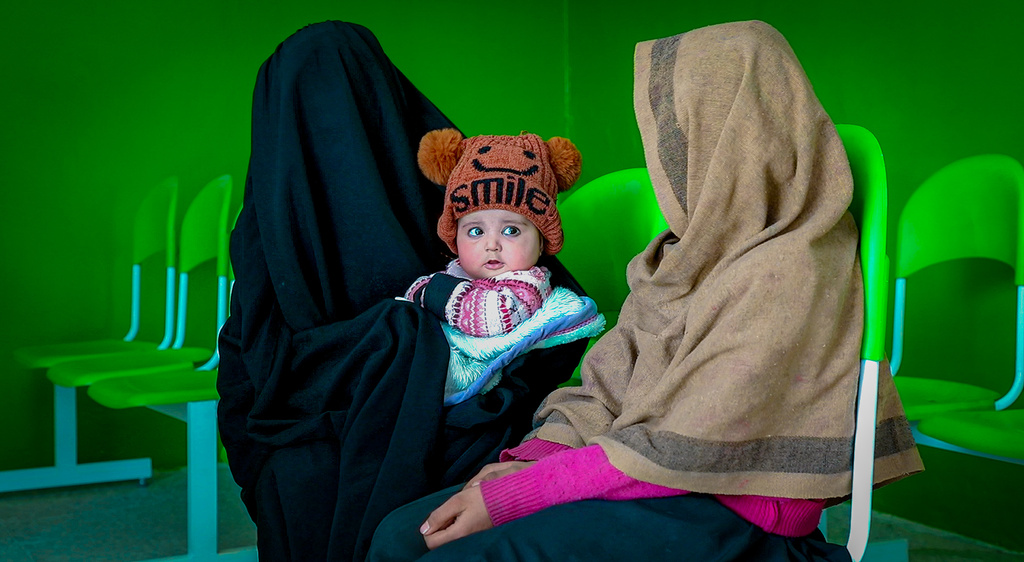
There are twenty ‘white areas’ in Kapisa province, just to the north of Kabul, places where at least 10,000 people have no access to health services within ten kilometres of their homes. One area, though, is white no longer. In November 2021, it gained a tiny clinic focused on women and children’s health, known as a ‘Continuum of Care Centre’ or 3C. Two midwives, previously trained by the Norwegian Afghanistan Committee (NAC),[1] work out of two rooms attached to the home of one of them in the village of Arabkhel, in the Bolaghayn area of Kohband district. One room is for deliveries. The other is a waiting room, with a curtained-off area where patients can be seen in reasonable privacy. There were already two other such tiny clinics in Kapisa. They were the only maternal clinics to stay open in the province in the weeks after the August 2021 change of government. That gave some confidence in negotiations with the new provincial authorities to open a third, the one in Arabkhel.
The day we visited the clinic, the waiting area was packed. One of the midwives, Gul Chehra, a graduate of NAC’s midwifery course, was seeing patients and because she is local, she can speak to the patients in their own language, Pashai. Pashai settlements dot the higher-lying areas of Kapisa from north to south, following the local sub-range of the Hindu Kush. They are often situated in rugged and isolated areas with rocky, low-fertility soil. Boulders spread across the fields on the approach to the clinic testified to the frequency of landslides and floods, such as those which hit the province in early October 2025 (South Asian Desk). NAC established the clinic on the further side of the river bed from the main asphalted road connecting the district to the provincial centre so that women from villages on that side of the river could access healthcare even when there was flooding and their villages were cut off from the rest of the province.
One of the patients being seen on the day we visited, Sima, was expecting her ninth child and described how, when the river flooded, the path to the main road became impassable. Her last child had been born in the clinic, the others at home. “There was no help,” she said. “I just prayed to God.”
Women’s health in crisis
The picture across the country is less rosy. Afghanistan was already in the bottom ten countries in the world for the worst maternal mortality figures. It is also an outlier in the region. The latest maternal mortality figure quoted by the World Bank is for 2023: 521 mothers dying for every 100,000 live births. The next worst country is far better, albeit still bad: 155 Pakistani mothers are dying per 100,000 live births.[2] Yet the numbers for Afghanistan appear to be getting even worse. Although there are no recent official statistics, World Health Organisation (WHO) Representative for Afghanistan Mukta Sharma told Salam Watandar on 7 April 2025 that there were 620 maternal deaths per 100,000 live births. The rise is not surprising, given the pressure on and lack of support to services. The World Bank December 2024 Afghanistan Development Update had already been warning about a contraction of the health sector – by 3.1 per cent – during the previous 12 months, saying:
The health sector has managed to stay afloat due to international support. However, the ongoing struggles in education [education had shrunk even more, by 9.3 per cent] and health highlight a critical lack of investment in human capital, which could jeopardize Afghanistan’s long-term economic prospects.
Since then, in early 2025, the United States, which had provided 40 per cent of aid to Afghanistan in 2024, decided abruptly to cut all aid to Afghanistan.[3] As a direct result, the WHO July 2025 Health Cluster Bulletin said, 422 health facilities had closed.[4] Several other donors have also cut funding, although not to the same extent. The Islamic Emirate of Afghanistan (IEA) has also continued to prioritise spending on its security services. According to the World Bank’s March 2026 Economic Monitor, the Ministries of Interior, Defence and General Directorate of Intelligence, had been allocated 48 per cent of government spending in financial year 2025 (ended 20 March 2026). Public health had been given just 2.6 per cent. Afghans have also been hit by a struggling economy (AAN), which has eroded the ability of many families to pay for private healthcare, or even to pay for transport to a free government or NGO-run clinic. Emirate restrictions on women’s travel and its insistence that they must have a mahram to enter government medical facilities in some parts of the country have further blocked women from getting access to treatment.
Donor funding has underpinned Afghanistan’s health sector for many years. That left it vulnerable to the decisions of donors – as seen both in cuts to aid and international sanctions against the Taliban, which, since they captured power, have been applied to Afghanistan. Although multiple waivers have since been introduced, sanctions still have to be factored into NGO decision-making. Their health programmes, now, as under the Republic, also have to be planned and implemented in close coordination with the Ministry of Public Health.
For NGOs working in the health sector, navigating the needs of communities, as well as the restrictions, demands and priorities of both donors and the Afghan authorities can be a tricky path to tread, particularly when something major happens. For some NGOs, the USAID cuts this year forced them to close clinics or stop deploying the mobile clinics that reached the most under-served communities. NAC, fortunately, received only very limited US money. However, a decision by the Emirate, in December 2024, to ban all training of female health professionals, including in midwifery, nursing, laboratory sciences and physiotherapy (BBC, Radio Azadi) did leave it with some difficult decisions to be made.
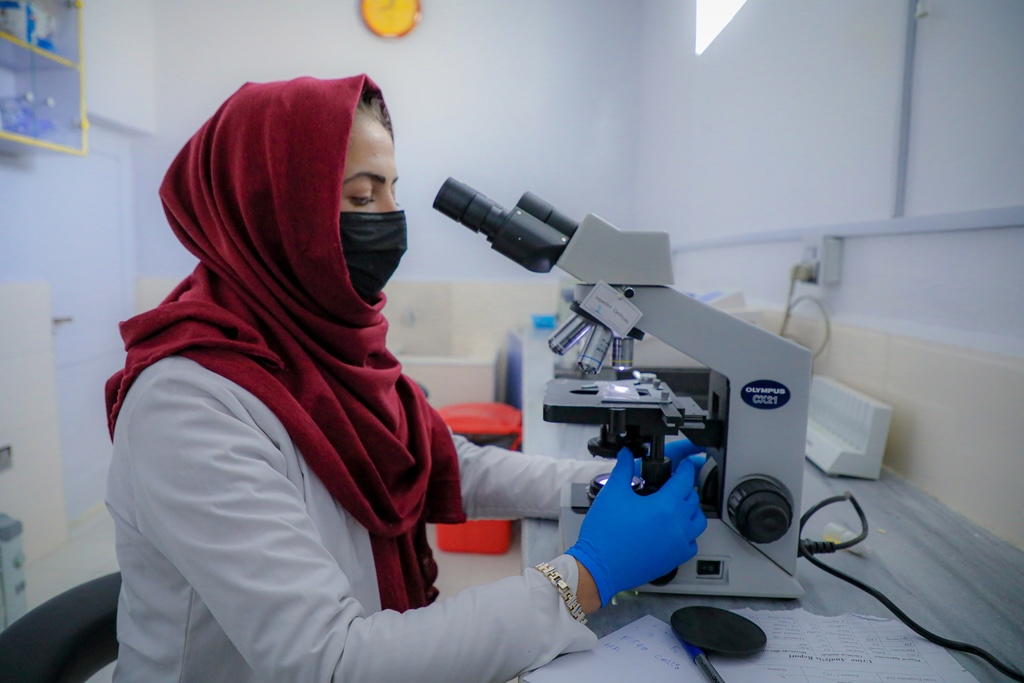
Photo: NAC, 20 December 2023
Only paper-trained?
The IEA made no official statements about the ban on health training for women, but the Ministry of Public Health did call the directors of private training institutes to a meeting on 2 December 2024 to tell them this was the case (RFE/RL). Three types of public and private organisations had previously provided health training to Afghan women:
The Institute of Health Sciences, officially known as the Ghazanfar Institute of Health Sciences, is a training authority under the Ministry of Public Health, that provides two to three year diploma programmes for healthcare workers and is responsible for curriculum development and supervision of regional institutes of health sciences. Female students were already blocked from studying there, following the closure of universities to female students in December 2022.
Community education programmes training midwives and other female health professionals in rural areas was carried out by a mix of national and international NGOs and other international agencies and, in a few cases, the government. The benefit of this route was that, as well as being local and often in under-served areas, entry requirements were lower (no need for 12th grade schooling). This avenue for training is also now closed.
Private institutes that offer health training had become the last avenue open for higher education for women and are now also closed to women. However, there was scepticism over the quality of some of the training that had been provided in the private sector. The State of Afghanistan’s Midwifery 2021 report, which delved into the training, qualifications, need and numbers of midwives, found there were almost 35,000 midwife graduates and that the sector was “saturated in terms of quantity of professionals.”[5] However, it questioned the competency of the 77 per cent of midwifes who had graduated from private institutes, which were not accredited with the Afghan Midwifery and Nursing Education Accreditation Board. It quoted a rapid assessment carried out in 2018 which had found that less than a third of the institutes (31 per cent) met the criteria as clinical sites requiring students to perform a minimum of 40 births assisted before graduation. The equivalent rates for community midwifery education and Institute of Health Sciences courses were 100 and 67 per cent respectively – and the 2021 midwifery report was satisfied it could assume their midwife graduates were competent.
The 2021 report also pointed out that there was high unemployment among midwives – 82 per cent – at the same time as Afghan mothers’ needs were not being met. It said the country needed 18,000 more employed and qualifiedmidwives. In particular, the rural/urban imbalance needed addressing, with an acute need for qualified midwives in rural and hard-to-reach areas.
This data is several years old, but it seems the overall picture is little changed. If anything, the situation will have worsened, as more midwives have graduated from private institutes, while no female doctors or other health professionals have graduated from university since the December 2022 closure. At the same time, as well, qualified and experienced health professionals were among those who left Afghanistan during the mass exodus of 2021.
Adapting to the Emirate’s training ban: apprenticeships and other stopgap measures
The ban on training female health professionals has applied to all community education programmes, including NAC’s. In Kapisa, it had been running midwifery, nursing and physiotherapy courses for the Institute of Health Sciences near Kapisa’s provincial capital, Mahmud-e Raqi, in Kohistan district. NAC’s involvement in medical training began there in 2014 with two-year programmes for 30 female students each in nursing and midwifery. In 2019, the ministry lengthened the courses nationally, to three years. NAC also added physiotherapy to its offer.
In 2020, NAC’s medical courses moved into a new building, with a smaller building alongside that serves as a clinic for women and children, both built by the Ministry of Public Health. The co-location meant students could easily also gain practical skills and experience. In 2023, the clinic was upgraded to a ‘Comprehensive Continuum of Care Centre’ (4C), offering far more extensive services to women and children. There are doctors, including an obstetrics and gynaecology specialist, midwives, specialist nurses, two lab technicians and a pharmacist – the latter three all commuting two hours each way every day from Kabul because of the scarcity of qualified women locally. In the month of October 2025, the clinic treated some 950 patients and delivered 11 babies. It mainly serves local women and children, but also attracts patients from elsewhere in Kohistan, from Kohband and Nejrab districts and the neighbouring provinces of Panjshir and Parwan.
NAC has produced many graduates in midwifery and other specialities over the years. “We give a good quality education,” said NAC Country Director, Terje Magnussønn Watterdal, “our graduates are sought after.” Significantly, he said, there is a focus on medical ethics and patients’ dignity. “There is a reason,” he said, “why many women chose to give birth at home – because medical staff are often not very nice to patients.”
The last cohort of trainees in Kapisa in 2024 had been 148-strong. Some of the women, studying nursing, midwifery and physiotherapy, had come from nearby, but most had travelled a long way – from Bamyan, Parwan, Panjshir, Ghazni and Wardak and remote parts of Kapisa – and stayed in the NAC hostel. Then, the Emirate’s ban came in. “We’d invested a lot in these facilities,” said Watterdal. “We wanted to protect our assets. We had a very open discussion with the provincial director of Public Health about that, so that [those assets] are there when the ban is lifted.”
NAC decided to redirect its activities. In coordination with provincial local health authorities, it set about planning three-month apprenticeships for women who have graduated in nursing, midwifery, physiotherapy, pharmacy and as laboratory technicians from private Institutes of Health Sciences. The aim is to give the apprentices practical experience either in an NAC clinic or in the government provincial hospital. Most, said Watterdal, “had studied theory and had had no opportunity to study anything practical.” So, the apprenticeships are an effort to turn their ‘paper-only’ qualifications, as described in ‘The State of Afghanistan’s Midwifery 2021’ report, into qualifications which are grounded in the necessary practical experience to enable them to work effectively and professionally.
NAC had also established a midwifery training school in Badakhshan, funded by GIZ, in 2024. In July that year, 30 students arrived from three remote and under-served districts in the province, ten from Kohistan, ten from Raghistan and ten from Yawan. NAC’s Midwifery Programme Coordinator, Momina Kohistani, who is herself from one of those districts, distributed the forms: “We found the students and prepared a standard programme, a three year course,” she said, “the girls were very interested.” However, she said, “There were never any graduates: [the girls] just did one term, went home on holiday and then the ban was announced.” NAC has received permission to train the 30 students, not as midwives, but as community-based rehabilitation workers, serving women in general and women and adolescent girls with disabilities in particular.
In Kapisa, NAC took another decision following the ban on training female health professionals – to start a course to train male pharmacy technicians.[6] This was driven by NAC being midway through a chunk of funding that was due to last until 2026, which it did not want to lose. It also wanted to keep making use of assets, such as the buildings, so that whenever women are again allowed to study, they would still be there. They needed a course that was two-years long, and training to be a pharmacy technician is one of the few health sector diplomas that fulfilled that requirement, besides being a specialisation that is always needed across Afghanistan. “We had to convince the donors,” recalled Dr Habib, NAC’s National Head of Health Programmes, “and then it took some time to sign the agreement with the government. So that after that, we had to rush to get all the contracts, procurement and refurbishment done in order to start with the new class in time this year. But we managed to avoid both losing the money and not putting the facilities to use.”
When the authors visited, the course had just begun. 34 students were being taught, even as some refurbishment works were still taking place to re-adapt the classrooms from their former use. The skills lab was being readied for when the students had progressed enough in their lessons to start practical training. Meanwhile, in another room of this vast complex, mannequins and other teaching material from the midwifery course had been carefully stored, in the hope that one day they could be brought out and used again.
Despite being ‘replacements’, the pharmacy students present were upbeat. Ranging in age between 17 and 24 and coming roughly from the same provinces as their female predecessors, despite the recent uprooting from their families and the busy lessons’ schedule, they were visibly excited to have passed the selection for enrolling in the school. This is now one of the few chances of foreign-funded higher education. Moreover, it is one leading to a prospective career that will allow the students to practice their skills in any corner of the country. As pharmacists, they said, they would be, by the nature of their work, able to establish a connection with Afghans from all groups and walks of life. They were ready, one claimed, to make the most of this rare chance and in the future “to show that we aren’t just khalwatgaran [people seeking protection, assistance], but rather khidmatgaran [servants, providers of service].”
The apprenticeship scheme
NAC’s apprenticeship scheme for women who have graduated from private medical courses relies on foreign funding, so the model is not ideal. However, it has one strong sustainable element in that a good education is rarely wasted and may have far-reaching and unforeseen consequences. Indeed, education was the germ for setting up the 3C clinics, such as the one in Arabkhel. The idea for them had grown, said Terje Watterdal, out of a survey of the midwives who had trained with NAC in previous years in Nangrahar and Laghman provinces. It had found that only half had formal jobs.
We were very disappointed. But then we asked those who weren’t working: Why? and What are you doing? And we found out they were working as midwives in their villages. Sometimes they were paid in cash, or in goods, but they were delivering more babies than in the formal system. That changed the picture for us completely. We wanted to set up a structure where our midwife graduates could organise in a different way.
NAC investigated different practices and found the idea of 3C clinics already promoted by the World Health Organisation in southern Africa and ideal for poor, remote and badly-served areas. “At the beginning,” said Watterdal, “the idea was that patients could pay a little – it should be less than the cost of transport to the nearest clinic. The IEA stopped that and said they should be free.” That does make the project less sustainable for the future, but even if funding ended tomorrow, it seems likely the 3Cs could turn into arrangements similar to the informal arrangements that NAC-graduate midwives found, identified in the survey in Nangrahar and Laghman.
Recovery, disability and dignity
Just how significant good quality, timely medical intervention can be was also seen in NAC’s Women and Child Rehabilitation Centre in Kabul. Set up a year ago, in April 2025, its philosophy is two-fold – curative and preventative:
- Treating those with disabilities to provide physical rehabilitation;
- Treating those who are injured to prevent their injuries becoming permanent.
In its first week, with no publicity, the centre saw 26 patients coming for treatment. By October, 200 patients had come, 15 to 16 a day. A few are referred by medical staff, said one of the physiotherapists at the centre, Nadia Haqjo, but most come through word of mouth. “We register them inside the compound,” she said. “No one waits on the street.” Three physios, provide, on average, ten sessions per patient in a women-only setting. The centre also provides psycho-social support, both at the centre and through outreach (with currently 80-100 patients) and vocational training for 30 female students.
“Lower back pain is what we most commonly see – many women do such heavy work,” said Nadia. “We also see people with spina bifida, amputees, children with delayed development, people with cerebral palsy and those who’ve had strokes or head injuries.” She gave the example of a 50-year old woman who had come to the clinic on the recommendation of a friend. She had a four-year old wound in her leg that had never healed, as well as diabetes, and she was also in a bad economic condition.
She came with a walker. Now, she just uses just a stick. The day the Taliban came to Kabul, she was accidentally injured, a gunshot to the tibia and it had got infected. She’d lost her mobility. The injury had atrophied and it was so painful, she wanted to die. I, myself, felt hopeless when I saw her.
After cleaning and dressing the infected wound, Nadia began to treat the woman’s other symptoms:
The first job was to improve her balance, also strengthen her muscles and support her morale – that’s very important, to give psychosocial support – and to decrease her pain through manual work and using TENS [Transcutaneous Electrical Nerve Stimulation, a method of pain relief where electrodes applied to the skin block impulses in underlying nerves]. Now, she’s very happy. She has some mobility. If she’d gone elsewhere, she’d have been rejected.
We also met two-year old Madiha who has cerebral palsy and had arrived constantly trembling and unable to sit up by herself. Now in her third month of treatment, coming to the centre twice a week, she was sitting up and even crawling. Nadia said her brother, five-year old Hekmat, who has the same condition, is now standing.
The centre’s secret, Nadia said, is that they are available, accessible and free, and can give patients time for follow-up visits, home-based if necessary. “If they relapse,” she said, “they can come back.” All of that, of course, costs money, and without funding for the physiotherapy, women’s injuries “can lead to their movement and mobility stopping.” Their problems then become compounded and they can become disabled, which is why Nadia thinks the physio’s work is so vital. “I’m very proud that most of our clients get better,” she said. “We improve their conditions. We have so many success stories. I love my profession.”
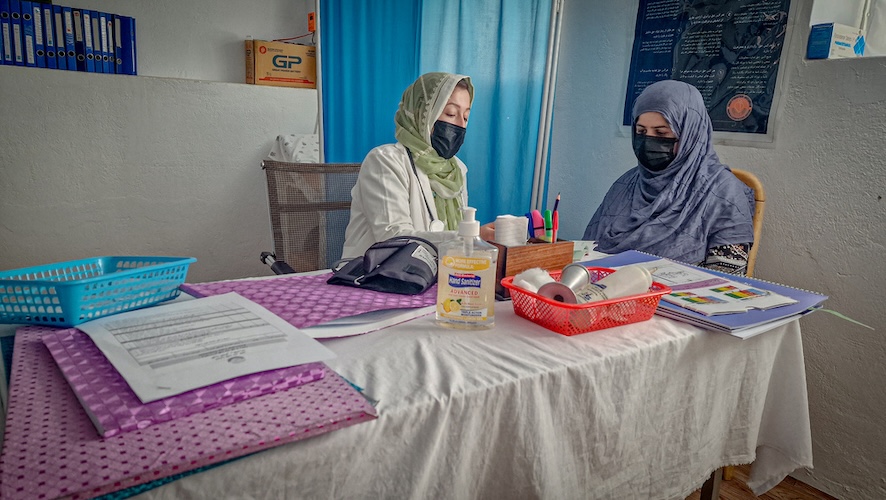
From training to practice: how education shapes lives and the wellbeing of communities
This report has so far largely focused on systems, funding and training opportunities – or their absence – and the constraints on women’s healthcare. We wanted to see how training and supporting female health workers affects the lives of the trainees and discovered it transforming not only the lives of the individual health worker, but also the lives of women in entire districts. Such a transformation is summed up in the personal story of NAC’s National Midwifery Coordinator, Momina Kohistani, who comes from one of those districts where there were no girls’ schools. Her own mother had died during childbirth because, Momina said, there were no professional medical staff in her district.
After that, the family moved to Faizabad and Momina was able to get the schooling that would not have been possible in her home district of Kohistan. Because of the circumstances of her mother’s death, Momina always dreamed of becoming a doctor, something her family could not afford. However, when she was in 10th class, she learned that the first midwifery programme in her province, run by Aga Khan Health Services, was to start. From then on, she said, her life changed.
I told my family I wanted to enrol, but they didn’t agree. My father said I had to complete my schooling. Luckily, I got married in the last year of school, and my spouse was interested in my education. Community elders also came to my house to ask that I get an education. My spouse convinced my family, saying to them: “The responsibility [for your daughter] has been given to me. You mustn’t be worried about her future because I’m certain her future will be good.” They gave their agreement and I started training in Badakhshan.
I was very lucky. I became the top student and the student representative for the hospital. Everyone encouraged me, especially the hospital chief. He even offered to pay my university fees, saying: “You must go to medical school.” But at that time, my son was very small – just six months – and when I shared the issue with my husband, although he was happy [with the suggestion], he said: “I can’t afford to support you. And your people need a midwife.”
So, I graduated on 1 October 2009 and started work on 10 October, after a week spent with my spouse’s family in our home district of Kohistan. When I began to work as a midwife [with the NGO, Medair], I was very young, and the people were thinking: “She won’t be able to do a thing.”
But in my first days, a mother was transferred to my clinic in shock. I found she had a retained placenta. I gave her IV fluid and removed the placenta with my hands and she was well again after two hours. Her husband had lost his first wife with the same bleeding. He cried. “I can’t believe my wife is alive,” he said. “I can’t believe you saved her!”
After that, all the people realised that this newly-graduated midwife could save lives, and even older women came to see me – to see how I was working – so young and with so little experience. There was a high maternal mortality rate in Badakhshan, especially in Kohistan. One thing I did was to work with my health community shura to identify and find high-risk mothers. We found them, and with UNICEF funding, there was a room in Faizabad that we referred them to go and stay in [until they delivered] because in winter, the roads are closed and emergency travel is impossible.
They’d bring me a cup of milk, an apple, vegetables and when I said the treatment was free and I couldn’t take gifts, they said: “We see you’re alone, you [and your husband] are away from your [birth families], you’re serving us, this is your portion that we’ve taken from our breakfast for you.” At Eid, they’d give me gifts and leave them with the guard to give to me. During that year, I went to many training sessions and meetings in Faizabad, but I used no annual leave or sick leave. … Kohistan is such a very poor, cold, remote area, with no transport.
Momina’s story demonstrates the value of medical education for both the individual and the community. Especially for women in rural areas, such training means they have a viable livelihood, but the benefits are not just economic, or even to do with saving lives. Research carried out by one of the authors in 2018 for the Italian NGO, Emergency, on a maternity hospital it ran in Panjshir found a surprisingly high percentage of young nurses and midwives from some of Kapisa’s rural districts working there. Several had attended the first educational programmes run by NAC. They reported how many of their classmates had ended up finding jobs with other NGOs and in private or public medical facilities across the region, and also how their status in their home villages had changed. Their new skills and economic status had brought an unprecedented degree of social recognition and acceptance by their families and neighbours. One of the midwifes working with Emergency, hailing from Kapisa, recalled how it had been the encouragement of fellow villagers that tilted the scales in favour of what for her was a brave choice to seek training despite family opposition:
There was a need for a midwife in my village – and till now [at the time of the interview in 2018], I’m still the only girl from there who’s studied midwifery. My family was against my attempts to get a higher education and then going to work outside – my maternal uncle was against the idea, and my father and brother as well. Only my mother wanted me to and she argued with them a lot. Actually though, it was the people of the village who supported me – somebody from the village becoming a midwife who could then help them. Even before I graduated, they started to come to my home to ask for advice and in time they developed a great respect for my skills. Seeing this, even my father started to respect me more, and had to relent.
When communities see such female healthcare workers in their midst as an asset, it helps to pull down barriers, enhancing the perception of working women, even in conservative rural areas. Momina attributed her success “to the prayers of Kohistan’s mothers,” a measure of the popular support she felt. She said that in her home district, when still in her early 20s, she had became known as the ‘Mother of the Tribe’.
Medical education, especially in rural areas, also gives women the opportunity to earn money and serve their communities in a way that is seen as respectable. It encourages progressive change, as girls’ education and women doing paid work outside the home come to be valued, even in, or perhaps especially in, the most conservative parts of Afghanistan.
A convergence of crises
The NAC apprenticeship programme is aimed, in Momina Kohistani’s words, to help “lift the quality so that there are enough skilled and experienced midwifes.” However, by itself, it cannot solve the looming staffing crisis: when the Emirate closed girls’ secondary schools, it ensured that the pipeline of girls finishing schooling to grade 12, who might go on to train as health professionals, if the ban is ever lifted, is now blocked. Past problems with schooling already mean that in some districts, there are no female high school graduates, and in some entire provinces, they are few on the ground.[7] In those areas, it is difficult to see how the health of women will ever really improve, so long as girls’ secondary schools are never opened, while nationally, there will inevitably be a gaping deficit in female medical professionals.
Afghanistan’s health system is currently facing a convergence of crises. However, one of them, foreign funding, looks for now, to have been somewhat averted. On 4 November 2025, UNICEF announced that it was getting USD 270 million from the Asian Development Bank (ADB) for 2026. The funding means it will be able to “expand and sustain essential health services for an estimated 23 million people across 17 provinces … support over 1,300 health facilities [and help] ensure that children, women, and men continue to receive quality primary health care close to home.” Afghanistan’s heavy reliance on foreign funding to support and sustain the country’s healthcare system has long been a topic of debate about its sustainability. The closure of hundreds of clinics this year in the wake of the abrupt USAID cut showed just how vulnerable the sector is to the decisions of donors. Yet, even if foreign funding was assured, if secondary schooling and medical training for girls is not restored, the future of Afghan women’s health can only be one of decline.
NAC’s work, always done in coordination with local communities, donors and the Ministry of Public Health and its provincial departments, demonstrates the possibilities and limits of intervention under the current constraints. Establishing small, local clinics in remote districts where there are already trained midwives, supporting women-and-child facilities and quickly adapting training programmes into apprenticeship schemes, show ongoing efforts – at NAC and elsewhere – to maintain professional standards in healthcare and safeguard earlier investments in female health education. These approaches cannot resolve the ongoing crisis in Afghanistan’s health sector, nor serve in any way as a substitute for a functioning national training pipeline, but they do help mitigate the most severe consequences in specific locations and communities.
The stories presented in this report show much of what is ultimately at stake. Momina’s experience demonstrates how education can transform an individual life and lead to long-term community trust in female health workers. Nadia’s shows how sustained, specialised care can restore mobility, dignity and hope to women who would otherwise be excluded from treatment altogether. Yet the gains demonstrated are small and vulnerable. Without restored access to education, institutional protection and sustained funding, even these openings will become fewer and farther between for the next generation of Afghan girls.
NAC’s programmes offer neither a comprehensive solution nor a scalable national substitute. They do, however, show that, even if they are constrained, locally embedded interventions can preserve professional standards and sustain essential services. Even so, without a reversal in restrictions on female education and either a solid international commitment to health financing or a radical change in Emirate funding priorities, these gains will remain fragile — and the cost of their loss will be borne most heavily by Afghan women and their families.
Edited by Rachel Reid
References
| ↑1 | The Norwegian Afghanistan Committee is one of the grassroots solidarity NGOs established in various countries to support Afghans in the wake of the Soviet invasion. Active since 1980, it opened its first office in Peshawar, Pakistan, in 1983, followed by field offices in Ghazni province in 1986 and Badakhshan in 1991 and, from 1997 onwards, an office in Kabul. It currently has programmes in the following fields: health, technical and vocational training, climate change and disaster risk reduction, food security and natural resource management, disability inclusion, humanitarian aid and early childhood development. |
|---|---|
| ↑2 | The World Bank gives the following figures for other countries: Bangladesh 115 women dying in childbirth for every 100,000 live births; India 80; Uzbekistan 26; US 17; Iran 16; Tajikistan 14; France 7; Norway 1. |
| ↑3 | The order to halt aid, pending an assessment, was made by Donald Trump on the day he was inaugurated for his second term, 20 January 2025 (AAN). The decision to resume only two tiny, short-lived projects came gradually over the next few months and finally the almost complete cessation of aid became clear on 30 April (AAN). |
| ↑4 | At its peak in the late 2010s, Afghanistan had more than 3,000 health facilities. By 2024, that had been reduced by about a half, with just over 1,500 still operational. According to the WHO July 2025, Health Cluster Bulletin, only 297 of the approximately 400 districts in Afghanistan’s 34 provinces now have health facilities. |
| ↑5 | Research for the report was led by the Afghan Midwives Association (AMA), with the technical and financial support of the Afghanistan Nurses and Midwives Council (ANMC) and the United Nations Population Fund (UNFPA). |
| ↑6 | A pharmacy technician works under a pharmacist and plays a more junior, but still vital role. |
| ↑7 | Under the Islamic Republic, insurgency-related insecurity meant that some districts never got girls’ schools. Elsewhere, the plague of ‘ghost teachers’ and ‘ghost schools’ that only existed on paper, while officials pocketed money meant for wages and operations, undermined education at all levels and of both boys and girls (see AAN’s 2017 report, A Success Story Marred by Ghost Numbers). |