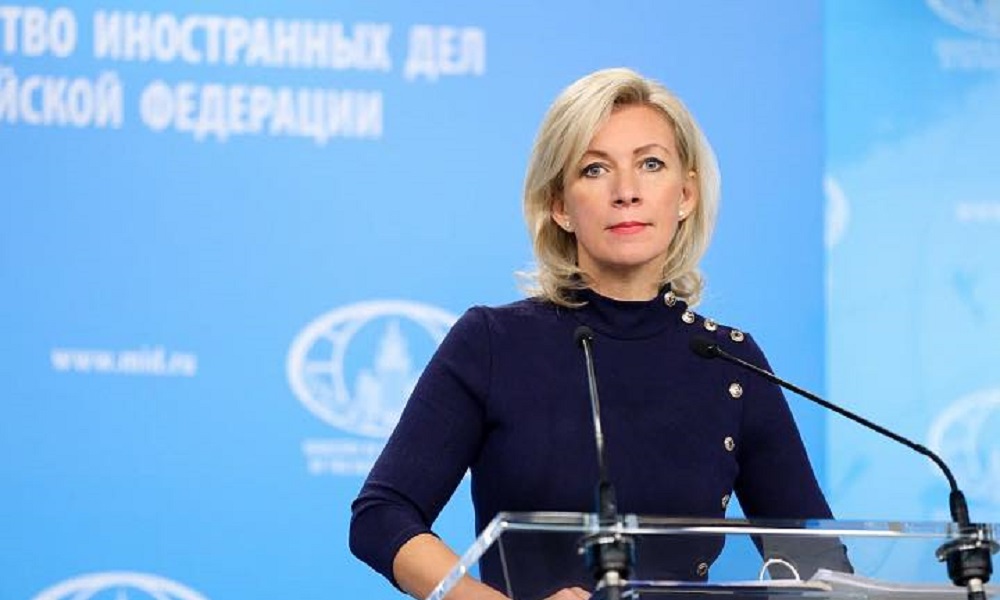
Secretary-General appoints Ms. Rabab Fatima of Bangladesh as Special Representative for Afghanistan and Head of the United Nations Assistance Mission in Afghanistan (UNAMA)

UN News

16 July 2026

New York, 15 July 2026 – United Nations Secretary-General António Guterres announced today the appointment of Rabab Fatima of Bangladesh as his new Special Representative for Afghanistan and Head of the United Nations Assistance Mission in Afghanistan (UNAMA).

Ms. Fatima succeeds Roza Otunbayeva of Kyrgyzstan, to whom the Secretary-General expressed his gratitude for her dedicated service. He also thanks Georgette Gagnon of Canada, Deputy Special Representative of UNAMA, who currently serves as Officer-in-Charge of the Mission.

Ms. Fatima brings to the position over 30 years of experience in national and international civil service, encompassing bilateral and multilateral diplomacy, policymaking, advocacy, programme planning and implementation. She currently serves as Under-Secretary-General and High Representative for the Least Developed Countries, Landlocked Developing Countries and Small Island Developing States (UN-OHRLLS).

Prior to this, she was the Ambassador and Permanent Representative of Bangladesh to the United Nations in New York (2019-2022). In that capacity, she served as the President of the Executive Boards of UNICEF (2020) and UN-Women (2022), as well as Vice-President of the UNDP/UNFPA/UNOPS Executive Board (2021). She was the first woman to be elected as the Chair of the Peacebuilding Commission in 2022. She also served as a Vice-President of the 77th session of the United Nations General Assembly.

As a career diplomat, Ms. Fatima served as Ambassador of Bangladesh to Japan (2016-2019), as Director-General of the Ministry of Foreign Affairs in Bangladesh (2015-2016), and in Bangladesh missions in New York, Geneva, Beijing and Kolkata, and in the Ministry of Foreign Affairs, in different capacities.

Ms. Fatima also served in the International Organization for Migration (IOM) as Regional Adviser for South and South-West Asia and Regional Adviser for Climate Change and Migration (2012-2015), and as Regional Representative for South Asia (2007-2011). She was also the Head of Human Rights at the Commonwealth Secretariat in London (2006-2007).

Ms. Fatima holds a master’s degree in international relations and diplomacy from the Fletcher School of Law and Diplomacy, Tufts University, United States, and a bachelor’s degree in social science from the University of Canberra, Australia. In addition to her native Bangla, she speaks English and has working knowledge of Hindi and Urdu.

Secretary-General appoints Ms. Rabab Fatima of Bangladesh as Special Representative for Afghanistan and Head of the United Nations Assistance Mission in Afghanistan (UNAMA)
read more

13 Afghan Doctors, Medical Student Detained in Pakistan


Pakistani police have detained 13 Afghan doctors and one Afghan medical student in Punjab’s Multan city and transferred them to a deportation center, despite the group saying their visa applications have remained pending for nearly a year.

Pakistani police have detained 13 Afghan doctors and one Afghan medical student in Multan, Punjab province, and transferred them to a deportation center, as the detainees say their visa applications have remained unresolved for nearly a year.

The detainees stated on Tuesday, July 14, that police arrested them from a government hospital in Multan before transferring them to a detention facility in Attock, where they now face possible deportation. They said they had applied for new visas or visa extensions about a year ago but had yet to receive any final decision from Pakistani authorities.

According to the detainees, five of them had applied for entry visas while the remaining doctors sought extensions of their existing visas. They said Pakistani police and security agencies had repeatedly inspected their documents over the past year, yet their immigration cases remained pending without any official resolution.

The doctors expressed concern that they could be deported before completing their medical specialization and training programs. They appealed to both the Pakistani government and the Taliban authorities to intervene and allow them to remain in Pakistan until they finish their studies.

The arrests come as Pakistan continues to intensify its crackdown on undocumented foreign nationals, particularly Afghan citizens, with authorities expanding detention and deportation operations across the country in recent months.

Earlier this week, Punjab police also detained one Afghan doctor and at least 10 Afghan medical students enrolled in universities and teaching hospitals across the province. According to reports, 10 of the detainees were undergoing specialist training at Quaid-e-Azam Medical University and Bahawalpur Teaching Hospital when they were arrested, while another Afghan doctor, Noorullah, was detained at Sahiwal Teaching Hospital.

Although Pakistani authorities have not officially explained the arrests, the detainees said they were taken into custody after their visas expired. The successive arrests have heightened concerns among Afghan medical professionals and students in Pakistan, many of whom say they face uncertainty despite having applied to regularize their immigration status.

13 Afghan Doctors, Medical Student Detained in Pakistan
read more

Pakistani Police Detaining Afghan Students, Amid Crackdown

The students say they are currently pursuing studies in various fields, but due to the non-renewal of their visas, they are at risk of deportation.

As the new phase of the forced deportation of Afghan migrants from Pakistan begins, a number of Afghan students have told TOLOnews that Pakistani police are also detaining and deporting students.

The students say they are currently pursuing studies in various fields, but due to the non-renewal of their visas, they are at risk of deportation.

They have called on the Islamic Emirate to engage with the relevant Pakistani authorities to prevent the deportation and harassment of Afghan students.

An Afghan student in Pakistan told TOLOnews: “Most of us applied for visa extensions on time, but we have still not received any clear response, and we do not know whether our applications will be approved or rejected.”

Sediq Shariati, head of the Afghan Students Union in Pakistan, said: “Afghan students in Pakistan are facing a very difficult situation. Every day, they are detained from different parts of the country, transferred to detention camps, and then deported to Afghanistan. This situation has had a serious psychological impact on all students.”

Officials at the Embassy of the Islamic Emirate of Afghanistan in Islamabad and the Afghan Consulate in Pakistan’s Sindh province say they have raised the challenges facing Afghan students with Pakistani authorities and are working to expedite the visa extension process for Afghan students in the country.

Abdul Jabbar Takhari, the Islamic Emirate’s Consul General in Sindh province, said: “Our request to the Pakistani government is to allow students to complete their studies peacefully and to provide the necessary cooperation in extending their visas.”

Yesterday, a number of students also sent a video to TOLOnews, saying they were under police surveillance and were not allowed to move freely or leave their places of residence.

Pakistani Police Detaining Afghan Students, Amid Crackdown
read more

‘When she turns eight they will take her’: rising number of Afghan girls being sold into child marriage

Neda Noran and Atousa Azar for Zan Times

At 13, Sima became a bride inside the compound where she still lives, and where she has given birth to her children. One child died of pneumonia aged one. She does all the housework: fetching water, tending the cows, baking naan in a tandoor. All the while, her children cling to her legs, crying.

Sima’s case is no longer exceptional. Interviews with workers at one public hospital in northern Afghanistan revealed that 42 underage girls gave birth in the first five months of this year. Six were in their second pregnancy. Five had ectopic pregnancies – a leading cause of maternal deaths – and 18 had caesarean sections. Two died, though their babies survived.

They are victims of a growing trend toward child marriage, driven by Taliban policies legalising the practice and forcing girls out of school, combined with a deepening humanitarian crisis in which families are forced to sell their daughters to pay debts or buy food. As well as Sima’s family, the Guardian and Zan Times spoke to three other families with daughters under nine who were traded in marriage to settle debts. The youngest was two months old when she was promised as a bride, with all the families pledging to give the girls to their future husbands when they reached between seven and nine years old.

Regression under the Taliban

Child marriage is not new to south Asia. But while the practice across the region has been declining, the Taliban takeover reversed that trend in Afghanistan. Shabnam*, a midwife, says: “Since the new government came to power, the number of child mothers has increased dramatically. In the past, perhaps only two child mothers visited the hospital each month, most of whom were from illiterate families. But now, literate and illiterate families marry off their daughters at a young age.”

Globally, “underage” means under 18, protected as a minor under the UN Convention on the Rights of the Child. The World Health Organization separately warns against pregnancy below the age of 20, as mothers and babies risk “major health consequences”.

Shabnam recalls a 2024 case in which a 13-year-old came to her with severe bleeding after suffering a miscarriage. “I was deeply saddened. I spoke with her mother, and the response I heard from her still echoes in my mind. When I asked why she allowed her 13-year-old daughter to marry a man nearly 30 years old, she said: ‘To feed my other children, I had to sacrifice one of them.’”

Some families falsely believe the younger the mother, the healthier and smarter the child. Mothers who are still children themselves often haven’t completed their physical or psychological growth and face higher risk of severe bleeding, anaemia, miscarriage, obstructed labour and premature birth, along with a greater likelihood of a low-weight or unhealthy infant.

Sima says she is still feeling the effects of bearing children so young. “During my pregnancy, I fainted several times because my blood pressure dropped very low. I always have a headache. My kidneys ache. I feel like a 70-year-old person,” she says.

Shabnam says families often resist caesarean section, believing they limit future pregnancies. Two young mothers in her care recently died in childbirth because their husbands refused to permit one.

A report in June by the UN’s Office for the Coordination of Humanitarian Affairs put Afghanistan’s maternal mortality rate at 600 per 100,000 live births, compared with 16 in Iran, 155 in Pakistan, and 12 in the UK. The report cites restrictions on women in healthcare and a shortage of rural health workers, and calls investment in education and female health staff vital.

Sima is one of more than 2.2 million Afghan girls who have been barred from education above the sixth grade (about 12 years) since the Taliban returned to power. Many are now forced into marriage and premature motherhood. The Afghanistan Human Rights Center reports that one teacher estimated 70% of girls pushed out of school had been driven into forced marriages, while a smaller survey of 15 such girls found 66% of them were under 18.

While the country’s pre-Taliban laws criminalised marriage under 15, a new decree this year set no minimum age at all. It follows the closure of schools and universities to women and growing restrictions on their mobility. The new laws have cut women and girls off from education and work, compounding Afghanistan’s economic distress amid rising unemployment.

Sima’s 24-year-old husband is unemployed; he went to Iran seeking work but returned empty-handed after three months. She wishes she could work, but as a mother of three with responsibilities at home, there is no opportunity to earn or learn a skill. “Five families live in one compound: my parents, my uncle with his two wives, and my brother with his wife,” says Sima. “Whenever others have something left over, they give it to us. Most of the time, we are hungry.”

After the Taliban closed school gates and banned women from most public jobs, Sima’s family used her to settle a debt: her father owed his brother 200,000 afghani (about £2,380), and Sima was given to the brother’s son in lieu of a bride price.

A recent UN Development Programme report shows three-quarters of Afghanistan’s population, about 28 million people, cannot afford basic needs and more than 80% of households are in debt. With the gutting of USAID and rollback of aid commitments in Europe and the UK, international assistance to the country fell by more than 16% in 2025, closing or restricting hundreds of medical clinics. Without investment in employment and services, the report warns, prospects for rebuilding people’s lives are poor.

Girls being sold as toddlers

The other three families interviewed for this report, all in western Afghanistan, say their daughters had been used to settle debts – money paid in advance, the daughters to be handed over later. Three of the girls are still under 10, unaware of the future that has been planned for them.

Golnar*, 57, holds her one-year-old granddaughter in her arms as she speaks. The girl was sold to settle her father’s debt, she says, after he fled creditors. They had no food to eat. The sale, explicitly for future marriage, was for 200,000 afghani in cash and the clearing of some debts.

“When she turns eight, they will take her from us,” says Golnar. “They gave 100,000 afghani upfront, and they will give another 100,000 after they take the girl from me. We gave it directly to the creditors for the debts.” She worries about her granddaughter’s future, remembering girls sold years ago in her neighbourhood: “They have no future. Whether they leave us to burn in a fire or face anything else, we will not know.”

Saheb Jan*, 51, pledged away her granddaughter at two months old to settle a debt, with a promise to hand her over at the age of seven. Jan is comforted that they at least know the buyer, but upset that no cash changed hands and their hunger continues. “We gave this girl away for the debts and that was it,” she says. “God is witness that even now, our living conditions are terrible and miserable.”

Sabza*, 44, sold her now seven-year-old daughter when the child was three, for a debt of 300,000 afghani (about £3,570), after returning from Pakistan to find nothing to eat and a husband too sick to work. She is now distraught that her daughter will be taken within a year. “If there were someone to give us this money, I would be so happy; if my daughter stays with me, I will be overjoyed,” she says.

Her other children always ask why she sold their sister, she says. “If my daughter goes to her aunt’s house, she comes back in a panic and asks me where her sister went. I don’t know what state they will be in after she is taken away. When I think that they will take my daughter in a year, the sky collapses on my head. I tell myself there is only one year left, no more.”

*Names have been changed

‘When she turns eight they will take her’: rising number of Afghan girls being sold into child marriage
read more

Anwar: Those Who Exceed Free Speech Limits Are Criminals

The Islamic Emirate official also stressed the importance of justice, saying that expression should be aimed at reform.

The Head of the Administrative Office, Sheikh Noor-ul-Haq Anwar, said during a journalist capacity-building program in Maidan Wardak province that, while emphasizing the importance of conveying facts through the media, freedom of expression is protected in Islam. However, he added that those who exceed the limits of this freedom and make accusations against the system are considered criminals.

The Islamic Emirate official also stressed the importance of justice, saying that expression should be aimed at reform.

He said: “Whoever speaks, the most important thing is truthfulness. Do not deviate from truth and justice. They make accusations, violate people’s rights, provide false interpretations, and pursue negative objectives. There is no place for such things in Islam.”

At the same time, the Deputy Minister for Publications Affairs at the Ministry of Information and Culture, Hayatullah Muhajir Farahi, reacting to Pakistan’s recent attacks on Afghanistan, said that the country currently has a strong and centralized system capable of responding in kind to any attack by the enemy.

Farahi added that the leadership of the Islamic Emirate has begun efforts to make the country self-sufficient in defense and military affairs.

Hayatullah Muhajir Farahi said: “Our system has the capability to respond in kind to any attack by the enemy. As you saw a few days ago, the Islamic Emirate’s air force targeted and struck enemy positions across the line in some areas of Balochistan, Peshawar, and Quetta.”

During the meeting, officials and some media representatives described delivering facts and producing effective content as the primary mission of media organizations and journalists.

The Director of Media Monitoring at the Ministry of Information and Culture, Safiullah Raeed, said: “Societies are not reformed by weapons alone; they are also transformed by the power of the pen. Clarify those harmful customs and innovations that have taken the place of religion through scholarly documentation and wise writing.”

Meanwhile, the Director of Information and Culture in Maidan Wardak, Habibullah Mujahid, said: “Since the victory, we have not had any incident in Maidan Wardak that would cause dissatisfaction. We have many active media outlets, and they have always reported the truth.”

The head of TOLOnews, Faridullah Mohammadi, also said: “Our mission and responsibility is to deliver the truth, whether it is from the government to the people or from the people to the government. We pledge to stand by this homeland in difficult times and to support this country and its sacred values.”

The capacity-building seminar was attended by around 400 journalists, writers, young people, and tribal elders. Discussions focused on the effective role of the media, and journalists were urged to produce content while respecting the country’s religious and national values.

Anwar: Those Who Exceed Free Speech Limits Are Criminals
read more

OIC Calls for Lifting Restrictions on Women, Girls in Afghanistan

Member states of the OIC called on Afghanistan to ensure the full, equal, and meaningful participation of women and girls in public life.

The two-day meeting of the Organization of Islamic Cooperation (OIC) concluded with the adoption of a resolution.

According to the resolution, adopted at the Ninth Session of the OIC Ministerial Conference on Women held in Islamabad, participants expressed concern over the continued restrictions on girls’ education and women’s employment in Afghanistan.

The 32-point resolution states that the restrictions imposed on women and girls in Afghanistan are inconsistent with Islamic values. Participants called for the removal of barriers preventing women from accessing education and professional opportunities.

The resolution reads: “Expressing deep concern over the continued restrictions on girls’ education and women’s employment in Afghanistan, which are inconsistent with Islamic values that uphold the dignity, rights and advancement of women and girls.”

Political analyst Gul Mohammad Din Mohammadi said: “If they believe certain actions here violate women’s rights or are inconsistent with Islamic law, they should engage directly with the officials of the Islamic Emirate and seek cooperation to resolve these issues.”

In another part of the resolution, the 57 member states of the OIC called on Afghanistan to ensure the full, equal, and meaningful participation of women and girls in public life in accordance with Islamic values.

Women’s rights activist Mumtaz Yousafzai said: “Over the past five years, we have not been able to provide society with enough qualified teachers or doctors. Without a doubt, when a mother receives an education, she can raise educated children.”

Although officials of the Islamic Emirate have not yet commented on the resolution, Noor-ul-Haq Anwar, head of the Office of Administrative Affairs, recently rejected Western criticism regarding women’s rights. He argued that what Western countries describe as women’s rights does not reflect Islamic principles and instead amounts to injustice toward women.

Anwar said: “What they call women’s rights, when compared with Sharia, is like taking a single drop from the sea. In fact, what they present as women’s rights is not women’s rights at all, but rather injustice and oppression against women.”

The OIC meeting, attended by representatives of its 57 member states, concluded on Monday evening with an emphasis on supporting women and expanding opportunities for them.

OIC Calls for Lifting Restrictions on Women, Girls in Afghanistan
read more

U.S. Lawmakers Criticize Delays in Afghan Refugee Resettlement

The lawmakers also reaffirmed their support for the cases of Afghan refugees, saying they would use every available legal and political tool.

AfghanEvac, an organization that supports the relocation of former U.S. allies and their families, has announced that it hosted a virtual meeting between Afghan refugees at Al Sailiya Camp in Qatar and three members of the U.S. Congress.

During the meeting, the U.S. lawmakers criticized the failure to fulfill promises made to the families of former U.S. partners, saying the situation is inconsistent with the values of justice and fairness.

Rep. Scott Peters said: “Absolutely riveted by these stories. They are heartbreaking, frankly repugnant to my sense of justice and fairness, my image of America. I don’t recognize America in the denial of promises and breaking of our word to these family members.”

Shawn VanDiver, president of AfghanEvac, said: “That you were heard today by people with the power to act on it. And even though it’s not going to happen overnight, we’re going to keep bringing folks back here to talk to you. We’re going to keep raising your voices. We’re going to keep fighting for you. We’re not going anywhere. And I’m just really grateful to all of you for showing up.”

The lawmakers also reaffirmed their support for the cases of Afghan refugees, saying they would use every available legal and political tool—including introducing legislation—to help move the process forward.

Rep. Lou Correa said: “I’m happy to show up with you, form a ticket line in front of the White House, then of Congress. You let me know I’m there. We have to make sure we bring this issue back at the forefront of Congress and of lawmakers.”

Sen. Richard Blumenthal added: “I can’t tell you where you’ll end up or when, but I can tell you that we’ll keep fighting and that we’ve heard you today and thank you all for the sacrifice that you have made and thanks for giving us the time, the education we got today. We heard you. We’re not going to let the scope quiet.”

The meeting took place as, according to the organizers, some Afghans transferred to Al Sailiya Camp have been waiting for more than a year and a half for a final decision on their resettlement in the United States.

Earlier reports had also suggested that around 1,100 Afghan refugees currently housed at Al Sailiya Camp in Qatar could be transferred to the Democratic Republic of the Congo.

U.S. Lawmakers Criticize Delays in Afghan Refugee Resettlement
read more

Rubio Cites Afghanistan ICC Investigation as U.S.Launches Campaign Against International Criminal Court

KT

The Kabul Tribune

14 July 2026

The Kabul Tribune (KT) — U.S. Secretary of State Marco Rubio has announced a diplomatic campaign against the International Criminal Court (ICC), citing the court’s investigation into alleged crimes committed during the war in Afghanistan as one of the reasons behind the move.

In an opinion article published Monday in The Wall Street Journal, Rubio said the United States would work with allied governments to dismantle the ICC “brick by brick, if necessary,” arguing that Washington would protect U.S. service members from the court’s jurisdiction.

According to Reuters, Rubio specifically referred to the ICC’s 2020 decision to authorize an investigation into the situation in Afghanistan, which included allegations of crimes committed by U.S. forces, alongside alleged crimes by the Taliban and the former Afghan government.

Reuters reported that although the Afghanistan investigation initially covered alleged abuses by U.S. personnel, ICC prosecutors have, since 2021, shifted their focus primarily to alleged crimes committed by the Taliban and the former Afghan government.

A U.S. State Department official told Reuters that the administration is considering measures including visa restrictions, travel bans, expanded sanctions against the ICC and affiliated organizations, and diplomatic pressure on member states to withdraw support for the court.

The ICC, established under the Rome Statute in 2002, has 125 member states, but the United States is not among them.

An ICC spokesperson declined to comment on Rubio’s announcement.

Rubio Cites Afghanistan ICC Investigation as U.S.Launches Campaign Against International Criminal Court
read more

Pakistan Cannot Tolerate A Peaceful Afghanistan, Says Taliban Official

14 July 2026

A Taliban Interior Ministry official says Pakistan does not want prosperity, peace or security in Afghanistan, accusing the neighbouring country of opposing a united and stable Afghanistan.

Abdul Hakim Hemmat Akhundzada, head of public relations at the Taliban’s Interior Ministry, made the remarks at a gathering in Paktia.

Without naming Pakistan directly, he said: “Beside us is an ominous enemy that is close to Paktia.”

Addressing those present, the Taliban official said: “If I ask you what enmity these people and this country have with us, we have no religious enmity, no enmity over land and people, and no linguistic enmity. They simply cannot tolerate a united, prosperous, self-reliant Afghanistan that is free of war and at peace.”

He stressed the need for public awareness and shaping public opinion against the country.

The remarks come as Pakistan also accuses the Taliban of fueling insecurity and crisis in the country in cooperation with India. Islamabad also accuses the Taliban of supporting the Pakistani Taliban and Baloch separatists.

Pakistani officials say attacks and insecurity in the country have increased severalfold since the Taliban returned to power. Relations between the two sides are currently in deep crisis, talks have produced no results, and the outlook remains bleak.

Pakistan Cannot Tolerate A Peaceful Afghanistan, Says Taliban Official
read more

The Taliban’s war on education: ‘Nobody talks about what is happening to the boys’

Fatima Faizi

Before he leaves for Kabul University each morning, Hashmat* checks his face for the beard he has been ordered to grow. Male students are required to grow their facial hair and wear traditional Afghan clothes and those who fall short are punished. Hashmat says he recently saw a classmate beaten for wearing trousers.

“They look at you before they listen to you. If your appearance is wrong, you are already in trouble before the class begins,” he says.

Five years after the ultra-conservative Islamists of the Taliban retook Afghanistan, students have described to the Guardian a collapsing education system, with women banned, lecturers leaving and teaching increasingly focused on religious subjects and discipline.

Students are required to attend religious lectures and pray in public every day, sometimes for two hours at a time, says Hashmat. The lectures are about Islam, conduct and obedience. They are not optional. In some cases, he says, they are held during time that would otherwise be used for regular academic courses.

“I am missing my actual classes to sit in a lecture about obeying. That is what they [the Taliban] think education is for. Everyone talks about the girls who were banned, but nobody talks about what is happening to the boys who were allowed to stay.”

Another student studying in central Afghanistan said the problem is not only weak teaching, but also the disappearance of debate and questioning from the classroom. “We are expected to listen, not to question,” says Qader*. “Since the fall of Kabul, the university has lost its purpose. It feels more like a madrassa now — a place where curiosity is banned and remaining silent ordered.”

A hand holding a book with Arabic script, next to a traditional Hazara-type hat and prayer beads
A booklet on Islamic civilisation that students say they are forced to study. Photograph: Handout

Hashmat studies journalism, a subject shaped by digital tools, online platforms, verification, ethics and technology, but as he listens in class, he says he wonders whether the person teaching the course understands the subject well enough to teach it.

“He is teaching us about the modern world while struggling to use PowerPoint in the class. How can you teach journalism technology if you do not understand what technology is?”

Hashmat’s account matches those of more than 20 students interviewed by phone at public and private universities in seven provinces across Afghanistan – Kabul, Kandahar, Helmand, Nangarhar, Bamiyan, Balkh and Wardak.

Afghanistan’s higher-education sector contracted sharply between 2019 and 2024, according to Unesco, with female enrolment down to zero by 2024 and male enrolment falling from 310,369 in 2019 to 188,957 in 2024.

Kabul University still looks like a university from the outside. The buildings are open, male students still attend, exams are held and degrees are issued. But students say much of what makes it a university has been hollowed out.

Experienced professors have left the country, stopped teaching or been pushed aside. And ideologically aligned Taliban lecturers have been hired in their place. In some departments, recent graduates and even undergraduates are teaching.

Hashmat points to one lecturer who, he says, finished his own degree only two years earlier. “Now he is standing in front of us. It is clear he does not know more than we do.”

Zalmay*, a student in Helmand province, describes a similar decline in the quality of teaching. “Some teachers come to class and only read from old notes,” he says. “When we ask questions, they cannot explain beyond what is written in front of them. We are university students, but sometimes it feels like we are back in high school.”

A former Kabul University professor, who has requested anonymity because he fears retaliation, confirms the students’ accounts and says the loss of qualified lecturers has weakened universities that are still expected to produce graduates.

Nearly all those who have spoken to the Guardian describe some version of the same crisis: weak teaching, underqualified lecturers, mandatory religious lectures, pressure over appearance and a growing belief that education no longer leads to work.

Kabul University once meant something very different. For generations, it trained Afghanistan’s doctors, engineers, journalists, civil servants and political leaders. To be admitted there was a source of pride for a family. It meant a brighter future was possible.

After the fall of Kabul, Hashmat says two of his younger brothers dropped out of school. They no longer believe education would help them find jobs or build a future. For years, school was presented as the safest path forward: study, graduate, work, support the family. Since the Taliban takeover, that promise no longer seems real.

“They do not believe education will help them anymore. I am reaching the same conclusion and find it hard to attend classes.”

Even on campus, Hashmat says, journalism students feel hostility. They are studying an occupation that has been restricted, lost professionals and treated with suspicion. Many independent news outlets have closed. He says he and his classmates have been called shaitan (Satan) by their teachers.

“We are studying journalism in a country where journalism barely exists. What are we being trained for?” he asks.

The question has worn down many of his classmates. Some still attend because their families expect them to; some come because a degree, even a weakened one, still carries social status.

But Hashmat says many fellow students no longer believe in what they are doing. “They come because their families want them to. But inside, they have already given up.

“I keep going because I do not know what else to do. But every day it gets harder to believe it means something,” he says. “The Taliban war on the battlefields has stopped, but their war on education continues in silence.”

* Names have been changed to protect their identities

The Taliban’s war on education: ‘Nobody talks about what is happening to the boys’
read more