Islamic Emirate Releases a 5-Year Development Strategy for Afghanistan

This strategy has been formulated in 15 sectors, based on Sharia rulings, scientific standards, and reliance on domestic capacities.

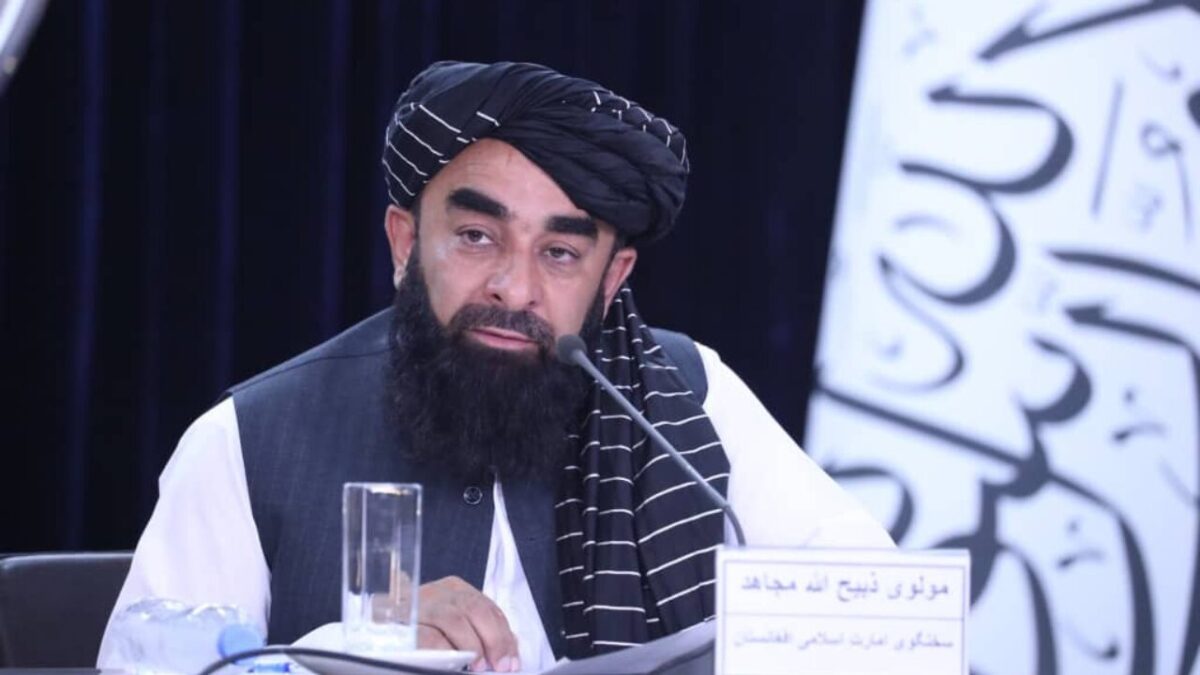
Zabihullah Mujahid, spokesman for the Islamic Emirate, stated Afghanistan’s development strategy has been finalized by the leader of the Islamic Emirate and will now enter the implementation phase.

According to him, this strategy has been formulated in 15 sectors, based on Sharia rulings, scientific standards, the country’s actual conditions, and reliance on domestic capacities.

The 15 main pillars of Afghanistan’s development strategy are as follows:

Rule of Sharia law and ensuring Islamic justice

Good governance and management of international relations

Reform of the public sector, ensuring transparency and accountability

Strengthening and expanding regional and international relations

Strengthening security, public order, and border protection

Law enforcement, combating crime, and strengthening local governance

Urban development and rural progress

Economic and social development

Effective and sustainable use of natural resources and provision of energy

Growth of agriculture and livestock

Improving financial management and expanding electricity payments

Improving health services and ensuring food security

Development of education, human resources, and culture

Growth of telecommunications and information technology

Development of transport and transit infrastructure

The office of the deputy prime minister for economic affairs has asked all ministries and government agencies to align and implement their policies, programs, and projects within the framework of this five-year strategy in order to ensure greater coordination, effective prioritization, and optimal management of national resources.

Regarding the usefulness of this strategy, Abdul Zahoor Mudaber, an economic expert, said: “A strategic program and plan generally define a vision and outlook, under which several key components find their place, including political stability, security stability, and regional economic connectivity.”

According to Islamic Emirate officials, governance based on Islamic rulings, ensuring nationwide security, safeguarding territorial integrity, creating job opportunities, and economic growth are considered the key objectives of this national strategy.

Islamic Emirate Releases a 5-Year Development Strategy for Afghanistan
read more

Trump Calls Afghanistan Withdrawal ‘Most Embarrassing Day in U.S. History’

Trump stressed that American forces should have been stationed at Bagram Air Base instead of Kabul airport.

Four years after the deadly attack at Kabul airport, questions and criticism over how the United States withdrew from Afghanistan remain unresolved inside the country.

Donald Trump, strongly criticizing former U.S. Former President Joe Biden, described the withdrawal from Afghanistan as “the most embarrassing day in the history” of the U.S.

Trump stressed that American forces should have been stationed at Bagram Air Base instead of Kabul airport.

He said: “They were in the wrong place. Bagram was the place to be, a  big, massive airfield with hundreds of acres surrounding it. Nobody can get near it. And who would not have done that? But we had a bunch of incompetent people running our country.”

The former president also emphasized that he intended to keep Bagram Air Base.

Trump once again claimed that China has taken over the base.

He added: “We would have kept Bagram, which is the air base, one of the largest runways in the world, one of the most powerful. You can land anything on it, many, many feet thick. You don’t build them that way anymore. You can’t. But we left it and now China is occupying that air base. This was the most incompetent administration in history. The Biden administration.”

Meanwhile, the U.S. Secretary of Defense also emphasized that reviews regarding the withdrawal are underway.

Pete Hegseth said these reviews will be completed by mid-2026.

The U.S. Defense Secretary stated: “Sean Parnell, an Afghanistan vet is leading it and we’re doing it on behalf of the American people. So I would anticipate, middle of 2026. That’s how thorough of you were doing hopefully a little bit sooner, but we’re going to everything in understanding what happened.”

On August 26, 2021, during the final days of America’s presence in Afghanistan, an explosion occurred at the gate of Kabul International Airport, killing more than 100 Afghan civilians and 13 U.S. soldiers.

Trump Calls Afghanistan Withdrawal ‘Most Embarrassing Day in U.S. History’
read more

Germany to resume entry of vulnerable Afghans after legal, diplomatic pressure

By

  • Some 2,000 Afghans stranded in Pakistan after Germany paused scheme to admit them
  • Pakistan aims to expel Afghan refugees by September 1 deadline
  • Government had faced several lawsuits challenging freeze on admissions
BERLIN, Aug 26 (Reuters) – Germany is set to lift its months-long ban on the entry of vulnerable Afghan nationals it had pledged to admit, a foreign ministry official said on Tuesday, after mounting legal pressure at home and a deportation push by Pakistan.
Around 2,000 Afghans approved for relocation to Germany under a programme for those deemed at risk under Taliban rule have been stranded in neighbouring Pakistan for months, after Berlin froze the scheme amid a pledge to curb migration.
The decision comes following several lawsuits by groups and dozens of affected Afghans challenging the freeze.
The interior ministry, which had put the programme on hold in the first place and was blocking its resumption, said Afghan nationals who were promised admission under earlier programs were undergoing individual case reviews.
“Afghans for whom the Federal Republic of Germany has been legally obliged by binding court decisions to issue visas and allow entry will gradually be admitted to Germany,” a ministry official said.
Only Afghans with binding admission approvals will be allowed in after security checks, the official said, noting that numbers were unclear and exit permits from Pakistan would still be required.
Matthias Lehnert, a lawyer representing Afghans who had challenged the suspension, told Reuters he had informed the affected families of the news and that they were “overjoyed”.
“These are all proceedings that were enforced through the courts. In that sense, the federal government is doing the absolute minimum,” Lehnert added.

URGENCY

The sense of urgency has increased as Pakistan moves to expel Afghan refugees ahead of a September 1 deadline, including those in Germany’s relocation programme.
Lehnert, who won four cases against the government, said the courts had ruled in principle that people could rely on Berlin’s admission commitments and were at serious risk of deportation to Afghanistan if not flown to Germany.
“That’s why it’s really scandalous that the government isn’t acting in all the other cases and continues to drag things out.”
Families with court rulings will be flying out of Pakistan soon but the details have not yet been disclosed, said Eva Beyer, media and advocacy officer for aid organisation Kabul Luftbruecke (Kabul Air Bridge).
“Some of them have been waiting for many, many months, some even for years, to be able to leave (Pakistan),” she told Reuters, adding that the Afghans would be flown to Germany on regular commercial airlines, not charter flights.

Reporting by Riham Alkousaa Editing by Miranda Murray and Gareth Jones

Germany to resume entry of vulnerable Afghans after legal, diplomatic pressure
read more

UN Warns ISIS-K Still Threatens Afghanistan, Europe, and Central Asia

Natalia Gherman said that the group is actively working to recruit new members and raise funds through propaganda tactics and online campaigns.

The Executive Director of the United Nations Counter-Terrorism Committee has stated that the Khorasan branch of ISIS (ISIS-K) continues to pose a significant threat to Afghanistan, Europe, and Central Asia.

Speaking at a UN Security Council meeting, Natalia Gherman said that the group is actively working to recruit new members and raise funds through propaganda tactics and online campaigns.

“ISIS-K remains a significant threat in Afghanistan and also in Europe and in Central Asia, where it actively seeks to recruit and fundraise, relying on propaganda tactics and online campaigns. ,” Gherman said.

While political analysts have differing views on the matter, some in Afghanistan describe international claims about ISIS presence as part of a negative propaganda campaign against the Islamic Emirate of Afghanistan.

Political analyst Amanullah Hotaki said: “The international community has run out of excuses, so now they point to ISIS. Previously, they made similar claims about al-Qaeda. Now, they talk about ISIS. My suggestion to our own government, the Islamic Emirate, is to address issues like girls’ education, women’s rights, skilled professionals, and political disputes with the world.”

Another analyst, Abdul Nasir Shafiq, told TOLOnews: “ISIS was a quick project for Iraq and Syria, it grew fast and collapsed fast. Now, the U.S. wants to use ISIS-K to scare regional and militarily powerful countries.”

The Islamic Emirate has repeatedly insisted that ISIS has been contained in Afghanistan and has dismissed previous UN Security Council member concerns over the presence of ISIS, al-Qaeda, and other terrorist groups in the country as baseless.

Hamdullah Fitrat, deputy spokesperson for the Islamic Emirate, also emphasized that countries should not try to portray Afghanistan as unstable without providing concrete evidence.

UN Warns ISIS-K Still Threatens Afghanistan, Europe, and Central Asia
read more

Da Afghanistan Bank: Afghani Value Up 21% Against Foreign Currencies

The bank’s data further show that banking sector financing has increased by 71 percent compared to the previous year.

Da Afghanistan Bank says that in the past four years, the value of the Afghani has increased by 21 percent against foreign currencies, especially the US dollar.

Bank officials state that efforts are underway to stabilize the country’s economy, which include strengthening the Afghani’s value, expanding the banking sector, and boosting financial support.

The bank’s spokesperson added that they have been able to protect the Afghani’s value by implementing appropriate monetary policies and to prevent severe fluctuations in the currency market.

Hasibullah Noori, the spokesperson of Da Afghanistan Bank, said: “In the past year, the Afghani has had a 0.79 percent positive change against foreign currencies, particularly the dollar, which indicates the stability of the Afghani. Our effort is to maintain the Afghani’s stability in a better way and not allow severe fluctuations to occur in this regard.”

He emphasized that important progress has been made in the banking sector and in relations with international banks. Currently, the institution is in contact with 200 international banks and is working to further expand global banking interactions, so traders can conduct international financial transactions more easily.

Some economic analysts, pointing to the banking restrictions of the past four years, say that expanding relations with international banks could play a key role in reducing the impact of these restrictions.

They stress that in order to preserve the Afghani’s value, it is necessary to explore alternative financial reserves or backing.

Trader Omid Haidari said: “The current problem we face in Afghanistan’s banking sector is the lack of support from private banks for our national traders. Whenever we deposit money in private banks, they do not release it for months. We request the leadership of the Islamic Emirate to establish a clear mechanism and sign agreements with private banks so that we can withdraw our money on time.”

Economic analyst Abdul Ghafour Nezami also said: “Afghanistan is currently on the threshold of economic transformation and has taken major steps in this regard. We are witnessing the launch of major projects and investments, which should strengthen the stability of the Afghani day by day. At the same time, the Afghani’s value must be raised against other foreign currencies.”

According to Da Afghanistan Bank, during the past year, 26,000 people received financing through small-scale financial support, and another 16,000 were financed through the banking sector.

The bank’s data further show that banking sector financing has increased by 71 percent compared to the previous year.

Da Afghanistan Bank: Afghani Value Up 21% Against Foreign Currencies
read more

Can China make Pakistan and the Taliban friends again?

As China pushes to expand the CPEC, Pakistan-Afghanistan tensions continue to cast a shadow over trilateral diplomacy

Islamabad, Pakistan – With clasped hands and half-smiles, the foreign ministers of Pakistan, China and Afghanistan’s ruling Taliban posed as they gathered in Kabul on Wednesday for a trilateral meeting.

It was the second such meeting between Chinese Foreign Minister Wang Yi, Pakistan’s Ishaq Dar and their Afghan counterpart Amir Khan Muttaqi in 12 weeks, after they huddled together in Beijing in May.

That May meeting had led to the resumption of diplomatic ties between Pakistan and Afghanistan after a period of high tension between them. It also set the stage for talks on extending the China-Pakistan Economic Corridor (CPEC) – a part of China’s ambitious Belt and Road Initiative (BRI) – into Afghanistan. The BRI is a network of ports, railroads and highways aimed at connecting Asia, Africa and Europe.

But as China plans to expand its footprint in the region, its attempts to forge peace between Pakistan and Afghanistan reflect its unease over the security of its interests even along the existing CPEC, say analysts.

And while Beijing is a vital partner to both Islamabad and Kabul, experts believe its influence over both remains untested, as does China’s willingness to take on the risks that it might confront if it seeks to bring Pakistan and the Taliban, once thick allies but now embittered neighbours, back into a trusted embrace, they say.

Shifting regional dynamics

The Beijing conclave took place under the shadow of a four-day conflict between Pakistan and India, but much has changed since then on the regional chessboard.

In recent months, Pakistan – long seen as China’s closest ally and reliant on its northeastern neighbour for military and economic support – has strengthened ties with the United States, Beijing’s main global rival.

China, for its part, has resumed engagement with India, Pakistan’s arch adversary and its key competitor for regional influence. India has also continued to deepen ties with the Afghan Taliban, who have ruled Afghanistan since August 2021, following the withdrawal of US forces.

Pakistan and Afghanistan, meanwhile, remain at odds. Islamabad was once the Taliban’s chief patron. Now, it accuses the group of providing a safe haven to groups carrying out cross-border violence, while Afghanistan accuses Pakistan of human rights violations by expelling Afghan refugees.

Amid this, China has positioned itself as mediator, a role driven largely by the CPEC, the $62bn infrastructure project running from the Pakistan-China border in the north to Gwadar Port in Balochistan.

A senior Pakistani diplomat with direct knowledge of the recent Pakistani interactions with their Chinese and Afghan counterparts said China, as a common neighbour, places a premium on neighbourhood diplomacy. For China, he added, a peaceful neighbourhood is essential.

“China has attached high importance to stability and security to pursue and expand its larger BRI project, so expansion of westward connectivity and development can only succeed when, among others, these two countries are stabilised,” the official told Al Jazeera on condition of anonymity.

“Development and connectivity cannot be achieved in the absence of security. Hence its efforts to bring the two neighbours together,” he added.

CPEC under strain

CPEC, launched in 2015 under then-Prime Minister Nawaz Sharif, elder brother of current Prime Minister Shehbaz Sharif, has been hailed by many in Pakistan as a “game-changer” for the country – a giant investment with the potential to create jobs and build the economy.

But the project has slowed down in recent years. Later this month, Prime Minister Sharif is expected to travel to China to formally launch the second phase of the CPEC.

While political upheaval has hampered progress, China’s primary concerns remain the safety of infrastructure and the security of its nationals, who have frequently been targeted.

Separatist groups in Balochistan, Pakistan’s largest but poorest province, have long attacked Chinese personnel and installations, accusing them of exploiting local resources. Attacks on Chinese citizens have also occurred in Pakistan’s north.

Nearly 20,000 Chinese nationals currently live in Pakistan, according to government figures. Since 2021, at least 20 have been killed in attacks across the country.

Stella Hong Zhang, assistant professor at Indiana University Bloomington in the US, said China has long wanted to bring Afghanistan into the CPEC, to expand the project’s scope and to promote regional integration.

But Zhang, whose research focuses on China’s global development engagement, said it is unclear how convinced Beijing is about investing in either Afghanistan or Pakistan.

The trilateral meet in Kabul was sixth iteration of the forum, with last formal meeting taking place in May 2023. [Wang Yi, Amir Khan Muttaqi and Ishaq Dar met in Kabul on August 20 for the trilateral dialogue among foreign ministers of China, Afghanistan and Pakistan. [Handout/Pakistan's Ministry of Foreign Affairs]
The trilateral meeting in Kabul was the sixth iteration of the forum, with the last formal meeting having taken place in May 2023 [Handout/Pakistan’s Ministry of Foreign Affairs]

“China might promise investments, but even though we are seeing actions on China’s diplomacy front,” she told Al Jazeera, it is uncertain whether officials in the two nations “will be able to convince China’s state-owned enterprises and banks to invest in further projects in both countries, given CPEC’s disappointing track record and the substantial risks in both countries”.

For Muhammad Faisal, a South Asia security researcher at the University of Technology Sydney, improvement in Pakistan’s internal security is paramount for China.

“This concern is what guides Beijing’s push for improvement in Pak-Afghan bilateral ties since the Tehreek-e-Taliban Pakistan (TTP) is operating from the Afghan soil, while Baloch militant groups have also found space in Afghanistan,” he told Al Jazeera.

“Through high-level trilateral talks, Beijing is aiming to narrow Islamabad-Kabul differences and also urge both sides to address each other’s security concerns to avert a breakdown of ties,” he added.

Pakistan Taliban, also known as TTP, founded in 2007, is a group which is ideologically aligned with the Taliban in Afghanistan but operates independently both in Afghanistan and Pakistan.

The Taliban has repeatedly rejected allegations that it allows its soil to be used for attacks against Pakistan and has consistently denied any ties with the TTP.

Security challenges

Since the Taliban seized power in August 2021, Pakistan has faced a sharp rise in violence, particularly in Khyber Pakhtunkhwa and Balochistan, both bordering Afghanistan.

Islamabad has repeatedly alleged that Afghan soil is being used by armed groups, especially the TTP, to launch attacks across the porous frontier.

Data from the Islamabad-based Pakistan Institute for Conflict and Security Studies (PICSS) shows that in the first six months of 2025, 502 fighter attacks killed 737 people, including 284 security personnel and 267 civilians.

Compared with the first half of 2024, fighter attacks rose 5 percent, deaths surged 121 percent, and injuries increased 84 percent, according to PICSS.

China, too, has also voiced concern over the Eastern Turkistan Islamic Movement (ETIM), accusing its fighters of using Afghan territory to launch attacks against China.

Abdul Basit, a research fellow at the S. Rajaratnam School of International Studies in Singapore, said that since the US withdrawal from Afghanistan, China has emerged as South Asia’s main geopolitical player.

“Without addressing Pakistan’s Afghan-centric security concerns, BRI’s Pakistan component, CPEC, will remain underutilised and underdeveloped. Hence, China has started the trilateral to help Afghanistan and Pakistan resolve their security issues under a holistic policy which tries to isolate economy and diplomacy from security trouble,” he told Al Jazeera.

Faisal, of the University of Technology Sydney, added that China brings political weight, offering both diplomatic backing at multilateral organisations – particularly on counterterrorism – and the promise of economic inducements.

But he was cautious about Beijing’s long-term leverage. “Beyond underlining the importance of stability via enhanced security coordination between Pakistan and Afghanistan, the outcomes of China’s efforts have been limited, partially due to Beijing’s own security anxieties,” he said.

The senior Pakistani diplomat said China’s BRI and related projects have brought it leverage in Southeast Asia and Central Asia, and expressed optimism that Beijing could bring about change between Pakistan and Afghanistan “armed with the political, diplomatic, economic and financial tools”, even if results have so far been limited.

But will China act as mediator and guarantor between Pakistan and Afghanistan? The diplomat was sceptical.

“As for guarantorship, I’m not sure whether China is willing or keen to do so. It certainly can play that role because of a high degree of trust it enjoys, but whether it would do so or not remains to be seen,” he said.

Source: Al Jazeera
Can China make Pakistan and the Taliban friends again?
read more

Afghanistan: Focal Point of Regional, Global Diplomatic Efforts

Meanwhile, Pakistan’s special representative for Afghanistan, Mohammad Sadiq, met with his British counterpart Andrew McCoubrey.

Four years after the collapse of the republic and the return of the Islamic Emirate to power, Afghanistan remains at the center of regional and global diplomatic discussions.

In Moscow, Russian Foreign Minister Sergey Lavrov, during a meeting with his Indian counterpart S. Jaishankar, emphasized that the two countries share common positions on Afghanistan.

Lavrov stated: “We have a shared position on the need to ensure Afghanistan’s practical inclusion in regional processes. We also discussed resolving the Middle East crisis and the disastrous humanitarian situation in Palestinian territories.”

Indian Foreign Minister Jaishankar added: “We discussed Ukraine, the Middle East, and Afghanistan. I want to emphasize that India sees dialogue and diplomacy as the main tools for conflict resolution. We also agreed to fight all forms of terrorism together.”

Meanwhile, Pakistan’s special representative for Afghanistan, Mohammad Sadiq, met with his British counterpart Andrew McCoubrey.

He wrote on X: “Met with British Special Representative for Afghanistan, Andrew McCoubrey, today. We discussed the evolving regional dynamics, the situation in Afghanistan, and the importance of continued international engagement for peace, stability, and prosperity in the region.”

In response to this meeting, political analyst Saleem Paygir said: “Pakistan and Britain are two countries that have always wanted instability and insecurity in Afghanistan. None of their meetings have been in the Afghan people’s interest, as Pakistan is dependent on the UK. I believe these meetings pursue another sinister plan against the Afghan people.”

However, other political analysts believe the continuation of these meetings and coordination shows that no country can exclude Afghanistan from regional dynamics.

Political analyst Najib Rahman Shamal said: “Special representatives from countries like China, Russia, Pakistan, and others have discussed Afghanistan in various meetings. They have pledged cooperation for peace, establishing an effective government, and combating corruption and terrorism, which is a positive sign.”

It is worth noting that Russia is the only country that has officially recognized the Islamic Emirate of Afghanistan in the past four years.

Afghanistan: Focal Point of Regional, Global Diplomatic Efforts
read more

U.S. Official: Taliban Have ‘Relatively’ Cooperated in Counterterrorism

Sebastian Gorka added that there are groups in Afghanistan that pose a threat to the current ruling authority as well.

Sebastian Gorka, Deputy Assistant to the U.S. President and a senior member of the National Security Council on counterterrorism affairs, has said that the “Taliban” have cooperated with the United States in the fight against terrorism.

Sebastian Gorka added that there are groups in Afghanistan that pose a threat to the current ruling authority as well.

He stated: “Cooperative counterterrorism partners, because there are certain threat groups in their country, Muslim threat groups that threaten them as well, and so we’re working together. We don’t have a complete overlap in threats, but not bad. The biggest concern is, of course, and you understand this, is with the surrender of Kabul under Biden, it’s very hard to see everything we need to see happening in that region.”

The senior U.S. official also spoke of some progress, particularly regarding U.S. citizens who, according to him, are detained in Afghanistan.

Sebastian Gorka emphasized that after August 2021, the United States lost its full oversight over the situation in Afghanistan.

He added: “With regards to Afghanistan, some very promising things I can’t give full details about are in motion right now, especially when it comes to US citizens who are being detained in Afghanistan. My greatest concern, and the Taliban, this sounds strange coming out of my mouth, but the Taliban have been moderately cooperative counter-terrorism partners, because there are certain threat groups.”

Meanwhile, U.S. President Donald Trump once again criticized the manner of the U.S. withdrawal from Afghanistan.

At a press conference in the White House, Trump said that Biden left behind a large amount of U.S. military equipment in Afghanistan.

“We gave a lot of it away to Afghanistan, but relatively small compared to the overall, but I think it was the most embarrassing day and period in the history of our country that they allowed those 13 wonderful people, but it’s really hundreds of people were killed,” Trump said.

The Islamic Emirate has not yet commented on this matter, though it has previously rejected the presence of terrorist groups in Afghanistan.

This is the first time since Donald Trump assumed the U.S. presidency that a senior American official has made such remarks about the Islamic Emirate.

U.S. Official: Taliban Have ‘Relatively’ Cooperated in Counterterrorism
read more

Peace Changed the Village Where War Changed Me

Joao Silva

Reporting from Deh-e Kuchay, Afghanistan

The New York Times

Aug. 21, 2025, 8:58 a.m. ET

Fifteen years after a combat photographer lost his legs to a land mine, he returned to the place in Afghanistan where it happened.

The village elder was out in his pasture, as he is every morning, crouched low in waist-high alfalfa. He ran his sickle through the thickets, and he and his grandsons gathered the plants into heaping bundles, lugging them on their backs to the two cows sheltered behind the walls of the family’s homestead.

The last time I was in this small farming community in southern Afghanistan, these simple tasks were impossible. The village was a front line in an interminable war. Buried beneath the earth was an endless arsenal of explosive devices, the Taliban’s weapon of choice against American forces.

“We were afraid of being killed, of explosions, and of bullets,” the elder, Haji Muhammed Zarif, 58, told me recently, his weathered features deepening as he squinted into the early sun.

One of those explosions he remembers distinctly. On Oct. 23, 2010, U.S. soldiers were searching Mr. Zarif’s apricot fields when a blast rang out in a nearby compound. A small cloud of smoke rose into the sky as he watched from a safe distance. Minutes later, a helicopter landed, and Mr. Zarif could see soldiers carrying someone toward it.

That distant figure, I told Mr. Zarif, had been me. While working as a photographer for The New York Times, I stepped on a land mine and lost both of my legs.

From the moment I picked up a camera again, I had wanted to return to this village, Deh-e Kuchay, in the fertile Arghandab Valley. That became possible after the war ended in 2021. And now, more than 30 years since my first visit to Afghanistan and nearly 15 years after my injury, I was allowed back, seeing the country as I had never seen it before: at peace.

I was here in search of closure, but not the emotional kind. I had unfinished journalistic business. My time in Afghanistan had ended abruptly. I had missed the U.S. withdrawal and the Taliban takeover, and I was sad that I had not seen the story through. But now I would pick it back up in a new chapter.

I had no idea what life would now be like under the Taliban, and was open to whatever I would see. I harbored no anger toward the Taliban. My legs had been lost to an act of violence, but I did not take it personally. The mine was buried for whoever came along first. I had not been surprised, after the war had killed or maimed so many, that I was next.

On that long-ago autumn day, I had been on a patrol with a platoon from Task Force 1-66 of the U.S. Army’s Fourth Infantry Division, documenting mine-removal operations with a Times correspondent, Carlotta Gall. It was the height of the American presence in southern Afghanistan, months into President Barack Obama’s troop “surge” aimed at turning around the faltering war effort.

Setting out from their combat outpost, the soldiers intuitively fell into single-file formation. As they approached an abandoned Taliban checkpoint, a prime location for roadside bombs, the patrol was ordered to halt. Three soldiers then pushed forward, sweeping the road ahead.

Two of them — Sgt. Brian Maxwell, who handled the sniffer dog, and Sgt. Anton Waterman, who provided security — continued on to a destroyed compound. They stepped inside, and I followed eagerly in tow, determined to keep my camera close to the action.

I don’t recall hearing an explosion, but there was a metallic click of sorts, followed by an immeasurable electric shock that ripped through my lower body, overpowering all my senses. I collapsed into a rising cloud of smoke and dust.

“Guys, I need help!” I remember saying. As I lay in the dirt, I instinctively tried to take pictures of my shredded legs but failed. I managed to shutter three frames of the soldiers I was with — they suffered concussions but were otherwise uninjured — before the pain took hold, forcing me to drop the camera.

Within seconds, I was being carried to the relative safety of the nearby road. I asked for a cigarette. When Carlotta materialized at my side, I used the satellite phone she was carrying to call my wife, Vivian, back home in South Africa. I figured that it would be better for her to hear the news from me rather than from an editor in New York. Part of me also wanted to hear her voice one more time, just in case.

I asked for another cigarette, but my request was declined as medics worked frantically to keep me alive. My memory fades as I was loaded into the medevac helicopter.

I returned to Deh-e Kuchay in May, I first met Mr. Zarif, the village elder, outside a small police outpost. He said he had thought that the person who was hit by the explosion that day in 2010 had died. “But today, I’m happy to hear that the person was you, and that you are alive,” he said, his eyes burrowing into mine.

He told me how much had changed now that the country was free of war.

“In the past, we were only living. We couldn’t enjoy our lives,” Mr. Zarif said. “But now, since there is security, we enjoy every moment of life, and have come to realize that we are truly alive.”

He took me to the exact location where I had lost my legs, but I did not recognize what I was staring at. The compound was gone. In its place stood a pomegranate orchard in flower, the petals glowing blood red in the afternoon sunlight. It gave me some comfort to see that life now grew from what had been a place of destruction.

Map located Deh-d Kuchay and the Arghandab River near Kandahar in the Kandahar Province of Afghanistan.

Behind us, the checkpoint that the soldiers of the Fourth Infantry Division had once warily approached was again controlled by the Taliban. A flag of the Islamic Emirate of Afghanistan, as the Taliban call their government, mocked 20 years of a futile war that killed more than 160,000 Afghans and over 6,000 Americans. A policeman sat on a plastic chair, his rifle resting on his lap, as he kept an eye on the village’s somnambulant traffic.

The checkpoint commander, Muttaqi Saheb, 43, and his crew took refuge under a mulberry tree, a rest area where tea is drunk and prayers are recited. Mildly curious, he listened to my story and asked how I was feeling now.

“I am good. Strong,” I said, and he nodded in appreciation. I had spent about 19 months recovering at Walter Reed Army Medical Center. My injuries meant that I would never photograph combat again, but I eventually resumed my work, even if I must now allow the action to come to me instead of rushing toward it.

As tea was served, Mr. Saheb and I talked about the war.

“The United States, with all its resources and air and ground forces, could not establish security in Afghanistan,” he said. “But the Taliban, who had nothing except motorcycles and Kalashnikovs, were able to take over the entire country in a short period of time and provide security.”

Deh-e Kuchay is once again a hive of rural activity as its residents carve a living from the land. Its roughly 250 families are served by two small stores on opposite ends of the village. One doubles as a motorcycle repair shop, fixing punctures and the like.

The village school is filled with the sound of children’s laughter. Young men play cricket on an open ground that once served as a landing pad for American helicopters.

Signs of the occupation are slowly disappearing. The old U.S. base in the village is gone, but blast walls still line part of a road. Where houses for American soldiers once stood, workers were laying foundations for new homes that will be occupied by villagers.

I sought out Haji Muhammed Jan, 67, a farmer Carlotta and I had met on the day before my injury.

He has expanded the pomegranate orchard where we had gathered all those years ago. He said he was happy that peace had returned, but he complained that life remained difficult, that the economy was not good. Huge cuts in international aid, crippling sanctions related to the Taliban’s harsh restrictions on women and girls, and a postwar ban on opium cultivation have led to hardship for many Afghans.

“Since our young people don’t have jobs or employment, the rate of theft has increased,” Mr. Jan said. “Anything that can be sold, they steal and take away.”

As the morning sun cleared the horizon, we sat on a ground covering at the edge of Mr. Jan’s field, breaking bread and sipping tea, while he reminisced about the war, including the day when U.S. troops kicked down the gate to his orchard. He fondly recalled a soldier named Nick, a man he described as skinny but very strong. It had taken all of Mr. Jan’s strength to defeat the soldier in arm wrestling, he said.

A neighboring farmer with manic eyes and wild hair made a sudden appearance. He held a bouquet of roses and other flowers. The news of a foreigner’s presence in the village had spread fast. Foreign journalists working in Afghanistan face reporting restrictions, and I had been drawing a crowd when I stopped to take photographs.

“In the past, we were planting I.E.D.’s for you,” the man, Sher Ahmad, 50, said as he handed me the flowers, sitting down unceremoniously and joining us. “Now we give you flowers.”

It took me a while to process his remark. In Pashtun culture, giving flowers can be a gesture of love, respect and a sense of security. I wondered if the roses were a peace offering.

I soon learned that Mr. Ahmad’s brother was a prominent Taliban combatant and, according to the school’s principal, Mawlawi Hafizullah, had planted many bombs targeting American forces.

The fighter, who goes by the nom de guerre Sardar Agha, is well known and admired in the community. He financed an opulent mosque with a towering minaret that dwarfs the surrounding mud structures. Mr. Ahmad said that Sardar Agha had told him to “welcome the journalist properly.”

Through an intermediary, I asked Sardar Agha if he would meet with me, and initial indications were positive. But as much as I would have reveled in the chance to sit and talk, in the end he refused.

I was disappointed but not surprised, because somewhere in the recesses of my mind I knew it was a long shot. It left me to wonder whether Sardar also wants to put the war behind him, or whether he was counseled not to meet me.

As we left the village and the sky dawned in subdued hues, I felt content to have walked on that ground again, even if through the aid of prostheses, and to have come this far, even if Afghanistan itself has so far to go.

Joao Silva is a Times photographer based in South Africa.

Peace Changed the Village Where War Changed Me
read more

Humanitarian Crisis: Afghan Refugees with Legal Papers Forced to Live in Islamabad Parks

By Fidel Rahmati
Khaama Press

Afghan refugees with legal documents, expelled from homes in Islamabad, now live in public parks without food, shelter, or medical care, creating a growing humanitarian crisis.

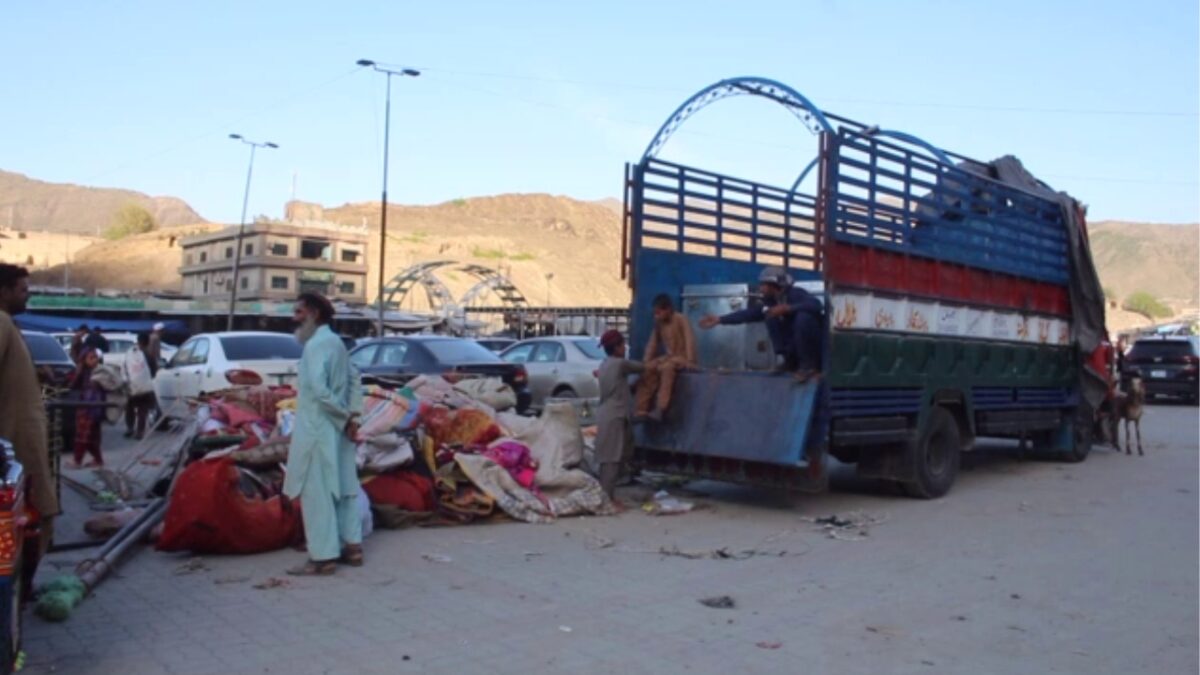
Afghan refugees with legal documents who were evicted from their homes in Islamabad are now spending nights in a city park, struggling with hunger, heat, and cold.

According to a Reuters report on Wednesday, August 20, the displaced families said they face scorching heat during the day and rain and cold at night, with little access to food or medical care.

The United Nations has warned that Pakistan has begun expelling even documented refugees before the September 1 deadline, a move that could force more than one million Afghans to leave.

Dozens of police officers have been deployed around the park. Refugees claim officers have repeatedly threatened them with removal, though police have denied these allegations.

Meanwhile, the UN reports that nearly 700,000 Afghans have also been deported from Iran, marking the largest refugee return crisis since the Taliban regained power in Afghanistan.

These developments have sparked growing concern among humanitarian organizations, who warn that the mass expulsions are leaving vulnerable families without shelter, food, or protection.

With Afghanistan still facing economic collapse and insecurity, aid groups stress that Pakistan and Iran must uphold international obligations and ensure the treatment of Afghan refugees is humane and lawful.

Humanitarian Crisis: Afghan Refugees with Legal Papers Forced to Live in Islamabad Parks
read more