 Afghanistan Peace Campaign
Key Takeaways:
- Rising Anti-Taliban Activity: The Afghanistan Freedom Front (AFF) and a newly emerged group, Sepahian-e Mihan (Patriotic Soldiers Front), have conducted successful attacks in Badakhshan, including an AFF operation on July 23, 2026, that killed 21 Taliban fighters and captured weapons in Zebak District.
- Internal Taliban Fractures: The Taliban are actively disarming local fighters and managing tensions with dissident Tajik commander Juma Khan Fateh, whose forces have been linked to land seizures, extortion, and control of gold mines; high-level Taliban officials have intervened with mixed results.
- Resource and Ethnic Tensions: Ongoing disputes over gold, lapis lazuli, and other mineral resources, combined with the Taliban’s mistrust of non-Pashtun local commanders, are fueling protests by miners, internal clashes, and broader instability in the predominantly non-Pashtun province.
Badakhshan Province is in the midst of severe disorders, experiencing violent anti-Taliban rebellions, intense internal mutinies within the Taliban structure, and crises over the mining of natural reserves.
On July 23, 2026, fighters of the Afghanistan Freedom Front (AFF) killed 21 Taliban fighters and injured another 37, in a series of targeted operations against Taliban bases, units, and military detachments in the Zebak District of Badakhshan Province. One AFF fighter was also killed. During the fighting, AFF fighters captured ammunition, light and heavy weapons, military equipment, and other war materials, from the Taliban.
On the other hand, as reported on July 22, 2026, the Taliban ordered gunmen loyal to dissident local commander Juma Khan Fateh to surrender their weapons as soon as possible in the Shekay and Nusay Districts.
On July 21, 2026, Taliban fighters stationed in the Nusay District of Badakhshan Province ordered 350 armed men affiliated with the group, who did not hold positions within the Taliban regime’s structure, to surrender their weapons. The notice warned that if any individual refused to hand over his weapons, Taliban fighters would use military force to seize them.
On July 17, 2026, Taliban authorities claimed that they had retaken the Yaftal-e Payin District in Badakhshan Province after an overnight attack claimed by anti-Kabul forces. Police Spokesperson Ehsanullah Kamgar stated that the attack occurred while several Taliban fighters and commanders were on leave, adding that Taliban authorities had arrested seven people in connection with the incident and seized weapons and military equipment.
On July 13, the 2026, Taliban begun disarming their local fighters in the Shahr-e Buzurg District of Badakhshan Province. Taliban’s special forces have also been deployed in the area, alongside Mawlawi Saifuddin Tayeb, the Deputy Chief of the Taliban Administrative Affairs Office. The disarmament process began after the noon prayer in the district.
According to partial data compiled by South Asia Terrorism Portal (SATP), since the Taliban takeover on August 15, 2021, 216 people, including 57 civilians, 14 militants, and 145 in the Not Specified (NS) category have been killed in Badakhshan Province in 73 incidents (data till July 25, 2026).
Some of the major incidents include:
On March 29, 2026, AFF fighters carried out a planned attack targeting a watchtower of the Taliban’s 219th Division, located in the Qalatak area of Baharak District in Badakhshan Province, killing four Taliban fighters and injuring three.
On November 29, 2025, AFF fighters carried out a rocket attack on the Taliban’s Police District (PD) 7, in Faizabad, the capital city of Badakhshan, killing three Taliban fighters and injuring two.
On October 12, 2025, at least 10 Taliban fighters were killed in fighting between rival factions of the group at Yalor village in the Yaftali Sufla District of Badakhshan Province, over control of a gold mines.
On May 26, 2025, a local Taliban commander, Zaidullah, was killed along with his wife and child, during an internal armed clash in the Shahada District of Badakhshan Province. At least four Taliban members were also seriously wounded, including Abdul Saboor, the deputy head of the Taliban’s intelligence unit in Shahada District, and Mahmood, another intelligence officer.
On May 8, 2024, at least three Taliban fighters were killed and another six were injured in an Improvised Explosive Device (IED) blast. Later, on the same day, the Islamic State-Khorasan Province (IS-KP) claimed responsibility for the blast.
On June 8, 2023, a Taliban senior commander identified as Mawlawi Safiullah and 15 others were killed in a bomb blast inside the Nabawi Mosque in the provincial capital of Faizabad.
On September 30, 2022, four Taliban fighters were killed when the National Resistance Front (NRF) attacked them in the Payan Mor area of ??Shahr Buzurg District of Badakhshan Province.
Amidst this chaos, a new anti-Taliban group, Sepahian-e Mihan (Patriotic Soldiers Front) has appeared on the scene. On July 17, 2026, the group claimed responsibility for an attack in the Yaftali Sufla District and declared that its forces had controlled the district administration building for several hours. Following this attack, the Taliban sent Army Chief Fasihuddin Fitrat to the District, to lead operations. Fitrat claimed that the assault had been foiled and that the attackers had failed to achieve their objectives. Nevertheless, on July 22, 2026, Qayum Malang, Commander of the Sepahian-e Mihan, released his first audio message, declaring that he and his fighters were safe: “I am in full health. Do not follow the enemy’s propaganda. We are all safe and well.” He also stressed that the front “has its own plans and objectives” and that its members desire freedom above everything else. The group reportedly consists of people from different sections of society, including residents of Badakhshan, who came together in response to growing dissatisfaction with Taliban rule in the province. The official logo of the group includes symbolic elements such as the Simurgh (a giant bird of Persian mythology), the sun, the Hindu Kush mountains, lapis lazuli, a sword and the golden star of Bactria. The Hindu Kush mountains are seen as a symbol of the group’s geographical roots, while the sword and star may represent its military and defensive character.
The Taliban however, initiated a few official interventions to assess the situation. On June 25, 2026, Taliban Defense Minister, Mullah Yaqoob Mujahid travelled to Badakhshan, following unsuccessful negotiations between a special Taliban commission and Juma Khan Fatah. Taliban officials said Mullah Yaqoob’s visit was to evaluate the security situation along the Wakhan, Ishkashim, and Shughnan border areas. However, sources suggest that he was also calculating military capabilities for a possible confrontation with Fatah. Later, as reported on July 9, 2026, Fasihuddin Fitrat, Taliban’s Chief of Army staff, and Mawlawi Amanuddin, Taliban Governor of Helmand, travelled to Nusay District to meet with Juma Khan, in an effort to ease ongoing tensions. Thereafter, on July 10, Juma Khan was transferred to Faizabad, capital of Badakhshan, after receiving ‘guarantees’ from Taliban Army Chief Fasihuddin Fitrat. No details of the talks or any agreement between the two sides have yet been released. A day later, Juma Khan Fateh returned to the Darwaz region of Badakhshan after pledging loyalty to the Taliban administration.
In parallel to these ongoing ‘negotiations’ at the administrative level, Zabihullah Mujahid, Taliban Spokesperson, announced on June 22, 2026, that Juma Khan had been removed as Zabul Deputy Governor, without being assigned a new role. Mujahid added that Taliban Supreme Leader Hibatullah Akhundzada had reshuffled several senior positions across government institutions. Moreover, as reported on July 9, Taliban forces established several checkpoints in the Shekay, Nusay and Maymay Districts in Badakhshan to monitor the movement of locals.
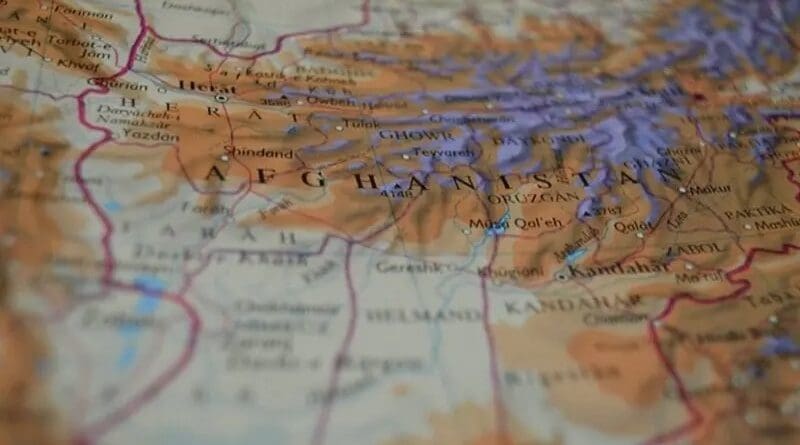
Badakhshan is a rugged and rocky, pre-dominantly non-Pashtun province in northeastern Afghanistan, rich in gold, silver, aluminum, limestone, lapis lazuli, etc. After their takeover in 2021, the Taliban leadership has been mistrustful of the local Taliban commanders of Tajik and other ethnic backgrounds. A major point of dispute has been the control of Badakhshan’s rich mineral resources and mines. There have been frequent disputes between Taliban and local miners. For instance, on July 21, 2026, a number of mine workers gathered in front of Taliban’s mining department building in Badakhshan, protesting against the Taliban’s continued closure of mining sites, and saying that Taliban forces threatened and beat some workers and ignored their demands. According to the protesters, the situation had left hundreds of families facing serious financial hardship. Earlier, on May 9, 2026, eight people were injured after local miners and residents clashed with Taliban-affiliated forces over control of the Qatqati gold mine in the Shirin Nazm village of Shekay District in the province. The tensions began after Taliban beat several miners. Crucially, in order to take full control of mining sites, as reported on February 19, 2026, Hibatullah Akhundzada approved the deployment of 1,000 fighters to protect gold mining operations in Badakhshan. Subsequently, on July 23, 2026, Taliban’s Ministry of Interior stated that it had signed an agreement with the Taliban’s Ministry of Mines and Petroleum to provide security for four of Afghanistan’s key economic projects, including the lapis lazuli mine of Badakhshan.
Badakhshan is in turmoil, substantially due to highhandedness and ethnic biases of the Taliban’s central leadership. The perennial mistrust of non-Pashtuns, untamed greed in exploiting local resources without paying heed to the common people, the emergence of anti-Taliban forces, and the unapologetic nature of the Taliban is pushing Badakhshan deeper into distress and violence.
- About the author: Sanchita Bhattacharya, Research Fellow, Institute for Conflict Management
- Source: This article was published by SATP