 Afghanistan Peace Campaign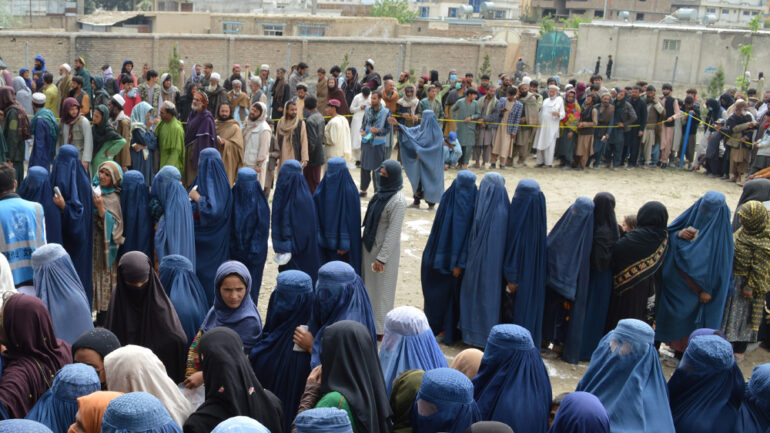
Human Rights Watch Warns Millions in Afghanistan Face Imminent Hunger Crisis
In a statement released on Friday, Fereshteh Abbasi, Afghanistan researcher at Human Rights Watch, said millions of Afghans were at risk of an imminent hunger crisis and stressed that the Taliban’s policies were exacerbating humanitarian needs.
“Exacerbating the crisis, the Taliban’s repressive policies impose severe restrictions on women working in international aid organizations and the UN,” Abbasi said.
She noted that by restricting women’s participation in humanitarian work, the Taliban have made it more difficult for aid agencies to reach vulnerable communities. Because only female aid workers are permitted to assist women in many areas, female-headed households are particularly vulnerable to food insecurity.
Abbasi urged donor governments to immediately increase funding for humanitarian operations in Afghanistan and called on the Taliban to lift all restrictions on women’s rights, including bans on women’s employment and freedom of movement that prevent them from accessing humanitarian assistance and economic opportunities.
Human Rights Watch also identified the forced return of millions of Afghan migrants from neighboring countries as another factor worsening the humanitarian situation.
The organization said many of the five million Afghans who have been forcibly returned from Iran and Pakistan over the past two years have gone back to areas already struggling with drought and limited employment opportunities, placing additional pressure on already vulnerable communities.
Abbasi further called on governments to ensure that returns of Afghan refugees and migrants are voluntary, safe, dignified, and accompanied by sustained support for their reintegration.
The warning comes amid growing concerns over Afghanistan’s food insecurity. The United Nations has previously estimated that more than 17 million people—over one-third of Afghanistan’s population—will face acute food insecurity this year, with women and children disproportionately affected.
The UN appealed for $1.71 billion to address humanitarian needs in Afghanistan in 2026, but less than 20 percent of the required funding had been received by the first half of the year.
Humanitarian agencies have also been hit by a sharp decline in foreign assistance from the United States, which previously financed up to 40 percent of humanitarian aid for Afghanistan.
As a result, aid organizations have been forced to scale back programs and prioritize assistance for those in the most critical need.
According to Human Rights Watch, the country’s food security has continued to deteriorate. Before October 2025, only 28 percent of Afghan households had sufficient access to food without external assistance. By April 2026, that figure had fallen to just 20 percent, while approximately 22 million people now require urgent food and healthcare assistance