 Afghanistan Peace Campaign
The pressures on Afghanistan’s environment are increasingly urgent as the climate crisis bites. Our last dossier of reports on this subject was published in November 2022 when Afghanistan – one of the lightest emitters of greenhouse gases and also one of the hardest hit by climate change – had no representation at the international COP27 gathering (because of the non-recognition of the Islamic Emirate). AAN has continued to pursue environmental reporting, looking not just into questions of climate vulnerability, but also, as featured in this new dossier, reports on drought and flooding, food security and water diplomacy, environmental pressures on cities, pollution, climate governance and conservation and biodiversity. Not all the reports are bleak, but many are, an indication of how grave and multiple the environmental crises facing Afghanistan are. Yet authors often provide suggestions of how to mitigate or adapt to avoid the worst, or even improve life.
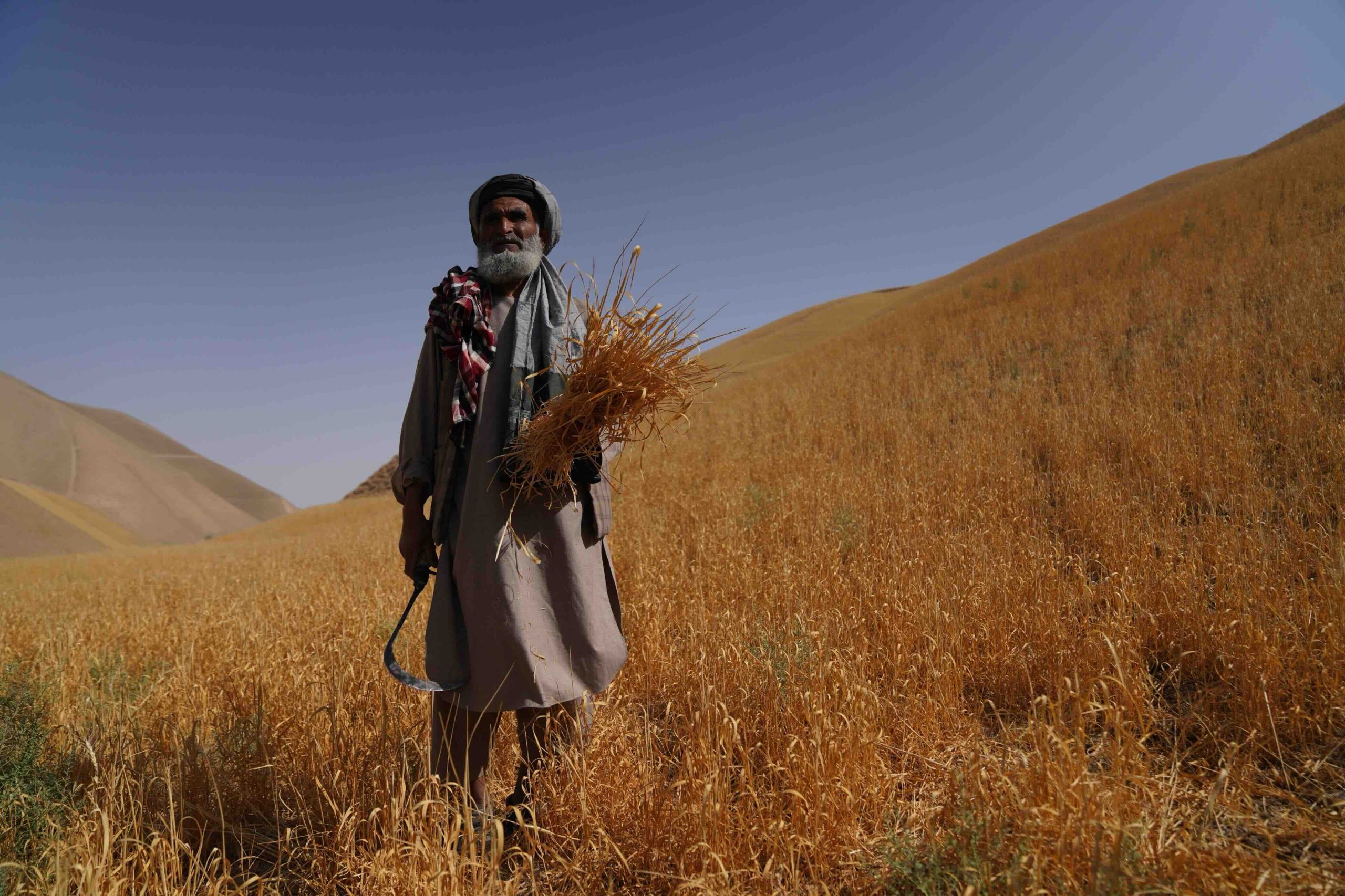 A farmer surveys his failed rainfed spring wheat in Khwaja Sabz Posh district of Faryab province, where in 2025 there was nothing to harvest in 90 to 100 per cent of all fields. Photo: Hashim Azizi/FAO, 7 July 2025
Two themes run through almost all the reports in this dossier – the climate crisis and water. Many of the issues we have investigated are also cross-cutting. Nevertheless, for ease of navigation, we have organised this dossier around five broad topics.
The first group of reports concern water scarcity – drought and its repercussions for agriculture and for Afghanistan’s towns and cities, and disputes over transnational water resources.
The second section focuses on floods, looking at both why they are happening with greater frequency and severity and the consequences for the communities hit by them.
A third section gathers together reports which ask broader environmental questions: What is the economic cost of the climate crisis for Afghanistan? Can Afghanistan feed itself? and Can the Islamic Emirate engage in international climate diplomacy when it is not recognised?
The theme of the fourth section is pollution, of all types – air, water, waste and noise.
The fifth and final section takes a look at biodiversity and conservation and the efforts to monitor and protect wildlife in a country where such concerns almost always compete with more immediate political and economic needs.
Together, the reports in this dossier offer a picture of a country living with rapid environmental change and searching for ways to adapt. They show that environmental crisis cannot be viewed as a distinct sectoral issue. Questions of water, climate and natural-resource management are entangled with food security, livelihoods, agriculture, public health, urban development, regional relations and international engagement. While climate change and water, inevitably, remain the central themes running through this dossier, the many reports gathered together highlight that broader environmental concerns will, for many years to come, shape Afghanistan’s prospects.
Water scarcity
The reports in this section look at the interrelated challenges of climate change, water availability, agriculture and livelihoods. They show how drought, changing precipitation patterns and growing demand on the country’s water resources are affecting food production, urban households’ access to water and regional relations.
Afghanistan’s Urban Water Dilemma: Why are Afghan cities running out of water?
Mohammad Assem Mayar, 17 September 2025
Another Drought Year for Afghanistan … But prospects are not as bad as they could be
Kate Clark, 17 July 2025Afghanistan is bracing itself for its fourth drought in five years. For many farmers and herders, the drought is catastrophic: spring rains failed and with them, rainfed wheat and pasture in the rangeland. Even so, agroclimate experts are forecasting a surprisingly positive picture for Afghanistan’s staple crop, wheat. Winter wheat has done well this year, despite below-average rain and snowfall, thanks to the mass distribution of drought-tolerant seed varieties, which has boosted the national harvest. Even so, the famine watchdog, the IPC, has projected that more than a fifth of the population will face crisis or emergency levels of food insecurity in the coming months largely because of non-agricultural factors – the fragile economy, cuts to aid and endemic poverty. AAN’s Kate Clark has been hearing from farmers and finding that those hit hard by the drought are acutely anxious not only about harvests and herds, but also the many other shocks assailing their communities – the forced return of compatriots from Pakistan and Iran, cuts to public sector jobs and the cessation of United States’ aid.
Finally, Rain and Snow in Afghanistan: Will it be enough to avert another year of drought?
Kate Clark and the AAN team, 26 March 2024
The last few weeks have finally seen rain and snowfall in Afghanistan, raising hopes for farmers and herders that this year could be better than the last three drought years. Afghans typically categorise a drought year as one where the low amount of precipitation causes problems for agriculture – a poor harvest or crop failure or not enough grazing for livestock. At its worst, a drought also affects drinking water. The long-term future for Afghan agriculture is grim: scientists predict the global climate crisis will bring more severe droughts more frequently. But this year, AAN’s Kate Clark found, together with Ali Mohammad Sabawoon, Rohullah Sorush and Sayed Asadullah Sadat, farmers hope there might be enough rain and snow to, at least, avert another year of drought.
The Long Winding River: Unravelling the water dispute between Afghanistan and Iran
Mohammad Assem Mayar and Roxanna Shapour, 20 November 2023
Afghanistan and Iran have been at loggerheads for much of this year over the Helmand River and its water. As the region grappled with a punishing drought for the third year running, the two neighbouring countries have been locked in a tense melee over shared transboundary rivers. While Iran seeks to assert its rights over water from the Helmand River based on the 1973 Afghan-Iranian Helmand River Water Treaty, Afghanistan maintains that there is simply not enough water to provide Iran with a greater amount. AAN guest author, Mohammad Assem Mayar, and AAN’s Roxanna Shapour look into what has driven the recent upsurge in the long-running dispute over water between these two countries and provides insights into how their ‘water relations’ might develop.
Floods
Flooding, like drought, is becoming more frequent and more destructive as the climate crisis deepens. These reports explore both practical measures to reduce flood risk and the experiences of communities affected by this extreme weather.
Before the Deluge: How to mitigate the risk of flooding in Afghanistan
Mohammad Assem Mayar, 15 May 2024
In Afghanistan’s rugged landscape, floods arise from a multiplicity of causes: torrential rainfall, rain on snow, the rapid melting of snow due to warmer weather, glacial lake outbursts, the overflow of natural ponds or even the breach of dams. Regardless of their origins, floods can destroy whole villages, ruin farmland and change the very landscape. Almost a quarter of all casualties caused by natural disasters in Afghanistan are due to floods, with the problem only likely to worsen, given that the climate crisis is predicted to bring heavier spring rains and more severe monsoons. This spring, above-average precipitation brought an end to the multi-year drought that had plagued Afghanistan, says AAN guest author Mohammad Assem Mayar, but the considerable rainfall has also led to devastating flooding. In this report, he delves into what can be done to mitigate the risk of flooding in Afghanistan, both now and in the longer term.
After the Deluge: Personal accounts of rain and floods in Zurmat district
Sayed Asadullah Sadat, 12 May 2024
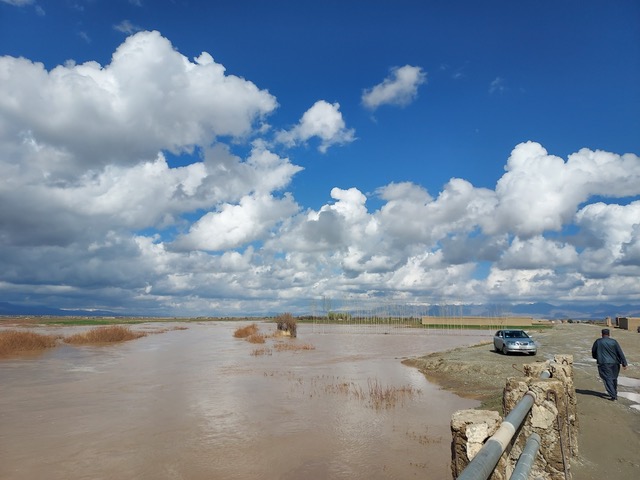
The rain and snow that has fallen in recent weeks has eased the hearts of Afghan farmers and given them hope that the multi-year drought has finally ended. At the same time, heavy rain falling on dry, parched land has caused flooding in many areas of Afghanistan. Hundreds of people have been killed in recent weeks, homes and businesses have been destroyed and farmland inundated with floodwater and mud. In March, we spoke to farmers in different districts about their hopes for better weather this year. For this report, Sayed Asadullah Sadat has returned to one district, Zurmat in Paktia province, to hear how the longed-for rain has brought devastating flooding.
Broader environmental questions
In this section, authors try to answer some big questions, to do with harvests and food security, the economic cost of climate change and international climate diplomacy for a government which is not internationally recognised.
Can Afghanistan Feed Itself? Agriculture, trade and food security under pressure
Mohammad Assem Mayar, 24 May 2026
Afghanistan’s food system is under growing strain. Domestic harvests remain insufficient and uneven and trade routes have shifted repeatedly in recent years. This spring’s rainfall has been good enough for a forecast of a bumper wheat crop, but that belies the ruinous longer-term reality of the climate crisis and the more frequent droughts it is causing. Population growth, returnees and declining purchasing power have all deepened vulnerabilities in both rural and urban areas. In this report, guest author Mohammad Assem Mayar brings together spatial data on major crops – production, deficits and risks – to show where food is produced, where shortages are emerging and how external shocks – from regional trade disruptions to climate variability – shape the nation’s food supply. He also examines some practical options for increasing production, with a focus on water and irrigation.
Mohammad Assem Mayar, 22 March 2025
No Climate Change Deniers: The Islamic Emirate of Afghanistan goes to COP29 as an observer
Thomas Ruttig, 24 November 2024
The 29th UN Climate Change Conference, or COP29, which was hosted by the Republic of Azerbaijan, concluded on 24 November 2024 in Baku, with a delegation from the Islamic Emirate of Afghanistan in attendance. This was the first time the Emirate had participated in a UN-organised conference on climate, but only as an observer. The invitation was extended to the Emirate by the host country and not by the United Nations. The Emirate’s delegation was led by the National Environment Programme of Afghanistan’s new Director-General, Mati ul-Haq Khales. The UN, for its part, invited two Afghan NGOs and a civil society representative to participate in COP29 side events. AAN’s former co-director Thomas Ruttig delves into what prompted this invitation, as well as examining Afghanistan’s climate-related challenges and the Emirate’s words and actions on climate change.
Pollution
Pollution in Afghanistan: Air, water, waste and noise under weak governance
Mohammad Assem Mayar, 10 February 2026
Kabul’s winters bring a suffocating haze, as residents burn coal, wood and even plastic to heat their homes and use outdated vehicles, releasing toxic fumes into the city’s dry air. However, perhaps surprisingly, the worst air quality in Afghanistan is found not in the capital, but in the southwest and north, where dust storms, made worse by climate change, blow in across the borders. Pollution is also not confined to the air. In urban areas, open sewage channels spread foul odours across city streets, badly kept septic tanks contaminate groundwater and rubbish piles up, uncollected. Noise adds another layer of disturbance, with vendors’ loudspeakers blaring by day and stray dogs barking through the night. These overlapping forms of pollution leave Afghans exposed to multiple hazards and reflect the decades-long failure of state institutions to provide basic services, particularly in urban areas. In his new report for AAN, guest author Mohammad Assem Mayar looks into the where and why of Afghanistan’s pollution crisis and lays out strategies for survival and mitigation.
Biodiversity and conservation
The final section of this dossier explores wildlife, conservation and environmental monitoring. The reports here highlight how environmental changes are affecting both the people of Afghanistan and its plants and animals, its ecosystems and biodiversity.
No Flamingos, but Ducks, Geese and Grebes: Afghanistan joins an international bird census
Kate Clark, 10 May 2026

The first survey of birds to be carried out by an Afghan organisation since the fall of the Islamic Republic has taken place. It was also the first time that Afghanistan has taken part in the annual International Waterbird Census, a global effort involving 189 countries. A volunteer team, including expert ornithologists, visited six wetland sites, all potentially important stopover sites on the Central Asian Flyway, the mass migration of birds that takes place twice a year, between winter feeding grounds in India/Pakistan and summer breeding grounds in Central Asia and Siberia. That migration had yet to start when the survey took place, but volunteers from a new Afghan conservation NGO, Organization Rewild, assessed resident and over-wintering birds and habitats in places that might provide a safe place for birds to stop and rest – or possibly not, writes AAN’s Kate Clark, given the dangers posed to them by hunters and the drying up of wetlands.
Of Hunters and Hunted (2): Falconry, bird smuggling and wildlife conservation
Fabrizio Foschini, 28 December 2023
The cold weather marks the start of the hunting season in many countries across the world. In Afghanistan, despite a hunting ban, this time of year sees the resumption of particular hunting-related activities. One particular group of hunters – raptor birds migrating through the country – become the hunted. Every year, some are caught and sold, often abroad, to be trained to hunt other prey in turn. At this time of year, as well, foreign falconers, notably wealthy sportsmen from the Gulf endowed with special hunting permits, come to western Afghanistan in order to indulge their passion for falconry and hunt their most prized quarry, the houbara bustard – which has also become the objective of a Qatari conservation programme in the country. In this second and concluding instalment of a two-part report on falconry in Afghanistan, AAN’s Fabrizio Foschini examines the illegal export of raptors from Afghanistan, and also the hunting of and efforts to conserve the houbara in Farah province. He notes the ambivalent effects of this particular form of foreign intervention.
You can also read the first instalment of Fabrizio’s series, Of Hunters and Hunted (1): Falconry in Afghanistan from classical literature to colonial sources, which explores falconry in Afghan history and in poetry and colonial literature.
For those interested in Afghan birds, see our earlier dossier: Thematic Dossier IX: Birds in Afghanistan.
For our previous dossier on climate change and the environment, see Not at COP27, but Already in Crisis: A dossier on Afghanistan and the Climate Emergency.
Complied by Roxanna Shapour; Edited by Kate Clark